Kidnapping

Abba Kyari forced me to accept being a kidnapper, Evans tells court

By Ahmad Deedat Zakari

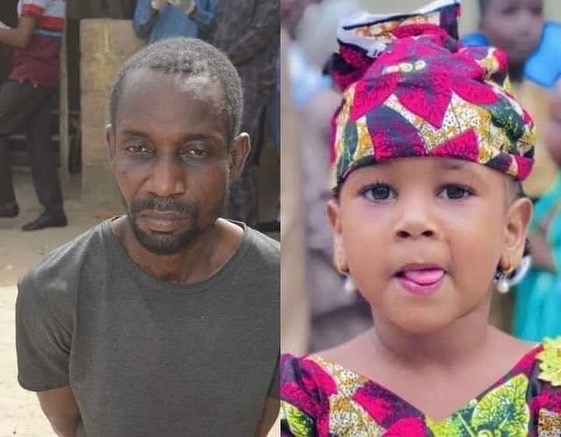
The alleged kidnap Kingpin, Chukwudimeme Onwuamadike, alias Evans, said his confession was obtained under duress and threat to his family by the embattled suspended Deputy Commissioner of Police, Abba Kyari and his team.

Speaking during his hearing at Ikeja Special Offences Court on February 4, 2022, Evans made the allegations against the suspended police chief.

Evans said, “One day at the IG Guest House, the police brought some documents and asked me to sign. I asked what the documents were for, but they didn’t answer me. They said if I didn’t cooperate with them they would kill me.

They killed about six persons in my presence and I signed the document, I was not allowed to read it. I think it is the document that was used to bring me to court.”

He was also asked why he was looking undisturbed and he said, “The police told me to laugh and smile in the video. You do not know what I encountered in the hands of Abba Kyari and his boys. My eyes saw hell.”

Evans is presently standing trial on a four-count charge of kidnapping and unlawful possession of firearms alongside a dismissed soldier, Victor Aduba.

The case has been adjourned until March 11 for the continuation of the trial.

Of criminality, economic stability, birth control and northern Nigeria

By Zakari Abubakar

It is evident that whenever there is an upsurge in criminal activities in parts of northern Nigeria, a perennial debate usually rears its head among those interested in the root causes of the problem. This is understandable. Without identifying the cause of a problem, its solution may not be in the offing. Like virtually every year, this debate is also gaining traction in this early part of 2022.

Admittedly, this view adds to the existing number of discussions on this topic. Those who are following the debates are not unaware that there are a group of people who link the rise in criminal activities in the north and the rate of excruciating poverty among its people, mainly to the large number of children born in virtually every family in the region. This group of people base their argument SOLELY on the superficial and generalised assumption that people with a large number of children, more often, engage in irresponsible parenting.

Another reason why this group of people see an individual with a large number of children as a potential source of criminality and economic stagnation is that Nigerian authorities have for long been finding it difficult to provide social services such as education, electricity and other life essentials to these growing number of citizens which leads to more people becoming poor. This is where I find their argument too simplistic. Because the same authorities are providing these services to themselves, their families or their cronies.

Going back to their first argument, it is glaringly verifiable that for every individual with many children who fail to cater for them, hundreds, if not thousands, bore many children and saw to their responsible upbringing. This example is on the level of individuals. There are many more such examples on the societal level. For instance, several countries and regions of the world have nearly the same population as northern Nigeria or are more populous but are not facing the same challenges.

Those societies have considered such a phenomenon as a gift and therefore utilise it positively. To buttress this point, the five most populous countries in 2021, according to sources, are China, India, the United States, Indonesia, and Pakistan. Although these countries may be facing their security and economic challenges, the standard of living in those societies is by far more robust than what is obtainable in northern Nigeria.

To cite a specific example: about 90% of China’s population is Han Chinese. They are over a billion people, yet, there is no accusation from the rest of the population in that country or the Hans themselves that the Hans are a potential source of poverty or criminality. Similarly, the most populous state in India is Uttar Pradesh, with over 200 million inhabitants. But go to India. How does Uttar Pradesh fare compared to the rest of Indian territories in terms of economic prosperity?

No one is disputing that northern Nigeria is recently replete with a high rate of criminality occasioned by poverty among its growing population. But to solely link this problem with the region’s birth rate is to accord the topic attention that is less than it badly desires. For example, what about the other seemingly systemic problems that have to do with governance and political leadership?

One may say, why do people resort to adding problems for themselves by producing more children since the government failed to sustain their needs? Then I would say, instead of blaming those who fail to provide those essentials (though they are providing them for themselves and their families), we resort to blaming the poor, despite his effort to always get himself out of the effects of poor/bad political leadership?

Elsewhere, other regions of the world are complaining of a decline in their population. Thus, they outsource other remedies for their problems, like encouraging men and women to engage in economic activities. Therefore, no matter how small, we should demand accountability from our political leaders and seek other possible options that are more viable than resorting to birth control, which has its implication on man’s overall health.

Zakari Abubakar is with the Department of Physical and Health Education, Aminu Saleh College of Education, Azare. He can be contacted via zakariabubakarnng@gmail.com.

Unknown gunmen abduct ex-President Jonathan’s cousin

By Uzair Adam Imam

The cousin of the former president of Nigeria, Goodluck Jonathan, was reported to have been abducted by unknown gunmen at his residence in Yenagoa, Bayelsa State.

The cousin, identified as Jephthah Robert, was abducted on Monday, 24, January 2022.

The Daily Reality has learnt that the abductors have yet to contact the family long since his abduction

SP Asinim Butswat, the police spokesman in Bayelsa State, confirmed the development while addressing the journalist.

He added that this has resulted in intensifying efforts to save the victim and arrest the culprits.

Reports from the state have shown that the rate of kidnappings in Bayelsa State has increased recently.

A minute of silence for Hanifa Abubakar

By Maryam Muhammad Lawan

“Baby sis! I’m craving for something spicy,” I said in a cosseted voice. 

“Don’t worry, please. Your lazy sis will take care of you today. Guess what! No, I’m not even telling you anymore. Just wait for it,” sis said. 

I jabbed at her amusingly while saying, “Go and prepare whatsoever it’s please”.

“So, you’re poking fun at me. I’ll surprise you today”, My sister said while cackling.

“Yeah, don’t surprise me with rubbish, please, “I teased while she guffawed and moved on. “What a sis? Bless her ya Allah, “I said silently.  

I was left alone in the room when I logged into my Facebook account and started scrolling. Why do I see Haneefah’s pictures on almost every post? Did those other sets of humans release her? So I decided to read, to discover what it is. 

SubhanAllah! AstagfiruLah! I read as many updates as possible, for I couldn’t believe what I read from the first update. But eventually, I realized even the first update was as right as a trivet. 

“Don’t tell me you couldn’t wait for me to finish. I want to cook delicious food, so be more patient, please,” My sister said as she heard my footsteps towards the kitchen. I stood there, and she quickly looked at me. “Okay. Cry, cry, baby, what’s wrong again? Let me turn off this cooker before this mood of yours spoil my hot spicy meal,” sis said aggressively.

I couldn’t spell out even a word, maybe because I was emotional. So all I could do was to extend the phone to her. 

She used her hands and closed her mouth. Tears had no option rather than to roll out of her eyes.

Innaa lillaahi wa innaa ilaihi raaji’uun! AstagfirulLah wa atubu ilaik! Ya Allah, have mercy on us. The girl I so much like? Though I don’t know her, the girl I always pray for Allah to protect her wherever she’s, and from the evil of those men?” she said with a sorrowful voice. She continued reciting, “HasbunalLahu wa ni’imal wakeel”.

“Her school teacher did this, then, if learning places are not safe, where on earth then? What a wicked world, Ya Rahman, have mercy on us. Ya Razzaq, grant her parents the fortitude to bear this loss,” My sister prayed

I replied, “Ameen ya Rabb,” while giving her a shoulder to cry on.

Maryam Muhammad Lawal wrote from Kaduna via mmafamam@gmail.com.

Police officers killed in Jigawa

The killings of two officers in Taura Local Government Area and the abduction of Haruna Maifata, the state’s contractor’s son-in-law, have been confirmed by Jigawa State police.

The incident happened at Kwalam, part of the Taura LGA, where the contractor lives.

Ma’aru Abubakar, the contractor’s son-in-law, was kidnapped.

While confirming the event to reporters, Lawan Adam, a police spokesperson in Jigawa, said the police were stepping up their efforts to apprehend the bandits. According to him, Anas Usaini, a superintendent of police, and Sunusi Alhassan, an inspector, were killed.

According to him, the cops were shot and killed beside an improvised patrol car set on fire by the attackers.

Residents stated that the gunmen broke inside their target’s home after striking a security formation and then proceeded unhindered into the town.

Residents said the latest incident happened less than three months after a businessman, Kabiru Taura, was kidnapped and released after allegedly paying a ransom of over N20 million.

Jigawa is a comparatively tranquil state in Nigeria’s troublesome northwestern area, but locals have urged for increased security to guarantee that the situation there does not worsen.

Compared to neighbouring Northwestern states like Kaduna, Zamfara, and Kebbi, where thousands of people were slain or kidnapped last year, the state has seen far fewer armed attacks.

Hanifa Abubakar: How democracy devalues human life

By Ibrahiym El-Caleel

I am writing this emotional article with a heavy heart. Thousands of Nigerians are grieving a heart-wrenching pedicide that occurred in Kano State.

Hanifa Abubakar, 5, went missing on 3rd December 2021 while returning home from school. Her pictures flooded social media with a dear request that she be helped located. However, several weeks later, it turned out that she was actually kidnapped, and 6 million naira was demanded as ransom. Hanifa’s parents struggled to raise the ransom and deliver it to the kidnapper.

At the point of collecting the ransom on 20th January 2022, a 37-year old Abdulmalik Mohammed Tanko was arrested. Abdulmalik confessed that he was both Hanifa’s kidnapper and school proprietor. He further admitted that he had already killed Hanifa weeks ago with a rodent poison and buried her in a shallow grave in his school. He led security forces to the shallow grave, where the decomposed body of Hanifa was exhumed. She was beyond recognition as her body appeared to have been dismembered after the poisoning. She was afterwards given a befitting burial according to Islamic rites. Thousands of sympathizers are still mourning in extreme melancholy.

A few hours after Hanifa’s story was uncovered, a new case of pedicide was reported from Zaria. Shu’aibu Wa’alamu Ubandawaki, a Zaria-based businessman, reported that his 8-year old daughter, Asmau (alias Husna), has been killed by her abductors. He had also paid 3 million naira as ransom, but the kidnappers killed Husna anyway. Revelations later emerged that the kidnapper is their close neighbour.

Several months earlier, in May 2021, a 6-year old Mohammed Kabiru was kidnapped by his neighbour at Badarawa, in Kaduna State. This neighbour had received one million-naira ransom from Kabiru’s father but still proceeded to strangle the innocent boy. After detectives apprehended the kidnap gang, they admitted strangling the boy to death because one of the members of the criminal team feared that the boy recognized him.

Cases like this are too numerous to count. Even yesterday, the police in Kano interviewed a youth who said he had slaughtered a girl hawker after she recognized him.

Child abductors have lately developed the attitude of killing their innocent victims because they fear they might recognize them when freed. All that follows is a social media hashtag trend; a promise by the security forces to charge the suspects to court and then a brief silence before the next case arrives.

The homicide rate is skyrocketing in Northern Nigeria, and this is no thanks to our current system of governance. Since the transition of Nigeria to democracy in 1999, we see a judicial system that romances murderers with no fair regard to their victims. Despite democracy’s snail-speed judiciary to prosecute murderers, it frowns at executing them in the spirit of legal retribution.

This problem is not specific to Nigeria. It is a global curse. The governance system maintains a gentle approach to capital crimes by seeking to abolish the death penalty and public executions. Therefore, pressure groups like Amnesty International have sworn themselves as apologists of murderers. As a result, every nation is now reluctant in passing deserved death sentences, not to even talk of actually executing the death penalty. Only a handful of countries like China, Saudi, Iran and North Korea still practice public execution.

The UN-led democratic world of today considers public executions as a ‘cruel, inhuman and degrading nature of punishment’. This is why everyone shies away from public executions. For potential murderers, this is quite a protective cover to go-ahead to kill whoever they want to kill! They have nothing to fear. Take anyone’s life if you wish, and the UN and Amnesty International will protect yours! Mahatma Gandhi ingloriously articulated that, “An eye for an eye will make the whole world blind”. With this statement, Gandhi might have insensitively passed one of the greatest injustices upon the victims of human barbarism. An eye for an eye will rid the world of barbarians who have desires to pluck the eyes of their fellow humans. If we let barbarians keep their eyes, they will continue to pluck people’s eyes till the whole world becomes blind, and only barbarians will have eyes. At this time, they will have to start amputating people’s limbs since Mahatma Gandhi would decree, “a limb for a limb will make the whole world limbless”!

A life for a life is fair enough. This is what every fair legal system should maximally execute in the spirit of retribution. The only chance you have to keep your eye is when you don’t pluck anyone’s eyes. Similarly, the only chance you have to keep your life is when you don’t take anyone’s life.

Countries like the UAE, Bahrain and Bangladesh recently resumed public executions because they discovered that Gandhi’s, UN’s, and Amnesty International’s way is merely idealistic. After returning to power last year, the Taliban continued its public executions in Herat by hanging four bodies of kidnappers from cranes. They said it should serve as a lesson for other kidnappers. Nigeria is still massaging Evans, her revivalist billionaire kidnap kingpin. Yet we wonder why bandits in the forests are making a mockery of the Nigerian armed forces. Do we wonder why people like Abdulmalik are out there looking for the Hanifas they will kidnap for their financial welfare?

Nigeria’s constitution still maintains the death penalty for capital crimes like murder, mutiny, terrorism and treason. The courts are passing the judgements, but they are rarely executed. A Premium Times report in 2021 narrated that Nigeria’s correctional centres are housing 3,602 death-row inmates. Of course, these inmates will never be executed under this UN-subscribed Nigeria’s democracy. Some of them will naturally die in detention after living to a ripe octogenarian or nonagenarian age. Others will be pardoned by the state governors and the president at any time they so politically wish. The murderers will be re-integrated into society as if nothing had happened. Why shouldn’t they commit another murder? Why shouldn’t the next barbarian commit murder?

This ugly scenario is why some people take laws into their hands. They decide to avenge the murder of their loved ones so that they become the beneficiaries of this controversial protection of human life championed by the UN and Amnesty International. In some cases, security forces decide to be the courts themselves, thereby making extrajudicial killings of apprehended criminals. This is because they get tired of arresting the same criminals repeatedly for the same crimes.

Nigeria has decided not to make any changes to arrest this ugly situation. But, of course, there are good excuses like; even the United States has a snail-speed judiciary when it comes to executing death-row inmates. Out of its 2,474 death-row inmates, the US executed only 11 of them in 2021. All of them committed their capital crimes about thirty years ago. So, Nigeria would say, if this is in the US, what more of Nigeria?

Therefore, it is humane that we are boiling with rage over Hanifa and Husna’s deaths. Every sane individual would do the same. We are craving that the law legally executes their murderers. But we have to understand that the problem is systemic. We have to come together as both leaders and ordinary citizens to amend our ways. Our laws need to practically show to everyone that for every eye taken illegally, an eye will follow it legally. Murder begets state execution. This is the only practical way through which Nigeria can recover the depreciated value of human life in the eyes of barbarians.

Unless the death penalty and public executions resume for culpable homicides, potential murderers will continue to have a field day.

Ibrahiym A. El-Caleel wrote from Zaria, Kaduna State. He can be reached via caleel2009@gmail.com.
Police arrest man for kidnapping, murdering 71-year-old man

By Uzair Adam Imam


Police in Imo State have arrested a 35-year-old man identified as Onyekachi and his wife, Oluchi, for allegedly kidnapping, murdering and burning the corpse of a 71-year-old man, Chief Precious Okorie.


Onyekachi was reported to have killed the man for allegedly sleeping with his wife, Oluchi.


The Imo State Commissioner of Police, Mr Hussain Rabiu, made the disclosure while parading the suspect, adding that the deceased was kidnapped on November 12, 2021.


According to the police commissioner, he ordered the commander of the Anti-Kidnapping Squad, Oladimeji Oyeyiyewa, and his operatives to swing into action after a report from the family about the case.


However, he added that this has led to the gang leader’s arrest, Agubata Maxwell Chimezie, known as “The Boss”, on December 10th, 2021, while Oluchi was arrested on December 20, and her husband was picked up on January 10th, 2022 in Owerri.

Haneefa’s Death: A true reflection of our society today

By Usama Abdullahi

The media is filled with the tragic story of the deceased Haneefa, who was abducted a couple of months ago in Kano State and later killed in a gruesome manner by her teacher—the abductor. When I came across the story, I couldn’t help but weep for the little pretty, innocent child. The shock in me is unbelievable. But did this happen for the first time? That was the question that popped up in my mind when I first read the news of her demise. 

That wasn’t the first occurrence, and I guess it wouldn’t be the last. A lot of babies have been killed for the past years. Still, more are being killed daily too. Sometimes we don’t hear about it because the abominable act is being done in private, hence beyond the reach of media. Unfortunately, irresponsible parents discard newborns like rotten cabbages; some get abducted while others are buried alive. Moreover, others are being sold as goods meant to be exchanged.

What is this telling you? Simple; it tells you more about our society and how unsparing we are today. This is a true reflection and clear proof of our today’s society. Indeed, we are a money-driven society. We crave excessive wealth badly. And we seek to get that in such venturesome and unacceptable ways. Unfortunately, some of us have turned beasts and cannibals in the process, thereby assassinating and eating the flesh of the unfortunate victims. 

This society stoops so low beyond imagination. Disturbingly, no possible help in sight to redeem such despicable acts and to tame or neutralise the evil-minded monsters doing these. Don’t we have leaders? You may perhaps ask. Yes, we do, but they are not helpful at all. Most of our leaders don’t deserve to live with us, let alone rule us. They are mostly the ones sponsoring these evils.

Imagine a so-called leader who hires hoodlums, feed them, rent five-star hotels for them so that he could assign them to abduct or take away the lives of those he wishes dead. When I was growing up as a kid, I used to deny the existence of “ritualism”. I thought that exists in fairy tales that we were taught at schools or watched on TVs. But, contrary to my kiddish thoughts, “ritualism” truly exists. It’s, in fact, become the norm.

As kids, our parents used to caution us against strangers, that we shouldn’t even exchange words with them. Because most of them are bad, they can wile us by giving us gifts, and when we take those gifts from them, we would be unconscious shortly after, and they would disappear with us to another world where they would waste us for their devilry reasons.

Our parents are damn right. But what our beloved parents need to know today is: it’s no longer strangers but our relatives; it’s now those we trusted and confided our care to. We might even feel more secure in a stranger’s abode than in some of our relatives’. Disgustingly, an uncle rapes his niece; a father kills his daughter; a mother copulates with her biological son, all these for worldly gains.

This is what we are now. One who’s supposed to protect and cater for you now turns to be your enemy. Our society is no longer safe. There are a lot of wolves in sheep’s clothing amongst us. Thus, we need to be extra careful because human lives aren’t sacred anymore. Sadly, humans are often hunted like wild animals in the jungle. Worst still, there’s a market for human organs, where every human body organ is available for sale.

Usama Abdullahi wrote from Abuja, Nigeria. He can be reached at usamagayyi@gmail.com.

Missing Haneefah found dead, remains buried

By Hussaina Sufyan Ahmed

Forty-six days of Haneefah’s kidnapping ended in sorrow after she was today, Thursday, January 20, 2022, found dead with severe injuries in her body.

Haneefah Abubakar, a five-year-old girl, was abducted on November 4, 2021, on her way back from an Islamic school at Dakata quarters, Kano State.

The decry by some social media users during her kidnap was rampant as fliers were created to show support for the family in finding out about her whereabouts.

According to Haneefah’s uncle, Suraj Sulaiman: “The kidnapper took Haneefa to his wife, but she refused to hide her. He later decided to take her to Tudunwada where he operates a private school. First, he poisoned her tea with pesticide. Then, after she died, he buried her there.”

The kidnappers were apprehended yesterday, Wednesday, January 19, 2022, in Zaria, at their point to collect the second round of ransom after the initial 6million naira.

The news of Haneefa’s death has stirred a lot of reactions from people online and offline. People have been posting about it, sending condolences to Haneefah’s family and praying for immediate action against her killers.

Haneefah has since been buried according to Islamic rites.

May her gentle soul rest in peace.

Insecurity and food insecurity In Nigeria

By Safiyanu Ladan

Banditry and kidnapping for ransom have created a sense of fear in many farming communities in North-Western and Central parts of the country. Alas, thousands of farmers are left with no other options than to leave and abandon their farmland uncultivated for some years now for safer and more secure environments, mainly as refugees, in urban areas.

The displacement of farming communities by bandits as a result of incessant attacks which prevented them from tilling their farmland, the abrupt cessation of rainfall, the increase in the price of farm inputs, among others, are listed as the major factors that affect food production in Northern Nigeria.

This has significantly been attributed to the hiking in the price of agricultural produce and will ultimately lead to food insecurity.

In July this year, an official of the United Nations Dr Rhoda Dia, was reported to have warned that an estimated 13 million people in northern Nigeria face the risk of acute food insecurity in the next few months.

The Project Manager, United Nations Development Program – Global Environment Facility (UNDP – GEF), in charge of the Resilient Food Security Project, said the warning had become imperative because the country is facing growing levels of acute food insecurity due to decades of insecurity across the country, saying that the insecurity had resulted in increasing poverty and economic crises.

She, however, stated that the situation had been worsened by the COVID-19 pandemic and, recently, the series of clashes between farmers and herders.

According to an agriculturist, the insecurity we’re facing now, especially in the North-Western part of Nigeria, has dramatically affected crop production and will go a long way in enabling food insecurity.

The fact that most of the agricultural activities in northern Nigeria are done by peasant farmers who live in rural areas and have been subjected to unprecedented attacks almost daily by bandits is alarming.

In many aspects, insecurity has affected food production. Naturally, this can be associated with the increase in food price, even though there are other factors like the Covid-19 pandemic, as we can see in other countries. But, still, our peculiar problem that aggravated the situation is the issue of banditry.

While lamenting the security situation, some farmers in one of the most troubled states said bandits had captured more than 30% of their farmlands.

Given the foregoing, the food insecurity is imminent, and it’s so glaring that there’s nothing the government can do about it as it has failed the country.

Safiyanu Ladan writes from Zaria via uncledoctor24@gmail.com.