Katsina State

How the lack of strong opposition masks the government’s failures in Katsina 

By Muhammad Isyaku Malumfashi

One thing I despise about Katsina’s political realm is the absence of a strong and formidable opposition that will tackle the government’s dormancy and make them very focused and renaissance-like toward their responsibilities by using both envious and constructive criticism against those in power, so that at least the citizens may witness democratic dividends seen in some states.

But for the opposition to hold hands and keep mute without holding those in power accountable for any misfortune is unhealthy, and that’s the reason why we are here. Many citizens have questions about the power, but they are afraid to ask due to threats of arrest or intimidation by those close to the power. Perhaps some would disguise themselves in the name of advice to convince you not to oppose this failed government led by the so-called PhD, but they will not prove to you that what you said about the government is not true.

It’s a good thing to advise one to be cautious and watchful of his tongue, but it’s cowardice to intimidate him with arrest or cite the quibbles of his words without pointing out the error in them. The present Katsina government at all levels has become a failure despite the boasting made about the ‘educational qualification’ of the governor during the campaign and even after in his first year of office.

The governor made it clear that he would work with only ‘educated people’ because he is a PhD holder. His academic position was also used to deceive people into believing that Katsina would have a governor for the first time who had attained such a high level of education, unlike his predecessors, who were only master’s degree and diploma holders. People believed that the highest level of education equates to good governance until Governor Radda spent two years in office with nothing to show, or at least outshine or perform better than his predecessors.

That’s when we realised that a secondary school leaver may do better than a PhD in governance because it’s not about the qualification but fear of God, experience, integrity, and honesty. This administration of a PhD holder has not endangered any sector in Katsina. Take the security issue first, which is the most pressing issue in the state.

During the campaign, the governor made it clear that even if it’ll cost him not constructing a single gutter, he’ll eliminate insecurity in the state. We were happy to hear that and even began to see some desirable steps toward actualising that by distributing ammunition to citizens, launching the Katsina State Security Watch Corps, and arresting and killing many people found sabotaging the fight against insecurity. But what happened along the way?

The emphasis was later shifted to politics; the bold promise of no negotiation with bandits at the weak point was broken, and we saw negotiations made in some local governments when it was apparent that the bandits breached many trusts that had been placed in them by the previous government after the talks, and the insurgency escalated. It’s only during Radda that we’ve seen the worst of banditry, especially in my hometown of Malumfashi.

Initially, they only attacked villages, but later they expanded their attacks to cities. People are no longer safe. The son of our immediate local government chairman has been in bandits’ captivity for months now. My sibling, a sister of the same father and the same mother, was kidnapped in the same area where the ex-chairman lived while in office, and his child was abducted.

Many people inside Malumfashi were kidnapped; some were killed, and some had ransom paid to release them. Even today, I woke up seeing the sad news of the death of a PDP leader in Malumfashi from bandits. It’s under this government that dozens of villages in Malumfashi were evacuated due to banditry, and a whole brigadier general from Tsiga was kidnapped and spent more than 50 days in their hands before gaining freedom after millions were paid to them as ransom.

And a first-position winner from Katsina of the National Qur’anic Competition (Musabaqa) held in Kebbi was also kidnapped with his parents along their way back to Faskari from Katsina, where the governor gave him prizes and gifts, but was not able to ask security to escort him home despite the apparent danger of their town. And the governor made a blatant lie in a video, which I saved for my unborn children to remind them that ‘he’s the one feeding every family whose head is kidnapped in the state.’ This is not just a capital lie but a grievous one.

If you take education, you still have nothing to show. The previous government was paying WAEC and NECO for every student in government schools who passed the qualifying exams. Still, this government of ‘PhDs’ paid only NECO to every student, even if he or she passed both WAEC and NECO last year. Katsina’s NECO result was released late last year, after many schools had concluded their admission processes, and the pass rate was very low. Katsina was ranked among the three lowest-passing states in the NECO exam last year.

The governor employed thousands of teachers and a few from the health sector. I agreed, but he did not tell us how many thousands have retired in every sector every year and how far along the replacement process is. No school will go without seeing a shortage of teachers, and the same goes for clinics.

How long did it take him to implement the 70k minimum wage, and has it been implemented 100%? You’ll hardly see a civil servant who saw an increase of up to 50k in his salary, like in other states. What was the cause of his dispute with the university staff about the minimum wage implementation, and how many times did they reject his low implementation of minimum wage for them?

The tertiary school fees were raised when many students were dropping out due to the high cost of education, even though the governor is now earning more than his predecessor because of the removal of subsidies. His predecessor did not increase the school fees, but PhD did. In his just two years in office, he claims to have spent more on security than the previous government did in 8 years, yet there has been no clear difference between the two governments in their success against banditry in the state.

Only these two crucial areas are sufficient to condemn this Yan Boko government, but the lack of opposition in Katsina is giving the governor the confidence to speak badly about the coalition. 

Coalition/opposition has come to stay in Katsina, and no man born of a woman can stop it.

Nigerian forces kill 30 bandits in Katsina counter-operation

By Abdullahi Mukhtar Algasgaini

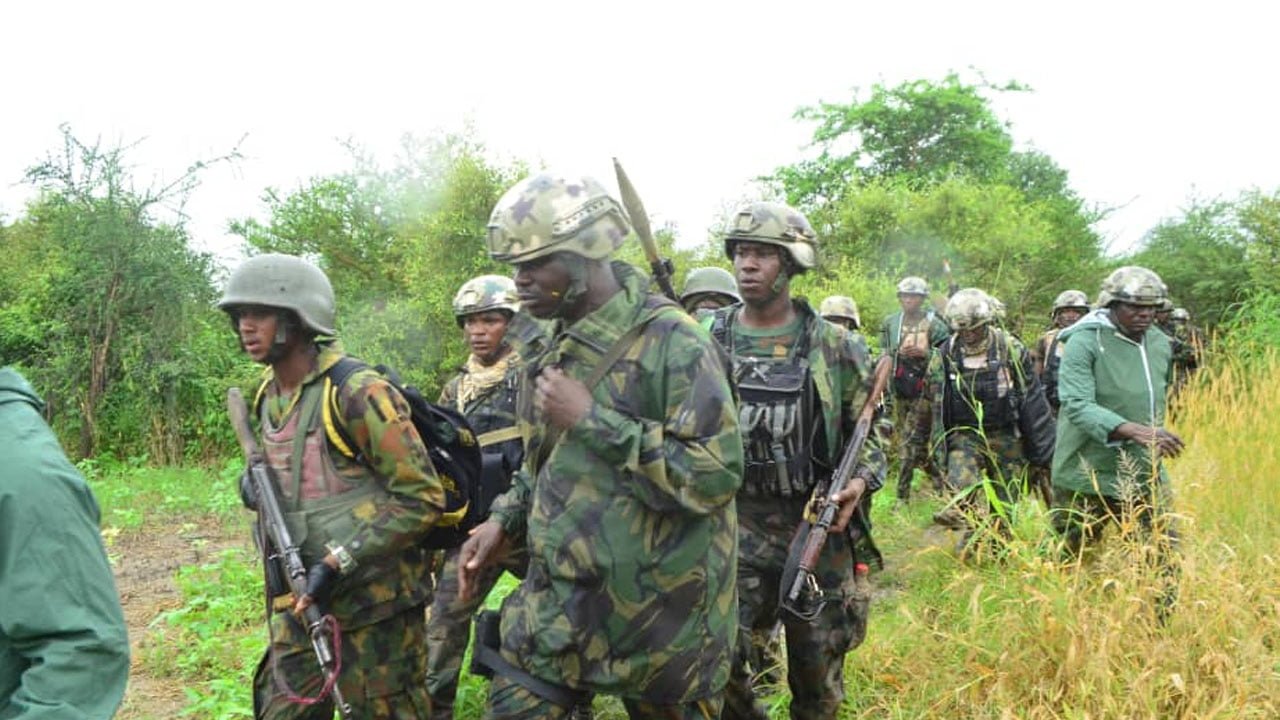
Security forces in Katsina State, Northern Nigeria, have announced the killing of 30 bandits following a counter-operation in Faskari Local Government Area.

The action came in response to attacks launched by the terrorists on three villages within the state on Tuesday.

The bandits had targeted the villages of Kadisau, Raudama, and Sabon Layi.

This prompted a coordinated response involving ground troops from the police and army, supported by the Nigerian Air Force.

The joint operation successfully neutralized 30 terrorists.

However, the engagement resulted in the loss of five security personnel and one civilian.Katsina State Commissioner for Internal Security, Dr. Nasir Mu’azu, confirmed the success.

He stated that security forces, acting on prior intelligence about the bandits’ planned attack, deployed personnel from Dandume and the Nigerian Air Force to intercept the assailants.

“After a prolonged gunfight involving ground and air assets,” Mu’azu said, “the bandits’ attempted attack was successfully repelled.”

Katsina State is located in Nigeria’s troubled North-West region, which has endured persistent bandit attacks leading to significant loss of lives and property.

Still on El-Rufa’i and Yar’Adua

By Saifullahi Attahir

In his article, titled “Yar’adua: Great Expectation, Disappointing Outcome,” Mallam Nasir El-Rufa’i wrote that the late Umaru Musa Yar’adua graduated from ABU in 1975 and did his youth service (NYSC) at Holy Child College in Lagos as a chemistry teacher.

After the service year, Yar’adua took a government job at the College of Arts, Science and Technology (CAST), Zaria, as a chemistry lecturer. He later obtained his MSc in 1978, while continuing his teaching career at the same CAST until 1983, when he joined his brother’s business after the latter resigned from the National Service as second-in-command to General Olusegun Obasanjo during the handover to civilian rule in 1979.

The above narrative can attest to the clear moral right Yar’adua has over Mallam Nasir, despite the latter’s constant attacks. I’m sure that in the years between 1976 and 1983, the late Umaru could have accessed all the privileges a graduate could have as a brother to a senior military officer and son of the establishment. His service year in the grammar school and his continued lecturing job at CAST Zaria can testify to a great deal about the individual Yar’adua, his brother Shehu, and the regime.

As a young and well-connected chemistry graduate, Umaru Yar’adua could have access to serve in the newly established NNPC, top agricultural firms, top Lagos banks, or even become a legislative aide in the green or red chamber.

Securing a job through connections is a common and sometimes effective method. Networking, which involves leveraging personal and professional relationships, can significantly increase your chances of finding a job. Indeed, many talented and industrious individuals can be harnessed through this process, although it may be perceived as nepotistic. Hadiza Bala Usman got her start at BPE by El Rufa’i through a similar path.

Of course, time has changed; it’s now normal that specific places, such as CBN, FIRS, NPA, BPE, top private firms, and Federal MDAs, are not accessible to ordinary corps members. We can still recall a time when a brother of Nigeria’s second-in-command opted to attend a grammar school and later took a teaching job at a college in Zaria. But still, that doesn’t prevent him from becoming Nigeria’s president.

While the 5th May remembrance has been immortalised in the hearts of Nigerians despite Yar’adua’s short stint as president, Mallam El-Rufa’i was still battling and settling past scores and fights.

Saifullahi Attahir wrote from Federal University Dutse via saifullahiattahir93@gmail.com 

Bandit kingpins surrender arms, release kidnapped victims in Katsina

By Abdullahi Mukhtar Algasgaini  

In a significant development, several notorious bandit leaders in Dan Musa Local Government Area (LGA) of Katsina State have surrendered their weapons and released kidnapped victims as part of a disarmament initiative.  

The operation, led by Operation Fasan Yamma in collaboration with stakeholders, saw the voluntary surrender of key terrorist kingpins, including Kamulu Buzaru, Manore, Nagwaggo, Lalbi, Alhaji Sani, Dogo Baidu, Dogo Nahalle, and Abdulkadir Black. The suspects renounced banditry and pledged to embrace peace.  

As a goodwill gesture, the group freed 16 kidnapped victims—seven women and nine children and promised to release the remaining captives by today, June 15, 2025. The freed individuals have been handed over to local authorities.  

Security forces have secured the surrendered arms and maintained a strong presence in the area to ensure stability. The situation remains calm, with continuous monitoring to sustain peace in the region.

Al-Qalam University secures full accreditation for 13 programmes

By Muhammad Abubakar

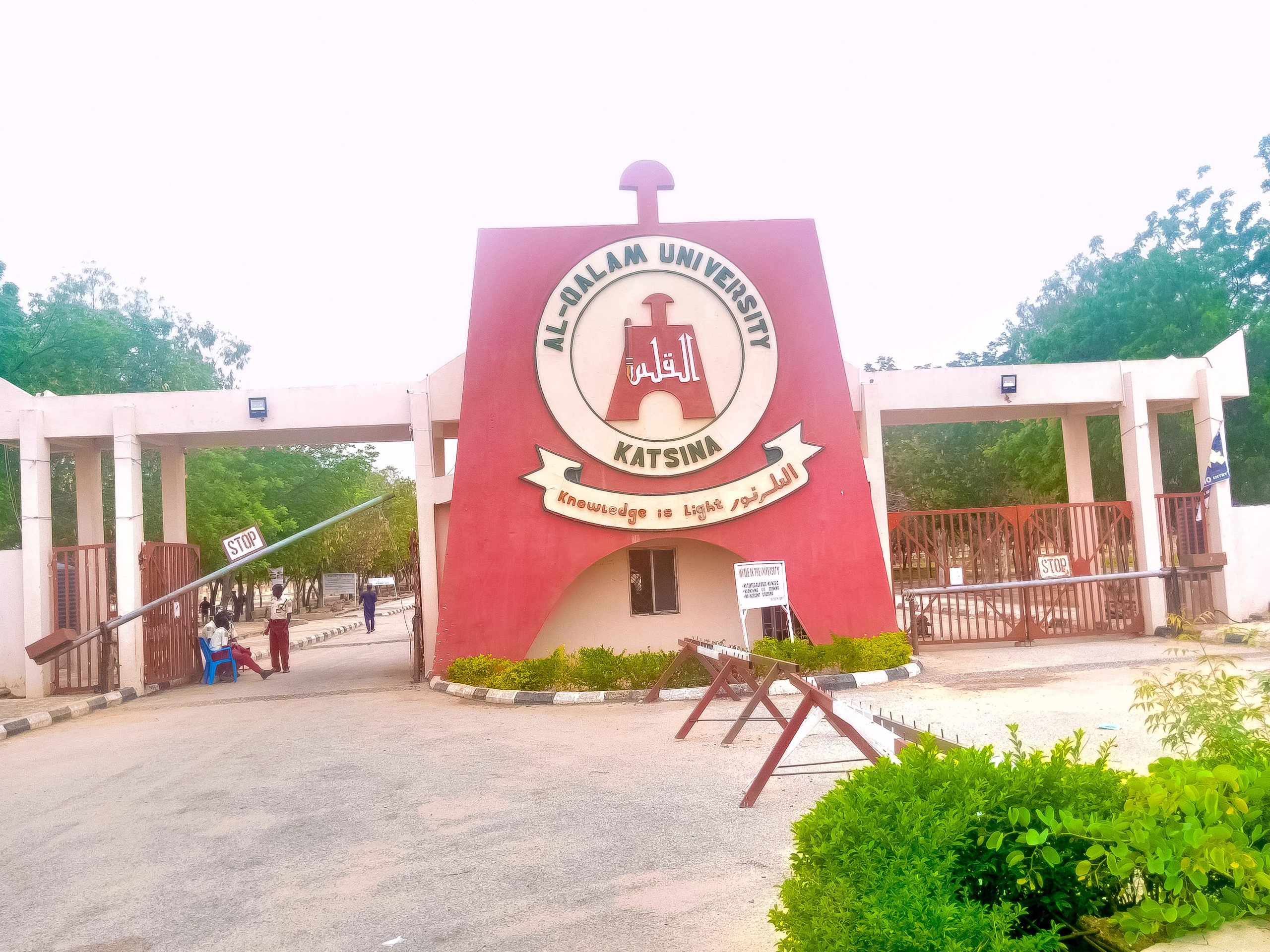
Al-Qalam University Katsina has announced that thirteen of its academic programmes have received full accreditation status from the National Universities Commission (NUC), following a visitation in November 2024.

The accredited programmes span the Colleges of Humanities, Education, and Natural and Applied Sciences. 

According to a report released by the NUC, this development means that all degree programmes offered by the university now enjoy full accreditation.

The university expressed gratitude to the Katsina Islamic Foundation—its founders—as well as its Chancellor, Malam Aminu Alhassan Dantata, and members of the Board of Trustees and Governing Council for their support. 

The statement also appreciated the contributions of staff, students, and parents in achieving this milestone.

“This achievement reflects our collective dedication and the growing confidence in our institution,” the management said.

Buhari loyalists reaffirm support for Tinubu, pledge to remain in APC

By Uzair Adam 

Amid speculations of discontent within the ruling All Progressives Congress (APC), key loyalists of former President Muhammadu Buhari have reaffirmed their support for President Bola Tinubu and pledged to remain in the party.

The group, operating under the Forum of the defunct Congress for Progressive Change (CPC), made the declaration in Abuja on Thursday, countering reports that some Buhari allies were planning to exit the APC.

Those present at the meeting included Katsina State Governor Dikko Radda, Niger State Governor Umar Bago’s representative, former Nasarawa State Governor Senator Tanko Al-Makura, former Katsina State Governor Aminu Bello Masari, and Chairman of the National Drug Law Enforcement Agency (NDLEA), Gen. Buba Marwa (retd).

Other notable figures in attendance were former Voice of Nigeria Director General Osita Okechukwu, former presidential aide Okoi Obono Obla, former APC National Secretary Waziri Bulama, ex-lawmaker Farouk Adamu, a representative of Speaker Tajudeen Abbas, and Foreign Affairs Minister Maitama Tuggar.

The forum emphasised that although individuals are free to pursue personal political interests, they should not do so under the guise of representing former CPC members.

Responding to whether the bloc would support Tinubu beyond the current administration, Hon. Farouk Adamu expressed confidence, saying, “We are with Tinubu just like our leader (Buhari), and it is our hope that Tinubu continues to remain our leader.”

About the Katsina lavish wedding

By Prof. Abdussamad Umar Jibia

Some years ago, a group of students from Kaduna state came to my office, lamenting how Muslim elders imposed a Christian candidate on them and rigged him into power. They even told how an Emir and some elders called Islamic scholars and warned them against remonstration in their preachings. “How can we bear this disgrace?” my students were frustrated.

I said, “You can solve the problem and make governance difficult for the imposed Governor”. The young people paid attention, expecting an “academic” solution to their problem. “The Governor cannot rule Kaduna state alone. Since the majority are against him, why not look for and beat up anyone who accepts his political appointment?” I offered.

My students looked at one another and said, “Sir, there will be chaos and mass arrest”. Poor them, they want to bring change, are not happy with what is happening, and are afraid of arrest. “The alternative is to support the unpopular Governor and struggle for your share of the haram”, I finalised the discussion.

In the case of my Kaduna state students, the problem was election rigging, even though there was relative peace in their state, at least up to that time. In the case of Katsina people, it has been killing, kidnapping, rape, stealing, etc. How have the people reacted to the politicians they elected to solve the problem of insecurity? 

Several people have asked why they no longer see my comments on insecurity, and I always reply that I am busy with other things. I am busy, but not too busy to write a few paragraphs to express my opinion. However, it reached a point where I began to ask, as far as insecurity is concerned, who is the culprit? Whom should I write to blame? The Government? The military? The masses?

Going by the advice I gave Kaduna youth, one would expect that no elected politician would have the guts to go to any community ravaged by insecurity in Katsina or nearby states. Unfortunately, that is not the case. I saw people who lost some of their closest relatives to banditry staunchly supporting a politician, whose actions mean that their losses do not matter. Bandits displaced a community, but I saw their youth on social media actively supporting politicians who were giving public money to bandits in the name of the peace agreement.

If you are actively fighting for those victims through writing or interviews, and you offend any politician, you should be ready to get a good beating from some of the banditry victims if that is what would please the politician.

So, whom should I blame? Do the people take no blame? What of the military? Should I write to blame the masses as weak as they are? Should I write to condemn the military as strongly as they are? Should I not be afraid of arrest like my Kaduna students? If I offend the military, and you must surely offend them if you will tell the truth about insecurity, who would bail me out when I am arrested and tagged a troublemaker or any name they decide to give me?

The cheapest people to blame are the politicians. Everybody is against them. Public money is in their hands, and they are spending it on weddings and musicians, just like we witnessed in Katsina. But are all the people criticising them sincere? Would they not do the same if they were in their position? Some of these things were the reason Nigerians voted PDP out ten years ago, and the “saints” they elected are doing the same.

If you are expecting me to continue directing my blame to politicians, you will be disappointed. While they have their fair share of the blame for insecurity, we also have our share as victims. 

The masses should take my advice to the Kaduna youth if they can. They can only beat the politicians or join them. For the politicians, I have no words. Only the masses can deal with them if they take the first side of my advice. For me, I shall keep mum about the military because I am a coward.

For other Nigerians, continue to enjoy yourselves before insecurity reaches your side. I pray it will not.

Prof Abdussamad Umar Jibia wrote via aujibia@gmail.com.

President Tinubu vows to crush terrorism, boosts military welfare 

By Abdullahi Mukhtar Algasgaini

President Bola Ahmed Tinubu has issued a strong charge to the Nigerian military, urging them to intensify efforts in ending terrorism and banditry while promising improved welfare for troops.  

Speaking to soldiers of the 17 Brigade in Katsina on Friday, Tinubu described the security crisis as a pivotal moment in Nigeria’s history. He called for unwavering resolve in defending the nation’s sovereignty and restoring peace.  

“This is a defining moment,” Tinubu declared. “Nigerians are counting on you to reclaim every inch of our territory. Let the enemies of Nigeria know—their time is up.”  

The President assured troops of better housing, healthcare, timely allowances, and family support. He praised their bravery in combating banditry in Katsina and beyond, stating, “You are the shields of Nigeria, standing between our people and terror.”  

Tinubu’s visit included inaugurating a 24km dual-carriage road and an agricultural mechanisation centre. His message was clear: Nigeria will not surrender to terrorists, and the military will receive full backing to end insecurity.  

“To those who seek to destabilise us,” he warned, “Nigeria will not bow.”

Bandits demand N30 million ransom for Katsina Qur’an recitation champion, family

By Uzair Adam 

The Katsina State Government has confirmed that the winner of the National Qur’anic Recitation Competition, Abdulsalam Rabiu-Faskari, along with his father and brother, remains in the custody of their abductors.  

In a statement issued on Friday, the state’s Commissioner for Information and Culture, Dr. Bala Salisu-Zango, clarified that contrary to some media reports, the victims were still alive.  

Rabiu-Faskari, an ABU final-year medical student, was kidnapped alongside his father and brother two days ago while returning to Faskari from Katsina, shortly after being honored by Governor Dikko Radda for his outstanding performance in the competition held in Kebbi.  

The commissioner noted that Rabiu-Faskari was set to represent Nigeria at the upcoming international edition of the competition.  

“The government has been made aware of reports suggesting that the young scholar was killed by his abductors. However, the latest information reaching us confirms that he and his family members are alive and in captivity,” Salisu-Zango stated.  

He further revealed that the kidnappers were demanding N30 million for their release.  

Governor Radda condemned the abduction, describing it as unfortunate and assuring that efforts were underway to secure the victims’ safe return.  

“My heart is with the victims, their family, relatives, and friends. We pray for their safe release. The government is taking concrete steps to ensure their rescue,” Radda said.  

He urged security agencies to intensify efforts in tracking down the kidnappers while reaffirming his administration’s commitment to addressing the security challenges in the state.  

The governor also called on the public to offer prayers for the safety of Rabiu-Faskari and other abductees.

Husband, wife arraigned for ₦197m fraud, impersonating Katsina First Lady

By Hadiza Abdulkadir

The Economic and Financial Crimes Commission (EFCC) has arraigned a couple, Baba Sule Abubakar Sadiq and Hafsat Kabir Lawal, along with two others, Abdullahi Bala and Ladani Akindele, for allegedly defrauding victims of ₦197,750,000 by impersonating the Katsina First Lady, Fatima Dikko Radda. They were charged before Justice Amina Bello of the Kaduna State High Court on March 10, 2025, for obtaining money by false pretense, money laundering, and stealing.

The EFCC alleged that Hafsat posed as the Katsina First Lady to deceive victims into a fake currency exchange deal. She and her accomplices allegedly obtained ₦89 million from a victim under the pretense of exchanging it for $53,300, with the funds deposited into Abdullahi Bala’s account. Investigations further revealed that her husband, Sadiq, provided her with SIM cards registered under the name “Fatima Dikko Radda” on Truecaller to aid the scheme.

All defendants pleaded not guilty. The EFCC’s counsel, Bright C. Ogbonna, opposed their bail applications, arguing they were not yet ready for hearing. Justice Bello ordered their remand in a correctional facility and adjourned the case to March 17, 2025, for the hearing of bail applications.

The EFCC stated that Hafsat fraudulently collected a total of ₦197.75 million from a bureau de change operator, claiming to have $118,300 to sell. The funds were allegedly laundered through various means. The case continues as the EFCC pushes for justice.