Kano

Kano strengthens HIV response with over N2bn despite donor exit

By Uzair Adam

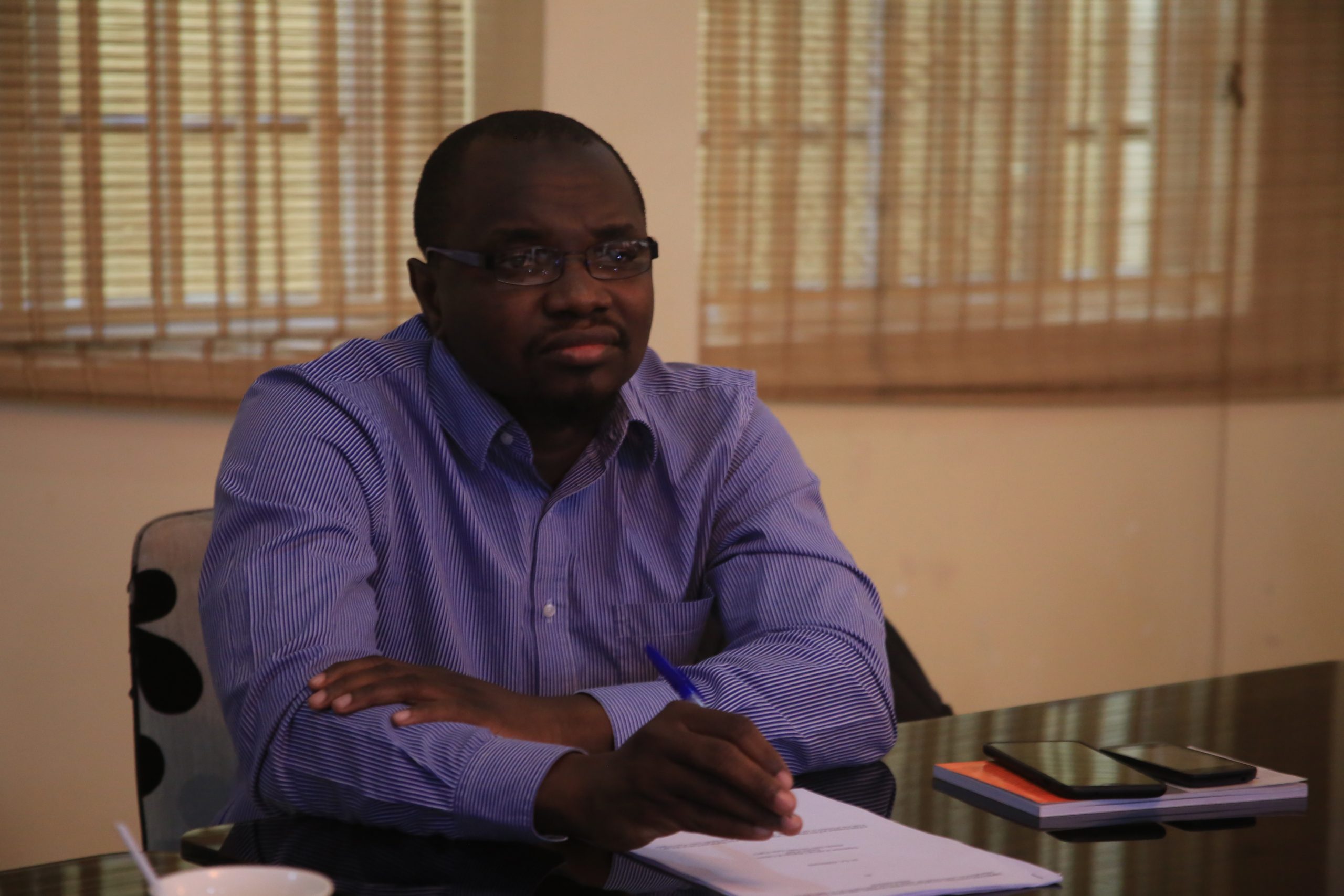
Kano State has developed a sustainable framework to boost its HIV response despite the withdrawal of global donor funding, the state government has disclosed.

This was revealed in a statement issued by the Public Relations Officer of the Kano State Agency for the Control of AIDS (KSACA), Sa’adatu Suleiman, on Wednesday.

According to the statement, the Director General of KSACA, Dr. Usman Bashir, presented the state’s progress and strategies during a briefing with the Commissioner of Health, Dr. Abubakar Labaran Yusuf, heads of government agencies, and key partners.

The statement explained that while several states experienced disruptions in HIV services following global policy shifts, particularly under the Trump administration in the United States, Kano remained resilient through proactive planning, strong political will, and consistent government support.

It added that Governor Abba Kabir Yusuf backed the HIV response with a dedicated budget of N2 billion, with nearly half of the funds already released to ensure test kits, drugs, consumables, and improved data systems remain available.

“The government’s commitment has ensured that the agency is now stronger, functional, and working hand-in-hand with sister agencies to prevent service interruptions,” the statement quoted Dr. Bashir as saying.

The statement further noted that the Commissioner of Health, Dr. Abubakar Labaran Yusuf, reaffirmed the government’s commitment to sustaining HIV services.

It stressed that KSACA continues to collaborate with agencies including the Hospital Management Board, Kano State Primary Health Care Management Board, KHETFUND, KSCHMA, KNCDC, and PHIMA.

It added that the presentation was not only a review of progress but also an opportunity to identify challenges and chart new strategies to sustain and strengthen HIV services in the state.

History Makers: Kano siblings graduate with first-class degrees from different universities, with identical CGPAs, in same year

By Uzair Adam 

Two siblings from Rimin Gado Local Government Area of Kano have achieved an exceptional milestone after graduating with first-class degrees in Computer Science from different universities in the same year.

Sulaiman and Maryam Salisu, younger brothers and sisters of a prominent BBC journalist, Aisha Salisu Babangida, both achieved identical Cumulative Grade Point Averages (CGPA) of 4.51 in 2025. 

While Sulaiman studied at Al-Istiqama University in Sumaila, Kano, Maryam attended the Federal University of Dutsin-Ma in Katsina State.

Speaking with The Daily Reality on Wednesday, Sulaiman said his achievement was not just personal but a fulfilment of his late father’s dream.

He stated, “When I saw my final result, I was surprised. I was thrilled because I had fulfilled my father’s dream. He always told me I could do it and reminded me how important it was.”

He explained that his first semester result placed him in the first-class category, which brought joy to his father. But when his performance later dropped, his father sat him down and encouraged him to refocus. “That conversation changed everything,” he recalled.

Sulaiman also spoke about the sacrifices his parents made during his studies, narrating how his mother once sold her goat to send him money for food after he ran out of supplies.

“I only discovered what happened when I returned home during the semester break. I felt like crying when I realised the sacrifice. It motivated me to work harder because I knew my parents were giving their all for me,” he said.

As a member of the pioneer graduating set at Al-Istiqama University, Sulaiman said having no seniors to look up to pushed him to put in his best and even guide his peers.

Similarly, his sister, Maryam, graduated with the same CGPA of 4.51 from the Federal University, Dutsin-Ma. She described her success as a dream she had nurtured for years.

She stated, “I cannot describe the joy I feel. Completing my studies with such a result is something I had prayed and worked for. This achievement is not mine alone; it belongs to my family and to Nigeria as a whole.”

Maryam recalled that she nearly lost focus after the death of their father while she was about to begin her final year, but the support she received from her family, teachers, and friends helped her persevere.

She said her ambition is to pursue advanced studies in Computer Science, with a focus on software development and Artificial Intelligence. 

She stated, “I want to use the knowledge I have gained to bring positive change to society, especially in Nigeria and Africa. 

“I also hope to inspire women and young people to believe that with determination and faith, they can achieve their dreams,” she added.

Both Sulaiman and Maryam expressed gratitude to their family, teachers, and friends, praying for Allah’s reward for their late father and their mother, whose sacrifices they said played a vital role in their success.

Kano police arrest 107 suspects, recover weapons in new operation

By Uzair Adam

The Kano State Police Command has rolled out a fresh security initiative tagged “Operation Kukan Kura” to strengthen community policing and intensify the fight against crime using both kinetic and non-kinetic strategies.

The Commissioner of Police, Ibrahim Adamu Bakori, disclosed this during a press briefing on Monday, noting that the operation aligns with the directive of the Inspector General of Police, Kayode Egbetokun, to entrench community-centered policing.

He explained that the initiative is designed to boost public participation and encourage collaboration with security agencies, stressing the crucial role of residents as the “eyes and ears of the Police” across the state.

He recalled that similar strategies had earlier produced positive outcomes, particularly in tackling thuggery, locally called Fadan Daba.

Bakori also highlighted the Command’s recent breakthroughs, revealing that 107 suspects were apprehended in August for offences such as armed robbery, kidnapping, human trafficking, drug trafficking, and theft.

Items recovered during the operations include an AK-47 rifle, seven fabricated guns, 11 live rounds of ammunition, motor vehicles, motorcycles, cows, cutlasses, knives, and large quantities of illicit drugs.

He added that in 2025 alone, the Command had recovered hundreds of weapons and significant quantities of narcotics.

While commending officers for their resilience, he pointed out that the adoption of digital tools and technological innovations had further enhanced police operations.

The Commissioner assured that the Command would continue to adopt fresh strategies to outpace criminal elements and sustain peace in the state.

He expressed appreciation to residents and the media for their vigilance and support.

“The willingness of our people to share information has greatly enhanced our operations and strengthened our capacity to safeguard the state,” he said.

Bakori urged the public to promptly report crimes or suspicious activities to the nearest police station or through the Command’s emergency hotlines.

Ban on commercial motorcycles at BUK sparks outcry from students, business owners

By Kabiru Abdullahi Muhammad

The recent decision by the management of Bayero University, Kano (BUK), that bans commercial motorcycle operators (okada riders) from operating within the university community has triggered widespread outcry from both students and business owners.

For decades, motorcycles have been a lifeline for transportation and commerce in the university environment.

But since the ban, traders in the popular Coke Village market say their businesses have suffered unprecedented losses.

Malam Tasiu Hamisu, a foodstuff dealer who has operated in Coke Village for over 30 years, described the impact as devastating.

“I have never experienced such a huge downfall in my business until now when the school management stopped the bike men from working,” he lamented.

There were about 400 motorcycle riders in the university, with roughly 100 operating daily. Many of them were among my most reliable customers.

“Some bought foodstuffs worth ₦3,000 every day, while others bought occasionally. Now that they are gone, my business has been seriously affected. The only time we used to lose customers was during school holidays, but this is worse,” he added.

He also noted that students who previously sent riders to purchase goods on their behalf no longer have that option.

Malam Aliyu Sulaiman Ibrahim, another trader who sells palm oil, groundnut oil, and other household essentials, echoed the same concern.

“This issue has really affected me, and I have lost a lot of customers,” he said.

Similarly, Malam Umar, who operates a café, narrated how the ban has disrupted his daily routine.

“Sometimes when fuel finishes in the middle of work, I used to send a bike man to quickly get petrol. But now I can’t, and students won’t wait for me to go myself because there are many other shops they can turn to. This affects me badly,” he explained.

Students Struggle with Transport

Students are also struggling with the issue. The management introduced on-campus tricycles (adaidaita sahu) as an alternative, but there are only five to six tricycles available to serve thousands of students.

Every morning, long queues form at the university gate, with many students forced to trek long distances to their faculties.

Zainab Lawan, a student from the Faculty of Agriculture, shared her frustration.

“I nearly missed a test because I was waiting for a tricycle. In the end, I had to trek all the way from the gate to my faculty. It is really stressful, especially when you are in a hurry to attend lectures,” she said.

Both students and business owners said that the ban has created more hardship than solutions.

As Malam Tasiu put it: “The university is not just about classrooms; it is also a community. We all depend on one another to survive.”

Kano under siege: Battling the menace of thuggery, phone snatching

By Suleiman Musa Yahaya Ikara

The scourge of thuggery and phone snatching in Kano State has escalated into a grave crisis, endangering students and residents alike.

Just weeks ago, a Bayero University, Kano (BUK) student fell victim during a routine trip to Dorayi.

The incident added to growing insecurity, leaving residents anxious about their safety and wellbeing, particularly in the metropolis.

The BUK community is still mourning the gruesome killing of a 300-level student, Umar Abdullahi Hafiz, by suspected phone snatchers near his off-campus residence in Dorayi.

His death underscores the brutality of the menace.From Danbare to Kofar Kabuga, Kofar Mata, Zoo Road, Sheka, Dorayi, Rijiyar Lemo, Kurna, and Gwagwarwa, violent attacks have become daily occurrences.

Street ambushes, stabbings, daylight robberies, and mobs armed with axes, stones, and knives have turned once-busy neighborhoods into zones of fear.

The perpetrators, commonly called fadan daba, have shaken public confidence in urban safety.

Media platforms are awash with disturbing videos and images capturing these attacks.

A source from Bayero University, kano said “The incident was so devastating and heartbreaking. As a girl from far away who chose to study in Kano, I ended up being robbed. It makes me feel discouraged.”

Confirming the university’s concern, Director of Public Affairs, Lamara Garba, said investigations and a manhunt were underway in collaboration with security agencies.

Similarly, the immediate past Vice-Chancellor, Prof. Sagir Adamu Abbas, condemned the killing and pledged to work closely with law enforcement to ensure justice.Despite these assurances, the violence persists.

Deep-rooted gang networks quickly replace arrested members, exposing the limits of enforcement alone.

Outrage across Kano has grown as the climate of insecurity signals that no one is truly safe.

The Law and the Crime

Legal experts remind citizens of their rights and the penalties awaiting offenders. Barrister Ibrahim Bako explained: “Section 43 of the Nigerian Constitution guarantees citizens the right to own property. Sections 286 and 287 of the Penal Code define theft and prescribe up to 10 years imprisonment for offenders.”

He added that phone snatchers could be charged with multiple offences, including theft, robbery, extortion, and criminal conspiracy

Root Causes: Drugs and Idleness

The NDLEA has linked the rise of thuggery and phone snatching to drug abuse among youths. In 2024, the Kano Command arrested over 1,345 suspects, seized 8.4 million kilograms of illicit substances, and secured 128 convictions.

Initiatives such as Operation Hana Maye continue to dismantle drug joints and rehabilitate addicts, but the challenge persists.

Searching for SolutionsGovernor Abba Kabir Yusuf has pledged decisive action against sponsors of youth gangs, alongside empowerment and job creation programs.

Yet, many argue that this is not enough. Community leaders stress the role of parents, traditional rulers, and residents in guiding young people away from crime.

Zayyana Abdullahi, a community leader stated that “Strengthening community policing, empowering neighborhood vigilantes, improving surveillance, and building trust between residents and law enforcement are critical for restoring safety.”

A Call for Collective ActionThe Kano Police Command, led by SP Abdullahi Haruna Kiyawa, acknowledges the worsening situation and has intensified operations.

Still, durable peace will require more than arrests, it demands holistic action.enforcing the law, tackling drug abuse, empowering youths with skills and jobs, and rebuilding community trust.

The coordinated efforts of government, law enforcement, religious bodies, and civil society must go hand in hand.

Kano’s battle against thuggery and phone snatching is not just a fight against crime,it is a fight for the soul of the city.

Panic in Kano communities as two children murdered in separate incidents

By Anas Abbas

Fear has enveloped residents of Zango Biyu in Rimin Gado Local Government Area of Kano State following the gruesome killing of two children in separate incidents over the weekend.

The daily post gathered that the first victim, five-year-old Muhammad Gambo, was found dead on Sunday morning.

Eyewitnesses said his mother had sent him to a nearby shop to buy powder worth ₦50, but the shopkeeper turned him away because the money was insufficient.

Instead of returning home, Muhammad reportedly set out for his grandparents’ house but was ambushed on the way.

A community member, Laminu Ahmad, described the shocking discovery.

“His mother sent him to buy powder, but the shopkeeper rejected the money. On his way to his grandparents’ house, some wicked people stopped him and slaughtered him like a ram,” Ahmad said.

He added that many residents suspect the killing was ritual-related.

“We suspect ritualists because there was no blood on the ground. They must have collected it in a bowl and even cleaned the knife before fleeing,” he lamented.

While the community was still mourning Muhammad, tragedy struck again.

A 13-year-old girl, Fatima Sule, was found dead in her family’s residence at Dandinshe Quarters, Dala Local Government Area.

Witnesses said she was strangled, her neck broken, and her body hanged on a window.

Her distraught mother told reporters that she had left her children at home and asked them to join their elder sister later.

“Before I returned, I received a call that Fatima had been killed,” she said in tears.

The back-to-back killings, which occurred between Saturday and Sunday, have left residents in shock and fear, as such incidents are unprecedented in the area.

The Kano State Police Command reportedly allowed the immediate burial of the victims after preliminary investigations.

Security operatives have since launched a manhunt for the culprits.

Efforts to reach the command’s spokesperson, SP Abdullahi Haruna Kiyawa, were unsuccessful, as his phone was switched off at the time of filing this report.

NDLEA arrests drug kingpin at Kano airport, moves to free Nigerians detained in Saudi Arabia

By Uzair Adam

The National Drug Law Enforcement Agency (NDLEA) has arrested a 55-year-old drug kingpin, Mohammed Ali Abubakar, popularly known as Bello Karama, along with five members of his syndicate operating at the Mallam Aminu Kano International Airport (MAKIA), Kano.

The arrest followed investigations that linked the group to the shipment of illicit substances that led to the detention of three unsuspecting Nigerian pilgrims in Saudi Arabia on drug trafficking allegations.

The Agency disclosed this at a press briefing in Abuja on Monday, addressed by its Director of Media and Advocacy, Femi Babafemi, alongside Dr. Abdul Ibrahim, Director of Assets and Financial Investigation, and Theresa Asuquo, Director of Prosecution and Legal Services.

NDLEA explained that the development came after its Chairman, Brig Gen Mohamed Buba Marwa (Rtd), received complaints from three families whose relatives—Mrs. Maryam Hussain Abdullahi, Mrs. Abdullahi Bahijja Aminu, and Mr. Abdulhamid Saddiq—were detained in Jeddah following their lesser hajj pilgrimage.

The detainees were accused of trafficking drugs after being linked to six additional bags not belonging to them, three of which contained illicit substances.

Investigations traced the bags to the syndicate led by Abubakar, who checked them into an Ethiopian Airline flight ET940 on August 6, 2025, the same flight boarded by the three innocent pilgrims.

Members of the group, including staff of Skyway Aviation Handling Company, were said to have illegally tagged the bags against the names of the pilgrims without their knowledge.

Six suspects are currently in NDLEA custody, with four already charged to court. Confessional statements revealed that the bags were checked in for monetary rewards, with transfers of N200,000 linked to the operation.

The NDLEA said it has initiated discussions with Saudi Arabia’s General Directorate of Narcotics Control (GDNC) to secure the release of the detained Nigerians.

Marwa is also expected to personally meet with Saudi authorities during an international drug conference to press for their exoneration.

The Agency assured that while it remains committed to fighting drug trafficking, it will not allow innocent Nigerians to suffer for crimes they did not commit.

Tribute to Malam Mu’azu Muhammad Yusif

By Ibrahim Lawal Ahmed

On September 9th, 2023, friends, colleagues and students of Malam Mu’azu Muhammad Yusif, more popularly called M.M. Yusif, gathered to honour and celebrate his long academic service at the Centre for Information Technology and Development (CITAD), Kano, by remembering the old days and reflecting on the transformation the academia has been going through in Nigeria. Malam M.M. Yusif recently retired from the Department of Political Science, Bayero University, Kano, and the occasion was a kind of send-off party.

It was indeed a robust discussion that involved personalities such as Mal. Ibrahim Mu’azzam, Dr. Y.Z. Ya’u, Dr. Nasir Fagge, Prof. Ibrahim Bello-Kano (IBK), among others. As expected, the debate spiralled from eulogising the celebrant to discussion on the character of students and teachers in the universities in Nigeria, the current system of running the university, the struggles of and in the Academic Staff Union of Universities (ASUU), and the neoliberal world order and its effects in Nigeria, particularly on the universities. 

In short, the discussion is a dialectical cross-examination of factors within the university and how their interrelationship is influencing the university education in Nigeria; the relationship between the university and the society (town and gown relationship); and the relationship between the university and the state. The relationship between the university and the state is at the centre of the ASUU issue.

University has been the life of Malam, and as one of the longest-serving chairmen of ASUU, BUK Chapter, ASUU is a union very close to Malam. Therefore, I can imagine his feelings as he witnesses and reflects on the last two battles between ASUU and the government (2020 and 2022) that almost destroyed the public universities in Nigeria. The fundamental issue of ASUU-FGN conflict, in my view, is not the non-payment of allowances but the reductionist approach to governance by the government, which entails decreasing concern for the institutions that provide welfare to the people and total neglect of the idea of ‘public good.’ The result is the systematic collapse of the social contract (and compact) and rising political cleavages, a pre-bendel form of primitive accumulation and rentierism (or sycophancy) which results in the concentration of wealth in the hands of a few. 

Consequently, as the rich get richer and the poor get poorer in Nigeria, commodity fetishism becomes the defining feature of the social relations in Nigeria. In other words, money is now the moral compass in Nigeria. The needs and wants of the average Nigerian are reduced to his stomach – you have to eat for you to think, for when you speak to a hungry man, he answers you with his stomach – as such, ASUU is faced with an enormous challenge of mobilising the society to back its course on its battles with the state. 

Moreover, people are tired of the classical tactics of strikes always taken by ASUU, which, in the last two years, have hurt the university education system more than they have salvaged it. Thus, one key takeaway from the gathering is that ASUU needs to reinvent itself. While remaining steadfast to its goals that are of public interest, it has to change tactics.

Similarly, government at all levels has to pay more attention to the educational sector. To improve education, efforts should focus more on qualitative development rather than the current quantitative development, which prioritises establishing tertiary institutions in remote areas primarily due to trivial political reasons. This is not right. Situating schools and tertiary institutions has to take comprehensive cognisance of the environment. The questions such as how the town will support the gown at its embryonic stage and how the gown will support the city at maturity have to be asked. Answering these kinds of questions requires a comprehensive analysis of the infrastructure (both hard and soft), human and physical factors in the environment where the school or tertiary institution is to be situated. The late Sir Ahmadu Bello set a notable example in establishing Ahmadu Bello University in Zaria. He could have stayed in Sokoto or Maiduguri. However, considering several factors, Zaria is strategically better suited to host the university. Such was a good leader who has vision that transcends personal and primordial interest.

Indeed, the issue of education in Nigeria cannot be left to the government alone. It is a social issue; therefore, it requires an All-of-Society-Approach – from parents, to community leaders, traditional rulers, commercial and industrial enterprises, all have to be involved, especially regarding financing the education. The policy of student loans will not work because the socioeconomic condition of Nigeria is not prosperous enough to favour such a policy. In fact, in some advanced countries, the policy is problematic and an obstacle to social mobility, thereby facing harsh criticisms. The students need grants, not loans. And the wealthy Nigerians have to be philanthropic towards our educational institutions, especially the tertiary institutions. There is no more rewarding investment than investment in education,though it takes time to ripen. There is no better way to empower the youth in Nigeria than through education. The proper education enhances the ability of citizens to think. And unless one can think and understand the complexity of the present world, one can not address one’s personal problems, let alone those of society.

The courses taught by Malam M.M. Yusif aim to help students understand this complex world by interrogating the institutions that hold it up. To teach such courses requires a special personality. Therefore, as his recent student, the gathering was an opportunity for me to know more about my teacher. I listened attentively as his friends and colleagues kept mentioning his academic contribution to social issues that include gender studies, labour studies, and military studies, among many. But one standing quality and lasting legacy of Malam is mentorship. Malam put a lot of his energy into guiding his students. 

He utilised his resources to acquire high-quality materials and provide practical work for his students. He is a teacher who loves questioning and never penalises you for your inability to answer a question. For him, the most important thing is for the students to attempt to answer the question brilliantly. He always has time for his students. 

One day, I visited his office to discuss some concepts I didn’t understand. After explaining the concepts to him, I complained, “Sir, I am confused.” He responded, “Do not worry, Ibrahim. This means you are learning.” It was on that day that I learnt that learning is full of confusion. If you are finding learning easy, then you are probably not learning anything new.

It will take time to fill the gap that Malam M.M. Yusif is leaving in the academia, particularly in the Department of Political Science at Bayero University. I am glad and proud that he has had an accomplished academic career. We, his students, cherish the memory and are thankful for the way he has taught and mentored us. May it please Allah that Malam has a peaceful and happy retired life.

Beyond “scandals”: Subtle war against Kwankwasiyya administration?

By Nuraddeen Nasir

In recent weeks, Kano State’s political atmosphere has been unsettled by a series of corruption allegations targeting senior government officials. From the resignation of the former Commissioner of Transportation, Honourable Ibrahim Namadi Dala, over a bail scandal to the latest accusations linking another top official to the diversion of public funds, the narrative has been one of scandal after scandal, amplified across select media platforms.

While accountability remains a cornerstone of good governance, it is important to ask a deeper question: Are these allegations isolated incidents, or do they point to a calculated effort to discredit the present administration?

A closer look reveals a pattern. Each controversy is picked up, amplified, and sensationalized in ways that extend beyond normal journalistic inquiry. The timing and intensity suggest more than coincidence; it hints at a broader political strategy designed to erode public trust in the governor’s leadership.

By targeting appointees one after another, the opposition may be seeking to create a perception that the administration is engulfed in corruption, regardless of the facts.

The real danger lies not only in the allegations themselves, but in how the administration reacts to them. Governor ABBA KABIR YUSUF has earned a reputation for his swift responses to public concerns. While such responsiveness is commendable, it can also be exploited. Reactionary decisions, especially dismissals or quick condemnations, may serve short-term public applause but risk long-term instability. They can embolden political opponents, who thrive on portraying the government as fragile and divided.

What is needed now is a balance: firm commitment to accountability, but guided by due process rather than media pressure. Investigations into any such incidents must be thorough, transparent, and credible, not dictated by headlines or political intrigue. At the same time, the administration must recognize that governance is not only about policies, but also about narratives. A robust communication strategy is essential, one that highlights achievements, places allegations in context, and exposes the political motives behind orchestrated attacks.

Kano State stands at a critical juncture. The battle is not merely about individual scandals; it is about the credibility of an administration that came to power on the promise of people-centered governance. If unchecked, the systematic discrediting of its officials could weaken the governor’s mandate and distract from his developmental agenda.

The lesson is clear: while corruption must never be condoned, neither should conspiracy be ignored. Seeing the bigger picture is essential. This is more than a string of scandals; it may well be a subtle political war aimed at shaping perceptions ahead of 2027.

Nuraddeen Nasir is a Doctoral candidate from Bayero University, Kano
MD, Data in-use Nigeria LTD

288 suspects nabbed in Kano over alleged by-election violence plot

By Uzair Adam

The Kano State Police Command has confirmed the arrest of 288 people suspected of attempting to trigger violence during the ongoing by-election for the Shanono/Bagwai State Constituency in Kano.

The disclosure was made by the Police Public Relations Officer in the state, SP Abdullahi Haruna Kiyawa, through his verified Facebook account.

He explained that the suspects were arrested with dangerous weapons and are currently under investigation.

According to him, the arrests formed part of a wider operation to forestall any breakdown of law and order throughout the election.