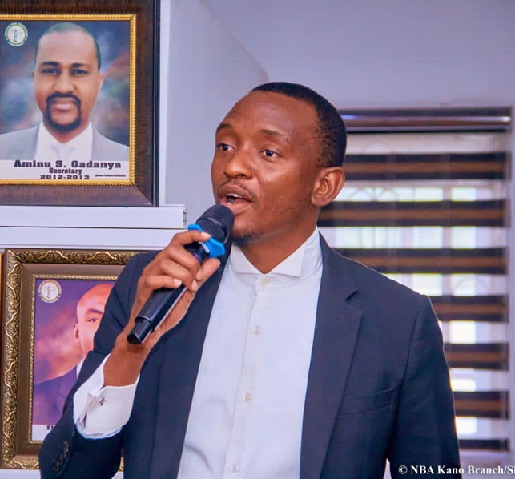
I read an article with the heading above written by one Yakubu Nasiru Khalid, which somewhat tries to demonise activists and freedom fighters venturing into politics. I got heartbroken and dumbfounded at our level of understanding of politics and its roles in our lives and nation-building.
The writer asked a pertinent question: Should a real social fighter be partisan? In this article, I will address just the question.
For clarity, by social fighter, I believe he meant someone who promotes and fights for socially progressive ideas and, where necessary, takes actions that benefit society. This is typical of Abba Hikima’s activism and benevolence in helping less privileged people access justice, voicing out the predicaments of people, the maladministration, and educating the populace about their civic rights and responsibilities. Also, by partisan, I believe he meant partisan politics, where one supports the candidates of one political party over others or decides to contest for office under a certain political party.
To start with, Abba Hikima has not been appointed as a ‘social fighter’ by anyone, nor did he, from my knowledge, ever arrogate to himself that title. It is a result of the work he does in promoting social justice, good governance and progressive ideals that people decided to refer to him as Freedom Fighter, Human Rights Activist, Social Fighter and many more nomenclatures to qualify the person that he is, which left to me are very deserving of him.
However, being a Social Fighter does not in any way exempt a person from participating in the democratic process of his country, which our Constitution generously guarantees and even demands explicitly. Therefore, I believe it is a gross injustice and discrimination to demonise or question anyone from exercising his rights because of his voluntary service to his community and nation, which you coined as ‘social fighting’.
It is also disheartening that we think politics and participation in the political process is an exclusive preserve of the elites or people who have no feelings for social justice and people´s emancipation or people with no impact on society. A serious society should rather have the Social Fighters, the Activists, the Freedom Fighters like Abba Hikima, who are adept at understanding societal problems and proffering people-tailored solutions, than some proletariat who live upstairs and have no touch with the masses to dictate to them whom to vote and even lead them.
For example, Barrack Obama of the United States was a lawyer and community organiser before he ventured into politics. Look how it turned out. Gani Fawehinmi is a Nigerian Human Rights Lawyer and Activist who campaigned for democracy, fought the brutish military regime, defended its victims for over 40 years, and later ventured into politics and contested the presidential election in 1994.
Nelson Mandela, a South African anti-apartheid activist, lawyer and former leader, fought and resisted apartheid in South Africa and was also a politician to become the first black Head of State, among many others. These tell you the place of politics in societal emancipation and social justice.
More so, what Abba Hikima does is more of civic enlightenment to the citizenry on what he firmly believes is right, especially in the face of what seemed like a gang-up to impose characters that have no business in leadership. According to Martin Luther King Jr., “The ultimate tragedy is not the oppression and cruelty by the bad people but the silence by the good people”.
The questions now are: Do you expect Abba Hikima to keep silent in the face of current political oppression in his state? Do you want him to disenfranchise himself because some people think he should not do so when no law or moral code is pointing towards that? Do you want Social fighters to steer clear of politics so thugs and the proletariat can take it over? These are questions worth pondering.
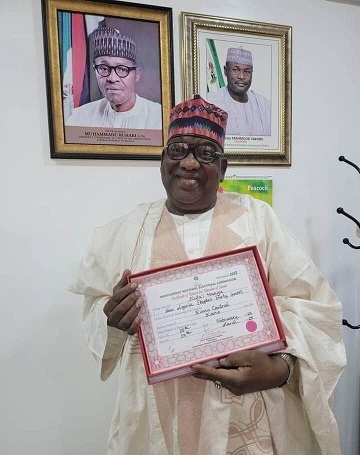
With the Supreme Court judgment affirming Senator Rufai Sani Hanga of the New Nigeria Peoples Party (NNPP) as the Senator-Elect, Kano Central Senatorial District, the people of Kano Central have reason to rejoice.
Kano Central is genuinely abuzz with excitement following the judgment. Senator Hanga challenged the Independent National Electoral Commission’s (INEC) declaration of Malam Ibrahim Shekarau as the winner of the February 25, 2023, senatorial election in Kano Central.
This victory of Senator Hanga is a significant boost for the NNPP. It also demonstrates the importance of pursuing justice through the appropriate legal channels rather than resorting to violence or other unlawful means. This is a win for democracy and the rule of law, a testament to his resilience and determination to fight for his right.
I am delighted that Senator Hanga has been elected to represent Kano Central at the National Assembly. With his experience and dedication to public service, I believe he will be an effective advocate for his constituents and a valuable asset to the Nigerian government.
A graduate of Accountancy, one-time member of the House of Representatives (1992-1993), and senator who represented Kano Central from 2003 to 2007, Hanga chaired several committees. They include Chairman Senate Committee on Drugs, Narcotics and Financial Crimes; Chairman Senate Sub-Committee on Housing and Urban Development; Chairman Sub-Committee on Finance; Vice Chairman, Senate Committee on Tourism and Culture; and Vice Chairman, Senate Committee on Special Duties.
These positions contributed to Senator Hanga’s deep understanding of Nigeria’s political and economic landscape. In addition, he has shown himself to be a skilled negotiator and collaborator, able to work effectively with others to achieve common goals. These qualities will serve him well as he navigates the complex issues facing the Kano people, particularly his constituents.
Senator Hanga has demonstrated a solid commitment to developing his community and the nation. His focus on education, healthcare, and infrastructure has been commendable. I am confident that he will continue to work tirelessly to address these and other critical challenges facing his constituents.
He is a politician with an impressive track record of public service, making him a valuable asset to any government. With years of experience working at various levels of government, Senator Hanga has developed a deep understanding of the political process, the needs of his constituents, and the challenges facing the country. His wealth of experience and expertise will undoubtedly prove invaluable in driving positive change and development initiatives in Kano Central.
Kano Central Senatorial District, located in northern Nigeria with fifteen local government areas, is known for its political and economic importance. It is the metropolitan commercial city of Kano, one of the largest cities in Nigeria.
One of the major reasons Kano Central needs good representation at Nigeria’s National Assembly is to ensure that the interests and needs of its people are adequately represented and addressed at the national level. This is important because the National Assembly is responsible for making laws that affect the entire country. It is also crucial that the laws made are fair and just for all Nigerians, including those in Kano Central. Now, the voices of Kano Central people will be heard, and their needs will be addressed in the national discourse.
Senator Hanga’s representation at the National Assembly should ensure that Kano Central gets its fair share of the national resources. This includes funds for infrastructure development, education, healthcare, and other social amenities. Moreover, with his effective representation, the district will not be left behind in terms of economic development, as policies that promote economic growth and development are made at the national level.
Furthermore, Kano Central is facing several challenges that require urgent attention from the National Assembly. These challenges include insecurity, unemployment, poverty, and a lack of access to clean water and electricity. Effective representation at the National Assembly can help to address these challenges and improve the standard of living of the people of Kano Central.
The importance of good representation at Nigeria’s National Assembly cannot be overemphasized. The National Assembly is the highest legislative body in Nigeria, responsible for making laws that govern the country. Therefore, good representation is crucial for developing any district or constituency.
Kano Central is in dire need of infrastructure development. The district is home to several markets, industries, and transportation hubs, making it a hub of economic activity in the state. However, the lack of good roads, electricity and other basic amenities hinders economic growth. A good representation of Senator Hanga at the National Assembly should ensure that the district receives adequate funding for infrastructure development.
Kano Central has several tertiary institutions, including Bayero University, Kano State Polytechnic, and Yusuf Maitama Sule University. However, the education sector in the district needs significant improvement. His representation at the National Assembly should ensure that these institutions receive adequate funding to improve the quality of education and provide better facilities for students.
Kano Central is also in dire need of better healthcare facilities. The district has several hospitals and health centres, but most are understaffed and lack adequate medical equipment. Senator Hanga should ensure that the district receives proper funding for healthcare facilities and training and medical personnel recruitment.
Kano Central has a high rate of unemployment, especially among the youth. Senator Hanga now has the opportunity to use all means of legislation that can attract foreign investors to the state and promote entrepreneurship, leading to job creation and economic growth.
Kano Central has experienced several security challenges recently, especially phone snatching, political thuggery, and burglary. Senator Hanga should ensure the district receives adequate security funding to combat these challenges and maintain peace.
I am excited to see what Senator Hanga will accomplish during his time in office. With his dedication to public service, commitment to his constituents, and extensive knowledge of the Nigerian political landscape, I am confident that he will be a valuable and effective representative for Kano Central. I wish him all the best in his new role, and I look forward to seeing his positive impact on the people of Kano and Nigeria.
Should a real social fighter be partisan? Does this mean the side he has taken has no weakness at all, or does it mean Abba Hikima is no longer a freedom fighter as people regard him but a politician?
Bar. Abba Hikima is a well-known social fighter, and he is one of the four most influential persons in Kano State who day and night fight to liberate have-nots peoples from the slavery of crooked individuals.
He is a loving person within Kano State metropolitan area. His lovers are from various political parties such as NNPP, APC, PDP, etc. Many of his supporters use his picture as a slogan for their businesses, like tricyclic drivers (Keke-Napep), just because he fights to liberate them from evil hands. Many love you because they do not know you are partisan.
It is good for a social fighter to build relationships with politicians and policymakers to create positive change. You should try to connect with politicians who share similar values and goals. Building trust and respect with politicians is essential to maintain their dignity while dealing with politics.
But should Abba Hikima be partisan as politics is concerned? Your benefit is more meaningful and beneficial as a freedom fighter than to be a politician. You can only maintain your dignity in politics by staying true, which is costly in Nigerian democracy. “If you want to understand a person, give him power.”
Being partisan means you are willing to swallow all sweetness and bitterness of the side without scrutinising. Still, social fighters always struggle to ensure that the public meets their needs effectively and efficiently.
As we all know, politicians in Kano have been claiming they are followers of the late Malam Aminu Kano to achieve their political interests. We all know and remember him as a leader of the masses, a reformist, educationist and revolutionist. Mallam had built the most substantial legacies. When he was minister, he joined protests against the federal government in Nigeria.
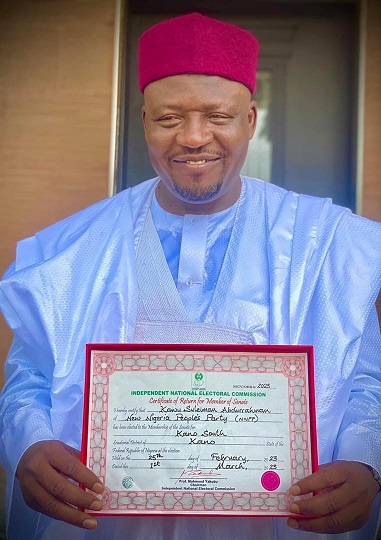
Honourable Kawu Sumaila is Malam’s ghost. As a strong opposition leader after resigning from his position as senior special assistant to the president on national assembly matters, Kawu defeated the incumbent senator that spent sixteen years in the seat last week.
He is ready to represent the good people of southern Kano. He contrasted and won the election three times. He represented Takai/Sumaila for 12 years in the Green Chamber.
Kawu’s action is louder than his voice. He knows the problems of his senatorial district. That’s why he aspired for the seat in 2019 and lost in a questionable primary election. He is ready to speak about his senatorial district, Kano state and northern Nigeria.
Kawu supports the less privileged within and outside his constituency. He founded Al-Istiqama University, the first private university in southern Kano.
Umar Ahmad Rufai wrote from Kano via umarahmadrufaijr@gmail.com.He is a student at Aminu Kano College of Education in Kano.
About a hundred students sponsored by the Kano State Government at Digital Bridge Institute have expressed their worries over the state government’s failure to pay for their certificates five years after graduation.
The students decried that the state government has not paid the designated fees to the institute to enable them to collect their results since 2019.
They complained that the development is delaying their education as they are left stranded for over five years.
The students said they need the certificate to further their education and apply for various job opportunities, saying their future would remain bleak if the government refused to intervene.
The Daily Reality gathered that the Kano State Governor, Dr Abdullahi Umar Ganduje, had sponsored 100 students, 40 males and 60 females, to study at the institute in 2017.
The students were sponsored to study various ICT programs such as Software Engineering, Multimedia Technology, Networking and System Security, Hardware Engineering and Telecommunications.
Our future is bleak students
The graduates said their educational careers were at risk, saying the years they spent at the institute would be wasted if the government refused to intervene.
One of the graduates, who pleaded anonymity, said he missed many opportunities, including admissions to study abroad because he has not collected his certificate.
He said, “I was offered three admissions to study in India, but I could not go because my certificate was not given to me.
“Some of my colleagues told me that they even got job offers. However, they could not go for an interview since they didn’t have the certificate.
“I would have scored admission and graduated had I the certificate. Probably got employed in an organisation.”
Muktar Ibrahim (not a real name) said he wanted to further his education but could not lay his hand on his diploma certificate after graduation in 2019.
He said, “I wanted to further my education. However, I have no certificate to seek direct entry into the university.”
Aisha Hussain (not a real name) said it was painful that she was yet to acquire a degree certificate while some of her sisters and friends were serving their one-year mandatory NYSC.
She said, “We have long been expecting the payment by the government for the release of our certificates. It is sad that some of my sisters and friends have completed their degrees even though I started schooling before them.
“I also got so many opportunities. However, I hopelessly saw them pass as I could not go for any of them,” she stated.
Government ignores our appeals
Since graduation, the students said they have been pleading with the government to settle the outstanding debt to enable them to collect their certificates.
The students went to various media stations pleading with the government to come to their aid and settle the debt.
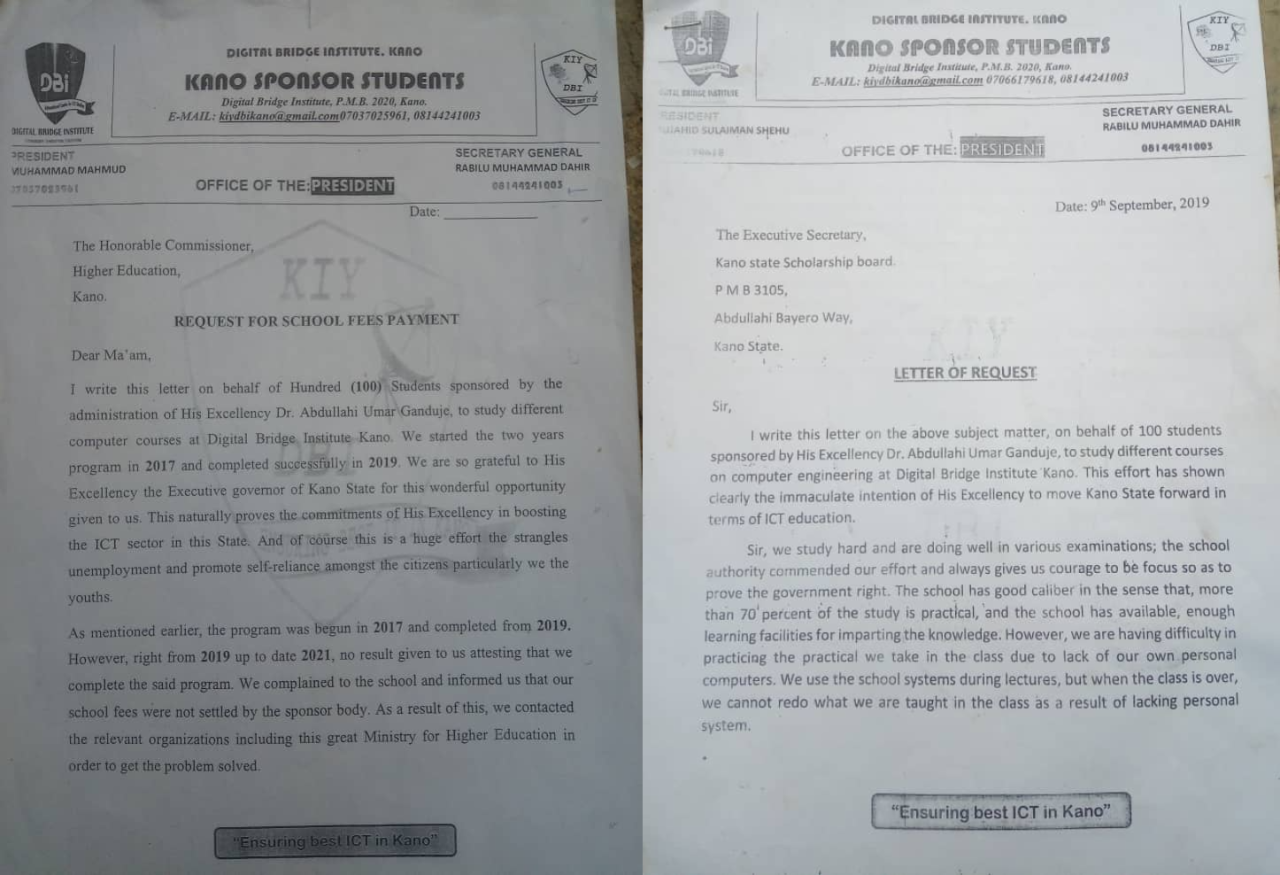
They said they also wrote letters to the Kano State Governor, Dr Abdullahi Umar Ganduje, through the Ministry of Higher Education and the Ministry of Education of the state.
However, all their efforts were in vain, as their plea did not yield any positive result from the government.
Some of these letters.
We are still not tired – students
The students who spoke to The Daily Reality said they are still not tired of sending their passionate appeals to the government to consider them.
They said they are still hopeful and pleading with Governor Ganduje to settle the debt before he leaves office this 2023.
Halima Ibrahim (not a real name) pleaded, “I urge his Excellency, Governor Abdullahi Umar Ganduje, to help us and pay for our certificates.
The lady said her parents are poor and therefore placed all their hopes on her certificate.
Another student who asked not to be named said, “Your Excellency, we know you are good and kind to the poor. We are your children. We are pleading with you to consider us.”
Maimuna Sunusi said, “Our parents cannot afford to settle this debt. Therefore, we are pleading with His Excellency to pay for our certificates and not to waste the years we spent at the institute.”
Kano State Government response
Our reporter has made several attempts to hear from the government, but all his efforts were in vain.
While the Public Relation Officer of the Kano State Ministry of Higher Education, Sunusi Abdullahi Kofar Na’isa, denied knowledge of the development, the Ministry’s Commissioner, Mariya Bunkure, could not be reached for comment.
His name was Sadik. Perhaps about 11 years old. He walked into my newly allocated office in the old Mass Communications building of Bayero University Kano (Nigeria) in 2013. I was startled. He was a tiny boy with deep dark skin, a beautiful face with intense eyes and a dolphin smile. He asked if I wanted to buy Fura (steamed millet balls blended in cow milk, often used as dessert, although it could stand on its own as a nutritious meal). He did not look like any of the usual urchins who thronged the corridors of the building look for odd jobs – run errands, empty trash, sweep office when those officially charged – and paid – to do so did not. Intrigued, I ordered one. He disappeared and returned some twenty minutes later with the Fura in a transparent plastic bag. I paid him, and that was that.
He returned the following day. When I declined to buy it because I didn’t feel like drinking the Fura, he insisted I buy it for others. When I asked why, he simply retorted that I appeared richer than other staff because, first, I was a professor, and second my office was larger. I was amused by his evaluation of my finances based on my position. And true, my office was the largest for staff, but I was a new bride in the Department – having been wedded to Mass Communication after an amicable transfer from the Department of Science and Technology (thus the ‘double’ professor tag), and all stops were pulled to make me welcome. Based on his logic of having a larger office, if not a deeper pocket, I bought about ten and asked him to distribute them to colleagues.
Sadik was to become a regular fixture in the corridor. Always after 2.00 p.m. One day he came with a blue checkered school uniform. Mentally, I thanked the boy who gave him the ‘hand me down’. The uniform was from Musa Iliyasu College, located along Gwarzo Road, a few kilometres from the New Campus of Bayero University Kano. This was a private and prestigious high school in Kano, attended by the children of the well-to-do.
I was told, however, that the uniform was his own and that he was indeed a student at the famous prestigious college. Curious about the human aspect of this development, I decided to delve further. What I found was what I want to share with you regarding the world of Hausa women.
Sadik did not come from an elite home. He was from a large Fulani family living in a ruga (a Fulani cattle encampment) near Janguza Army Barracks in Kano – itself a few kilometres from Bayero University Kano, New Campus, along Gwarzo freeway. The unit was a father, three wives and eighteen children. Sadik was the eldest in his mother’s room. They were herders. Indeed, Sadik was born near Tamburawa along Zaria Road in Kano when the family was on the move in 2002. They camped near Janguza Barracks, where they located their ‘hometree’.
The mother was the one selling the Fura at Bayero University Kano New Campus that Sadiq marketed. She had a ‘stand’ near the Faculty of Engineering. She had a lot of customers in all categories of the university community. After all, even professors love Fura. Her interaction with the university community enabled her to develop an interest in education, and she wanted to get Sadiq to attend a school and eventually a university. She did not want Sadik to follow the family herd. His father, however, wanted the child to join the family herding tradition. The mother then engaged one of her customers, a professor, to drive to the ruga and convince the father to allow the child to attend school, to which he reluctantly agreed. The mother then took over the process of educating the child.
She enrolled him in a local private primary school inside the Janguza Barracks. After he finished, she inquired which was the best high school around, and Musa Iliyasu came highly recommended. She enrolled him there. An exclusive private school. Paid for from the proceeds of her Fura business. She bought a bike for Sadik to make it easy for him to attend the school, some five kilometres from their tent. His legs could barely reach the pedals, but he was enthusiastic about learning. After school, he would go to her Fura stand, park the bike and then trample all over the BUK mega building advertising his mother’s Fura (even boldly entering the Vice-Chancellor’s office to market the Fura), all the way till 6.00 p.m. when they close ‘office’.
I interacted with Sadik for three years. He was so curious, bold, confident and always lifting books on my desk, trying to read them, asking endless questions, his eyes always darting and roving all other office. He was truly an inquisitive and intelligent child.
In 2016 I temporarily relocated my place of work to Abuja, and that was the last I saw of Sadiq. I did not fully return to Bayero University till 2022. In the intervening period, I had wistfully thought of Sadik and finally decided to find out what had happened to him when I returned. It was a massive success story of doggedness by a traditional woman.
When Sadik finished Musa Iliyasu College, he told his mother he wanted to be a pilot. She asked him to find out how much it would cost. Off he went to the Nigerian College of Aviation Technology (NCAT), Zaria, where he learned the fees could be as much as ₦7.5 million. He informed his mother, who immediately asked him to continue the process of getting admitted. She would pay the entire sum – after all, she was already a millionaire with the large herd she had. She earmarked the number of cows to sell to raise the pilot school fees. Sadik did the entrance exams but did not scale the final test. So, he was not admitted.
He then applied to BUK with his JAMB score of 201 for Computer Science but did not meet the Post-UTME requirements for the program. Again, he faced rejection. His mother initiated the process of getting him alternative university admission and was advised to take him to Al-Qalam University, a non-profit Islamic university in Katsina. He went there and inquired about the admission process and the fees. With his results, he was admitted. His mother sold two of her cows for ₦450,000 and gave him the money to pay for the school fees in Computer Science and his accommodation in Katsina. He enrolled and started his program.
When he relocated to Katsina, she sent him money every day. She eventually gave him ₦200,000, with which he started a Fura packaging business, employing his co-tenants in the house he was renting. Soon, he established a small business employing other students. Eventually, he vied for and succeeded in becoming the Vice-President of the Computer Science Students Association of the Al-Qalam branch.
Sadik became a dedicated student with a consistently high CGPA, which could eventually lead to either a good second upper or a first in Computer Science. He was eventually elected the President of the Computer Science Students of his university chapter. One day, the officers of the Association came to Kano for a function during a school break and decided to see his house, especially after he told them he lived in a ruga. They were astonished to discover he was telling the truth – their respect for his modesty raised higher.
In January 2023, I was in my office at the Faculty of Communication BUK when someone walked in. I was bent on my laptop but did notice the guest removing his shoes and coming and standing in front of my desk, waiting for a pause in my typing.
I looked up at a tall well-built young man. I immediately knew it was Sadik. At 21 years, everything about him has changed, of course, but not his dolphin smile. He told me he learnt I was asking of him and decided to come and greet me. I was so happy to see him, and it was he who related to me what I had written so far. I immediately connected him to Sunusi Ahmad Baffa Dawakin Tofa, Chairman of the Kano State chapter of the Fulfulde Development Association of Nigeria (FULDAN), of which I was a patron. They promised to come together and see how Sadik could be part of community mobilisation awareness and a role model, especially for youth. Sadiq owes his success so far to his mother.
Professor Abdalla Uba Adamu and Sadik
***
Sadik’s mother, Hajiya Hauwa Suleiman Dikko, was not an educated, entitled, privileged woman. She did not go to school. Her class was the hard knock of life. As a young girl, she missed going to school with lunchboxes and rucksacks festooned with stickers from the Marvel Cinematic Universe – Spiderman, Hulk, X-Men, and Fantastic Four. She did not attend a privileged landscaped school with paintings of Micky Mouse and Donald Duck on their walls. She had no driver to chauffer her to school in an airconditioned SUV. No TV to return to after school hours in a nice airconditioned living room. No iPads to play with. No Netflix to relax her hard stressful day. No extra lesson teacher (Uncle John or Auntie Funmi) to ensure she passed those horrible subjects such as Mathematics.
Her contemporaries who lived such life finished successfully from their expensive private schools (of course, no private school would allow mass failure, especially from children of the privileged) and had gatekeepers to ensure they got admission into the juiciest disciplines in the university of their choice. If at all in Nigeria – otherwise, it would be off to Ukraine (before it became too hot), some obscure countries in Eastern Europe, India, Cyprus, the UK or preferably, Malaysia.
When such contemporaries returned, they had cushy jobs waiting for them and a relatively easy path to the top. Eventually, they are celebrated as women of substance – given awards (which they don’t need) and celebrated in academic papers and opinion pieces as role models of female achievement and doggedness in a patriarchal society. I don’t mind their high-profile visibility. I just believe the accolades are wrongly placed, or at the very least, the Point of View (POV) should sweep around.
My female heroes? Those I will be celebrating today, the 2023 International Women’s Day? Let’s start with Sadik’s mother. And hundreds of others like her. I am sure you know one or two in your locality. They are women, often widowed, left alone, with little or no inheritance, and who, with the little they have, were able to provide much-appreciated services in their communities and keep a tight hold on their families. They don’t engage in endless and fruitless debates about gender identity or reproductive rights nor women’s representation in political representation and their share of hegemony. Rhetoric. Talking loud and saying nothing. As my main Man sang, “Like a dull knife / Just ain’t cutting / Just talking loud / Then saying nothing”. (James Brown, 1970).
Mainly, restauranteurs, these local women build people and impact their communities. With their business – restaurant (ƙosai, koko, tuwo, ɗanwake, wake da shinkafa, alkubus, gurasa, ƙashin rago, etc.), public transport (Keke NAPEP, buses, Acaba/Okada, Ƙurƙura), estate (properties, rental apartments, plots of land) – they are the role models who should be celebrated. They don’t feel entitled and are privileged in the peace of mind they have and the mentoring they do in their communities. They have no PAs, SAs, fierce dogs at the gates of their solar-powered villas and mansions, no frowning ‘maigad’ to intimidate and scare away panhandlers.
They have no SUVs as the cost of one could serve as capital for a whole year for their business. They don’t even have cars, despite some owning a transport business or so. They do not take their holidays in London or Dubai – they have no time for holidays as they are busy serving their communities. They marry off their daughters, not in grand style, with furniture imported from IKEA in China but from local makers – thus contributing to local economies.
So, what should be the concerns of women on International Women’s Day? For me, with a focus on Muslim Hausa women living in traditional communities, how about integrating them into the modern sector digital economy? Instead of empty rhetoric about gender representation, why don’t we focus on enabling them to acquire skills such as mobile phone repairs and POS services – in the comfort and safety of their homes? Many women are now engaged with mobile phones and online trading and payments. Muslim Hausa women feel unsafe in approaching service centres where clusters of men provide these services. Empowering them to be skilled in digital knowledge in the lungu and saƙo (alleyways) of our communities works better than hot-air rhetoric and genuinely can make a difference.
On this day, I, therefore, award accolades to Sadik’s mother, Hajiya Mai Ƙashin Rago Fagge (with a whole street named after her), and countless others whom I am sure Jaafar Jaafar knows more. They are truly women of substance.
Today, being International Women’s Day, please locate any in your community, go right up to her and appreciate her. Celebrate her achievements and her silent but visible impact in the community as the REAL woman of substance.
PS: Some have asked about Sadik’s whereabouts. He is in his final year at Al-Qalam, Katsina, Computer Science, and from his results so far, he is heading towards either a First Class or a very good Second Upper.
Professor Abdalla Uba Adamu can be contacted via auadamu@yahoo.com.
Bashir Ahmad, the Special Assistant to President Muhammadu Buhari on Digital Communication, has disclosed that the Deputy Governor of Kano State and Gubernatorial Candidate of the All Progressives Congress, APC, Dr Nasir Yusuf Gawuna, pledged to grant autonomy to local governments in Kano State if elected governor.
Ahmad stated this in a tweet on his verified Twitter handle on Thursday.
According to Ahmad, this is one of the many reasons why Kano electorates should vote for Gawuna. He noted that Gawuna would govern and operate differently.
“Dr. Nasiru Yusuf Gawuna, the Kano State APC Gubernatorial Candidate, has pledge [sic] to give local governments in the State autonomy to operate if elected as Governor. This is one of many reasons why we will vote for Gawuna as our next governor, he will govern and operate differently.” He tweeted.
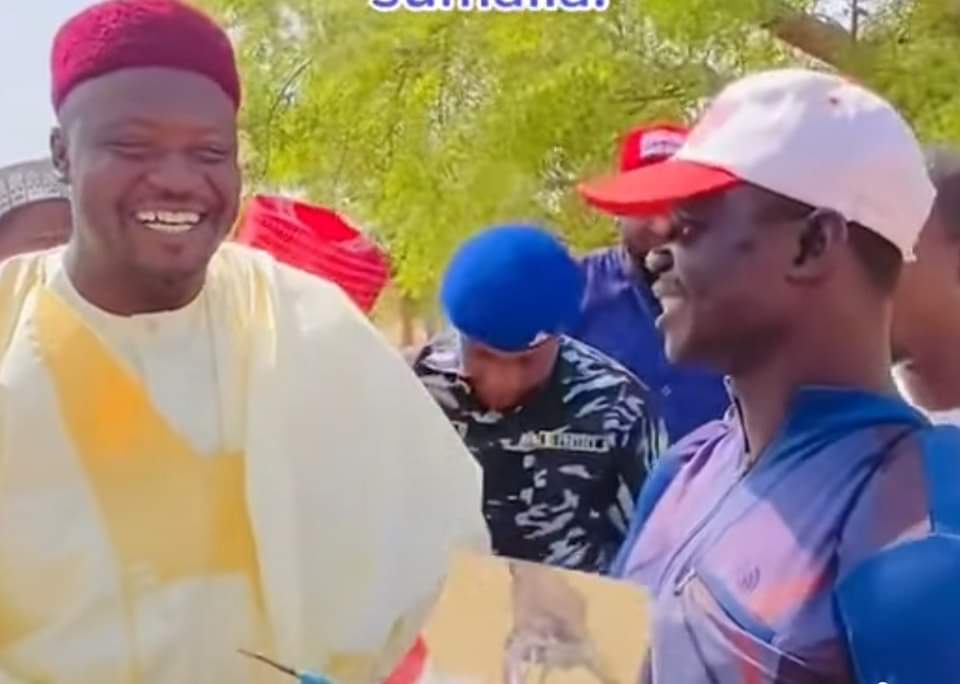
A young man from Jigawa state has embarked on backward trekking from Gwaram in Jigawa State to Sumaila town in Kano state, to celebrate the election victory of Honorable Kawu Sumaila.
The young man whom Kawu Sumaila met on the road explained that he was doing this backward trekking because almost every style of trekking has already been done, so he decided to do his own.
Even though Sumaila asked him to go back home since they met on the road, the young man insisted that he would not go back, because he had sworn to do it.
On arriving, the senator gave him a token, and he promised him a slot to go on Hajj to Makkah, because of this manly effort that he took upon himself to travel a long in a backward manner to congratulate the senator.
Professor Ibrahim Adamu Yakasai, Returning Officer of the Tudun Wada/ Doguwa House of Representatives Election, has admitted to declaring the election results under duress.
The Professor made this known in a voluntary statement dated February 28, 2023.
According to Professor Yakasai, his life and that of other INEC officials in his company were threatened, and he was afraid he would lose his life. He added that the collation area was completely under siege by hoodlums, and he was ordered to declare the results within an hour.
“I served as the Returning Officer for the 2023 Tudun Wada/ Doguwa House of Representatives Election, whose Result was declared by me on the 26th February, 2023. However, I will want to testify that the declaration I made was under duress for fear of losing my life and other INEC officials who were with me. ” He wrote in the statement.
Prof. Yakasai’s statement
He further stated that the situation made it impossible for him to act in accordance with the extant provisions of the Electoral Act.
On his reason for the disclosure, Professor Yakasai said he is testifying with the hope that necessary actions be taken to remedy the situation. However, Professor Yakasai refused to disclose whose bidding he was coerced to carry out then.
INEC has already declined to issue a Certificate of Return to Mr Doguwa, the Majority Leader at the outgoing National Assembly, for the same reason. A court in Kano granted the embattled lawmaker bail after being arrested for murder charges last week.
Democracy can be likened to a human being in terms of characteristics and functions. A person is rendered incapacitated by the amputation of his limbs or by the removal of his eyes or ears. Using violence, buying votes, and bribing electoral officers and security personnel to rig elections not only render the democracy incapacitated but also lifeless. An election is the most sacred aspect of democracy that must be protected against any form of interference from within or outside the commission responsible for conducting elections, state government, national government or any foreign state.
It is worrisome how Kano State, one of the fast-developing and economically vibrant states in Northern Nigeria, is facing severe attacks from the antagonists of democracy. It could be recalled how the 2019 Governorship Election in the state was characterised by violence, intimidation, disenfranchisement, arson, and killing and injuring of voters. This prompted my article “Democracy Bleeds in Kano”, published in Daily Trust on 4th October 2019. Thanks to CP Wakil (nicknamed Singham) for standing firmly in controlling the terrible political tragedy of that year. Sadly, in the Presidential and National Assembly Elections held on 25th February 2023, a similar premeditated political tragedy occurred in some Local Government Areas of Kano State. A member representing Doguwa/Tudun Wada in the Green Chamber, Ado Alhassan Doguwa, allegedly shot innocent citizens and ordered his thugs to set on fire a building with people inside.
The Governorship Election coming on 11th March 2023 is feared to be unfree from grave challenges, especially as many issues have continued to unfold since last week. Some of these issues are mentioned below. A few days ago, the Nigerian Police Force, State Headquarters, Bompai, Kano State, released a piece of information about how it discovered a plot by some politicians to disrupt the forthcoming election using political thugs. There is a serious allegation against some politicians hiring thugs even from outside Kano to disrupt the electoral process. One may find it difficult to disagree with the allegation given the recent happenings in the state’s political space. Two Local Governments Areas that experienced this violence last week are Tudun Wada and Takai.
What raises more questions about the 11th March Election are the movements of some trucks seen across the state in the last few days, carrying a lot of food commodities and clothing materials suspected to be distributed to the masses in exchange for their votes. As alleged by some observers, those food commodities and clothing materials had not been seen during the Covid-19 predicament—a time when people direly needed assistance. Generally, Nigeria is battling abject poverty, sending many people hungry. As such, the unfortunate situation presents a golden opportunity for politicians. Vote buying, either by money or offer of any commodity, is a severe attack on democracy that any well-meaning citizen cannot oversee.
Some political parties, especially from the opposition, have cried out a plot by the ruling party in the state to buy the conscience of INEC’s staff and the security personnel, which, if found to be true, will be highly condemnable, immoral and illegal.
I am, therefore, using this opportunity to call on the Federal Government, the Nigeria Police Force, the Independent National Electoral Commission and the Kano State Government to rise to the occasion and prevent the occurrence of the 2019 political tragedy in Kano and also investigate the above allegations with a view of ensuring a free and fair election. While human beings can cheat one another, they can never cheat history.
I am also calling domestic and international election observers to be extra observant in the Kano 11th March election. Political parties and the media have a massive role in creating awareness and enlightening the masses, especially in rural areas, about the catastrophic consequences of vote buying. Security personnel and INEC’s staff should remember that there is a life after death and that one must reap what he sowed. The masses must display boldness throughout the stages of the election. They must quickly report suspicious activities by anyone to the appropriate authority. I pray that Kano State and Nigeria will have peaceful, free, and fair elections on 11th March 2023.