Kano State

Ƙoƙi and ethnographic slice of Hausa history

By Prof. Abdalla Uba Adamu

I was rummaging through my travel pictures when I came across a picture that I am sure has not been published anywhere. I saw it in a glass case at a ‘corridor museum’ at Universität Hamburg, Germany, on 2nd December 2008. I was excited because of its rarity. It was the picture that I am sure has not seen the light of day almost anywhere. I had vaguely heard about the man from my father, a writer, but did not pay attention then. Now he was there, smiling in all glory and right before me. I decided I would take the picture to show it to my father.

Edit: The man was Muhammad Ƙoƙi, the son of Alhaji Mahmud Ƙoƙi, the Kano Malam. His picture triggered my excitement about his father, Malam Mahmudu Ƙoƙi.

Malam Mahmudu was perhaps one of the most unsung and unknown critical literary figures in Hausa history. You can Google all you can. You won’t find him or his picture. Instead, you will be taken to Neil Skinner’s book, “Alhaji Mahmudu Ƙoƙi: Kano Malam” (ABU Press, 1977). I very much doubt if ABU Press itself has a copy. My copy is in excellent condition (except for a slightly scratched cover) since it was printed on shiny bond paper – and can therefore scan very well. I hesitate to do this for fear of copyright violation. I do wish ABU Press would consider retrieving a copy somewhere and reprinting it.

On return from Hamburg, I started looking for the book – and I was lucky to grab a copy at then ₦550 in January 2009. Now, some 14 years later, you can get a second-hand copy from the online store Abe Books for just $99 (cheap at ₦74,000 in 2023). At the moment, I don’t have any ‘kebura’ around me (since the ASUU strike was suspended!). Otherwise, I would offer mine for ₦50,000 for my copy!

Quite simply, it is a brilliant slice of Hausa history. Most significantly, it detailed the fieldwork done in the collection of data for Bargery’s Hausa Dictionary, whose full title is “A Hausa-English dictionary and English-Hausa vocabulary”.

Although mainly attributed to Rev. George Percy Bargery (1876-1966), an English missionary and linguist, the dictionary had significant input from Diedrich Hermann Westermann (1875-1956), a German missionary, Africanist, and linguist. The dictionary was published in 1934. The printed copy used to be available at ABU Bookshop, where a colleague of mine gifted me one he bought at the huge sum of ₦2,000 in ancient days, almost breaking his bank account!

The book was written/edited by Neil Skinner (1921-2015) at the request of Bargery’s son, Kenneth, to collect recollections of the elder Bargery while in northern Nigeria. Alhaji Mahmudu Ƙoƙi (1894–1976) was Bargery’s Chief Assistant in the preparation of the Dictionary and was the first choice to ask in 1967. As Skinner recollected, “I began recording some of his memories of Bargery. Listening to his vivid accounts of Kano in the first of the century, I formed the idea of putting together from Mahmudu’s lips some account of his own life.”

And what a fascinating life it was. Skinner continued, “As a son of the largest city of northern Nigeria, who had been born into the civil war of Aliyu and Tukur, M. Mahmudu saw the coming of the British, knew Waziri Giɗaɗo and Resident Temple, lived to see the end of the British rule and the Nigerian Civil War and, above all, had close contact with rulers and innovators, both Nigerian and British. He, therefore, seemed likely to have a tale worth recording for younger generation of Nigerians and those with an interest in Nigeria as it was and is. Mahmudu was a spectator of many great events and participant in not a few.”

And what a whirlwind tour of northern Nigeria it was in the early 20th century. Reading the book is like going back in a time machine. Everything was covered: economy, society, governance, culture, everything. As Neil Skinner stated, the book was told by Mahmudu himself – Skinner just edited it. It contained both fascinating and often disturbing details of days gone by. For me, for instance, I was traumatized by his account of the slave trade in Kano. As Mahmudu recalled,

“I used to see slaves being sold – with my own eyes! At Ƴan Bai, on the west of the [Kurmi] market. That was where they used to line them up and sit them down, with their feet sticking out, like this. Then it would be, ‘You there! Get up!’ And he would get up, and we would look him over well from top to bottom and say, ‘Walk a little!’ then he would do so until we told him to come back. He would do so, and we would say, ‘Right, go and sit down’ and put hand to pocket and take out a little money, perhaps a score of cowries or fifteen and give them to him. You would do this, whether you bought him or not. Then, if he saw someone selling groundnuts, he would call her over to get some saying he had been given the price for getting up to be inspected. That is how we have a proverb which says, ‘Tashi in gan ka ma na da ladanta’.”

Based on this disturbing account – in the heart of Africa – I wonder how many of our other proverbs have such creepy and dark origins? If you go to Ƴan Bai in Kurmi market in Kano, now you will only see mats, books and assorted goods.

Alhaji Mahmudu Ƙoƙi provides a rich tapestry of ethnographic details about how the Dictionary was compiled and the fact that the team of Bargery and his assistants insisted on seeing actual objects and their names before recording them. One wished they had an artist with them to sketch out many of the cultural artefacts that have all but disappeared now. It is good that the Bargery dictionary has been digitized and is available free online, thanks to the efforts of Hirokazu Nakamura of the Faculty of Human Science, Department of Human Sciences, Bunkyo University, Japan.

“Alhaji Mahmudu Ƙoƙi: Kano Malam” is comparable to “Baba of Karo” by Mary F Smith (wife of M.G. Smith, author of “Government in Kano, 1350 to 1950” amongst others, and which is available FREE online!). Published in 1954, “Baba of Kano” is an anthropological record of the Hausa people, partly compiled from an oral account given by Baba (1877-1951), the daughter of a Hausa farmer and a Koranic teacher. Baba’s reports were translated by Smith.

Books like these encourage us to seek out our own cultural history – visit those places mentioned, savour their historical aroma and note them as centres of excellence in discovering our past. By the way, Ƙoƙi is a ward in the city of Kano and right on the edge of the Kurmi market. If you are from the area, perhaps you may have heard of Alhaji Mahmudu from his grandchildren.

Don’t forget; this is not a review of the book but a memory jog on the old man, Alhaji Mahmudu Ƙoƙi, whose picture was honoured at a foreign university.

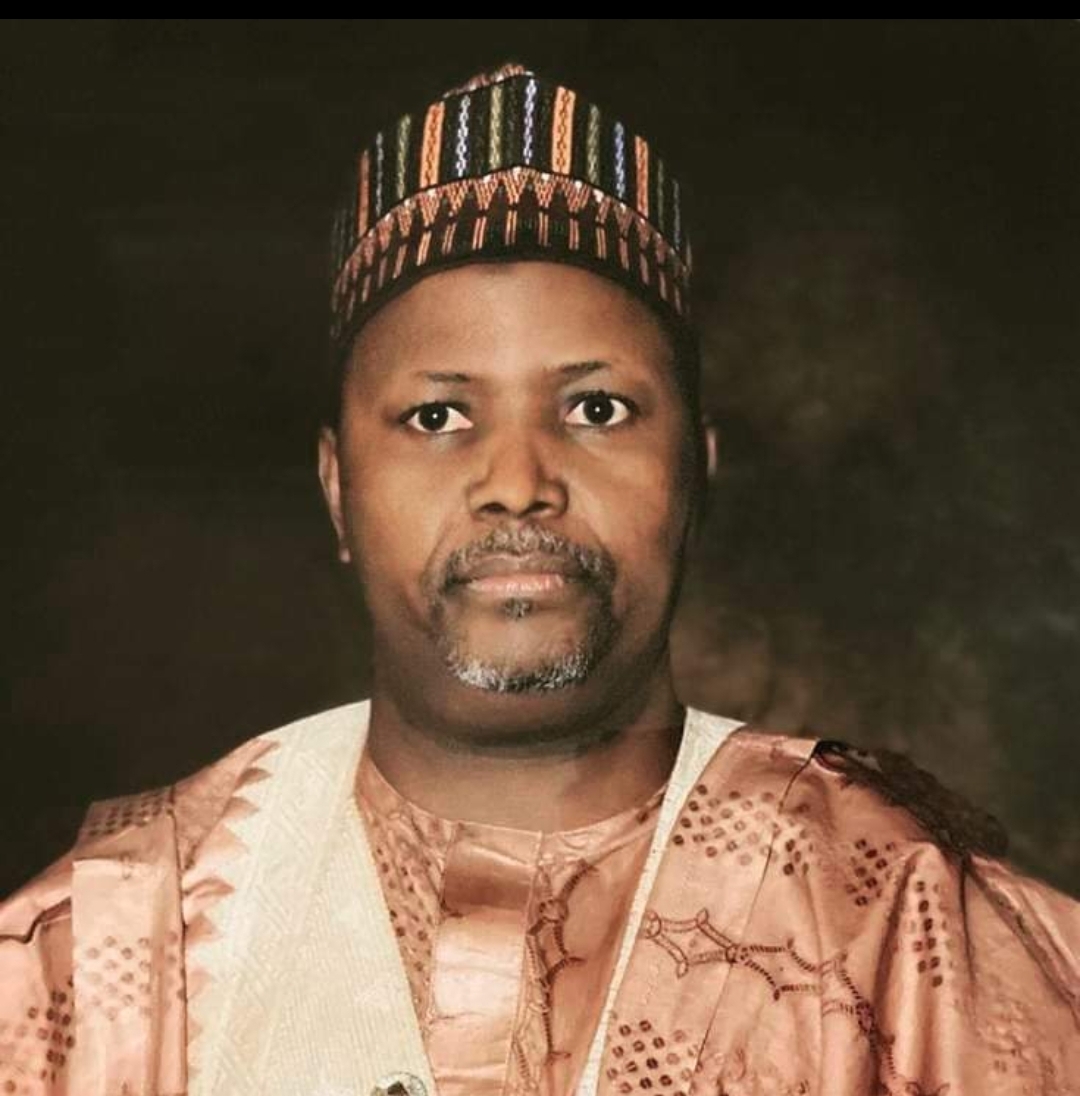
There is a composite collage of the picture I snapped in the Hamburg university museum of the son, the book and the father! as the latter appeared in the book.

Prof. Abdalla Uba Adamu can be reached via auadamu@yahoo.com.

Quick takeaways from the premiere of Manyan Mata!

By Mahmud A. Zukogi

This much-awaited, much-talked-about and star-studded film series, which incidentally will hit your screens today, Saturday, February 11, 2023, at nine o’clock this evening on Arewa 24, was premiered on February 4 at the Film House, Ado Bayero Mall, Kano.

The event, which was graced by the invited guests and Kannywood’s veteran, reigning and emerging stars, was full of the usual fanfare, excitement and expectations associated with the premiere of any new film. The red carpet was lit with beautiful lighting and stars, and guests took turns to pose to the beauty and demand of the evening.

The industry is gradually exploiting the opportunities that film serialisation provides, no thanks to the exciting marketing platform made available by the leading entertainment television, Arewa 24. It is to the eternal credit of the television that such films as Dadin Kowa, Gidan Badamasi, Labarina, Kwana Casa’in, Gidan Danger, etc., have become popular and a must-watch by the teeming audience of the industry. It is obvious, therefore, that the art of film serialisation has gained currency in the industry, and Manyan Mata is coming to compete for space and attention. How it is able to do this will depend largely on the techniques and the staying power of the crew, especially the producer and the director.

Manyan Mata is produced and directed by two of the industry’s iconic duo, Abdul Amart (Maikwashewa) and Sadiq Mafia. What the film brings to the table can be summarised into three: innovation, diversity and topicality of motif. Abnur Entertainment is known in the industry for innovations that have opened a window of opportunities to the core stakeholders, from the producer down to the end of the ladder in the entertainment chain.

The film is highly diverse because of the array of stars it could gather under one roof. As far as the Kannywood industry is concerned, it takes great power, confidence and directing abilities to handle these stars, each with his/her ideals and idiosyncrasies. Thus, if any outstanding star is left out of the film, it could be a result of unavoidable oversight or a logistical glitch. But getting Ali Nuhu and Adam Zango, the northern and the southern poles of the industry, in one set is no doubt speaks of the commendable effort of the producers. Talk of the leading female stars of the industry; name them, and they are all there.

What, then, are the central motifs of the film and which has made it outstanding and a must-watch? The Almajirci question, the girl-child abuse/prostitution and the male overload of the women under the guise of marriage have been juxtaposed to educate, entertain and, most of all, draw public empathy to the raging social issues putting us down as a people.

The premiere opens with electrifying scenes of these social motifs, and this drew great excitement from the audience, who expressed individual understanding and appreciation of the representations in the film and its many expectations.

Veterans of the industry were well represented, ranging from Kabiru Maikaba, Shehu Hassan Kano, Hajiya Saratu Gidado Daso and the like. No less represented were the leading directors in the industry who came to support one of their own. There were expressions of appreciation and critique of the film, which was well received by the directing crew.

Overall, the premiere evening was full of life, excitement, and encomiums for the head of Abnur Entertainment, Abdul Amart, for his creativity and vision.

The greatest oversight is the industry’s inability to tap into the opportunities provided by the university which is next door. As far as the industry is concerned, there has not been a concerted effort to establish the needed relationship between and gown, a beneficial relationship that would help to grow the industry and take it to a whole new level of growth and worldwide visibility.

Strong institutional linkage is desperately needed to grow the art and economy of this under-tapped multibillion-dollar industry. I’m aware that scholars such as the respected Professor have invested so much energy in intellectual research that would have propelled the industry to the worldwide heights it ought to be. Same for Professor Yusuf Adamu, Ibrahim Malumfashi and, lately, Dr Muhsin Ibrahim, who has published widely and recently completed his PhD on a topic related to the industry at the University of Cologne.

Yours sincerely and his colleagues were only there in their individual capacity and not on institutional representation, which shouldn’t be the case.

It is thus necessary and about time that this costly oversight is remedied. The industry needs to open up and embrace change, and the best way to do this is to key into the opportunities they stand to gain by establishing a solid relationship with the university to improve its art and human capacity. I also believe this should be a two-way process, so the university should take the industry into confidence and dispel its image of unapproachability.

Mahmud Zukogi can be reached via mabuzukogi78@gmail.com.

Foundation sponsors 3 Kano indigenes to study in Türkiye

By Uzair Adam Imam

Darul Erkam Foundation has fully sponsored three indigenous students of Kano state for undergraduate studies in Istanbul, Türkiye.

Aliyu Yusuf, the Director Public Enlightenment, Ministry of Education Kano State, disclosed this in a statement Friday.

Yusuf said the youths were sponsored following their outstanding performance in the just concluded Reading Competition of the Biography of Prophet Muhammad (SAW).

He added in the statement, “The 3 sponsored students are Muhammad Nasiru Dantiye from Asal College, Fadima Musa Haruna from Kuntau Academy and Al-Amin Sani from Governor’s college.

“In addition to their sponsorship, Muhammad Nasiru Dantiye, who emerged as the overall winner of the reading competition, got a Prize of N700,000 and a Trophy, Fatima Musa Haruna received N650,000 and a Trophy for emerging in the 2nd position, while Al-Amin Sani who emerged the 3rd position received N600,000 and a Trophy.

“Speaking during the presentation of the awards at the coronation Hall of the state government House, Kano, the Commissioner of Education, Rt Hon. Ya’u Abdullahi Yan’shana expressed gratitude to Darul-Erkam Foundation for the kind gesture.

“The Commissioner noted with great pleasure the various humanitarian activities been rendered not only in Kano but in other states by the Darul-Erkam Foundation, saying only Allah the most gracious can reward them.

“Rt. Hon Yan’shana said he was much happier than any one of you here because this achievement has been recorded during my stewardship as the Commissioner of Education” 

“While congratulating the sponsored students for the height they have attained, he urged them to be good ambassadors of the state and their parents when they found themselves in Istanbul.

“To other participants of the reading competition who also revised different consolation prizes and medals, the Commissioner said they should not be reluctant as more opportunities are coming to their way, stressing that all of them should put into practice what they have read in the Biography of our Noble Prophet.

“In their separate remarks, the Chairmen of Murat Huda Vendigar Vafki Foundation and that of Darul-Erkam Foundation disclosed that the reading competition was part of the Humanitarian activities of the foundations aimed at boosting the reading culture of the participants as well as inculcating the practices of the life of the Prophet Muhammad SAW in their day to day activities.

“During the award presentations, all the participants were given a medal and cash prizes ranging from N5,000 to N200,000 depending on their performance,” the statement concluded.

Kwankwaso is most qualified and prepared for presidency, says party chieftain

By Ahmad Deedat Zakari

A chieftain of the New Nigeria Peoples Party (NNPP), Dr AB Baffa , said Rabiu Musa Kwankwaso is the most prepared and qualified candidate for the Nigeria’s presidency.

Kwankwaso is the presidential flagbearer of the NNPP.

Dr AB Baffa, who is also the NNPP’s candidate for Kano North Senatorial District in the forthcoming general election, disclosed this in an open letter addressed to Kwankwasiyya members and NNPP supporters on Monday.

According to Dr Baffa, Kwankwaso’s political trajectory and experience as a former parliamentarian, minister, diplomat and governor stood him out amongst the contenders for the presidency.

He further explained that Kwankwaso’s educational qualifications to the level of PhD are verifiable and undisputed.

The letter reads in part :
“Dare I remind you that our Party, the New Nigeria Peoples Party, NNPP, is the only party that fielded the most competent and the most experienced patriot with over four decades of hands-on experience in governance and
Leadership at the civil service, the executive, the legislature, the security, as well as the diplomatic levels, as its Presidential Candidate.”

“Dare I remind you that our Party, the New Nigeria Peoples Party, NNPP, Presidential candidate has over 17 years of experience in the civil service, was the Deputy Speaker of the House of Representatives, was a member
of the Constitution Conference, is a Class 1999 Governor, was a Minister of Defence, was a Special Envoy to Darfur and Somalia, was a member of the Board of Niger-Delta Development Commission, NDDC, is a Class 2011 Governor, and he was a Senator of the Federal Republic.”

“Dare I remind you that our Party, the New Nigeria Peoples Party, NNPP, has fielded the most properly educated Presidential Candidate in the history of our democracy with traceable and verifiable educational qualifications from Primary School, to Boarding Senior Primary School, to Crafts School, to Technical College (where he obtained his City & Guild certificate), to Polytechnics (where he obtained his National Diploma and Higher National Diploma), and up to Universitiesin the UK and India (where he obtained his Masters and PhD in Water Resources Engineering respectively).”

Naja’atu Muhammad declares support for Kano’s Abba Gida-Gida 

By Ahmad Deedat Zakari

A former Director in the Presidential Campaign Council (PCC) of the All Progressives Congress (APC), Hajiya Naja’atu Muhammad, has declared her support for the Kano gubernatorial candidate of the New Nigeria Peoples Party, Abba Kabir Yusuf, alias Abba Gida-Gida. 

On Arise Television’s Morning Show programme, Naja’atu disclosed her reasons for resigning from the PCC-APC and other reasons for supporting other candidates in the forthcoming election. 

She said while she would not be a card-carrying member of any political party, she would support the Kano NNPP’s gubernatorial candidate, Abba Gida-Gida.

She also disclosed that she would support former Vice President Atiku Abubakar of the Peoples Democratic Party, PDP, for President and Aisha Binani of the APC for governor of Adamawa state. 

Explaining her reason for choosing Atiku over Tinubu, she said Tinubu is the devil and Atiku is the deep sea. 

She also alleged that the APC’s Presidential Candidate, Bola Ahmad Tinubu, is physically and mentally unfit to lead Nigerians.

Kano-based lawyer drags CBN, Gov to court over currency swap deadline

By Muhammad Aminu

A Kano-based lawyer, Sanusi Umar Sadiq has dragged the Central Bank of Nigeria (CBN) alongside its governor, Godwin Emefele, to a Federal High Court in Kano over currency swap deadline of 31st January, 2023.

Barr Sadiq is asking the Court of his fundamental human rights in line with sections 44 and 46 of the 1999 Constitution, Article14 of the African Charter on Human and Peoples’ Right Act, Laws of the Feederation of Nigeria 2010 Order Rule 2 and 3 of the Fundamenmtal Rights Rule 2009.

He asked the Court to declare that the cessation of the existing N200, N500 and 1000 from being used as legal tender from 31st January 2023 as unlawful and unconstitutional.

The legal luminary contended that the arbitrary stoppage of the existing notes which are largely in circulation will cripple the econmony and further entrench poverty among Nigerians.

“An order of this Honorable Court enforcing the Fundamental Rights of the Applicant as enshrined under and guaranteed by the 1999 Constitution of the Federal Republic of Nigeria (As Altered) and the African Charter on Human and Peoples’ Rights (Ratification and Enforcement) Act Cap. A9, Laws of the Federation of Nigeria 2010.

“…that it is unlawful and unconstitutional for the Respondents to declare the existing N200, N500 and N1, 000 currency notes, which are currently largely in circulation, as no longer the legal tender of Nigeria by 31st January, 2023.

“…that the abrupt and arbitrary policy adopted by the Respondents to make the existing N200, N500 and N1, 000 currency notes that are widely in circulation now is a threat to national security and inimical to national interest as same will cripple the economy and throw many more innocent Nigerians into poverty.

“…this Honorable Court restraining the Respondents from making the existing N200, N500 and N1, 000 currency notes cease to be the legal tender in Nigeria by 31st January, 2023, which currency notes are the ones largely in circulation now, are the ones issued by the various commercial banks in the country, and are the ones dispensed by the various Automated Teller Machines (ATMs),” the originating motion states.

According to him, he wants the Court to compel the CBN and its governor “to follow and comply with the Global Best Standard Practices for changing currency whereby the old ones are gradually withdrawn from circulation by not releasing them to the public once they get deposited in banks within a reasonable time that shall not be less than six months.”

Barr Sadiq argued that the apex bank has not made adequate preparations or put in place appropriate measures to make the redesigned notes available to the public as the commercial banks across the country, both within the banking halls and via the Automated Teller Machines (ATMs) continue issuing and dispensing the currency notes intended to be replaced until few days to the deadline.

He urged the Court to restrain the Bank else “they will throw the country into an economic chaos and anomie.”

Bayero University debunks school fees increment rumours

By Sumayyah Auwal Ishaq

The Bayero University Kano (BUK) has debunked rumours that the institution has increased registration fees.

A statement published in the official bulletin of the university and signed by Lamara Garba, the Deputy Registrar, Public Affairs, says, “The attention of the Management of Bayero University, Kano, has been drawn to a purported fake letter in circulation on social media announcing an increase in registration fees.”

The statement further adds, “In the light of the above, students, parents, and other stakeholders should note that Bayero University has not yet decided o ln any school fees increase as against the social media post being circulated by some unscrupulous elements”.

The Management cautioned members of the public to disregard the information as fake and malicious.

Be your parents Sadaqatul Jariya

By Tijjani Muhammad Musa

I left the house without taking breakfast or even a bath in order to meet an 8:00 am appointment with the rest of our SWS.Comms production crew. A client has brought in an advert for emergency production and airing on the radio against an event scheduled to take place the next day, Saturday morning, by 10:00 am after the monthly Sanitation exercise.

The heavy traffic of Adaidaita Sahu, private vehicles, motorcycles, and so on State Road was highly discouraging as I turned into it from Maiduguri Road. Quickly calculating my other options, I thought of taking alternative routes to steer me away from the delay most likely to occur if I should get trapped in the traffic mess.

However, thinking positively and hoping for the best, I still drove into the snailing jam of vehicles. Soon, however, I saw an opening on the side of the road accommodating a trickle of cars and the ever-daring tricycle riders. Now being in a bit of a hurry, I instinctively branched into that flow. 

This gave me and many others the opportunity to cut off almost three-quarters of the “go-slow” that was caused due to road repairs, maintenance and renovation work going on on the roads as a result of adverse effects of heavy rainfall witnessed in the city in recent time. 

So many of the roads in the metropolis have turned into shallow graves and potholes, forcing many drivers to demonstrate their driving skills and dexterity, with pedestrians expressing their anger and annoyance once in a while from getting splashed with dirty potholed rainwater.

As I slowly snake through the engaging challenge, turning my head side to side to check the distance between me and the line up of tricycles to my left, I suddenly saw her in one of the Adaidaita and couldn’t help but stare. While briefly looking at it, I at that same time sensed myself being stared at. So I checked to see who was poring his or her eyes over me.

It was a much younger woman sitting next to the person who had caught my rapt attention. Clearly, she was wondering why my face lightened up and suddenly saddened again upon seeing the old woman sitting calmly by her side. 

To douse her fears, I lowered my car window, pointed at the old woman and loudly said, “She reminds me of my mother, who is now late. May her soul be blessed and rest in peace.” I whispered the supplication to my hearing only.

The younger woman, now relaxed and with a slight smile, said, “Allaah Sarki. Allaah Ya jik’anta da rahama” and I said, “Amin thumma amin” as tears wheeled up my eyes. I quickly got hold of myself as I averted the gaze of both the woman as well as the okada rider, whose attention had now turned to me.

I looked at the old woman intently once again and realized that she didn’t actually look like my Hajia in any way except for her height and the frail, wrinkled body characteristic of old women in their octagenarian stage of life. She was looking absent-mindedly into a future that none could tell what it was her mind’s eye was seeing or thinking.

Once again, tears overwhelmed me, for I could remember clearly the same kind of look on the face of my mother. She didn’t want to die due to the uncertainties that lay ahead. But then, none can avert its coming to pass, as it is a promise that must be fulfilled.

This is because Allaah AWJ Says in the Qur’an, “Kullu nafsin za ikatul maut” – Every soul must taste of death (Q3:185). So we all must eventually bow out. When, where, why, by what or how none of us knows. Thus by the 1001 ways and more to die, we all must become deceased.

I felt for her as I did feel for Hajia then whenever I saw that worrisome look registered on her face. I would immediately want to do something to distract her attention so as to change her mood for the lighter from such disturbing thoughts. 

Suddenly without thinking, I reached into the pigeon hole in front of my dashboard and fetched out some money I usually keep there in case of an emergency and asked the Adaidaita rider how much was the cost of the ride. He told me, and I handed much more than the amount to him, telling him to give her the change.

The old woman looked at me and smiled. She was pleased with what I did and waved her two palms at me in thanks, and all of a brief flash, I saw my mother in her. It was a beautiful sight. The younger woman with her was also happy and prayed fervently for me as I drove off.

Then by Allaah SWT, the dam broke, and I started crying, in the wonder of what my mother might be going through, wherever she might be at that moment. There and then, I started praying to Allaah AWJ to please forgive her, whatever wrong she might have done while alive and bail her from anybody’s haqqi if she has done them wrong. 

That my Lord and Maker should please compensate whoever she owes, whatever it might be and set her soul free in Barzakh, pending when she will be admitted into Jannah and His AWJ’s much sought after Grace. Fortunately, I’ve dreamt of her 3 times already. She’s doing alright, bi iznilLaahi.

In one of such dream, we were at an occasion with Prof. Yusuf Adamu, and she came to the place. So I excitedly introduced her to him. As he respectfully greeted her and started thanking her for me, she said to him, smiling, “A’a haba ai mu ne da godiya”. More tears tore into my composure like a small child.

I had to stop myself as passersby were beginning to stare at me, wondering and whispering to each other what they thought was wrong with me. Though I never liked the idea of tinting off my car windows since I have nothing to hide, for a change, I wished I had done so, so I could indulge and enjoy my emotional outburst in full privacy. 

It’s not every day that such grace from Allaah happens to me. Anyway, I pray that all our parents who have died be in better existing conditions, wherever they may be right now than when they were here living on earth. 

May all other mothers and fathers be similarly forgiven for their wrongs, mistakes and shortcomings. Allaahumma amin thumma amin.

Driver’s killing: Protesting tanker drivers remove vehicles after negotiations in Zaria

By Uzair Adam Imam

The Zaria-Kano Highway has been reopened after two days of blockage by the protesting tanker drivers in the area.

It was reported that the drivers protested over the alleged killing of their colleague by a soldier and demanded justice for the victim’s family.

The development Wednesday had led to a gridlock that left many travellers stranded.

Daily Trust reported that the drivers used their heavy vehicles to block the road but had agreed to remove them after a series of negotiations with security agencies and FRCN officials.

Our reporters gathered that the drivers decided to protest after a soldier attached to a construction company reportedly shot the victim dead.

The State Acting Sector Commander of the Federal Road Safety Corps, Lawal Garba, said normalcy had returned.

“I’m happy to inform you this morning that the Zaria-Kano Highway was reopened around 9:30 am today after days of blockage. Traffic flow is smooth as the road is fully open. Personnel of the Command are in traffic control,” he said.

2023: Drama as Ganduje, Kwankwaso trade words over Kano votes

By Uzair Adam Imam  

Governor Abdullahi Umar Ganduje of Kano State and his former boss, Dr Rabi`u Musa Kwankwaso, the Presidential Candidate of the New Nigerian Peoples Party (NNPP), have continued to trade words over Kano votes in the forthcoming general elections of 2023.

Ganduje, while addressing his party`s supporters, said Kano people would vote for Asiwaju Bola Ahmed Tinubu, the Presidential Candidate of All Progressive Congress (APC), against Kwankwaso, who is a citizen of the state.

He added that Kano would repeat what happened in the 1993 presidential election when the state supported a Southern candidate, the late MKO Abiola, against its citizen, the late Bashir Tofa.

However, responding to what Ganduje had said in a statement, Kwankwaso stated that whoever works against him in Kano in the forthcoming election would regret it.

Kwankwaso said, “I had a rally not long ago, which was one of the best rallies. I had one in Wudil, the southern senatorial district. I had one in Bichi, northern senatorial district. I opened my office in Kano Central, and one of the best rallies because you can’t compare it with the ones by some of the candidates who had crowds that came to Kano from neighbouring states and so on.

“Now, you see, I don’t want to talk about that man. I don’t know whether he said it or not. But the reality is that anybody who works against NNPP or Kwankwaso in 2023 one day will regret it, that he made a mistake.

“Anybody who knows me, who knows my antecedents, believes that, if I win this presidential election, Kano will have maximum benefit. Of course, northern Nigeria will benefit and, of course, the country.

“So, I am surprised if you go and say I should hold a rally. I have done many rallies in Kano. In just recent months, January and December in Kano, in all three senatorial districts. So, what is the problem with holding a rally in Kano?”