Kano State

Rarara’s Invective Barbs: innuendoes, body shaming, and Kano politics

By Prof. Abdalla Uba Adamu

For the past 43 years that I have been a researcher, there were two areas I stay clear of: politics and religion. If you see my hand in any of these two, then the entry point is popular or media culture. For instance, I have recorded a lot of Kano Qadiriyya’s Anfasu zikr, not as a devotee, but as an ethnomusicologist – focusing on the body percussion and movements (after studying the wonderful works of Margaret Kartomi on body percussion while in Morocco). Similarly – and to balance things somewhat – I recorded Tijjaniyya zikr sessions at Chiranci in the city of Kano as part of a larger study on religious performances. All my recordings were uploaded to a dedicated YouTube public channel. I was, therefore, amused when people try to pigeonhole me either as Qadri or Tijjani. I am neither.

Politically, I am apolitical, meaning I really don’t care who rules the country. I don’t even vote, having done once a long time ago (at the insistence of a dear friend), and promised never to do it again. But performance arts brought my attention to protest songs and the prosecution of singers in Kano. The end product was a paper, “Poetic Barbs: Invective Political Poetry in Kano Popular Culture” which I am sure is floating somewhere in a modified form. And I thought that was it.

In 2014 I came across a song that I found amusing. I was playing it on my laptop when someone exhibited surprised that I was listening to the songs of Dauda Adamu Abdullahi Kahutu, with a stage name of Rarara. That was the first time I even heard the name. The song was “Zuwan Maimalafa Kano.” It attracted my attention in two ways. First, its lyrical construction, as well as its delivery, was just amazing. Rapid fire. He should have been a rapper, a genre of music I am totally besotted on (old school DMX, 2Pac, Snoop Dogg, Ice Cube, Queen “The Equalizer” Latifah, y’all). It was clear Rarara was singing off the cuff, not reading from a setlist or lyrical sheet. Second, it was the most detailed invective song I have heard in the Hausa Afropop music genre. I started digging and latched on to him and his songs. So, for the last seven years or so, I have been following every song he released using the invective matrix.

So, what is an invective song? Invective is the literary device in which one attacks or insults a person or thing through the use of abusive language and tone. If you like, “zambo/shaguɓe”. Invective is often accompanied by negative emotion. Invective can be divided into two types: high and low invective. High invective requires the use of formal and creative language, while Low invective, on the other hand, makes use of rude and offensive images. From 2010, Rarara became a master of popular Hausa invective oral poetry. He used his skills to abuse, insult and body shame anyone he was paid to insult. Including former masters and associates.

A pattern evolved. His switchbacks. Chronologically, his earliest non-invective song was “Saraki Sai Allah” (in honour of then Governor Ibrahim Shekarau’s turbaning as Sardaunan Kano in 2010 by the late Emir of Kano, Alhaji Ado Bayero). In 2011 – barely a year later – when Shekarau failed to anoint Rarara’s ‘master’, Deputy Governor Abdullahi T. Gwarzo, to succeed him, Rarara became ballistically invective – and established a career in body shaming, abuses and innuendoes against various previous masters. Shekarau bore the blunt of colorist abuses – often a case of the kettle calling the pot black. No one was spared his invective barbs. Deeply cut. Insulting. Spread over 39 songs, from 2014’s “Malam Ya Yi Rawa Da Alkyabba”, to 2023’s “Tangal-Tangal.”

I have seen social media calling Rarara out on his not being a Kano indigene, getting rich in Kano through his songs, and yet insulting Kano’s leaders. This is all true. However, ‘da ɗan gari a kan ci gari’ (enemy within). Only about three songs in my analytical corpus by Rarara were free-standing (i.e., unsponsored). All the others were commissioned and paid for – by politicians from Kano, to abuse other politicians from Kano. Rarara always acknowledges his sponsors in the opening doxology of his performances.

Rarara was a highly unprincipled and unethical businessman. Show him the money, and he will praise his closest friend and abuse the friend’s enemy. Show him more money, and he will insult the same friend he praised, and heap praises on the enemy he insulted. Does anyone remember that the glorified “Ɗan Ƙaramin Sauro” (irritating mote) was part of the demeaned “Banza Bakwai” (Bastard Seven)? The bromance did not end well, did it? Business unusual.

In any event, Rarara’s invective braggadocio came back to hit him hard on 5th April 2023 when his opponents used his mother’s picture in unflattering terms and splattered it all over social media and gave her a feminine variation of an insulting name he used against one of his targets. Apparently when the shoe is on the other foot, it pinches.

Thus, instead of focusing on political ideology and promises of creating a better life for the electorate, often politicians in Kano (and I think Kano, as usual, is the only state that uniquely does this) would pay more attention to denigrating, shaming, and condemning opposing candidates, creating an unfavorable imagery of the politician to prevent his being voted. Rarara was a perfect malleable puppet in this process. He has the same emotional value to Kano politicians as an alien from Saturn. Despite his lyrical brilliance and acerbic wit, he was expendable. How many singers from Kano can you recall doing the same invective insults as Rarara to Kano politicians? Two? Three? Their corpus is not as extensive as that of Rarara. Conversely, how many politicians from Katsina pay Rarara money to insult other Katsina politicians? I can only remember one.

Wary of possible legal action against direct defamatory speeches, politicians often find it easier to engage what I call ‘political drones’ to communicate their defamatory messages through the popular medium of singing. In this way, when push comes to shove, it is the singer who would face legal – or in some cases, physical – wrath in one way or other. Unethical singers like Rarara – who was arrested, but not charged in 2014 over “Zuwan Maimalafa Kano” – were willing to pay the price in exchange for the stupendous amount of money they will receive. At least they will have enough for medical care when their houses were wrecked, assaulted and incapacitated to continue singing.

And the politician who caused it all? He can’t even remember the song that made him popular, having moved on to greener political pastures. Until the next election cycle when he will latch on another expendable drone to help him heat up the polity through more invective songs using campaign words he does not have the guts to utter himself.

Rarara’s defense of not uttering specific names in his invective taunts and body shaming do not stand up to scrutiny under Nigeria’s defamation laws, and demonstrates that while he was a brilliant lyricist, he needs to understand the law. This is because his invective defamation in the form of his songs is publicly available (indeed, he made them so), created a narrative about individuals that are easily identifiable either by their physical appearance or public behavior, created a negative impression on the person being so targeted, and was not misquoted as Rarara’s utterances (from his songs) were publicly available and subject to an only interpretation as intended. A clever prosecutor would have enough to jail Rarara on listening to any of his invective songs, if someone complained hard enough.

Invective songs can often have their positive sides in the sense of making politicians – or their targets – aware of public perception of their misdemeanors, or at most, errant behaviors. Rarara’s invective narrative in the selected songs I analyzed, however, do not demonstrate their oversight functions in public accountability for politicians. Regardless of whether explicit names were uttered or not, their narrative was focused on kicking them when they are down, and subjecting them to public ridicule. This questions the artistry of Rarara as a purveyor of aesthetic values of the Hausa oral arts.

Academicians ignore Rarara and his art – and I think that’s a mistake. True, some would argue that his songs have no aesthetic, intellectual or ideological value. On the contrary, they do. In their own way. They are beautiful as lyrical discourses. His delivery is truly artistic, even if the content is inelegant. Unlike other songs in the repertoire of political communication, his are not protest songs, and thus lack ideological focus. They neither educate, illuminate or illustrate any aspect of political culture. They only entertain – at the expense of the dignity of the people he attacks. His songs synthesize Hausa rural lexicon overlayered with abusive, often self-constructed urban jargon to enhance general appeal – and act as rabble rousers for politicians who think like him. It is a unique, if unadmirable business model in the performing arts.

Subsequently, Rarara’s songs cannot be compared, by any stretch of imagination, with the classical Hausa protest poets such as Sa’adu Zungur, Mudi Sipikin, Aƙilu Aliyu, Abba Maiƙwaru and Aminu Kano, whose artforms were fueled by educative political ideology, certainly not profit. Mudi Sipikin, for instance. used his poetry to attack the system of colonial rule. Aƙilu Aliyu wrote poems directly attacking the NPC. Abba Maiƙwaru wrote a 10-line NEPU poem for which he and Aminu Kano were arrested in the mid-1950s.

Zungur used his poetry originally to warn the emirs of the north of the necessity for reform, as illustrated in his central work, Jumhuriya ko Mulukiya [Republic or Monarchy]. In this work, he called for political and social problems to be solved on the basis of the existing Islamic institutions, rejecting alien political concepts. He later used his poetry to appeal directly to the common people. In a similar vein, one of the earliest poems written for a northern political party was by Aminu Kano, and called ‘Waƙar Ƴancin NEPU-Sawaba’ [Freedom poem for NEPU-Sawaba], and published in 1953 and put in the final form by Isa Wali. It was one of the earliest statements of Nigerian nationalism.

Despite all these, I argue that as researchers we can’t afford to ignore a current of knowledge flowing right at our feet. But the cold shoulder given to Rarara by our community, opposed to Aminu Ladan Abubakar (ALAN Waƙa) who is a toast to the academic and intellectual community, merely emphasizes the expendable and ephemeral nature of Rarara’s art. Ten years after the release of any ALA song, it will still have relevance. The relevance of Rarara’s songs rarely last to the next song release. Instantly forgettable.

Nevertheless, just as we struggled for the recognition and documentation (if not acceptance) of the Kano Market Literature in the 1990s when everyone was denigrating it, we need also to document the stream of popular culture, including Rarara – warts and all – flowing around us at all times. As far as I can see, only Maikuɗi Zukogi has focused attention on two of Rarara’s songs. More needs to be done.

As soon as I tell myself that I will wrap up the research, he will release a song insulting a former master or associate. Subsequently, I delayed publishing the research until he insulted two people, and true to expectations, he did. These were President Muhammadu Buhari (Matsalar Tsaro) and Governor Abdullahi Umar Ganduje (Lema ta sha ƙwaya). With the ‘Hankaka’ barb against Ganduje in the Lema song, my fieldwork became almost complete. His destruction of “ɗan ƙaramin sauro” leaves only the references to be completed. As I argued, based on his corpus, Rarara sells to the highest bidder with neither conscience nor ideology. The huge profit he makes serves as insurance against future loss of earnings when Kano politicians become mature enough to stop patronizing him to insult each other (and themselves) and utilize his skills in more constructive ways.

My thanks to a team of eager research assistants, headed by my ever-faithful and close companion, Hassan Auwalu Muhammad – a former songwriter and lyricist himself. He was the one who mainly, patiently, transcribed the songs, which I wove into a narrative going to almost 40 pages! I plan to upload the lot during my Summer break when the children are all here on holiday! By then, the threatened wobbling ‘Tangal-Tangal’ had stopped and probably settled for a four-year legal battle.

Professor Abdalla Uba Adamu can be contacted via auadamu@yahoo.com.

Women who sacrifice for other’s education

By Hajara Jaoji

Kudos to my paternal uncle (a family man) who cared for ten of us, including my mom, after our dad died in 2010. He ensured we had a sound, good life as if our late father were on earth. 

This story is about me, a young beautiful, under thirty years old single intelligent lady. I am the third in my family, with two older brothers, two younger brothers and four younger sisters.  I graduated from university and finished my youth service in 2020. I got a temporary job appointment (still on it) before,  during,  and after my youth service.

I used to help and take care of my siblings. Regarding education, I helped my eldest brother pay his professional exam fees. I also help my immediate older brother in pursuing his education at university. In addition, I covered all the expenses for the two junior brothers in their secondary school days. One is now a student at Aminu Kano College of Legal Studies (second year); the youngest brother recently graduated from secondary school and is looking forward to securing admission into the university for him. 

For the sisters, I took over my immediate younger sister’s expenses from my uncle. She’s a student at Bayero University, Kano (BUK). The other junior sister recently got admission to the School of Hygiene, Kano, while the two younger ones are secondary school students, and I still care for them all. 

Maturity is not by age but rather by the number of responsibilities one is able to shoulder. The best investment in life is to invest in human beings. I would rather walk around with old clothes and an old-fashioned phone, knowing that my siblings are busy getting qualitative education (modern and religious).

I  pray that God will increase my heart and bless my income so that I will help other non-blood-related orphaned children worldwide.

Hajara can be contacted via hajaraibrahimjaoji2019@gmail.com.

Dr Nasiru Yusuf Gawuna has paid his dues

By Ibrahim Siraj Adhama, Ph.D.

The governorship election in Kano has come and gone. The battle has finally been won and lost. No doubt it will go down as one of the most keenly contested guber elections in our State in recent history. At the end of it, a winner emerged in the person of NNPP’s Abba Kabir Yusuf, alias Abba Gida-Gida. While congratulating him, his party and his teeming supporters, it is our collective prayer that Almighty Allah will give him the courage, wisdom, guidance and tenacity to lead Kano to greater heights.

Not unexpectedly, the March 18th election has left in its wake several talking points that will continue to dominate public discussion and intrigues that may take years to unravel. Its outcome will go a long way in shaping the future of Kano politics for a long time to come. Questions will continue to be raised about the legality or otherwise of the returning officer’s result declaration when it appeared there were more registered voters affected by cancellations than the margin of lead between the two candidates with the highest number of votes against the provisions of the 2022 Electoral Act and INEC election guidelines. Not a few people will be tempted to suggest a spectre of legitimacy haunting governor-elect Abba’s declaration arising from that controversy until all doubts are justifiably cleared.

The purpose of this piece, however, is to x-ray the governorship contest vis-a-vis the heroic performance of His Excellency Nasiru Yusuf Gawuna, candidate of the ruling APC, who, despite not winning the big prize, has given a very good account of himself as a great and promising young leader and politician with immense rich and potential. All fair analysts will give it to him that he had fought a good fight.

It is safe to argue that no candidate of a ruling party has gone into an election with many odds working against him as Gawuna in the just-concluded election. From his living under the burdensome shadow of Governor Abdullahi Umar Ganduje to widespread disillusionment against his party, APC, across the levels, from Kwankwasiyya’s massive followership and unflinching determination to effect a change to highly biased and unfriendly media, Gawuna’s task of winning could not be more daunting.

Gawuna contested the election as Ganduje’s backed candidate and a possible successor. One needs to understand how unpopular Ganduje’s government has become to appreciate how much of a liability that was. Ganduje had been practically on a mission to cultivate as many enemies as possible for himself, his administration, his party, his family and everything associated with him. Ganduje had, for a better part of his administration, pressed the self-destruct button.

Ganduje’s controversial land grab and conversion policy, his poor handling of education and students’ welfare, the falling standard of healthcare and poor state of hospitals in the State, his mismanagement of A Daidaita Sahu cyclists, his apparent lack of empathy towards such vulnerable groups as junior workers, pensioners and retirees, his failure to provide leadership towards resolving his party’s internal wranglings thereby causing the defection of key members to opposition parties, among other terrible blunders and unforced errors, Governor Ganduje has made things a lot easier for the opposition NNPP.

With Ganduje, you needed no enemy; he was his government’s number one detractor and his party’s foremost de-campaigner. His largely self-inflicted injury had overshadowed his modest achievements, especially in peace and security, urban renewal, expansion of economic opportunities and general infrastructural development. Hardly do people take note of these achievements.

Consequently, the opposition succeeded in making every declaration of support for Nasiru Gawuna as an endorsement of Ganduje’s litany of “atrocities”. Efforts to prove that the Deputy Governor might not himself be happy with Ganduje’s ways and will almost certainly correct those mistakes, given a chance, were taken with a pinch of salt. Many who campaigned for him faced the daunting challenge of convincing other voters that he would act differently. It’s that difficult!

As the ruling party in control of the centre, the APC did not help matters either. In a move that had the potential of jeopardizing the chances of the party’s candidates nationwide, the Federal Government announced a plan to redesign the country’s currency ostensibly to curb vote-buying and payment of ransom to bandits and kidnappers. This policy, coming on the eve of general elections, fueled speculations within the ruling party itself that certain fifth columnists close to President Muhammadu Buhari were part of a plot to rock the ship of the APC, considering how unprecedented cash crunch riled up already suffering Nigerian masses against the ruling party. Though APC has somehow managed to win the Presidential election and maintain control in most States, the damage done by this ill-advised policy to the party’s electoral fortune could just be imagined.

That His Excellency, Deputy Governor Nasiru Yusuf Gawuna, was able to score nearly nine hundred thousand votes is no mean feat given these circumstances. For me, he should be grateful to Almighty Allah, who made it possible for him to harvest this massive figure in spite of all attempts to rubbish him or undermine his chances using Ganduje’s failures. This feat is majorly attributable to his ability to connect well with some key segments of society who stood by him.

In appreciating Gawuna’s performance, though, I pay little heed to reports of widespread vote-buying. This is due to the realization that both NNPP and APC were culprits; available evidence has shown that the two major parties had tried different tricks at voter inducement. And as experts would say, vote-buying itself works on nothing, and it mostly targets undecided voters.

Since his foray into politics 20 or so years ago, Gawuna has been rising and rising. The outcome of this election represents a temporary setback which does not in any way signify his downfall as naysayers would want to believe. For careful observers of his trajectory in politics, it’s just a matter of time before he recovers and continues to rise higher and higher. Let his detractors know that the man is not going down anytime soon.

With the highest number of votes obtained by an APC gubernatorial candidate anywhere in Nigeria, Gawuna looks set for something very great, especially with an APC federal government of Asiwaju Bola Tinubu in place. No doubt, Gawuna will be an invaluable asset in Jagaban’s cabinet, going by experience. After serving for 20 years as Local Government chairman, commissioner and deputy governor, who knows if Allah is preparing him for national service? Only time will tell, and our prayers are with him now and always!

Dr Ibrahim Siraj Adhama is a Senior Lecturer from the Department of Mass Communication, Bayero University, Kano and can be reached through isiraj.mac@buk.edu.ng.

Kwankwaso, Kwankwasiyya and Arewa beyond 2023

By Aminu Alhassan Kuba

During the 2023 general elections, Eng. Rabiu Musa Kwankwaso contested for the office of the President Federal Republic of Nigeria under his newly registered party, the New Nigeria People’s Party (NNPP). Unfortunately, he came a very distant 4th, winning just one State out of 36 plus the Federal Capital Territory, Abuja, with a little over 1 million votes. His party also presented candidates for the governorship in a few other states apart from Kano, and the closest it came to winning apart from Kano was in Taraba.

Before the elections, Senator  Rabiu Musa Kwankwaso had been engaged in a fierce political battle with his erstwhile political friend and deputy and present governor of Kano State, Dr Abdullahi Umar Ganduje.

In 2015, Kwankwaso supported Ganduje to succeed him, but afterwards, trouble started. In a video I watched sometime in 2018, Ganduje accused Kwankwaso of envy. He said he did everything to respect and be loyal to his former boss, but it seemed Kwankwaso wanted everything. He accused Kwankwaso of wanting to be governor by proxy.

The fight between the two finally culminated in the now infamous inconclusive governorship election of 2019, where Kwankwaso tried to unseat Ganduje and replace him with his former PA, former commissioner, son-in-law, now governor-elect Eng. Abba Kabiru Yusuf. In that titanic battle for Kano, Ganduje emerged victorious.

The win led to other unfortunate matters, including the dethronement and banishment of the then Emir of Kano, His Royal Highness Muhammadu Sanusi II, the balkanisation of the Kano Emirate into five (5) smaller entities and the eventual appointment of two of Sanusi’s cousins among others as Emirs of Kano and Bichi, respectively.

In the succeeding four years, the political rivalry and fight between Kwankwaso and his old friend and political ally only intensified, culminating in the defeat of Ganduje’s candidate by same Kwankwaso’s son-in-law Eng. Abba Kabir Yusuf in the just concluded governorship election in the State.

Following NNPP’s victory, Kwankwaso’s supporters mainly and some commentators have sought to present Kwankwaso as some political wizard in Northern Nigeria. While this is true to a certain degree and circumstance, it is more accurate if Kano and not Northern Nigeria was the point of reference.

Kwankwaso has indeed managed to remain politically relevant compared to his Northern governor colleagues, alongside whom he contested and won elections to become governor in 1999. However, since his stated goal is not to become or produce the governor of Kano State but to lead Nigeria as President and Commander in Chief, the fairest comparison should be with those who have demonstrated similar ambition. And in this category, the most worthy comparison should be with the President-elect, His Excellency Asiwaju Bola Ahmad Tinubu, former Senator and Governor of Lagos State.

This comparison is even worthier considering that Lagos and Kano share similarities in population, political history, economy and commercial relevance to South and Northern Nigeria, respectively.

Let’s take a dive

In 1992 when Tinubu won a seat to become Senator of the Federal Republic, Kwankwaso won one in Nigeria’s House of Representatives and became its deputy speaker.

In 1999, both Tinubu and Kwankwaso contested and won to become governors of Lagos and Kano, respectively.

In 2003, while Tinubu was re-elected for a second term in office despite Obasanjo’s backstabbing and cynical takeover of the entire South West (except Lagos, of course), Kwankwaso lost his seat to a former permanent secretary, Malam Ibrahim Shekarau, whom he had humiliated and relegated to a classroom teacher. Shekarau went on to serve two full terms as governor of Kano. Kwankwaso was eventually appointed Minister of Defence by Obasanjo.

In 2011 Kwankwaso returned to Kano for a second shot and won. He served the next four years, delivering spectacularly on the massive infrastructural transformation of Kano and investing heavily in education and social services. In addition, he provided scholarships to hundreds of Kano indigenes to undertake postgraduate studies around the world. By the end of his tenure in 2015, he easily transited to the Senate under the newly minted alliance party, the APC, with General Muhammadu Buhari’s CPC, Asiwaju’s AC and Atiku’s rebellious PDP G-5 governors.

 In the same period, Tinubu chose not to run for office but worked to build a formidable political base with the South West as its fulcrum, installing governors in at least four of the region’s six States, many of them his former commissioners and going beyond to support former comrade Adam Oshiomhole to take Edo from the PDP.

In the same period, Tinubu not only built the Lagos-Ogun axis as Nigeria’s financial and economic powerhouse, but his former appointees also became a Vice-President, ministers, governors, chief executives of agencies and parastatals of the Federal Government.

Kwankwaso and his Kwankwasiyya movement have failed to go beyond the borders of Kano into neighbouring states like Jigawa, Katsina, Kaduna, Bauchi, etc.

Notably, they have ruled Kano with his former deputy turned adversary for 16 years. Despite its industrial and commercial potential, Kano has failed to significantly grow its internal revenue base to compete favourably with its peers in the country. In a shocking manifestation of its leadership crisis, a civil service state like Kaduna now generates more internal revenue than Kano.

Again, in education, Kano tops the list of states with the most out-of-school children. This is where I find difficulty in understanding Kwankwaso’s education investment model of sending vast numbers of Doctors, Pharmacists, Nurses, Engineers and other university graduates outside Nigeria to undertake postgraduate studies while millions of children are roaming the streets wretched, hungry and illiterate.

While I do not begrudge the beneficiaries of his scholarship largesse, many of whom I know personally, I think the billions of naira public funds he spent in that endeavour would have been best spent in strengthening Kano’s capacity to educate its underprivileged poor urban and rural population.

Therefore, it’s now twenty-four years after Kwankwaso and Tinubu first became governors; Tinubu could comfortably lose Lagos but still win in the rest of Nigeria and become President; Kwankwaso could only win his Kano and ended up a distant 4th in the same presidential race. This is a testament to how far both have come.

To bolster the point further, while Kwankwaso has managed to build a competent and diverse political team across Nigeria, on the one hand, even in his beloved Kano and over 24 years, he could only find his son-in-law and former PA worthy of his trust to become governor.

Beyond Kano in the wider Arewa, he has failed to create a political support base. Instead, he is mainly seen as the head of a violence-prone, uncouth, fanatic and cult-like group willing to insult and denigrate anyone who dares to disagree with its methods. This is not without justification either. Evidence in utterances, actions and inactions from him, his closest lieutenants and supporters that they are willing to use violence to achieve political ends when push comes to shove.

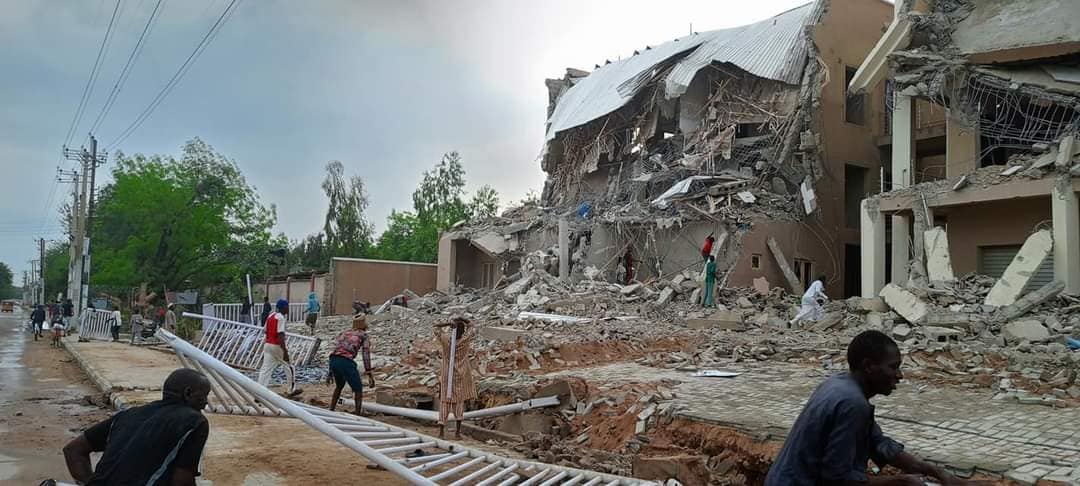
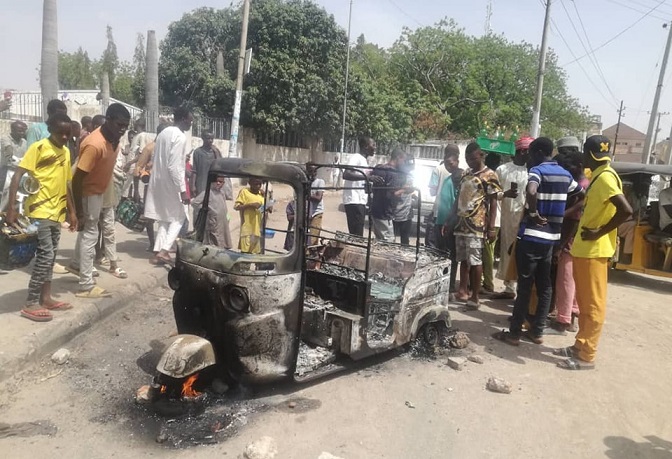
The behaviour of his supporters after the governorship election in Kano in which his candidate was declared the winner and his silence speak volumes. After attacking and burning down Rarara’s property within the Kano metropolis, no word of condemnation or reproach came from the Madugu [leader] or this party.

Despite Kwankwaso’s failings, however, at this moment of Nigeria’s political journey, Arewa needs a viable opposition to put the APC-led government on its feet from May 29th this year. And Kwankwaso’s NNPP, with a base in Kano, could position itself as a viable platform for the role. From the results of both Presidential and Governorship elections so far declared and its history in this part of Nigeria, PDP can no longer pose a serious challenge to the ruling APC.

Now practically wiped out of the North East, North West and North Central except in some minority enclaves like Taraba and Plateau and unfortunate governance failure examples like Zamfara and possibly Adamawa, PDP is practically dead. In Bauchi and Adamawa (maybe), I don’t see PDP surviving beyond 2027. All these added that Alhaji Atiku Abubakar, its leading financier, is now both old and tired. A Kwankwaso-led NNPP could therefore become a viable alternative for the greater North.

But for NNPP and Kwankwaso to take up this role, I suggest they need to rebrand; Kwankwaso needs to convince the rest of Arewa and Nigeria that his movement can grow beyond the personality cult Kwankwasiyya is now.

He must also convince the rest of Arewa and Nigeria that Kwankwasiyya is not a violence-prone provincial cult that quickly resorts to arson and looting at the slightest opportunity. Finally, he must convince the rest of Nigeria that when his interests clash with that of the State, that of the State will take precedence and that he is willing and able to reign in his supporters.

Aminu writes from Kaduna and can be reached via aminukuba@yahoo.com.

Kano police apprehend 14 suspected criminals

By Muhammadu Sabiu 

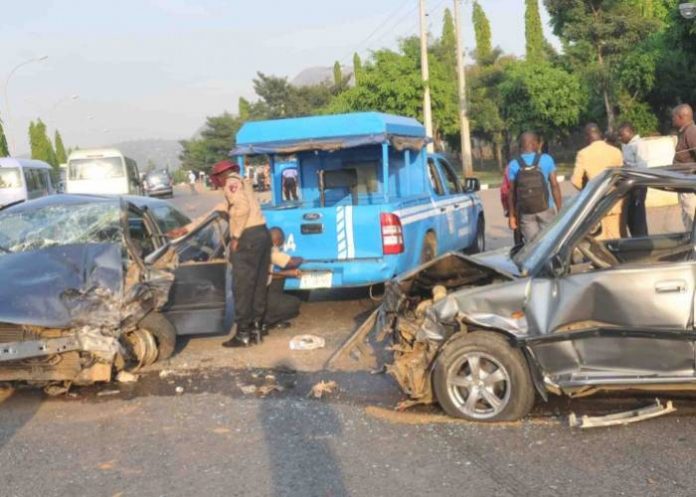
The Kano State Police Command reported that its agents had detained 14 suspected criminals as part of their attempts to purge the state of any criminal activity.

This was stated in a statement released on Thursday via SP Abdullahi Haruna Kiyawa’s Facebook page, the command’s public relations officer.

The arrests, according to the statement, took place during clearance operations carried out by a team of Operation Restore Peace under the direction of CSP Bashir Musa Gwadabe. 

The accused were found to be in possession of lethal weapons, illegal substances, stolen, and looted valuables.

The police spokesman added, “Rigorous patrol and raids of criminals’ hideouts and black spots will continue throughout the state, as the Command will sustain the tempo in ensuring the safety of lives and properties.”

Stop construction in public places – Kano Gov-elect warns residents

By Uzair Adam Imam

The Kano State Governor-elect, His Excellency, Engr. Abba Kabir Yusuf, has warned residents to stop any ongoing building in public places in the state.

The Govenor-elect also strongly cautioned that anyone who contravenes this warning is doing it at his or her own risk.

He made this warning in a statement Thursday by his Chief Press Secretary, Sanusi Bature Dawakin-Tofa.

There have been popular outrages by the citizens in the state over the selling of some parts of schools and hospitals by Govenor Abdullahi Umar Ganduje.

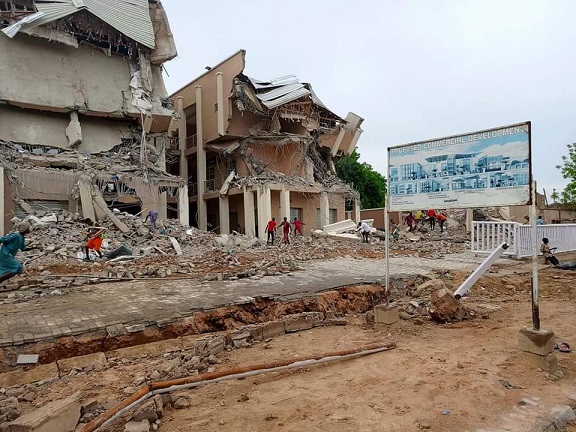
The statement read, “You are advised to discontinue any construction work on public land within and around the following: All schools in the State, all religious and cultural sites in the State, all hospitals in the State, all graveyards in the State, and along the city walls of Kano.

“You are also advised to discontinue the demolition of, and the construction on, all existing public buildings belonging to the government and people of Kano State.

This Advisory is issued in the public interest, effective from today Thursday 30th March, 2023 till further notice. Any contravener does so at his/her on risk, please,” the statement concluded.

YOSPIS calls on INEC to learn from Kano guber poll’s mistakes

By Ahmad Deedat Zakari

Youth Society for the Prevention of Infectious Diseases and Social Vices (YOSPIS) has called on the Independent National Electoral Commission (INEC) to forestall the recurrence of the mistakes that pervaded the Kano State gubernatorial election. 

YOSPIS made the appeal in a press statement signed by its Executive Director, Zainab Nasir Ahmad, on Wednesday. 

In the statement, the group outlined their observations of the election and recommended what INEC should do differently in subsequent elections. 

Some of the group’s recommendations include reducing the number of party agents at the polling unit, addressing the technical issues of BVAS, and the security of electoral materials, amongst other things. 

The group congratulated the Kano governor-elect, Abba Kabir Yusuf and wished him the best in his administration.

Kano elections grand finale: The echoes of competence

By Nusaiba Ibrahim

The 2023 gubernatorial elections will go down in history as one of the most highly contested, especially in Kano. After eight years of Dr Abdullahi Ganduje-led government, his party, APC, could not secure the first position. Neither the victory of the President-elect, Bola Ahmed Tinubu, nor the popularity of President Muhammadu Buhari was significant in the tight race that was fiercely fought between the governorship candidates. 

There were just countless permutations, combinations, analyses and whatnot on the proposed outcome of the gubernatorial elections coming from different viewpoints and existing realities, especially after the presidential and upper chamber elections. However, one thing that stood out was the incredible performance of the NNPP in Kano. And this became a challenging point for the ruling APC until the opposition candidate Abba Kabir Yusuf of NNPP emerged victorious.

While the Presidential elections had minimal cases of vote buying, Kano recorded massive acts of vote buying with petty items like soaps, detergents, wrappers and spaghetti during the gubernatorial and state house of assembly elections. In addition, in some strategic locations, there were significant disruptions in the voting and counting processes. But, of course, all of these aren’t out of the normal as tensions had already heightened after the presidential polls.

Nothing summed up the 2023 elections in Kano for me more than the chants of competence over spaghettis. Indeed, “taliya ba ta zabe” (loosely translated – spaghetti doesn’t vote). The likes of Senator Barau Jibrin, among others, only escaped losing their seats because of the hard work they channelled to community service and distinctive competencies. I’m in awe of how each candidate has been weighed based on the capacity to earn the invaluable mandate of the people. Here are my takes on each candidate.

Governor–elect Abba Kabir Yusuf: By resisting all odds to emerge the winner of the elections in Kano State, the heart of Northern Nigeria, you deserve resounding applause. You have also proven your worth to the electorates after losing the 2019 election, which was first declared inconclusive. So, your victory is a testimony of a relentless effort to achieve this desired objective. More so, preserving a loyal fanbase over these years is unimaginable and a strategic tool for your success. But you need to understand that more must be done. The game has just begun.

You would be serving the entire citizens of Kano, which includes your loyalists and a bunch of opposition. It would be easy if you’ve not made many promises during your campaigns, and even if you haven’t, you’ll still be judged anyway. You might face the gigantic task of restoring Kano State to what it used to be. The truth is, that might be impossible to do. Do not waste your time unveiling the errors of the past administration; the people are already full of new yearnings and aspirations. Focus on health, security, education, economy and adverse effects of climate change. They are the priority now.

Nasiru Yusuf Gawuna: Kano is proud of a citizen like you, though you have yet to accept defeat. Nothing compares to being crushed in a public engagement. You’ve taken a wise decision of not resorting to leading thugs to disrupt collation processes this time because you would make news for the wrong reasons, coupled with a widely shared photo of you explaining what happened to police offers. You must have performed your best after serving the people of Kano under three with three administrations in your lifetime. You should be thankful for this rare achievement that not everyone is fortunate to have. You’ve also made the history of being a loyal assistant for eight years – not so many deputies were lucky as you are. Better still, you can go to court if unsatisfied with the results.

Shaaban Ibrahim Sharada: When all youths were wary and incompetent to approach the governorship candidacy, you dared all doubts to stand out. Your candidacy was an ideal reflection of the future of the northern youths. There was so much to cull from what you exuded until the election. Your confidence reminded youths about the times of Tafawa Balewa, Sir Ahmadu Bello Sardauna, Malam Aminu Kano and Maitama Sule. Your grasp of the Kano situation wowed the audience anytime you spoke. You were ready to oppose the status quo even at the risk of your dearest life. But, unfortunately, the political trajectory was faulty. Defeating candidates with an established loyal fanbase needs more time, not a dying-minute preparation.

Mallam Ibrahim Khalil: Like Shaaban, you tried hard to showcase that an Islamic cleric is efficient enough to contest an election. You boldly did not play politics lowkey by supporting some politicians during your sermons and lectures. You challenged the maxim of playing politics as a war without or sometimes with bloodshed. You blocked your ears on people’s thoughts about the inappropriateness of clerics going into politics despite its indecency and ruthlessness. Although you lacked the support of other clerics, you were still confident in your quest. I applaud your effort, mainly because, unlike others, you didn’t hide under religion to back dubious politicians. Unfortunately, the current political trend is not ready for your clean style.

Results from around the country show signs of revolution from all over the nation. It is not just a red cap revolution in Kano but a ‘wake da shinkafa’ [rice and beans] revolution across the country – Zamfara State is one interesting illustration. I’m overly pleased that competence was echoed until it transformed into an actuality.  I hope these revolutionary divergences will be a reason for the prosperity of Kano and Nigeria.

Nusaiba Ibrahim Na’abba is a master’s student from the Department of Mass Communication, BUK. She is a freelance writer and researcher. She can be reached via nusaibaibrahim66@gmail.com.

An open letter to Governor-elect Abba K. Yusuf “Abban Kanawa”

Dear Sir,

I shall begin by congratulating you for winning the governorship election in Kano state. I am thrilled to write this letter, and I hope it will reach you in a sound manner.

Sir, the awaiting day has arrived, and your dream and ours have come true. The long and rough journey we have been travelling on has now come to an end. A new journey has begun.

Sir, you have witnessed the outstanding hard work and roles played by scholars, educationists and students in bringing you to this stage. We must salute the investment in education by the father, founder and leader of “Kwankwasiyya” in the name of Eng. Dr Rabiu Musa Kwankwaso.

Education is the backbone of the development of every society. Therefore, reformation of the lopsided education system in this state is what poor masses have been dreaming of, and it is one of their reasons (if not the major) for casting their votes for you, courageously hoping that you will repair the broken shoulder of the education system in this state.

I hope this letter will serve as a call for the revocation of the defraud-sold public properties: some parts of the land of some primary and secondary schools, tertiary institutions, and some government organisations by the outgoing government around Kano state.

I shall also not be reluctant to mention the sale of GSS Panshekara, WRECA Quarters, land and defunct abattoir along Panshekara road. I am sure each of these lands is more than enough to build a new primary or secondary school or faculty for some of our state tertiary institutions.

Furthermore, civil servants should also not be forgotten or left behind. We hope that the incessant tears running in their faces for many years hope will be stopped and wiped by your blessing palms.

Sir, I hope you will act as your name implies, “Abban Kanawa”, which means “father of Kano people”. You will handle and take care of us as your children. May Allah help you and make it easier for you to carry out your duties and bring Kano state forward.

Yours faithfully,

Musa Idris Panshekara.

Sheikh Ibrahim Khalil: Goodbye to a political reformist

By Umar Ahmad El-Rufai

Sheikh Ibrahim Khalil is a renowned Islamic scholar. However, as a gubernatorial candidate in Kano, he didn’t hide under religion to win an election.

Whether you know it or not, he didn’t beg others to endorse him due to his identity as an Islamic scholar. He regards himself as a politician. Every politics is local.

He campaigned like everyone and participated in politics. That’s his constitutional right. However, he neither sought donations from his students nor others dignitaries.

As a result of Malam’s political journey, anyone among our Islamic scholars is free to venture into politics now. Nobody should hide under religion to achieve his political goals.

Sheikh Ibrahim Khaleel became chairman of the Northwest Nigeria Council of Ulama, an organisation of Muslim religious leaders. He has been opening big doors with small keys. 

I regard him as a winner that reforms the system. As a result, nobody will come to get cheap popularity under religion. That’s a victory for everyone.

Politics is good to some. Mallam will be remembered as a political reformist. So do your politics; don’t hide under religion. The game is over.

Umar Ahmad Rufai wrote from Kano via umarahmadrufaijr@gmail.com. He is a student at Dala College of Education.