Kano State Government

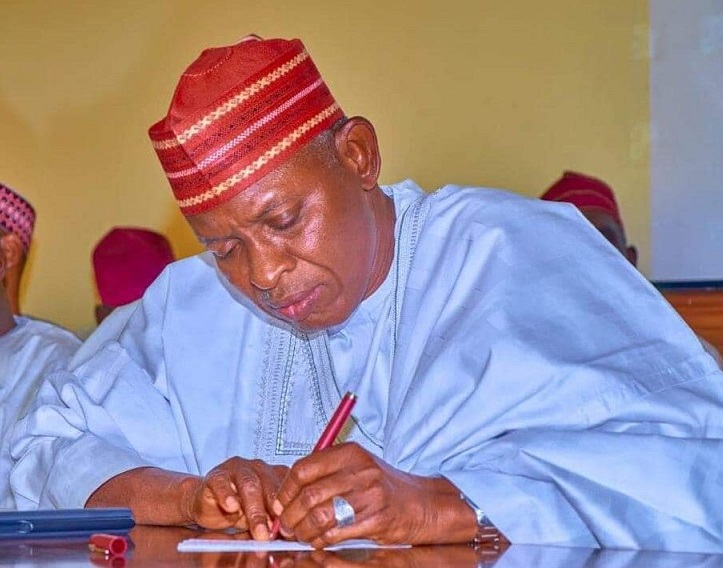
Dr Sani Danjuma: An uncommon gatekeeper

By Sani Surajo Abubakar

Dr. Sani Danjuma was among Governor Abba Kabir Yusuf’s personal aides appointed on the 16th of June, 2023 as Senior Special Assistant (SSA) Administration I, but later assigned to oversee the portfolio of Principal Private Secretary (PPS) to the governor following the redeployment of the earlier appointment PPS Dr. Faruk Kurawa to (Kano State Agricultural and Rural Development Authority) KNARDA as substantive Managing Director.

Before his first appointment into the administrative circle of the government of Alhaji Abba Kabir Yusuf, he served as a senior lecturer and the Head of the Computer Science Department of the Northwest University, Kano. 

In the intricate web of governance, the role of a Principal Private Secretary to a Governor is often understated yet profoundly impactful. Dr. Sani Danjuma, as the Principal Private Secretary to the Governor of Kano State, exemplifies the qualities of an uncommon gatekeeper. 

His dedication, strategic acumen, and unwavering commitment to public service have made him an indispensable asset to the Kano State Government.

As a pillar of support, Dr. Danjuma’s role extends beyond mere administrative duties. He is the linchpin in the Governor’s office, ensuring seamless communication, efficient coordination, and timely decision-making. 

His expertise in managing complex schedules, facilitating high-level meetings, and advising on strategic matters has been pivotal in the smooth operation of the government.

Dr. Danjuma’s role has contributed to the smooth operation of the government by ensuring that decisions are implemented effectively; his robust coordination between public agencies is leading to more efficient service delivery.

Beyond his administrative responsibilities, Dr. Danjuma serves as a trusted advisor to the Governor, providing informed and innovative insights. His ability to analyse complex issues, foresee potential challenges, and propose effective solutions has earned him the respect and trust of his peers and superiors.

Also, his commitment to public service is evident in his tireless efforts to support the Governor’s initiatives and policies.

He is driven by a passion for contributing to the development of Kano State and improving the lives of its citizens. 

His work ethic and professionalism set a high standard for others in the public service.

What sets Dr. Danjuma apart is his uncommon leadership style, which combines humility with effectiveness. He leads by example, inspiring those around him to strive for excellence. 

Thus, his ability to work collaboratively with various stakeholders, from government officials to community leaders, has been crucial in advancing the Governor’s agenda.

Dr. Sani Danjuma’s role as an uncommon gatekeeper is a testament to his exceptional skills, dedication, and commitment to public service. 

As he continues to serve the people of Kano State in this capacity, his contributions will undoubtedly have a lasting impact on the state’s development. 

His story inspires all who aspire to make a difference through public service.

In recognising Dr. Danjuma’s contributions, we acknowledge not just his professional achievements but also his character and the values he upholds. He is indeed an asset to the Governor’s office and a role model for future generations of public servants to emulate.

By highlighting Dr. Danjuma’s qualities and impact, it becomes clear that he is an indispensable tool in the number office in the state, contributing significantly to the state’s development.

His dedication to public service and strategic thinking is one of the tools that make him an exemplary figure in governance. 

Sani is the deputy director of the Public Enlightenment at Kano Government House.

Kano government dismisses allegation of new $6.6m loan as politically motivated

By Uzair Adam 

The Kano State Government has refuted claims that it secured a new external loan of $6.6 million under the current New Nigeria People’s Party (NNPP) administration.

In a statement issued on Thursday, the Director General of the State Public Debt Management Office, Hamisu Sadi Ali, described the allegation as false and politically driven.

The claim was made by a group known as the APC Patriotic Volunteers, which alleged that Governor Abba Kabir Yusuf’s government had taken a fresh loan within two years of assuming office—an allegation earlier reported by the Daily Nigerian on June 11, 2025.

Sadi Ali dismissed the report, insisting that the present administration had not contracted any new domestic or external loans since coming into power.

“Since the inception of the NNPP-led administration till today, the Kano State Government under the leadership of His Excellency Alhaji Abba Kabir Yusuf has not taken a single fresh loan,” he said.

He clarified that the government is still servicing loans inherited from the previous All Progressives Congress (APC) administration, which he described as a “wasted” eight-year period under former Governor Abdullahi Umar Ganduje.

The debt office boss also criticised Usman Alhaji, the leader of the APC group and former Secretary to the State Government, questioning his understanding of the 2021 law that established the State Public Debt Management Office—a law signed during the APC administration.

“If he claims ignorance of the law, we must remind him of Section 4(b), which empowers the State Debt Management Office to borrow on behalf of the government—under strict procedures and documentation,” Sadi Ali said.

He challenged the group to provide verifiable evidence from the Federal Debt Management Office in Abuja to back their claims.

“They should provide the name of the creditor, the subsidiary loan agreement, the purpose of the loan, the amortisation schedule, and whether it is a multilateral or bilateral loan,” he added.

Sadi Ali emphasised that the public can now differentiate between facts and political propaganda, adding that Governor Yusuf remains committed to fulfilling his mandate without being distracted by baseless accusations.

Gov Yusuf visits Kano pilgrims in Saudi Arabia, offers sallah gifts

By Uzair Adam 

Kano State Governor, Abba Kabir Yusuf, has extended his Sallah greetings to the state’s pilgrims in Saudi Arabia and presented them with monetary gifts to mark the occasion. 

During his visit to their accommodation on Saturday night, he gifted each pilgrim 250 riyals, approximately N105,000.

Governor Yusuf praised the success of this year’s Hajj exercise, describing it as an improvement over previous years, particularly last year. 

“Last year’s Hajj exercise was also good, but this one is better, and we are grateful to God for this success,” he remarked.

The governor said the visit was intended to strengthen relationships, pray for the progress of Kano State and Nigeria, and share in the joy of Sallah with the pilgrims.

He urged the pilgrims to continue praying for Kano, Nigeria, and for those who lost their lives during the Hajj exercise. 

“I also commiserate with the families of those who died in Makkah, Madina, and during Arafah. May those who are missing be found,” he said.

Governor Yusuf called on the pilgrims to remain dedicated to their acts of worship and avoid any actions that might compromise the completion of their Hajj rituals until they return home safely.

He thanked the Kano State Pilgrims Welfare Board, local government chairmen, and other stakeholders for ensuring a smooth Hajj experience. 

“I also thank the local government chairmen for their unwavering support in caring for the people from their areas. And there are also members of the State Assembly, like I said. None of them is sleeping. Everyone is doing their best,” he added.

The governor concluded by praying for the acceptance of the pilgrims’ Hajj and a safe trip back to Nigeria.

In his remarks, the Director General of the Kano State Pilgrims Welfare Board, Lamin Rabi’u Ɗan Baffa, expressed gratitude to Governor Yusuf for his unwavering support and leadership during the pilgrimage.

Kano govt launches probe into suspicious salaries of 379 LG staff

By Uzair Adam

The Kano State Government has inaugurated a nine-member fact-finding committee to investigate allegations that 379 local government staff received salaries without proper identification.

This was disclosed in a statement issued on Wednesday by Aliyu Yusuf, Director of Public Enlightenment at the Office of the Head of Service.

He said the decision followed growing agitation from civil servants over salary inconsistencies, prompting the state to revamp its payroll committee.

According to Alhaji Abdullahi Musa, the Head of Service, the committee will determine whether the affected staff members are retired, deceased, or otherwise untraceable.

The situation reportedly came to light during a salary validation exercise in which dummy vouchers were distributed across MDAs to help staff cross-check their pay against official records.

Musa explained that the discovery raised serious concerns, necessitating the constitution of a committee to ascertain the status of the affected workers and recover any salaries paid in error.

The committee is also tasked with recommending measures for preventing such irregularities in the future.

He urged members to approach the assignment with sincerity, merit, and the fear of Allah.

The committee is chaired by Hajiya Kubra Iman, Permanent Secretary of the Ministry of Tourism and Culture.

Other members include Abdulmalik I. Rogo and Auwalu Saminu Sagagi from the Local Government Payroll Standing Committee; Lamido Aminu from the Office of the Head of Service; and Nura A. Baba from the Ministry for Local Government and Chieftaincy Affairs.

Also on the team are Aminu Malamijo Abdullahi of SUBEB, Aliyu Sani Muhammad from the Office of the SSG, with Sulaiman Hodi Adamu and Sadiq Faruk Yola serving as secretary and co-secretary, respectively.

The committee has been given two weeks to submit its report.

Kano censorship board suspends Manyan Mata, Dakin Amarya, Labarina, 19 others for violating guidelines

By Uzair Adam 

The Kano State Censorship Board has suspended 22 Hausa film series, including Dakin Amarya, Labarina, Gwarwashi, Dadin Kowa, Gidan Sarauta, and Manyan Mata, for allegedly violating the Board’s censorship regulations.

The suspension was announced by the Executive Secretary of the Board, Abba El-Mustapha, following a management meeting and internal consultations. 

According to a statement issued by the Board’s Information Officer, Abdullahi Sani Sulaiman, the action is part of a strategic effort to ensure that all films are subjected to censorship before public release, in line with existing laws.

The Board warned all producers and owners of the affected series to halt further streaming or broadcasting of the content via television or online platforms. 

It directed them to submit their films for censorship approval within one week, starting from Monday, May 19, 2025, or risk facing legal consequences.

Sulaiman further called on television stations and the Nigerian Broadcasting Commission (NBC) to support the Board’s enforcement efforts and help safeguard the integrity of the local film industry.

According to Sulaiman, the affected film series include:

1. Dakin Amarya  

2. Mashahuri  

3. Gidan Sarauta  

4. Wasiyya  

5. Tawakkaltu  

6. Mijina  

7. Wani Zamani  

8. Labarina  

9. Mallaka  

10. Kudin Ruwa  

11. Boka Ko Malam  

12. Wayasan Gobe  

13. Rana Dubu  

14. Manyan Mata  

15. Fatake  

16. Gwarwashi  

17. Jamilun Jiddan  

18. Shahadar Nabila  

19. Dadin Kowa  

20. Tabarmar  

21. Kishiyata

22. Rigar Aro

Open letter to Governor Alhaji Abba Kabir Yusuf

Accelerating Kano’s Future Through Technology and Innovation

Your Excellency, 

I write to you with profound optimism about the transformative potential of technology and innovation to position Kano State as a beacon of progress in Nigeria and beyond. As Africa’s youth population surges, Kano, rich in culture, commerce, and human capital, is uniquely poised to harness this demographic dividend by embracing technology as a catalyst for economic growth, social equity, and sustainable development.  

Your Excellency, I recognise and commend your commendable efforts and those of the Kano State Ministry of Science, Technology, and Innovation, under the visionary leadership of the Honourable Commissioner, in laying the groundwork for transformative projects already in the pipeline. The recent establishment of the Kano State Information Technology Development Agency (KASITDA) is a particularly strategic leap forward, signalling the state’s resolve to institutionalise tech-driven growth. These efforts are a critical foundation, and I urge sustained momentum to ensure their timely execution. 

The recommendations outlined herein aim to complement and accelerate these existing plans, providing additional frameworks to attract global partnerships, amplify local talent, and unlock scalable opportunities. By building upon the Ministry’s initiatives and KASITDA’s mandate, Kano can fast-track its rise as a regional leader in technology-driven development.  

Why Technology Matters

Technology is not merely a tool but a foundation for modernisation. It drives efficiency, creates jobs, and bridges gaps in education, healthcare, governance and more. For Kano, where over 60% of the population is under 25, investing in tech equips our youth with skills to compete globally while addressing local challenges like unemployment, agricultural productivity, and access to public services.  

Globally, nations such as Rwanda and India have demonstrated that prioritising tech ecosystems can spur prosperity. Closer home, Lagos’s emergence as a start-up hub highlights the power of deliberate policy and infrastructure. Kano, with its strategic location, historical significance, and entrepreneurial spirit, can surpass these models by tailoring solutions to our unique context.  

A Blueprint for Transformation

To unlock this potential, I propose the following actionable initiatives:  

1. Establish Kano Tech City

Create a dedicated innovation district with co-working spaces, labs, and incubation hubs. Partner with organisations like Google, Alison – Free Empowerment Platform, Microsoft Africa, Altmentor and more to offer training, mentorship, and funding access. This ecosystem will nurture startups in EdTech, AgriTech, FinTech, HealthTech, etc, sectors critical to Kano’s economy.  

2. Revolutionise Education

Integrate digital skills into school curricula. Launch “Kano Code Clubs” and sponsor scholarships for students pursuing careers in STEM fields. Collaborate with Universities to offer advanced degrees in emerging technologies, ensuring a pipeline of skilled talent.  

3. Upgrade Infrastructure

Prioritise broadband expansion, especially in rural areas, and deploy solar-powered tech centres to overcome energy challenges. Reliable internet and electricity are non-negotiable for attracting global investors.  

4. Enact Innovation-Friendly Policies

Offer tax breaks for tech start-ups, streamline business registration, and establish a regulatory sandbox for testing solutions. Launch a Kano Innovation Fund to provide grants and venture capital. Some Innovation-Friendly Policies are outlined below;

-Tax Incentives & Financial Support

  • 5-Year Tax Holiday: Exempt early-stage start-ups (0–3 years) from corporate income tax, PAYE, and land use charges. 
  • Investor Tax Exemptions: Offer 100% capital gains tax relief for investments in Kano-based tech start-ups. 
  • R&D Grants: Fund 50% of R&D costs for startups in priority sectors (AgriTech, EduTech, renewable energy).
  • Kano Equity Fund: Establish a state-backed venture capital fund to co-invest in high-potential startups, matching private investments 1:1.  

-Ease of Doing Business

  • 24-Hour Start-up Licensing: Create a dedicated tech desk at the Kano Investment Agency to fast-track business registration, licenses, and permits. 
  • Regulatory Sandbox: Allow start-ups in FinTech, HealthTech, and mobility to test products for 12 months without full regulatory compliance. 
  • Land Grants: Allocate subsidised land in Kano Tech City to start-ups and investors who commit to hiring at least 60% local talent.

-Talent & Immigration

  • Tech Talent Visa: Partner with the Federal Government to expedite visas for foreign founders, engineers, and investors relocating to Kano. 
  • Residency Rebates: Offer 50% discount on residency fees for startups that train and hire 100+ Kano youths annually.  

-Market Access & Growth

  • Government Procurement Quota: Mandate 20% of state procurement contracts (e.g., e-governance tools, agri-supply chains) to be awarded to local tech startups.
  • Export Incentives: Subsidise Saas (Software-as-a-Service) startups to scale across Africa by covering 30% of their cross-border marketing costs.  

-Investor Confidence & Exit Opportunities

  • Investor Matchmaking: Host quarterly pitch sessions connecting startups with angels and global VC networks.
  • Acquisition Support: Legal and financial advisory subsidies for startups exiting to foreign or local acquirers.  

-Sector-Specific Boosts

  • AgriTech Subsidies: Free state-owned farmland for AgriTech startups piloting IoT-enabled irrigation or crop-monitoring drones.
  • AI Ethics Framework: Develop Nigeria’s first state-level AI governance guidelines to attract ethical tech firms and global grants.  

-Long-Term Stability

  • 10-Year Policy Guarantee: Legislate a “Kano Innovation Charter” to lock in incentives beyond political cycles, ensuring investor confidence. 
  • Kano Tech Ambassadors: Appoint youth innovators as global ambassadors to showcase success stories in international media.  

5. Host Annual Tech Conferences

Showcase Kano’s potential through events like “Kano Innovates,” attracting investors, entrepreneurs, and thinkers. Celebrate local success stories to inspire a culture of innovation.  

Attracting Investment

A thriving tech ecosystem signals stability and opportunity. By cultivating homegrown talent and infrastructure, Kano will attract investors seeking opportunities in untapped markets. Public-private partnerships can further de-risk investments, while success stories will generate organic interest.  

A Call to Legacy

Your Excellency, this vision demands bold leadership. Imagine a Kano where farmers use drones to monitor their crops, artisans sell their products globally via digital platforms, and students use AI to solve community problems. Championing this agenda will secure Kano’s place as a hub of African innovation, creating jobs, reducing poverty, and inspiring generations.  

The time to act is now. Let us collaborate with stakeholders, businesses, educators, and youth to build a Kano that leads, not follows.  

Abubakar Sadiq Umar writes from Kano and can be reached via email at aserdeeq@gmail.com

Kano to equip 200 schools with 50,000 computers

By Hadiza Abdulkadir

Governor Abba Kabir Yusuf has announced that 200 public schools in Kano State will each receive 250 computers, totalling 50,000 units, under a major digital education initiative supported by the World Bank through the AGILE Project.

The distribution, aimed at bridging the digital divide in education, was announced during the flag-off ceremony for instructional materials distribution held in Kano.

“Our goal is to bridge the digital divide and ensure our students are not left behind in this era of technological advancement,” the governor said.

According to Sunusi Bature Dawakin Tofa, the governor’s spokesperson, the initiative is expected to boost digital literacy among students and enhance the overall quality of education in the state.

“This is a transformational investment in our future. It will improve access to technology and empower thousands of students with the tools they need for academic success,” Bature said in a statement on Monday.

Governor Yusuf reaffirmed his administration’s dedication to promoting inclusive and innovative education through investments in digital tools and resources.

Kano Govt to solarise 200 public schools

By Hadiza Abdulkadir

In a bid to provide stable electricity and improve learning conditions in public schools, Governor Alhaji Abba Kabir Yusuf has announced plans to solarise 200 public schools across Kano State.

The initiative, unveiled during the official flag-off ceremony for the distribution of instructional materials to schools, is part of the World Bank-supported Adolescent Girls Initiative for Learning and Empowerment (AGILE) Project.

Governor Yusuf stated that the installation of solar power systems would ensure uninterrupted electricity supply, thereby creating a conducive environment for learning and digital education.

“This effort is part of our broader commitment to modernise education infrastructure and ensure that our students are learning in environments that support innovation and growth,” the governor said.

His spokesperson, Sunusi Bature Dawakin Tofa, noted in a statement issued Monday that the intervention aims to eliminate power-related challenges that have long hindered the use of technology in public schools.

The solar project is expected to enhance teaching and learning outcomes while supporting other digital initiatives planned by the state government.

Kano bans live political programmes

By Hadiza Abdulkadir

The Kano State Government has imposed an immediate ban on all live political programmes aired by media organisations in the state.

As Kano Times online news media reported, the decision was announced during a quarterly stakeholders’ meeting organised by the Ministry of Information and Internal Affairs. The meeting, chaired by the Commissioner for Information, Comrade Ibrahim Abdullahi Waiya, brought together government officials and media executives.

In a statement signed by Sani Abba Yola, Director of Special Duties at the ministry, the ban aims to prevent the spread of inflammatory content that could jeopardise the state’s cultural and religious harmony.

“We are not trying to stifle political dissent,” Comrade Waiya told the gathering. “Our objective is to protect the sanctity of our cultural and religious values.”

Further measures were introduced during the meeting. All individuals invited for interviews on media platforms must now sign an undertaking committing to avoid abusive, defamatory, or culturally insensitive remarks.

Presenters have also been directed to avoid provocative questions or gestures that might provoke defamatory or damaging statements against individuals or the state.

Waiya acknowledged a recent decline in the use of inflammatory language on air, crediting the ongoing collaboration between the ministry and media houses for the improvement.

He also disclosed that the government has rolled out sensitisation campaigns targeting political presenters, media commentators, and members of the Council of Friday Imams to promote responsible public discourse.

“We want to ensure that all public communication is done with integrity—free of defamation and in a way that protects the reputation of Kano State,” Waiya said.

Kano judiciary suspends two registrars, cautions two judges over misconduct

By Uzair Adam

The Kano State Judicial Service Commission has suspended two court registrars and issued formal warnings to two Upper Sharia Court judges for various acts of misconduct.

This was announced in a statement by the spokesperson of the Kano State Judiciary, Baba Jibo Ibrahim, on Sunday, April 27, 2025, according to SolaceBase.

The statement said the disciplinary measures were approved during the Commission’s 80th meeting held on April 22, 2025, based on the recommendations of the Judiciary Public Complaints Committee.

Principal Registrar II of the High Court of Justice, Ibrahim Adamu, was suspended without pay for six months and had his promotion delayed after being found guilty of verbally assaulting and attempting to physically attack his superior — actions that violated the Kano State Civil Service Rules 2004 and Judicial Service Commission Regulations. 

The statement noted that this was his second appearance before an investigative panel for violence-related misconduct.

In a related case, Maigida Lawan, a Principal Registrar of the Sharia Court of Appeal, was found guilty of demanding and receiving improper gratification under false pretences. 

Consequently, he was demoted from GL-13 to GL-12 and suspended without pay for six months.

Meanwhile, Upper Sharia Court Judge Alkali Mansur Ibrahim was issued a formal warning after evidence showed he used abusive language toward a litigant. 

Similarly, Upper Sharia Court Judge Alkali Nasiru Ahmad received a caution for ordering the detention of a judgment debtor in circumstances that suggested a conflict of interest and compromised judicial impartiality.

The Commission reaffirmed its zero-tolerance policy toward corruption and misconduct, warning that any court staff found guilty of such practices would face compulsory retirement. 

It stressed that judicial officers must uphold fairness, integrity, and respect for all court users to maintain public trust in the judiciary.