Kano Emirate

Why I wrote A Glimpse of Takai in the History of Kano

By Salihi Adamu


Writing A Glimpse of Takai in the History of Kano has been a personal journey for me. Growing up, I have read stories about Takai’s rich history and its impact on the Kano emirate. However, I noticed that there wasn’t a single book that told the story of Takai in a way that was easy to understand. This book is my attempt to fill that gap.

As I researched Takai’s history, I discovered many interesting stories and facts. I learned about the town’s founding, its role in the Kano Civil War, and its cultural heritage. I also met with people from Takai who shared their experiences and insights with me. Through these interactions, I gained a deeper understanding of the town’s history and its people. This book is a reflection of what I have learned, and I hope it will be a valuable resource for anyone interested in learning more about Takai.

This book is not a complete history of Takai. Instead, it’s a collection of stories and facts that give readers a glimpse into the town’s past. I have endeavoured to make the book accessible to a diverse range of readers, from those interested in history to those seeking to learn more about Takai.

One of the challenges I faced while writing this book was deciding what to include and what to leave out. Takai’s history is complex and multifaceted, with many stories that could be told. I have tried to focus on the most important events and themes, while also leaving room for further research and exploration.

I hope that A Glimpse of Takai in the History of Kano will inspire readers to learn more about Takai and its people. I also hope that it will contribute to a greater understanding and appreciation of the town’s history and culture.

I would like to thank everyone who contributed to this book, from the people of Takai who shared their stories with me to my family and friends who supported me throughout the writing process. Ultimately, this book is a labour of love, and I am proud to share it with readers. 

Kano Emirate Crisis: Group demands swift police response after ‘premeditated’ palace disruption

By Hadiza Abdulkadir

A coalition of concerned citizens has issued a strong call to the Nigeria Police Force for an urgent investigation into what they describe as “premeditated acts of provocation and incitement” targeting the Kano Emirate.

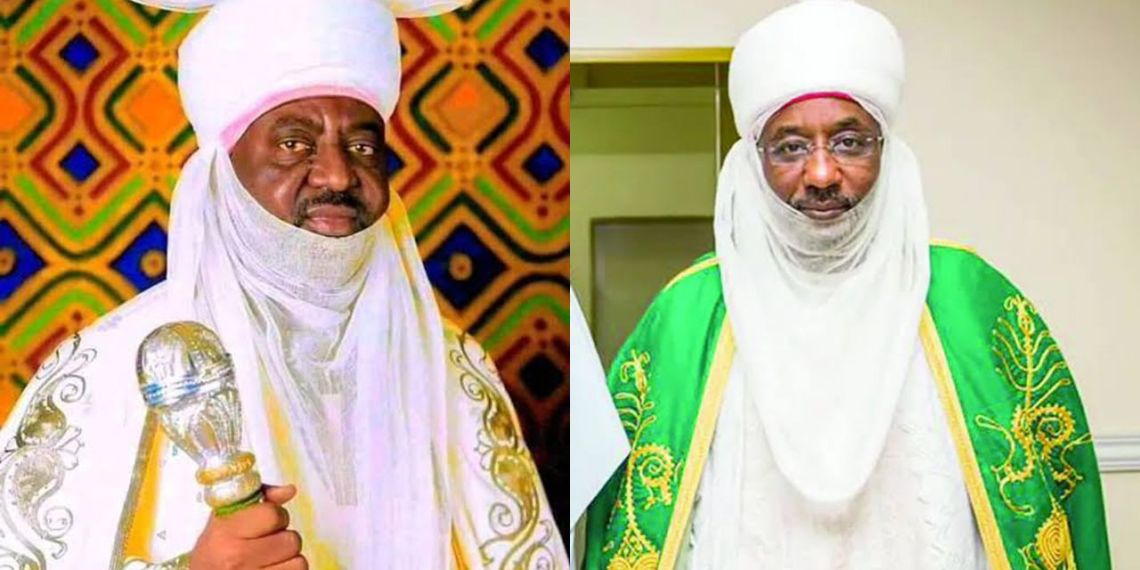
The group, led by Secretary General Rabiu Matazu, alleges that recent unrest surrounding the annual Durbar celebrations was orchestrated by associates of the deposed Emir, Aminu Ado Bayero. According to the statement, supporters of the former Emir had publicly mobilised thugs via social media to gather at his Mandawari residence, which lies directly along the route of Emir Sanusi’s durbar procession.

The release also describes a separate incident involving Aminu Ado Bayero’s convoy, which reportedly passed in front of Gidan Rumfa — the official residence of the Emir — during a condolence visit. Eyewitnesses claim the convoy tore down official banners and damaged parts of the palace wall, while chanting threats against Emir Sanusi.

“This is not [a] mere coincidence,” the statement read. “These are coordinated efforts to provoke confrontation and destabilise the Emirate.”

In stark contrast, the statement commended Emir Sanusi II for what it described as a peaceful and respectful gesture during the Nasarawa Eid durbar, deliberately avoiding the Nasarawa Palace where Bayero is said to be “squatting.”

The group is demanding that the police investigate all aspects of the incidents, including social media incitement, acts of vandalism, and the role of any influential individuals behind the provocations. They emphasise that accountability should not be selective.

“Kano has suffered enough,” the statement concluded. “The people deserve peace, stability, and a police force that enforces the law without fear or favour.”

Open letter to Emir Aminu Ado Bayero: A reflection on leadership and legacy

By Kamal Alkasim

As a passionate observer of our culture and heritage, I am writing this letter from the heart of Kano metropolis. It was driven not by personal interest, but by love for our land, its history, and the legacy entrusted to its leaders.

Your Highness, it is said that to whom much is given, much is expected. As the custodian of a rich cultural heritage, the expectations placed on your shoulders are immense. You come from a distinguished royal lineage: your late uncle, Emir Muhammadu Sanusi I, was a towering figure whose leadership left a deep mark across Northern Nigeria. More recently, your nephew, Muhammadu Sanusi II, carried the same torch, boldly defending the dignity and legacy of the Kano Emirate, even after facing unjust dethronement in 2020.

The legacy of your father, the late Emir Ado Bayero, speaks for itself. He reigned with wisdom and dignity for over five decades. History recalls how former Governor Abubakar Rimi once attempted to depose him, but fate and divine will had other plans. That chapter ended in tragedy, and Rimi never held office again. Your father, on the other hand, continued to serve and left behind an enduring legacy.

Your Highness, the Kano Emirate has stood for over a thousand years as a beacon of leadership, culture, and Islamic scholarship. It deserves a leader who will defend its dignity with integrity, wisdom, and a sense of responsibility that transcends personal or political interests.

Sadly, many believe that under your leadership, the kingdom has faltered. There are concerns that you have allowed yourself to be used as a tool by those with no regard for the unity and peace of Kano. These are strong words, but they come from a place of deep concern and affection for our home.

Leadership is not about holding a title; it is about rising to the moment and making tough but principled decisions in the interest of the people. Leadership is not about clinging to a throne while the city suffers unrest and division. Peace, justice, and unity must always come first.

Your name will forever be in the history books as one of the Emirs of Kano. That, in itself, is no small achievement—one that countless princes before you have dreamed of. But how your name is remembered depends on what you do with the responsibility now entrusted to you.

Let Kano rise again—not as a battlefield for political power plays, but as the most peaceful, united, and respected state in Nigeria and beyond. Let the Emirate return to being a symbol of honour, not controversy.

May God guide you to lead with justice, dignity, and wisdom—for the sake of our people and the generations to come.

Kamal Alkasim is a Concerned Son of Kano.

Kano Emirate crisis deepens as rival emirs appoint separate Galadimas

By Abdullahi Mukhtar Algasgaini

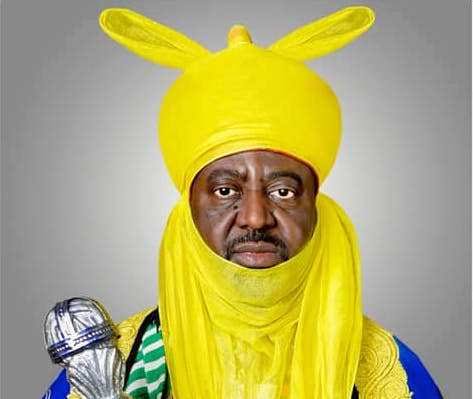
The power struggle within the Kano Emirate has escalated as both Emir Aminu Ado Bayero and reinstated Emir Muhammad Sanusi II have appointed different individuals to the prestigious Galadiman Kano title.

Emir Aminu Ado Bayero approved Alhaji Sanusi Ado Bayero, eldest son of the late Emir Ado Bayero, for the position, with his installation set for May 2, 2025.

Meanwhile, Emir Sanusi II had earlier named Alhaji Munir Sanusi Bayero as Galadiman Kano on April 9, filling the vacancy left by the late Alhaji Abbas Sanusi.

The conflicting appointments highlight the ongoing feud between the rival emirs, stemming from Sanusi II’s controversial reinstatement.

The situation raises concerns over further division in the historic emirate.

Appeal court halts Sanusi’s reinstatement as emir, awaits supreme court decision

By Uzair Adam 

The Court of Appeal in Abuja has suspended the enforcement of its January 10 judgment, which upheld the Kano State Government’s repeal of the 2019 Emirate Council Law, pending the determination of an appeal at the Supreme Court.  

The appellate court, sitting in Abuja, overturned the June 20 order by Justice Abubakar Liman of the Federal High Court in Kano, which had nullified actions taken by the state government under the Kano State Emirate Council (Repeal) Law 2024, including the reappointment of Sanusi Lamido Sanusi as the 16th Emir of Kano.  

The court ruled that Justice Liman issued the order without jurisdiction. Dissatisfied with the decision, the Kano State Government took the case to the Supreme Court and sought an injunction at the Court of Appeal to halt the execution of the judgment while awaiting the apex court’s ruling.  

On Friday, a three-member panel of justices led by Justice Okon Abang ruled on two suits—CA/KN/27M/2025 and CA/KN/28M/2025—filed by Alhaji Aminu Babba Dan’agundi (Sarkin Dawaki Babba). 

The suits were brought against the Kano State Government, the Speaker of the House of Assembly, the Inspector General of Police, the Nigeria Security and Civil Defence Corps, and other security agencies.  

Dan’agundi’s application, filed on February 6, 2025, sought to prevent the respondents from enforcing the appellate court’s judgment while an appeal was pending before the Supreme Court. 

He argued that the trial court lacked jurisdiction over the case and emphasized the need to maintain the status quo.  

In a unanimous ruling, Justice Abang held that the application was valid and deserving of the court’s discretion in the interest of justice. 

He stated that preserving the subject matter of the case was necessary since a valid appeal was already before the Supreme Court.  

The court ordered that the status quo be maintained as it was before the Federal High Court’s ruling on June 13, 2024. 

It also directed the applicant to file an undertaking within 14 days to indemnify the respondents for damages if the order was later found unnecessary.  

With this ruling, the reinstatement of Sanusi Lamido Sanusi as Emir of Kano remains on hold, pending the Supreme Court’s final decision on the matter.

Judge bars lawyers from granting media interviews

By Abdullahi Mukhtar Algasgaini

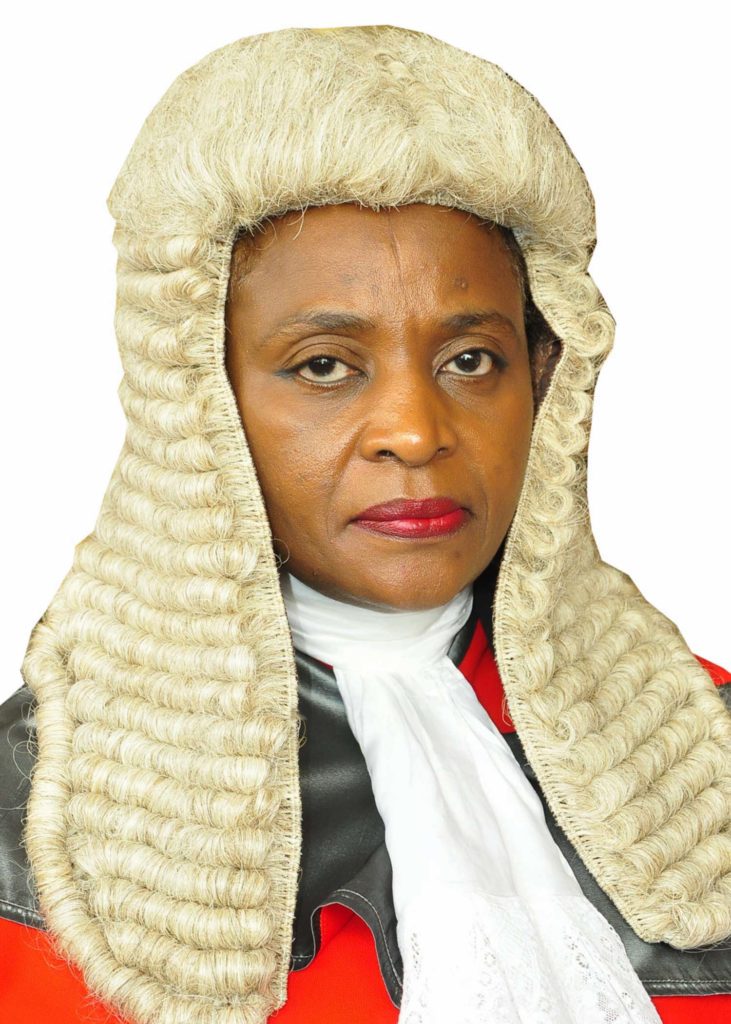
A Kano State High Court presided over by Justice Amina Aliyu, has restrained lawyers from granting reporters interviews in the ongoing Kano Emirates Tussle case.

Justice Aliyu gave the order on Thursday during the court proceedings.

“I am giving an order to lawyers not to grant any interview with journalists before and even after my ruling on the respondent stay of proceedings application pending the hearing and determination of the appeal,” the Judge said

The applicants in the case are the Attorney General and Commissioner of Justice of Kano State, Speaker Kano State House of Assembly, and Kano State House of Assembly, through their counsel Ibrahim Isah-Wangida filed a motion exparte dated May 27.

The applicants are seeking the court to restrain the deposed Emir, Aminu Ado Bayero, and four other dethroned emirs of Bichi, Rano, Gaya, and Karaye from parading themselves as emirs.

The respondents in the suit are Alhaji Aminu Ado-Bayero, Alhaji Nasiru Ado-Bayero Bichi emir, Dr Ibrahim Abubakar ll, Emir of Karaye, Alhaji Kabiru Muhammad-Inuwa, Emir of Rano and Alhaji Aliyu Ibrahim-Gaya, Emir of Gaya.

Others are the Inspector General of Police, Director of State Security Service, Nigeria Security and Civil Defence Corps, and Nigeria Army.

The Kano throne dilemma

By Ibrahim El-mu’azzam 

Four years ago, we witnessed the removal of Mallam Muhammadu Sunusi II as the Emir of Kano and the splitting of the Kano emirate a few months earlier. As they say, what goes around comes around.

Since then, many people have prayed, predicted, and foreseen that the action would be reversed. Thanks to time and destiny, we are now witnessing the return of the Emirates to one and the reinstatement of Muhammadu Sunusi II to Gidan Rumfa and the throne of Dabo. People forget too soon; if not for that, this wouldn’t have made these trends and surprises.

Muhammadu Sanusi II was legally appointed as the 14th Emir of Kano by Gov. Rabi’u Kwankwaso in 2014, following the passing of Alhaji Ado Bayero, the 13th Emir of Kano. Although he initially faced the usual opposition from some people, his appointment was eventually accepted by all, including the family of his predecessor, the Emirate council, the people of Kano, and the global community.

After about six years, a personal-political misunderstanding arose between him and the then-government of Dr Abdullahi Ganduje. This personal-political interest had no adverse effect on the Emirate or the good people of Kano state. However, despite calls from respected individuals and institutions worldwide, as well as a court order, Ganduje, in a display of power, divided the ancient Kano kingdom into five different kingdoms and proceeded to dethrone Sunusi on groundless grounds.

Ganduje didn’t stop there. He took the former CBN governor, the 14th Emir of Kano, an Imam, and the chartered Economist to Loko and later to Awe villages in Nasarawa state, where there was reportedly no stable electricity and water supply. His actions were only halted by the intervention of Malam Nasiru El-Rufa’i, the then-governor of Kaduna state.

You see, I’m not a big fan of SLS. I disagree with some of his takes, but this is an apparent disrespect and damage not only to him but also to the Kano Emirate, the people of Kano, and the entire Kingdoms of Shehu Usmanu Ɗanfodiyo. It pained me more to divide the Kingdom into pieces than to even dethrone the King.

Alhaji Aminu Ado succeeded the central Kano Emirate and performed admirably. I admire his personal qualities, demeanour, lifestyle, and effective handling of the throne. I often tell people that Sarki Aminu Ado embodies more of the traditional King’s character than Sarki Sunusi II. But sad, Aminu Ado was alive and well when his father, Bayero, the 13th Emir, passed away, and Sunusi was appointed. Despite Aminu’s charisma, love of the people, and competence, Sarki Sunusi was chosen by the Almighty to ascend to the Kano throne.

Ever since the campaign of the current governor of Kano state, Engr. Abba Kabir Yusuf, there have been suggestions to reinstate Sunusi and restore the Kingdom to its previous state. I supported this idea, but I didn’t fully agree with the decision to remove the Kano Emir again. I wanted the Kingdoms to be returned, with Aminu continuing as the King. I hoped Sunusi would oversee and move forward, especially with the furtherance that occurred and continue to befall him, like the Khilafa of Tijjaniya and more. I strongly oppose the idea of our honourable Kings to be played like toys by democratically elected governments. I even think of how unaware people were when the law of dethroning a King was made like this.

Although I have some doubts, I wanted everything to be very amicable, especially since all the parties are descendants of Malam Ibrahim Dabo—the same family, living in the same house and sharing the same bloodline. However, Sunusi’s return and acceptance of the reinstatement should not be blamed.

Firstly, for Emir Sanusi, it’s a repetition of history. The same thing happened to the King whose name he bears, Muhammadu Sunusi I. So, to cleanse their lineage of misfortune and bad luck, he can take this as a starting point.

Secondly, he was the last occupant of the undivided Kano throne. It is suggested that the five created kingdoms should be dissolved. Sarki Aminu has not been sworn in for the undivided Kano kingdom. If he is the one to continue, there must be an elevation that extends the continuity of the process. With this, reinstating Sunusi is more legal and straightforward. 

Furthermore, if Aminu is to continue, it will likely be forever prohibited for Sarki Sunusi to visit his origin, the Gidan Dabo. This is a hardly bearable consequence with the opportunity at Sarki Sunusi’s disposal. More importantly, everything is believed to be done on baseless grounds.

We should be reminded that the ultimate desire of every heir to a throne is to be crowned. In addition, Sarki Sunusi’s got the government at hand, the similar power that dethroned him before. Therefore, I don’t view this action as wrongful but rather corrective. The criticisms of Sarki Aminu’s supporters are expected and accepted.

Dr. Ganduje, the prior architect of the dilemma, is currently in a position where he has to watch everything unfold. He is even facing challenges in his current role. Whether he initiated this with a positive or negative mind, it’s up to him to reap. The important lesson to remember is that power is transient. If you have it now, use it wisely; it may turn against you in the future.

In conclusion, it is very significant to call on the Sultan, the high-ranking Emirs, and other stakeholders to address the law that allows Governors to singlehandedly dethrone their Emirs. It doesn’t make sense at all. These Emirs were the foundation. They founded these communities and controlled them for centuries. Then why on earth should a borrowed phenomenon dominate the founding one? Why should an Emir be selected or dethroned without the consent, not even the approval, of the Sultan or his Emirate council? This is the major issue that needs to be addressed.

For Gidan Dabo. Sarki Sunusi, Sarki Aminu, and Sarki Nasiru, you all come from that house. It’s your base and heritage. Why would you allow the government or any external party to distort your peace and relationships?

Sarki Sunusi and Sarki Nasiru lived in the same room for over a decade. Sarki Sunusi’s first wife, Sadiya Ado Bayero, is a biological sister to Sarki Aminu and Sarki Nasiru. Sarki Ado Bayero was on good terms with Sarki Sunusi I. It’s your family. Why would you let an outsider tear you apart? Assume the government dethroned Sarki Sunusi II in the first place, and you all disagree with it; none of you accepted it. Can Ganduje give it to an outsider? “Sai bango ya tsage ƙadangare ke shiga” – “It’s when the wall cracks that a lizard gets a passage,” as Malam Bahaushe says. Please give this a concerned look.

I believe it’s high time for the Emirs and Kings of our respective Kingdoms in Nigeria to stand firm in upholding their dignity and that of their kingdoms. It’s hard to believe that an Emir needs the consent of his local government chairman for his outings and some of his activities. I understand the importance of the position of a local government chairman, but when compared to that of an Emir or a King, there’s a clear distinction. Let’s face reality, set aside selfishness and personal interests, and work together for the betterment of our lands.

A person’s power is his greatest enemy. He either uses it well, or it uses him well.

Sarki Muhammadu Sunusi II (the 14th and 16th Emir of Kano), may Allah protect and guide you. Sarki Aminu Ado, Sarki Nasiru Ado, and the others, may the Almighty accept the right you have done and overlook the wrong. May the blessings of the Almighty be upon all of you for eternity.

Ibrahim El-mu’azzam wrote via elmuazzammail@gmail.com.

Court adjourns hearing on Kano emirship tussle

By Uzair Adam Imam

The Federal High Court sitting in Kano has adjourned the hearing regarding the removal of Kano Emir Aminu Ado Bayero to June 13, 2024.

The lawsuit, filed by Aminu Babba Dan’agundi, a title holder and senior counsellor in the Kano emirate, challenges the repeal of the 2019 Emirate Council Law by the Kano State House of Assembly.

Presided over by Justice Abdullahi M. Liman, the court has set the case for ruling on June 13, 2024. Aminu Babba Dan’agundi, represented by Barrister M. S. Waziri, argues that the repeal of the 2019 law unlawfully stripped both the Emirate Council and the plaintiff of their powers.

Counsel to the 1st and 4th respondents, Mahmoud Abubakar Magaji SAN, urged the court to decline jurisdiction to entertain the matter, citing that the law has gone through legislative processes and the order was made after the action was done.

Ibrahim Isah Wangida, counsel to the 2nd and 3rd respondents, aligned himself with Magaji’s submission, stating that the applicant’s rights were not breached as the 2024 law was repealed and accented to before the applicant filed the action.

Sunday Ekwe, counsel to the 5th and 6th respondents, stated that they did not file any issue on jurisdiction, as the duty of the police is to maintain peace and wait to carry out the court’s order.

The court requested written submissions from both sides and will review them before rendering a decision on June 13.The respondents in the suit include the Kano State Government, Kano State House of Assembly, Speaker of Kano State House of Assembly, Attorney General of Kano State, Kano Commissioner of Police, Inspector General of Police, NSCDC, and DSS.

This legal battle is part of a larger crisis revolving around the emirship in Kano, following the dethronement of Aminu Ado Bayero and the reinstatement of Muhammadu Sanusi II by the Kano State government, creating tensions in the ancient city.

Currently, both emirs are holding court from separate palaces, with Sanusi operating from the main emir’s palace and Bayero presiding from the Nasarawa GRA mini palace.

Reinstatement of Emir Muhammadu Sanusi II and the resurgence of thuggery in Kano

By Aliyu Dalhatu Adamu

Kano people are known as peace-loving, as inculcated by the longest-serving Emir of the kingdom, Alhaji Ado Bayero,who led for over 50 years. His charisma and love for his people made him unique among all African traditional rulers. 

Kano people were traumatised by His Highness Alhaji Ado Bayero’s demise in June 2014, and the loss remained irreplaceable until 2020 when His Highness Alhaji Aminu Ado Bayero became the Emir of Kano. His emergence renewed the hope of the Kano people because he exhibited the same characteristics as his father. This makes him earn the love that people have for his father, which no one has in Kano.

The recent development of the Emir and reinstatement of the deposed Emir Sunusi Lamido Sunusi have seriously disrupted peace and stability in the state. This has opened doors for hooligans and thugs to widen their operations in the state.

It is a known fact that hooliganism and thuggery threaten the security of lives and property in every society. Hence, leaders are saddled with the responsibility of maintaining law and order to prevent potential offenders from engaging in such acts. 

It is unfortunate to say that the current administration of Governor Abba Kabir Yusuf has begun to do the other way around, as hoodlums and thugs are allowed to take over the Kano palace in the name of protecting the selfish and politically motivated interest of his political godfather. This has become a serious threat to the peace and safety of people in Kano as the hoodlums are harassing and intimidating people at will within the vicinity of the Kano Emir’s palace, all in the name of imposing Sunusi on the throne, which is facing outright absolute rejection by the good people of Kano.

This unbecoming attitude is becoming an eye-opener for young children who are now growing to witness this evil as a condoned behaviour. This may contribute to making hooliganism a wider phenomenon, a useful symbol, and a social obsession in the future tradition of the Kano Emirate traditional system.

Since the reinstatement of Sunusi Lamido Sunusi to Gidan Dabo, the palace and areas such as Kofar Kudu, Kano Municipal, Gwale, Dala, and the surrounding areas become the headquarters of thugs. Even medical workers at Hasiya Bayero Paediatric Hospital were attacked on the 27th of May, 2024. The Nigerian Medical Association (NMA) issued a statement condemning the barbaric development. Many other people living in the neighbourhood are not spared either.

This situation arose when the city’s public spaces were “swarming” with thousands of newly armed groups mandated to “protect” and pay allegiance to Emir Sunusi. These groups were recruited by the Kano state government only to praise their political master at the detriment of public safety.

Indeed, Gov Yusuf’s incompetence, ineptness, and clueless leadership style are undoubtedly taking Kano back to square zero. The pickle of the Kano emirship brawl is a cessation of Kano peace and stability as a courtesy to Senator Rabi’u Musa Kwankwaso, former Governor of the state Kwankwaso, by Governor Yusuf and the former Emir Sunusi Lamido Sunusi, in a bid to drag Kano to the state of anarchy. 

Hooligans also came to represent the dangers inherent in loosening constraints on society. Even when hooligans victimised people far from their concerns, the increase in their numbers, the apparent pettiness of their motives, and the savagery of their actions within Gidan Dabo suggested that certain members of the lower classes were either very beastly or very angry and that the mechanisms of state’s control were no longer in place to checkmate this.

Now, what we ask is, does the state government prioritise praising its political godfather over protecting the blood of theKano people?

Ironically, hooliganism and thuggery that previous administrations fought have now been revived by the present administration as the number 2IC in the government triggered the infiltration and indoctrination of youth into hooliganism and thuggery.

On this note, we are calling on the federal government, security agencies, intelligence communities, Nigerian Bar Association (NBA),  northern traditional rulers, religious leaders and all other relevant authorities to intervene. They should also advise the Kano state government to obey the court order restraining them from reinstating the deposed Emir Sunusi Lamido Sunusi and dissolving the remaining four Emirates in the interest of the good people of Kano. This will bring an end to hooliganism, public disrespect, defiance, chaos, and violence that are capable of destabilising the peace and security of Kano State.

Aliyu Dalhatu Adamu wrote from the Federal University, Dutsinma, Katsina State, via

aliyudalhatuadamu@gmail.com.

Of Kano and the need for change

By Abdullahi Aminu Mudi

The intriguing question is, what makes Kano State what it is today? Coming from Kadawa on Zaria Road, into Unguwa Uku, and on Eastern By-Pass, going up to Mariri, and getting to Wudil, back to Hadejia Road, going up to Dawanau and Bichi, and finally, moving to Janguza on Gwarzo road, is a sprawling and a densely populated city. Its growth in number matches its enterprising exuberance. Kano is a commerce city with a large market covering northern, extending to many parts of central and southern Nigeria, and linking up to the Central African Republic, Niger, Cameroun, and Chad.

As business and entrepreneurial opportunities abound in Kano, due to a large population, it represents a sordid state with a grubbily degenerating condition. Its growth depicts chaotic organization, unplanned settlements, lack of, in many aspects, the absence of sanity in the society and the public system. This is the intriguing question that points to a paradox and a binary of opposites; from one angle, one sees the positive outlook of Kano, and another perspective provides insight into the deplorable and annoying situation that has engulfed the state.

The impetus for this write-up emanates from the disorganization that has become of Kano. Given its status and development, the state has metamorphosed over the years into what it is today. Therefore, setting a clear path, and for us to understand and appreciate the status of Kano, its historical and evolutionary development must be looked into. This will shed light on its present condition and the challenge of managing a cosmopolitan state. Building on this, having understood its current situation, an attempt will be made in the second part of this article to suggest pathways towards addressing such challenges and rebuilding Kano to claim its rightful position.

Like many other cities, towns and states, Kano’s evolutionary and historical development to what it has become cannot be linked to or reduced to a single factor. Cumulative actions by different actors and events, not what some historical accounts say, of the decline of Katsina as a city of commerce, or the trans-Saharan trade, have influenced and shaped Kano’s growth and ascendency. Ruled through a combination of efforts and collaboration between traditional authority, merchants, and religious leaders, over the years, from pre-colonial, through colonial and post-colonial times, Kano has transformed and developed. During the colonial era, the traditional leadership took active steps by changing key institutions and making the Native Administration a functional system in a way that key social and economic sectors were made to be responsive. Thus, industrialization and economic reinvigoration were made to match statecraft. Under Alhaji Abdullahi and Alhaji Muhammadu Sunusi (I) as emirs of Kano, the Challawa and Bompai Industrial layouts were established. These were made and established to industrialize the state. Their impacts, so enormous were they, relative self-sufficiency was achieved, jobs were created, and set Kano in an envious position.

This collaboration and the state’s central role in development and planning continued in post-colonial Kano, principally with Audu Bako’s government prioritizing agriculture and its value chain. Based on the prevailing macro-economic, social and political climates, subsequent military and civilian regimes enhanced Kano’s industrial atmosphere and production base. The state, capable of competing and compared with any other important state in Africa, became significant. As a consequence of the phenomenal economic activities, an aviation hub and centre emerged, serving the domestic market, and connecting regional and international routes.

Amid the oil boom in the early 1970s, shortly after Nigeria’s civil war, the federal government’s indigenization and nationalization policies led to the emergence of industries in many states. Manufacturing and assembly plants became catalysts for economic activities. In Kano, Bompai and Challawa became beehives of activities. With the progress made and subsequent expansion, Sharada Phase I and II came on stream serving Nigeria and many other African countries. These developments were made possible through the active interplay between various institutions, political actors, and the merchant class.

The collaboration, as stated earlier, over the years, to what prevailed in the 80s, made Kano a centre to be reckoned with, then, even with the subsequent economic decline and collapse of industries in the following years. This collapse signals the frightening condition that was to become of Kano from the 80s to the present. In the last three decades, the aftermath of this collapse from the 1980s has seen a persistent increase in unemployment, rise in social vices, failure in social and political institutions and general discontentment, coupled with excessive population growth. Kano’s position has continued to degenerate and placed it on a gargantuan precipice. Kano’s enduring decay represents a classical negation of positive and functional development. It is not the case here; it is neither growth without development but a community geared towards self-destruction and eventual destruction.   

Coming into Kano’s airspace from Lagos or Abuja, pleasing as it is, as one nears home, descending into the town, one’s happiness changes into a burning gloom, as one comes into a full glimpse of Kano as a poorly planned city or an unplanned one. From 1999, with the coming of new civilian administration, Kano witnessed drastic changes and massive development in socio-economic and commercial activities. It also heralds crystallization, from the rise of industrialization in the 60s up to the early 80s, of a downturn and further decline and collapse of manufacturing. As political leadership collaborated with the merchant class in bringing about industrialization in Kano state, their cumulative efforts and inactions derailed the state’s progress in this dispensation even against their enlightened self-interest.

It would seem, looking at the myriads of challenges, nagging and unmanageable as they have been, institutional bottlenecks might have hampered development. Indeed, institutional failure, especially in the public sector, dramatically contributes to escalating the challenges facing the state. Against itself, the public sector operates in a complete variance of its mandates, sowing discord and seeds of its destruction and weakening its sustainability. The civil service cannot be relied upon to carry out government business or regulate life in civil society. One cannot understand this failure in isolation and a vacuum.

Since 1999, Kano has been managed by four regimes belonging to different political parties. Successful implementation of policies of each administration relies on an efficient and effective civil service. However, and to our dismay, none of these regimes ever contemplated reforming the civil service so that contemporary challenges are tackled, visions translated into policies, and their implementation carried out. Expediency, which is a hallmark of utility, necessitates a system of succession that is vital and critical to the survivability of the public system. There is a need to do a lot to fix these and other problems, especially in recruitments and promotions in the civil service.

Mr Mudi sent this article via aamudi28@gmail.com.