Kano

Security: Kano rolls out smart transport tracking system for commercial vehicles

By Uzair Adam

The Kano State Government has rolled out a Smart Transport Solution aimed at enhancing security and improving efficiency within the state’s transport system through the use of modern tracking technology.

The Daily Reality reports that the programme was unveiled on Saturday at the Afficient Event Centre, where top government officials, transport stakeholders and security agencies gathered for the flag-off.

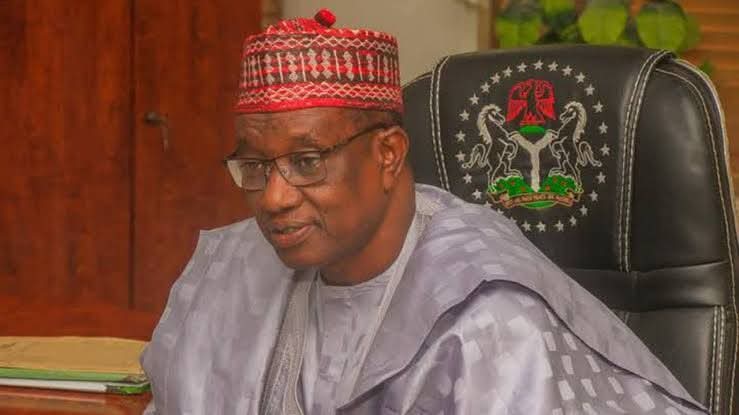
Speaking at the event, the Commissioner for Transport, Barrister Haruna Isa Dederi, said the initiative, although new to Kano, is a globally tested system already deployed in major cities around the world.

“This is a system which is new in Kano, but not new in the world and not new in major cities,” Dederi said, explaining that the technology enables authorities to monitor transport activities in real time using cameras and satellite-based tracking.

He noted that the system would capture the movement of commuters and vehicles entering the state from designated points, with relevant data transmitted to appropriate authorities for monitoring and response.

According to the commissioner, security agencies including the police, the Ministry of Transportation and the Cabinet Office will have access to dedicated dashboards to track activities across the transport network.

“Everybody will be monitoring what is happening,” he said, adding that the initiative was informed by the growing influx of people into Kano due to its relative peace and economic opportunities.

Dederi stressed that while Kano remains one of the most peaceful states in northern Nigeria, there is a need to adopt modern technology to sustain security.

“That is why we just have to employ a lot of technological innovation, which will help us ensure absolute security in Kano,” he said, while commending the cooperation of security agencies in the state.

On the scope of the programme, the commissioner explained that the tracking system would initially cover all commercial vehicles, including tricycles, taxis, buses, trailers and tankers, with plans to eventually extend it to private vehicle owners.

“For the start, we are focusing on all commercial vehicles,” he said. “Eventually, it will come down to everyone.”

He added that the initiative is in line with the state’s comprehensive transport policy, which provides a legal framework for public-private partnerships and encourages investment in road and rail infrastructure.

“The government cannot go it alone. Partnership through public-private collaboration is the global trend, and Kano will benefit from it,” Dederi said.

Also speaking, the Head of Operations of As&Aj Company, Dr. Aminu Umar Maigari, explained that the firm is the technical partner responsible for deploying and managing the tracking technology used for the Smart Transport Solution.

He said the system was introduced to address security challenges in the transport sector and protect both commuters and their property, noting that As&Aj Company is providing the software platform and tracking devices required for effective monitoring.

Maigari described the initiative as part of Kano State’s efforts to embrace information technology in governance, adding that it would improve transparency and accountability in transportation operations.

He explained that the application required to access the system is free to download and use, with operators only expected to complete a Know Your Customer (KYC) process and install the tracker.

“The good thing about it is that it’s free. You don’t need to pay anything to download and use the application,” he said, adding that the combined cost of the KYC and tracker is N28,000, with a 10 per cent government subsidy for the first one million subscribers.

He noted that the flag-off ceremony was intended to create awareness among transport unions and local government stakeholders, adding that full deployment of the system would commence the following Monday.

In a show of support, the Chairman of the Vehicle Owners and Transporters of Nigeria (VOTOR), Comrade Nazifi Gidan Kudi, commended the initiative, describing it as timely and necessary.

He said the Smart Transport Solution would help check excesses among commercial vehicle operators, address unsafe driving and riding practices, and enhance security across the state.

The Daily Reality gathered that the Smart Transport Solution is expected to mark a significant step in Kano State’s drive to modernise its transport sector and strengthen public safety through technology-driven governance.

SIMDA confirms fire outbreak at Singer market

By Anas Abbas

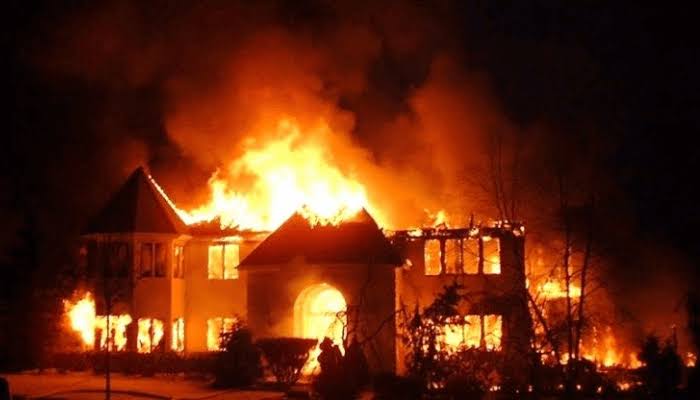
The Singer Market Development Association (SIMDA) has reported a major fire outbreak at Singer Market, which began at about 3:00 a.m. and is still ongoing as of the time of this report. The incident has caused panic among traders and residents in the area.

In a statement shared by the chairman of the association, Barrister Muhammad Zakari called on members of the public and the business community to offer prayers for divine intervention as efforts continue to contain the fire. The association described the situation as serious and distressing.

The chairman urged everyone to remember the affected traders in their prayers, asking Allah to protect lives and minimize losses resulting from the inferno. He emphasized the importance of unity and support during this difficult moment for the market community.

The statement concluded with prayers for Allah’s mercy and protection, asking Him to bring the fire under control and restore calm to the market. “May Allah save us from this calamity,” the chairman prayed

Updates on how the fire started and the level of damage recorded will be communicated in due course.

Residents set suspected phone snatcher ablaze in Kano

By Sabiu Abdullahi

A suspected phone thief sustained severe injuries after a mob attack in the Dorayi area of Kano State.

Sources said the incident occurred after the suspect was accused of attempting to steal a mobile phone belonging to a woman. The accusation led to a confrontation, which later escalated into violence.

Witnesses disclosed that the woman sustained injuries during the incident and was immediately taken to a nearby hospital for medical attention.

Residents in the area stated that the youths subdued the suspect before the arrival of security operatives. They later poured petrol on him and set him on fire.

A tricycle rider, Abba Tilda, told newsmen: “When I got to the scene, the woman was being put on a ride to get her to the hospital.

“They poured petrol on the suspect and lit the match. He was still moving when the security agents took him. The road has been completely blocked.”

The suspect was later taken into custody for further investigation.

Dorayi has recorded similar violence in recent weeks. A woman, Fatima Abubakar, and her six children were murdered in the same area a few weeks ago.

As of the time this report was filed, the Kano State Police Command had yet to issue an official statement on the incident.

Kaduna police arrest seven suspected bandits, seize rifles, pistols

By Uzair Adam

The Kaduna State Police Command has arrested seven suspected bandits and recovered five firearms with live ammunition in separate intelligence-driven operations across the state.

The command’s spokesperson, DSP Mansir Hassan, disclosed this in a statement issued on Friday in Kaduna, saying the arrests followed credible intelligence on the activities of armed suspects.

According to Hassan, the first operation was carried out on January 28 at about 5:45 p.m. after security operatives received information that some individuals were in possession of prohibited firearms.

He explained that detectives attached to the Anti–Car Theft Section of the State Criminal Investigation Department promptly acted on the intelligence, leading to the arrest of five suspects.

He said the operation resulted in the recovery of an AK-47 rifle with two fully loaded magazines, two Beretta pistols with one fully loaded magazine, as well as a locally fabricated Beretta pistol loaded with seven rounds of live ammunition.

The suspects, he added, are currently in custody while investigations continue to track other criminal networks linked to them.

In a related operation on January 29, Hassan said the Divisional Police Officer of Zaria City Division led a team of 47 Police Mobile Force operatives on stop-and-search duties following intelligence reports on the movement of armed bandits.

“The operation led to the arrest of two suspects, Adamu Lawal and Abdulhadi Lawal, both from Malumfashi Local Government Area of Katsina State, with a locally fabricated firearm recovered from them,” he said.

Hassan noted that the suspects are cooperating with investigators and providing information that could lead to further arrests.

He added that the Commissioner of Police, CP Rabiu Muhammad, commended the officers for their professionalism and swift response, while reaffirming the command’s zero tolerance for banditry and other forms of criminality in Kaduna State.

Kano police arrest 25-year-old man for allegedly assaulting own mother, recover pistol

By Sabiu Abdullahi

The Kano State Police Command has arrested a 25-year-old man, Ididiong James, over an alleged assault on his mother and the possession of a firearm and ammunition.

The command said the suspect was arrested after operatives attached to the Panshekara Division responded to a distress call on January 25 concerning his actions.

In a statement released on Wednesday, the Police Public Relations Officer, CSP Abdullahi Haruna Kiyawa, said officers who arrived at the residence discovered that the suspect was “mercilessly beating his mother at their residence in Panshekara Quarters, Kano.”

According to the statement, the suspect escaped when the police officers got to the scene. His mother later handed over an English Beretta pistol and eight rounds of ammunition to the officers. She told the police that she found the items inside her son’s bag and refused to return them to him, which allegedly triggered the attack.

“She also expressed concern over her son’s changed behaviour since his return from a New Year celebration,” the statement added.

The police spokesperson said the suspect was later apprehended and is now in custody, while investigations continue.

“The suspect was subsequently arrested and is currently in police custody. The Commissioner of Police, CP Ibrahim Adamu Bakori, PhD, commends the mother for her courage and urges parents to be vigilant,” the statement said.

The police assured members of the public of their commitment to maintaining peace and safety across the state.

2027: APC grants Governor Abba Kabir Yusuf automatic ticket, Ganduje declares

By Sabiu Abdullahi

Former National Chairman of the All Progressives Congress (APC), Dr. Umar Abdullahi Ganduje, has announced that Governor Abba Kabir Yusuf will enjoy full backing of the party ahead of the 2027 governorship election in Kano State.

Ganduje made the declaration while formally receiving Yusuf back into the APC. He stated that all other aspirants interested in the governorship seat had agreed to step aside in favour of the governor.

According to him, “I can categorically tell you that you are going to wins 2027 with a landslide because all those contesting for the same seat have agreed to allow you alone go for it.”

He described Yusuf’s return as a historic moment for the party. “To us, leaders of the APC, this is a memorable occasion we are all waiting for. I strongly welcomed Governor Abba Kabir Yusuf back to his home,” Ganduje said.

The former party chairman recalled the governor’s earlier exit from the APC and expressed appreciation over his return. He said, “We were in APC together with you, it was formed with you, but later on because of some political differences, political redirection, you left the party to NNPP. But now we are thankful that you are back to our party and your home.”

Ganduje also praised Yusuf’s leadership style and governance approach. “You as our brother, the Governor of Kano State, you are a progressive politician from your utterances, your policies and the implementation of those policies,” he added.

He stressed that within the APC structure, Governor Yusuf now occupies the position of party leader in Kano State. Ganduje noted that the declaration was meant to end speculation and internal disagreements over the party’s leadership in the state.

He further spoke on President Bola Ahmed Tinubu, describing him as a leader who does not discriminate. Ganduje said the president treats Nigerians equally, without regard to religion or ethnicity, and expressed confidence that Yusuf would secure victory in the 2027 election.

In his remarks, the Deputy President of the Senate, Senator Barau Jibrin, praised Governor Yusuf for his decision to return to the APC. He maintained that the move was firm and irreversible.

The development has continued to draw attention within political circles as preparations gradually begin ahead of the 2027 polls.

Kwankwaso and the cost of fighting godsons 

By  Ibrahiym A. El-Caleel

Senator Rabiu Musa Kwankwaso should be competing on the national stage with contemporaries such as Senator Bola Tinubu, Alhaji Atiku Abubakar, and other Class of 1999 political actors. By pedigree, experience, and longevity, Kwankwaso has clearly outgrown Kano politics, and he does not need to prove it again in 2027. However, he appears stuck in state-level politics. 

Kwankwaso is at odds with the two successive Kano governors after him, both of whom are his protégés: Dr Abdullahi Ganduje and the incumbent, Engr Abba Kabir Yusuf. He says they have “betrayed” him. There was a show of electoral force at his residence in Kano this afternoon. A large number of people trooped into his Miller Road residence in what he later called a “solidarity visit”.  

These developments indicate that Senator Kwankwaso is once again positioning himself for state-level dominance rather than advancing a national ambition in 2027. Ideally, Kwankwaso should defeat Governor Abba through a candidate he anoints for #KanoDecides2027. But a deeper question remains: should the 2027 ambition of a politician of Kwankwaso’s stature be focused on unseating a “betraying” godson at the state level, when Kwankwaso’s contemporaries have either honourably retired from politics or are positioning themselves for the presidency? 

Who exactly would Kwankwaso replace Abba with, and what assurance does he have that a newly installed godson would not eventually “betray” him, just as Ganduje and Abba did? At this point, there is little reason to believe the outcome would be different. The current godsons around him are likely to use his influence to rise and then assert their independence once in office. There is no clear indication that they would be more submissive than their two elder political siblings, Ganduje and Abba. How do you keep doing the same thing repeatedly while expecting a different result? 

There is also a genuine political risk. What if Abba Yusuf, like Ganduje before him, survives the onslaught and secures a second term? This is not an endorsement of electoral malpractice, but a recognition of Nigeria’s political realities. Kano’s 2019 gubernatorial election demonstrated how powerful interests can intervene decisively; Dr Ganduje ultimately retained office despite glaring indications that he lost at the polls.

If a similar outcome were to occur in 2027 and Governor Yusuf were to proceed to a second tenure, would that not constitute a second public humiliation for the godfather? What explanation would suffice then? That yet another protégé has matured enough to build political alliances strong enough to neutralise Kwankwaso’s influence? At that point, the narrative shifts decisively: from betrayed mentor to diminishing power broker.

On the other hand, if Senator Kwankwaso succeeds in unseating Governor Yusuf and installing another loyalist, what exactly would he be celebrating at the end of the day? That Kwankwasiyya has simply replaced Kwankwasiyya? That a godfather has prevailed over his own godson? Such victories may satisfy the logic of control, but they do little to expand political influence, strengthen institutions, or advance democratic culture. At best, they amount to an internal power rotation within the same political family, offering no clear gain to the broader society.

Ultimately, this debate goes beyond personalities. Do we really need a political model anchored on godfathers, covenants, and lifelong loyalty to patrons? Has Buhari’s repeated endorsement of anointed candidates meaningfully improved governance or political culture in the North? Has Tinubu’s entrenched godfatherism in the South West translated into measurable social or institutional progress? Until we seriously examine the long-term costs of political baptism, loyalty tests, and patronage politics, it remains difficult to argue that godfatherism is the most viable model for a modern democratic society.

 Ibrahiym A. El-Caleel wrote via caleel2009@gmail.com.

Gov. Yusuf quits NNPP amid escalating internal crisis in Kano

By Sabiu Abdullahi

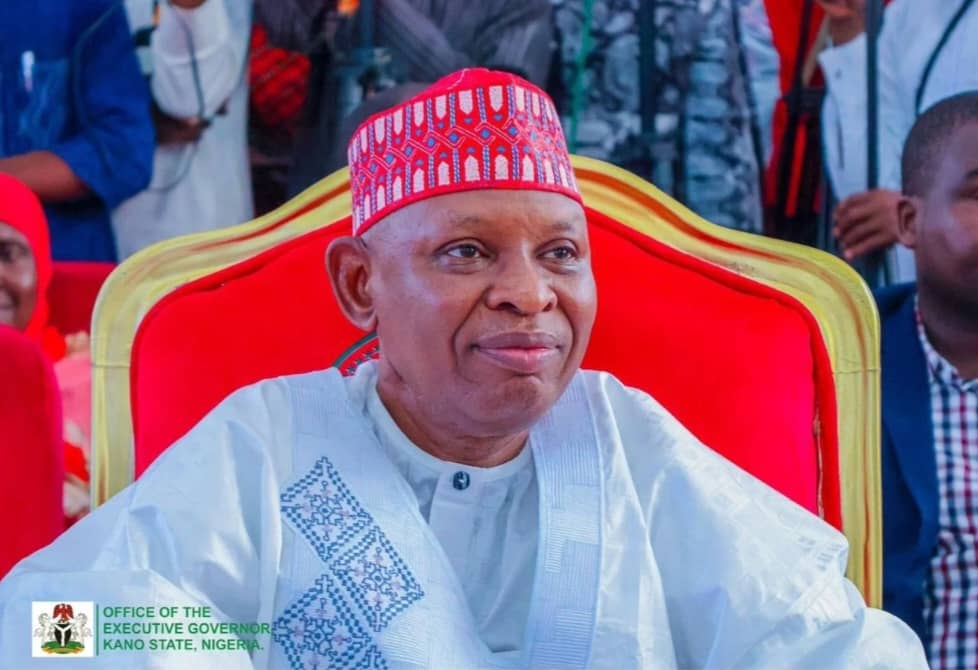
Kano State Governor, Alhaji Abba Kabir Yusuf, has resigned his membership of the New Nigeria People’s Party (NNPP), attributing his decision to worsening internal disputes and a resolve to protect the overall interest of the people of Kano State.

The development was disclosed in a press statement dated January 23, 2026, and signed by the governor’s spokesperson, Sunusi Bature Dawakin Tofa.

According to the statement, Governor Yusuf conveyed his decision in a letter addressed to the Chairman of Diso-Chiranchi Ward of the NNPP in Gwale Local Government Area, with the resignation taking effect from Friday, January 23, 2026.

In the letter, the governor stated, “I write with a deep sense of gratitude to formally notify the leadership of the New Nigeria People’s Party (NNPP) of my decision to resign my membership of the party, with effect from Friday, 23rd, January 2026.”

Governor Yusuf expressed appreciation to the party for the opportunity and support it offered him throughout his time as a member.

“I remain sincerely appreciative of the opportunity given to me by the party, its leadership, and members across Kano State to be part of its political journey since 2022, as well as the support, goodwill, and cooperation extended to me during my time in the party.”

He explained that persistent leadership disputes and legal battles had continued to destabilize the party at the national level.

“In recent times, the party has been confronted with persistent internal challenges arising from leadership disagreements and ongoing legal processes, many of which are presently before the courts for judicial determination.”

The governor noted that the situation had led to serious divisions and weakened unity within the party.

“The growing disenfranchisement among party members has created deep divisions within the party structure, resulting in cracks that appear increasingly irreconcilable and have generated uncertainty at both state and national levels.”Governor Yusuf said his resignation followed careful consideration and was based strictly on public interest.“

After careful reflection, and without prejudice to the party’s capacity to resolve its internal challenges, I have come to the conclusion that my resignation is in the best interest of the people of Kano State.”

He added that the move was made without animosity and with a continued commitment to peace and development.

“This decision is taken in good faith, without any ill will, and with a continued commitment to peace, unity, and the progress of Kano State.”

The statement disclosed that the governor’s resignation was accompanied by that of 21 members of the Kano State House of Assembly, eight members of the House of Representatives, and 44 local government chairmen across the state.

The NNPP acknowledged receipt of the resignation letter through the party’s Secretary in Diso-Chiranchi Ward, Hon. Kabiru Zubairu, who praised the governor’s achievements in governance.

“I wish to concur with His Excellency on the lingering crisis in our party, though we are trying our best to contain it, but we have no option than to accept the resignation of a one and most performing Governor of the NNPP.”

Kano court remands cleric over alleged land document forgery

By Sabiu Abdullahi

A Magistrate Court in Kano State has ordered the remand of a popular Islamic cleric, Ibrahim Makwarari, over allegations of forgery linked to land ownership documents.

Mr Makwarari appeared before Magistrate Court No. 53, sitting at Normansland, Kano, on Wednesday. He is facing charges bordering on illegal possession of land and forgery of land documents in connection with two properties located along Ahmadu Bello Way in the Kano metropolis.

The charges were filed by the police after a petition submitted by the Kano State Ministry of Land. The ministry alleged that the cleric forged title documents that were originally issued in the names of Kassim Usman Baba and Audu Yaro Fagge.

According to investigators, the disputed documents were recovered from the defendant. The police stated that Mr Makwarari failed to give a satisfactory explanation concerning the authenticity of the documents.

When the charges were read in court, the defendant pleaded not guilty.Counsel to the defendant, A. T. Shehu, applied for bail and assured the court that his client would be available for trial. The prosecution counsel, Nura Salisu, opposed the request.

Mr Salisu told the court that the defendant had previously ignored police invitations and was arrested only after a specific court order was issued.

In his ruling, the magistrate, Mustapha Datti, granted bail to the defendant in the sum of ₦20 million with two sureties. The court directed that the sureties must include a district head from any local government area in the state, supported by an official letter from the relevant Emirate Council, and a Kano-based businessman with verifiable property.

The magistrate also ordered the defendant to submit his international passport to the court. Both sureties are required to provide recent passport photographs.

Mr Datti further ruled that the defendant should be remanded in a correctional facility until all bail conditions are met.

The case was adjourned to 12 February for hearing.

When silence kills: Lessons from Kano’s daylight tragedy

By Ibrahim Aliyu Gurin

What is more terrifying than violence? It is the sound of someone calling for help, with no one responding. That cry, unanswered, is the quiet horror that haunts our communities.

Last week in Kano, a family was killed in broad daylight. Neighbours reportedly heard the screams but stayed indoors. Outrage spread on social media. How could people hear such suffering and do nothing? How could an entire community remain silent while lives were being taken right next door?

At first, the silence felt unforgivable. Then I remembered something my Media and Society lecturer, Binta Suleiman Gaya, once said: crime is rarely about criminals alone. It is often a mirror of the society that allows it. Suddenly, the tragedy began to make painful sense.

I thought of my own experience. We grew up in a different Nigeria. Then, whenever discipline crossed into anger in our house, our neighbour was always the first to intervene. Once her name was mentioned,  “Hajja Mamma Yidam! Yidam!” (Rescue me), she would rush out immediately, pleading on our behalf. Sometimes we would deliberately call her name, knowing she would come to our rescue. That was how our society functioned. Not because everyone was perfect, but because everyone was involved.

We grew up in Nigeria, where even if a neighbour was beating a child, people would rush out to ask questions. Elders would intervene. Women would shout across fences. Youths would gather instinctively. No cry was ignored. No pain was considered private. That society shaped our humanity.

Today, a person can scream until their voice disappears into death, and doors remain locked. People now live only metres apart, yet are emotionally separated by fear. In Media and Society,  this condition is described as “alienation”, which is the gradual breakdown of social connection and communal responsibility.

Modern media culture has accelerated this separation. Through phones, television and social platforms, we are exposed to violence such as daily killings, kidnappings, and accidents, which are endlessly replayed. Human suffering now competes for attention in timelines and headlines.

Over time, this constant exposure creates “desensitisation”. What once shocked us now barely interrupts our scrolling. Tragedy becomes routine. Death becomes familiar. Media and Society argues that when violence becomes normalised in the media, society unconsciously absorbs that normalisation.

Alongside this is the rise of individualism. Survival has become personal. Safety has become private. The collective spirit that once defined African communities has been replaced with the logic of “mind your business.”  So when danger appears, people retreat indoors, but not always out of wickedness, but because society has trained them to think first of self, not community.

The course also explains the bystander effect, a psychological phenomenon in which individuals fail to act in emergencies because responsibility feels shared. Everyone assumes someone else will intervene. In moments like the Kano tragedy, everyone heard, and everyone waited.

Fear worsens this silence. Media reports of mob justice, wrongful arrests and police brutality have created deep public distrust. Many citizens now fear becoming suspects more than becoming helpers. The result is a society paralysed.

Media and Society helped me understand that insecurity is not only about criminals and weapons. It is also about broken trust, weakened communal values and a media environment that has reshaped human behaviour.

Our old society relied on communal vigilance. When danger came, the community itself became the first responder. Today, citizens wait for institutions that often arrive too late. The killers in Kano did not act alone. They were aided by fear and protected by our silence. 

The government must rebuild trust between citizens and security agencies. Community policing must be strengthened. Media institutions must go beyond reporting bloodshed and begin promoting empathy, social responsibility and communal vigilance. Religious and traditional leaders must revive the values that once made indifference shameful.

Beyond policies lies humanity. Every life lost affects us all. Speak up, protect your neighbours, and restore the community we once had.

We pray for the souls of those who lost their lives in Kano. May their families find strength, and may we as a society learn to act before it is too late. Let their cries not be in vain.

Ibrahim Aliyu Gurin wrote via ibrahimaliyu5023@yahoo.com.