Kaduna State

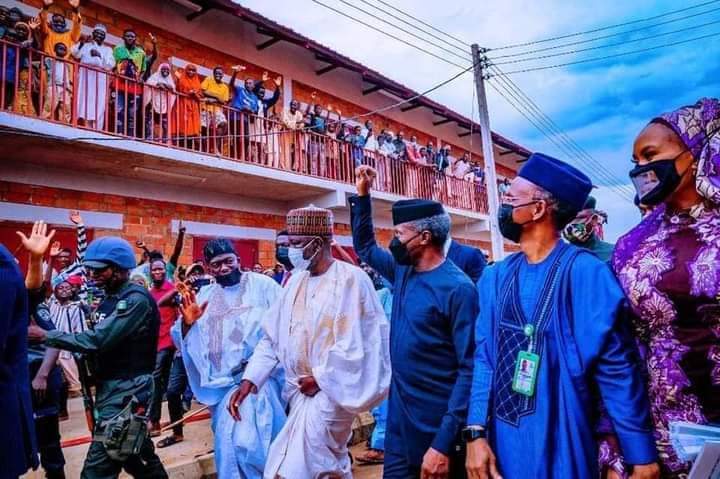
El-Rufa’i, Sanusi, others attend 6th KADINVEST

By Sumayyah Auwal Ishaq

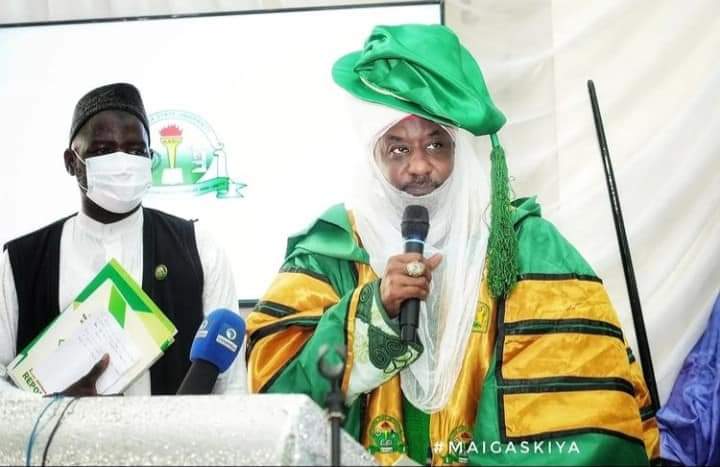
The 6th edition of the Kaduna Economic and Investment Summit (KADINVEST) has commenced this morning in Kaduna with Governor Nasiru Ahmad, El-Rufa’i, Minister of Water Resources, Eng. Sulaiman Hussain Adamu, Emir of Zazzau, Amb. Ahmad Nuhu Bamalli, Khalifa Muhammadu Sanusi II, among others, in attendance.

The theme of this year’s summit is “Towards a Knowledge-based Economy”. The Vice President, Federal Republic of Nigeria, Prof. Yemi Osinbanjo, SAN, will serve as Special Guest while His Highness, Khalifa Muhammadu Sanusi II, serves as the Guest Speaker. Other speakers will include Prof. Celestine Monga and Prof. Benedict Oyeh Oramah.

IGR, VAT controversies: a bright future for northern Nigeria

By Muhammad Sagir Bauchi

Adam Smith, in “Wealth of Nations”, while discussing what he tagged as “Canon of Taxation”, outlines some principles he describes as “Principles of Good Taxation”. These principles include fairness, certainty, convenience and efficiency. By the principle of fairness, he meant that the taxpayer’s condition should be considered before enforcing tax on him; this is in addition to the ability of the taxpayer to pay the tax. By certainty, the taxpayer should be informed on why he needs to pay his tax and how such taxes are levied on him. By the convenience, he refers to how the taxpayer finds the process of paying the tax as easy as it is. The final principle of efficiency described how the tax payment should have no negative effect on the distribution of resources in the economy.

In a short story, a man came to someone and asked him, “what should I be giving you every day?” He replied: “Sand”. So, as requested, whenever he meets that person, he picks up sand on the ground and hands it over to him. 

One day, that man came to him to collect the sand, but he looked at him abruptly and said, “Why can’t you bend down and fetch it by yourself? Why should I be giving you what you can have if you work hard?”

Recently, there has been an uproar between Federal Inland Revenue Services (FIRS) and Ekiti State Government. As a result, the state government came up with a law regulating Value Added Tax (VAT) collection. With the new law, the Ekiti state government will have absolute power to utilise the VAT generated from that state instead of the usual remittance to the Federation Account! Ab initio, a State high court granted an order to the Ekiti government to move on with their new VAT policy since they have already enacted a law to that effect. Still, a move by the FIRS through the Appeal Court blocked Ekiti State Government from putting the law into effect.

In the beginning, the will to challenge the Federal Government on VAT collection by the states was spearheaded by a single state. Still, by looking at the fruition that may come out from the success of such a legal battle, some states from the South-South joined Ekiti in the suit, thereby sending their representative to the Appellate Court.

Before going further, we need to understand what VAT refers to; for that, we will shed more light on the desperation and motives of these states to have the right to deduct VAT within the economy of their states.

According to FIRS, VAT is “a consumption tax paid when goods are purchased and services rendered“  to this, “all goods produced within or imported into the country are taxable except those specifically exempted by the VAT act”.The authorities responsible for the deduction of the VAT are; indigenous companies with non-resident companies within the country; government ministries, statutory bodies and other agencies of government; and companies operating in the oil and gas sector. These are the statutory bodies saddled with the responsibility of deducting the VAT in Nigeria.

From 2016-2020, Nigeria recorded more than five trillion naira from VAT deduction, but surprising, about three point nine trillion of that amount came from Ekiti and Lagos State. And as usual, the whole amount was shared between the three tiers of government with some amount given to the FIRS for its VAT deduction services! Naturally, human beings are similar to those two people mentioned that one gives sand and the other received, which at the end one expressed tiredness. 

Sentiment aside, it is hard to imagine how a state or region would work diligently harnessing such a hefty amount, in which, in the end, it will be shared with others that contributed little out of it.

Before discovering oil in commercial quantity, the Northern Region of Nigeria was the main contributor to GDP growth, which means that the agricultural sector was the primary source of foreign exchange to the country. But today, despite the contribution of agriculture to the GDP, Northern States rely primarily on what is given from the federation account. Today, it is no longer a secret that only some few Northern states can stand on their own to pay their workers salaries and wages, fulfil their financial commitments, not to mention financing their annual budgets. Most of them would go broke and insolvent if the federal government decided to withhold their monthly allocation for a single month!

To some analysts, the action of Ekiti and Lagos State Governments is nothing but a display of absolute selfishness. Still, to me, it is nothing but expressing their worth and importance to their counterparts.

Amidst this VAT controversy, a new statistical report on Internally Generated Revenue (IGR) of the 36 states of the federation for the fiscal year of 2020 was released. Lagos State is topping the list with about 418bn, Rivers with 117bn and Delta as the third. The report stated that only two Northern States are among the top 10 states with highest IGR, that’s Kaduna and Kano State. And it is not surprising since Kano is the commercial hub of the North. But, surprisingly, even the commercial nerve of the North is generating less IGR than Kaduna. Are commercial activities taking place in Kaduna greater than that of Kano? This shows that there’s transparency and accountability in Kaduna state more than that of Kano.

If one analyses that IGR statistical report and the five-year VAT table, he will weep for the sorry state of the northern states! And the implications of the possible ruling favouring those two states (Ekiti and Lagos) by the Appellate Court against the federal tier, then not only the northern states, but the remaining 34 states would find themselves in deep economic crises.

Then, what should the Northern policymakers do to improve their IGR and move away from dependence on monthly federal allocation?

I foresee a bright future for the northern states out of this development if only their policymakers pursue policies with a serious positive impact on the income of its majority (who are peasant farmers) other than policies that could only favour the wealthy and those in the government. For instance, if the agricultural sector will be given proper attention, thereby coming up with policies that could boost commercial farming through accessibility to quick/soft agro related loans, hybrid seeds with the ability to stand these ever-changing climatic conditions, mechanised farming equipment, setting up subsidised agro-allied chemical industries in the region, provision of good accessible roads connecting all the remote areas, all year round farming and a fair export zones, with these, its unemployed youths will surely seize that opportunity and venture into agro-businesses without looking up to the government for job opportunities in the government sector. But imagine an agricultural intervention program meant to cushion farmers difficulties is deeply flawed in I don’t care attitude of government officials, deliberate delays and nepotism, in the end, such interventions may not meet the majority of farmers on time!

Other regions in Nigeria cannot feed themselves without the support of the Northern farmers. So, why should we be panicking when they try to withhold their money? Why can’t the North stand up and bring out those opportunities? 

Despite the insecurity in almost all parts of the Northern region, one fact that can never be denied is that the area is blessed with arable land, enough for cultivating in dry and rainy seasons. Therefore, adequate farming inputs and machinery should be provided, either in loans or at a subsidised rate by the Northern states governments.

Curbing insecurity is another point that all the governors of the 19 northern states should work hand-in-hand to achieve.

Senators, Representatives and States Assembly members should focus on things that harmonise them with their governors to formulate policies that will boost their states IGR, rather than engage in their usual political war, which deprives millions of citizens of opportunities that may bring development to their livelihood and the region at large.

The impact of Small and Medium Enterprises (SMEs) in boasting every economy can never be neglected in every sound economy. But in northern Nigeria, those SMEs are either forced to shut down due to unfriendly tax policies or poor environment to carry out their activities. So, those SMEs should be given more reason to be alive than to seize to exist, thereby granting them soft loans with zero interest or a low interest rate and a friendly environment to carry out their activities.

Most of those states with high IGR have different means of gathering or sourcing revenue within their states. But in the North, both the tax collectors and taxpayers are not up to their responsibility. Therefore, a transparent and professional agency should be enacted in every state with the sole aim of creating awareness on the importance of paying tax, why they should be taxed and the transparent manner in which their tax is utilised.

Lastly, the principle of fairness, certainty, convenience and efficiency should be put into practice to generate more tax to boost IGR for those states.

Sagir writes from Bauchi State and can be reached via ibrahimsagir1227@gmail.com and 07019718681.
JUST IN: Kaduna releases fresh resumption dates for schools

By Sumayyah Auwal Ishaq

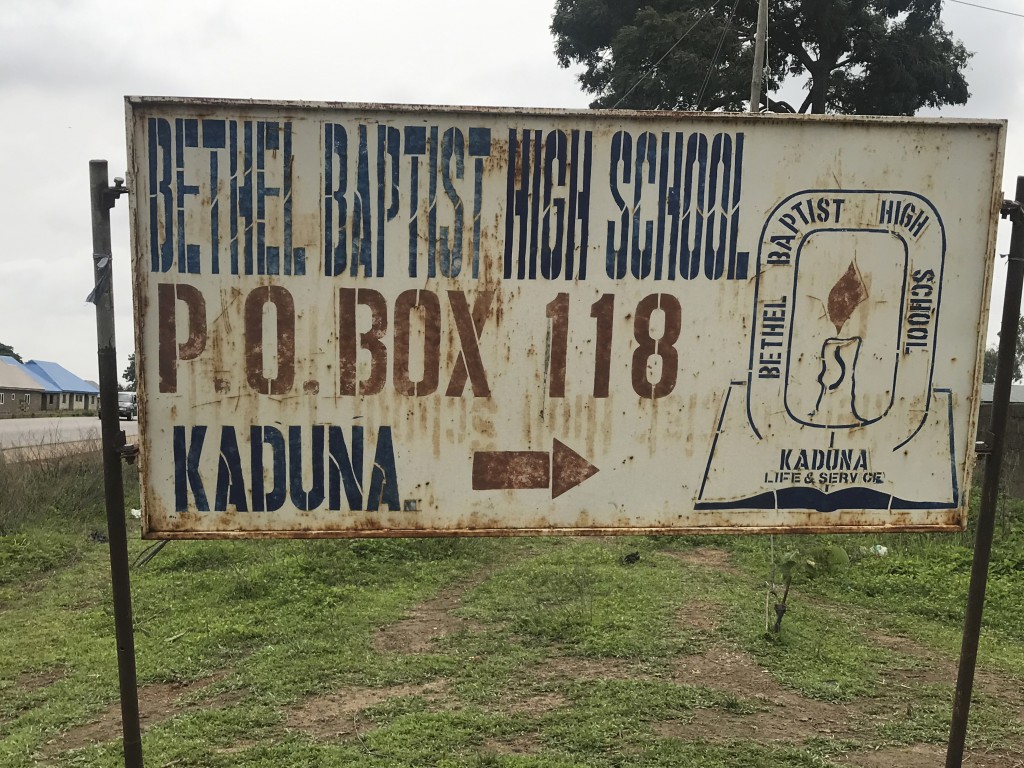
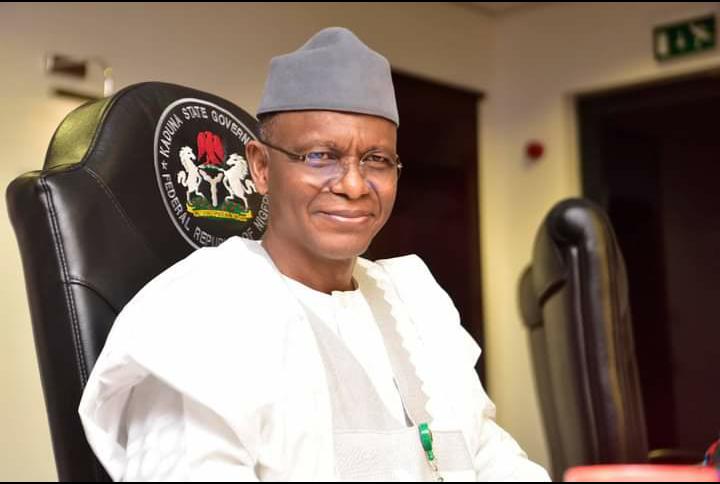
The Government of Kaduna State has announced a new resumption date for its schools after months of disruption in the school calendar due to insecurity ravaging the state.

The state’s commissioner for education, Shehu Makarfi, disclosed this while participating in a virtual workshop organised by the Education Writers’ Association of Nigeria. According to him, students of the state are expected to resume on Sunday, September 12, 2021.

However, the commissioner said rather than resuming for the third term that was aborted in the state, the schools will resume the first term for the 2021/2022 academic calendar.

Kaduna LG Polls: Why Gov. El-Rufai lost own polling unit, ward

By Mohammed Zayyad

Mallam Nasir El-Rufai is one of the best performing governors in Nigeria. So far, he is the best Governor of Kaduna State in recent times. However, Mallam lost his polling unit and ward in the local government elections conducted by the Kaduna State Independent Electoral Commission on September 04, 2023.

Governor El-Rufai voted at Unguwan Sarkin polling unit 001 in Kaduna North LGA of the state. Mohammed Sani, the presiding officer, announced the final results: Unguwan Sarki Ward 007 Kaduna North Chairmanship, the People Democratic Party (PDP) scored 1,235 votes while the ruling All Progressive Congress (APC) scored 948 votes, while for the councillorship position, PDP garnered 1,405 votes while the APC was behind with only 804 votes.

Unfortunately, though, the election witnessed low voter turnout and challenges in some polling units as the wrong machines were deployed. El-Rufai himself expressed disappointment about the low turnout of voters in the council polls. He said: “What worries me is that I noticed that people didn’t turn out much,” This could be one of the reasons the APC did poorly at Governor El-Rufai’s unit, the party may say.

The big questions are: Why should a performing governor’s party be rejected by the people at the governor’s polling unit? Why should a performing governor lose at his polling unit and ward? Are the people angry with the governor, his party, including his government? Are the people not happy with the way the beautiful Kaduna Urban Renewal is being handled? Is the current insecurity the state is witnessing a significant factor? Is it the issue of the sack of workers? Is the Kaduna state government out in touch with the real ordinary people? So many questions require answers because the result is a big political statement from the people to the governor,  his government and his party.

Some political pundits believe that Mallam Nasir El-Rufai’s major error is that his government is not doing well in balancing policies, development, and politics. The pundits further said this is a reminder that development in a poor society must and should always consider the people’s survival first. An example was the former governor of Adamawa state, Muhammadu Umaru Bindow, who did very well in constructing roads, bridges and hospitals. Still, the people denied him and his party the APC a second term because Bindow failed in workers’ salaries and human development.

Nevertheless, El-Rufa’i is still the best governor Kaduna State has had so far. APC may go on to win the majority of the local government councils as the results come it. Still, some pockets of the results have given the opposition more strength to fight more and take advantage of areas the government is lagging. One simple example is how one of the governorship hopefuls, Honourable Ahmad Tijjani Umar, is smartly mobilising the youth and building bridges while taking advantage of the government’s weak areas. It seems it is working well for him and his party to win support from the ordinary people.

Governor  El-Rufa’i should be commended for conducting a free and fair election and using modern technology to advance democracy. Furthermore, the governor’s polling unit and ward results have given the governor some clues and the need for readjustments and adjustments for future politics.

Zayyad I. Muhammad writes from Abuja, zaymohd@yahoo.com.

Kaduna Poly expels 85 students, suspends 8 others

By Sumayyah Auwal Usman

The management of Kaduna Polytechnic has expelled 85 students for their involvement in examination malpractice and suspended eight others. 

A statement issued on behalf of the Registrar, Dr Muhammad Sani Musa, said the decision to expel and suspend the affected students was reached at a meeting by the Academic Board held on 25th August 2021, thereby recommending different levels of punishment for the students, depending on the degree of involvement. 

The list includes forty-four (44) HND students and forty-one (41) ND students. Their expulsion was said to have been prompted by the approval of the report of the Academic Board at its extraordinary meeting held last week.  

The affected students have been asked to vacate the institution’s campuses immediately and hand over all polytechnic property in their custody to their respective heads of department.

See the list below:

Insecurity: Kaduna bans transportation of livestock

By Sumayyah Auwal Ishaq

The Kaduna State Government has banned the transportation of livestock from the state to other states in the country and the transportation of livestock into Kaduna state from other states with immediate effect.

The directive was contained in a press release signed by the state commissioner for Internal Security and Home Affairs, Mr Samuel Aruwan. The Government also reiterated that the transportation of donkeys into the state is a criminal offence, and anyone found engaging in this will be prosecuted accordingly.

Furthermore, “the Kawo weekly market which usually holds every Tuesday in Kaduna North LGA has been suspended with immediate effect. The previous directives suspending weekly markets, and selling of petrol in jerrycans in Birnin Gwari, Giwa, Chikun, Igabi and Kajuru LGAs, as well as banning the felling of trees for timber, firewood and charcoal and other commercial purposes in Birnin Gwari, Kachia, Kajuru, Giwa, Chikun, Igabi and Kauru LGAs, are still in force” Aruwan said.

Banditry and Kidnapping: Dangers academics in Zaria face

By Abdelghaffar Amoka Abdelmalik

I love ABU and the used-to-be lovely Zaria; But is it time to run away?

After submitting the final copies of my PhD thesis in March 2012, a friend and I conversed about my plans after the PhD program. “I am leaving back to Nigeria in few days, resume my job, get married, and start living the Nigerian life”, I told her. And she was like, it appeared I had got everything planned out. And I said I couldn’t find anything to keep me back in the UK. Then about a year later, I got a postdoc research fellowship in Norway.

Immediately after my postdoc in 2015, I was looking forward to coming back home. I had this picture of a laboratory I want to set up in my university to perform impactful research from this part of the world. Maybe I was crazy. But for the five years three months that I spent in Europe, I never saw myself living there for long, but how I could use the experience of the few years to add value to the world of research from my country.

But after the kidnapping of my friend’s family last month, for the first, I started to ask myself if my decision to return to the country was the right one. And last night, I heard gunshots from my room before midnight. I knew something was wrong, but I could not figure out what it was and where. So I could not sleep well. Then, after waking up in the morning, I got a call that the same terrorists they choose to call bandits strike in Zaria again, but this time at Zango-Shanu and went away with four victims.

Criminals use to operate while hidden. But these terrorists take their time to break into houses and abduct their victims unchallenged. The police can’t dare do anything to them because they have superior arms and unlimited ammunition. One would expect special forces capable of repelling these terrorists to be put in Zaria due to these frequent occurrences, but nothing like that.

The government seems to have given up, and we are left on our own. The Governor insists no one should pay a ransom but no provision to prevent the kidnapping of anyone. So you have two choices when you have a victim with them; either you pay ransom to get them released after torture, or you leave the victim to die with them.

I closed my eyes, and I still see the picture of the state of my friend’s wife and kids when the bandits released them, and I cried. I am still wondering why these innocent young children and their mother should pass through that horrible experience. The system has failed them. The country has failed them. Now we live in fear. The government has failed us.

A distant cousin in Canada called me a few weeks ago and asked about my plans for my family with this insecurity that is getting worse by the day. I was dribbling around, and he said: how can you make an impact in an environment you are not safe? You can only make an impact if you are alive and free. That statement refused to leave my head.

You can’t sleep well at night for fear of the terrorists. So, how do you concentrate during the day to be productive to make your dream impact? Our children can’t go to school. The state government has closed down all the state-controlled schools for fear of kidnapping but no structure to prevent kidnapping the same children from their houses. So, what has he done?

The kids are living a caged life. You can’t even allow them to play outside talk less of sending them on an errand outside the house for fear of insecurity. We got President Goodluck Jonathan out for Boko Haram; President Buhari came in, and kidnapping was added to the list of the insecurity challenges. It has become a big business. The business CEOs sit in their houses while getting sophisticated arms for their boys for the kidnapping operation. They are ruthless, and of course, the informants are among us. There seems to be no much intelligent service to get rid of this challenge. At least not from the kidnapping of my friend’s wife and kids.

With all these challenges, the political leaders, including those claiming to be fighting corruption, are getting richer while the people are getting poorer. For example, a former recharge card seller, now an aide, has billions of naira in his accounts that he claimed are “gifts” from people. But he didn’t get such “gifts” when he was a  recharge card seller. Aside from workers at CBN, NNPC, DPR, etc., other workers struggle to survive with that thing called salary. And unfortunately, most of the victims are from families struggling to survive, but the informants perceive them as rich.

People are shouting why the Doctors that the country spent a lot to train are leaving. But, with the level of unemployment, economic hardship, and insecurity, will you stay and submit your life to banditry if you have a choice to leave the country?

The political leaders surround themselves with security personnel. They can run to any country of their choice if they think their lives and immediate family are unsafe while we are left for the bandits.

I had so much optimism in this country, but I am not sure any longer. Should we continue to live this life of fear and uncertainty? I never thought of the idea of relocating to another country till last month when those poor little kids and their mother were abducted for 40 days.

I had two chances and came back because I believed in Nigeria and wanted to make an impact. Will I return if I have the 3rd chance?

I still remember that prominent MKO Abiola’s interview on TV during the June 12 crisis, where he stated this famous quote: he who fights and runs away lives to fight another day.

Don’t hesitate to run if you have the slightest opportunity.

Abdelghaffar Amoka Abdelmalik writes from Zaria and can be reached through aaabdelmalik@gmail.com.

Tuition hike: Fire from Kaduna to Niger

Ibrahim Yahaya

A proverbial Hausa dictum states that ‘If you see your neighbour’s beard go in flames, you should wet yours’. For instance, this can be simplified to mean that if you notice the car in front of you crash because of high speed, you should apply the brakes. Emphasis is on being cautious and proactive at all times. But that was not the case with the people of Niger State, at least in terms of action as Kaduna went ablaze.

When news broke out about the hike in tuition fees in Kaduna State, the internet went agog, followed by public uproar and protests. And…. as you would expect, nothing more than grouses here and there as parents were forced to comply with the increment or keep their wards outside the walls of the varsity.

The decision stood, despite the opposition, protests, and ‘aluta gra-gra‘. But, like an infectious disease, it has now spread its tentacles to the neighbouring Niger State. So much for solidarity, eh?

In the cold hours of Wednesday, 4th August 2021, another shocker hit the public space. This time, Ibrahim Badamasi Babangida University, Lapai, Niger State, followed suit in the tuition hike competition, with a staggering increment somewhat above 150%!

Where do we go from here?

The students are confused. The parents and guardians are even more so. There is fear that there would be a repeat of Kaduna State which appears to be the vanguard in the hiking tournament.

Agreed, education is expensive. But the same ought to be made affordable in the interest of social growth and development. No society prospers on gargantuan illiteracy, and none ever will. So, isn’t it ironical that a region (North) already struggling with many out of school persons and abject under-development is striving so hard to make education unaffordable? Does it make any sense?

For the umpteenth time, where do we go from here?

How can a state deem it fit to impose above 150% increment in tuition fee where the same state is struggling to meet the minimum wage mandate? For a while now, this same state has failed to pay 100% salary, for God’s sake. Look at Borno State, for instance; it is a region blighted by insecurity, yet they pay wages in full when due and equip their educational institutions with state of the art facilities without resorting to milk the lot on educational grounds. So what is wrong with Niger State, please?

It wouldn’t be long before conspiracy theories begin to fly here and there, justifiably. And, don’t be shocked to see the lot argue that an agenda is being pursued to deny the poor access to education despite it (education) being a fundamental human right. It is bad enough that graduates roam the streets without meaningful jobs. But, I hate to think of a scenario where those roaming the streets are aggrieved students compelled to drop out of school due to ill-advised policy/policies by those in the corridors of power.

Now that the fire has reached Niger State, our neighbours should better wet their “bear-bear” by supporting them to help persuade the government to reverse this increment.

This fire should be extinguished here and now!

Yahaya Ibrahim can be reached via yahayaibrahim006@gmail.com.