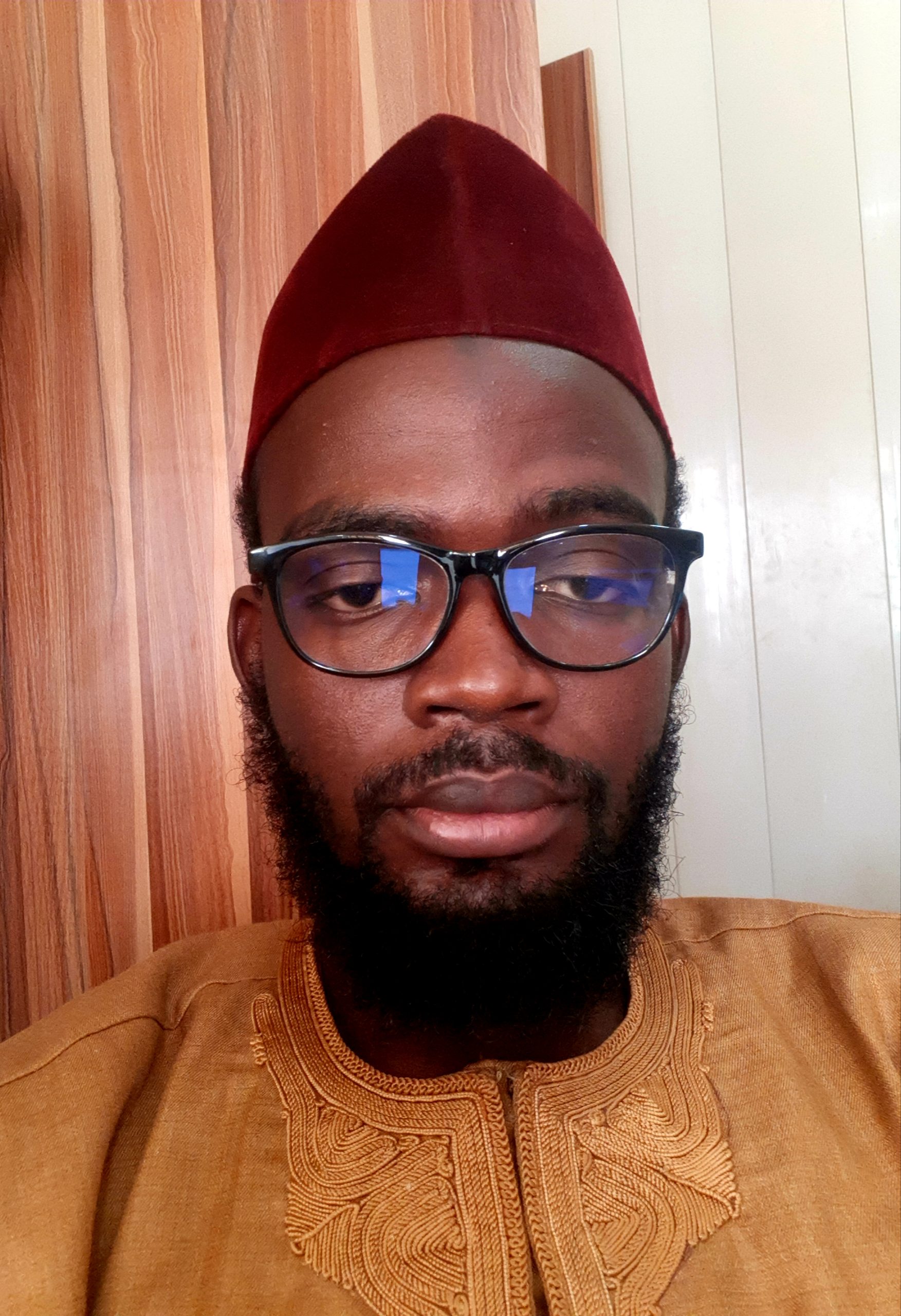
Kaduna State

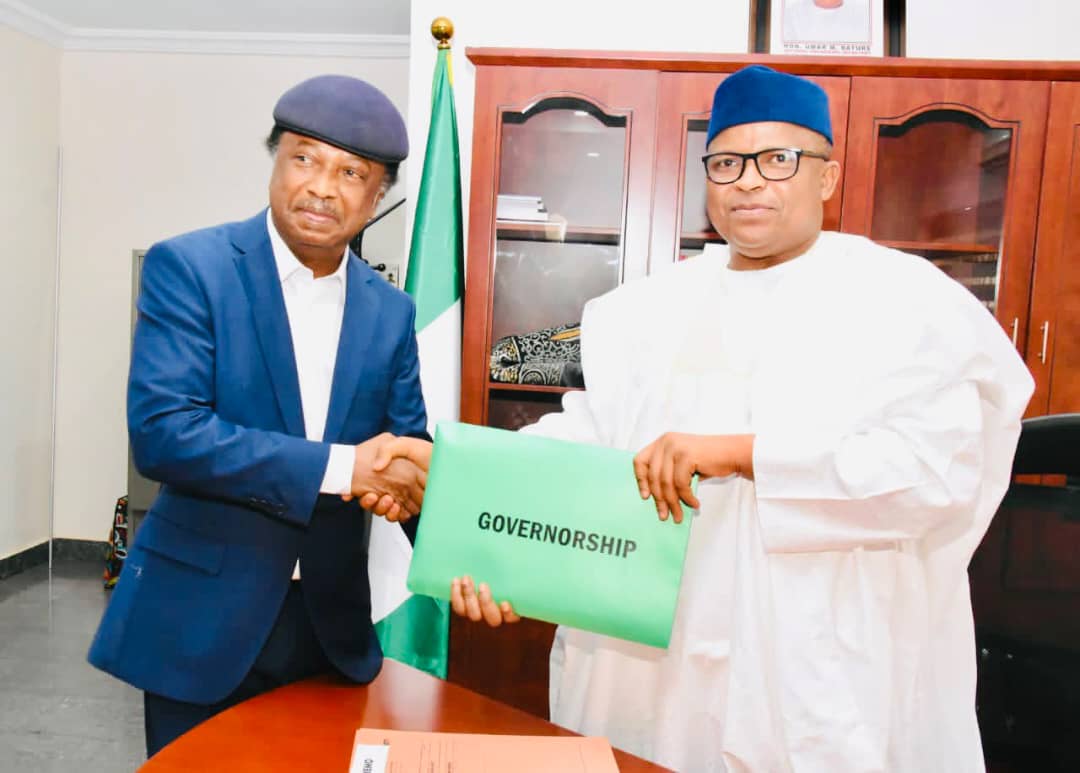
Shehu Sani picks Governorship form, clarifies that he, not any group, buys it

By Ahmad Deedat Zakari.

Shehu Sani picks the Governorship Form. However, he said he would not lie that a group paid for the nomination form.

Senator Shehu Sani, who represented Kaduna Central Senatorial district in the 8th Assembly from 2015 to 2019, disclosed this on his confirmed Facebook account on Wednesday, April 6, 2022.

“I picked my Governorship form. I suppose to lie that “a group” bought the form for me, but I can’t start with such lies. We need your support and prayers,” Sani posted

Mr Shehu Sani has long indicated an interest in contesting the 2023 Kaduna State gubernatorial election, and picking the nomination form did not come as a surprise to many.

Many people have commented on Shehu Sani’s post, wishing him well in the gubernatorial race.

“Victory all the way, Sir.” Stephanie Sewuese Shakaa, a Facebook user, commented.

Another Facebook user, Al-Ameen Jumare, said, “Best wishes, sir, our solidarity and support are priceless.”

Giwa, banditry and internally displaced persons

By Musa Kalim Gambo

Before this kidnapping, banditry, and terrorism got to this scary stage, I consider(ed) Giwa my favourite and adopted Local Government in Kaduna State. This is a place where I have the largest number of friends in Kaduna State; many of these friends have come to assume the status of brothers to me. Not long ago, I visited Giwa frequently, almost weekly.

Now all things have changed. Giwa has become an epicentre of kidnapping and terror attacks on innocent individuals. Criminals attack people at home and on their farms; kill and abduct for a huge ransom. In the past few weeks alone, the rate of this criminality has intensified geometrically. Due to this tragic development, some villagers have been forcefully displaced. They have had to migrate to the Giwa town, which is relatively safer than their communities. About 3,000 of these displaced persons now take refuge in camps in Giwa town, Marabar Yakawada, and Yakawada. While a large number of the displaced persons have also moved to stay with their relatives in neighbouring towns of Sabon Gari and Zaria in Kaduna State and Funtua in Katsina State.

The families who have been sadly uprooted from their homes have obviously been denied access to the arable rural farmlands. Beyond the refugee crisis, this will result in an attendant shortage of food in the towns, which may eventually spill over to the rest of the country. Therefore, it is evident that life will not be easy for them in their camps and the host communities.

These refugees now have to contend with the gory reality in town, that while they run for their lives, they also definitely need food, medical attention and clothes to survive in their new temporary settlement. It has been reliably reported that the Giwa Local Government Chairman, Dr Abubakar Shehu Lawal, has made provisions for feeding them at various refugee camps in Giwa and across the Local Government. Also, Senator Uba Sani is reported to have delivered some relief items to the camps. This is indeed commendable. The local politicians have indicated a high level of commitment to responding to the plight of their people in distress.

However, all these are not enough. What is needed is a total end to this incessant spate of killings and kidnappings in Giwa. Within the week, this was one of the major issues raised on the floor of the House of Representatives by Honorable Shehu Balarabe, a member representing Giwa and Birnin Gwari federal constituency, in a motion of urgent public importance. Honourable Balarabe, in a very emotional tone conveying the gravity of the situation, highlighted the depth and dimension of the troubles and crises that these banditry, kidnapping and senseless killings have plunged his constituency in both Giwa and Birnin-Gwari. He called on the Federal government to direct all the relevant agencies to swing into action in order to address the crisis.

It is sad to note that the two Local governments that Honorable Shehu Balarabe represents at the House of Representatives are the two most dangerous places in Kaduna State in terms of banditry and kidnapping today. So it is easy to understand the difficult situation in which the Honorable finds himself as one of the voices of these people in Abuja. Birnin Gwari suffers way too much from the atrocious attacks of these bandits, and it also has its refugee crisis as well. However, I write on Giwa because of my deeper connection and access to the situation there.

So to an appreciable extent, it may well be concluded that the political leaders from Giwa are playing their roles to bring an end to this madness that has continued for too long. However, what remains is the commitment on the part of the federal government, which obviously does not seem to render any positive outcome yet. There has been a military presence in Giwa and other bandit infested communities. However, it has remained a puzzle that the criminals could still carry out attacks almost every day without any hindrance.

The month of Ramadan has just begun. While we keep calling on the governments at all levels to aid these communities in crises, it is also important for us to use this holy month to pray to Allah to provide succour and restore peace and sanity in the land. It is now evident that we should no longer pray for Allah to guide these criminals aright, no! They have unleashed an unforgivable magnitude of terror on our land. The least we can do now is pray for an eternal condemnation upon them, starting from here on earth. It should also be our point of prayer that whoever supports these criminals, in whatever way or means, from their informants’ right to the supply chain of their arms and ammunition, should face eternal perdition and body crippling afflictions here on earth before they meet their worse punishment in hell.

Finally, may Allah grant our leaders the will and ability to put in place the right measures to end these killings and kidnappings. At the same time, we should assist these displaced persons with the little we have in terms of food items and clothes; I have also seen a group of youths on Facebook led by the immediate past president of the Giwa Students Association, Nuhu Haruna mobilizing funds on Facebook to assist these displaced persons. We should contribute as much as we can.

Musa Kalim Gambo writes from Zaria and can be reached via gmkalim@hotmail.com.

APC leader Bola Tinubu admits Nigeria is bleeding, calls for joint action

By Muhammadu Sabiu

Bola Tinubu, a former governor of Lagos State, warned on Tuesday that Nigeria is bleeding due to the recent wave of killings.

The All Progressives Congress’s National Leader asked everyone to join hands in the fight against banditry.

This comes as Governor Nasir el-Rufai stated that Nigeria is at a fork in the road and that the country must make a difficult decision by 2023 on who will lead the country out of its various problems.

Tinubu, who was in Kaduna for a condolence visit following the terrorist attack on a Kaduna-bound train from Abuja on March 28, donated N50 million to help the state government repair and care for the victims.

“We are facing the current challenges seriously, and we have to do more. Nigeria bleeds on behalf of everybody.

“We need to fight terrorism with all our energy and whatever we have. It’s not shameful for people to be poor, but it’s unacceptable to accept poverty as a norm.

“It’s shameful to be callous, wicked and be a bully or terror to instil fear in humanity, and it’s not acceptable,” Mr Tinubu was quoted as saying.

Jack Rich Northern Front distributes Ramadan packages in Kaduna

By Sumayyah Auwal Ishaq

The Jack Rich Northern Front has distributed Ramadam items comprising rice, sugar, and millet, among others, to widows, orphans and the less privileged in Kaduna state. The distribution took place at the Kawo LEA primary school premises with the beneficiaries in attendance.

Speaking at the event, the Front coordinator, Dr Ibrahim Abdulkareem, said the initiative was necessitated by the neglect and abandonment being suffered by widows, orphans and the less privileged in society, especially during the month of Ramadan.

 One of the beneficiaries, a mother of three who lost her husband two years ago, Malama Halima Mukhtar, expressed gratitude for the gesture and called on well-meaning people to pray for the success of the Fronts’s activities.

The organization has given similar assistance as its Ramadan welfare package to other orphans across some states in northern Nigeria.

Train blast is not a problem of Kaduna alone

By Aliyu Nuhu

When we criticize this government, some people deride us as Buhari bashers. They complain that we lack patriotism because we run down our country. But look at Nigeria today and say if it is the kind of country you want to live in or it is the kind of country you want your children and grandchildren to inhabit.

What is the fault of the government in matters that concern our security? It is because of the way it neglected police affairs. Banditry and terrorism are, among others, products of poor community policing. Humans are products of communities, good or bad. The police decide the kind of communities we have as far as crimes are concerned. Before they kidnap anyone, criminals emerge from the community and when they kidnap they return to the communities. Good police will ensure that they don’t emerge and if they do, they can’t return to the community. But today’s Nigerian police are going on strike because of poor salaries and delays in payment of even the poor salaries. Police lack all working tools from the basics such as lie detectors, electricity, and computers; to the complex ones such as data banks for fingerprints and DNA.

Whenever there is a bomb blast you see the president holding emergency meetings with service chiefs. That is missing the point. What have navy, airforce and army got to do with attacks on the train? The president should hold his emergency meeting with police high commands, NSCDC and DSS. That is where the missing links lie.

The military ordinarily has no business safeguarding railways, doing the work of police, DSS and NSCDC. They have no budget to safeguard the railway. The military can be called to give additional firepower to the police when there is a need but they have no solution to the problem and cannot prevent future attacks.

The railway is a product of technology and there is technology to protect it. Only Nigeria will invest so much in railway and refuse to deploy the technology to protect it. There are real-time intelligent railway protection systems of various types to deploy. The minister for transportation had made such a request after the first attack which was denied (though the request was later accused of being through a seemingly corrupt process). The second attack has made the president see the reasons and approved of the technology. I hope that with the new measures, future attacks on railways will be prevented.

Who were the attackers?

According to the Daily Trust, a Kaduna security source, who did not want his name in print, said the attack was carried out by Boko Haram elements in collaboration with bandits.

“Two sources; a local with knowledge of bandits’ activities and a senior intelligence officer in Abuja confirmed that a Kaduna-based bandits leader, Boderi, was involved in hatching the attack.

Boderi is notorious for masterminding a number of atrocious attacks in Giwa, Chikun, Igabi and Zaria Local Governments in Kaduna State, including the abduction of students of the Federal College of Forestry Mechanisation, Afaka, in March last year and kidnapping of the Emir of Bungudu, Alhaji Hassan Attahiru in October of the same year.”

Also, victims said they were not the regular Fulani kidnappers that carry out their raids on the highways. They said they were very young boys between the ages of 18 to 25 years and spoke good English. Some of them were pronouncing “Allahu Akbar”. It pointed to either Boko Haram or ISWAP. Deployment of IED technology is Boko and ISWAP franchise. The attackers used buses, unlike the Fulani kidnappers that use motorcycles, an indication that they came from a long distance. How about 200 terrorists came in buses and carried people and disappeared into thin air beat all minds. There was no single casualty on the side of the attackers and no one was captured. We have a long way to go in security matters.

Airspace and aviation security in Nigeria: Matters arising

By Mukhtar Ya’u Madobi

Another national embarrassment almost happened over the weekend. But alas, it wasn’t fated. Reports indicated that a group of bandit-terrorists, about 200 swarmed the Kaduna International Airport located in Igabi Local Government Area of the State.

The incident temporarily led to the disruption of activities, including the grounding of an Azman Air Lagos-bound aircraft. In addition, a security officer attached to the Nigerian Airspace Management Agency (NAMA) also lost his life.

It was learnt that the terrorists were on a revenge mission after some Nigerian military troops neutralized scores of them and equally retrieved some rustled cattle in their possession.

However, this unfortunate development is coming after another security breach had occurred last year, when the same category of criminal elements–bandits–invaded the country’s highest defence and security training hub, the Nigerian Defence Academy, NDA, in Kaduna.

Aside from killing some soldiers, reports claimed that the bandits abducted a senior military officer.

Nevertheless, the level at which these non-state actors are resurging and unleashing violence at will is something that needs to be treated with the adequate attention it deserves. Government and security agencies should live up to their expectations to surmount these lingering security challenges that disturb our nation’s peace.

It has been noted that an efficient transport system is part and parcel of national security as it entails the movement of people and goods from one place to another across the length and breadth of a particular geographical location. But in today’s Nigeria, it is disheartening to learn that people no longer travel comfortably with peace of mind due to uncertainties associated with our entire transport system.

For example, looking at the land transport system, the roads are in bad shape caused by numerous potholes that can easily plunge a motorist into an accident. Apart from that, the roads are also not safe as bandits, kidnappers and armed robbers are always having a field day launching attacks on commuters, robbing them of their hard-earned properties, abducting or even killing them.

Even the trains are no longer safe as terrorists have since devised a means of exploding rail tracks, thereby forcefully bringing them to a halt to pave the way for them to carry out their nefarious activities on passengers.

The recent bombing of the Kaduna-Abuja rail track by bandits is one of the worst attacks on the Nigerian transport system. Several passengers were killed, others got injured, while scores were equally abducted and yet to be accounted for.

Similarly, Nigeria’s waterways are also dangerous because they are swarmed by pirates who rob ships and sometimes abduct the entire crew only to release them upon payment of ransom. With the recent attack on the airport, it is right to deduct that the entire Nigerian transport system is compromised and has lost its calibre to serve the functions it is known to deliver.

The time is long overdue for Nigeria to rise to the challenge of safeguarding airspace and other transport sectors from the menace of criminal elements.

The importance of airspace and aviation security has been captured effectively in Nigeria’s National Security Strategy (NNSS 2019), a document published by the Office of the National Security Adviser (ONSA), Babagana Monguno, a retired Major General.

According to the document, “Efforts to secure the Nigerian airspace will be led by the Nigerian Air Force (NAF) in collaboration with other relevant agencies. Considering the vulnerability of the airspace, the NAF will employ preventive and protective measures to guard against airspace violations through [the] enforcement of international and national air laws.

“In addition, the NAF will deploy its resources to ensure the integrity of Nigerian airspace is maintained at all times. This will include [the] conduct of aerial surveys and delineation of security zones and liaison with appropriate agencies towards the completion of the Total Radar Coverage of Nigeria (TRACON) project to ensure effective monitoring and airspace security.

The primary stakeholders principally concerned with safety and security in the aviation sector include the Nigerian Civil Aviation Authority (NCAA), Nigerian Airspace Management Agency (NAMA), the Federal Airports Authority of Nigeria (FAAN) and the Nigerian Air Force (NAF), among others.

The role of these agencies is expected to be coordinated and enhanced in line with extant legislation and policy on Nigerian Aviation Security.

Nevertheless, another evolving phenomenon in airspace security is the preponderance of drones which constitutes safety challenges such as air misses and mid-air collisions with manned aircraft and security challenges such as air space violation, penetration of prohibited airspaces, a threat to VIP security, terrorism and espionage. Others are law enforcement challenges such as drug trafficking and proliferation, all inimical to national security.

To properly secure airspace and the aviation industry, the government must ensure the continuous provision of modern and up-to-date equipment and the promotion of adequate training and professionalism of various agencies handling different aspects of aviation security.

Additionally, Standard Operation Procedures must be developed to streamline the roles and responsibilities of the various agencies to optimize their performance and enhance the cohesion of their personnel.

Furthermore, it is imperative to ensure the development of standard safety protocols and resilience to protect critical aviation information infrastructure against cyber-attacks to enhance aviation security.

Mukhtar wrote from Kano via ymukhtar944@gmail.com.

El-Rufa’i: A politician without political ambition?

By Safiyanu Ladan

While speaking on Channels TV program Politics Today, the governor of Kaduna state, Malam Nasiru Ahmad El-Rufa’i, said he’s currently not vying for any office come 2023. The governor, whose tenure is elapsing in the next fourteen months, insisted that he’s not interested in any political position.

“I have said it over and over, but I guess the trust in politicians is very low. Nobody believes me. I have said over and over that, I’m not a contestant for any office. I’m not an aspirant for anything,” he said.

“Rotimi Amaechi is interested in running for president. He has the right to do so, but I’m not running for anything. I’m not going to be on his ticket.”

He gave an impression that he had never wanted to run for the office of the governor of Kaduna state in 2015, but President Buhari prevailed over him. Because he has so much respect for the President, he reluctantly accepted to run.

The essence of being in politics is to have political ambition, which includes aspiring for a higher political position. Political ambition dictates the activities of every politician and can go to any extent in fulfilling their aspirations.

Yet, Mr El-Rufa’i remains the only politician in the history of this country without any political ambition that came out on national TV endorsing the removal of the National Chairman of the APC caretaker committee. Therefore, one can’t help but ask what the governor’s motive is?

It’s high time for this politician to stop deceiving us. We already know that the ambition of every politician is fixed and well defined. It’s nothing other than being in a political position.

Safiyanu Ladan wrote from Kaduna. He can be reached via uncledoctor24@gmail.com.

Why Dattijo should succeed el-Rufai

By Abu Hibbah Ibrahim

Typical of a penultimate election year, pictures and billboards of aspiring politicians have littered major and minor roads in Kaduna State. People who share in the leadership ideologies or principles of the Governor of Kaduna State, Nasir Ahmad El-Rufai, have all started indicating interest to succeed him. Also, people who are at variance with all he stands for have likewise thrown their hats in the ring.

In his quiet moments and as he drives out of Sir Kashim Ibrahim House through the state metropolis, billboards of different politicians erected in strategic locations staring at him, only God knows what runs in El-Rufai’s mind regarding his successor in 2023. It seems William Shakespeare had El-Rufai in mind when he captured in Macbeth that: “There’s no art to find the mind’s construction in the face.”

As El-Rufa’is second tenure nears its end, and after exhibiting a tremendous performance, the next most audacious and bold decision left for him is to anoint a successor, rally his supporters around him and subsequently aid him in attaining victory at the polls. Verily, this singular act will make or mar the sustainability of his hard-earned and stellar achievements. More reasons why el-Rufai should be meticulous.

To understand the importance of having a credible and competent successor, let’s cast back our minds to the second tenure of former president Olusegun Obasanjo. After failing to extend his tenure, the infamous third term, Obasanjo, imposed a sick president on the country. Unfortunately, this singular act almost erased the decent achievements he recorded in his second term.

Interestingly, during his interview with Seun of the Channels Tv last Wednesday, Governor el-Rufai made sketchy explanations on who will likely succeed him. He highlighted that he would want someone from his team with whom they have developed and implemented policies to take on the baton of leadership from him.

Being a youth myself, I have a bias for Muhammad Sani Abdullahi, popularly known as Dattijo, considering his age. Of course, age in itself isn’t a recipe for good governance or positive results, but young age coupled with competence, experience, the ability to form a capacitated team and then lead them to drive reforms and produce results would do magic. And Dattijo exudes these sterling qualities in addition to the advantage conferred on him by age.

Plus, he has exhibited these qualities and delivered outstanding results as the Commissioner of Planning and Budget Commission of Kaduna state and Chief of Staff to the Governor. Under the governor’s tutelage and with his experience as a commissioner, he has been armed with the ability to allocate resources amidst competing demands or interests for the betterment of the state. In addition, he chaired the Infrastructure Council, one of the policy councils initiated by el-Rufai to fast track soft and hard infrastructural developments.

Dattijo is a development practitioner trained in the University of Manchester and a graduate of Economics from the prestigious Ahmadu Bello University. With dwindling federal allocations, effects of COVID-19, the possibility of subsidy removal on petrol, and security challenges, economic difficulties will be harder for the state governments. However, I believe his deep knowledge of economics will help him navigate the state through tough financial times. Consequently, he has the mettle to sustain the growth in revenue mobilisation that has characterised el-Rufai’s tenure.

El-Rufai has done remarkably well in revenue mobilisation. This terrific effort has pushed Kaduna above the commercial nerve of Northern Nigeria, Kano State, in terms of internally generated revenue (IGR). Moreover, he has consistently invested in education and health as these two sectors gallop the highest percentage of the state’s budget. And as one Indian writer posited, “nobody bothers about education because results take a long time to come.” But el-Rufai cares. This fantastic idea of investing in critical sectors, especially education and health, needs to be continued.

Temperament and intellect. Ever since Dattijo’s body language signifies an intent to be the governor of Kaduna State, he has been under scrutiny and verbal attacks by some political opponents or sycophants. This is expected in electioneering, though. However, he has demonstrated thoughtful calmness and grace under pressure. He is even-tempered and not given to volatile gestures. These virtues are pertinent in a governor who would want to continue leading the Kaduna state towards greatness by reducing or eliminating ethnic tensions and building bridges.

On a final note, the saying that power corrupts people is a tag sincere seekers of the truth, or any discerning person cannot place on Dattijo’s neck. In all the leadership positions he has been appointed into by his boss, el-Rufai, he has served the people of Kaduna with humility, loyalty and hard work.

I believe Dattijo has the moral compass to build on el-Rufai’s legacies. He is blessed with intellectual rigour and has the courage to make sound, careful and bold decisions that hold generational transformation. Dattijo has officially declared his intention to succeed his boss. Therefore, I beseech Governor el-Rufai to rally other APC aspirants to support him. He is prepared and ready.

Abu Hibbah Ibrahim writes from Kaduna and can be reached via hibbahabubakar1505@gmail.com

Banditry: Custom officer shot dead, six others abducted in Kaduna

By Uzair Adam Imam 

Bandits have shot ASCII Muhammad Maradun, a Customs officer with Federal Operations Unit (FOU), to death in Kaduna.

The Daily Reality gathered that six people, among whom was a bride-to-be, were abducted in the process. 

It has been discovered that the bandits had stormed his house at Rogachikun Community of Igabi local government, Kaduna, in the early hours of Wednesday.

The deceased, Mr Maradun, was reported to have sustained gunshot injuries.

The FOU Chief Public Relations Officer (CPRO), M.A Magaji, confirmed the victim’s death.

However, the deceased was said to have died while undergoing surgery, putting all attempts to save his life in vain.

Harmful effects of skin bleaching

By Tijjani Muhammad Nura

Bleaching has been in practice for a long time worldwide. However, it doesn’t specifically side with one gender, although women are more than men. Nonetheless, in a report referred to by the World Health Organisation in 2016, Nigeria was reported as the country with the highest number of women that bleach their skin in the whole of Africa. 

While there is no reliable data to confirm which state bleaches the most in northern Nigeria, we cannot deny that Kaduna, Abuja, Taraba, and, most importantly, Kano will top the list in Nigeria. In addition, a few Nigerians are naturally light-skinned, while some are naturally raven. To this end, bleaching is more prevalent among women than among men.

In (northern) Nigeria’s meaning of the word “bleaching,” it’s a process where people apply skin-lightened products to their skins, regardless of the route through which they are administered, intending to change their complexion or skin colour to impress or comfort themselves. From most people’s viewpoints, this bleaching as a thing is influenced by the victims’ desire to impress and attract attention to their opposite gender, from women to men and men to women.

Bleaching products are available in different forms, and some come in the form of creams, oils, serums, and lotions. It still comes in tablets, and some bleaching products are also available in injectable form. The lightening creams encompass a broader spectrum of products designed to bleach and lighten the skin. The effect occurs by targeting cells producing melanin, thereby reducing its functions. The majority of the creams are made available to treat abnormal conditions like acne scars on the skin, not for bleaching the skin.

However, many users are ignorant of the damaging effects of the products on their health. They are dangerous to their skin and a threat to their health in general by affecting the functions of the kidney, liver, and immune system because they work by reducing a pigment called melanin in the skin.

Most bleaching products have an active ingredient called mercury, making them more dangerous because mercury is a toxic agent that can cause serious psychiatric, neurological, and kidney problems. In addition, pregnant women who use a skin lightener with mercury can pass it to their unborn children.

Nonetheless, there are several healthy ways to maintain healthy skin. And that includes avoiding using bleaching creams, using baby’s soap that does not damage the skin, using moisturizing creams during the harmattan seasons. Other ways involve applying sun creams that can boost skin protection from the sunny sun, drinking enough water daily, eating well-balanced food in its diet, and stopping applying perfumes to the skin. These, among others, would help maintain good, healthy, and super bright skin.

With all the above being said, this article aims to notify people about the dangers associated with using creams or any other bleaching products to bleach the body, especially the facial skin. It, therefore, aims at calling the attention of parents to caution their children to avoid it or order them to immediately stop using it if they have already started using it.

Tijjani Muhammad Nura holds a bachelor’s degree in Pharmacology. He writes from the Hardawa district of Bauchi State and can be reached via tijjanimnura@gmail.com.