Kabiru Musa Jammaje

A feminist reading of Jammaje’s Nanjala

  • Production:    Jammaje production
  • Producer:       Abubakar Bashir Maishadda
  • Director:        Ali Nuhu
  • Cast:               Sani Mu’azu, Ali Nuhu, Nancy Isime, Enyinna Ngwige, Rabi’u Rikadawa, Segun Arzine, Abba Al-Mustapha, Asabe Madak, Abba Zaki.

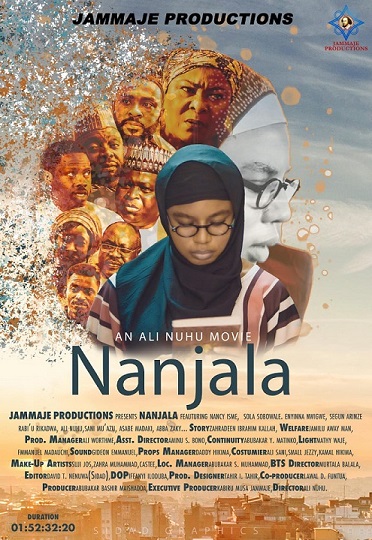
Nanjala, an eponymous and one of the most expensive movies in the Kannywood industry by Jammaje Production, is a breathtaking movie that explores and thematises patriarchal power, domination and mistreatment towards women gender. Nanjala, a leading character, is victimised by her chauvinistic father, who disbands her for being a female in favour of a male child, Dititi (Abba Zaki). Captain Jimmoh (Rikadawa) becomes her adopted father and helps to actualise her dream of becoming a renowned journalist.

Furthermore, Captain Sembene’s family is set on fire as his beloved son, Ditit, becomes a spoiled child, drug addict, thief and clubgoer. Plus, his other female daughter, Jarry, takes a leave from home for her father’s chauvinistic mistreatment. Falmata, another victim of Captain Sembene’s chauvinism, befriends her biological brother, Ditit, with a view to wed him.

Nanjala becomes a renowned and influential journalist who tirelessly fights and exposes corruption in the government. She encounters obstacles along the way from the authority. She is detained in cells for exposing corruption. Finally, she appears triumphant.

Mistreatment and domination are long-held traditions shown to women by a patriarchal world. Women, as chauvinists maintain, are disaster and second-class citizens who can’t contribute to one iota of life. In those days, women had to cancel their identities to have their voices heard—the same as Nanjala has to take a leave from a patriarchal home to attain her potential. 

Thomas Aquinas (1274) opines, “A woman is really an imperfect man… an incidental being … a botched man’’. Nanjala’s treatment by her father affirms Aquinas’s stance that women are imperfect and a botched to her male brother, Dititi. Plus, according to Baudelaire, “woman is natural, that is abominable’’ Some men consider women disgusting. This perception runs through Nanjala’s father, who finds the female gender abominable – divorcing Falmata’s mother for carrying a female unborn child, making life unbearable to Majuma (Asabe Madaki) and causing a great aspersion on Nanjal and Jarry, whom all are females. They have to leave their homes to feel at home.

The belief that women are nothing but second-class citizens, abominable and sex machines for men to exploit became prevalent during the Victorian period (1837-1901) and also in plenty of their literature. We see the fate of Susan Henchad, who is auctioned in Thomas Hardy’s The Mayor of Caster Bridge (1886), women who are sexually exploited by men at Sixa in Mango Beti’s Poor Christ of Bomba (1956) and Firdaus’s sexual abuse by men in Women at Point Zero (1975). Likewise, patriarchal domination doesn’t put a halt here but tries to silence any emerging powerful female voice. 

Women like Gorge Eliat (1919-1880), Gorge Sand (1904-1876), Charlotte Bronte (1816-1855), etc., succumb to patriarchal pressure and accept defeat to vie with men intellectually and literarily. Comparatively, Nanjala encounters the same treatment, where patriarchs try to silence her intellect and voice. They envy her fame, success, and education. Men are jealous of women’s successes, but Nanjala struggles and succeeds. 

For women to succeed in the patriarchal world, they have to be educated, pushed, and struggled. We see how women break the bonds. Li succeeds in The Stillborn (1984) via struggle and education, as Ada in Second-class Citizens(1974). Also, we see in the Kannywood movies- Hauwa Kulu (2019) where Hauwa (Hasana Muhammad) and Laila (Hadiza Gabon) in Manyan Mata (2023 succeed through education. However, Firdaus in Women at Point Zero (1975) and Nnu Egu in The Joys of Motherhood (1980) fail because they are illiterate or barely educated.

Meanwhile, Simone De Beauvoir (1908-1986) asserts that “males define what it means to be human, including what to be female. Since the female is not male”. Beauvoir maintains, “She becomes another”. Indeed, this derogatory portrayal has been born by females throughout many centuries. In the film, Nanjala’s father has this perception run in his blood. He evidently defines who a human being is to him, his male child, Ditti.  He loathes all his three daughters – Nanjala, Jarry, Falmata and Majuma because they are “others”. Women become secondary or non-existent players. 

Finally, Beauvoir asserts, “Women must break the bonds of their patriarchal society and define themselves if they wish to be a significant human”. This is what Nanjala does, and she becomes a “being” in the patriarchal society. Meanwhile, Kate Millet (1970) says, “A female is born, but a woman is created”. As Nanjala defines herself as a true human being, discarding the notion of femaleness in her, she creates womanness, as Millet (1970) puts it, through hard work, education, struggle, and boldness.

By way of conclusion, Nanjala mirrors patriarchal society and uncovers stereotypical portrayal of women as “others”, Second-Class Citizens, incidental beings, imperfect men, and abominable and other derogatory names forced women to accept by men. The film depicts the power of education and struggles as the only means for women to break the long-held tradition enjoyed by men and bury women’s intellect.

If not for education, Nanjala would have been buried alive like other female characters. The film is a clarion call to women to be educated, to disown being relegated to non-existent players or “others”. Nanjala succeeds and becomes a “human being”, whereas Majuma, Jarry and Falmata become second-class citizens.

Reviewed by Abba Musa Ibrahim. He can be reached via abbamusa6888@gmail.com.

Kannywood/Nollywood film review: NANJALA (the Right Choice)

Company: Jammaje Productions

Director: Ali Nuhu

Producer: Abubakar Bashir Maishadda

Language: English

Cast: Nancy Isime, Sani Muazu, Sola Sabowale, Ali Nuhu, Enyinna Nwigwe, Rabi’u Rikadawa, Segun Arinze, Abba el-Mustapha, Asabe Madaki, Abba Zaki, etc.

Release date (Nigeria): 16-6-2024

After successful screenings in Turkey and the United States, the reportedly most expensive Kannywood movie, Nanjala, has finally hit our domestic screens. The movie is a groundbreaking attempt to bridge the gap between Northern Nigeria’s Kannywood and “mainstream” Nollywood by bringing actors from both industries together in a neutral setting and on an equal footing.

The film narrates the story of Nanjala (Nancy Isime), whose father, Captain Sembene (Sani Muazu), harbors a deep-seated disdain for female children. He, therefore, neglects his three daughters, focusing his care only on his son, Dititi (Abba Zaki). Nanjala has been a voracious reader with dreams of becoming a journalist since her childhood. However, her father’s constant discouragement makes his friend, Captain Jammoh Jummoh (Rabi’u Rikadawa), adopt her to help her realize her dreams.

Years later, Captain Sembene’s family falls apart. His favorite son, Dititi, becomes a drug addict, and his daughter, Jarry, leaves home, fed up with his mistreatment. Meanwhile, Nanjala achieves her dream of becoming a journalist but encounters problems with people in authority who want her to stop exposing their corrupt government.

How does the story unfold from there? Find out for yourself at Platinum Cinema.

The film addresses themes of women’s empowerment, the endurance of the human spirit, corruption, and moral decadence. It debunks the chauvinistic belief that female children are mere burdens to their parents and incapable of achieving greatness. We see how Nanjala suffers, initially at the hands of her chauvinistic father and later as a journalist hunted by a corrupt government. Despite these challenges, she overcomes her fears and insecurities to eventually emerge triumphant.

Nanjala is indeed a compelling film that has enough to hold viewers’ attention throughout its runtime. However, while it may lack attention-grabbing twists and turns, the wonderfully constructed screenplay and perfect use of flashbacks make it an enjoyable experience that you wish would never end. The cinematography is also spectacular, fully doing justice to the film’s scale. I haven’t enjoyed any Kannywood movie as much as this one recently. One must applaud the makers for their courage and financial strength in bringing such a big project to life.

The eponymous character seems to be inspired by Kenyan political analyst and activist Nanjala Nyabola. She also shares similarities with a character played by actress Miriam Osimbo in the Kenyan comedy series Hullaballoo Estate. Therefore, the film is likely to resonate with a broad African audience for that reason, and for its setting (a fictitious East African country), casting, character names, and universally relevant thematic preoccupations.

The film also deserves distinction marks for its English dialogue. The diction and flow of words are exceptional. What is even more interesting is how the Kannywood actors deliver their lines as flawlessly as their Nollywood counterparts in the cast. Thanks to Mallam Kabiru Musa Jammaje, the executive producer who pioneered the trend of “Kannywood films in English.”

In terms of performances, Nancy Isime fully immerses herself in the character of Nanjala and plays it exceptionally well. Sani Mu’azu is excellent as her chauvinistic father, delivering his dialogue with expressions that prove his acting skills. Rabi’u Rikadawa will win your heart as Nanjala’s foster father, who stands by her through thick and thin.

Asabe Madaki (Majuma), the character of Jarry, and Abba Zaki (Dititi) are first-rate as Nanjala’s siblings, but their mother, played by Sola Sobowale, does not live up to expectations. However, Enyinna Nwigwe is admirable as an accomplished author who later becomes Nanjala’s love interest. Segun Arinze, Ali Nuhu, and Abba el-Mustapha all shine in their brief roles. But it’s Hajara Haidar (Falmata) who will impress you with her adorable looks and fluent English, giving her small role a huge impact.

In conclusion, Nanjala has opened a new page in Nigerian cinema. It is a “Pan-Nigerian” film that will resonate across the country and beyond. I strongly recommend this insightful and inspiring film to every parent, young ladies, and, of course, anyone who enjoys seeing Africans speaking English on screen.

Habibu Maaruf

Kano, Nigeria abduhabibumaaruf11@gmail.com.

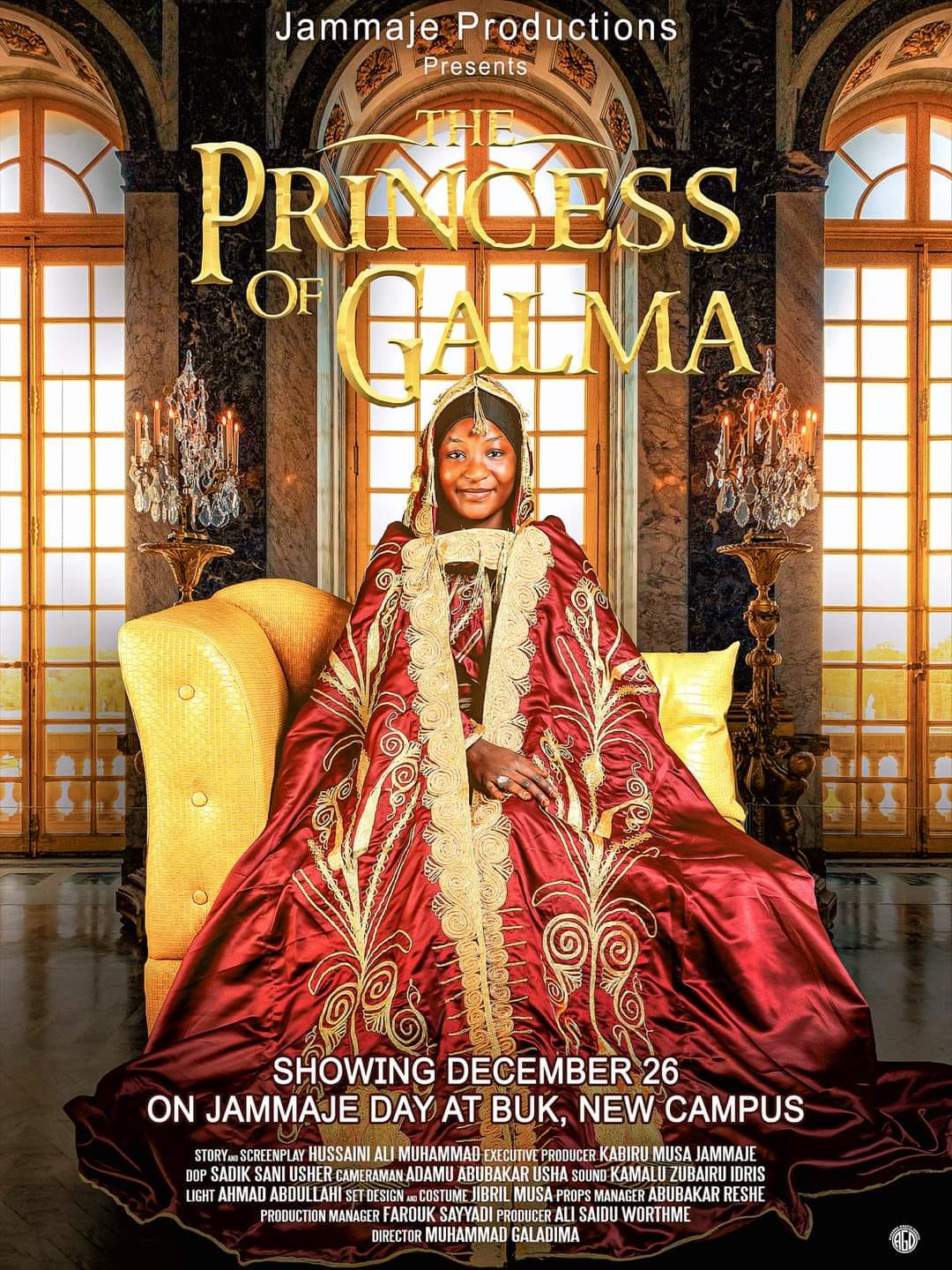
Kannywood movie review: The Princess of Galma

  • Director: Muhammad Galadima
  • Producer: Ali Saidu Worthme
  • Company: Jammaje Productions
  • Language: English
  • Release Date: 26th December, 2023
  • Cast: Hajara Yusuf, Magaji Mijinyawa, Abba Zaki, Billy O, Tijjani Faraga, Mustapha Musty, and others.

The Princess of Galma is another ‘Kannywood film in English’ from the promoter of the genre, Malam Kabiru Musa Jammaje, who has produced a few others before. The film was screened during an annual event, ‘Jammaje Day’, attended by hundreds of English language enthusiasts. Jammaje seems to have made the event a new way for showing his English movies as the attendees clearly make the audience he targets.

Despite its glorious title, The Princess of Galma is neither a historical drama nor an epic adventure. It’s a regal fiction set in a contemporary, fictitious kingdom, Galma, where King Ahmadu (Magaji Mijinyawa) suffers from a serious illness. The film begins with King Ahmadu’s illness, which caused widespread concern in the kingdom. His only daughter, Princess Nafisa (Hajara Yusuf), is deeply worried about her father’s deteriorating health condition. 

Meanwhile, the kingdom’s cabinet deliberates on the succession dilemma, as tradition dictates that the one who marries the princess inherits the throne. This makes Waziri (Tijjani Faraga), a cabinet member, send his son Sahabi to propose to the Princess. But she promptly rejects him despite his being a royal son and the most handsome young man in the Kingdom. The ensuing drama unveils Waziri’s struggle, the princess’s personal choice, and more…

Although the plot has its share of clichés, it maintains a reasonable flow, ensuring no dull moments throughout the story. But the screenplay runs too fast to a hasty finish. It would have been better if it had more scope, especially for Waziri’s secret schemes and the Princess, who suffers magic afflictions.

Beyond its regal and romantic themes, the film emphasises the healing power of prayers. We see how the prayers heal the king after everyone has begun to despair. It also highlights the prevailing theme of good triumphing over evil, as depicted in Sahabi’s loss of the princess despite his father’s magical attempt to acquire her. Besides, it also subtly addresses big security challenges in northern Nigeria.

The film also tries to be brim-full of cultural showcase but falls short of capturing the intrinsic value it truly deserves. It lacks the seriousness and dramatic intensity expected in a movie of its genre. The technical aspects are also average. A film like this should be carefully produced with a considerable budget to get the required impact. 

However, the English usage is generally flawless. The dialogue is captivating, and the actors deliver their lines remarkably. A few scenes were rendered entirely in the Hausa language, with others having lots of code-switching and mixing to accentuate comical effects and cultural representation.

On the other hand, all the actors try to pull off a good performance, especially Hajara Yusuf, who perfectly fits the role of Princess Nafisa and delivers her lines effectively. Abba Zaki leaves an impression in a brief role as the man of Nafisa’s dream. The scenes where he expresses his love for her captivate the most. Also, Billy O. gives a very real performance, similar to Malam Abdulhadi. The comic gestures he portrays get the audience laughing throughout.

Finally, The Princess of Galma qualifies as a worthy addition to Kannywood’s archive of English movies. It has little novelty but offers much to keep you glued to the screen. I commend the efforts of the director (Muhammad Galadima) and all the cast and crew members. Rating: 3/5.

Reviewed by Habibu Maaruf Abdu

habibumaaruf11@gmail.com

Kannywood/Nollywood film preview: Nanjala

The “Hausa films in English” have, since their debut, been as much praised as they have been criticised. However, while a large section of spectators welcomes the films, many others regard them as a threat to the development of the indigenous language. Others go further to describe them as “non-Kannywood” productions.

However, their initiator and promoter, Malam Kabiru Musa Jammaje, remains undaunted. He is all set to enthral the audience with another Kannywood film in English after the remarkable success of There is a way (2016), This is the way (2017), Light and darkness (2018) and In search of the king (2019).

The soon-to-be-released movie, entitled Nanjala, is the first of its kind in Kannywood. It features the industry’s heavyweights alongside top Nollywood actors like Enyinna Nwigwe, Nancy Isime, Segun Arinze, Sola Sabowale, among others. Moreover, it’s reportedly the most expensive Kannywood movie with a budget worth over N35 million.

The movie was directed by “whizkid” Ali Nuhu, co-produced by Abubakar Bashir Mai-Shadda and titled after its main character, Nanjala. I have only watched its two-minute-long teaser, but I could grasp that the eponymous heroine, Nanjala, is a journalist whose investigative reports would lead to the main conflicts. The film’s themes may include corruption, honesty, women empowerment, the menace of drug abuse, moral decadence, etc. The cinematography is terrific, and the cast seems to give an outstanding performance.

To be right is to describe the film as ‘pan-Nigerian’ due to its production quality, cast, English medium, and the resonance of its message in the country. It’s, of course, promising and will surely appeal to moviegoers from a wide range of backgrounds.

I, therefore, commend the trio of Jammaje, Ali Nuhu and Mai-Shadda for making a Kannywood film with the potential to catapult the overlooked film industry to the international stage. I do hope that it will not disappoint.

Habibu Maaruf Abdu

Kano, Nigeria

habibumaaruf11@gmail.com

27.5.2022

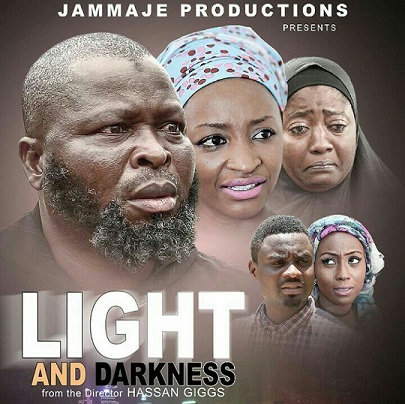
Kannywood movie review: ‘Light and Darkness’

By Saddam Ungogo

Light and Darkness (2018) is one of Kabiru Musa Jammaje’s Kannywood films in English. He is a fantastic filmmaker with ideas, but I always feel it isn’t a good idea to make such films. If it is something worth doing, Ali Nuhu would have made a few, Karan Johar would have made a Bollywood film in English. Instead, however, we saw indigenous films winning prestigious global awards.

At the Oscars, we even have an award category called ‘The Academy Award for Best International Feature Film’ (known as Best Foreign Language Film before 2020). It is given to feature films produced outside the United States with a predominantly non-English dialogue.

Directed by Hassan Giggs, written by Ilyasu Umar Maikudi and co-produced by Kabiru Musa Jammaje and Abubakar Bashir Maishadda, Light and Darkness is a story that revolves around Alhaji Balarabe Maikadara (Rabi’u Rikadawa), who is allergic to western education. The movie was set in an urban Hausa society of the 2000s, and it turned out to be a domestic drama with ‘education’ as its central theme.

Alhaji Maikadara was a well-endowed businessman. He married his second wife, Raliya (Rahma Sadau), with a promise to let her further her education, but after having her under his watch, he transgressed his end of the bargain. He had two grown-up children, Abba (Nuhu Abdullahi) and Basma (Maryam Booth), with his late wife. He chased Basma out of the house when she protested his intention to give her hand out in an arranged marriage. Instead, Basma preferred to go to school.

The film tries to identify the significance of education, paint it as light, parade the remonstrance of ignorance, and sketch it as darkness.

The film has good intentions, but it lacks preparation. Something tells me that the film cast was selected based on who they are or because they could speak English. Stories are supposed to call for actors.

Viewers were rushed through the storytelling, the story was stitched with anxiety, and the dialogues were incompatible with the character profiling.

Jammaje decided to be the line’s director, which I think was a blunder. He assigned uneducated characters to speak big grammar and talk with idiomatic expressions. Perhaps he was trying “to use the opportunity to teach English to viewers”, as he bragged in a Daily Trust interview on January 7, 2017.

Throughout the movie, I asked myself what audience the filmmakers had in mind while putting it together. Staged in an urban setting, written in English and with education (girl-child education included) as its cardinal message, this story was huge. Its target audience should be rural Hausa communities where there is a high level of out-of-school young people and children, where western education is still not condescended. If that is the case, the language used in transmitting this message must have spooked away from the suitable audience of the movie.

This is 2022. The movie was made in 2018. Maybe nobody would even care about this review, even the filmmakers themselves. Jammaje made many movies after this one, including The Right Choice, which his co-producer Maishadda called the “biggest Kannywood project ever in terms of finance”,…costing N35m.

The Right Choice (2020) was worth N35m. It featured top Nigerian stars from both Kannywood and Nollywood industries, such as Sani Mu’azu, Segun Arinze, Sola Sobowale, Nancy E.Isime, Enyinna Nwigwe and Ali Nuhu.

With The Right Choice, Jammaje Production must have learnt that they needed to be more pragmatic and made a complete Nollywood movie. Or, maybe, a Nigerianized film so that Jammaje could teach his beloved English language through his role as he would get educated cinema-goers lining up for his work anywhere around the world.

As for Hausa consumers like me, do not dare bring something like Light and Darkness ever again.

You might be promoting my culture with Light and Darkness, but honestly, you were killing my language!

Saddam Ungogo is a Kanp-based broadcaster and singer. He can be reached via candidsaddam@gmail.com.