Jama’are

Late Alaramma Malam Idi Nakamaku: A Qur’anic memorizer par excellence

By Ibrahim Sulaiman (Jama’are)

In circa 1993, my late maternal grandfather, Malam Musa Nagari (d. circa 2017), took me to Malam Idi Nakamaku’s Makarantar allo (a traditional Quranic school) in the Gandun Sarki quarters of Jama’are town, where I was enrolled as a Titibiri (an elementary student). He purchased a new allo (a wooden slate used as a hand-held writing board by students) for me, which I guessed he bought from the Jama’are weekly market. 

Even though they weren’t the same age, I realized that Allaramma Malam Idi and my Malam Musa Nagari were good friends. 

I was already enrolled in Abdulkadir Ahmed Primary School (formerly known as Zango Kanti Primary School). I usually attend the afternoon session at Malam Idi’s school alone with his regular Almajirai (students), most of whom come from nearby and distant towns and villages around Jama’are. 

That was a foundational journey I first had in Islamic studies. 

Sometimes, my maternal grandfather, Malam Musa Nagari, would lead me to school, hand me over to Allaramma, and jokingly say, ‘Ga dalibinka, Dan Izala’ (here is your student, member of Izala). This is because my father had already been a member of Izala (JIBWIS) since the early 1980s. (For an exploration of this statement and the struggle for religious space between Izala and other Sufi groups in Jama’are, see my MA thesis, ‘A History of JIBWIS/Izala in Jama’are, 1986-2015,’ submitted to the Department of History at Bayero University Kano in 2022.)

That was the start of it. Since then, whenever Malam sees me or I pass by him, he calls out, ‘babban dalibi’ (a senior student), even though I stopped attending his school when I was at the Titibiri level. True to form, he asks, ‘ya karatu’ (how’s studies), now referring to conventional education, and concludes with, ‘Allah ya yi albarka’ (may God bless).

As Malam is no longer with us, I will miss his prayers. Whenever I’m in Jama’are, I can hardly pass by Malam without stopping to greet him, and he has always been generous with his usual prayers.

Malam Musa Nagari and Malam Nakamaku have been a school for me. They have been a veritable source of inspiration. 

Malam Nagari, though a grandfather, was a no-nonsense type. We rarely exchanged banter, unlike typical grandparents in a Hausa/Fulani setting like Jama’are. He was a disciplinarian in the real sense of the word. Although we spent a lot of time together at home, on the farm, and in his vocation of building houses, that familiarity did not breach any contempt, as they say. Malam Musa Nagari once told me something I knew was intended to inspire me. ‘Ibrahim, let me tell you. Do you see my farms in their numbers? I only inherited one from my parents…’. This is a way of telling a teenager to ‘be hardworking’!

From Malam Idi Nakamaku, I learned the principle of goodwill. Even though I left his school to probably join Izala Islamiyya, Malam Idi has never stopped considering me his student, referring to me with the term baban dalibi. This has never been a source of concern for him; he simply wants to know how I’m progressing, even at the conventional school level. Malam never ceases to ask such questions; the last time we met was last year during Eid el-Kabir. 

To me, Malam Idi Nakamaku’s life epitomized an enduring commitment to promoting Quranic studies (what a blessed life!). It symbolizes selflessness and service to humanity, along with complete submission to the will of God. I believe Malam Idi Nakamaku embodies the traditional classical eclectic ascetic lifestyle characterized by Zuhd (asceticism or self-denial to achieve Ridhal Allah, meaning God’s pleasure) of early Sufi scholars, which continues to endure into this century.

The demise of Allaramma Malam Idi Nakamaku on March 4, 2025, was a great loss and, indeed, irreparable to the entire Jama’are Emirate. May his soul, along with that of his good friend Malam Musa Nagari, continue to rest in Janna til Firdaus.

Ibrahim Sulaiman (Jama’are) wrote from Abuja via ibrahimsulaiman193@gmail.com.
Making a difference in Jama’are 

By Mukhtar Jarmajo 

The importance of representative democracy is to give an avenue by which the citizenry can utilize in deciding on matters of the state through elected legislators in an assembly. In this sort of a vehicle of governance, complex decisions are made in an efficient way. More so, in spite of the fact that the majority will have their way, in representative democracy, the minority will have their voices heard. Additionally and very importantly, in this system of governance, political stability is ensured given that different interests are given a platform to negotiate and find common ground. 

However, as beautiful as this picture of representative democracy looks, people can only reap the benefits of democracy when they elect competent and patriotic politicians into the hallowed chambers of their assemblies. And that is why one of the main reasons why Nigeria as a nation is facing plethora of problems is the fact that many of the elected legislators, both at states and national levels, are either incompetent or are not patriotic enough to give their constituents fair representations. And in the few constituencies that have very active representatives in the legislature, life is made better both through legislative functions and constituency projects. 

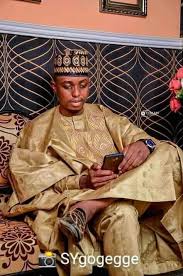
The member in the Bauchi State House of Assembly representing Jama’are Constituency for example, is making a difference. Hon. Mubarak Haruna (Mairakumi) has remained very consistent in making sure that his constituency gets the dividends of democracy. He does this both through legislative functions and constituency projects. Thus far, the gentleman politician has moved many important motions in the Bauchi State House of Assembly that have direct bearing on the people of Jama’are. He moved the motions for the dualization of the 3km township road in Jama’are and the rehabilitation of the Adamami/Disina/Jama’are road. Both motions have been adopted and are already in the 2024 Bauchi State budget. 

More so, Mairakumi moved a motion for the establishment of the House Committee on NGOs. With the increasing need to provide oversight of the numerous NGOs operating in Bauchi State in order to ensure transparency in their activities and adherence to regulations, the importance of the House Committee on NGOs cannot be overemphasized. Also, the Committee will facilitate enhancing collaboration and coordination between the NGOs and the Bauchi State government. And on matters of public importance, Mairakumi was quick to call on the attention of the Bauchi State government to intervene when there was outbreak last year, of diphtheria in Jama’are and elsewhere across Bauchi State. 

And shifting attention on constituency activities, upon inauguration as a member of the Bauchi State House of Assembly, Hon. Mubarak Haruna immediately established Jama’are Constituency Committees on Health, Education, Higher Education, Admissions, Water and Sanitation, Empowerment, Employment, Emergency and Sports. The various Committees were set up to look into the problems in their sectors and provide succor to the people of Jama’are by providing solutions. Thus far, the Health Committee has provided free eye care services to 70 people, sponsored hernia surgery for 20 others, fumigated Jama’are Constituency at the cost of N1.6 million and provided health assistance worth over N500,000. 

The Higher Education and Education Committees have expended N3 million on scholarships and supported Corp members with transport fare to their states of postings with over N700,000. They have also sponsored over 220 students for JSCE, expended over N600,000 in exams assistance and distributed books, biscuits and sweets to primary schools pupils in the sum of N1million. More so, the Admissions Committee has secured 20 more slots for the people of Jama’are Constituency in several schools to study health related courses, pharmacy, law and other courses. 

The Water Committee has thus far rehabilitated about 150 boreholes and constructed almost 10 new more. The Committee on Employment has secured more than 20 job slots in various organizations. On Empowerment, the Committee has distributed a car, 3 motorcycles and cash worth over N8 million. On women empowerment of small businesses, more than N4 million has been distributed. The Emergency Committee has expended over N2 million attending to cases of urgency. The Sport Committee has expended more than N1 million on football competitions and jerseys. 

While Hon. Haruna’s work in Jama’are is commendable, it serves as a microcosm of the larger challenges facing Nigeria’s democracy. His dedication highlights the crucial role which individual representatives play in shaping their communities’ well-being. However, his efforts also emphasize the need for systemic change. We must strive for a broader landscape where competent and committed representatives are the norm, not the exception. This necessitates increased voter participation, stricter vetting processes for candidates, and unwavering vigilance from the citizenry. Only then can the promise of representative democracy be truly realized for all Nigerians.

Jarmajo wrote from Lobito Crescent, Wuse 2, Abuja