Islam

The Caliphate did not die in Burmi: My travelogue to Maiurno

By Abdulrahman Sani

I went to Sudan to study Arabic. That was the beginning, simple and deliberate. But in truth, Arabic was only the surface. Sudan offered more than language. It stirred old questions I had carried with me since adolescence. Questions about memory, exile, and what remains after collapse.

My first encounter with the Sokoto Caliphate’s legacy wasn’t through archives or oral traditions. It was through theatre. I was in secondary school when I read Attahiru by Ahmad Yerima. The image of the Caliph fleeing colonial forces, defiant to the end, burned itself into my mind. I didn’t fully understand the politics then, but I felt the tragedy. That single text became a spark.

Later, I found the writings of Dr. Usman Bugaje, measured and searching. And then came Muhammad Shareef, the African American founder of Jamaa’at Danfodio in the United States, whom I had the pleasure of interviewing [here: https://youtu.be/_5Uj1S0lXQM?si=1BpJ9vusnW2HqWf4]. His writings were rich, wide-ranging, and full of overlooked geographies. It was through him that I first read about Maiurno, a small village in Sudan that held the echoes of Sokoto’s fall.

The very idea of it intrigued me. Remnants of the Caliphate had not only survived but also resettled, rebuilt, and renamed. I wanted to know what happened after Burmi. I wanted to know what exile looked like, generations later.

I mentioned this to my friend Malam Hassan, and soon after, we were on our way — me, him, and our guide. Before Maiurno, I spent some time in a Hausa village in Sudan. The familiarity was immediate. I saw areas named after Illela, heard idioms that sounded like home. It was as though Sokoto had sent a whisper into the desert, and it had echoed back in Sudanese tones.

Maiurno came into view quietly, without ceremony—a flat, sun-beaten village, carrying itself without fanfare. But history rarely announces itself. You feel it in the silences.

We made our way to the Sultan’s palace early in the morning. As we approached, an elderly man greeted me in Fulfulde. I hesitated, then responded in Arabic, admitting I didn’t understand. It was one of those quiet humiliations. A Fulani, abroad, unable to answer in the language of his own people. He smiled politely and said nothing.

We waited. There were others before us, people from another town in Sudan who had come to report a case. In the meantime, I noticed the crocodiles. Yes, crocodiles. They lay in their enclosure like royal guards, unmoving. It felt surreal but somehow fitting. The Sultan was no mere figurehead. He was the acknowledged leader of Hausa and Fulani communities in Sudan, a man of both presence and authority.

When he finally emerged, he received the guests before us. He listened without interruption or impatience. Then he settled their matter with a wisdom that didn’t need to explain itself. That kind of clarity is rare.

Then he turned to me.

I told him why I had come. I said I was interested in the Fodiyawa manuscripts said to be preserved in Sudan. He nodded with understanding, but explained that the key lay with the Sardauna of Maiurno, a scholar of great standing who, ironically, had travelled to Nigeria, my own country.

The Sultan was fluent in Hausa, Arabic, and Fulfulde. He spoke with the calm rhythm of someone used to being listened to. He smiled and said, “I know in Sokoto your Fulfulde doesn’t go beyond Balinjam.” It was said lightly, but it landed with accuracy.

He spoke of his relative, Professor Mukoshay, the author of the Fulani-Hausa dictionary. Then, briefly about Hayat ibn Sa‘id, a name that deserves more telling than time allowed. Before long, I realised I should be recording this. I asked his permission. He agreed with grace.

He began narrating how their ancestors had come to Maiurno after the fall of the Caliphate, how they had built their homes, mosques, and memory on Sudanese soil, and how they still kept contact with their families in Nigeria. He spoke too of the Jamaa’at Danfodio in America with quiet admiration, amused by how history had found new shapes and tongues.

After the conversation, he did something unexpected. He asked, gently, for my contact. I gave it. We shook hands, and I took my leave.

What struck me wasn’t just the story. It was the clarity with which he carried it. My visit to Maiurno took place in 2019. At the time, the country was in a fragile transitional moment, unsure of what lay ahead. But even then, the Sultan stood out–quiet, composed, and principled. In later years, during the war with the RSF militia, I would hear that he remained steadfast and stood with the state when others hesitated. The president himself visited to thank him.

Maiurno wasn’t just a trip. It was a quiet, necessary crossing, from curiosity to memory, from story to place. The Sokoto Caliphate may have fallen in Burmi, but it lives on. In names. In speech. In places like Maiurno, where its sons still remember.

Abdulrahman Sani can be reached via X: @philosopeace.

Dr Yasir Qadhi pays tribute to Alhaji Aminu Dantata

By Hadiza Abdulkadir

Renowned U.S.-based Islamic scholar Dr. Yasir Qadhi has paid a heartfelt tribute to Nigerian business mogul and philanthropist Alhaji Aminu Alhassan Dantata, who passed away at the age of 94.

In a message shared via his social media platforms, Dr. Qadhi described Dantata as “a shining star and a legendary icon” in Nigeria, praising his humility, honesty, and lifelong commitment to philanthropy.

“He was one of the most successful entrepreneurs and business tycoons in Africa,” Dr. Qadhi wrote. “Yet everyone knew him to be a humble and honest man… ever-ready to help others less fortunate, never greedy for more.”

Recalling a recent meeting with Dantata in Nigeria, Qadhi shared the late businessman’s parting words of wisdom: “Honesty! Always, be truthful and sincere, and leave the rest to Allah.”

Alhaji Dantata, who declined a political appointment, was never involved in a scandal and was laid to rest in the revered Baqi al-Gharqad cemetery in Madinah, Saudi Arabia.

“Such men are very rare indeed,” Qadhi noted, praying for Allah’s mercy upon him and for his legacy to continue through his progeny.

Four arrested in Turkey over Prophet Muhammad’s cartoon

Turkish authorities have arrested four staff members of a well-known satirical magazine following the publication of a cartoon that many believe portrays the Prophet Muhammad — a depiction strictly forbidden in Islam.

The country’s Interior Minister, Ali Yerlikaya, described the cartoon released by LeMan magazine as “shameless,” confirming that the magazine’s editor-in-chief, cartoonist, graphic designer, and institutional director had been taken into custody.

In a post on X (formerly Twitter), Yerlikaya also released footage of their arrests and condemned the illustration as a “vile drawing.”

Responding to the outrage, LeMan firmly denied that the image was a caricature of the Prophet.

“The work does not refer to the Prophet Muhammed in any way,” the magazine wrote on X. It later issued an apology “to well-intentioned readers who feel hurt,” while maintaining that the cartoon was misinterpreted.

“The cartoonist wanted to portray the righteousness of the oppressed Muslim people by depicting a Muslim killed by Israel, and he never intended to insult religious values,” the statement read.

The magazine added, “We do not accept the stain that is cast on us because there is no depiction of our Prophet. You have to be very malicious to interpret the cartoon in this way.”

Despite the denial, hundreds of people gathered outside the magazine’s Istanbul office on Monday in protest. Demonstrators were heard chanting “tooth for tooth, blood for blood, revenge, revenge.”

Riot police intervened as the protest escalated, and a journalist from Agence France-Presse (AFP) reported the use of rubber bullets and tear gas by security forces to disperse the crowd.

Justice Minister Yilmaz Tunc revealed that the Istanbul Chief Public Prosecutor’s Office had opened an inquiry into the matter, accusing the magazine of “publicly insulting religious values.”

He stated, “The caricature or any form of visual representation of our Prophet not only harms our religious values but also damages societal peace.”

He added that legal action against the staff of LeMan would proceed “without delay.”

Authorities have also issued arrest warrants for other senior figures at the magazine.Images of the cartoon, now widely circulated on social media, depict two winged characters floating over a war-torn city.

One character is quoted as saying, “Peace be upon you, I’m Muhammed,” to which the other replies, “Peace be upon you, I’m Musa.”In a comment to AFP, LeMan’s editor-in-chief Tuncay Akgun, who is currently in Paris, argued that the drawing had been misunderstood.

He stressed that LeMan would “never take such a risk.” He also compared the backlash to the 2015 attack on French satirical magazine Charlie Hebdo over its caricatures of the Prophet, describing the response to LeMan as “very intentional and very worrying.”

The Charlie Hebdo incident led to the deaths of 12 people and marked one of the darkest moments in recent French history.

Wunti Al-Khair Foundation: A quiet revolution of kindness

By Usman Abdullahi Koli, ANIPR

It often begins in silence, the kind of silence that follows suffering, that surrounds forgotten people and places. Then, one day, someone listens. Someone hears the unheard cries and decides to act. Not for praise. Not for politics. Just for people. That is how the Wunti Al-Khair Foundation was born out of quiet empathy and bold conviction.

Founded by the respected and remarkably selfless Dr. Bala Maijama’a Wunti, this foundation has grown into a strong pillar of light for those trapped in the shadows of neglect. It doesn’t announce itself with noise, but rather with impact. It doesn’t parade power, but wields compassion with quiet strength. In every village it touches, in every child it lifts, the foundation tells a story of care that is both personal and profound.

At the heart of Wunti Al-Khair is a simple but powerful philosophy: people matter. Whether it’s a sick mother, a child without a school, a youth without skills, or a traditional gasping for breath—everyone counts. The foundation has built its work on four timeless pillars: health, education, skills, culture, and community services. These aren’t just categories; they are the lifeblood of any thriving society. And Wunti Al-Khair doesn’t just serve these areas; instead, it brings them to life.

In healthcare, the foundation reaches places others overlook. It breathes life into under-equipped rural clinics, supports emergency services, organises medical outreaches, and ensures that the poorest families are not left behind. Where once fear and despair prevailed, now there is relief—and a renewed will to live. For many, a hospital bill is the difference between hope and helplessness. But through Wunti Al-Khair, that burden is lifted with dignity.

In education, the foundation does more than hand out books, renovate classrooms, or award scholarships. It opens the doors of destiny. Imagine a young girl from a forgotten hamlet stepping into school for the first time, her eyes wide with dreams, her hands clutching a schoolbag gifted by strangers who saw her worth. That’s the kind of miracle Wunti Al-Khair delivers—not one-time donations, but long-term transformation.

Skills development follows naturally. Because education alone can inspire, but skills empower. The foundation trains women, nurtures local entrepreneurs, supports artisans, and helps young people turn their talents into trades. It doesn’t just teach people to fish; it gives them a pond, a rod, and the confidence to cast their lines.

Then there is the culture: the soul of a people. Now, as globalisation tries to wash away local identity, Wunti Al-Khair holds firm. It celebrates heritage, promotes traditional art, supports festivals, and reminds communities that their past is not a relic but a treasure. By honouring culture, it strengthens pride, and through pride, it nurtures progress.

Governments often fall short in fulfilling their responsibility to provide basic amenities for the populace. The Wunti Al-Khair Foundation has stepped in to fill the gap with endless commitment. The foundation restores hope in underserved communities by implementing impactful, grassroots initiatives. Among its most notable contributions are the drilling of solar-powered boreholes in rural areas, ensuring access to clean and sustainable water sources. It also extends compassion to the less privileged and vulnerable by providing permanent and temporary shelter solutions.

But a foundation, no matter how noble, is only as strong as the man behind it. And in Dr. Bala Wunti, we see not a benefactor from above, but a father beside us. His generosity is quiet, his heart open, and his actions resolute. Those who know him describe a man who listens before speaking, gives without being asked, and navigates life with humility and purpose. His leadership is not defined by status, but by service.

Dr. Bala’s life is a lesson. From humble beginnings to impactful influence, he has never lost sight of the human face of hardship. He gives not because he has to, but because he cannot not give. For him, lifting one person is worth more than a thousand compliments. He believes that the true measure of wealth is not in what you own, but in the number of lives you’ve made better.

Wunti Al-Khair Foundation is not just an organisation; it’s a movement of mercy. It is a reminder that in a world often clouded by selfishness, there are still hearts that beat solely for others. You won’t always see its name in headlines, but you’ll find it in the eyes of a healthy mother, in the smile of a child clutching a scholarship letter, in the hands of a youth finding his worth and becoming independent, and in the praises of others whose lives have been touched.

This is a revolution led by kindness. One community at a time. One human being at a time.

Usman Abdullahi Koli wrote via mernoukoli@gmail.com.

31 Muslim passengers lynched in Plateau: ABU Muslim Forum demands justice

By Muhammad Sulaiman Abdullahi

The Muslim Forum of Ahmadu Bello University (ABU), Zaria, has condemned the brutal lynching of 31 Muslim passengers in Mangu Local Government Area of Plateau State, describing the attack as a “horrific act of savagery and barbarism.”

According to the Forum’s statement, signed by its Secretary-General, Dr. Munir Sani Ari, the victims—travelling in an 18-seater bus marked “ABU-Zaria”—were ambushed on Friday, June 20, 2025, while seeking directions in Mangu. Twelve passengers were reportedly killed and burned on the spot, while 18 others sustained serious injuries and are currently receiving medical care following military intervention.

Among the deceased was a staff member of ABU’s Department of Physics, who was reportedly transporting women and children to a wedding. The Forum emphasised that this was not an isolated incident but part of a “disturbing pattern of impunity-driven violence” against Muslims in Plateau State.

Criticising the response by Mangu LGA Chairman, Mr. Emmanuel Bala, who attributed the massacre to a “case of mistaken identity”, the Forum labelled the remark as “futile and insulting,” citing social media posts glorifying the attack as evidence of premeditated hate.

The Forum issued a set of urgent demands, including a full and independent investigation, public prosecution of those responsible, prompt compensation for victims, and immediate government intervention to prevent future attacks. It also called on the Kaduna State Government to support the victims’ families and cover medical expenses.

The Forum warned that continuing to fail to act decisively would only deepen national tensions, urging authorities to pursue justice beyond “mere rhetoric.”

Islamic wisdom offers a timely antidote to Nigeria’s silent mental health crisis, experts assert at IIIT lecture

By Musa Kalim Gambo

The International Institute of Islamic Thought (IIIT), Central Nigeria Office, recently hosted a pivotal monthly lecture series on Sunday, June 1, 2025, shedding light on the escalating challenge of mental health and psychosocial issues in the modern world through an Islamic lens. The virtual event, titled “Navigating Mental Health and Psychosocial Challenges in the Modern World: An Islamic Perspective,” brought together eminent scholars and practitioners to underscore the urgency of addressing mental well-being, especially in a nation grappling with pervasive stressors and inadequate healthcare infrastructure.

The lecture commenced with welcoming remarks from Dr. Aliyu Tanko, the Coordinator of IIIT Central Nigeria Office, who highlighted the widespread nature of mental instability, noting the common sight of individuals speaking to themselves or acting unusually due to mental distress. Professor Ahmad Bello Dogarawa, a Zaria-based Islamic scholar who served as the chairman of the occasion, emphasised the timeliness and relevance of the topic, noting that the issue of mental health and psychosocial wellness gained critical attention during the COVID-19 lockdown, as families experienced increased troubles and stresses while confined to their homes. This realisation, he stated, underscored the necessity of continuous discourse on mental health and psychosocial support.

The first distinguished speaker, Professor Salisu Shehu, a Professor of Educational Psychology at Bayero University Kano and Executive Secretary of the Nigerian Educational Research and Development Council, delved into the conceptualisation of mental health. He noted that traditionally, mental illness was only recognised in its most severe forms, such as “actual madness and lunatic behaviour,” overlooking milder emotional instabilities like neurosis or withdrawal syndrome. However, with expanding knowledge, it’s now understood that mental illness encompasses a broad spectrum, including emotional disorders.

Professor Shehu highlighted the fluidity in defining “disorder” or “maladaptation” in the modern world, influenced by libertarian philosophies and concepts of freedom and inclusivity, citing the LGBT movement as an example where behaviours once considered abnormal are now termed “difference”. He countered that in the Islamic context, and conventionally, any behaviour “that deviates markedly from the accepted ‘norm’ or pattern can be considered as a disorder or abnormality”. He adopted the World Health Organization’s (WHO) 2022 definition of mental health as “a state of well-being in which the individual realizes his or her abilities, is able to cope with normal stresses of life, work productively and fruitfully, and make a positive contribution to his or her community”. He further explained that mental illness, according to WHO, is a “clinically significant disturbance in an individual’s emotional regulation, or behavior,” often associated with stress. He lamented the “irony of modernity,” where inventions designed for ease have, paradoxically, accentuated stress and psychosocial challenges, leading to increased mental illness due to factors like urbanization, overcrowding, and the erosion of social networking and extended family support.

Transitioning to the Islamic perspective, Professor Shehu articulated that mental health and sickness are “primarily subject to the absolute will of Allah,” rooted in the Tawhidi framework. He emphasised that Islam attaches “fundamental and central concern on maintaining and preserving mental well-being”. A profound demonstration of this concern is the unequivocal prohibition of intoxicants, as mental well-being is a prerequisite for fulfilling all Sharia obligations. He cited a Hadith affirming that “the pen (for record of sins) is suspended… against… the mentally ill until he regains sanity,” underscoring the vital importance of sound mental health in Islam.

The Quran, he noted, directly links stress and depression to emotional disorders, offering remedies such as belief in divine decree, patience, trust, and gratitude. Practices like Dhikr (remembrance of Allah) and Dua (supplication) are prescribed as potent coping mechanisms for sorrow and anxiety. Professor Shehu referenced Islamic scholars like Ibn al-Qayyim al-Jawziyya, who in “al-Tibb al-Nabawy (The Prophetic Medicine),” discussed the effects of stress (e.g., sleeplessness, grief, unfounded fears) on mental well-being and outlined over twenty Islamic coping techniques.

Following Professor Shehu, Professor Taiwo Lateef Sheikh, a distinguished Professor of Psychiatry at Ahmadu Bello University, Zaria, delivered a comprehensive presentation. He echoed the sentiment that mental health is a core protection in Islam, ranking third among the five necessities. He stressed the critical distinction between mental health symptoms and mental illness, noting that many experiencing distress can recover with community or spiritual support without necessarily needing clinical intervention.

Professor Sheikh painted a grim picture of mental health in Nigeria, describing it as “one of the most neglected areas of health in the world and even worse in Africa”. He presented sobering statistics:

  • Over one in five people in conflict-affected areas experience mental health conditions.
  • Nigeria allocates less than 5% of its health budget to mental health, with funds often going to standalone psychiatric hospitals rather than comprehensive care.
  • There is a severe shortage of mental health professionals, with fewer than one psychiatrist per 100,000 people in Nigeria, translating to a ratio of 1 to 1.5 million.
  • More than 85% of people with severe mental illness in low- and middle-income countries do not receive the care they require.
  • Around half of all mental health conditions start by age 14, and suicide is the second leading cause of death among youth aged 15-29 in Africa.

He explained that mental health encompasses emotional, psychological, and social well-being, influencing thought, feeling, action, relationships, and stress management. He introduced the “bio-psychosocial approach” to care, integrating biological (physical investigations, medications), psychological (counselling, psychotherapy), social (lifestyle adjustments, environmental factors), and religious/spiritual dimensions. He passionately argued for the crucial role of spirituality in mental health, stating it provides a “sense of purpose and meaning, social support, healthier behaviours, increased happiness, and enhanced coping mechanisms and resilience”.

Professor Sheikh also detailed Nigeria’s mental health governance, outlining policies from 1995 to 2023. He highlighted his pivotal role in developing the National Mental Health Act of 2021, a landmark legislation signed into law in December 2023. However, he lamented the significant institutional barrier: the Act remains largely unimplemented, and the Federal Ministry of Health has yet to establish a dedicated Department of Mental Health, the “first rate-determining step” for a budget line and governance structure. Other barriers include professional rivalry, lack of standardisation in religious healing approaches, and individual self-denial and stigma. To overcome these, he called for multi-sectoral and integrated approaches, involving collaborations across health, education, housing, and other sectors and fostering partnerships with faith-based organisations and community engagement.

The lecture concluded with interventions from other senior colleagues and attendees. Professor Nasiru Maiturare, Rector of the Hajj Institute of Nigeria, underscored the effectiveness of the Islamic framework by presenting statistics on suicide rates: Muslim-majority countries show remarkably lower rates compared to nations like South Korea, Japan, and Sweden. This, he asserted, is not a coincidence but attributable to Islam’s “comprehensive approach to mental health,” which anchors human life in faith, remembrance of Allah, patience, trust, and gratitude.

Participants urged for greater mass outreach, including radio and TV programs in local languages, to reach broader audiences beyond those who can log into virtual platforms. Given their large followership, there was a strong call to engage religious and traditional institutions for awareness and community-based support and to standardise spiritual healing approaches. Suggestions were also made to integrate mental health awareness into primary school curricula and to establish groups of young, enthusiastic individuals at the state level to disseminate this crucial knowledge.

The lecture served as a powerful reminder of the urgent need for a societal shift in addressing mental health, emphasising that Islam provides a robust, holistic, and spiritual foundation for mental well-being and resilience in the face of modern-day challenges.

Gambo writes from Funtua, Nigeria and is a member of the IIIT Central Nigeria Office Monthly Lecture Series Committee.

OIC summit convenes amid Middle East turmoil, with little hope of influence

By Muhammad Abubakar

Leaders and foreign ministers from the 57 member states of the Organisation of Islamic Cooperation (OIC) are gathering in Istanbul this Saturday for a high-stakes summit overshadowed by escalating tensions in the Middle East, most notably Israel’s war with Iran and the ongoing devastation in Gaza.

Iranian Foreign Minister Abbas Araghchi is set to attend, as many of his counterparts are expected to call for an immediate ceasefire. Yet the OIC, long criticised for its limited political clout, is unlikely to shift the course of either conflict.

The situation in Gaza—now in its 21st month—remains dire. Humanitarian workers report that more Palestinians are killed by the Israeli army while trying to collect food than in actual combat. 

On June 17th, at least 59 people were killed when Israeli tanks reportedly opened fire near an aid distribution centre run by the Israel-backed Gaza Humanitarian Foundation. Israel’s military has pledged to investigate the incident.

Despite repeated condemnations and emergency meetings, the OIC has remained largely powerless in stemming the violence in Gaza. With tensions now spilling into a broader regional confrontation, the summit is expected to issue a familiar call for peace that few expect to alter the course of events.

Inclusive leadership, not religious dominance, will save Nigeria

By Malam Aminu Wase

A presidential Muslim-Muslim ticket is not merely a political strategy. It is a catalyst for national instability. In a country like Nigeria, which is still grappling with deep-seated mutual distrust, such a move sends the wrong signal. 

For Nigeria to truly progress, its leadership must reflect the nation’s rich diversity. Only through inclusive governance can we assure every citizen, regardless of faith, ethnicity, or region, that they have a rightful place in the nation’s power structure.

Malam Nasir Ahmed El-Rufai played a pivotal role in promoting the idea of a Muslim-Muslim presidential ticket. While this strategy may have been politically calculated, it encouraged religious and ethnic groups to compete for power, rather than unite under a shared national vision that addresses the hardships facing all Nigerians.

Ironically, many of the architects of the Muslim-Muslim ticket are not reaping the benefits of their efforts. The lofty expectations they once championed of inclusion and representation have been dashed. Some have even defected to other political parties, disillusioned by the very system they helped establish.

Nigerians must open their eyes. The struggle among the political elite is not about improving the lives of the masses; it is a scramble for personal gain, to secure privileges for their children, families, and close associates. We must rise above the politics of religion and region and demand leadership representing all Nigerians.

I urge fellow citizens to reject the idea of a Muslim-Muslim ticket in the upcoming election. Let us vote for candidates committed to unifying Nigeria, easing economic hardship, and introducing policies that genuinely impact the lives of ordinary people.

Malam Aminu Wase, Write from Kaduna State. He can be reached via aminusaniusman3@gmail.com.

FG declares June 6 and 9 public holidays for Eid-el-Kabir

By Maryam Ahmad

The Federal Government of Nigeria has declared Friday, June 6, and Monday, June 9, 2025, as public holidays to commemorate this year’s Eid-el-Kabir celebration.

Announcing the holidays on behalf of the government, Minister of Interior Dr. Olubunmi Tunji-Ojo extended congratulations to the Muslim Ummah both within Nigeria and in the diaspora. 

Dr Tunji-Ojo urged Muslims to embody the spirit of sacrifice and faith exemplified by Prophet Ibrahim (Peace be upon Him) and to use the period to pray for a peaceful and prosperous Nigeria.

In a statement signed by the ministry’s Permanent Secretary, Dr. Magdalene Ajani, the minister assured Nigerians that the people-oriented reforms and initiatives carried out under President Bola Tinubu’s administration’s Renewed Hope Agendaare aimed at restoring Nigeria to progress.

Eid-el-Kabir, also known as Eid al-Adha, is one of the most significant festivals in Islam. It commemorates Prophet Ibrahim’s willingness to sacrifice his son in obedience to Allah’s command. In Nigeria, the festival is marked by prayers, animal sacrifices, and sharing meals with family, friends, and the less privileged.

The declaration of these public holidays allows Muslims across the country to observe the religious rites and festivities associated with Eid al-Kabir.

From us, by us, for us: How homegrown Waqf initiatives can shift our gaze from international donors

By Abdullahi Abubakar Lamido, PhD

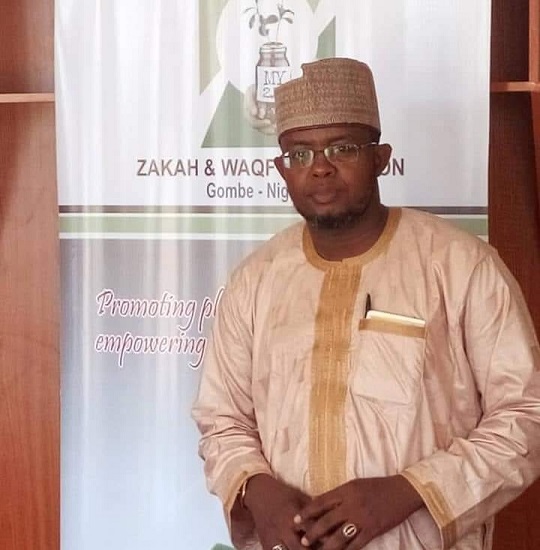
It was a warm afternoon in my office at the Zakah and Waqf Foundation in Gombe, and I had cleared my schedule for what was described as a “very important meeting.” A group of nine young professionals—doctors, nurses, and medical administrators—filed in with purposeful expressions. These were respected Muslim health workers in our community, competent and resourceful in their own rights, leading their Muslim body. 

They sat down, exchanged pleasantries, and after a few minutes, one of them cleared his throat and spoke. “We were hoping you could help us reach Qatar Charity. We want to build a mosque in our hospital.”

I paused. My mind raced not with criticism but with confusion. These were not poor villagers. These were professionals, all salaried, some likely earning above average. I asked gently, “How much will the mosque cost?”

“About ten million naira.”

“And how many Muslim staff do you have?”

“Roughly 500,” they responded.

I picked up a pen and scribbled something. “That’s twenty thousand naira each,” I said. “Divided over four months, that’s 5,000 naira per month.”

There was a short silence. “You don’t need Qatar Charity,” I told them. “You need yourselves; you need Gombe Charity.”

From my limited understanding, I explained that most international charities, like Qatar Charity, raise funds from within their own people first. They identify a problem in a country, develop a proposal, return to their citizens and say: “Donate to build a mosque in Nigeria.” If they can do that for us, why can’t we do it for ourselves? I then told them to put my name as the first donor of the twenty thousand naira to kickstart the project. 

That brief meeting offered a glimpse into a deeper issue—our chronic psychological dependence on external aid, even when we can act. The problem isn’t always material poverty; often, it’s a lack of belief in our collective strength—a poverty of the mind and will.

The Turkey Phenomenon: A Lesson Misunderstood

Take, for example, the popular trend in some Northern Nigerian states where applications pour into Turkish and other organisations for Qurbani (Udhiya) distributions. Turkish charities, may Allah reward them, buy cows and distribute meat during Eid.

But here’s a crucial question: Is this a model to emulate or one to reconsider? If every year, our people look outward to receive—and never inward to learn how to organise, fund, and distribute—we risk cultivating a culture of constant reception without reciprocity.

Islam is not a religion of passivity. It teaches us to act before asking, to solve before seeking, and to build with what is already in our hands. Prophet Muhammad (peace be upon him) taught us that the upper hand is better than the lower one—the hand that gives is superior to the hand that receives.

The Al-Basar Example: From Vision to Visionary Impact

Now, let’s discuss a model worth following—Al-Basar International Foundation.

Al Basar International Foundation is a non-profit international NGO. Founded in 1989 by a group of concerned professionals. Al-Basar is a shining example of what happens when people come together to solve a problem themselves. Their focus? Combating preventable blindness across the Muslim world. No dependency. No grand donor campaigns. Just strategic self-mobilisation as well as waqf and collaborative mindset. 

It works in Yemen, Bangladesh, Sudan, Nigeria, Pakistan, etc. In Nigeria, for instance, a 2019 campaign funded by King Salman Humanitarian Aid and Relief Centre in collaboration with Al Basar International Foundation saw medical volunteers from Saudi Arabia meet 8,000 eye patients and perform 800 eye surgeries to remove cataract and glaucoma in Ibadan, Nigeria, as well as in Lafia in Nasarawa State. 

The foundation manages the Makkah Eye Specialist Hospital in Kano state, Nigeria, where 4,000 free eye surgeries were carried out in 2021. The hospital treats eye conditions, including diabetic retinopathy. In 2022, Al Basar International Foundation, in collaboration with the King Salman Relief Center, sponsored 400 free cataract surgeries for residents of Kano, which took place at Makkah Eye Specialist Hospital. 

Over the years, Al Basar has conducted over 2,000 outreach programs worldwide, performed over 700,000 cataract surgeries, and dispensed nearly 2 million glasses. With 28 hospitals across six countries, the foundation has recorded 26 million outpatient visits. It also invests in education by establishing colleges to train eye care professionals, impacting Africa and Asia. Their school screening program has reached over 1 million children, providing immediate interventions and ensuring a comprehensive approach to their eye health.

Now ask yourself: is Al-Basar a government-funded operation? No. Did it start with foreign aid? No. It was “from them, by them, for them.” And now it is for us, too—because they nurtured it to the point where it could grow beyond them.

We should not only admire such models. We should replicate them.

Historical Echoes: Islamic Proofs of Self-Driven Solutions

Uthman ibn Affan (RA) and the Well of Rumah

When water scarcity plagued Medina, and a private owner monopolised a well, the Prophet (SAW) called for someone to purchase it for the Muslims. Uthman (RA) stepped up, bought the well, and made it a public waqf. He didn’t write to Yemen. He didn’t petition the Romans. He simply used what Allah had given him to solve a problem for Allah’s sake.

So, What Can We Do? A Homegrown Waqf Blueprint

If we genuinely want to stop relying on donors and start building resilient communities, here are practical steps:

Think Within, Act Within: Begin every solution by asking what the community already has—not what it lacks. Do you have professionals? Land? Skills? Social networks? Then, start from there.

Group Economic Self-Waqfing: Encourage professional groups (doctors, teachers, engineers, traders, lawyers) to dedicate a portion of monthly income to a fund. Even a modest 5,000 naira monthly from 100 people can generate sustainable capital. At Zakah and Waqf Foundation, we enjoy that from some professionals, and it works. 

Community Challenge Waqf: Identify a local challenge—maternal health, education for orphans, access to clean water—and collectively endow a waqf around it. Let the yield solve that problem perpetually.

Transparent Management Structures: Set up trustworthy waqf boards to manage resources. Trust fuels contribution. Accountability sustains it.

Celebrate Independence: Create cultural pride around self-funded projects. Showcase schools, hospitals, orphanages, and mosques built without a single foreign dime.

It is Time to Change the Script

Imagine if each LGA in Nigeria had one waqf-funded primary health centre, one vocational training centre, and one scholarship fund—all funded by local contributions from professionals, retirees, and small traders.

We would not be beggars. We would be builders.

It’s time to write a new story. One not of helplessness and application letters to foreign NGOs but of resolve, unity, and strategic giving. One of From Us, By Us, For Us—in the truest, most impactful sense.

When that story is told to future generations, they will say: There was a people who stopped waiting and started building.

Amir Lamido wrote from Gombe via lamidomabudi@gmail.com.