Islam

The sociology of Eid festivals in Nigeria 

By Hassan Idris

It’s quite important to demystify the fact that in the festivity of the Eid festival, which is a religious celebration amongst Muslims all over the world, there is quite a lot of sociologically significant display, which demands sociological explanations and outlooks. Religious festivals such as Eid hold greater importance to sociologists like Emile Durkheim (1858-1917). He developed a widely used theory for explaining what holds society and social groups together through his study of religion. He identified core aspects of religious structure and participation that sociologists today apply to the study of society in its entirety.

This includes the role of religious festivals and rituals in bringing about social cohesion, social solidarity and people together around shared practices and values. It also comprises ways that participation in religious festivals and rituals reaffirms shared values and thus reaffirms and strengthens the social bonds between people and the experience of “collective effervescence,” in which people tend to share in feelings of excitement and are unified in the experience of participating in religious festivals and rituals together. The Eid festival, an Islamic holiday celebrated by many Muslims as a religious holiday with religious rituals, values, and relationships, is one of them.

Thus, Durkheim defined religion as a“unified system of beliefs and practices relative to sacred things. Sacred to him meant extraordinary—something that inspired wonder and that seemed connected to the concept of “the divine.” He argued that“religion happens” in society when there is a separation between the profane (ordinary life) and the sacred. A rock, for example, isn’t sacred or profane as it exists. But if someone makes it into a headstone, or another person uses it for landscaping, it takes on different meanings—one sacred, one profane. Durkheim, who’s generally considered the first sociologist to have analyzed religion regarding its societal impact, believed that religion is about community. It binds people together (social cohesion), promotes behaviour consistency (social control), and offers strength during life’s transitions and tragedies (meaning and purpose).

With the applicability of the methodology of natural science to the study of society, Durkheim held that the source of religion and morality is the collective mindset of society and that the cohesive bonds of social order result from common values in a society. He contended that these values need to be maintained to maintain social stability, to which explanations of Durkheim on the importance and functionality of religion would be used to explain and understand the religious Eid festivals celebrated by all the Muslims in the world.

However, the word “Eid” means festival or feast. Therefore, it depicts the event that is being celebrated. Muslims celebrate two types of Eid yearly following two significant acts of worship. The first is called “Eid Al-Fitr”, which means “the fast-breaking Festival” celebrated after fasting the entire month of Ramadan. The second, known as “Eid-ul-Adha,” meaning “the festival of sacrifice which is celebrated immediately upon the completion of Hajj, the annual pilgrimage to Mecca. The Eid Al-Adha entails going for a pilgrimage to Mecca performed by millions of Muslims simultaneously once a year. Through Eid Al-Adha, the sacrifice Abraham was willing to make to God and the mercy God had upon him becomes celebrated and manifested.

Muslims celebrate the day by sacrificing a sheep or so and sharing it not just with family and friends but also with the less privileged. This celebration lasts four days, beginning the day after the completion of Hajj. The celebration of Eid Al-Fitr lasts one day, starting with the sighting of the new moon, which marks the end of the Islamic month of Ramadan and the beginning of the following month. During Ramadan, Muslims fast to purify themselves and get closer to God. Ramadan is like a retreat, a time to step aside worldly worries, focus on spirituality, and improve connections with the one who gave them life and blessings.

After going through a long spiritual retreat for a maximum of 29 to 30 days, it is only logical that a feast is held to mark the end of the month. This is what Eid Al-Fitr is all about. Like Ramadan, Eid Al-Fitr begins with the first sighting of the new moon, so most of the time, Muslims have to wait until the night before Eid to verify its date. If the new moon is not visible, the month lasts 30 days. The date changes annually on the Gregorian calendar and varies from country to country, depending on geographical location.

Though, in declaring the start of Eid, Muslim-majority countries depend on the testimonies of local moon sighters. The Judicial High Court then decides if Eid has arrived. When the sighting has been verified, Eid is declared on television, radio stations and mosques. The celebration of Eid Al-Fitr lasts one day, starting with the sighting of the new moon, which marks the end of the Islamic month of Ramadan and the beginning of the following month.

The first Eid Al-Fitr was celebrated in 624 CE by the Prophet Muhammad (PBUH) and his companions after their victory in the battle of Badar, a turning point in the prophets’ struggle with his opponents among the Quraish in Mecca during the early days of Islam. Inasmuch as all Muslims celebrate the festival, there are many doctrines and ways of celebrating it which are sociological and are of paramount interest and importance to sociologists and Anthropologists. However, the traditions of Eid Al-Fitr entail ‘Sawm’ ( fast), which is the practice of fasting during the holy month of Ramadan and is one of the five pillars of Islam.

Muslims believe that during Ramadan, the Qur’an text was revealed to the Prophet Muhammad (S.A.W). Muslims celebrate Eid Al-Fitr with “Salat Al Eid” (Eid prayers). There is no audible call to prayer for the Eid prayers. Muslims will gather in mosques or open spaces and offer two units of prayer–called “Rakat”. The prayers are followed by a sermon, in which the Imam asks for forgiveness, mercy, and peace for every being worldwide.

To further bolster the sociological social solidarity and love in Islam, which clarifies Durkheim’s postulation, the other key element of the Eid festival is giving money to the poor alias ‘Zakat al-Fitr’, sending Eid greetings and feasting with families. For many Muslims, Eid al-Fitr is a festival to show gratitude to Allah for the help and strength he gave them throughout the month of Ramadan to help them practice self-control. The phrase commonly used by Muslims as a greeting on this day is “Eid Mubarak”, which is Arabic for ‘blessed festival’.

Muslims begin Eid with the observance of the Eid congregational prayer, sometimes in the mosque but usually in an outdoor location. Before going for the Eid prayer, it’s encouraged to take a bath, wear the most befitting clothes, and look dignified for the celebration. On the way to the Eid Prayer, Muslims recite the words: Allah is great, Allah is great, Allah is great. There is no other God but Allah. Allah is great; Allah is great. To him belongs all praise. And after the Eid prayer, people gather to feast with their families and friends, where they get to savour the taste of various dishes.

Some even travel to their hometowns or home countries to celebrate with their extended families and rekindle the bond of kinship. There is a rich tradition of gift exchange during Eid. For example, it is customary to gift new clothes and shoes to children in Nigeria. Sometimes, the children receive money to buy sweets and snacks to enjoy with their friends and cousins. In western countries, however, children receive gifts instead of cash, and parents decorate their homes to create a mood of excitement for the family.

Finally, Eid is meant to celebrate the completion of spiritual duty and a time to bond and exchange hugs, kisses, and laughter with family, friends and the community. Each country has traditional foods, and sweets prepared ahead of Eid or on the morning of the first day. These foods range from special biscuits and bread to cakes and puddings. On the first day of Eid al-Fitr, voluntary fasting is not allowed as Muslims are encouraged to feast and celebrate the completion of a month of worship and abstinence from food.

Greetings for Eid also vary depending on the country and language. For instance, in Indonesia, Eid is called Lebaran, so Indonesians would say, “Selamat Lebaran”, which means Happy Eid. Other variations of Happy Eid are “Barka da Sallah” in Hausa, a Nigerian language. In addendum, with clothes being an essential marker of Eid, some people wear traditional clothes from their culture, while others pick out something new to wear. Eid is a time for every Muslim to share and express love, peace, and friendship worldwide and extend hands to their non-Muslim neighbours and friends during this festival.

Hassan Idris wrote from Kogi State via idrishassan035@gmail.com.

Tribute to my late mother, Zainab Basiru (1957-2022)

By Nasiru Manga

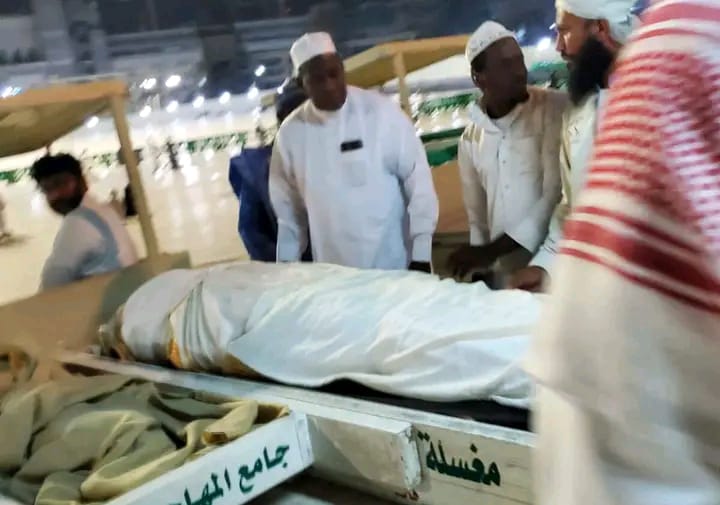
My dear mother, as pilgrims converge at Mount Arafat today, marking the climax of this year’s Hajj, I can’t help but shed tears, remembering that it was one of the lifetime ambitions you didn’t live to fulfil as you passed on precisely 155 days ago. Had you been alive and healthy, you could have been among the over one million pilgrims standing at the plain of Arafat today in observance of one of the five pillars of Islam that not every Muslim is lucky to perform.

I know you craved nothing in this world more than seeing yourself circumambulating the house of God, Kaaba al-Musharraf, in Makka and visiting the holy prophet of Islam (PBUH) in Madina. This informed my decision the first time I was blessed with fortune enough to sponsor your pilgrimage about three years ago.

I remember your reaction vividly when I broke the good news to you as I was seated a few meters away, facing you after you finished your Duha prayers one Saturday morning. Your face radiated with joy instantly upon hearing my plan, and for the first time in my life, I noticed tears of joy cascading down your cheeks despite your effort to stifle them. This image of you has kept flashing on my memory all these five months since you met your creator. I remember how you made me blush as you kept showering me with prayers and words of blessings as it was your wont in every little thing done to you.

We started all the necessary preparations for your Hajj. That was when I got to know your actual date of birth, as I had never discussed it with you before. You told me you were sixty-four and born on Sunday, the 7th day of Ramadan. So, using the Hijri converter, I arrived on 7th April 1957, the date we used in all your official documents to anticipate your lifting up to the holy land.

I remember how we had an animated conversation over the phone on the first day you started attending the weekly lessons organised for intending pilgrims in Dukku. You excitedly told me what transpired at the session in minute detail from the attendants, the number of lessons’ teachers and all each of them said, while I was keenly listening, interrupting you only for more clarification. However, we were disappointed when the organisers brought the session to an end a few weeks later. To our disappointment, we learned that there would be no hajj in 2020 due to Covid-19 pandemic restrictions in the world, including the Kingdom of Saudi Arabia, thereby upending your plan to fulfil your lifetime ambition of answering the call of Prophet Abraham (PBUH).

I remember your response when it was suggested that you perform Umrah, when the Kingdom of Saudi started relaxing its Covid-19 restrictions. You told me over the phone that I should allow God to decide. You insisted that it should be Hajj first before Umrah. And you added: “If Allah so will that I will be there, they will push me even in a wheelbarrow, but if it was already written in lauhul mahfuz that I will not perform hajj, there is nothing you can do about it”.

Your health condition started deteriorating during the Covid-19 imposed two-year hiatus from Hajj. You had been a hypertensive patient, a regular visitor to the Federal Teaching Hospital Gombe, but you were never on admission until barely six months before you departed us. And even during your on and off admissions to the hospital, you were hopeful that the restriction would soon be lifted, and you would witness this day on the mount of Arafat. In fact, it was why you agreed to be hospitalised after your grandchildren convinced you that you should take your treatment seriously for this important day.

When I last saw you on a hospital bed, along with my wife and your grandchildren, you looked frail and not the spirited and good-humoured Maama I knew who would tease her grandchildren lovingly. But despite your condition, you were conscious of time for five daily prayers. The following day when I visited you, I heard you complain in a barely audible and soft voice about how your granddaughter did not wake you up in time to observe Subh prayer. I take consolation like a soothing balm in knowing that, as a follower of Tijjaniyya Sufi order, your mouth was full of Azkaar when you were placed on a ventilator about an hour before you took your last breath on 2nd Rajab 1443 (4th February 2022) after Juma’at prayer. It was around 3 pm that I received an unforgettable call from my kid bro and your youngest child informing me of the inevitable.

It’s been five months since you left us, Maama, but we have yet to come to terms with the vacuum you created. It has left an ineffable deep void in our hearts. Now I feel down every morning I wake up. I cannot hear your voice over the phone; listen to your never-ending prayers for me until I cut off the call. Your prayer for me, which I believe catalyses my success, is what I miss greatly. Images of you kept flashing in my memory when I last set my foot in your room which was a source of comfort and joy to everyone around you, especially your grandchildren, who thronged it for the daily goodies you preserved for them. My last call with you was on Wednesday, two days before your death, when I informed you of having an additional grandson, and I remember how you teased the new child calling him Moɗadimbo since his elder brother was called Moodibbo.

You taught me in your words and deeds how I should be generous and a happy giver, believing that what I give out to others is what’s mine, not what I spend on myself. I also learned altruism from you, as you were always concerned about the well-being of others above yours. The first time I brought you some stuff, you shared almost everything in my presence. This taught me a lesson not to buy things for you alone: I had to include my stepmother and uncle’s wives.

I remembered when once I visited you and discovered that your fan was not working. After buying you a new one, you insisted I  should do the same for my stepmother as her own wasn’t functioning too. Any time I visited, you would remind me to see so and so person, and while on the phone, you would tell me to call and felicitate or commiserate with so and so person, and you would ask me the next day whether I carried out your command.

I often felt guilty for hiding some of my problems from you because of your extreme care and concern for me. However, this was out of my respect for you, too, as you became more affected by my problem than I do. Missing you now is a heartache that will never go away.

On this Arafat day, which you had been longing for, I pray to Almighty Allah to grant you al-Jannatul Firdaus and forgive your shortcomings.

Nasiru Manga wrote from Dukku, Gombe State, via nasman@gmail.com.

Hajj 2022: NAHCON apologises for failure to convey 1,500 intending pilgrims 

By Muhammad Sabiu

The National Hajj Commission of Nigeria (NAHCON) publicly apologized on Friday for its inability to transport 1,500 pilgrims for the 2022 Hajj.

Mrs Fatima Usara, the commission’s Assistant Director, Public Affairs Division, issued a statement on the unfortunate drama on Friday in Abuja.

She stated that there would be nine pilgrims from Bauchi, 91 from Plateau, and 700 from Kano State, who were supposedly travelling to the holy country.

Usara also expressed regret for the commission’s inability to transport an estimated 750 intending pilgrims from the Private Tour Operators sector.

She stated that the commission accepted responsibility for the hardships and disappointments experienced during outbound airlift operations to the Kingdom of Saudi Arabia by intending pilgrims for the 2022 Hajj.

Usara was quoted in the statement as saying, “Sadly, in spite of all efforts to transport all Nigerian intending pilgrims to Saudi Arabia for the 2022 Hajj, NAHCON was incapacitated in discharging this responsibility.

“Majorly due to last-minute setbacks that frustrated its plan to conclude transportation of pilgrims by June 27.

“Unfortunately, the chartered flights option that gave so much hope to NAHCON and the Private Tour Operators’ leadership also became a failure as their IBAN accounts failed accreditation by the respective authorities in Saudi Arabia.”

Meanwhile, a video of some aggrieved intending pilgrims who also didn’t make it to the 2022 Hajj has gone viral on social media, airing their grievances and cursing anyone who has a hand in their ordeal.

WANTED: The reformation of the Almajiri system in Nigeria

By Kabir Fagge Ali

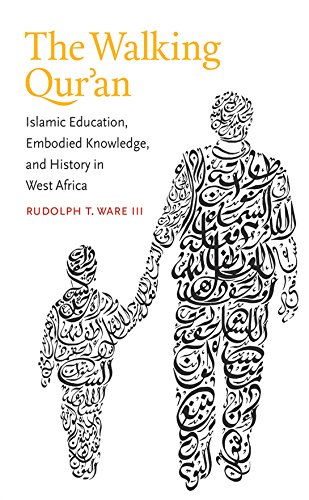
Almajiri is a system of Islamic education practised primarily in Northern Nigeria. The term is also used to denote a person who is taught or undergoing learning within this system called “Almajiranci.”

Almajiri is derived from the Arabic “Al-Muhajjirun”, an “Emigrant” who migrates from his home to a particular Islamic school in the quest for knowledge.

Over the years, it has been a normal feature, a cultural norm to have seen children roaming the streets in certain parts of (mainly northern) Nigeria, all in the name of seeking Islamic Education through the system of Almajiri.

Before the arrival of British colonial masters, a system of education called ‘Tsangaya’ has since prevailed in the Kanem-Borno Empire. It was established as an organised and comprehensive education system for learning Islamic principles, values, jurisprudence and theology.

Established after madrasahs in other parts of the Muslim world, Tsangaya was primarily funded by the state. Islam traditionally encourages charity, so the community readily supported these Almajiri. In return, he (Almajiri) gives back to society through manual labour.

The system also produced the judges, clerks, and teachers who provided the colonial administration with the needed staff. The Almajiri schools provided the first set of colonial staff in Northern Nigeria.

The Colonial masters abolished state funding of Tsangaya, arguing that they were religious schools. “Karatun Boko”, western education was introduced and funded instead. With this loss of support, the system collapsed.

A 2014 UNICEF report put the number of Almajiri in Nigeria at 9.5 million, or 72 per cent of the country’s 13.2 million out-of-school children. Unfortunately, this is a disaster unfolding before our eyes, as some estimates claim that the number of out-of-school children in the country has risen past the 15 million mark, most of whom originated from the North.

Regrettably, the Almajiri culture has since outlived its purpose and has become a breeding ground for child begging and, in extreme cases, potential materials for recruitment into terrorist groups. Moreover, the pupils who were meant to be trained to become Islamic scholars have now had to struggle to cater for themselves, begging rather than learning under the watch and supervision of some semi-literate Quranic teachers or Mallams who themselves lacked the requisite financial and moral support. Hence, the system runs more as a means of survival rather than a way of life.

This is because the Qur’anic schools became hapless, unable to render any help. After all, the head of the school is not also financially stable. This ultimately leads him to enforce a rule that ensures the students get him food or money. The most annoying part is making it mandatory, as punishment is enforced on anyone who fails to turn in what is expected from him.

Deprived of a normal and decent upbringing, Almajiri children, usually little boys between the ages of 4 and 15, may have been direct products of polygamous marriage or broken homes or simply due to economic challenges that hit the family. They lack adequate family cover as children are sent out to the streets under the guise of Almajiri as soon as the family’s resources are overstretched.

The Almajiri grows up in the streets without their parents’ love, care, and guidance; his struggle for survival exposes him to abuse (homosexuality and paedophilia), used as a slave, brainwashed, and recruited for anti-social activities, and used for destructive and violent activities. This is the picture of the pitiful plight of an Almajiri child in Nigeria.

Additionally, Almajiri culture epitomises child abuse, social exclusion, and chronic poverty in all ramifications. Because the system is believed to be rooted in Islamic religion and Fulani cultural practices, many attempts to reverse the trend or end such abuse of humanity have always hit a brick wall.

The fact that Islamic teaching strongly forbids begging, except in exceptional circumstances, which include a man’s loss of properties or wealth in a disaster or when a man has loaned much of his money for the common good, such as bringing peace between two warring parties already proves that Almajiri system as it is being practised today is unIslamic. A child neglected by his parents is vulnerable to diseases and social crimes. To survive, he often has to beg from ‘dusk to dawn’, after which he returns to the Tsangaya (Almajiri school).

For the past years, the Almajiri system has created a cover for criminally minded individuals to abuse Nigerian children through trafficking and expose them to anti-social behaviours such as forced labour and sex slaves.

Even former President Goodluck Jonathan designed a program under which a few Almajiri Model Boarding schools were established, which was aimed at integrating conventional western education into Islamic education, only turned out to be merely ‘removing a spoonful of water from a filled tank’, it wasn’t enough to adequately address the problem. As a result, less than five per cent of the children were captured by the Federal Government’s program meant to remove the Almajiri off the streets.

Therefore, as urgent, the government should take reasonable measures to address the Almajiri system in Nigeria to take them off the streets, even if it means banning the culture.

Unless it is banned or adequately reformed to meet the modern challenges and realities, the problems of underdevelopment, educational backwardness, and mass poverty in (northern) Nigeria will worsen. People will continue to bear children they do not have the resources to cater for, knowing that they could easily push such children out into the Almajiri system.

To conclude that the Almajiri system has deviated from its original purpose and is currently giving Nigeria a bad image in the international community is to admit the obvious.

This problem is a ticking time bomb waiting to explode at any time. And when it does, it will consume us all. But, it is still not late. So, something can be done to stem the tides.

Fagge is a student of Mass Communication at Skyline University Nigeria. He sent this via faggekabir29@gmail.com.

Tributes pour in as Turkish Sunni Sheikh, Mahmud Effendi, dies

By Ahmad Deedat Zakari

Influential Turkish and Sunni scholar, Sheikh Mahmud Effendi passed on at the age of 93. 

Sheikh Effendi, who was well known for his emphasis on strict adherence to the sunnah, died on Thursday after battling kidney-related problems. 

His grandson announced his demise on Twitter on Friday, June 24, 2022. 

“His Excellency Mahmud Effendi, my grandfather, has reached Allah,” he tweeted. 

The late Sheikh was buried on Friday, after a funeral at the Faith Mosque in Istanbul. The funeral which was held after the Jumu’ah prayer was attended by thousands of people. 

Turkish President, Tayyip Erdogan joined mourners in paying tributes to the late shaykh.

“May God have mercy on Mahmoud Effendi, a spiritual guide in our country. He dedicated his life to Islam. I wish patience to his family, students and all his fans. Let him rest in peace,” he tweeted. 

Other important Muslim figures around the world have also joined in praying and extolling the virtues of the late sage. 

“Innā li-Llāhi wa inna ilayhi rāji’ūn. Saddened to learn of the passing of Shaykh Mahmud Effendi of Turkey. He revived Islam & Sunnah at a challenging time, inspiring millions of people in #Turkey & around the World. A great loss for the Ummah,” said Pakistan’s former Prime Minister, Imran Khan

“Do you know how you can tell a real scholar and walī of Allah?” 

“It is the fact that Allah has written the love of this person in the hearts of millions of righteous people from different backgrounds. The death of the Turkish scholar Sheikh Effendi shows such a love والله حسيبه.” Dr Yasir Qadhi tweeted

Imam Omar Suleiman was not left out in praying for the shaykh as he also took to his verified Twitter handle to mourn his demise. 

“May Allah have mercy on Shaykh Mahmud Effendi, forgive him and elevate him. What a loss for the Ummah. A man I always felt had a secret with His Lord that was manifest in his face,” said Imam Omar Suleman.

Sheikh Mahmud Effendi was born in Turkey’s northern Trabzon, he completed the memorization of the Qur’an at the age of 10. 

He authored Tafsir of the Qur’an in the Turkish language named Rahu’l Furkan

He was ranked number 34 in the 2022 edition of “The Muslim 500”; the annual publication by the Jordan-based Royal Islamic Strategic Studies Centre, which ranks the most powerful Muslims globally.

Between citizen and parachute journalism 

By Abdullahi A. Maiwada

“‘Parachute Journalism’ trivialize and sensationalize events that are more complex than a 30-second clip can capture” – Thomas L. McPhail.

However, this era of social media has made citizen journalists more dangerous than parachute journalists. While practitioners of the former are utterly ignorant about the basic principles of the profession, the latter is about placing journalists into an area to report on stories with little knowledge or experience. Lack of knowledge and tight deadlines often result in inaccurate or distorted news reports, especially during breaking news. 

While citizen journalists lack the fundamentals of news judgement, one cannot neglect their relevance in the business of news reportage. In some cases, the traditional media rely on citizen journalists for updates about issues in the form of eyewitness reports. 

The above implies that both parachute journalism and citizen journalism are interrelated at specific points. In most cases, their characteristics can be catastrophic and misleading instead of informing and educating. 

Even though I am not a fan of CNN, my recent update about the strategies by the new CEO Chris Licht making frantic efforts to redefine the usage of breaking news is a step in the right direction. “Moving away from alarming news distributing styles”, he said.

Both citizen journalists and mainstream media have fallen into the trap of fake news and hate speech precipitated by digital media. This is to satisfy the urge to take the lead in breaking the news.

In the word of my journalism lecturer Dr Kola Adesina “no time to think syndrome”. The outcome is having limited know-how to strike a balance between speed and accuracy. Thanks to convergence which created a blurry line between mainstream and digital media.

The primary reason we dish out content is to inform and not disinform, misinform and mal-inform. Why can’t we think twice and have a sober reflection before writing or talking? We should endeavour always to put a round egg in a round peg to avoid misleading society towards the direction of Rwanda. 

Influential media effect theories are still relevant in the digital age. The hypodermic needle/bullet, agenda-setting theories and the likes play a critical role in shaping the perception of the gullible and media illiterates who form the majority in our society. 

I have encountered a colleague who changed his perception of Russia based on an American movie. We have so many of them out there.

Finally, I will end my piece with the saying of our beloved Prophet (SAW). “Whoever believes in Allah and the day judgment should utter what is righteous or keep mute”. Gbam!!!

Abdullahi A. Maiwada is a superintendent of Customs attached to the Public Relations Unit, Nigeria Customs Service Headquarters, Abuja.

Supreme Court allows use of Hijab in Lagos schools

By Muhammad Sabiu

Lagos State’s ban on female Muslim pupils attending public schools in the state wearing the hijab was overturned by the Supreme Court on Friday.

In a 5–2 split ruling, the Supreme Court maintained the Court of Appeal, Lagos judgement from July 21, 2016, which overturned Justice Grace Onyeabo’s October 17, 2014 decision from the High Court of Lagos State.

The lead majority judge, Justice Kudirat Kekere-Ekun, dismissed the Lagos State appeal against the 2016 decision of the Court of Appeal, Lagos, because it lacked merit. 

Justice Tijani Abubakar read the lead majority judge’s decision on Friday.

Wearing the hijab in the Yoruba-dominated region, which is a mixture of Muslims and Christians, has been causing a lot of controversies.

Wole Soyinka, Ibrahim Maqary and Western Neo-Paganism

By Ibrahim Ado-Kurawa

Wole Soyinka is a Nobel Laureate who won the highest prize for his work in Drama, where he excelled. But as everyone knows, no one who opposes Western ideas will win that prize. In fact, those who oppose their indigenous worldviews are more likely to win it. A good example is Neguib Mahfouz, the Egyptian anti-Islamic intellectual. Ibrahim Maqary, on the other hand, is an Islamic scholar who became prominent at a very young age because of his proficiency and erudition. They are from divergent backgrounds. Soyinka was nurtured in the neo-pagan Western intellectual tradition. Maqary was nurtured in the Muslim intellectual tradition of Sudanic Africa.

The neo-pagan Western Civilization, sometimes referred to as Western Christian Civilization, considers itself as the superior civilization, and all others must judge their practices according to its criteria. The West, since Enlightenment, has continuously incorporated pagan traditions. Hence Roberts’s conclusion that “Europe once coterminous with Christendom is now post Christian and neo-pagan” (Roberts 1996: 583).

The Islamic and Sinic Worlds have resisted Western intellectual domination. Therefore Ibrahim Maqary and other Muslim scholars always speak their minds damning the irritation of Western neo-pagan inspired scholars. Soyinka will insist that he is independent, but this is not true. His ideas of freedom are not original but primarily influenced by Western Neo-Paganism. He is not even a pan Africanist compared to Walter Rodney, Ngugi and Franz Fanon, who resisted colonialism. He was only engaged in sophistry, which is a form of intellectual cowardice.

Yes, there are elements of African traditionalism in Soyinka’s ideas, but they are those acceptable to the West. They include his anti-Islamic and anti-Muslim postures. He supports animism in Muslim majority Yoruba land. Hence despite his liberal pretensions, he never opposed the killings of innocent Hausa Muslims in Yoruba land by Sunday Igboho and other Oduduwa terrorists as much as he opposed the extra-judicial killing of Deborah Samuel in Sokoto.

Like his Western patrons, Wole Soyinka never opposes the killings of innocent Muslims. Hundreds of Hausa Muslims and non-Muslim northerners have been killed by IPOB and unknown gunmen in the South East. Yet, Wole Soyinka and Christian Bishops never protested loudly as they did for the extra-judicial killing of Deborah. Their conception of human beings is rooted in the Western intellectual tradition where the other has no value.

Why has the Neo-Pagan West become so inhuman even though Man has been the pivot of its philosophy since Renaissance? This could only be understood within the context of European history and the abolition of Christianity, and the entrenchment of secularism. Jesus (peace be upon him) did not come to destroy the Law of Moses but to confirm it and give glad tidings of the coming of Ahmad (SAW), the last Prophet. Therefore his followers remained Jews until the conversion of Paul. And eventually, Jewish Christians under the leadership of James, who upheld the Law, were obliterated (Wilson 1984: 126-7). This paved the way for emphasizing only the teachings of Jesus relating to personal piety, and people were encouraged to regard Caesar as supreme in worldly matters (Mark 7: 17).

Subsequently, Christianity became the Roman Empire’s official religion, and the clergy wielded power and influenced decisions. During the theocratic phase, in some areas, the clergy ruled, and the Pope, as the head of the Christendom, crowned the Kings and Emperors. The Church abused this privilege because Pauline Christianity was not equipped for this purpose. This necessitated a Reformation led by the Protestant fathers. In most parts of Europe, the clergy were made to revert to the position Paul intended for them. Many scholars have shown how Protestant ethics led to capitalism (Raghuram 1999: 236). The Catholic areas of Europe also followed these steps, and the influence of religion in public life was gradually reduced. Europeans believe that they were backwards in the Dark Ages because of the influence of the clergy, which caused the “Christian disease” (Lewis 2002).

With the curing of the “Christian disease,” religion became marginalized in Europe, and there was a shift from God as the pivot of philosophy to Man (Aminrazavi 1996: 384). This was the Enlightenment philosophy. According to Kant, one of the greatest Enlightenment philosophers, this current facilitated the emergence of man from his self imposed infancy and inability to use his reason without the guidance of another (Inwood 1995: 236-237). The Enlightenment philosophy preached equality for citizens of the nation but encouraged brutality and even genocide against others.

For example, the French revolution, which was a product of Enlightenment that gave birth to the republic based on “liberty, equality and fraternity”, but it restored slavery after it jailed Toussant L’Ouverture, the leader of the revolt in Haiti who was inspired by the French revolution (Time, December 31, 1999 p. 164). This shift from God to Man led to all the atrocities committed by Westerners who came to regard themselves as superior and all others as expendable. They lost the compassion of Christianity and became Christians in name only. And they were always willing to use Christian missionaries for this agenda. As confirmed by Pope Paul VI, the apostles who were extremists were also willing to be associated with the European imperialists because they regarded all non-Christians as heathens.

The public aspect of Christianity was abolished because the clergy misused the privilege. This was why Roy made his statement: “Secularity and politics are born of a closing of Christian thought onto itself” (Roy 1994: 8). Fukuyama also observed that: “Christianity in a certain sense had to abolish itself through a secularization of its goals before liberalism could emerge” (Fukuyama 1992: 216). This made it possible for some Western Christians to hate others and commit the worst crimes in human history: colonialism and Nazism. As a result, more than fifty million people lost their lives during the Western-inspired Second World War, the worst in human history.

This Western imperialist epistemological vision has enabled Western leaders to commit the worst atrocities against humanity despite human rights pretensions. European Americans committed genocide against Native Americans and Africans to build their economy. It is universally acknowledged that Western leaders lied when they invaded Iraq, as there were no weapons of mass destruction.

They spent trillions of dollars to destroy Muslim countries: Iraq, Afghanistan, Libya and Syria, causing the worst humanitarian crisis. Since World War II, the worst conflict has been the resource war in the Democratic Republic of Congo (DRC) caused by Western companies. Over three million people have lost their lives. No one cares about these atrocities in the West, but their diplomats can talk about Deborah in Nigeria.

Wole Soyinka and some Christian leaders can show their outrage against the extra-judicial killing of Deborah but not the massacre of innocent Muslims in the South East precisely because their worldview is rooted in the Western intellectual tradition. Muslim lives are nothing to people like Wole Soyinka. Hence, he was one of those who signed the petition that the murderers of Tafawa Balewa, Sardauna and military officers of northern origin should be released because the lives of Muslim and non-Muslim northerners eliminated do not matter. And now they want the mob that killed Deborah to be prosecuted simply because she symbolizes the violation of the sanctity of the Prophet (peace and blessings be upon him), not because of any humanitarian consideration since they are selective.

Wole Soyinka has no respect for the Prophet of Islam (peace and blessings be upon him). There is no problem with this since he is an acclaimed unbeliever, but he should show understanding of the Muslim position as an intellectual. Ibrahim Maqary, on the other hand, as a Muslim scholar, considers the position of the Prophet of Islam as more important than the world and what it contains. Therefore, just as Western imperialists can destroy countries to satisfy their hedonistic lives, Muslims are willing to sacrifice their lives for the Prophet (peace and blessings be upon).

Muslims have no history of genocide against non-Muslims or cruel destruction of countries as in the case of Iraq, Libya, Afghanistan and Syria or evil obliteration of communities like Tafawa Balewa in Nigeria.

Muslims, unlike Western Christians, have not abolished Islam; therefore, they cannot tolerate infringement on the sanctity of the Prophet. This is the worldview of the Muslims, and why should anyone query it? Must Muslims adopt a Western neo-pagan worldview? This can never happen. No Muslim scholar has ever called for the extra-judicial killing of anyone who violates the sanctity of the Prophet. It is the responsibility of the state to take action against those who commit this crime.

There is no doubt Wole Soyinka will continue his pretentiousness that Ibrahim Maqary should be sacked from the position of Imam of the National Mosque. This is one of the reasons why he was awarded the Nobel Prize – to promote Western neo-paganism against Islam. Ibrahim Maqary, on the other hand, will continue to attract the respect of the Muslims for protecting the sanctity of the Prophet (peace and blessings be upon him). Muslim scholars will also continue to maintain their position that Prophet must not be insulted and, at the same time, no mob action or human rights violations of innocent citizens.

Ibrahim Ado-Kurawa is the Editor of Nigeria Year Book and Who is Who. He can be reached via ibrahimado@hotmail.com.

Marriage tests your character, makes you happy and matured

By Aisha Musa Auyo

Allah created marriage for lifelong pleasure and happiness. Therefore, beyond any other human relationship, marriage has the potential to make us happier. But there is a price to this happiness, which is CHARACTER. 

Marriage tests our character in every way. It tests our patience, work ethic, willingness to forgive, sensitivity to others, tolerance for those different from us, cooperation ability, endurance, and humility. Marriage is simply the biggest character test in life.

These tests integrate into our demeanour and give us a certain level of understanding, patience and maturity, and willingness to forgive. Moreover, it opens our eyes to the reality of life that unconditional love is exclusively for parents and children.

One needs to work more on his character, temperament, and personality to be able to live peacefully with others. Emotional intelligence plays a greater role in the relationship than anything else.

For most new couples, marriage was like a trip to the proverbial woodshed for the first several years. They were selfish, insensitive, angry and chauvinistic. After the first few years, many spouses were convinced that they had made a mistake in marrying their mate and that they were the cause of their misery.

But after lots of patience and endurance, when they look back at those times, they will realise that all the negatives that happened are crucial in forming their character. Many couples admit that they almost didn’t make it. They almost give up, but such circumstances forced them to decide to change and become more like Allah wants them to be… (patient, prayerful, selfless, understanding, and forgiving).

As a partner, know that your marriage will take a significant step forward every time you make a positive character change. Your spouse also will make positive character choices that will benefit your relationship, and you will have a great marriage, inshaAllah. It won’t be perfect, but you will be happier, contented, and at peace than ever before and will be glad to be committed to the lifelong journey.

Know that before marriage makes you happy, it will make you grow.

Aisha Musa Auyo is a Doctorate researcher in Educational Psychology. A mother of three, Aisha is a homemaker, caterer and parenting/relationship coach.

How to plan the prosperity of your family through Waqf  (II)

By Abdullahi Abubakar Lamido

Bleak Economic Future on Losing bread Winner

Think of it; the moment you die, the socioeconomic status of your children and wives changes. Your children (those young among them especially) become orphans, and your wives are called widows. While alive, you worked hard and earned for their feeding, clothing, shelter, education, healthcare and general wellbeing. The moment you die, they lose a breadwinner. If in your lifetime you have searched from the Islamic Sharī’ah, you would have learned the art and science of planning beyond your lifetime for these prospective widows and orphans. After relying on Allah, you would have built for them a prospect such that they would live a life of meaning, success, prosperity and contribution, insha Allah. And here comes the relevance of family waqf; waqf, in general, being the Islamic instrument for institutionalising philanthropy and ensuring perpetuity in giving!

Family Waqf as a superb socioeconomic institution enables one posthumously to maintain his parenthood and breadwinner status for his family, generates him reward permanently and preserves the dignity of his progeny everlastingly. In family waqf, you find one of the essential instruments for planning the future prosperity of your progeny.

Family Waqf as Solution

Family waqf, also called posterity waqf, is a kind of endowment created as a futuristic investment for the sustainable prosperity of the endower’s relatives or friends. It is often called a restricted waqf, distinct from a public waqf whose benefits go to an open class of beneficiaries. It can be for the immediate family; wives and children. It may also include parents. It can be made for the extended family, depending upon the financial capacity of the endower. One can make a family waqf for a child with a special need, say one with sickle-cell disease. The beneficiaries of a family waqf, in short, are those defined by the endower.    

Significantly, although the primary beneficiaries of this form of waqf are those pinpointed from the endower’s family, time may expand the scope of the recipients of its fruits. When, for example, the revenues generated from the waqf grow so large beyond the family’s need, or when the family gradually goes extinct after some long time, the waqf could be converted to a public waqf, expanding the coverage of those who enjoy its benefits. Therefore, what distinguishes a family waqf from a general public waqf is its scope of defined beneficiaries. Virtually all other rules of its governance are the same with public waqf. It can be made a direct waqf, one that creates direct benefits, on an investment waqf whose revenues are distributed to the designated recipients.   

Family waqf can be made for the provision of all forms of welfare and empowerment services for the family. It can be made for education, healthcare, feeding, clothing and other needs. It can also be made, specifically for the sponsorship of Hajj to family members. In this regard, instead of spending five million naira for two or three members of the family to perform Hajj this year, the same amount can be invested as a waqf, such that after its maturity, the proceeds from the investment waqf can be used to sponsor Hajj for a certain number of family members every year. With proper management and Allah’s barakah, instead of three family members, dozens of them can enjoy Hajj from the same seed money even long after the demise of the original donor. Waqf multiplies benefits and rewards manifold.

More often than not, you hear people complain over the demands of their family members overwhelming them even as they want to contribute. But little do they know they have a satisfactory answer in family waqf. For example, suppose you know you spend two million naira for the education of your children and extended family annually. Why not make an investment waqf so that the proceeds of the waqf relieve you of any spending in that direction in some years to come?

Form and Functioning of the Family Waqf

A person can build a rentable shopping complex, subscribe to Islamic bonds (Sukuk), buy shares of a halal company, and dedicate the same and profits thereof as a waqf for the education of his children and grandchildren. Likewise, one can build an orchard full of date trees, mango trees and other fruit-bearing trees, dedicating them as a waqf for the future specific or general financing of the needs of their children.

When the endower specifies in the waqf deed that it is only for the education of his children, then, as a rule, no part of the rentals shall be spent on other needs, just as the resources cannot be used to fund the education of children other than his, except when the yields grow far beyond the education of the designated siblings. If the endower dedicates it to education and healthcare, its proceeds cannot be diverted to feeding the family or other things except under absolute necessity. All this is to safeguard the sanctity of the waqf, ensure its sustainability, and guarantee the continuous flow of its yields in line with the overall goals and objectives for which it is created.

 The good thing is that, like all other waqfs, making it a family waqf makes the investment/asset inalienable. It prevents it from being counted among the inheritable wealth of the endower, as it will remain a separate entity that creates benefits perpetually to the entire qualified beneficiaries. The asset can neither be sold nor given as collateral. It remains a waqf asset. This way, even when the children need other things, they source them outside the waqf, allowing the waqf to maintain its defined purpose perpetually.  

The idea behind family waqf stems from Islam’s emphasis on ensuring the wellbeing of a person’s family and biological relations and the need to spend continuously on all aspects of their needs; spiritual, intellectual, biological, physiological, socio-cultural, and so on. Talking about spending, the Qur’an draws attention to prioritising spending on the family. When, for instance, the companions continued to ask the Prophet (SAW) how best to organise their spending, Allah intervened with a divine spending formula: that whatever you plan to spend for good or charity, direct it to your “parents, relatives, orphans, the needy and the traveller” (Qur’an 2: 215).

Your family, in short, occupies the first three spaces on your scale of spending preference. They are the primary beneficiaries of your giving, be it obligatory or voluntary. Now, if, as the Prophet declares, the most pleasing act in the sight of Allah is one that is perpetual and sustainable; then it becomes apparent that the most rewarding spending on the family is the “gift that keeps on giving”, that is a waqf that keeps bearing fruits to the family.

Start Early, Start Now!

It is important you begin the waqf plan early. Many people start their marital lives with moderate incomes, which, with little adjustments, a futuristic mindset and financial discipline, are sufficient to be divided into consumption, saving and little investments. However, financial shortsightedness often prevents them from allocating some portion of that “meagre income” to what would ease their financial burdens and create a sustainable flow of income – and reward- for themselves and their family in the future. Little do they realise that as their family grows, so do their financial burdens. If these are added to inflation and other economic unpredictables, the complexity of the situation worsens.

Many people do not also realise that the best immunisation from the negative socioeconomic consequences of shrinking disposable income is to begin early implementation of an effective financial plan. Many begin to regret when the regret cannot change anything; they would want to start to cry when the head is already cut off!  

So, plan for the future of your beloved wives, children and relatives. That is a Sunnah, a well-established one, for that matter. A viable and well-managed revenue-generating waqf can do that for you. You get double rewards; you safeguard your family’s future Islamically and earn rewards perpetually. Make an effective plan for their feeding, sheltering, education, medicine, and socioeconomic prosperity. Make a waqf for their Hajj, ‘umrah and general spiritual wellbeing. That is sunnatic. Do not miss the opportunity to practice this multidimensional Sunnah, the Sunnah of family waqf. Our dear mother and wife of the Noblest Prophet, Aisha, reports to us that the Prophet (peace be upon him) dedicated his seven gardens as waqf to benefit the clans of Banū Abd Muttalib and Banū Hāshim as recorded by Bayhaqi.

We also see emphasising family waqf in the guidance of the Prophet to his companions. After the revelation of the verse “By no means shall you attain righteousness/piety unless you spend of that which you love; and whatever good you spend, Allah knows it well” (3:92), Abu Talha met the Prophet and said, “This is what Allah has revealed, and the most treasured of all my wealth is this garden, Bayruhā’. I have set it aside as a adaqah to attract reward from Allah. Therefore, you should administer it the way you wish”. The Prophet was amazed by this gesture. And so he said, “Certainly your wealth is blessed. Having heard what you have said, I recommend that you dedicate it as a perpetual charity to your relatives”. Based on this Prophetic advice Abu Talhah made it a waqf for his close relatives and cousins (Bukhari and Muslim).

It is interesting also that most companions of the Prophet are reported to have implemented this Sunnah. For example, Caliph Abubakar dedicated a house as a waqf for his son, and Umar dedicated a waqf near Marwa to his son. Also, Zubayr endowed a house in Makkah, another in Egypt, and yet another in Medina as waqfs for his children. Amr b. ‘Āss endowed a house and another huge property in Mecca for his children, just as Hakīm b. Hizām also dedicated a house as a waqf in Mecca and another in Medina for his son. After reporting all of these, Ibn Qudamah says in al-Mughniy, “All this are intact till date”.

Family waqf is a Sunnah of the Prophet, his companions and generations of Muslims in the last fourteen centuries. It is a well-developed institution that grew as a robust instrument for family empowerment and societal development until it faced the orchestrated wrath of the colonial monsters. The colonialists saw it as an institution that gave families and societies independence against their mercilessness and hence officially abolished it in Muslim nations like Egypt, Morocco, and so on.

Sadly, there is hardly any evidence of its practice as enshrined in Islamic law and civilisation here in Nigeria. With the growing waqf awakening in Nigeria, one hopes that a new page would be opened for entrenching this all-important Islamic civilisational institution. The good news is that with each family doing it, we gradually build a new waqf generation. Through that, we give a big blow to poverty at family levels before we finally eject it out of our communities. The early we sow, the earlier we reap. The more we sow, the more we reap. May we begin this journey NOW.

Abdullahi Abubakar Lamido, Chairman, Zakah and Waqf Foundation, Gombe . He can be reached via lamidomabudi@gmail.com.