Islam

Celebrating World Speech Day 2024

By Bello Sagir

Today is World Speech Day (WSD), 2024! This year’s theme is “Speech for a Better World.” WSD is a day of celebration for all Nigerians and people around the world.

In 2015, Simon Gibson founded WSD at the Athens Democracy Forum to celebrate free speech, public speaking, and public speakers. In 2016, WSD was inaugurated and first celebrated in Athens and Singapore. By 2020, over one hundred countries celebrated WSD. As a result of this milestone, Facebookers and YouTubers began live-streaming the event.

World Speech Day is a celebration day for all Nigerians because, prior to 1960, when we officially became an independent nation from Britain, there were a series of speeches by Sir Abubakar Tafawa Balewa, Herbert Macaulay, Nnamdi Azikiwe, etc., in Britain, some African countries, and, above all, in Nigerian media and during processions and campaigns, all in a bid to free Nigeria from the shackles of the colonial masters.

Sheikh Uthman Danfodio reformed Islam in northern Nigeria, not because he was the most pious or educated person nor because he was the most fearless warrior, but largely, if not solely, because he was a very persuasive speaker.

The same is true of Malam Aminu Kano, who won the Kano East constituency in the federal legislature during the Second Republic. Similarly, in 1979, his party, the PRP, won the Kano and Kaduna gubernatorial seats in a landslide victory.

As we are Black and African, so is Barack Obama, whose father went to the United States from Kenya. Therefore, his political victory affects us. According to analysts, Obama became the first Black African American President because he could speak persuasively to the audience.

Teaching is a form of speech that falls under informative public speaking. That is to say, all educated people are educated because teachers have taught them. Imagine the world without teachers! Would there be medical doctors who take care of our health, engineers who design and make cars for us, pilots who fly us, military and other security personnel who secure us, bankers who keep and manage our money, or even journalists who hunt for news professionally and inform us? Would there be all these personalities and many more?

Regardless of the religion you follow, it reached you through public speakers who are God’s agents. They used largely informative and persuasive public speaking to extend the religion to people. Also, you learn how to worship God through public speakers who teach you at schools the performance of the religion, as prescribed by God and his messenger.

See how public speaking has been instrumental in Nigeria’s independence, the reformation of Islam in Northern Nigeria, educating Northerners (of that time), resisting bad governance, and a person of African descent becoming president of the powerful United States of America.

Additionally, considering how public speaking is responsible for the creature comforts and peace we enjoy, among other things, it is not amiss to conclude that World Speech Day is worth celebrating every year by all of us in our various capacities because, in a way, celebrating the day is celebrating all the public speakers responsible for the civilized world we are all proud of today.

Bello Sagir Imam

Public Speaking Coach

Malam Ahmad the Muezzin: As Constant as the Northern Star!

By Malam Mahmud Zukogi

Those who did one program or the other at the Bayero University, Kano (BUK) new campus may know Malam Ahmad in two places: the university library and the now-old new campus mosque. 

For students who frequent the library for the serious business of “acada,” the likelihood of you not meeting Malam Ahmad every other day is zero. At any of his bits in the Reserve, Circulation, Serials, and Nigeriana sections, you are certain to meet a man who is calm, gentle, welcoming, and professional in his disposition. 

Malam Ahmad listens to you, guides you, and directs you where to get the books and materials you seek. Such is the man Malam Ahmad, who recently retired from the services of Bayero University, Kano, as a Principal Librarian in 2019.

Malam Ahmad obtained his Diploma in Library Science in the early eighties and was absorbed into the university’s services. He went on to do his bachelor of Arts Education in Library Science at Ahmadu Bello University (ABU) Zaria and capped it off with a master’s degree in BUK.

However, his professional duty has not made Malam Ahmad renowned at the university. For over 40 years, his heart has been devoted to the mosque. Starting as an assistant Muezzin, he rose to become the substantive Muezzin, a role he held steadfastly. 

At the onset of time for prayers, you will hear Malam Ahmad’s voice waxing through the air, calling faithful to prayer. He’s as constant as the northern star. Whether sun or rain, he will be on top of time to open the mosque, clean up the spaces and hit the mic with his signature voice. Let the rains tear through the skies with intensity at dawn; his voice calling to prayer and success will wow the fierce nature into the homes and ears of adherents in the quarters. Subhanallah.

He looks frail in his mid-seventies, but his heart is still strong and firm. As a testimony to this, even after packing out of the university quarters, Malam Ahmad will still be in the mosque at the appointed time. The only time you won’t find him is when he is challenged healthwise. He is a very peaceful man, never engaging in any squabbles or quarrels. You will find him engrossed in zikr and recitation of the Holy Qur’an between prayers. 

Ya Allah, grant this your servant good health and endow him with sufficient means to live his remaining life in peace and harmony. Ya Allah, grant him a beautiful ending and enlist him into Jannat ul Firdaus.

Time to return to the masjid

By Bello Hussein Adoto

When COVID-19 came, we switched from receiving exegeses of the Qur’an and Hadith from masājid and physical gatherings of knowledge to virtual ones. We attended Facebook Live and Zoom sessions to listen to our favourite scholars. We followed their tafsirs on Mixlr, Google Meet, and Telegram.

These were supposed to be temporary solutions to the social-distancing mandates that COVID-19 imposed, but they have become the norm. It is about time we returned to the masājid to restore their beauty and secure the blessings of learning physically from scholars.

This Ramadan is a great time to start.

Allāh says in the glorious Qur’an, “I did not create mankind and the jinn except to worship Me.” The masjid is central to this worship. We observe the congregational ṣalāt at the masjid, perform iʿtikāf there, distribute the zakāh, and listen to explanations from our scholars.

Beyond worship, the masjid unites us as a community by bringing us together with our Muslim brothers and sisters as members of a shared community, united by faith. In preserving this faith and community, we must find a way to restore the essence of our masajid, even in the age of online communities.

Why should we return to the masjid?

Islam is not against technological innovations that would benefit Muslims. Indeed, we use microphones to project the adhan, telescopes to observe the moon, and smartphones and other devices to spread the message of Islam beyond the masajid. Therefore, we are free to seek and adopt goodness from any source.

However, attending virtual lectures or learning at online madrasahs or Islamic institutes should complement, not substitute, listening to lectures in the masjid or learning physically at the feet of scholars.

The masjid creates a veritable platform for teachers, scholars, and students to connect physically and leverage the elements of the surroundings—the sound, the sights, the mannerisms, and the divine blessings—to achieve maximum benefit from the engagement. Besides, it is the most common place to connect as brothers and sisters and focus solely on learning and worship without distractions.

So, how can we return to the masjid?

Start small

Returning to lectures at the mosque or taking in-person classes would be challenging in the first few days. You are changing a routine and need time to adjust.

So, start small. Instead of joining Twitter Spaces for morning reminders, stay back for three to five minutes to listen to short tafsirs of the Quran and Hadith. If that is unavailable at your masjid, introduce the idea to the masjid committee. Then, you can listen to your virtual sessions on your way home.

Commit to optimizing Jum’ah sessions

The Jum’ah prayer is our weekly chance to gather in our numbers to worship Allah. Thankfully, Imams deliver khutbahs on salient issues that can provide us with much to ponder for the week. We can optimize our schedules to prioritize the Jum’ah sessions.

Set out early to secure convenient spots. Those of us who sleep through the khutbah can nap before going for Jum’ah. That way, we are more likely to stay sharp until the end of the service and earn the full reward.

Leverage your local masjid

The scholars at the mosque you pray at may not compare with the exotic collection of scholars you can listen to online, but they offer a great platform to keep you grounded in your community’s realities.

They speak your language, use local examples to explain Islamic concepts, and are easier to reach than those you listen to online. Physical sessions with these scholars and teachers also provide a social presence unmatched by virtual ones.

The mere fact that they are live before you strengthens your connection and primes you to appreciate better the content and context of the lecture or discussion. So, start with your local masjid and see how a virtual platform can help you improve.

Remember, the masjid offers more than learning

Think back to the last time you were at the masjid. Perhaps you met a brother you hadn’t seen in a while or made a new acquaintance. Whatever the case, you must have said tasleem, shaken a hand or two, or even felt the warm embrace of your brother in the Deen. Such is the richness that comes with the masjid, the one that strengthens our brotherliness and fetches Allah’s mercies.

We can listen to podcasts for hours and join Mixlr, Zoom, Google Meet, Facebook, or YouTube live sessions to follow our favourite scholars. Still, they cannot and should not replace our intimate experience of physical sessions.

If anything, their many limitations—the distractions, the weaker connection between scholars and students, speakers and listeners, the transient sense of community that virtual platforms foster, and even the difficulties that come with setting up virtual sessions and following them—show that we need our masājid and our ḥalaqah now more than ever.

Ramadan is here. It’s time to return to the masjid.

The Kingdom of Saudi Arabia does not represent Muslims

By Abba Abdullahi Garba

There is an apparent misunderstanding of what a kingdom in the Arabian Peninsula (Saudi), Islam, and Muslims mean and what they represent, especially when it comes to the point of view of some Nigerians.

This short, precise, and well-clarified article, under 700 words, will differentiate these things and conclude with the reason why the Saudi Kingdom does not represent Muslims or Islam but Saudi Arabians.

Saudi Arabia Kingdom

The Saudi Kingdom rules Saudi Arabia and represents it worldwide. It acts as the president, prime minister, and legislative body of Saudi Arabia.

Anything that is outside Saudi land is outside the control of the Saudi Kingdom [from religion, spirituality, international politics, et cetera], except what directly relates to it or its citizens.

The Kingdom, just like its counterparts in Qatar, the UAE, and others, has the authority to allow things [like entertainment, sports, et cetera] to take place within their land. And that is their business, not Muslims!

Islam

Islam is a non-modifiable religion practised by over one billion people all over the globe. And those people come from all walks of life and different races.

However, what makes it the perfect choice for many people is the fact that there is no racism, discrimination, indecency, or so many other leftist things. It is a religion that uses over 1,400 years of old scripture, which, to date, no one has modified, and it will remain like that till the end of the world.

Islam does not have a representative country, kingdom, or race. Its representatives are the teachers who taught it appropriately, and even if they cannot modify its teachings, they must teach it the way it is.

Islam promotes peace, tolerance, love for each other, good manners, truthfulness, and honesty, among other things.

I can’t tell you everything about Islam right now because this article is supposed to be short. But, sincerely speaking, Islam is a way of life!

Muslims

Muslims are the people who accept and practice the teachings of Islam regardless of their race, country, or region. And when I say Muslims, I mean all Muslims.

And it is impossible to say this: all Muslims are good people, or all are bad! Some are good people, and some are bad people. Everywhere and in every religion, there are those kinds of people, good and bad.

And the behaviour of one Muslim does not represent Islam if it is against Islamic teachings. It represents that person, not his religion.

And the behaviour of a kingdom that rules a country of people who follow and practice Islam does not represent Islam; rather, it represents that country and its leaders.

Any Islamic preacher or ordinary Muslim whose actions or words are out of Islamic context does not represent Islam but rather his person.

Conclusion

Islam is a religion. Muslims are those who practice it. And the Saudi Kingdom does not represent Muslims or Islam. It represents the people of Saudi Arabia. And Muslims all over the world have no say in what the Kingdom of Saudi Arabia decides for its people in any aspect of life.

So, for those who think the Saudi Kingdom represents Islam, then it is time to change your perception on this topic, for Islam is a religion with no authoritative body that can speak or act on its behalf. And Muslims are those who practice it.

And you can be one too!

Abba Abdullahi Garba wrote from Zugachi, Kano, Nigeria. He can be reached via abbaabdullahigarba@outlook.com.

Women’s education—a command, a right, a life, here and hereafter!

By Aisha Musa Auyo

International Women’s Day holds immense significance as a global observance dedicated to celebrating women’s achievements, promoting gender equality, and raising awareness about the challenges women face. It serves as a reminder to acknowledge and appreciate women’s contributions in various fields, while also highlighting ongoing efforts to address gender disparities. The day fosters a sense of solidarity among women worldwide, encouraging discussions and actions to advance women’s rights and opportunities.

The theme for IWD 2024 is “Invest in Women: Accelerate Progress”. It highlights the importance of women’s and girls’ empowerment and their rights to healthier lives.

I plan to write this article from a religious and social perspective because many have hidden behind the veil of religion to deny women their basic right to education and empowerment.

Without question, education for women and girls is an integral part of Islam.

In the Holy Quran, Allah orders both men and women to increase their knowledge and condemns those who are not learned. The very first revelation to Prophet Mohammed (ﷺ) starts with the word “read” and says:

“Read. Read in the name of thy Lord who created; [He] created the human being from a blood clot.

Read in the name of thy Lord who taught by the pen: [He] taught the human being what he did not know.” (Q96: 1-5)

In addition to the clear stance of the Qur’an on knowledge acquisition by every Muslim woman and man, the Prophet is also reported to have said (hadith):

“The acquisition of knowledge is the duty of every Muslim man and Muslim woman” (Rahman 1980, 397).

From the above verse and hadith, we can conclude that

1. Girls’ Education Is a Divine Command

The obligation for women and men to study is also confirmed by the hadith and the sunnah. Preventing women and girls from receiving an education is preventing them from fulfilling the divine obligation commanded by Allah and intervening with their akhirah, or afterlife.

2. Girl’s Education is a Divine Right

Education of girls is central to their faith because it increases their knowledge, teaches them how to use their intellect, furnishes them with critical reflection skills, and makes them better Muslims and better members of their communities. It allows girls and women to make use of the gifts Allah has given them.

Preventing women and girls from receiving an education is preventing them from fulfilling the divine obligation commanded by Allah and intervening with their akhirah, or afterlife.

Prophet (PBUH) Invested in the Education of Girls

Since the early years of Islam, learned women enjoyed high public standing and authority. The Prophet (ﷺ) made an effort to educate women and girls and encouraged his wives and daughters to learn and be educated. He held classes for women, and women were often present in the public assemblies that came to learn from the Prophet (ﷺ). Women in his household received education not only in Islamic sciences but in other fields such as medicine, poetry and mathematics, among others. He made arrangements for training women in the commandments, fixing one day a week to meet with them.

Aishah and Umm Salamah (ra) are among the greatest narrators of hadith. Much of what Muslims practice today in terms of their religion is transmitted via the education of these two great women. The world’s first institution of higher education, the University of Qarawiyyin in Morocco, was established by a Muslim woman, Fatima al-Fihriyya.

How the society benefits from educating women

“Education is the only way to empower them [girls], improve their status, ensure their participation in the development of their respective societies, and activate their role to be able to take responsibility for future generations.” – Dr. Yousef bin Ahmed Al-Othaimeen, secretary-general of the Organisation of Islamic Cooperation

Education is more than just the ability to read and write. It is the process of acquiring knowledge, skills, and values in various fields that enable individuals to contribute meaningfully to the social, economic, and political well-being of their families and communities. Without educating its citizens, no society can develop and prosper.

The concept of knowledge in Islam covers a broad spectrum of subjects. The Quran describes the breadth of knowledge as vast and states that learning encompasses both religious and secular subjects. Many verses of the Holy Quran invite the reader to reflect and contemplate the creation of the universe. Therefore, it is incorrect to restrict women to the study of only religious sciences and prohibit them from a broader scope of education.

Some of the benefits of educating women include the following:

Educating girls contributes to stronger economies and alleviates poverty. Economic development and poverty reduction require countries to benefit from the talents, skills, and productivity of all their citizens, both men and women. Reducing the gender gap and educating girls in science, technology, engineering, and mathematics (STEM) will help reduce the skills gap, increase the employment and productivity of women, and reduce occupational segregation.

Educating girls leads to healthier and happier families because, as mothers, educated women make better and more informed decisions for their children’s well-being, including protecting them from disease.

When women are educated, violence is reduced, and children have better psychological well-being and are happier.

Ways to invest and accelerate women progress

Investing in women for societal progress involves addressing various aspects to empower them holistically. Here are key areas for investment:

Education: Ensure access to quality education for girls and women. Support scholarship programs, mentorship initiatives, and STEM education to bridge gender gaps.

Healthcare: Invest in women’s health services, including reproductive health, maternal care, and mental health support. This contributes to healthier communities and improves overall well-being.

Economic Opportunities: Promote equal economic opportunities by supporting women entrepreneurs, providing training, and encouraging workplace diversity. This enhances financial independence and contributes to economic growth.

Legal Rights: Advocate for and invest in legal frameworks that protect women’s rights. This includes combating gender-based violence, ensuring equal pay, and promoting workplace policies that support work-life balance.

Technology and Innovation: Encourage women’s participation in technology and innovation sectors. Investing in programs that provide skills training and mentorship can bridge the gender gap in these rapidly evolving fields.

Community Engagement: Invest in community-based programs that empower women, addressing social and cultural barriers. This can involve awareness campaigns, support groups, and grassroots initiatives.

Media Representation: Support initiatives promoting positive and diverse portrayals of women in media. This contributes to changing societal perceptions and breaking stereotypes.

By investing comprehensively in these areas, societies can foster an environment where women have equal opportunities, contribute significantly to various sectors, and play vital roles in societal progress.

Let us unite in a collective call to action for the continued support of women’s empowerment. Support, sponsor, and encourage the women and girls around you. By standing together, we can accelerate progress toward a future where women’s rights are not only acknowledged but celebrated, ensuring a more equitable and prosperous world for all. The journey toward women’s education and empowerment requires each of us to play a role—let’s commit to this shared mission and create lasting change.

Happy International Women’s Day to all women and the men who have allowed, supported, sponsored, and encouraged women’s education and empowerment.

Shaykh Aminu Daurawa, Gov. Abba K. Yusuf and the triumph of Hisbah in Kano

By Isma’il Hashim Abubakar, PhD

In my previous article, which predated and possibly heralded the public announcement of the voluntary and, of course, short-lived resignation of Shaykh Aminu Daurawa from his post as the Commandant-General of the Hisbah Board, I challenged what many people alleged to be a political romance between the Kano State Government and Murja Kunya, a rising TikToker who achieved notoriety through her lecherous utterances, unblushing gyrations, and licentious dances that not only defy moral codes but also corrupt the norms and values of Muslim society in northern Nigeria.

In that write-up, described by some as extremely blunt and overly radical, I chronicled a brief history of Hisbah and marshaled the unequal clout the morality police institution used to wield during previous Hisbah commandants and the immense sacrifices each of them made, which ultimately reinforced Hisbah and made it the most enduring and impactful religious bureaucracy established by the government since the return of Shari’ah at the turn of the century. I juxtaposed the achievements of Hisbah during previous leaderships against the commitment of the current command under Daurawa and concluded that the cleric was changing the course of how things used to be before his ascendancy as the Board’s head.

This view gains legitimacy through some of the Shaykh’s public confessions that, unlike during his predecessors’, he has modified and limited the ground operations of Hisbah such that he commands his guards to avoid storming and chasing elites, powerful figures, and places owned by influential personalities, while restricting their raids and arrests to the poor and weak masses who have no one to intervene and secure their release. This, to me, sounds counterproductive and explains why Murja Kunya nearly defeated Hisbah after she was arrested and jailed while awaiting trial, before her mysterious escape from prison.

To be candid and honest, Daurawa’s arrest of Murja was a courageous and commendable move, although certainly itself an act of defiance of a theory he formulated, which showed that he perhaps underrated Murja, and that was why he thought she belonged to the class of powerless masses, the supposed target of Hisbah’s wrath.

Meanwhile, the sudden announcement of Daurawa’s voluntary resignation after Governor Abba Kabir Yusuf’s public speech, which Daurawa and thousands of listeners received with dismay and interpreted as an authoritative demoralization of Hisbah, was ironically, based on the development that followed the resignation, a blessing in disguise. This awakened not only stakeholders but also remote audiences to the essentialness of the existence and backing of institutions like Hisbah. Having earlier decried Daurawa’s “soft” approach and selective application of his mandate, his resignation should be welcomed by me and those who have reservations about his policies.

However, like many pro-Hisbah fellows, I ironically found his sudden resignation shocking, albeit trying to live by the dictates of my admonition in my previous essay, thanks to the circumstances through which he almost vacated his seat. I spent the whole day after listening to the short clip of the scholar announcing his resignation, contacting and discussing with friends, and deliberating on who might be the right candidate to succeed Daurawa. Some of the names I heard allegedly being peddled and imposed on the conscience of Governor Abba sincerely scared me a lot.

One of those candidates is even a crony and closest representative of an infamous scholar who almost ignited a war in Kano due to his poisonous and blasphemous preachings before he was finally convicted by the court and is now still languishing in jail. It suddenly dawned on me, as it did to thousands of the audience, that Daurawa’s resignation would hardly lead to the reform of Hisbah we crave and the brave and intrepid posture and outlook that we aspire for the head of Hisbah to wear and maintain. In fact, whoever would have succeeded Daurawa would merely do the bidding of the Governor and avoid unleashing Hisbah’s wrath on people connected with the Governor’s political victory, even if they are as worthless as Murja Kunya.

It was this similar feeling and the fear of the decline of Hisbah’s influence that virtually alerted concerned Muslims to wade into the matter and, at different levels, embarked on calls and campaigns to have an understanding between the Governor and his cleric appointee to recant the resignation and to have a rethink on the position and function of Hisbah amidst growing disappointment at how immorality is holding sway in cyberspace and social media domains within the region. The mission for reconciliation sponsored, led, and facilitated by the Coalition of Ulama in Kano, besides the calls for Governor Abba to make peace with the Hisbah boss that stormed different quarters from various constituencies, has been very fruitful.

Sincere happiness and celebration for the triumph of Hisbah are now the stuff that spectators have to feast on these days, with pre- and post-reconciliation group photographs of the Governor, Daurawa, and the peacekeeping team flooding social media from all angles. Daurawa himself expressed happiness that the worries and reservations he earlier nurtured, which likely but also partly justify his diplomatic approach, will now be a thing of the past since there is a renewed commitment from the government to support, empower, and stand with Hisbah.

Daurawa’s recent efforts to synergize the function of Hisbah, mobilize, and secure more support for Hisbah from various groups and levels of people, as expressed in his public address and illustrated by his recent visits to important arms of government, including the Grand Khadis, are chiefly commendable moves.

The gaps created by Murja’s illegal escape from prison, which will hopefully now be checkmated, and the subsequent resignation of Daurawa all evince the previous lack of a commensurate and strong network that Hisbah ought to have had, which would have made its work easier. With the Sultan of Sokoto, the highest Muslim royal figure in Nigeria; top business moguls; prominent Islamic clerics across different sectarian divides; senior government officials; technocrats; academics and intellectuals; as well as the overwhelming majority of concerned Muslims within northern Nigeria all backing Hisbah and pledging unanimous allegiance to its commandant, the Board now has adequate authority to tackle and contain immorality on a larger scale and without, in the slightest sense, any class discrimination.

There is no better time than now to expand the scope of Hisbah and extend its activities to other Muslim states within the region. Sheikh Daurawa will be a very good asset, particularly as he reviews some of his previous approaches, to spearhead an advocacy movement to institute a unified Northwestern Hisbah command or zonal network, officially and legislatively endorsed by state governments in order to effectively counter the rising challenge of immorality that is spread largely on social media platforms.

The approachability, broadmindedness, and openheartedness that informed Governor Abba Kabir’s swift acceptance and accommodation of criticism and correction have restored some hope to the public of having a governor who would combine the leadership qualities of decisiveness, intrepidity, hard work, foresight, wisdom, and clemency at one time—the principal behavioral dispositions, part of which define Engineer Rabiu Musa Kwankwaso and his longtime political counterpart, Malam Ibrahim Shekarau. These are expected to come into play in Abba’s expected commitment toward and prioritization of Hisbah activities, particularly by reforming the administrative aspects of the Board, by first appointing a formidable governing council peopled with members who will be devoted to their job ahead of considering it a political favor through which to get material gratification. The best pool to draw on will be the same peacekeeping team that ensured the reconciliation between the Governor and Hisbah commandant.

Previous senior Hisbah officers as well will be of great importance as part of the governing council. An upward review of the monthly allowance from ten thousand Naira for Hisbah guards, such that it triples their current take-home pay, will be a visible indication that the Governor is now in full support of Hisbah. The Governor will be wiser if he takes singular caution by distancing himself from the pseudo-cleric he appointed as a religious adviser. The opportunist appointee, who is rubbishing Hisbah’s mission by advising his boss to reward Murja Kunya and integrate her into his cabinet, seems to be on a mission to drag the Governor into an unnecessary but suicidal fight with the religious constituency. With elements like this in the corridors of power, the sudden triumph of Hisbah will remain incomplete unless Murja Kunya faces the severe wrath of the law.

Isma’il writes from Rabat, the Kingdom of Morocco and can be reached via ismailiiit18@gmail.com.
On the Kano Coalition of Ulamas’ giant efforts in promoting sanity and peace in the state

By Salihi Adamu Takai

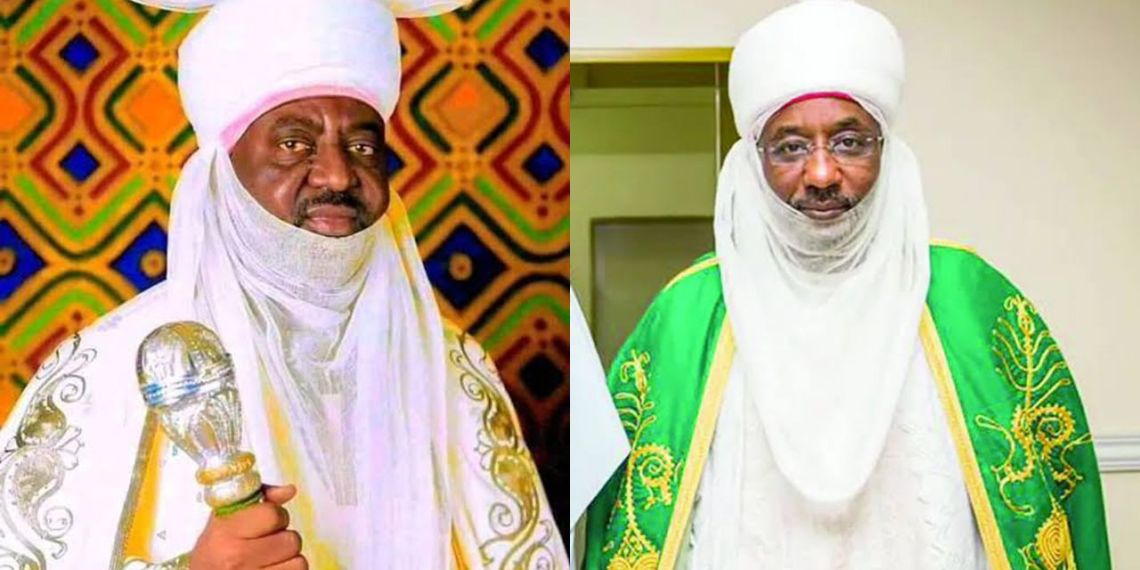
Kano State Coalition of Ulama comprises the great Islamic clerics of Kano from different sects to promote sanity and peace. The coalition is headed by Sheikh Abdulwahab Abdullah (Imam Ahlussunnah). The clerics, who grouped themselves in the religious effort of making the work of Almighty Allah effective in the state, are very important scholars of impeccable characters.

Kano State happens to be the ancient city in the northern part of Nigeria that is very popular for its religiosity. It is one of the first states in Africa to receive the light of Islam. Many scholars have revealed that Islam was received in the state through Wangarawa and Arab merchants.

The spread of the Islamic religion in the state has made it a very religious city—and the religious aspect has become very sensitive in the state. After some years of the spread of the Islamic religion in the city, there has been the existence of Sufism and other sects of beliefs.

The Islamic reformers played very vital roles in sanitizing the aspects of the religion. They focused vehemently on the teachings. They gave more emphasis to the seeking of knowledge of Islam. This aided the reformation in the religious activities of the State.

The spread of Sunnah came and knocked on every door. The objective of the Kano State Coalition of Ulama is to reform religious teachings to accommodate morality. Despite people having embraced religious knowledge and Western education, there is also a need to reform teaching activities and their adoption.

Sometimes, people have the knowledge, but they need to be guided on how to apply it to their teaching and learning. So, the reformation needs a coalition for its success. It is for the Muslims.

The Coalition of the Ulamas has been intervening in matters of religion. They are very keen on promoting sanity in religious activities. They call for peace—and peace signifies the best way of depicting Islam.

To also achieve the aim of their activities, they refer to themselves as the Coalition of Ulama of Kano. This means they comprise different Ulamas from different sects; from Izala, Qadiriyya, and Tijjaniyya.

The Coalition could also be the source of understanding one’s teachings amongst the Ulamas. The Tijjaniyya Clerics in the Coalition could understand some aspects from those Sunni Scholars.

Moreover, the Coalition led by Sheikh Abdulwahab Abdullah reconciled Sheikh Aminu Daurawa with Governor Abba Kabir Yusuf following their misunderstanding about the conduct of the Hisbah corps. Today, Daurawa has resumed his position as the Hisbah Commandant. This is one of the thousands of achievements of the Coalition. They intervene in every matter that affects the public.

May Almighty Allah continue to support the Coalition in achieving their goals, and may He reward them, amin.

Salihi Adamu Takai wrote via salihiadamu8888@gmail.com.

Marabus: Remembering Auwalu Bello Jigirya

By Salisu Shehu 

In Hausa, the word ‘Murabus’ simply means a former or one-time leader. Such a person would either have left the leadership position by duly completing his tenure or removed in some way before finishing the period for his stewardship. Malam Auwalu Bello Jigirya was a one-time Amir of the Muslim Students’ Society of Nigeria (MSSN), Kano State Area Unit (KNSAU) from 1995-2001. 

Since 2001 to date, the word MURABUS has become a daily pronouncement in the MSSN/KNSAU family. It was a respectful and humourous reference to Auwalu Jigirya after he handed over the mantle of Amirship to Malam Ado Garba Yankaji in 2001. MURABUS soon became a household name for Jigriya, and it resonated within the MSSN circle in Kano State. 

Whereas MURABUS means retirement or dethronement, as explained above, it means something different in the case of JIGIRYA. Rather than the ordinary sense of stepping aside, it was for JIGIRYA a metaphor for steadfastness, doggedness, resilience, selflessness, and sacrifice, ornamented by tolerance and forbearance. Instructively, Amirs before and after him held the Amirship and stepped aside, but he was the only one graciously crowned ‘MURABUS’. 

JIGIRYA presented a striking trait rarely found in people. He was a very humble person yet courageous. He would be decorous to those apparently senior to him but would also unrelentingly muster the brevity to advise them when they erred. He always had a demeanour of raw honesty, and frankness imbued with a permanent character of humour and conviviality. 

You would never get bored staying with him. He was, in the KNSAU family, in terms of humour and joy, a natural successor to the late Baba Alhassan Ibrahim Dawanau of blessed memory, who would always play the grandpa, entertaining the brothers and giving some relief that clears away monotony and tension when the situation started getting tough and stressful. To the younger ones, he was a friendly, cheerful, amiable, accessible, and easily approachable mentor. 

Since our adolescence, we grew up together in the Kano State Area Unit for nearly four decades. He was the Amir when I was the Director of Education at Al-Muntada al-Islamy Trust. That was when I started getting to know him at a closer range because Al-Muntada supported the KNSAU MSSN immensely. Not surprisingly, because of his down-t-earth mentoring style, when those younger ones established the ALHASSAN IBRAHIM DAWANAU COLLEGE OF HEALTH SCIENCES AND TECHNOLOGY, Malam Auwalu Jigirya made it to the list of the members of the BOARD OF TRUSTEES of the College. 

We, however, became closest in the last nine (9) years when we worked together in the Islamic Forum of Nigeria. He was a strong pillar in our Local Organising Committee of our Annual Ramadan Lecture and IFTAR RELIEF SCHEME. Not only punctuality and commitment made him a strong pillar of the Committee. It was also because of his dependability and reliability in terms of honesty, trust and probity. He was one person on the committee to whom I would never hesitate to hand over the budget for purchasing food items for the IFTAR RELIEF PACKAGE and would go to sleep. One would not be afraid of failure or fraud. 

As an attestation of Jigirya’s leadership character, the Executive Council of the Islamic Forum unanimously approved his appointment as the Secretary of the Caretaker Committee of the KANO State Chapter when its exco was dissolved nearly two years ago. 

In both the Kano State Area Unit (KNSAU) of the MSSN and the MSSN and the Local Organising Committee of the Annual Ramadan Lecture of the Islamic Forum of Nigeria, we will miss not only the person of Malam Auwalu Bello Jigirya but will seriously miss his loveable characters In all In described In above In. Our greatest solace is that we will have dozens of encomiums on his praiseworthy behaviours with which we will keep consoling ourselves. 

As we keep showering those praises on him, we are sure, as was said by our Beloved Prophet (SAW), we will be “the witnesses of Allah to him on earth”. 

Allahummaghfir lahu warhamhu warhamna ba’adahu wa’anta Khairul ghafireen.

Salisu Shehu, Vice-Chancellor, AL-ISTIQAMA UNIVERSITY, SUMAILA, can be contacted via sshehu.edu@buk.edu.ng.

Recitation of the glorious Qur’an

By Salihi Adamu Takai

The recitation of the Glorious Qur’an is beyond anything people can think of or guess how it is limited in terms of positivity. It is everything and beyond. Yes, it is indeed! In addition, the rewards for its recitation are granted based on letters. Each letter recited in a verse is worth 10 rewards, and the rewards multiply.

The recitation of the Glorious Quran is the food that satisfies people to the ultimate satisfaction. It gives satisfaction to those reciting it day and night. While reciting it, the reciter gets satisfaction from it for his/her satisfaction in the thing he/she comes across. Through it, a Muslim can understand the blessings of Allah for all of humanity on Earth. Allah’s creatures were explained. The lives of our ancestors were told; how they lived on Earth before us. This explains the Oneness of the Lord, Almighty Allah.

The recitation of the Glorious Quran makes Muslims live peacefully, and their hearts find peace and composure. The beautiful recitation of the Glorious Quran heals the heart of anger. It does away with agony and temper. The Quran has explained this in Chapter 13, Verse 28: “Indeed, with the remembrance of Allah, hearts find peace.”

When a person starts reciting it, their attention becomes focused on the Almighty Allah and His words. Listening to the words of Allah is the best thing people can do to gain composure, and its recitation gives you everything and draws your heart to Him. You become happy. The world remains peaceful and harmonious for you as you begin reciting it. Therefore, do not stop reciting the Quran. It is the best thing to help you achieve everything on Earth.

Have you been in a dilemma or limbo? If yes, have you recovered? If not, you can recover from any kind of limbo by reciting the Quran. Keep reciting the Quran. It will help you recover and make you happy all the days. If you can’t recite it, listen to it online. There are different recitations of the Quran available online. Go to your Play Store and download it, and keep listening to it offline or online. It is, of course, the best medicine undiscovered by physicians!

Salihi Adamu Takai wrote via salihiadamu8888@gmail.com.

Aminu Daurawa, Murja Kunya and the defeat of Hisbah in Kano

Isma’il Hashim Abubakar, PhD

If there is one government institution that citizens of Shari’a states in Northern Nigeria ought to regard as their personal property which cannot be politicised and subjected to jeopardy and machination due to its direct relevance and importance in preserving Muslim norms and values, that institution will undoubtedly be the Hisbah Board. 

In other words, by virtue of being Muslims, all Muslims in these states and, of course, in the rest of northern Nigeria are expected to regard themselves as natural and bona fide members of Hisbah, even if they do not wear the Board’s uniform, are not participating in its anti-immorality patrol and of course not in the payroll of government. This, therefore, underscores the collective and societal support and endorsement that Hisbah is supposed to enjoy since its creation and transformation during the tenures of Engineer Rabiu Musa Kwankwaso (1999-2003 and 2011-2015) and Malam Ibrahim Shekarau (2003-2011).

During the administration of Shekarau, the time when Hisbah was entirely transformed and formally mainstreamed into government bureaucracy, representing one of the major arms of Shari’a implementation agencies established by the state government, Hisbah Board confronted daunting challenges and opposition from all angles that only a sincere political will, uncommon determination and superior commitment would have saved it from being scrapped.  

Olusegun Obasanjo, Nigeria’s President (1999-2007) who opposed the transformation of Hisbah, sought to use all the presidential powers at his disposal to not only thwart the Hisbah from undertaking its task of sanitising the moral climate of Kano but also to proscribe it and mischievously label it as a terrorist organisation. Obasanjo’s wrath on Hisbah was merely a manifestation of his unsuccessful struggle to sabotage the implementation of Shari’a, whose winds had blown with an unprecedented force in 12 northern states. Even Obasanjo’s resort to legal machinery could not abort the Shari’a project. He, willy nilly, oversaw a federal government that had to allocate grants to states whose main priority was to promote moral values and eradicate vices that bedevilled the society, the hallmarks of the Shari’ah program as advocated by its proponents at the turn of the 21st century.

Obasanjo ultimately banned Hisbah through an announcement by his Inspector General of Police, who also shamelessly alleged that Hisbah guards were trained in Libya, and ordered the arrest of the Hisbah commandant, the late Shaykh Yahaya Farouk Chadi and his deputy Malam Rabo Abdulkarim. The Kano State Government headed by Shekarau gathered all its strength and entered into a decisive battle with the federal government, irrespective of whether this could culminate into a funny, fruitless and audacious fight between a rat and an elephant, leaving no one with a doubt as to where the victory and defeat ordinarily lied. 

After all, Shekarau was pushing for his second term as general elections were approaching, which explains how the attention of Shekarau and his government would be divided. This scenario could be juxtaposed with the climate of anxiety that befell the current governor, Abba Kabir Yusuf, who almost lost hope after the first and second rulings of the tribunal and appeal courts in favour of his opponent, Nasiru Yusuf Gawuna. The development necessitated a momentary pause in regular government activities. It brought about a wild and arbitrary push of things that could be interpreted as valedictory stages of a short-lived tenure. Stability was restored in the psyche of the government and its supporters only after the Supreme Court issued a final verdict that annulled the rulings of both the tribunal and appeal courts and affirmed victory for Abba Kabir Yusuf.

The Shekarau-led government, which, before institutionalising Hisbah, had followed the legislative procedures to get the Board appropriately legalised and signed into law, summoned enough courage to sue the federal government in court. The legal battle ended in favour of the Kano State Government after the court, in March 2007, a few weeks before the elections, described the arrest of the two top heads of Hisbah as illegal and forced the federal government to pay them damages. Nonetheless, allegations had gained currency in Kano by that time that Farouk Chedi, who died in 2010 after a protracted illness that made him look too frail and emaciated, was a consequence of an intravenous poisoning applied to him while in detention. This gradually ravaged him and eventually took his life.

Like Chedi, Chedi’s successor, Shaykh Ibrahim Maibushra, was also a professor at Bayero University, Kano. He built on the intrepid pedestal chartered by his predecessor and the government that recruited him. Maibushra displayed extreme gallantry by, as I was told by a Hisbah guard, going to the extreme of jeopardising his job when he detained an elite belonging to a royal family who was caught committing a crime. 

Maibushra’s zealousness to discharge his duty was, as evidenced by the report above, not limited to the poor whom his guards frequently chased but rather knew no discrimination between the poor and the elite or between the weak and the strong. The suspect remained in Hisbah’s custody, and even after the interference of bigwigs within and outside the royal family, Maibushra stood on his ground and refused to release the man. With the endorsement of the then patriarch and the most respectful royal figure within Nigeria and beyond, Maibushra continued to retain his detainee and treated him the way every Tom, Dick or Harry was ideally treated once he fell into the hands of Hisbah. 

Maibushra, I was told, was so fearlessly courageous to chase and catch not only low-ranking soldiers but also high-ranking officers like army colonels. Of course, needless to say, without the support of the government of the day, the Hisbah commandant would have been in greater trouble. However, it was likely that Maibushra would not have performed contrarily, regardless of whoever held the reins of power at the time.

When Shaykh Aminu Daurawa emerged as the new commandant of Hisbah after the election of Rabiu Musa Kwankwaso in 2011, only ‘pessimistic’ people would doubt his competence and preparedness to at least show equal sacrifice, even if not outshine his predecessors. After all, Daurawa was one of the most outspoken voices who denounced their membership in Shekarau’s Sharia-related committees, criticised the mode of Shari’a implementation of the Shekarau administration and rallied around Kwankwaso, culminating in the latter’s victory against Salihu Sagir Takai, the candidate of the then ruling ANPP. 

There were high hopes that Daurawa would build on Hisbah’s achievements and improve in the areas he criticised in the past administration. Interestingly, although Kwankwaso did not primarily campaign on the Shari’a mantra, the Islamic clerics within his circles, including Daurawa himself, had assured electorates that Kwankwaso would be more forthrightly supportive toward Shari’a implementation since he was believed to be more no-nonsense, fearless and invincible than his predecessor. 

Although there was a relative shortage in the money allocated to Hisbah for running costs and operations, Kwankwaso deserved commendation for reportedly giving Hisbah’s leadership adequate autonomy to carry out operations with little interference. A source from Hisbah confided in me that Kwankwaso admitted being callow about Shariah and Islamic knowledge in general and, as such, gave Islamic clerics within his circle enormous power to decide on any matter relating to religion, including issues affecting public religious institutions to whose leaderships Kwankwaso assigned the various clerics who campaigned for, supported or backed his election bid. With an intrepid head of government like Kwankwaso and with zero challenge from either the federal government or any other visible quarters, Daurawa was expected to leverage the available power and resources of government to improve in areas he unleashed censures on the past administration. 

Of course, mass wedding (auren zawarawa) was one of the main notable projects and inputs which Daurawa’s Hisbah championed. At the same time, all other ground operations and patrols were conducted not better than what was obtained in the Hisbah under the leadership he inherited. Meanwhile, Daurawa was behind the decline in sacrifice in the model of Chedi’s leadership or Maibushra’s flat and indiscriminate approach toward criminals and their cronies among influential partners. 

It was Daurawa who appeared in one video, which still circulates on social media and confessed that as Hisbah commandant, he deliberately avoided arresting the elite and concentrated on the poor because, according to him, the poor are powerless and easy to deal with, unlike the elite who could use their influence to manipulate his sack from the job. In my opinion, this public confession of weakness and a thirst to remain politically relevant, which Daurawa made, partly set the foundations of what Hisbah is going through at this trying moment. 

Daurawa has been the longest-serving Hisbah commandant since its institutionalisation. He served between 2011 and 2015 during Kwankwaso and was reappointed by Governor Abdullahi Umar Ganduje, serving for more than four years. Even as relations between Kwankwaso and Ganduje worsened, Daurawa, who belongs to Kwankwaso’s camp, was retained at the time. Politicians with political loyalty to Kwankwaso were not carried along. 

Similarly, after resting for only four years throughout the second tenure of Governor Ganduje, which distanced him from the corridors of power, Daurawa successfully reunited with his seat immediately after the emergence of Abba Kabir Yusuf as Ganduje’s successor in May 2023. Although it is an uncomfortable truth that cannot be denied, Daurawa has got so engrossed with his rank in Hisbah more than being too courageous enough to live by the dictates of his old credentials or even at least to maintain the tempo of his predecessors, one of whom had even lost his life in the cause of his Hisbah. In contrast, the second would have lost the job entirely had he not got a superior intervention.

It is precisely this stand and posture that Daurawa is expected to display when tired of the massive campaigns to turn the Muslim north immoral by impolite TikTokers, the Hisbah resorted to preaching and interacting with TikTokers a few months ago with the hope that they shun promoting lewdness and vices which contribute to moral degeneration of northern Muslim society. That was a good move since it would serve as a warning that would justify applying force in bringing TikTokers to order and sanitising the too much spoiled social media space. 

The recent arrest by Hisbah of Murja Ibrahim Kunya, a prominent TikToker, had restored some hope that Hisbah leadership did not only want to, at the time its activities are most needed, remain a timid institution principally different from how it used to be 20 or so years ago. Murja Kunya was taken and presented before the court. It was a relatively good move. Still, it would have been safer and better if she was presented to the court within Hisbah, and of course, this would have saved Hisbah from further disgrace and wanton defeat that resulted from what unfolded later. People woke up on a certain morning in February 2024 with the news that Murja, who was detained in prison and awaiting trial, was arbitrarily released in mysterious circumstances.

Whatever the case and whoever was responsible for her release, someone with even the slightest inkling of the sensitivity of the Hisbah Board and the foundations upon which the institution was set up would never expect a mere arrest of an immoral TikToker would attract the interest of some influential figures within the circle of Kano State Government. Most people rejoiced after Murja’s arrest that the development would mark the end of the ascendance of an empire of vulgarity and obscenity that has taken the grip of northern Muslim social media. 15 or 10-year jail term for Murja, which religiously inclined and Islamic-compliant people prayed Murja would be served with, would have deterred hundreds of TikTokers receiving inspiration from her from treading along her path. 

The release of Murja represents one of the most shameful artificial calamities that Hisbah would witness in its two decades of operation; unless all stakeholders, including the remaining figures in the past administrations and all concerned Muslims, have risen to this big challenge, the decline of Hisbah would be one of the last phases of the fall of Shari’a which started at the turn of the century and reached peak, only to fall to this too low level. Who is Murja Kunya, and how can one ever imagine that she would be an obstacle to Hisbah?  It is disheartening and regrettable that a responsible government in the past would challenge, fight and successfully defeat the Obasanjo-led federal government in a legal battle on Hisbah, but a different, less committed Hisbah leadership cannot fight a mere gullible TikToker.

Daurawa has, during one of his interviews with the press in the aftermath of Murja’s illegal escape from prison, commented that Hisbah has done all within its power, implying that it has no business whatsoever with what transpired afterwards. Although this is partly true, it is altogether unacceptable; Daurawa would have used every means possible to register his protest against the sabotage of Hisbah by a fifth columnist within the government that appointed him. 

There are two reasons for Daurawa’s protest, even though a voluntary resignation would have been a decent solution. Daurawa criticised the Shari’ah implementation process in the past because he was dissatisfied with the government attitude of the day. Now that he was put at the helm of affairs, it would only be reasonable if Hisbah’s principles and values were protected or if he took his leave. Secondly, continuing to remain in a government that has less commitment to eradicating immorality and vices, as illustrated by Murja’s release, would be equal to prioritising one’s position over preserving ideals that one has been preaching for decades.

Finally, although the ugly picture of the fate of Hisbah painted in this essay seems to be discouraging, Hisbah is yet the most visible of all government machinery that has been symbolically and, of course, practically reminding Muslims that Kano and other sister states are still legislatively covered by Sharia. A political will, which we hope will be revived by Kano power brokers, can anytime restore the tempo and spirit of Sharia and decisively tackle and fight the social media agents who have been hell-bent on depriving Muslims of their norms and values. Although very painful to admit, one can say that for now, immorality is gradually winning the war against morality in a society that used to prefer death rather than surrender to a violation and corruption of norms and values. 

One of the most cogent ways of tackling social media immorality, which I hope relevant government agencies like Hisbah will adopt, is having a unified network of a joint task force within Hisbah and similar institutions in some northern states and, if possible, to sign this into law after passing necessary legislative process. This would make it easy for Hisbah to detain criminals everywhere in these states without struggling with issues of arrest warrants and areas of jurisdiction.

Dr Ismail wrote this piece from Rabat, the Kingdom of Morocco and can be reached via ismailiiit18@gmail.com