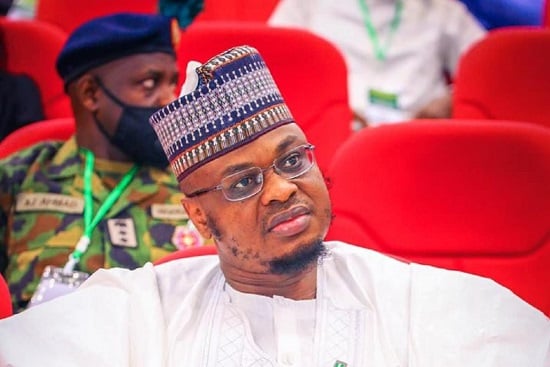
Isa Ali Ibrahim Pantami

Pantami’s three faces

By Zayyad I. Muhammad 

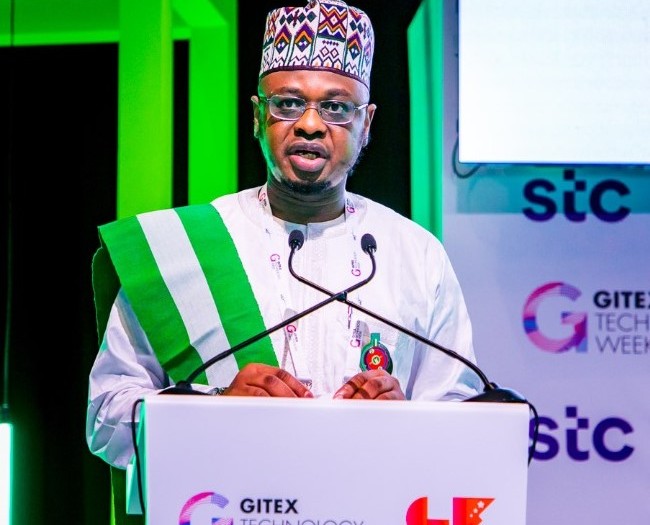
Isa Ali Ibrahim Pantami, former Honourable Minister of Communication and Digital Economy, an Islamic sheikh, and a UK-trained Ph.D. holder, has found himself in a triangular situation: an Islamic sheikh, a politician, and an academic. This revered status means any issue that affects his personality will always be a hot topic and attract public scrutiny.

Pantami’s full transformation into a politician who is eyeing the ‘ballot box’ was noticed during this year’s Ramadan Tafsir; his style of delivery and the content of his messages were noticeably altered. Traditionally known for his sticking to religious contents during tafsirs, this time, the sheikh took every opportunity to showcase his extensive knowledge of the economy, geography, and global politics. This shift did not go unnoticed by the audience and observers.

Pantami’s discussions were peppered with references to economic policies, geographic strategies, and the intricacies of international relations, signalling a significant change in his focus and priorities. Pantami continues to align himself more closely with political aspirations, and his body language has also evolved to reflect this new ambition. 

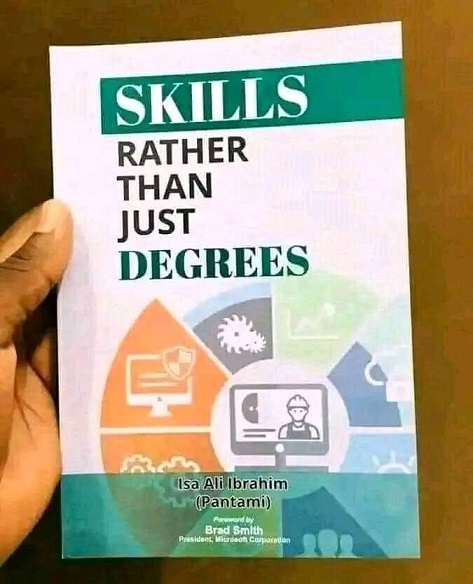
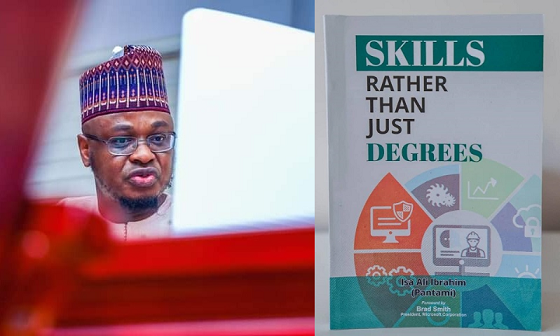
Recently, controversies, debates, and discussions have emerged about Pantami’s books, Skills, Rather than Just a Degree and A Scholar’s Journey: Navigating the Academia. These books trended for a while and reignited old controversies about how he obtained his professorship. This situation has also awakened Pantami’s political adversaries, who view his behind-the-scenes early efforts to enter the Gombe state governorship race as an encroachment on their territory.

Many politicians, especially in his home state of Gombe, are upset with Pantami because they view him as an outsider who seized opportunities to occupy their ‘slots,’ first as the Director-General of NITDA and later as a federal minister representing Gombe State. However, after eight years of working independently, he now seeks their support to establish himself in their domain.

Conversely, the majority of Pantami’s critics regarding his appointment as a professor are academics. In contrast, most of those who backed the critics were Pantami’s political opponents and their supporters.

One of Pantami’s critics was reported to have penned this: 

“Mr. Pantami was only for the most part a Lecturer 1 or 2 where he first served and didn’t spend a whole working career in the university system or in a university’s employment,” he was “made” a Professor by a university where he never worked, taught, sat in its Senate, worked in its committees, never examined or marked UG or PG exam scripts, and his whole promotion papers were never processed at the departmental and faculty levels, and, indeed, he never had a payroll number… Mr. Pantami was thus never a scholar in the classical or academic sense of that word. I wonder whether he’s now teaching or giving classes or seminar papers at any university after his leaving office in May 2023.”

On the other hand, supporters of Pantami’s professorship encompass academics with a fondness for him, members of religious groups, his students, and his political associates. 

In fairness to Pantami, having held a ministerial position, he is already entrenched in politics. Moreover, the criticisms in his books predominantly consist of one-off comments rather than comprehensive analyses or academic discourse. Furthermore, Pantami’s challenge for a debate on his book is yet to take place. 

The debate about Isa Pantami’s books, professorship, and foray into politics has three divides: his adherents, his opponents, and those sitting on the fence. The views of his followers and critics are well known and are often based on their perspectives. However, those sitting on the fence have, on many occasions, provided valid points both for and against Pantami.

Isa Ali Pantami’s transition from an Islamic scholar to a politician and professor has sparked both controversy and applause. His political opponents view his entry into politics as an intrusion into their territory, while his academic critics regard his professorship as ‘unearned.’ On the other hand, his supporters perceive his multifaceted identity—as a sheikh, a politician, and a professor—as exceptional among his peers.

Zayyad I. Muhammad writes from Abuja via zaymohd@yahoo.com.

In response to Farouq Abba’s baseless critism of Pantami’s book 

By Usama Abdullahi

I don’t understand why someone like Farouq Abba, whose command of the English language is faulty, would waste his time kissing off Sheikh Ali Isa Ibrahim Pantami’s book titled, Skills Rather Than Just Degrees. I am pretty sure everyone who stumbles upon his criticism of the book would know that it’s such a ridiculous attempt to downplay the superbness of the book. To be honest, I find his criticism very tasteless and insulting. To insist that a comma must precede  ‘Skills’ before ‘Rather’ is to insist that the English language isn’t a complex one. Unknown to the faultfinder-Abba, putting a comma before ‘Rather’ is quite unnecessary.

It’s up to the author to decide whether to insert a comma or not. And the absence of a comma in the book’s title doesn’t invalidate the effectiveness of the book. Well, it’s obvious that the critic is plainly being too naive to conceive that idea. That being said, his understanding of grammatical rules is limited. So, we may wish to dismiss his critique as a misguided priority or some sort of attention-seeking thing.

Surprisingly, Abba has admitted by himself that he hasn’t yet read the book. But he’s quick to point out some “gaffes” in the book’s title. I guess he’s simply being hypocritical like he has always been when it comes to matters of great importance. 

I’m amused that he ended up exposing his ignorance while trying to alter what’s already inalterable. I understand that there are a number of people who wrongly assume that the use of ‘just’ in the book’s title is shocking. Contrary to their misapprehension of the adverb ‘just’, it can be understood in a series of ways. We all know that ‘just’ is synonymous with ‘only.’ Therefore,  there’s nothing to worry about in that title. It’s as simple as it seems. I, however, do not wish to denigrate Abba. I only wish to disagree with him. 

He also characterised the art on the book’s cover as being “too basic”. I don’t know what he clearly meant by that. But, to think that way is to think that the earth should revolve around him alone. That the book’s painting is “too basic” doesn’t mean the book won’t be impactful as it’s expected to be. You can only imagine what the book has in store if you haven’t read it. A good brother-cum-friend has shared the book with me via WhatsApp, and I have started reading it. It’ll be an interesting one. 

In conclusion, the book is such a great masterpiece. It argues that having a degree doesn’t guarantee that a person possesses the necessary skills to succeed in a given position or industry. Moreover, it suggests that instead of sorely relying on academic achievements, employers should focus on an individual’s (applicant’s) experience, practical knowledge and work-related skills because that determines how they will perform the job effectively.

The truth is, having relevant skills is much more valuable than simply having academic qualifications. Isn’t it funny that this is the kind of book which Abba sought to dishonour?!

Usama Abdullahi is an Abuja-based writer.  He can be reached via usamagayyi@gmail.com.

Why Nigeria needs a comprehensive data protection law now

By Muhammad Mikail

‘The amount of data being generated today is enormous; as such, it has become necessary to have a full-fledged data protection law to ensure confidentiality and privacy of the data’ – Prof. Isa Ali Ibrahim Pantami

In today’s digital world, data is key to the extent that some scholars have termed ‘data as the new oil’. This speaks to the huge revenue potential data has for every country serious about growing its digital economy. Nigeria is certainly one. This data is in the form of personal information, which is frequently collected, stored, and shared by businesses, governments, and individuals.

According to Professor Isa Ali Ibrahim Pantami, the Hon Minister of Communication and Digital Economy, who spoke at the recently held maiden edition of the ‘Digital Economy Regional Conference’ in Abuja with the theme: Positioning West Africa’s Digital Economy for the Future, “In the fourth industrial revolution, data is key. In 48 hours, the quantity of data generated globally is equal to the quantity of data that was generated within a period of 5000 years.”

However, without clear regulations to govern the use of such data, individuals and entities are left vulnerable to privacy violations such as data breaches, identity theft, and other forms of abuse. Today, it is a global best practice to have a data protection law in place. Otherwise, nations find it difficult to attract so many interventions beneficial to their countries. A data-secured environment is an investment wonderland.

The above explains why many development partners, international financial institutions, critical stakeholders in the digital economy space and even potential investors today have continued to ask questions as to why Nigeria does not have a data protection law in place. Having such a law in place will align the country with the scores of others around the globe and make Nigeria a global player. Put differently, the costs of a lack of a proper data protection law are enormous.

To address this issue, the Federal Government of Nigeria established the Nigeria Data Protection Bureau (NDPB) in 2022 as the regulatory institution responsible for ensuring that people’s personal information is kept private and safe when used for ‘digital things.’ Furthermore, in January 2023, the Federal Executive Council (FEC) approved the Nigeria Data Protection Bill presented by the Hon Minister of Communication and Digital Economy for transmission to the National Assembly for consideration.

The draft data protection Bill was sent to the National Assembly by the President in separate letters addressed to the leadership of the National Assembly and read on the floor of both chambers on Tuesday, the 4th of April, 2023. The Bill has gone through the first and second readings and sent to the ‘Committee of Whole’ in the National Assembly to harmonise positions from both chambers. This Bill will provide a legal framework for the protection of personal information, safeguard people’s basic rights and freedoms, and establish a data protection commission for the regulation of the processing of personal information and data when passed into law.

The eight Assembly previously passed the Draft Data Protection Bill, but President Muhammadu Buhari declined assent. This was due to concerns raised by stakeholders on some identified areas and clauses in the Bill. So far, Nigeria Data Protection, in collaboration with the Nigeria Digital Identification for Development Project, NDID4D, has been working with critical stakeholders, captains of industries and policymakers on addressing those concerns and perfecting the bill.

Recently, a validation workshop was held to present the draft bill to stakeholders for their buy-in, comments, criticism, and suggestions to improve the bill.  Senator Ibrahim Hossein, and Rt. Hon Lado Suleja, both Chairman Senate and House Committee on ICT and Cybersecurity, respectively, have, on numerous outings, conveyed the support and willingness of the National Assembly to diligently work on the bill to ensure speedy passage and eventual assent by the President.

‘Data Protection is a constitutional right in Nigeria’, is an oft-quoted statement of Prof. Pantami, the communications minister, as Section 37 of the 1999 constitution as amended provides that: “The privacy of citizens, their homes, correspondence, telephone conversations and telegraphic communications is hereby guaranteed and protected.” In the same vein, the core rights of data subjects under the Nigeria Data Protection Regulation provide a data subject have a right to be informed, the right of access, the right to object, the right to data portability, the right to erasure, right to restriction of processing, rights to rectification and rights regarding automated decision making.

Thus, data protection law is urgently needed in Nigeria as citizens have had one form of data or the other compromised without the ease of recovery, leading to huge financial losses, reputational damage, revenue losses, and other forms of abuse. This is pertinent, especially with the growing rate of identity theft, cyberstalking, data mining, theft, internet fraud and increasing reported cases of abuse of financial information by financial institutions, mobile service providers and telecom companies, unregulated loan credit companies and so on.

The current National Assembly needs to pass the data protection bill for President Buhari to assent to it before May 29th, 2023. This will provide an additional layer of protection for the nation’s digital identity ecosystem and, in no small measure, safeguard the Nation’s fast-growing digital economy, boost investor’s confidence, attract foreign direct investment, improve our GDP, and ensure robust protection and safeguarding of personal information from being stolen and misused for fraudulent purposes, reducing the incidence of identity theft and fraud as well as serve as a buffer for citizens’ personal data privacy.

Data is critical to the survival of every nation’s economy, particularly in today’s digitised global home. It is on record that Nigeria is the first African country to join the developed countries in celebrating international data privacy day. This demonstrates the Nation’s drive and willingness to take its pride of place as a leading African digital economy hub amongst the comity of nations.

The data protection law is not in any way meant to punish our citizens but rather to create awareness so that we will all be data compliant. We are urged to comply. Today, because of awareness creation, collaboration amongst digital economy ecosystem partners, critical stakeholders in the data sphere, reaching out to institutions, sanctions, and interrogating others, the data protection and privacy compliance rate is on a steady increase.

Additionally, businesses and organisations will be held accountable for any data breaches or privacy violations, which will encourage them to take data protection seriously and implement proper measures to protect personal data.

The current Assembly should take due credit and ensure the speedy passage of this lofty bill, and President Buhari should quickly assent to it for the good of posterity. The passage of a comprehensive data protection law in Nigeria is urgent and should not be delayed further.

Muhammad Mikail writes from Abuja, Nigeria and can be reached via muhammadnmikail.mm@gmail.com.

Holy Qur’an University confers honorary doctorate on Sheikh Pantami

By Abdurrahman Muhammad

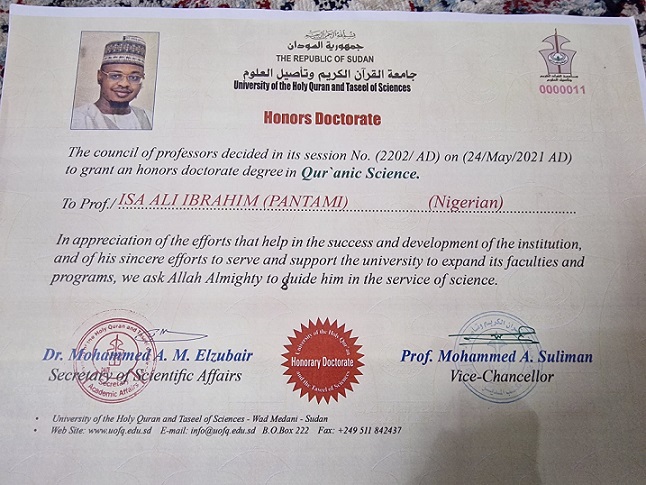
The University of the Holy Qur’an and Taseel of Sciences of the Republic of Sudan awarded Nigeria’s Minister of Communications and Digital Economy and renowned Islamic cleric, Professor Isa Ali Ibrahim (Pantami), with an Honorary Doctoral Degree in Qur’anic Science.

While the Honourable Minister was awarded in May 2021, he received the award certificate and shared the same on social media only recently.

According to the official social media handles of the Minister, he was the first person in sub-Saharan Africa to receive the award. The statement, in part, reads:

“With the exemption of North Africa, he was the first African to receive the recognition on the Glorious Qur’an.”

During Ramadan, Sheikh Pantami delivers Tafsir at the Annur Masjid in the Nigerian capital, FCT Abuja. He also holds other preaching sessions outside the Holy Month at the same mosque or elsewhere.

Celebrating Prof. Pantami: The architect of Nigeria’s digital revolution

By Yakubu Sani Wudil, PhD

During the last three and a half years, Nigeria’s Minister of Communications and Digital Economy, Prof. Isa Ali Ibrahim Pantami—a digital dynamo—has demonstrated quality in leadership and has raised the bar of good governance in the country. Specifically, the Digital Economy sector has come to the limelight under his stewardship.  Since his assumption into office, he has become the champion of Nigeria’s digital revolution.

Prof. Pantami has exhibited exceptional leadership skills in driving the Communications and Digital Economy sector to record several unprecedented achievements. His leadership has not only escalated the sector’s quarterly revenue generation by more than 500 per cent due to his digital innovations but also played a pivotal role in lifting the Nigerian economy out of recession.

Under his watch, the Digital Economy sector has multiplied the revenue generated from fifty-one billion Naira quarterly to about four hundred and eight billion Naira, according to an independent assessment carried out by the Foreign, Commonwealth & Development Office (FCDO). On the other hand, the ICT sector recorded the highest growth rate in the year 2022, as reported by the National Bureau of Statistics.

From the onset, Professor Pantami has identified eight priority areas for development: developmental regulation, digital skills, solid infrastructure, service infrastructure, digital services development and promotion, soft infrastructure, digital society and emerging technologies, and indigenous content development and advancement. The Minister has done exceptionally well in these areas by implementing policies and projects that have significantly impacted the Nigerian economy.

For instance, he has established ICT skill acquisition centres across the states and has recorded over 219,000 direct beneficiaries of digital skills training. Additionally, he has laid about 19 kilometres of fibre cable to expand reach and coverage to MDAs (covering 28 MDAs). Furthermore, he has established digital economy centres to support the growth of the economy in the country. He has also developed policies and initiatives to promote indigenous content and created an enabling environment for the sustainable development of Nigeria’s economy, which has been able to resolve challenges that have lingered for decades.

Under Professor Pantami’s leadership, a significant number of National Policies have been developed. Currently, over a dozen of these policies are already being implemented, one of which is the National Digital Economy Policy & Strategy 2020-2030, which sets out a comprehensive plan for the growth and development of the digital economy in Nigeria.

The Minister has also executed several projects, too numerous to mention, which have significantly impacted the Nigerian economy. Nevertheless, some of these projects include the establishment of ICT skill acquisition centres in most of the states, registration of all mobile sim cards, emergency communication centres, virtual examination centres, Data Sharing Centres, Digital Industrial Parks, Wireless Internet Cloud, Digital Capacity Training Centres, NITDA Community IT Training Centres, IT Innovation Hubs, IT Capacity Building Centres, and Provision of ICT Facilities in our Institutions of learning.

In his effort to transform governance to the 21st-century model, the minister has established the E-Government Training Centre to equip stakeholders with the necessary skills to achieve optimum productivity. He also constructed several E-Health Facilities, E-Libraries, and E-Accessibility Projects. Furthermore, the minister has coordinated the establishment of multiple Community ICT Centres, NIPOST Digital Centre, Tertiary Institution Knowledge Centres, School Knowledge Centres, Rural Broadband Initiatives, National Centre for Artificial Intelligence and Robotics. He also empowered Farmers through the National Adopted Village for Smart Agriculture Program.  The Accelerated Mobile Phone Expansion-Base Transceiver Station was also accomplished under his watch.

Furthermore, to complement the efforts of security agencies in ensuring adequate National security, there have been over 92 million unique National Identification Number enrolments as of November 2022.  These achievements are a testament to the hard work and dedication of Professor Pantami, who has been tireless in his efforts to drive the digital revolution in Nigeria.

It is worth acknowledging that President Buhari must be commended for the wise decision to appoint Professor Pantami as the Minister of Communications and Digital Economy. He is one of the best-performing ministers in the cabinet and has succeeded in delivering on his mandate to the Nigerian people. The country needs more brains like him to drive the nation’s development and ensure that we can compete on the global stage.

As we look to the future, it is clear that Professor Pantami has the ability and vision to continue to drive the growth and development of Nigeria’s Communications and Digital Economy sector. The erudite scholar has distinguished himself for integrity and selflessness. In addition, he has been a worthy ambassador for Nigeria’s young population.

We pray that he will have the opportunity to serve the country in many capacities and higher positions in the future. His leadership and expertise are vital to the continued progress of our nation. The policies and projects executed under his leadership have significantly impacted the Nigerian economy and have laid the foundation for a sustainable future in the sector.

Dr Yakubu Wudil writes from King Fahd University of Petroleum and Minerals, Saudi Arabia, and can be reached via yswudil@yahoo.com.

NIGCOMSAT gets new Managing Director

By Muhammad Auwal

President Muhammadu Buhari has approved, with immediate effect, the appointment of Engineer Tukur Mohammed Lawal Funtua, as the new Managing Director of Nigeria Communications Satellite (NIGCOMSAT), following the retirement of the erstwhile Managing Director, Dr Abimbola Alale, after two terms of 10 years in office.

Engineer Tukur Mohammed Lawal Funtua, an indigene of Funtua Local Government Area of Katsina State, Northwest Nigeria, was born on 24th November 1966.

He holds a Bachelor’s Degree in Chemical Engineering, PGDM, MBA, a Professional Diploma in Education and a PhD in Environmental and Sustainable Development Management in view, at the University of Port Harcourt.

He was, before his appointment, Director, health community affairs, safety and environment with BUA Cement Plc, and served in various capacities, including Health and Safety Manager, Country HSE Manager and Regional Manager for Communications, Public Affairs and Sustainable Development at Lafarge Africa Plc and Group Head, Environment and Community Affairs at  Dangote Cement Plc among others.

Engineer Tukur, who has thirty years of professional experience in manufacturing, process engineering, health, production, safety and environmental management, communications and various other fields, is a Chartered Environmentalist at the Society for Environmental Toxicology and Pollution Mitigation, a Fellow of the Nigerian Society of Chemical Engineers, and the Professional Leadership Practitioners Institute.

He is a Registered Engineer with the Council for the Regulation of Engineering in Nigeria (COREN), a member of numerous professional bodies and institutes.

University Degrees vs Skills debate: A consequence of our purposeless education system?

By Prof. Abdelghaffar Amoka Abdelmalik

A recently published book by Dr Ali Isa Pantami has rekindled the debate between degrees and skills. Even though the book focused on digital skills, “educated” Nigerians are trying hard to separate skills from university degrees (education). That someone graduated in computer science without being able to write a computer code does not mean that all graduates in computer science cannot write computer code.

Public primary and secondary schools have collapsed, and there is no debate on a possible mission to rescue them. The public universities are on the path to the state of the public primary and secondary schools, and all we want is to keep the kids in the class to MILT (manage it like that).

Some of the questions that came to my mind as I watched the debate were: What is skill? Can you truly separate skills from university degrees? What qualified you to receive a degree from a university? What skills do you need to survive in Nigeria? What skills do we need to propel Nigeria to a particular height? Just digital skills? What are the available jobs in high demand in Nigeria? Over the last 20 years, tell me about a job that was advertised, and after all the screening, they could not get a qualified graduate in Nigeria with the appropriate skills for the job.

The debate on degrees and certificates is getting more interesting. It is more interesting to me this time around as the Northern elites champion it. We are growing up.

I did my National Youth Service in a secondary school in Bagwai, Kano state, between 2000 and 2001. One weekend, I went to the market to get some stuff and met the Senior Teacher. I jokingly asked why he was in the market and didn’t let the wife do the shopping. That led to a lengthy discussion where I mentioned the General Hospital, Bichi. As of then, there were 3 Doctors, all male, at the hospital. Two were Yoruba and one Igbo. They were all Christians. There was no female doctor. I told him that they need to encourage their daughters to go to school so that we can have their daughters as Doctors in those hospitals. I guess I was wrong. Degrees are useless.

We are fond of mentioning our iconic automotive designer, Jelani Aliyu, as an example of skills rather than degrees. This is a very interesting example with a missing background. Jelani was a very good student and truly left the university for the polytechnic because he wanted a more practically oriented program. That is what polytechnics are originally meant for. So, after finishing his HND from the polytechnic as the Best All-Round Student, he got a scholarship from the Sokoto state scholarship board to study automotive design at the College for Creative Studies in Detroit, US. They got certificates every step to show that he has acquired the requisite skills. The rest is history.

You see, anyone can write a book on degrees vs skills, especially people at high places whose entire success is based on their degree certificates. But can the book change our reality? Not likely. Only a few Nigerians actually read books. A long post on Facebook is even difficult to read. We prefer to use the time to argue over who is the football G.O.A.T. How do we change that? There are several challenges to deal with to save our system.

But then, by the virtue of your degree certificate, you got a job as a Graduate Assistant at a public university. You built on that to have your Master’s degree in the university. And being a lecturer in a public university, you got a scholarship for PhD in the UK. With a PhD degree from the UK, you got a job offer as an Assistant Professor at a university abroad. Then, a few years later, you got an appointment outside academia. I guess a skill was identified that took you to all these places. There was no record of industry experience. So, all the skills were acquired at the university. So, what is your problem with the university? If you have got all these skills in the university and the necessary skills that your students in your department need to have are missing, then we should blame you for it.

All that you are was built on your degrees, and the same degrees are suddenly no more important but skills? We are supposed to be the light of our society. So, what is skill? What do we do in the universities? Are university environments unskilled environment? Where do you get the skills? Meanwhile, their kids are in university acquiring degrees. My guess is that you need skills, while their kids need degrees to manage your skill.

One of my senior colleagues once told us during an undergraduate lecture in the ’90s that physics makes you think. That’s a skill. He said, whatever you decide to do after graduation, physics will help your thinking. Sometimes back, I had a discussion with one of our graduates who switched from physics to IT after graduation, and he said IT is a piece of cake compared to Physics. He said he finds it easy having studied physics. Of course, let’s preach skills and not degrees while our best graduates are been harvested by the US, Canada, France, Norway, England, Germany, etc.

Recently, there were some trending Master’s graduation lists from UK universities where the graduates were 99% Nigerians. The tuition fee for the master’s program can start a business in Nigeria, but they decided to give the money to the UK university to acquire a certificate that will qualify them to work in the UK. Their first degree from Nigeria got them admission to a Master’s program in the UK. That qualifies them for the two years post-study visa to get a job. They don’t intend to come back, and they will get a job there with a university degree.

Shaquille O’Neal found it offensive when he walked into business meetings, and people would only talk to his representatives. He felt he was lacking something and found it necessary to enrol in a Master’s degree program at the University of Phoenix. He told them that he wanted somebody to teach him in class but was informed that the course he enrolled for was only taught online and that he can’t be taught alone. He asked for the requirements to have a physical class, and he was told that they needed a minimum of 15 students. Shaq paid for 15 of his friends to join him in the Master’s program. There was a gap, and he got a degree to fill it. It is up to you if degrees are skillless.

Barrister Jimoh Ibrahim recently got a Doctor of Business degree from Cambridge Judge Business School, University of Cambridge. He is a billionaire with an MSc in Major Programme Management from Oxford, an MBA from Cambridge, a Certificate in International Tax Law from Harvard, an MPA from Ife, and a Bachelor of Law from Ife. He has been a billionaire. What does he need another degree for?

Our universities are not in the best form, nor are our polytechnics the way they were during Jelani’s days. We watched public educational institutions degrade over the years without any resistance except ASUU. That we have lost some vital components of what made a university a university is not a global case. It’s a peculiarity that we have to deal with to save our system. Our efforts should be towards reviving the lost skills that ought to be acquired at each level of our education, from primary schools to polytechnics and universities. 

Sadly, instead of making efforts to save the education system of the country and direct it toward the developmental needs of the nation, we are arguing over degrees and skills while they are taking the extra steps for the further destruction of public universities. The people telling you to go for skills instead of degrees have got their kids in schools abroad or private universities. What are they acquiring there? Unskilled knowledge? They have systematically destroyed what made the university a university but complained of a lack of skills. Double standard.

Since our brothers are championing the commercialization of public universities and skills rather than degrees, I hope our general hospitals in the North have got enough doctors so that we can close down our degree programs for medical sciences. What about law, finance, etc.? Optic fibre, which has revolutionized medicine and telecommunication, was a product of research from the university. A simple physics concept (total internal reflection in a material) that was engineered. Endoscopy and broadband transmission are not products of questionnaires but skilled thinking.

The World Bank recently said it will take northern states 40 years to catch up with their southern counterparts considering the current growth rates. Meanwhile, northern leaders don’t seem to bother about that but doing politics with the education of the people. I was informed today that grasses have taken over some of the primary schools in a state in the North-central. If we are to stop going to school, we need to start telling them to lead the way on the skills we need to survive in the North and make Nigeria work. Is it farming, as the president advised?

In a recent World Bank report, the Bank stated that “despite its vast natural resources and a young, entrepreneurial population, development in Nigeria has stagnated over the last decade, and the country is failing to keep up with the GDP growth of its peers. Declining private investment and demographic pressure push young Nigerians to pursue opportunities overseas”. Lack of skilled leadership and not a skilled workforce is possibly responsible for this.

It wasn’t a lack of skilled workforce that caused the massive unemployment in the country. There won’t be unemployment if there are jobs. There can’t be jobs if there is no job creation or an enabling environment for job creation. We are quick to forget that every certificate, degree or not, comes with the requisite knowledge and skills. The certificate is to show that you have acquired the prescribed skills. Of course, some find a way to get it without getting the requisite skill. This is Nigeria, where everything is possible. That is a systematic problem. That is why there is an interview.

Are you dealing with incompetent graduates? Blame your hiring process or yourself for not conducting the required interview. That you can’t find a job in Nigeria does not mean you don’t have the skill to get a job. The jobs ain’t just there. Go and study in the UK. If you stay back, you will get a job without any need to know someone that knows somebody. But if you dare return to Nigeria out of that thing called “patriotism” to contribute, you may need to buy a job or know somebody at a high place to get that dream job.

The problem is that we don’t even know what we want. No strategic plans. Everyone is just looking out for his pocket. After seven years, there is no clear education policy for the country. They said there are not enough resources to properly fund education, but they can’t produce a sustainable funding model for education. We are still living and surviving in lamentation mode.

They said a country cannot grow beyond the level of education of the people. Meanwhile, the education system of the country is in a deep mess, and no one is calling for a discussion on the sort of education that we need to aid our development as a developing nation. Every opportunist sits in the comfort of his office to push a policy through our throat, policies that will naturally die after they are out of the office. 

It was entrepreneurship yesterday and that made them introduce entrepreneurship as a compulsory subject in secondary schools and as a general studies course in the universities. But which entrepreneur will go and sit as a secondary teacher in a class to receive slave wages of N40,000 per month? The course is taught at the university by colleagues struggling to get home with their take-home pay.

The subject is taught by people struggling with monthly salaries and doesn’t know what entrepreneurship looks like aside from what they read in the book. The government that introduced the policy, as usual, did not make adequate provisions for it to be taught. But they are happy to have introduced the subject. Not sure of how many entrepreneurs we have produced from the teaching of the courses. Today, it is skill acquisition. Are we confused?

Just like the “entrepreneurship” package of yesterday, “Skills rather than Degrees” seems to be the new gold mine among those in government with different packages for funding from the government. At least we have started spending billions on skill acquisition across states. A report from Vanguard on April 6, 2022, says over N6.2 billion was spent to train and equip 16,820 Bauchi youths in the art of smartphone repairs. That’s about N368,609 per person.

You can write books on skills and get Bill Gates to write the foreword, but that won’t change our situation until we are willing to change it. We are not getting it right with our education system, and we have refused to ask honest questions and find answers to them. Some of the skills needed to be acquired at the university are missing due to system failure, and we pretend that all is well. All that our leaders want is to hear that students are in class and manage it like that. The quality of the teaching is not important to them. After all, their kids ain’t there. Unfortunately, we don’t see anything wrong with the MILT syndrome, and some of the victims even consider questioning/challenging the leaders as insubordination.

A member of this government is championing the “Skills and NOT Degrees” campaign, and he has written a book on it. I did not know that ministers have the luxury of time to write books while in office, despite their tight schedules. Well done, sir. I hope the idea will not die in May 2023 after leaving office.

There is no doubt that all is not well in our universities, from the hiring process to the interference of professional bodies to funding to the strangulation of the system by government agents to the killing of motivation to the localization of the universities to the internal politics to the quest for positions to the loss of a scholarship, etc. But condemning the university system that made us because of our mindset against ASUU won’t solve our problem unless we ask the right questions and find answers to them.

Why did the public primary schools collapse? What is the basic skill requirement at the primary school level? Why are those skills missing? What are the deliverables at the secondary schools? How did we lose it? We had the Government Technical Colleges. What happened to them? Can we restore them? What are the expectations from the polytechnics and the university for national development? What are the obstacles to making the expectations a reality? How do we get rid of the obstacles? The University education system is a universal purposeful system that has not changed. Ours is what we made it to be. We must revive the purposeful educational system towards our developmental needs as a developing nation.

Restoring our universities and other educational institutions to the state they are meant to be needs an honest approach. But window dressing our challenges won’t solve the problems if we don’t tackle them from the root. If we don’t sit to deliberate on the sort of education system we need to aid our development as a developing nation, we’ll keep moving around the clock while our situation keeps deteriorating.

Abdelghaffar Amoka Abdelmalik, PhD, wrote from Ahmadu Bello University, Zaria. He can be reached via aaabdelmalik@gmail.com.
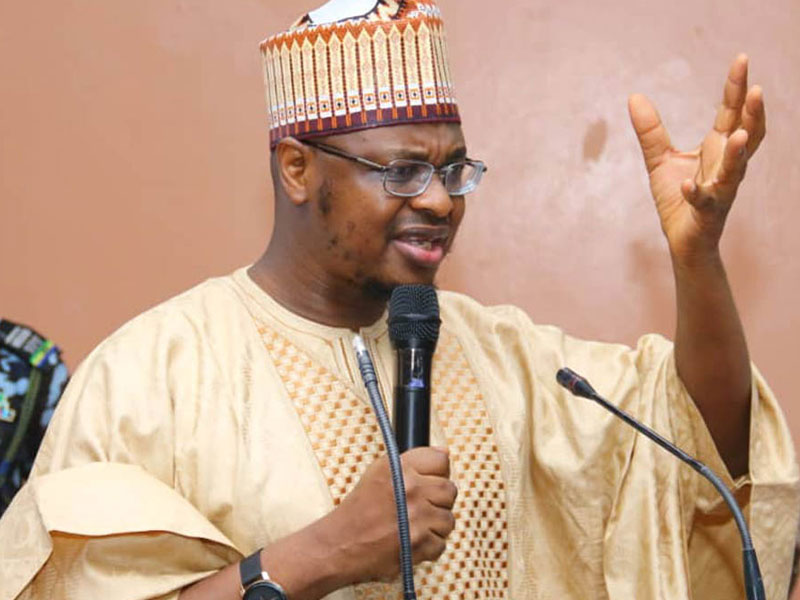
Skills rather than just degrees: A timely professional advocacy

By Engr. Mustapha Habu Ringim

Despite all his official commitments, Prof. Isa Ali Ibrahim Pantami’s internationally recognised contributions to the field of both Digital Economy and Islamic knowledge are unprecedentedly breaking colossal barriers to socioeconomic development in Nigeria and Africa at large. We are grateful to The Almighty Allah, Who has bestowed our society with such a rear gem.

The Islamic scholar and professor of cyber security, Sheik Pantami, is leaving, to some extent, a tripartite legacy for our future leaders to emulate. He is equally fostering a paradigm shift in his professional career and public office as a Minister of Communications and Digital Economy. He is an epitome of a role model, a philosopher with a positive legacy which will serve as a footprint or a sailable path for all potential leaders, academics and religious scholars to tread on.

However, Malam Pantami is building this astounding path against all criticisms from some of his academic colleagues and Islamic and Christian scholars. He patiently stands tall on his two feet. He forges ahead against all social media hypes, just like the flow of rivers, as “rivers never go reverse” – they gradually clear their paths to their destinations, entrenching a memorable route for explorers and navigators to follow passively.

Long before writing his essential book Skills Rather than just Degrees, his advocacy out of which the book was written, has already transformed so many lives, including myself and thousands of graduates of our innovation hub, through the effective programs and seminars conducted by the National Information Technology Development Agency (NITDA) under the excellent leadership of its Director General, a “Digital Transformer”, Kashifu Inuwa CCIE.

Prof. Muhammad Bugaje, the current Executive Secretary of the National Board for Technical Education (NBTE), is another advocate of the same subject. However, his slogan, “Skills but not Degrees”, is a bit tougher. Therefore, I sincerely urge these two erudite professors to actualise an inter-ministerial or agency collaboration between NITDA and NBTE to develop a realistic action plan and strategic roadmap for entrenching ubiquitous skill capital development in our society. 

The National Board for Technology Incubation (NBTI), Industrial Training Fund (ITF) and National Directorate of Employment (NDE) would equally play an essential role in the proposed collaboration. Such agencies are supposed to be under the same umbrella, the way it is done in Morocco, which as a result of their effective work-based learning, has achieved one of the highest economic growth among African countries, as pronounced by the European Training Foundation.

ENGAUSA GLOBAL TECH HUB, publicly recognised as “technical skills enthusiasts”, will formally seek permission from His Excellency Prof. Isa Ali Ibrahim Pantami to translate the book into the Hausa language. The translation will help fit it into the bilingual-based curriculum of ENGAUSA APPRENTICESHIP PROGRAMS. That opportunity would also pave the way for using the translated version in our public awareness programs on Radio, TV and social media. This book succinctly corroborates the mission and objectives of ENGAUSA HUB, as it goes with our motto, “Breaking Barriers and Bridging Gaps”.

Engr. Mustapha Habu Ringim is the founder/CEO of EngausaHub.com.