Iran

Israel accuses Iran of hacking security cameras amid Middle East war

By Sabiu Abdullahi

Israel’s cybersecurity directorate has reported “dozens of Iranian breaches into security cameras for espionage purposes” since the outbreak of war in the Middle East, urging the public to remain alert.

“The directorate is working to alert hundreds of camera owners and calls on the public to change their passwords and update their software to prevent any security risk, whether national or personal,” Cyber Israel wrote on X on Monday.

Cyberattacks have been a recurring feature of the tense relationship between Iran and Israel, with both sides engaging in a shadow war that escalated into open conflict last June and again on February 28.

In December 2025, former Israeli prime minister Naftali Bennett — who plans to challenge incumbent Benjamin Netanyahu in this year’s general election — reported a cyberattack on his Telegram account, claiming hackers had accessed his phone.

Private messages, videos, and photographs allegedly taken from Bennett’s phone were later posted on a hacker site named after “Handala,” a character symbolizing the Palestinian cause, and on a related X account.

AFP quoted a cybersecurity expert noting that Iran-linked hackers intensified their activities in the region following attacks on the country.

Israeli cybersecurity firm Check Point highlighted in a report that since the start of the US-Israeli offensive on February 28, hackers have frequently accessed surveillance cameras, which are widely deployed but often poorly secured.

The images were reportedly used to evaluate damage from attacks and to “gather the necessary information” on “the habits (of targeted individuals) or locations to hit,” Gil Messing, head of cyberintelligence at Check Point, told AFP.

Messing added that the hackers “are part of (Iran’s) army” and “are largely supported by the state,” particularly by the Revolutionary Guards and the ministry of intelligence and security.

Last week, the Financial Times reported that Israel had monitored nearly all of Tehran’s traffic cameras for years in preparation for the operation that killed Iran’s supreme leader, Ali Khamenei, on the first day of the offensive.

Pentagon chief Hegseth promises ‘most intense day’ of US strikes as Iran war escalates

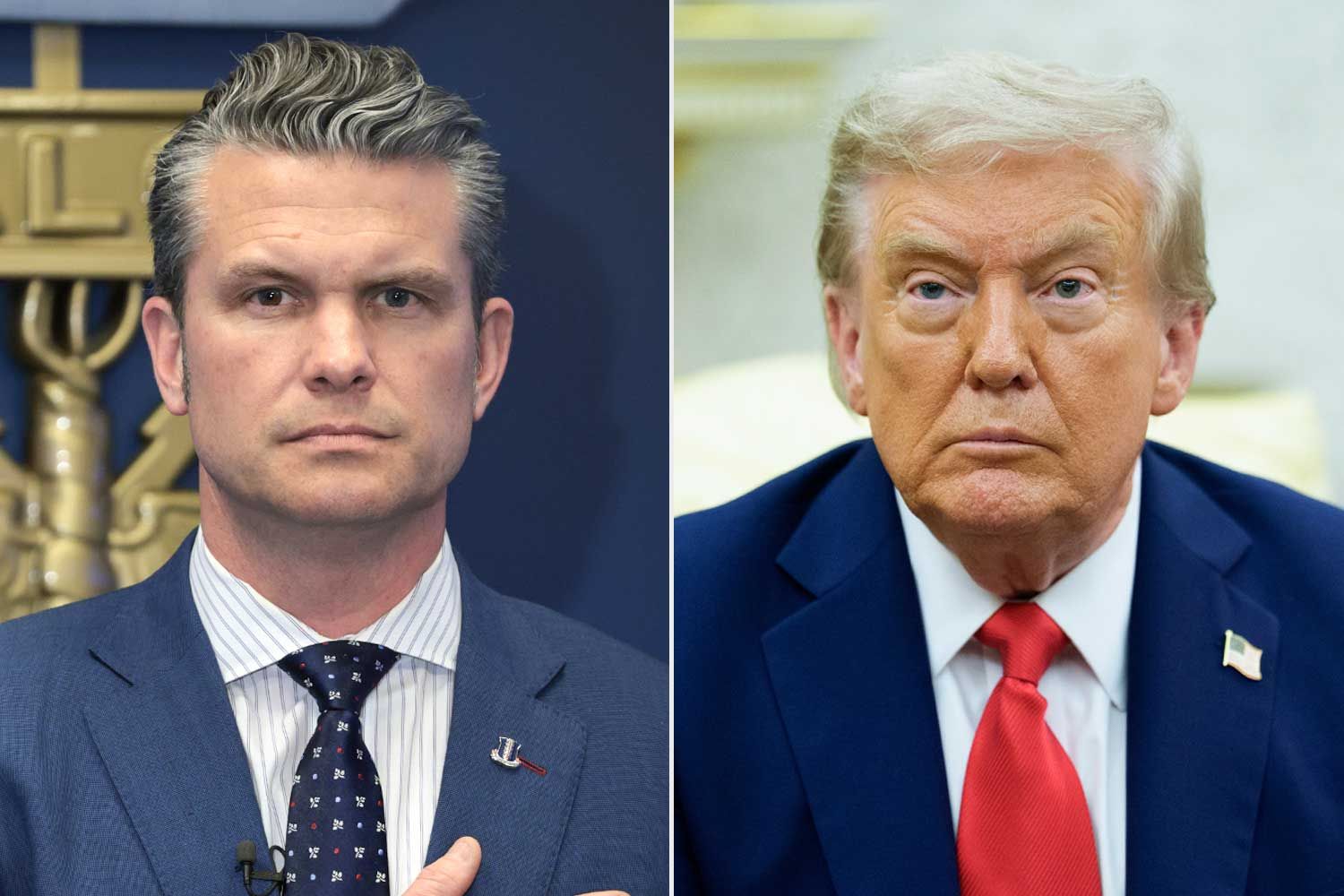
United States Secretary of Defence Pete Hegseth has said American forces are preparing for what he described as the most intense round of strikes against Iran since the conflict began.

Hegseth made the remark during a briefing with reporters on Tuesday. He stated that the United States believes it is gaining the upper hand in the war. However, he declined to give a timeline for when the fighting might end. He said President Donald Trump will determine the pace of the campaign.

According to the Pentagon chief, Washington’s military operations are focused on weakening Iran’s missile capacity, destroying its naval forces and ensuring that Tehran can never obtain nuclear weapons.

“We will not relent until the enemy is totally and decisively defeated,” Hegseth said.

“We do so on our timeline and at our choosing. For example, today will be yet again, our most intense day of strikes inside Iran – the most fighters, the most bombers, the most strikes.”

Despite the claims from Washington, Iranian leaders have projected defiance. They have promised that the country will continue to resist the attacks.

“Those mightier than you have not been able to eliminate our nation. Those who have tried have become eradicated themselves,” Iranian official Ali Larijani wrote in a social media post on Tuesday.

Iran has repeatedly denied that it is pursuing nuclear weapons. Authorities in Tehran insist the country’s nuclear programme is peaceful. The denial comes despite earlier claims by President Trump that US strikes in June 2025 had “obliterated” Iran’s nuclear programme.

The conflict has already led to heavy casualties. US and Israeli strikes have killed Iran’s Supreme Leader Ali Khamenei along with more than 1,250 other people. Iran has responded with missile and drone attacks against Israel and other targets across the region.

Iranian forces have also targeted oil facilities in several Gulf countries. The military campaign has disrupted shipping through the Strait of Hormuz, which is one of the world’s most important energy routes. The disruption has pushed global fuel prices higher.

President Trump warned Iran on Monday that it would face “death, fire, and fury” if it continued to block oil shipments through the strategic waterway.

Larijani responded with a warning of his own. He said the strait “will either be a Strait of peace and prosperity for all or will be a Strait of defeat and suffering for warmongers”.

Top US General Dan Caine said American forces are still tracking and striking vessels suspected of laying naval mines in the Gulf. He noted that Washington has not yet decided whether the US Navy will escort oil tankers through the strait.

“If tasked to escort, we’ll look at the range of options to set the military conditions to be able to do that,” Caine said.

The war has also revealed differences in military priorities between the United States and Israel. Last week, Israeli forces struck oil depots in Tehran. The attack triggered large fires and thick smoke across the Iranian capital. The move attracted criticism from some supporters of the war.

Hegseth acknowledged that Israel has its own objectives in the conflict. He indicated that attacks on Iran’s energy infrastructure were not a primary US goal.

“Israel has been a really strong partner in this effort. Where they have different objectives, they pursued them. Ultimately, we’ve stayed focused on ours,” he said.

Questions remain about the long-term aim of the war. President Trump has offered different explanations in recent weeks. His statements have ranged from promoting “freedom” for Iranians to suggesting that a new Iranian leader from within the country’s political system could emerge and cooperate with US and Israeli demands.

When asked how long the conflict might last, Hegseth said the final decision rests with the president.

“The president has set a very specific mission to accomplish, and our job is to unrelentingly deliver that. Now, he gets to control the throttle. He’s the one deciding.”

Sirens heard in Jerusalem after Israel warns of Iranian missiles

By Sabiu Abdullahi

Air raid sirens sounded across Jerusalem and parts of central Israel on Tuesday after the Israeli military alerted residents about missiles launched from Iran. The development came on the 11th day of the ongoing conflict involving the United States, Israel, and the Islamic Republic.

The Israeli military confirmed that its air defence units had been activated in response to the incoming threat. In a statement, the military said, “Defensive systems are operating to intercept the threat.” Shortly after the warning, journalists from AFP reported hearing at least one explosion in Jerusalem.

Emergency service provider Magen David Adom said it had not recorded immediate casualties from the missile attack. However, the agency disclosed that some individuals were hurt while trying to reach shelters. It also stated that several others required medical attention due to shock. According to the service, its teams were attending to “a small number of people who were injured on their way to protected areas, as well as individuals suffering from anxiety.”

Officials said the latest missile strike followed a series of attacks that began after Iran responded to joint military actions carried out by the United States and Israel. First responders reported that at least 11 people have died in Israel since Iran started launching missiles in retaliation. Dozens of others have also sustained injuries.

On Monday, emergency workers reported that shrapnel killed one man and critically injured another in central Israel. Explosions were heard in the area after the Israeli military announced that missiles had been fired from Iran.

Meanwhile, Israeli Prime Minister Benjamin Netanyahu stated that the country’s military campaign against Iran would continue. In a statement issued on Tuesday, he said the operation was “not done yet.” His remarks came after US President Donald Trump suggested that the conflict could end “soon.”

Putin dares US, pledges “unwavering support” to Iran’s new Supreme Leader

By Sabiu Abdullahi

In what appears to be a daring move against the United States and its allies, Russian President Vladimir Putin has expressed support for Iran’s new Supreme Leader, Mojtaba Khamenei, after the cleric was appointed by the country’s Assembly of Experts.

Putin congratulated the 56-year-old on Monday. He said he believed the new leader would continue the legacy of his father, the late Ayatollah Ali Khamenei, who was killed in recent US-Israeli strikes.

The Russian leader said he was confident Mojtaba Khamenei would carry out his responsibilities “with honour” and unite the Iranian people “in the face of severe trials”.

Putin also reaffirmed Moscow’s position on Iran. He said Russia wished to confirm “unwavering support ‌for Tehran and solidarity with ⁠our Iranian ⁠friends”.

Iran and Russia have maintained close ties since the collapse of the Soviet Union in 1991. During the current conflict, reports have suggested Moscow may have supplied intelligence that helped Iranian forces target American positions. The White House has not denied those reports, although Russia has not formally entered the war on Iran’s side.

China has also reacted to the leadership change in Tehran. Beijing warned against any attempt by the United States or Israel to target Mojtaba Khamenei during their military campaign.

Meanwhile, the conflict in the Middle East has continued to intensify. Israel launched fresh air strikes on several Iranian locations, including Tehran, Isfahan and parts of southern Iran. Israeli officials said the attacks were directed at key infrastructure.

Thousands of Iranians gathered in major cities to show support for the new leader. Crowds assembled at Enghelab Square in Tehran and Naqsh-e Jahan Square in Isfahan. Many people carried Iranian flags and portraits of Mojtaba Khamenei while pledging loyalty to him.

In Washington, US President Donald Trump said any decision to end the war would involve both the United States and Israel.

“I think it’s mutual… a little bit. We’ve been talking. I’ll make a decision at the right time, but everything’s going to be taken into account,” Trump told The Times of Israel.

He also claimed the military action prevented a larger threat from Iran.

“Iran was going to destroy Israel and everything else around it… We’ve worked together. We’ve destroyed a country that wanted to destroy Israel,” he said.

Trump declined to comment directly on Mojtaba Khamenei’s appointment as Iran’s new supreme leader, saying only: “We’ll see what happens.”

Diplomatic efforts to calm the crisis are also under way. British Prime Minister Sir Keir Starmer said his government is working with partners to reduce tensions in the region.

French President Emmanuel Macron has travelled to Cyprus for talks with President Nikos Christodoulides on regional security. France has deployed naval forces to the Mediterranean and says it will help defend British bases on the island while Royal Navy ships are absent.

US senator says war on Iran could bring huge financial gains

By Sabiu Abdullahi

A senior United States senator has suggested that the ongoing war against Iran could bring major economic benefits if the current Iranian government collapses.

Republican Senator Lindsey Graham, who has long supported military intervention abroad, made the remarks during an interview with Fox News on Sunday. He said it would be worthwhile for Washington to invest resources in removing Iran’s leadership.

“When this regime goes down, we are going to have a new Middle East, and we are going [to] make a tonne of money,” Graham said.

The veteran lawmaker has been one of the most outspoken supporters of the US-Israel war against Iran under President Donald Trump’s administration. He also appeared to link recent US actions abroad to control over global oil supplies.

“Venezuela and Iran have 31 percent of the world’s oil reserves. We’re going to have a partnership with 31 percent of the known reserves. This is China’s nightmare. This is a good investment,” he said.

Iran strongly rejected the claims and accused Washington of attempting to divide the country in order to control its natural resources.

Iran’s Foreign Ministry spokesman Esmaeil Baghaei said the United States had a clear plan to weaken the country and take over its oil wealth.

“Their design is clear, their enterprise is quite obvious – they aim at partitioning our country to take illegal possession of our oil riches,” he said. “Their objective is to violate our sovereignty, defeat our people and undermine our humanity.”

Graham also warned that US and Israeli attacks on Iran could intensify in the coming weeks. He issued a strong warning to Tehran over threats to shipping routes in the Strait of Hormuz.

The senator said the US was ready to escalate military pressure.

The Trump administration has defended the strikes against Iran. President Trump said the Iranian government posed a serious danger to Americans.

“An Iranian regime armed with long-range missiles and nuclear weapons would be a dire threat to every American,” Trump said on March 2.

However, some analysts and legal experts have questioned the justification for the military action. They said the claim that Iran posed an immediate threat lacks legal backing under international law.

The conflict has also affected the global economy. Oil prices have risen above 100 dollars per barrel since the fighting began. Iranian missile and drone attacks have targeted Gulf countries that host US military bases. These include Saudi Arabia, the United Arab Emirates, Qatar, Kuwait and Bahrain. The strikes have disrupted oil and gas production and forced several countries in the region to close their airspace.

Reports also show that Graham held several meetings with Israeli officials before the war began. He said he had discussions with members of Israel’s intelligence agency, Mossad.

“They’ll tell me things our own government won’t tell me,” Graham said.

According to the Wall Street Journal, the senator also spoke with Israeli Prime Minister Benjamin Netanyahu during his visits. The report said Graham advised Netanyahu on how to persuade President Trump to support military action.

Netanyahu later presented intelligence information to Trump that helped convince him to approve the joint attacks on Iran, the senator said.

Israel has repeatedly claimed that Iran intends to develop nuclear weapons. Tehran denies the accusation and insists its nuclear programme is designed for civilian purposes.

The International Atomic Energy Agency has also said there is currently no evidence of a systematic programme by Iran to produce nuclear weapons.

Graham has supported several US military operations in the Middle East during the past two decades. These include the 2003 invasion of Iraq, as well as interventions in Syria and Libya.

During the interview, he also urged Saudi Arabia and the United Arab Emirates to join the fight against Iran.

“Yeah. I want them to get into the fight. We sell them weapons. Iran is striking their country; they have good capability,” he said.

Graham’s remarks also suggested that US attention could shift to Cuba in the future.

“You see this hat? ‘Free Cuba.’ Stay tuned. The liberation of Cuba is upon us. We’re marching through the world. We’re clearing out the bad guys. Cuba is next.”

Iran’s next leader must get U.S. approval or won’t last – Trump warns

By Uzair Adam

U.S. President Donald Trump on Sunday warned that Iran’s next supreme leader would not remain in power for long without Washington’s approval, as Tehran prepares to announce a successor to the late Ayatollah Ali Khamenei.

Nine days after joint U.S.–Israeli strikes on his compound killed Khamenei and triggered a wider Middle East conflict, Iran’s Assembly of Experts met behind closed doors and selected a new leader, members of the body said.

The clerics did not disclose the identity of the chosen candidate but indicated that an announcement would be made soon. Some members suggested that Khamenei’s 56-year-old son, Mojtaba Khamenei, could succeed his father.

Trump had earlier insisted that the United States should have a say in the decision and described Mojtaba Khamenei as an unacceptable “lightweight.”

“He’s going to have to get approval from us,” Trump said in an interview with ABC News. “If he doesn’t get approval from us, he’s not going to last long.”

However, Iran’s Foreign Minister Abbas Araghchi rejected the suggestion, saying the leadership decision was solely Iran’s internal matter.

Speaking on Meet the Press on NBC, Araghchi also called on Trump to “apologise to people of the region” over the escalating war.

Mojtaba Khamenei is widely viewed as a hardline conservative, partly because of his close ties with Iran’s Islamic Revolutionary Guard Corps.

Israel’s military has already issued a warning to any incoming Iranian leader, saying it would not hesitate to target them if necessary.

Israel demonstrated its military reach overnight with two new operations — air strikes on fuel depots in and around Tehran and an attack on a hotel in Beirut believed to house suspected Iranian commanders.

Warplanes hit five oil facilities near the Iranian capital, killing at least four people, according to a state oil executive, and sending thick smoke across the city.

Tehran’s governor told the state-run Islamic Republic News Agency that fuel distribution in the capital had been temporarily disrupted.

A dense haze covered the city of about 10 million people, blocking sunlight as the smell of burning fuel filled the air.

Authorities warned that the smoke could be toxic and advised residents to remain indoors, although many buildings had their windows shattered by the force of the explosions.

A 35-year-old resident said the fire had been burning for more than 12 hours and that the air had become difficult to breathe.

“At first, I supported this war. After Khamenei’s death, I celebrated with my friends,” she said in a message sent to Europe. “But since yesterday, people say there is no gasoline left at the stations.”

As the conflict entered its ninth day, Iran’s Revolutionary Guards said they had enough supplies to sustain missile and drone operations across the Middle East for up to six months.

Explosions were also reported over Israel’s commercial hub of Tel Aviv after the Israeli military detected a barrage of Iranian missiles. The emergency service Magen David Adom said six people were wounded in central Israel.

Trump again declined to rule out deploying U.S. ground troops in Iran but insisted the war was close to being won despite continued Iranian attacks.

The U.S. president also spoke with British Prime Minister Keir Starmer on Sunday, according to Downing Street, after previously criticising him over Britain’s involvement in the conflict.

Meanwhile, Iran’s Revolutionary Guards spokesman Ali Mohammad Naini said the country had so far used only first- and second-generation missiles but would soon deploy more advanced long-range weapons.

The conflict has also affected other countries in the region. Authorities in Saudi Arabia said a projectile killed two people and injured 12 in Al Kharj province after a wave of drones was intercepted near the capital Riyadh.

Kuwait reported damage to fuel tanks at its international airport, while Bahrain said a desalination plant had been hit.

Iran’s health ministry said at least 1,200 civilians had been killed and about 10,000 wounded in the war, although the figures could not be independently verified.

In Lebanon, the health ministry reported that at least 394 people had been killed in Israeli air strikes since the country was drawn into the conflict, including dozens of women and children.

Two Israeli soldiers were also killed during clashes in southern Lebanon, according to the Israeli military.

Analysts say there is still no clear path to ending the conflict, which U.S. and Israeli officials believe could last for several weeks.

Trump suggested Iran’s economy could be rebuilt if a leader acceptable to Washington replaces Khamenei.

Meanwhile, China’s top diplomat Wang Yi warned that the war should never have occurred, saying the world “cannot return to the law of the jungle.”

During his Sunday prayer, Pope Leo XIV also called for peace, urging that “the roar of the bombs may cease, the weapons may fall silent, and space for dialogue may open.”

Iran claims American soldiers captured, US denies report

A senior Iranian security official, Ali Larijani, has alleged that Iranian forces captured several American soldiers. However, the United States military has rejected the claim and described it as false.

Larijani made the claim on Saturday in a post on X. He accused Washington of attempting to conceal the alleged incident.

“It has been reported to me that several American soldiers have been taken prisoner. But the Americans claim that they have been killed in action,” Larijani wrote.

He also insisted that the truth would eventually emerge. “Despite their futile efforts, the truth is not something they can hide for too long.”

The United States Central Command (CENTCOM) quickly dismissed the allegation. A spokesperson for the command told Al Jazeera that no American soldiers had been captured.

“The Iranian regime’s claims of capturing American soldiers are yet another example of its lies and deceptions,” the spokesman said.

The exchange of claims and denials comes at a time of heightened tensions in the Middle East. The situation worsened after joint air strikes carried out by the United States and Israel on Iran on February 28. Reports indicate that the attacks killed more than 1,000 people. Those reported dead include Iran’s Supreme Leader Ali Khamenei, over 150 schoolgirls and several senior military officials.

The conflict has increased instability across the region. Tehran has also carried out retaliatory attacks on locations linked to the United States in several parts of the Middle East.

Trump mocks Iran over apology to neighbouring countries after airstrikes

By Sabiu Abdullahi

United States President Donald Trump has mocked Iran after the country apologised to neighbouring states affected by its recent retaliatory airstrikes.

Iran had launched missile and drone attacks on several American military bases located in Gulf countries. The targets included bases in Bahrain, Qatar, the United Arab Emirates (UAE), and Kuwait. The strikes were carried out in response to what Iran described as “preemptive” attacks by the United States and Israel.

Earlier, Iran’s President Masoud Pezeshkian stated that Tehran had no intention of invading neighbouring countries. He called for cooperation among regional nations to promote stability and peace.

“I deem it necessary to apologise to neighbouring countries that were attacked,” Pezeshkian said.

“We do not intend to invade neighbouring countries.”

However, Trump reacted strongly to the apology in a message posted on his Truth Social platform on Saturday. He claimed the apology resulted from continuous military pressure from the United States and Israel.

“Iran, which is being beat to HELL, has apologised and surrendered to its Middle East neighbours,” Trump posted.

“They were looking to take over and rule the Middle East. It is the first time that Iran has ever lost, in thousands of years, to surrounding Middle Eastern Countries.

“They have said, ‘Thank you President Trump’. I have said, ‘You’re welcome!’

“Iran is no longer the bully of the Middle East, they are, instead, ‘The loser of the Middle East’ and will be for many decades until they surrender, or more likely, completely collapse!”

Trump also warned that further military action could follow.

“Today, Iran will be hit very hard!”

He added that Iran’s “bad behaviour” had forced authorities to consider expanding potential targets. According to him, some areas and groups that were previously not included among targets are now under consideration for “complete destruction and certain death.”

Trump mocks Iran over apology to neighbouring countries after airstrikes

By Sabiu Abdullahi

United States President Donald Trump has mocked Iran after the country apologised to neighbouring states affected by its recent retaliatory airstrikes.

Iran had launched missile and drone attacks on several American military bases located in Gulf countries. The targets included bases in Bahrain, Qatar, the United Arab Emirates (UAE), and Kuwait. The strikes were carried out in response to what Iran described as “preemptive” attacks by the United States and Israel.

Earlier, Iran’s President Masoud Pezeshkian stated that Tehran had no intention of invading neighbouring countries. He called for cooperation among regional nations to promote stability and peace.

“I deem it necessary to apologise to neighbouring countries that were attacked,” Pezeshkian said.

“We do not intend to invade neighbouring countries.”

However, Trump reacted strongly to the apology in a message posted on his Truth Social platform on Saturday. He claimed the apology resulted from continuous military pressure from the United States and Israel.

“Iran, which is being beat to HELL, has apologised and surrendered to its Middle East neighbours,” Trump posted.

“They were looking to take over and rule the Middle East. It is the first time that Iran has ever lost, in thousands of years, to surrounding Middle Eastern Countries.

“They have said, ‘Thank you President Trump’. I have said, ‘You’re welcome!’

“Iran is no longer the bully of the Middle East, they are, instead, ‘The loser of the Middle East’ and will be for many decades until they surrender, or more likely, completely collapse!”

Trump also warned that further military action could follow.

“Today, Iran will be hit very hard!”

He added that Iran’s “bad behaviour” had forced authorities to consider expanding potential targets. According to him, some areas and groups that were previously not included among targets are now under consideration for “complete destruction and certain death.”

Trump says he must play role in choosing Iran’s next leader

By Sabiu Abdullahi

U.S. President Donald Trump has said he must play a part in selecting Iran’s next leader following the death of the country’s Supreme Leader, Ali Khamenei.

Trump made the remark during an interview with Axios on Thursday. He said Mojtaba Khamenei, the 56-year-old son of the late Iranian leader, appears to be the most likely successor. However, the U.S. president rejected the possibility of him taking over the position.

“They are wasting their time. Khamenei’s son is a lightweight,” Trump said. “I have to be involved in the appointment, like with Delcy [Rodriguez] in Venezuela.”

Rodriguez became Venezuela’s acting president in January after U.S. forces entered Caracas, arrested then-President Nicolas Maduro and transferred him to New York to face drug-related charges. After Rodriguez assumed office, Trump described Venezuela as “our new friend and partner” and said her administration had supplied the United States with millions of barrels of oil.

Trump stressed that Washington would not accept a new Iranian leader who intends to continue the policies of the late supreme leader.

“Khamenei’s son is unacceptable to me,” he told Axios. “We want someone that will bring harmony and peace to Iran.”

He repeated the position in a separate interview with Reuters.

“We want to be involved in the process of choosing the person who is going to lead Iran into the future. We don’t have to go back every five years and do this again and again.”

Reports from the New York Times indicate that Mojtaba Khamenei has emerged as the leading candidate for the role after several meetings of Iran’s Assembly of Experts. The cleric, who has largely stayed away from public attention, studied Islamic theology and is known for holding hardline conservative views.

The comments from Trump come days after the United States and Israel launched a large-scale military operation against Iran. The strikes targeted multiple locations across the country. A humanitarian organisation reported that more than 1,000 people lost their lives during the attacks.

Iran responded with missile strikes on Israel, Qatar, Kuwait, the United Arab Emirates and other locations in the region. According to the Pentagon, six American service members have been killed in the conflict.

Military activity has continued in recent days. Reports indicate Iranian attacks in Azerbaijan. The U.S. Navy also sank an Iranian vessel in the Indian Ocean. The Pentagon said more than 20 Iranian ships have either been damaged or destroyed.

Soon after the first strikes, the Trump administration offered several explanations for the operation, which it named “Epic Fury.”

Vice President JD Vance said the campaign aims to stop Iran from developing nuclear weapons. Secretary of State Marco Rubio stated that the action followed indications that Israel planned to attack Iran. Trump also suggested the operation could lead to political change in Iran. He wrote on Truth Social during the weekend, “This is the single greatest chance for the Iranian people to take back their Country.”

During a press conference on Monday, Trump outlined four major objectives. He said the United States seeks to destroy Iran’s missile capabilities, eliminate its navy, prevent the country from obtaining nuclear weapons and remove the current Iranian leadership.

It remains unclear how long the operation will last. Trump suggested it might take about four weeks but said the United States has the ability to continue longer if necessary.

The military action has drawn mixed reactions in the United States. Many Democrats oppose the campaign and have described it as illegal and strategically flawed. Several Republicans have expressed support for the president, although some have raised concerns in private.

A war powers resolution that aimed to limit the president’s authority over the Iran conflict failed in the Senate earlier this week. Lawmakers in the House of Representatives are expected to vote on a similar proposal.

Public opinion also appears divided. A recent Reuters survey found that only one in four Americans support the U.S. strikes on Iran.

Iran’s government has condemned the attacks. Officials in Tehran described the strikes as illegal and urged the international community to support the country.