Insecurity

Banditry: Governor Masari commands civilians to get firearms

By Uzair Adam Imam

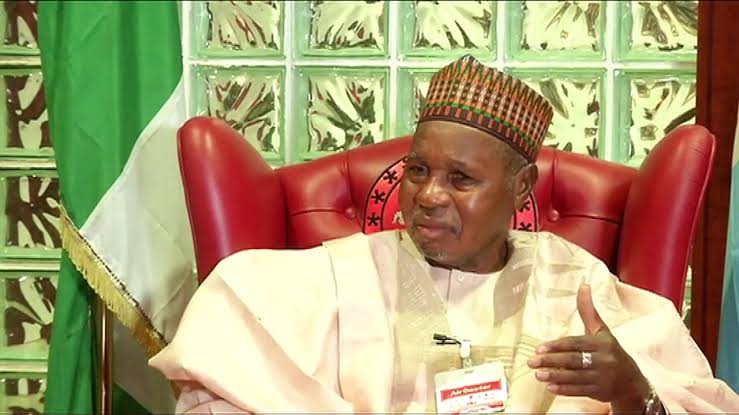
Governor Aminu Masari of Katsina State has called on residents of the state to arm themselves and confront bandits, reiterating that it is “Islamically allowed for one to defend himself against attack.”

Masari said the state government would help those who are ready to own arms with the view to help end the menace. The governor lamented that the security officials alone could not tackle insecurity in the state.

Katsina State is one of the states in the northwestern part of the country that has witnessed incessant attacks by bandits. Reports disclosed how hundreds of people had been injured, killed or kidnapped in Katsina this year, with thousands more displaced from their homes.

Governor Masari made the call while speaking during a media parley with journalists at the Muhammadu Buhari House in Katsina. He added that the number of security personnel they have is insufficient to tackle the situation.

Masari was quoted as saying: “It’s Islamically allowed for one to defend himself against attack. One must rise to defend himself, his family and assets. If you die while trying to defend yourself, you’ll be considered a martyr.

“It’s surprising how a bandit would own a gun while a good man trying to defend himself and his family doesn’t have one,” the governor said.

“We’ll support those who come with the initiative to procure arms because residents need to also complement the efforts of security agencies. These people (security agents) don’t have the number to protect the people.

When President Buhari came, he even tried by increasing the number of our security agents, but it’s inadequate. Count it yourself, how many policemen do we have in this country? How many soldiers do we have?

“Even if we say every policeman should go back to his home state, it’ll still not be enough. So, if we fold our arms and decide to do nothing, we’ll be the ones to suffer most,” he lamented.

However, Masari added that the police would register all guns bought by the residents to ensure they are put to the right use.

The role of media in troubling times

By Muhammad Auwal Ibrahim

Nigeria is burning. We have to stop it. We can’t afford to lose our dear nation. But who can be of help? The media has a critical role in extinguishing the fire before it goes out of hand.

Information is power, thereby making the media a powerful tool for sending persuasive messages. The more the messages flow in our societies, the higher their ability to shape public discourse. Media is a powerful tool used in shaping public opinion and thereby changing the way people behave, think, and even live sometimes. Unfortunately, the power elites often use it to achieve their aims. In present-day Nigeria, where things are still falling apart, are the media organisations playing a positive or negative role? 

The media has the role of information dissemination, which is accurate, factual and unbiased to a large and scattered audience. Terrorism and insecurity information is not an exception. Therefore, the media should accurately inform the people about future threats, chaos and fear of terror attacks and how to avert them, should they occur.

Also, the media plays a critical role in every society by holding leaders accountable, especially in times of crisis. However, it should be noted that it is not lawful in any way for the media to undermine national security in the process of discharging such responsibilities. 

 Furthermore, it is no gainsaying that the media have to build a nation and not destroy its existing pillars. The media, in other words, can be said to be fire extinguishers and not fire fuel. Through this process, the media can only promote national security and harmony. 

The media can give several contributions to national growth and development if properly managed. However, when the reverse is the case, they will contribute to national underdevelopment or worse.

It is evident in Nigeria today that some media houses have been diverted from their role to being used to spread hate speech and fake news, which may result in violence or more troubles than the one Nigeria currently battles now. Supporting violence, sensationalism, and hatred will do nothing but add to the already burning fire in this country. However, these are not the responsibilities of the media, and hence, they should take heed.

A veteran journalist, Kadarai Ahmed, said, “Despite numerous examples that exist which have proved, including not too long ago in Rwanda, that the conduct of the media can help in, starting, promoting and perpetuating violence and ethnic strife, we have turned a deaf ear to pleas to not become a tool that enables hate. But we have failed to heed these warnings.”

“We have given platforms to the worst among us, the extremists and the bloodthirsty. We have turned militia leaders and criminals into champions. Instead of us to lead a calm and rational discussion on the existential challenges we face with a view to promoting actionable solutions, we have succumbed to hysteria and the next exciting clickbait headline.”

Therefore, the media can positively contribute to the prevention of terrorism, insecurity, and other threats by specifically portraying how other nations responded to such scenarios and how it yielded positive outcomes without bias. In other words, it is known as development journalism.

Muhammad Auwal Ibrahim is a multipleawardwinning journalist, fellow AIJC 2020, Wits University, Johannesburg, South Africa. He can be reached via awwalbinibrahim@gmail.com.

FG must stop these senseless killings in the North – Ulama Forum

By Aisar Fagge

The Ulama Forum in Nigeria is greatly concerned and saddened over the perpetual killings of innocent lives going on unabated in Nigeria, especially in the North West of the country in recent times.

The forum disclosed this in its press release signed by its secretary, Engr. Basheer Adamu Aliyu, on Monday, December 13, 2021, and sent to The Daily Reality today, Thursday, December 16, 2021.

The statement reads: “Our hearts bleed over the dastardly and inhuman act of burning alive of 23 passengers in Sokoto state. Other equally sad losses of lives that were witnessed in Niger, Kaduna, Zamfara and Katsina states over the last one week are heart touching, frustrating and to say the least unpardonable. It is highly inconceivable how bandits and terrorists move about freely in the land, committing heinous acts and atrocities unchecked by the power of government and its security agencies.”

“The terrorists have desecrated all religious, human and universal values and indeed, they have lost their faith and humanity; they must be confronted head-on with might and power. We most strongly urge the Federal Government of Nigeria (FGN) to sit up to its responsibility of protecting the lives of Nigerian citizens. It would be recalled that in the year 2020, out of similar concern over the deteriorating trend of insecurity, the Ulama Forum had advanced nearly a dozen suggestions to the governments at all levels so as to curb the Boko Haram menace, banditry and other security challenges facing the Northern region.”

“It is sad to note that most of our suggestions were ignored and security situation in the country has been moving from bad to worse,” the Forum lamented.

“Based on the foregoing, we would like to once more urge the FGN to re-assess its security strategies and spending with a view to unfolding a more holistic and all-inclusive approach. We believe that divine intervention is a most potent weapon against the bandits, insurgents and their collaborators.”

“To this end, members of the Forum have resolved to devote themselves to alqunut (special prayer in times of turmoil) during each prayer session. Similarly, special prayers should be observed in Madaaris (Islamiyyah Schools) and other places of gathering.”

“We pray to Allah to give our leaders the listening ears to hear the cries of its weak, terrorised and terrified citizens, particularly in the North. May they have the wisdom, will, determination and ability to do the needful and ensure peace and security in the land. There is no power or strength save in Allah,” it concluded.

The release was endorsed by its members such as:

Prof. Mansur Ibrahim (mni), Sokoto; Dr. Bashir Aliyu Umar, Kano; Dr. Abubakar Muhamad Sani B/Kudu, Jigawa; Dr. Khalid Abubakar Aliyu, Kaduna; Prof. Muhammad Babangida Muhammad, Kano; Dr. Said Ahmad Dukawa, Kano; Prof. Salisu Shehu, Bauchi; Prof. Ahmad Bello Dogarawa, Kaduna; Amir Abdullahi Abubakar Lamido, Gombe; Dr. Ibrahim Adam Omar Disina, Bauchi; Prof. Ahmad Murtala, Kano; Sheikh Tijjani Bala Kalarawi, Kano;

Northern insecurity and politicisation of terror

By Tahir Ibrahim Tahir

It is no longer news that on December 7, 2021, 42 innocent travellers were gruesomely burnt in a bus as they moved through Gidan Bawa village of Sabon Birni local government of Sokoto state. Thirty-five died instantly, and seven survived with very severe burns. May Allah shower their souls with his mercy.

The attack is one of the most horrendous and inhumane acts of the bandits that have since visited Northwestern Nigeria with an orgy of violence. I believe this barbaric act accounts more for Sheikh Gumi excusing himself from speaking on behalf of the bandits than the reason he gave – citing their proclamation by law as terrorists. This heartless, baseless and demonic act of burning a fellow human being alive has laid bare the true nature of what Nigeria has been fighting for so many years.

Fighter jets bombarded many enclaves of the bandits, east of Dumburoum forest in Zurmi, Zamfara, and also in Sokoto and Kaduna states, as well as ISWAP locations in far away Borno state, a day before this inhuman slaughter at Gidan Bawa. It is evidently a reprisal attack and an inadvertent confirmation of the nexus between ISWAP, Boko haram and Bandits – the same hydra-headed terrorism monster.

It is no longer news that northerners are moaning beneath the anguish of the mayhem that these ‘organisations’ have visited upon their people – annihilating human lives like they were crickets. More lives are lost to terror, and there doesn’t seem to be a decline. A 100 lives are lost in a week sometimes. Northerners are increasingly livid over the fact that PMB is a northerner. As President, he ought to secure his northern constituency – letting their governors, legislators, service chiefs and other top government functionaries off the hook for the bizarre and profoundly depressing situation of the North.

It is no longer news that the FG has made massive investments in security, purchasing no less than 60 fighter jets (fighter helicopters, FJ-17s, Super-Tucano, M346 Italian jets) along with battle tanks, MWRAPS, TAVORS, Armored navy vessels, and sophisticated surveillance systems. Bases have been positioned throughout the length and breadth of the war theatre. More boots are on the ground than ever, most definitely more than the civil war. All air assets have been deployed in the North to fight terrorism. So what in God’s name could be the problem?

It is no longer news that the weaponisation of poverty, in the long term, especially in Northern Nigeria, is mainly responsible for the hell pit we’ve found ourselves in. We watched our leaders dig us in and did us in while we egged them on for as long as it favoured us. We genuflected before them, made them take bows, applauded them – and allowed them to go scot-free. The masses and the village dwellers suffered this weaponisation with years of untold hardship, weeping blood. In contrast, we, the elite and the city dwellers, enjoyed all the blood money and whatever elitist pleasures therein. Now the shoe shiner is wielding an AK-47, so is the Maiguard. The herdsman is a warlord, so is the Vectra driver an informant. One of the Northern universities’ security chiefs is a kidnap kingpin, and a Hajiya in the village is the supplier of thousands of rounds of ammunition to bandits. The questions bang your scalp like the heavy August rainfall; who is not a bandit, or a terrorist, or an informant, or a kingpin or some helper of a sort to these terrorists? The North is hardly an image of its once prestigious self, now hunched with woes and barely a shadow of its erstwhile esteem. The hypocrisy screams to the high heavens, muttering sulky and morose invectives at PMB alone as the bane of our problems. Indeed.

It is no longer news that a foreign journalist, in an article titled, “The bandit warlords of Nigeria”, navigated the nooks, crannies and alleyways of bandits in the North, unharmed by these demons; inadvertently betraying the conspiracy of banditry in the North. He waxed politics with the bandits, claiming OBJ and Jona are far better than PMB, who the bandits say stifles Islam! Lord have mercy on our souls. He also erroneously put Fulani bandits as conquest driven Islamic extremists. This faulty description only further lumps Boko haram and Bandits together.

The news headline that should be etched into our consciousness is the reality of Nigeria long being marked as a state for Balkanisation. A proxy war is being fought out with our homeland as the battlefield. Eastern merchants versus western warlords are slugging it out, punch for pound. Islamic North, its idealistic and archaic ways are a thorn in their meal. As they carve their diamonds clean, our population suffers the brunt of their steel.

What is left for us is the Sunna of the Prophet (SAW), backed by his hadith, describing the bigger Jihad as striving for one’s cleansing and towing the path of righteousness – backed by Q22:78. The strange situation in the North is the duty of every northerner to un-knot, un-tie, and crack. Prophet SAW was the last one, so we have to be messiahs unto ourselves.

We must encourage ourselves to eradicate this phenomenon that has become the new Yahoo or money bet of the North. We must expose ourselves and fight ourselves by ourselves. No war ends with a gunshot. It can only start it. So we must sit together, back-benchers, frontliners, warts and all, voodoo if you like – and do the needful. As our faith is in our hearts, so is our fate in our own hands.

Tahir is Talban Bauchi. He wrote from Bauchi via talbanbauchi@yahoo.com.
Forensic Science: An imperative tool for fight against corruption, insecurity, other woes

By Mubarak Shu’aibu

The insecurity challenge in Nigeria has assumed a formidable dimension that requires a stakeholder’s approach as it is being touted in various quarters and, in all honesty, necessitates a call for creativity and long-term work. The alarming rate of insecurity is no less disturbing despite the reform undertaken and a substantial share of the national budgets allocated to the security sector.

The sensation of insecurity citizens of our societies experience is one of the main threats against the quality of life in a democracy. Thus, this has caused public opinion to cry in favour of searching for solutions to the woes.  There is an acceptance that a lot needs to be done to turn the current malaise around, and espousing Forensic Science as a tool should be considered on the list of priorities as it would make a profound impact and or even lay a groundwork for the fight against insecurity. Proof for sexual offences, drugging, cold blood murder, bank robbery, identification of victims and other menaces could be decisively dealt with by forensic techniques.

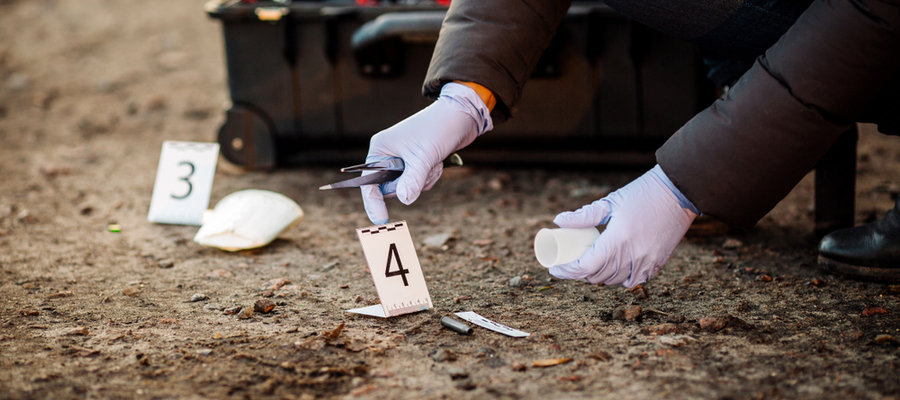
Forensic Science refers to the application of scientific methods in the recovery, analysis and interpretation of relevant materials and data in criminal investigations. It is both an intelligence and evidential tool to assist in the crime management and delivery of justice.

Scientific advances already play an essential role in solving crimes. According to the American National Institute of Justice, since 2009, the institute has funded forensic science projects worth more than $127 million, including approximately $116 million for 269 research awards and nearly $11 million for projects by federal partners. This funding has resulted in more than 900 reports, publications in scholarly journals and presentations. Therefore, it is a wise bit of business in a country like Nigeria, where the criminal activities are devoid of sophistication like that of America, to expend more resources in forensics.

Just as medical, agricultural and economic research are crucial for the advancement of a country, a sustained progression in the research underlying forensic sciences also is critical for advancing safety and the administration of justice. Unfortunately, Nigeria is hooked on instant highs and short-term fixes, which has ultimately and gruesomely halted our general progress as a country.

In retrospect, lack of intrinsic abilities on forensic had many arguing in favour of the Kano State Governor Abdullahi Umar Ganduje when his videos stacking dollars into his pocket were leaked. This event had the public stupefied, including President Muhammadu Buhari, who in the aftermath remarked that he didn’t know the extent of technology used to record the video, a matter that could quickly be settled within a fraction of seconds with good forensics in place.

In a similar terrain, a snake swallowed handsome money in the JAMB office, a fire outbreak in one of the finance offices in Abuja, the recent accident that occurred recording scores of deaths by one of the elite sons and many more stories whose verdicts to date remain surreptitious for Nigerians.

Bringing this to a close, I can say employing forensic science techniques in our fight against lingering insecurity and corruption should be considered inevitable and necessary. That will solve many other problematic issues such as sexual offences, drugging, cold murder, etcetera.

Mubarak Shu’aibu wrote from Bauchi State, Nigeria.

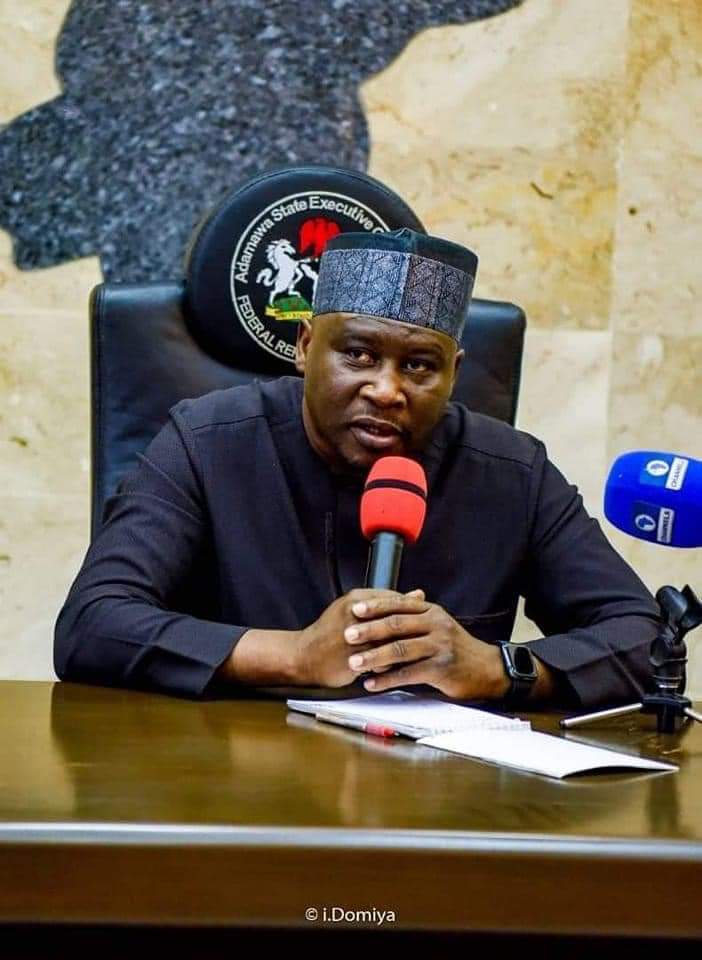
Gov. Fintiri proscribes hunters associations in Adamawa

Adamu Ibraheem Jimeta

The Adamawa State Governor, His Excellency, Ahmadu Umaru Fintiri has declared the Association of Professional Hunters in Adamawa as illegal. In a statement signed by the Chief Press Secretary, Humwashi Wunisiko on Monday, December 6, 2021, stated that “The operations and activities of the hunters have become a source of concern and insecurity instead of the security it is fashioned to provide”.

He further said the hunters’ abuse of rules of engagement and lack of regard to the traditional institution and security agencies in the state, especially in the five local governments of Numan, Demsa, Lamurde, Guyuk and Shellenge have made the decision unavoidable.

The statement reads: “More worrisome is the fact that the association operates independent of any security organization in the 5 Local Government Areas, thereby giving room for suspicion of their motive and intentions especially that they operate in uniforms of our security agencies and at odd hours.”

While emphasizing that security is everyone’s business, Fintiri added, “No group or anybody will be allowed to take the Law into their hands, disrespect to security agencies and traditional institution.”

He finally directed security agencies and traditional institutions to collaborate and ensure that peace is maintained across the state before, during and after the Yuletide and new year festivities.

Kano deploys modern technology to tackle insecurity – Ganduje

By Uzair Adam Imam

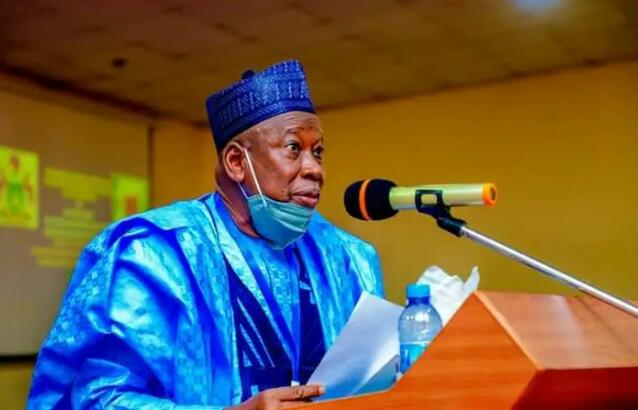
Kano State Governor Dr. Abdullahi Umar Ganduje has stated that his administration has deployed modern technology gadgets such as CCTV to tackle the challenges of insecurity and ensure safety of its citizens and their properties.

The governor made this disclosure in a release signed Monday, 15th November, 2021 by the Chief Press Secretary to the Deputy Governor of Kano State, Hassan Musa Fagge.

It was gathered that Ganduje, who was represented by his deputy, Dr. Nasiru Yusuf Gawuna, was said to have stated this while receiving the General Officer Command of the one division of Nigerian Army Kaduna, Major General Kabiru Imam Muktar who paid him a visit at the Government House, Kano.

According to him, installation and deployment of modern technology has assisted greatly in curbing the criminal acts that before are bedevilling the state.

Ganduje also noted that, Kano is today one of the most peaceful states in the country due to prayers and synergy between the government and all the security agencies.

The statement read: “In Kano we hold regular security meetings so as to analyse our operations and chart ways foward, infact we have included paramilitary agencies into the state security council”.

“The Commander 3 Brigade, I am sure will brief you about our efforts in provision of adequate logistics,” Ganduje said.

He then assured of continued support and cooperation to the Nigerian Army towards ensuring peace and safety of Kano citizens.

Speaking, the General Officer Commanding of the One Division,Nigerian Army Kaduna, Major General Kabiru Imam Muktar said he is on a visit to the Army units and formations under his command in Kano State.

He explained that the first hand information they received from the citizens has assisted them alot in combating crimes.

“The cooperation and support given to us by Kano people has helped tremendously in our effort to contain criminality to the bearest minimum”.

“We are grateful to the traditional rulers and the citizens for their role in curtailing the farmers and herders conflict in the State”.

“I am indeed happy with the cordial relationship between the 3 Brigade and Kano people,” he said.

Major General Muktar while reiterating their commitment towards ensuring security of lives and properties of Kano people, commended the Governor for executing laudable projects in the State.

INSECURITY: El-Rufa’i briefs stakeholders on development

By Uzair Adam Imam

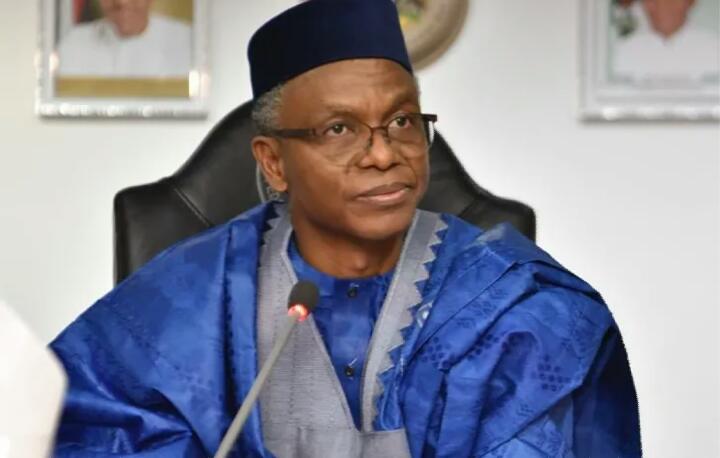
The Kaduna State Government has on weekend held a meeting with the stakeholders to brief them on the incessant security issues bedeviling the state for a very long time and other government policies.

The governor of the state, Malam Nasir El-Rufa’i, chaired the meeting which was held at the Murtala Square, Kaduna.

The purpose of the meeting, however, was to brief the stakeholders on security challenges, adding that the security operatives have been quite successful and security breaches have been reduced.

He added that: “We are not imposing hardship on certain people but they can see the benefits of the actions we have taken.

“We got good suggestions from stakeholders which would be used to modify some of our policies. It has been a very rich and engaging conversation,“ he disclosed.

The governor also promised of the other projects would be completed before he leaves the office, adding that: ” We are pleased with the support clerics were giving to the Religious Preaching Regulatory Council.”

Recalled that the council has been established to ensure that clerics are committed to peace in their preaching and sermons.

El-Rufa’i also assured the stakeholders that number of programmes would be introduced by federal and state governments to reduce the hardship faced by Nigerians.

OBASANJO: Nigeria should have state police

By Hussaina Sufyan Ahmad


The former president of Nigeria, Olusegun Obasanjo has called for the creation of state police while delivering his speech at a lecture titled, ‘Social responsibility in nation building,’ to mark the 78th anniversary of Island Club in Lagos, on Friday.


Obasanjo said Nigeria needs state police to efficiently tackle the insecurity challenges of the country. He said only a safe environment can guarantee nation building.


According to Obasanjo:

“I have said it before and I will say it again. Nigeria should have state police all over the various states so that insecurity can be tackled efficiently. uaranteeing citizens a safe environment and round security is one thing a government must do.


No nation can be built where peace, security and stability are not guaranteed and with reasonable predictability of the President and the future not enthroned.”

Nigeria’s Development: The Daunting Doom

By Lawi Auwal Yusuf

Leaders are preoccupied with self-centred political hustles, party meetings, extravagant banquets and flying their private or chartered jets over the country attending various lavish occasions. On the contrary, Nigerians turned wistful and sad about the terrible fate of the country and the gloomy future. As they get more concerned, their hope becomes less.

The country is endowed with efficacious potentials for its development to become a global power. It has a strategic location, sizable landmass, enormous young population, highly educated elites and abundant natural resources. In addition, favourable climate, fertile farmlands, and the shores that give it access to the Atlantic Ocean in the South are all added advantages.

In the last sixty-one years, Nigeria has reaped hundreds of billions of petrodollars in total revenues as one of the major producers and exporters of oil to the global market. It is the 12th largest producer of oil in the global ranking, 8th largest exporter and the 10th largest proven reserves. According to the Department of Petroleum Resources, it has about 159 oil fields and 1481 wells in production.

Apart from petroleum resources, Nigeria has multiple precious mineral resources in massive deposits. Moreover, cocoa is the largest foreign exchange earner to Nigeria besides oil and rubber, the second largest.

Similarly, as the most populous state in Africa and the 7th in the world with over 211 million people, Nigeria is a vast market. Its mixed economy is the largest on the continent. It is the 27th largest economy in the world by nominal GDP as of 2021 estimate. By GDP per capita, it is the 137th in the global ranking and the 25th largest by PPP.

However, these unique and extraordinary endowments are rare for a country to possess. These are the best opportunities and possibilities for its advancement. Unfortunately, poor leadership, endemic corruption and mismanagement have been the greatest obstacles in realising the potential. These precious endowments were not genuinely and diligently used. Hence, it has not made appreciable progress in those years. Had they been utilised at the best and maximum capacity, the sky would have been the limit.

More than 40% of Nigerians are living below the poverty benchmark in May 2020 estimates. They are destitute and cannot afford the three daily meals. Today, pervasive poverty depicts the lives of most Nigerians. The life expectancy is as low as 54.7 years on average. Infant mortality reached 74.2 deaths per 1,000 live births in 2019, and maternal mortality was 814 per 100,000 live births in 2015.

Moreover, the stagnant economy, inflation and the perpetual falling value of the naira have aggravated the plight of the masses, making life worse, more challenging and more miserable for ordinary Nigerians. There has been a swift rise in the cost of living and a concurrent decline in the living standard. Therefore, poverty, inequality, mass idleness, underemployment and wretchedness are at the highest pinnacle. This made Nigeria always emerge winner of the global rankings of the poorest nations.

It is appalling that the masses are becoming poorer while the nobles are getting more affluent. There has been a persistent widening inequality between the rich and the poor. Transparency International ranked Nigeria 136th out of 182 in the 2014 Corruption Perceptions Index. It was estimated that more than $400 billion were embezzled by corrupt leaders from independence to 1999. Nonetheless, President Muhammadu Buhari in 2015 said that corrupt officials had squandered more than $150 billion in the last decade. As a result, the country is synonymous with corruption. And the most astonishing is that it is among the wealthiest countries and also the poorest simultaneously. This is because the state wealth is enjoyed only by the aristocrats while the commoners are destitute.

Rule by theft known as ‘kleptocracy’ has deteriorated into kleptomania. They are strongly obsessed with stealing to the level that they don’t even have a material need for it. It degenerated into highly competitive accumulation syndrome. The monies that are ideal for the development of Nigeria are stashed at its detriment in Western countries and therefore become beneficial to their contented economies.

On the other hand, in the early 1960s, Nigeria was self-sufficient in food. But after the Civil War in 1970, the government failed to reinvigorate agriculture, resulting in failure to meet the acute population growth. It had to depend primarily on importation to fill up the supply gap. Sadly, in the 21st-century world, farmers are still tilling the ground with simple implements like hoes and cutlasses to feed a population of over 200 million. As of 2010, almost 30% of Nigerians are employed in agriculture and still have not met up the national demand.

The leaders had failed to provide the basic necessities of life to the citizens. As a result, after more than six decades of self-governance, there is no stable electricity supply, safe drinking water, standard healthcare, adequate and affordable food, qualitative education, social housing estates, infrastructures and social amenities. Nonetheless, the problems of the country in the1960s are yet to be resolved. Poverty, corruption, rule by theft, secessionism, tribal and religious antagonisms are lingering today. Regrettably, terrorism, kidnappings, cattle rustling, banditry and other current collective problems have deepened the crises.

Not being able to diversify the monocultural economy that largely depends on oil plays a significant role in the economy, accounting for 40% of GDP and 80% of the government earnings. Moreover, Nigeria does not adequately exploit the vast array of mineral resources in colossal deposits while the mining industry is still in its early stage of development. Moreover, other sectors of the economy that will help tremendously grow the economy and raise revenues are also underdeveloped. Contrarily, it has remained a perennial borrower of funds in the global capital market. Recently it emerged as the 5th most debt-ridden country in the world. The World Bank in August 2021 said that it had accumulated $11.7 billion in debt.

There has been deficient human development, especially the youths folk. In 2019, it ranked 161st in the world in the Human Development Index with a 0.539 score, which was very low. Millions of school-age children are out of school while some wander the streets freely with torn-out clothes and scavenging through rubbish looking for food. These miserable children are left on their own to live their entire unwholesome lives on the streets in search of a living. They have no qualifications or skills to make them employable in the labour market. Similarly, graduates searching for employment happened also to be idle many years after they had left school. Therefore, almost half of Nigerians are unemployed.

Furthermore, the emigration by professional Nigerian doctors to the diaspora known as the “brain drain” due to adverse working conditions in the country led to shortages of doctors in the healthcare system. It was estimated in 1995 that roughly 21,000 indigenous doctors were working in America alone, which was almost equal to those in the public health service then.

When you make a comparative analysis between Nigeria and its peers to assess its performance, you will realise that it had performed poorly. For example, look at the High Performing East Asian Economies (HPEAEs) that include Malaysia, Taiwan, Thailand, Singapore, Indonesia, South Korea and Japan. They are the fastest-growing economies in the world after the first world countries. Some had launched rockets into space. They manufacture aircraft, ships, automobiles, computers and smartphones while Nigeria still imports razor blades, pencils, toothpicks, including its most abundant petroleum products. Singapore and Japan developed from the less developed countries and joined the first world nations.

Look at other countries like UAE, India, Brazil and South Africa that recently established a consociational democracy in 1994. Nigeria played a significant role in fighting the apartheid regime and helped in establishing the multiracial democracy in the country. South Africa is now regarded as a highly developed state and has become a better haven for Nigerian youths who emigrated there in search of greener pasture.

Finally, Nigeria still has the chance to do better and start developing once more to realise its long-lost potential.

Lawi Auwal Yusuf wrote from Kano. He can be reached via laymaikanawa@gmail.com.