Identity

NIN to serve as tax ID for Nigerians from January 2026

By Muhammad Abubakar

The National Identification Number (NIN) issued by the National Identity Management Commission (NIMC) will automatically function as a Tax Identification Number (Tax ID) for Nigerians starting from January 2026, the Federal Inland Revenue Service (FIRS) has announced.

According to the FIRS, the policy is part of broader efforts to harmonise government databases, improve tax administration, and expand the country’s tax net. By linking tax records directly to the NIN, authorities aim to reduce duplication, enhance compliance, and make it easier for individuals and businesses to fulfil their tax obligations.

Officials said the integration would streamline identification across government services while strengthening transparency and efficiency in revenue collection.

Nigerians are therefore encouraged to ensure their NIN details are accurate and up to date ahead of the January 2026 implementation.

The move aligns with ongoing digital reforms by the Federal Government to modernise public administration and improve service delivery nationwide.

Measuring the impact of strategic stakeholder engagement in the identity ecosystem

By Muhamad Mikail

In today’s interconnected and accountability-driven environment, a stakeholder is anyone who has an interest in or influence over an organisation, ranging from employees, customers, investors, and regulators to local communities and advocacy groups. Stakeholder engagement is a strategic process that involves informing, consulting, collaborating with, and responding to these groups to ensure transparency, secure buy-in, manage risks, and incorporate feedback into project planning and execution. According to the International Association for Public Participation (IAP2), stakeholders are those who are “affected by or can affect the outcome of a decision or project,” making their inclusion vital to successful outcomes.

A 2020 McKinsey & Company report found that organisations that engage stakeholders meaningfully tend to perform better across both financial and social metrics, and are 2.3 times more likely to outperform their peers. The World Bank now requires stakeholder engagement in all funded projects, and frameworks like the Global Reporting Initiative (GRI) emphasise stakeholder inclusiveness as a core principle of sustainable reporting. In this context, stakeholder engagement is no longer a courtesy—it is a strategic imperative for organisations seeking long-term relevance, impact, and resilience.

Since it became effective in December 2021, the Nigeria Digital Identification for Development Project has sought to have a proactive and open relationship with its stakeholders, across public and private institutions, ministries, departments and agencies, the media, Front End Enrolment Partners, Non-governmental organisations, Civil Society Organisations, disability clusters and women’s forums. This consistent stakeholder engagement is viewed as being fundamental to the core development objective of the Project, which is “to increase the number of persons with a national identity number issued by a robust and inclusive foundational ID system that guarantees their access to services”. This is to ensure the provision of a verifiable means of identification (NIN) for all Nigerians and legal residents of Nigeria. 

Thus far, the Project has successfully organised stakeholder consultation workshops annually for critical stakeholders in the ID sector across Nigeria. Importantly, these consultations elicited feedback and synergy on areas of collaboration, building on established networks and structures across communities and ward levels. Reports of these consultation workshops have been published in three national dailies, which serve as a means of reporting back to stakeholders on the progress of implementing their recommendations and suggestions. 

It is worthy of immense applause that the Project, through the Ecosystem Coordination Strategic Unit, (ECSU) in manner yet to be replicated in the country and anywhere else in the world supported the then Nigeria Data Protection Bureau headed by Dr Vincent Olatunji, devised a master stroke strategy of engaging critical stakeholders in the digital economy ecosystem, data protection thought-leaders, cybersecurity experts, policy makers, technocrats, NGOs, CSOs, development partners and even politicians in the drive to the drafting, passage of the data protection bill and eventual assent by President Bola Ahmed Tinubu on the 12th of June 2023 all under one year. This eventually gave rise to what is now known as the Nigeria Data Protection (NDP) Act of 2023, which led to the establishment of the Nigeria Data Protection Commission. 

Furthermore, the Project Coordinator of the Project Implementation Unit, Mrs Tito Ejenavi said in a speech delivered at the opening of training for over 7,157 revalidated Front End Enrolment Partners and agents, that the PIU is part and parcel of  NIMC and has supported the National Identity Management Commission in entering several partnerships that have benefited underserved communities, disability clusters and several women forums including taking enrolment to their communities, test of accountability scorecards and assignment of special enrolment agents to enrol persons with disability, drafting and validation of disability policy, inclusion strategies, incentivisation of enrolment partners using the business model and billing solution, aided by the geo-spatial mapping of all communities and cities in Nigeria.  The NIMC is also collaborating with the National Social Safety Net Coordinating Office to enrol the poorest of the poor into the National Social Register and validate the Social Register using the NIN. 

As a result of this engagement and numerous other initiatives, NIN enrolment figures and data have improved by millions each month. From January 2022 when enrolment for the NIN stood at seventy-two million, seven hundred thousand, three hundred and sixty (72, 700, 360) and May 2025, enrolment currently stands at one hundred and nineteen million, six hundred and twenty-three thousand, two hundred and twenty-nine, a whopping addition of forty-six million, nine hundred and ninety-two thousand, eight hundred and sixty-nine. This accounts for a 48.80% increase in the number of people enrolled and issued a National Identification Number, NIN. 

Establishing and maintaining good relationships requires a long-term horizon, involving taking varied steps and making different, far-reaching decisions. The NIMC through the Project Implementation Unit, PIU of the NDID4D Project have invested heavily and strategically in the training and retraining of grievance redress representatives across the 36 states of Nigeria who across all NIMC centres are to serve as the first points of contact for any aggrieved enrolee, enrolment agent or residents of the host communities especially when such situation is tied to enrolment for the NIN or any other services that the NIMC currently offers.  

Concerted Efforts are being made through CSOs and women’s forums, such as the Federation of Muslim Women Association of Nigeria (FOMWAN), to personalise relationships with communities across the federation. This is achieved by building on their already established structures and networks, and working through their employees to create links with local communities and drive inclusion. Grievance redress has taken centre stage with the establishment and expansion of a NIMC 24/7 toll-free line to address grievances from anywhere in the country. The DG/CEO of NIMC, Engr. Abisoye Coker Odusote has been quoted in several official events stating that NIMC takes grievances seriously and will address them in a reliable and timely manner. 

It is worth noting that strategic stakeholder engagement is a key strategy for governments, organisations, and community groups in developing coherent policies and projects. It is our sincere hope that many more sustainable and people-centred reforms will be pursued in the drive to reposition our digital identity ecosystem, thereby helping to enhance the growth of our digital economy.  I therefore call on the National Assembly to expedite the passage of the amendments to the NIMC Act of 2025, as forward-thinking legal reforms like the NIMC Act amendment hold the key to unlocking the limitless benefits of the Fourth Industrial Revolution.

Muhammad Mikail is a Communications Professional and writes from Abuja. He can be reached via muhammadnmikail.mm@gmail.com.

Language and the specific gravity of identity

By Prof. Abdalla Uba Adamu

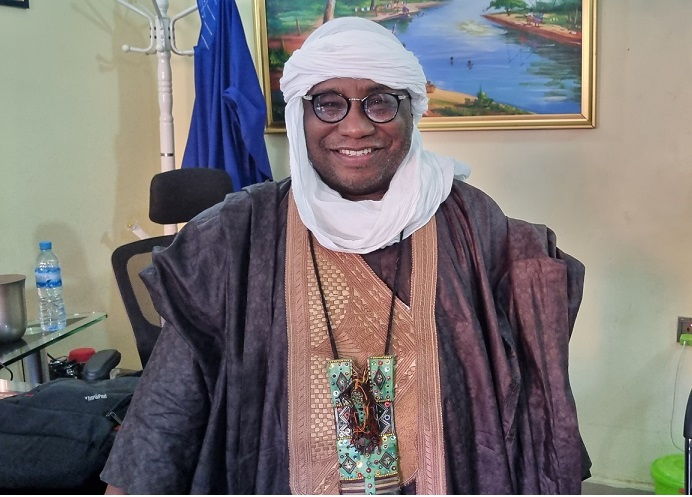
Muhsin Ibrahim had started a very interesting thread on his Facebook wall about language usage in northern Nigeria. Basically, the argument is about whether predominantly Hausa (his publics) should intensify their use of English in public discourse, especially now that things are getting more virtual. There has been a lot of resistance in using English among the Hausa because of the belief that using English (or other languages, except Arabic) leads to the erosion of identity. Muhsin urges the Hausa to embrace or at least immerse themselves as much as they can in the English language to gain a competitive advantage. I agree with him.

The arguments against the use of English are predicated upon language and identity. Generally, language symbolizes our identity and conveys identities to those who speak them. But how true is this in an interconnected world? I have a friend whose children were born in Hong Kong. They are adults now. They hardly speak Hausa. Does that make them Chinese? Imagine an Urdu-speaking Pakistani immigrant whose children were born in Wales and do not speak Urdu. Does that make the children Welsh?

In South Africa, the apartheid regime used language as one of the yardsticks, besides skin colour, to develop its divide-and-rule ideology against the black population. If a Black South African somehow was able to speak fluent Afrikaans, does that shifts his identity and make him White? I have encountered Hausa merchants in the Deira section of Dubai’s textile market speaking fluent Hindi – are they then Indians?

I once encountered a Yoruba mechanic in Gusau – born and bred there, but could only speak the Sokoto dialect of Hausa, not my absolutely wonderful Kano dialect, and informed me that although his parents were Yoruba, he does not speak the language. So, what was he? Bayarabe or Bazamfare? The Kano Hausa even created sociolinguistic categories for his situation: ‘Ɗan Kasa’ (‘son of the soil’), ‘Muna Kano’ (immigrant non-Hausa, Hausa-speaking), ‘Muna Hausa’ (immigrant, non-Hausa, retaining immigrant language identity). The two ‘outsider’ categories are easily recognized by Kanawa, who describe their Hausa as ‘wata iri’/strange. Oh, they will interact freely with you – until you come to marry one of their daughters!

So, does merely speaking a particular language confer on the speaker the identity of the originators of the language? We learn English and Arabic. Become fluent in them. Does that make us English or Arabs? Thus, if we speak other languages besides our mother tongue, does that shift the specific gravity of our identity? I have three adult children (an oxymoron, I know, but there you are!). We always address each other in Hausa, but we always write to each other in English! Does that alter our identity?

Then the big one. Any DNA test on me will reveal that I am genetically Fulbe (Silsilɓe/Torodbe mix). I don’t speak Pulaar. I tried to convince myself that I should speak Pulaar as a form of anchor to an identity. When I asked Aliyu U. Tilde about the easiest way to learn the language of my genetic ancestors, he suggested marrying a Fulɓe woman! Not on the cards – I am a single-wife person for life.

So, I moved into the anthropology of cultural preservation. At one stage, I was even the Grand Patron of the Fulani Development Association of Nigeria (FULDAN) Kano Branch. During one or two erratic meetings, I was the only one who could not speak Pulaar – and I was the Chairman! We set up an evening class school at Gidan Makama school in Kano to teach Pulaar. Not many people came – despite the usual posturing of many Kanawa that they are Fulɓe.

Next, with some funding from Maison des Cultures du Monde in Paris, I produced two CDs of Pulaar children’s songs (Surbajo, Short Round Crew), and with the help of the British Council in Kano, held a Pulaar music festival, Voices from the Desert, and included a Pulaar rap song (Wazobia Waru). I have no clue what the artists were singing! I next personally sponsored a series of video lessons on how to speak the language and paid lots to make the finished product sleek and professional. I planned to upload the lot on YouTube. That was four years ago. I never got around to it. If I could, somehow, learn Pulaar, what, exactly, would I do with it – none of my publics speaks it; so, with whom will I converse this new form of lost-and-found language identity?

I stopped all that and quit deceiving myself on the issue. Not even my great-grandparents from both sides of the genetic pool spoke it. At all. Only lovely, glorious, wonderful Hausa. In this, I stand with The Nigerian Bahaushe, where I belong. Gregor Mendel, the father of the modern study of Genetics, rest in peace.

So where do I find the intersection of my identity – at the junction of Hausa and Pulaar languages? And please, don’t say ‘Hausa Fulani’. There is absolutely nothing like that. The fact that the ‘Hausa’ was written before the ‘Fulani’ suggests a linguistic dominance, at the very least, not a genetic chiasma.

Yes, there is often a particularly strong link between language and a sense of belonging to a national group, a sense of national identity. Further, although fears are voiced in some countries about the loss of national identity caused by learning foreign languages, especially English, there is little, if any, research evidence to justify this fear. Studies of language and identity have traditionally focused on how individuals or groups maintain, construct, project or negotiate their social identities in and through linguistic practices. Speaking English, however, does not make you English (not to talk of being Welsh, Irish, or Scottish), even if you are British.

It is believed that languages become endangered when they are not passed on to children or when a metropolitan language dominates over others. The tenacity of the Hausa language and its speakers will only endanger those who come in contact with Hausa, not the other way around. No matter how much immersion in English the Hausa have, I doubt if they are in danger of losing their language and identity. After all, what is identity?

Broken down to the interpersonal level, identity is a person’s sense of self, established by their unique characteristics, affiliations, and social roles. We must therefore see identity as a shifting focus on multiple planes – cultural identity, professional identity, ethnic and national identity, religious identity, gender identity, etc. Language can bind but not suppress them.

Thus, acquiring the English language gives the Hausa a competitive advantage in any international communication while, at the same time, tenaciously retaining their identity. I know. I am one of them!

Prof. Adamu can be contacted via auadamu@yahoo.com.