US Marines Arrive Middle East As Houthis Join US/Israel War With Iran
By Sabiu Abdullahi
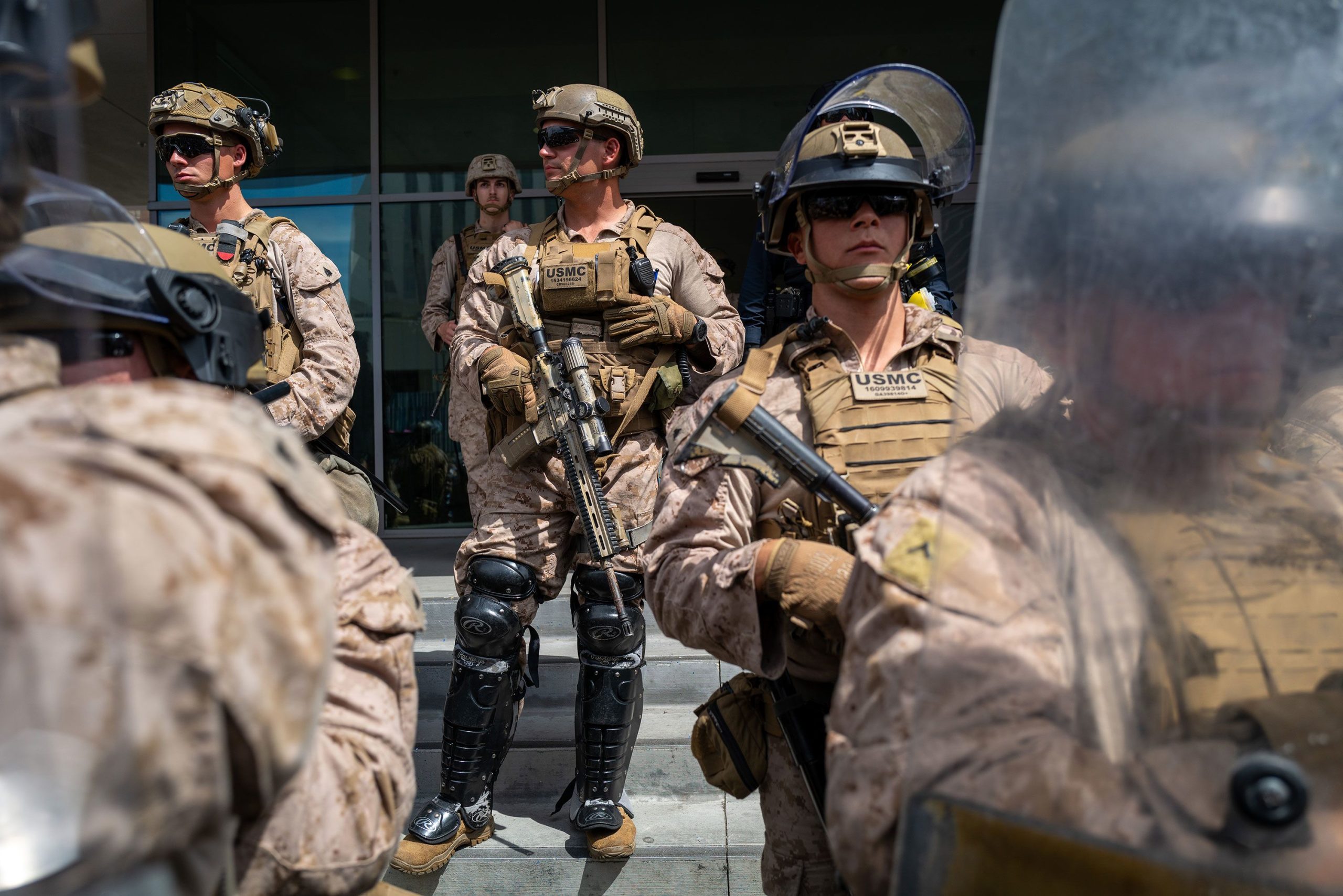
United States naval personnel and marines aboard the amphibious assault ship USS Tripoli have reached the Middle East, according to an announcement by the Central Command on Saturday.
The vessel serves as the flagship of the Tripoli Amphibious Ready Group/31st Marine Expeditionary Unit. It carries about 3,500 troops along with transport and fighter aircraft.
The deployment is expected to strengthen the U.S. military presence in the region. Washington is reportedly weighing the possibility of launching a ground operation around Iran’s key oil export hub and the Hormuz Strait.
Reports indicate that the U.S. is considering steps to secure Iran’s nuclear materials. Other options under review include a possible seizure of Kharg Island, an invasion of Larak Island near Hormuz, and control of Abu Musa and nearby islands. Additional strikes on nuclear and energy facilities are also being considered.
At the same time, Yemen’s Houthi forces have declared their involvement in the conflict. The group said it carried out its first operation using ballistic missiles against Israeli military targets.
“Our operations will continue until the declared goals are achieved,” a spokesperson vowed on Saturday. “We will continue until the aggression stops on all fronts.”
Meanwhile, Iran continued retaliatory actions against Gulf countries over the weekend. Two drones struck Oman’s Port of Salalah. The incident left one worker injured and damaged a crane.
Authorities in Kuwait reported that multiple drones hit the country’s international airport, affecting its radar systems. Emirates Global Aluminium also confirmed that Iranian strikes impacted its Al Taweelah facility in Abu Dhabi.
Iranian President Masoud Pezeshkian criticized the situation. He said it was unfortunate that “the territories of some Muslim countries” are being used to attack Iran. He accused Israel of attempting to widen the conflict across the region.
The president also stated that Iran has been “attacked twice during negotiations,” adding that the “bombing infrastructure and assassinating Iranian figures show that the aggressors cannot be trusted.”
His remarks came after Israel launched fresh strikes on two nuclear-related facilities in Iran. The targets included a heavy-water production plant in Khondab and a yellowcake production site in Ardakan.
Russia also reacted to the developments on Saturday. Moscow accused Iran’s opponents of escalating the conflict “despite related risks, including a threat of large-scale radioactive contamination.”
The country called on the International Atomic Energy Agency (IAEA) to address what it described as a “grave threat.” It added that the attacks breached international law and should attract strong condemnation from the global community.