History

The towering intellectual inferno of Northern economic history: Philip Shea remembered

By Prof. Abdalla Uba Adamu

I was not a History student but a student of history. My interest originated in my father, Dr. Muhammad Uba Adamu, a historian who really believed in the discipline. Further, it was a real anomaly in my education—that turned out fine for me—that although I was a science student in high school, we studied history in our set due to the lack of a physics teacher, which was just as well. I tried a semester of physics after high school, but I could not hack it. 

To me, history was better than Physics, which was and still is excellently boring. With History, I understood myself and my culture and could safeguard my heritage. With Physics, I would be forced to cram useless formulas, which I was led to believe were the intellectual heritages of dead White scientists. 

Despite being housed in the Faculty of Education, Bayero University Kano, since July 22, 1980, as a Graduate Assistant, I found myself drawn to History. It helped that the late Prof. John Lavers, who taught my father, was there. His purchase of an Amstrad desktop computer in around 1989, and my being the only person on the campus who mastered it, created a Moebius strip where I was teaching Prof. Lavers how to use it! Eventually, I had to come in contact with Prof. Philip Shea, who also knew my father as an administrator. 

My subsequent interactions with Prof. Lavers, Prof. Shea, and later Prof. Murray Last put me at an intersection of historical immersion. They further fuelled my interest in historical studies and anything related to Kano’s history. I started teasing Philip by calling him ‘Uncle Philip’, which he found irritating as he did not want to seem ‘old’. This was more so due to his closeness to my father. When in 2002 or thereabouts, my father publicly presented (I refuse to allow it to be ‘launched’) his book Confluences and Influences, Philip Shea wrote the review and read it during the presentation. 

With Philip Shea, life in Kano was not just economic history but also cultural history. His “Mallam Muhammad Bakatsine and the Jihad in Eastern Kano” (History in Africa 32 (2005), 371-383) is a brilliant appendix to the Kano Chronicle in the sense of filling in a lot of gaps not in the Chronicle. For one, it gave us a microscopic view of how a Joɓawa clan member, Malam Bakatsine from Takai town, mobilised the jihad forces fuelled by his understanding of Islam. 

Eventually, somehow or another, the British Council Kano engaged me as the Chairman of the Centre for Hausa Culture, which we established in 2003 to facilitate a series of Hausa traditional concerts on their behalf. I invited Philip to one of them on March 8, 2006, and had to drive him to the venue because he was virtually colour-blind at night and found it difficult to drive—too many full headlights, he told me.

I was, therefore, shocked when I learned of Philip Shea’s passing away barely a month later on April 5, 2006. I was in Saly, Senegal, for a Volkswagen Foundation activity then. It was a sad moment for me, for Philip was a truly wonderful person. I really doubted if he had any intentions of leaving Kano—so ingrained he was in the very social and economic fabric of Kano. He was involved in almost every activity of the Kano State Government, during which we always sat next to each other. 

For instance, he actively participated in the 2003 conference celebrating the 40th Anniversary of the late Emir of Kano, HRH Alhaji (Dr) Ado Bayero. A proceeding of the conference, which I edited and for which he let the Communique team, was later published. He was also a prominent participant at the National Conference on 200 Years Since the Uthman Dan Fodio Jihad in Kano held at the Kano State History and Culture Bureau, Kano, Nigeria, 27-29 July 2004.

Philip was also a familiar face in quite a few Kano markets; his speciality was economic history. For instance, I met him several times when I visited the Garu market in Kumbotso. He was not actually buying anything but moving from stall to stall, observing, listening, and noting. He used to be followed by a gaggle of kids, but they eventually became used to him and left him alone. I, on the other hand, visited the market because my better half dragged me against my will, wish and desire for her to buy Kayan miya (groceries) as they were cheaper in that market – and I had to drive through a slowly flowing river Panshekara to get to the market!

For me, observing Philip in that market was a front-row lesson on Ethnography: to truly understand the flow of events, you need to be there—on the ground—not from afar. His writings on the economic history of Kano and, indeed, Hausa land, therefore, had a solid base. 

He published several articles in Nigerian and international journals on, among other subjects, the development of the dyeing industry in precolonial Kano, rural production, indirect rule, and the central Sudanese silk trade. His unpublished doctoral dissertation, “The Development of an Export-Oriented Dyed Cloth Industry in Kano Emirate in the Nineteenth Century” (Wisconsin, 1975), has become one of the most cited works on dyeing and textiles in Africa and a reference text in discussions of indigenous African textile practices.

Philip had mentored many generations of Historians. It was only befitting, therefore, that the whole constellation of Philips students and associates gathered together to honour his intellectual contribution to the economic history of northern Nigeria. This was realised in Economic and Social History of Northern Nigeria: Revisiting Milestones and Exploring New Frontiers: Essays in Honour of the late Professor Phillip James Shea

The book was ‘launched’ on Sunday, July 21, 2024, at the Dangote Business School auditorium, Bayero University Kano New Campus. Despite it being a Sunday (and overcast), the hall was reasonably filled with many people—and not the ‘student fillers’ either, since although the university resumed classes on Monday, July 15, 2024, students have not fully resumed. 

The book, edited by his students led by Prof. Mohammed Sanni Abdulkadir, Samaila Suleman and Kabiru Haruna Isa and published by Aboki Publishers), is undoubtedly a heavy reading with 874 pages. Divided into six sections with 40 papers, it covers a massive ground, from Environment to Riots, Slavery, Reforms, Settlement, to Migration. 

I will not even presume to review this book – leaving it to voracious readers like Shamsuddeen Sani to do that when he gets his stethoscope on a copy! There were standout papers. Murray Last’s “Note on the Economy of 19th Century Warfare in Hausaland” reminds us of the links between social disruptions and economic growth – even over a hundred years ago. Or the one about the brown sugar industry in Maƙarfi by Shehu Tijjani Yusuf. Want to learn about donkey trade (yes, donkeys!)? Then Abubakar Tukur Mohammed will guide you. Salafism and Social services are treated by one of what I term the ‘Zafafa Goma’ intellectual cluster of BUK, Kabiru Haruna Isa. And so on. 

No one, no book, no writer is perfect. My grouse? In this constellation of economic coverage, not one single paper has dealt with media and popular culture. Music (traditional and Afropop), Books (in whatever form), Films (love, hate, but can’t ignore Kannywood), and Media (Radio, TV, Newspapers, Social Media) were all seemingly ignored, as if economic history is only rooted in the past and only on commodities. And yet, one of the attention-grabbing parts of the book was ‘New Frontiers’. It seems that such a frontier was not to look ‘back to the future’. Oh, there is a paper on multinational publishers (Sani Yakubu Adam), but it was on the English book trade!

Warts and all, this book is, in my view, the most comprehensive summary and, at the same time, introduction to the uninitiated of the subject matter so far in our history. It is also a befitting reminder of the legacies of one of our time’s most important economic historians. 

Capitalism in Northern Nigeria: A radical historical perspective

By Abba Sadauki

Introduction

There comes a time when the world’s weight seems unbearable, making each breath a struggle. Like a midlife crisis, this pivotal moment is when one confronts the reality of their material existence. It’s a stark realisation that all the goals and aspirations pursued were essentially economic activities aimed at providing for oneself and loved ones. 

Another revelation compounds the gravity of this understanding – the fact that these efforts have primarily served to enrich others. Despite all the hard work, one finds themselves barely making ends meet, with the prospect of accumulating enough wealth for a comfortable life or pursuing truly fulfilling endeavours seeming increasingly elusive. 

The weight of economic struggle is a universal experience shared by countless individuals across the globe. This article aims to shed light on the historical journey that has shaped this experience, particularly within the context of Northern Nigeria. 

We will explore, starting from the feudal reigns of the Sarkis (Kings) and Amirs (Emirs), delving into the transformative impact of British imperialism. Our journey will culminate in an analysis of post-colonial governance and the pervasive influence of global capitalism, painting a picture of our present reality. 

Through this, we will uncover the roots of the stark wealth inequality that pervades our society, understand the purpose and implications of debt, and confront the enduring reality of class struggle. 

As we navigate through the complexities of these issues, we will question the viability of our current system in the face of 21st-century challenges. The 2008 economic crisis is a stark reminder of these challenges, prompting us to reevaluate and rethink our economic structures. 

The Emergence of Capitalism in Northern Nigeria: Pre-capitalist Economic Systems

The Emergence of Market Societies

As in the bible, we will start at Genesis, to the very inception of our economic systems. In the beginning, there were no economies, only markets. But what exactly are markets? They are places where a willing buyer and a willing seller meet to exchange goods or services. Here, we encounter the first myth that capitalism propagates – the notion that markets did not exist before its advent. However, markets existed long before capitalism emerged as a system during the Industrial Revolution in Britain in the 18th century.

You might wonder, what do I mean by “there was no economy”? The answer lies in a simple yet crucial condition for markets to evolve into an economy – the existence of a “surplus”. A surplus refers to the excess resources that can be accumulated and utilised.

When our ancestors first tilled the land and initiated the process we now know as agriculture, they created resources that exceeded immediate needs. This surplus transformed markets into an economy – a complex network of relationships that emerges in societies with a surplus.

This economy enabled us to produce food and, more importantly for this discussion, tools and instruments that wouldn’t exist with labour alone. The first instrument of this system was likely writing, used to account for the units of agricultural produce stored by an individual in the communal granary. These units were probably represented by engravings on shells, signifying the value of the stored produce.

These shells could be exchanged between individuals for goods or services. If this concept sounds familiar, it’s the precursor to what we know as money today. Instead of shells, we now use pieces of paper or digital representations.You could also borrow these shells or promise a specific amount in the future in exchange for immediate service. This is the concept we now understand as debt.

Someone had to ensure the value of these shells was guaranteed, often through force. In today’s terms, this individual might be known as a king, whose domain of influence is a state. The king would have people managing the accounting and others enforcing his guarantee, akin to modern-day police.

As we can see, a “surplus” led to a radical societal transformation. However, this transformation was not without its adverse side effects. One of these was that the king and his bureaucracy accumulated a surplus, leading to an overconcentration of power and wealth in the hands of a few. This process, which we now call inequality, is still a pressing issue in our modern society.

Now, let’s dive into the heart of our economic systems, armed with conceptual toolboxes that will guide us through its intricate workings. Our first concept is a ‘commodity’. Simply put, commodities are goods produced to be sold. Each of these goods has a market price reflecting its exchange value.

Next, we explore ‘production’, the transformative process that turns raw materials into components or finished goods. This production journey begins with the first factor, the raw materials and the infrastructure used to extract them, such as tools and machines. These are what we refer to as ‘capital goods’.

To carry out this process, we need a location—land or space—our second factor of production. Lastly, we require human labour to transform these raw materials into finished goods. This production process forms the bedrock of an economy, making it tick and thrive. 

The Hausa Feudal Society

The early days of the Hausa kingdoms are shrouded in various myths used to legitimise their existence; the most plausible scenario of how they came to be is that diverse ethnic groups cohabited in the same area, known as Kasar Hausa. These groups were often embroiled in relentless resource conflicts, leading to chiefdoms composed of dominant families.

As time unfolded, the chiefdoms with superior military prowess and organisational structures absorbed the weaker ones, giving rise to kingdoms. The less powerful chiefdoms gradually became vassals, paying tribute to a king or Sarki.

The kingdom’s population began to stratify. The most influential family head ascended to the position of Sarki, distributing offices among his followers from other families. The lineages of these followers evolved into Sarakuna, the aristocracy. These Sarakuna integrated into Sarki’s military organisation, acting as vanguards in establishing dominance over weaker groups and compelling them to pay tribute.

Over time, the Sarki and Sarakuna transformed into the leisure class, while the rest of society, forming the base of economic production, became subordinate to them. Within the broader Hausa society, another stratification layer emerged based on the economic services offered. Free peasants, serfs, and enslaved people emerged as the new classifications of the labour class.

Each kingdom mentioned earlier was divided into administrative units (fiefs) by its ruling class, with a titled lord or his representative serving as its overseer. The kingdom’s capital depended on the resources sent from the labour class in the fiefs and political power in the form of laws, and their enforcers came from the capital to enforce them in the kingdom’s territory.

Society was broadly divided into two distinct classes. The’ Isarakim’ ruling class comprised the king and his officials. On the other hand, the ‘Talakawa’, or the ruled class, consisted of peasants, serfs, and enslaved people.

As we’ve observed, the ruled class formed the backbone of the economy. The ruling class appropriated their labour and the fruits of their production through tribute, taxes, special levies, and forced labour. This arrangement, where the ruling class expropriated labour at the expense of the commoner, is a characteristic feature of all feudal societies

Rise of Merchant Class and Beginnings of Capitalist Spirit

Trade in the Hausa states was determined by the basic facts of geography and communication, the primary routes linking the area to the rest of the world being the trans-Saharan caravan routes. The main imports from Europe and North Africa were cotton and calicoes from Lancashire, cotton and sugar loaves from France, red cloth from Saxony, beads from Venice, needles, mirrors, and paper from Nuremberg, sword-blades from Solingen, razors from Styria, fine silks from Lyons, coarse silks from Trieste and Tripoli, red fezzes from Leghorn, and all kinds of Arab dress from North Africa. In contrast, the main commodities the Hausa exported to balance its trade with the outside world were cotton, goatskins, leather goods, and slaves.

The acquisition of wealth from these ventures eventually led to new values within the ruling class and new members of that class—the merchants. These emerging values played a crucial role in shaping modern social stratification and the formation of nation-states.

The merchants and their heirs, often referred to as the “nouveaux riches,” found themselves beyond the control of the aristocracy. With the support of imperialists, they absorbed ancient traditional kingdoms, uniting them into regional and national entities under their control. In the following discussion, we’ll explore the process by which this transformation occurred.

The Creation and Evolution of Capitalism and Its Effects in Colonial Northern Nigeria

1. The Birth of Capitalism

In the earlier societies we explored, none of the factors of production were treated as commodities. For instance, consider labour: throughout history, people worked, but during feudal times, this labour was not sold or rented to the aristocrats. Instead, a portion of the talakawa’s harvests was forcibly taken. The tools of production—such as hoes and cutlasses—were often crafted by the talakawa themselves or by craftsmen from the same fief. In exchange for these tools, the talakawa provided food to the craftsmen. Land, too, was never treated as a commodity. The sarakuna never sold it; such an idea would have been unthinkable. Land ownership was either inherited or forever out of reach.

The process by which these factors became commodities began with the development of shipbuilding in Europe and advancements in sea navigation. European merchants traded vast distances, shipping wool from England to places like Shanghai in exchange for silk and other Asian goods. Upon returning to England, they exchanged these acquired goods for even more wool than they had initially started with. The traded products gained international value through these exchanges, and those involved in their production or sale amassed significant wealth.

By observing these nouveau riche individuals—whom they considered social inferiors—amassing fortunes that threatened to overshadow their own, English aristocrats adopted a classic strategy: “If you can’t beat them, join them.” They disrupted the existing system built by their ancestors. They uprooted perishable crops that lacked international value and fenced off their land. Peasants who had lived on that land for generations were evicted and replaced with sheep, whose wool could fetch a healthy price in international markets. It is estimated that around 70 per cent of the peasants were displaced during this transformation. Ultimately, this process turned Britain from a society with markets into a market society, effectively commodifying land and labour.

Indeed, the commodification of labour emerged from the basic human need to survive. As the newly evicted peasants wandered from village to village, desperate for sustenance and shelter, they knocked on countless doors, willing to do anything in exchange for those necessities. In this process, they unwittingly auctioned their labour, transforming themselves into the precursors of modern workers—the very traders of their own toil.

The land was commodified when aristocrats decided to lease it rather than directly oversee wool production. They set rental prices based on international market conditions. Some former serfs accepted these offers, as it was a choice between that or poverty. They signed leases hoping that selling wool in the market would cover rent and wages for other serfs working under them, with any leftover funds going toward their families’ sustenance. These transformations, coupled with the invention of the steam engine, eventually gave rise to what we now refer to as industrial society. This development reinforced the Great Contradiction: the simultaneous existence of unimaginable new wealth and unspeakable suffering. As a result, the inequalities that originated during the agricultural revolution, which we encountered previously, increased dramatically.

New creations also came about due to the birth of this new system, and the concept of debt has existed throughout human history. In simpler times, it might manifest as a neighbour helping another in need, with the recipient expressing gratitude by saying, “I owe you one.” No formal contract was necessary; both parties understood that the favour would eventually be repaid, settling their moral debt. However, with the advent of capitalism, this moral obligation became legal. Debt now comes with terms—precisely, exchange values. When a debtor borrows money, they agree to repay the original sum plus a little extra to compensate the creditor for granting the loan. This additional amount is known as interest.

Another new creation was the subversion of production by distribution; in the feudal system, the production process followed a specific order: serfs worked the land (production), feudal lords dispatched agents to collect rents (distribution), and any surplus from rent collection was converted into money. This allowed the lords to purchase, offer loans, and pay for services (credit-debit).

 However, under the new capitalist system, distribution began before production. Former serfs, now renting land from landowners, supervised the production of wool and crops for profit. But they needed capital upfront—for wages, seeds, and rent—before producing any goods. To acquire this capital, they turned to debt. Those who lent them money naturally expected interest as profit. Since all the production processes (wage payments, rent to the landowner, procurement of raw materials and tools) occurred before actual production commenced, distribution now preceded production, and debt became the primary lubricant driving the capitalist machine.

2. Capitalism and Imperialism in Northern Nigeria 

We previously touched upon the collaboration between imperialists and the nouveau riche, which is pivotal in shaping today’s social stratification and nation-states. The process unfolded through a series of significant events.

Firstly, colonial assaults weakened the power and economic position of the feudal aristocracy. Territorial fiefdoms were abolished, along with the economic foundations of feudalism—such as tribute, taxes, levies, tolls, and forced labour. The military hierarchy was dismantled, and the judicial powers of the feudal class were curtailed. These measures effectively stripped the feudal class of its political influence.

Subsequently, during independence movements, the imperialists lost ground to the merchant class. As political power shifted, so did economic power. The traditional elites—the former ruling class—also experienced this loss.

The new elites, primarily merchants, leveraged the state’s economic structure to accumulate wealth. They secured loans from state banks and participated in emerging enterprises. However, they didn’t entirely abandon the traditional aristocracy. Instead, they strategically married into feudal families, accepting honorific titles from kings. This move allowed them to invoke an ethnocentric ideology reminiscent of feudalism, defending the unity of the now-defunct feudal kingdoms and their values.

For instance, the Northern People’s Congress (NPC) was entangled with the emirs—a metamorphosis of feudal society in a new guise. Yet, the forces of modern capitalism compelled this new ruling class to target vital vantage points of feudal state power, which they perceived as impediments to the evolution of capitalism.

“All these forces transformed the merchant class into the new bourgeoisie in modern capitalist Northern Nigeria. This class spans both the public and large-scale, foreign-controlled capitalist sectors. Its dominant elements include administrative, managerial, and supervisory roles alongside local private capital and professional groups.

The arrival of oil revenue further strengthened the federal drive at the centre, led by the federal bureaucracy. This allowed the state to play a crucial role in creating a national base for capital accumulation. The state achieved this through infrastructure expansion, the development of a local financial system, the growth of state capital in industry and agriculture, and measures to increase local ownership and control.

Conclusion

The Nature of Capitalism

Throughout this journey, I have aimed to demonstrate that capitalism is not a natural system, as some claim, but rather a created system that evolved and transformed through historical conditions and forces. While capable of generating immense wealth and development, capitalism also bears the responsibility of allowing a select few to accumulate wealth at the expense of the majority, pushing the system to its limits.

Capitalism has historically experienced periods of crisis, but the current crisis extends beyond mere stagnation in productive forces. It encompasses a broader cultural, moral, political, and religious turmoil. The 2008 financial crisis marked a significant turning point. World capitalism has never fully recovered from that shock; massive government interventions were necessary to prevent total catastrophe. However, these measures led to uncontrolled inflation and substantial public, corporate, and private debt. 

Now, the entire process must reverse. The world hurtles toward an uncertain future marked by perpetual cycles of war, economic collapse, and increasing suffering. Even in the wealthiest nations, rising prices erode wages, while cuts to public services like healthcare and education exacerbate social inequalities. In poorer countries, millions face slow starvation, trapped by the grip of imperialist moneylenders.

The comforting myth of equal opportunity for every citizen has shattered. Obscene wealth flaunted alongside poverty, unemployment, and homelessness highlights the stark contrast. Capital increasingly concentrates in the hands of a few billionaires, giant banks, and corporations. We must seek a new system that acknowledges the unsustainable status quo and upholds the sanctity of life. The era of the sarakuna has ended, and the time has come for a new bourgeoisie to emerge. The shifting sands of the North must transform into an oasis of new ideas and a system dedicated to uplifting all.

The alliance of history and the “Good Old Days” phrase

By Sharif Ishaq Abubakar

Introduction

Man envisages hope and secures confidence. In the course towards thriving to make a better positive arrival to the future, emanating from a past and rolling to a thoughtful destination, though I’m not quite sure, I set goals to beat what has to spell the past. There is a joint alliance with history as a discipline and what a layman could call the “Good old days”. 

The good old days, as the essay subscribes to them, are precision in explaining what is commonly attested to when there is a flashback in a human being’s life, portraying the rosy and more easygoing way of life or the simple life of the past. This is usually not welcome in the language of academic historians, as what is more vividly visible is the past in response to the doctrine of history. 

The good old days in question are what I find and regard as a commonly digested utterance by those who find their past life more pleasing. They are not necessarily shouldered with success in a weighted rate, but a sense of appeasing and touching unforgettable times that the present has swallowed but left tangible emotions for the utterer to describe. It is not elusive. It happened, occurred, took place, and was quite eventful. 

With this periodic relevance, I sensed a spectacular alliance between the history known as a Study and the phrase candid by mostly good explainers of events and happenings, adhering and recalling their past days as the good old days. I see the two working relatedly, but I saw them separating as the latter could not get a fixed spot as shallow as a topic.  This essay, therefore, will highlight the alliance of History and the phrase” Good old days”.

The Past and the Emotion of the Old Days

This piece does not set itself in the medicinal or health advocative stance, guided by medication or clinical hypothesis. In this context, the past and the emotion of the old days patronise a common fact that should be well acknowledged by every human being, which posits that the past was not that less patchy or lacked bruises in the lane that gave birth to the present. There were struggles, but the man still thrived like the men of the stone age. The measures and methods might not constitute similar skills and advancement, but what ascertained the inbuilt tradition of man is to uncover the path for survival, which further comes with attached conditions and risk-taking that also spells more of man’s ways. 

If this is how the generational pattern of man’s life was and will continue to be, how did man develop emotion for the past and even refer to the past with an emotional remembrance phrase, the Good old days?

I found the worthiness of my response to these questions in stages of human being growth. 

In the study of history, those before us paved the way for the advancement we enjoy today, and we are responsible for what will become of future advancement. It is a stage, and it is periodical. Man, stages of growth come with several definitive developments and mistakes, which transform into lessons. Historically, our forefathers have been down to us, and we shall be forefathers to another set. 

Man grows up leaning on his parents, forming a bond and several events transpiring in his life; in several clicks of time, one can no longer go back to those days, but the days stay in the heart, brain and the whole body system, despite the natural heritage from the parents which of course speaks clearly of who you took after, one still look back at the gone days and smile, blushing out some event that occurred not because there were meant to make a joke of, but because there are several notable notations attached to that scenarios. The past is lovely because it makes you remember who you are and what you are supposed to strive for. The mind works in a mysterious way that flashes back in a second to events that take you out of your present, honouring the past and handing over the juridical capability to make your choice forward. It is emotional, but the phrase “good old days” weighs a lot.

The Alliance of History and the Phrase the “Good Old Days”.

Standing from within, inspecting the past, observing the turning points of events, and profoundly judging the historical stages that led to the current development, one would apparently love the past because it is historical; it takes you back to the meaning of the present. This sets a distinct correlation between the term history as a study and the above phrase.

What will become of the understanding of democracy or the modern pattern of international relations when one thinks of imperialism and how it transpired, where it became economically and practically legal to show nation strength and capability by annexing and conquering more land, these territories and lands have settlers and indigents inhabited in them. Still, the wake-up of the clamour of securing your land by defending and raising quite a courageous military to secure land proves the days to be readymade for wars. 

Territories prepare and anticipate war. Some nation-states have made a fortune and are where they are today because conquest was practicable before today, and there is no favour history can bring about their success without pointing at those days. Today, national flags speak volumes of reasons why they appear with specific colours, not because the past covers the unscratched step to their current capability, but because it was worth passing through the past and having the present as a representative of the past.

Aside from the above example, why would a layman refer to the past as the good days, and how is it related to history?

Indeed, they have been developed, but glaring at the present harbours inflation and population growth as resources tend to be fewer than in the past. Looking back to the past and scoring those days as good days defines the long way the past determines the future and how related they are. It breaks an alarming projection when the hope of the future is always cherished to be better. It hence gives birth to a predicament when the future of the past becomes less provident than it was judged to be. 

Man is hence left with a single option: turn to the better days, which is why history deals with everything. History is used to judge the progress of a certain goal; it tracks the impact and provides facts that place the past and the present on a scale for one to choose between whether the past had a more promising trajectory, or the present thwarted those policies initiated to befit the future (Now Present). Either way, I will cite Nigeria as a critical reference.

Nigeria gained independence in the year 1960. The individuals who worked through the path of success in attaining Nigeria’s freedom from colonialism were highly respected and celebrated with greater hope for the country’s future. All reflection points to leadership, health care, education, youths, democracy, infrastructure, and other aspects that require reliable leaders’ consent. That was hope, and it started on a good platter, but the future led to crises and other predicaments, resulting in a civil war within six years of attaining a positive foot in the country’s history. 

The future rolled on, leading to several phases of military leadership, and the country bounced back to democracy in 1999. Why, then, will one refer to the days of the leaders of the first republic as the good old days? There is a response to the question when one depicts the days of the previous leaders who died not owning or amassing the wealth of the public or citizens of the country despite being labelled as corrupt. 

One of the reasons the First Republic’s political settings crumbled was corruption. Still, till today, the pattern of corruption has only taken a glorifying approach that seems more degrading than that of the leaders of the First Republic. That is to assert that in a situation where the past seemed to be more politically sound than the future (now present), the past must be seen as the good days, not because it was hoped for to be that way, but because it proves better than the worsening present/ future.

 Conclusion 

 This essay captured the relevance of the past, thereby mirroring the fact that not all events that happened in the past historically can be beaten by the future or present. Some might indeed wish the past should fade, but growth seems to make one attached to his past so much that the yearning for past memories leads to a label known as the “Good Old Days.”

Sharif Ishaq Abubakar wrote via Sharifishaq55@gmail.com. He is a PhD Student at the University of Abuja, Department of History and Diplomatic Studies.

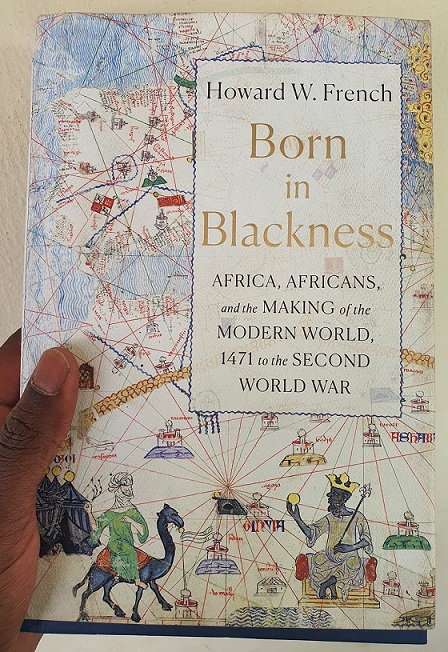
Book Review: Born in Blackness

By Dr Shamsuddeen Sani

When I first read about this book in the Guardian International sometime last year, I knew it had to be good. But even more so when I read somewhere about the author narrating a story of a Nigerian lady that bought 1200 copies of the book to distribute back here in Nigeria. In this seminal work, Born in Blackness: Africa, Africans, and the Making of the Modern World, 1471 to the Second World War, Howard French provides a comprehensive and nuanced exploration of African history and its impact on the world. French’s ground-breaking analysis challenges the dominant Eurocentric narrative of history, highlighting the agency and contributions of Africans to global events.

Subdivided mainly into five parts, the book covers a broad expanse of African history, from the early encounters between Europeans and Africans to the struggles for independence in the mid-twentieth century. Through a meticulous examination of historical events and phenomena, French emphasises the complex and interconnected nature of global history, illustrating how the experiences of Africans were intertwined with those of Europeans, Americans, and Asians.

One of the most striking highlights of the book is French’s deep commitment to challenging conventional narratives of African history. Through a nuanced analysis of primary sources and historical evidence, French emphasises the agency and contributions of Africans in shaping their destinies. He highlights how Africans responded to the challenges of imperialism, colonialism, and globalisation, from the rise of Pan-Africanism to the emergence of new cultural and intellectual movements.

Another key feature of the book is French’s emphasis on the dynamic and diverse nature of African history. Rather than presenting a monolithic view of African societies and cultures, French highlights the rich and complex tapestry of human experience on the continent. He explores the diverse political, social, and economic structures that emerged in different regions of Africa and how Africans adapted to changing circumstances over time.

Overall, this book is a tour de force of African history that challenges conventional wisdom and invites readers to rethink their understanding of the world. French’s masterful analysis and deep commitment to historical accuracy and nuance make this book a must-read for anyone interested in the history of Africa and its impact on the global stage.

Ƙoƙi and ethnographic slice of Hausa history

By Prof. Abdalla Uba Adamu

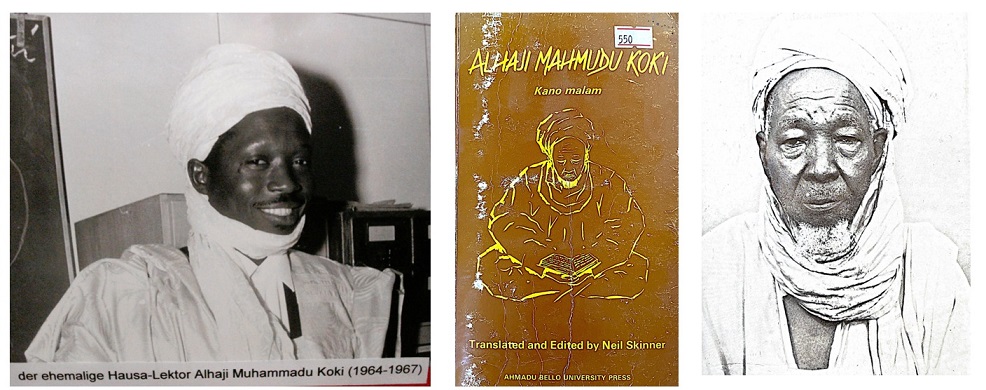
I was rummaging through my travel pictures when I came across a picture that I am sure has not been published anywhere. I saw it in a glass case at a ‘corridor museum’ at Universität Hamburg, Germany, on 2nd December 2008. I was excited because of its rarity. It was the picture that I am sure has not seen the light of day almost anywhere. I had vaguely heard about the man from my father, a writer, but did not pay attention then. Now he was there, smiling in all glory and right before me. I decided I would take the picture to show it to my father.

Edit: The man was Muhammad Ƙoƙi, the son of Alhaji Mahmud Ƙoƙi, the Kano Malam. His picture triggered my excitement about his father, Malam Mahmudu Ƙoƙi.

Malam Mahmudu was perhaps one of the most unsung and unknown critical literary figures in Hausa history. You can Google all you can. You won’t find him or his picture. Instead, you will be taken to Neil Skinner’s book, “Alhaji Mahmudu Ƙoƙi: Kano Malam” (ABU Press, 1977). I very much doubt if ABU Press itself has a copy. My copy is in excellent condition (except for a slightly scratched cover) since it was printed on shiny bond paper – and can therefore scan very well. I hesitate to do this for fear of copyright violation. I do wish ABU Press would consider retrieving a copy somewhere and reprinting it.

On return from Hamburg, I started looking for the book – and I was lucky to grab a copy at then ₦550 in January 2009. Now, some 14 years later, you can get a second-hand copy from the online store Abe Books for just $99 (cheap at ₦74,000 in 2023). At the moment, I don’t have any ‘kebura’ around me (since the ASUU strike was suspended!). Otherwise, I would offer mine for ₦50,000 for my copy!

Quite simply, it is a brilliant slice of Hausa history. Most significantly, it detailed the fieldwork done in the collection of data for Bargery’s Hausa Dictionary, whose full title is “A Hausa-English dictionary and English-Hausa vocabulary”.

Although mainly attributed to Rev. George Percy Bargery (1876-1966), an English missionary and linguist, the dictionary had significant input from Diedrich Hermann Westermann (1875-1956), a German missionary, Africanist, and linguist. The dictionary was published in 1934. The printed copy used to be available at ABU Bookshop, where a colleague of mine gifted me one he bought at the huge sum of ₦2,000 in ancient days, almost breaking his bank account!

The book was written/edited by Neil Skinner (1921-2015) at the request of Bargery’s son, Kenneth, to collect recollections of the elder Bargery while in northern Nigeria. Alhaji Mahmudu Ƙoƙi (1894–1976) was Bargery’s Chief Assistant in the preparation of the Dictionary and was the first choice to ask in 1967. As Skinner recollected, “I began recording some of his memories of Bargery. Listening to his vivid accounts of Kano in the first of the century, I formed the idea of putting together from Mahmudu’s lips some account of his own life.”

And what a fascinating life it was. Skinner continued, “As a son of the largest city of northern Nigeria, who had been born into the civil war of Aliyu and Tukur, M. Mahmudu saw the coming of the British, knew Waziri Giɗaɗo and Resident Temple, lived to see the end of the British rule and the Nigerian Civil War and, above all, had close contact with rulers and innovators, both Nigerian and British. He, therefore, seemed likely to have a tale worth recording for younger generation of Nigerians and those with an interest in Nigeria as it was and is. Mahmudu was a spectator of many great events and participant in not a few.”

And what a whirlwind tour of northern Nigeria it was in the early 20th century. Reading the book is like going back in a time machine. Everything was covered: economy, society, governance, culture, everything. As Neil Skinner stated, the book was told by Mahmudu himself – Skinner just edited it. It contained both fascinating and often disturbing details of days gone by. For me, for instance, I was traumatized by his account of the slave trade in Kano. As Mahmudu recalled,

“I used to see slaves being sold – with my own eyes! At Ƴan Bai, on the west of the [Kurmi] market. That was where they used to line them up and sit them down, with their feet sticking out, like this. Then it would be, ‘You there! Get up!’ And he would get up, and we would look him over well from top to bottom and say, ‘Walk a little!’ then he would do so until we told him to come back. He would do so, and we would say, ‘Right, go and sit down’ and put hand to pocket and take out a little money, perhaps a score of cowries or fifteen and give them to him. You would do this, whether you bought him or not. Then, if he saw someone selling groundnuts, he would call her over to get some saying he had been given the price for getting up to be inspected. That is how we have a proverb which says, ‘Tashi in gan ka ma na da ladanta’.”

Based on this disturbing account – in the heart of Africa – I wonder how many of our other proverbs have such creepy and dark origins? If you go to Ƴan Bai in Kurmi market in Kano, now you will only see mats, books and assorted goods.

Alhaji Mahmudu Ƙoƙi provides a rich tapestry of ethnographic details about how the Dictionary was compiled and the fact that the team of Bargery and his assistants insisted on seeing actual objects and their names before recording them. One wished they had an artist with them to sketch out many of the cultural artefacts that have all but disappeared now. It is good that the Bargery dictionary has been digitized and is available free online, thanks to the efforts of Hirokazu Nakamura of the Faculty of Human Science, Department of Human Sciences, Bunkyo University, Japan.

“Alhaji Mahmudu Ƙoƙi: Kano Malam” is comparable to “Baba of Karo” by Mary F Smith (wife of M.G. Smith, author of “Government in Kano, 1350 to 1950” amongst others, and which is available FREE online!). Published in 1954, “Baba of Kano” is an anthropological record of the Hausa people, partly compiled from an oral account given by Baba (1877-1951), the daughter of a Hausa farmer and a Koranic teacher. Baba’s reports were translated by Smith.

Books like these encourage us to seek out our own cultural history – visit those places mentioned, savour their historical aroma and note them as centres of excellence in discovering our past. By the way, Ƙoƙi is a ward in the city of Kano and right on the edge of the Kurmi market. If you are from the area, perhaps you may have heard of Alhaji Mahmudu from his grandchildren.

Don’t forget; this is not a review of the book but a memory jog on the old man, Alhaji Mahmudu Ƙoƙi, whose picture was honoured at a foreign university.

There is a composite collage of the picture I snapped in the Hamburg university museum of the son, the book and the father! as the latter appeared in the book.

Prof. Abdalla Uba Adamu can be reached via auadamu@yahoo.com.