Hausa

Majma’al Bahrain: Arabs in Kano II – the sequel

By Prof. Abdalla Uba Adamu

My posting about MU Adamu’s 1968 paper on the influence of Arabs on Kano culture, economy and religious practices has ignited a few responses of personal nature from some readers interested in their own interconnected life stories. This is a follow-up and update.

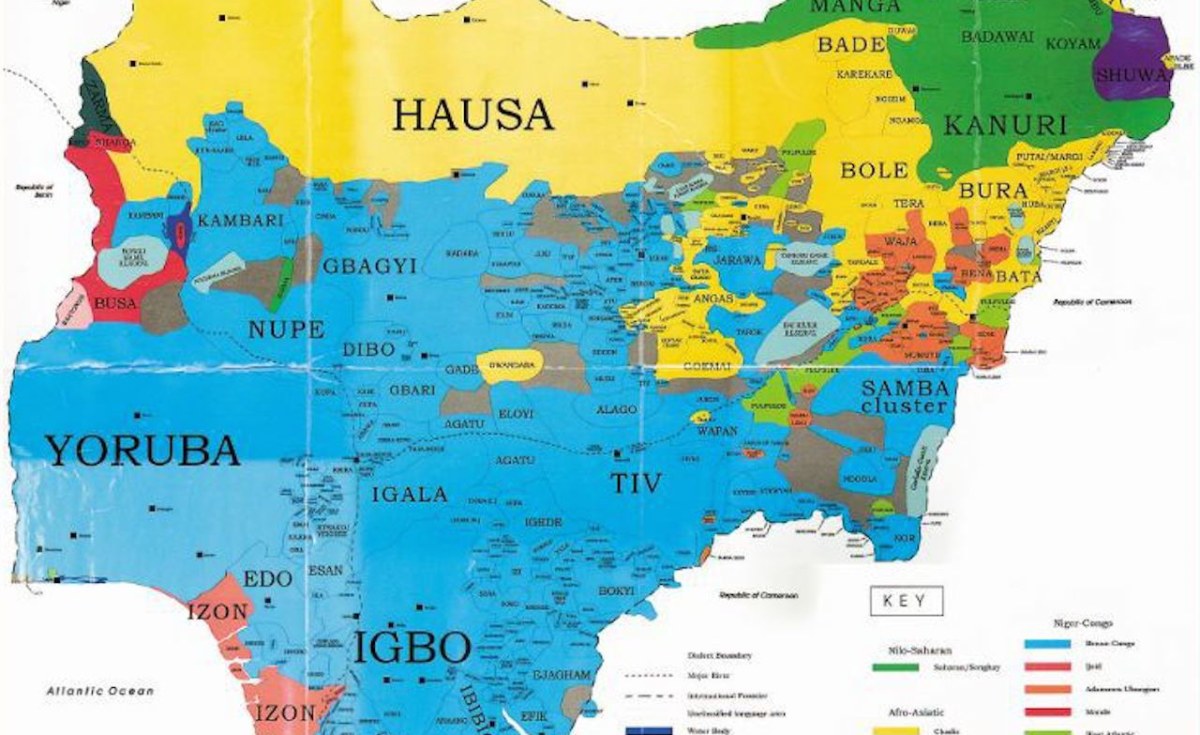
I think it is wonderful that we begin to interrogate our past so that we can appreciate our present in order to make better plans for the future. We were all besotted with this implausible concept of ‘Hausa-Fulani’ that we tend to ignore other genetic tributaries that constitute the Hausa genetic pool, especially in Kano. Such Majma’al Bahrain is either unknown to many or ignored. Bringing it out means that the ethnic picture of the Hausa is more than the mingling of the Fulani genes with the Hausa – there were dashes of Arab in there thrown for good measure.

For the most part, the Arab voices had been silent. I think it is time for them to voice out their life histories in conversations with their elders. Not to further divide a monolithic Hausa society but demonstrate how the Hausa have been developing into distinct, absorptive people. Clearly, then Hausa is not a language but a people. Ask any individual in Kano with ‘Fulani’ or ‘Arab’ ancestorial roots, and they will tell you they are Hausa, ‘even though my grandmother is Fulani/Arab/Russian/Greek, etc.’

Let’s split hairs here. Having different languages but the same skin colour – whether you are black, white, brown, yellow or (if an alien) green, and submitting to the same central, national governing authority makes you ‘ethnic’. Having the same attributes but without recognition of national authority, only blood and kinship ties make you ‘tribal’. Separation across skin colour is a race, not an ethnic issue. Arabs are a separate race from Africans. So, what happens when the racial divide is crossed (bred)? Will a new ‘race’ emerge?

The Arabs’ contributions to the economy and culture of Kano are far more than any other ethnic group, including the Fulani. Consider the Yemeni alone and their massive contributions to the animal skin trade in northern Nigeria. Initially ‘imported’ as Italian trade agents from Yemen in the early 20th century, they have now become domesticated to the Hausa society. Yes, they are light-skinned, and quite a few speak Arabic; but the mid-generations have lost the Arabic language. As a ‘minority’ group, they intermarried with local African women and their offspring contributed to the sustainable development of culture and life in Hausa societies without the consciousness of being ‘the other’. What are then the cultural specificities that tie them to the Arab world? Can it be in dress, language, food, existential rites and rituals (birth, living, death)? How do theirs – if at all present – differ from those of the Hausa?

Then consider the Lebanese and their input into the goods and products found in various Kano markets – including their influence all over West Africa. They are less integrative with their African hosts but have been linguistically domesticated, and for all intents and purposes, many self-identify as Hausa and retain some living rituals (e.g., food habits). This is an area initially mapped out by Sabo Albasu’s monumental groundbreaking research, “The Lebanese in Kano” (which is based on his 1989 doctoral thesis), and unfortunately, not much else was done on such a scale by other people. I wish he could update and re-print it, as now, more than ever, is the time for it.

The Sudanese, more than the other Arabs, had integrated more effectively into northern Nigerian Hausa communities, perhaps due to the gradation in their skin colours – from extremely dark to extremely light – than either the Tripolitanians, Yemeni, Lebanese or Syrians/Jordanians, whose clearly light skins made them stand out in any group. Establishing themselves in the city of Kano at Sudawa (Sudanese settlement), they formed part of the identity of the Kano city populace.

The Sudanese influence was also more intellectual. While they were instrumental in trade, their main contribution was in education. For instance, when the School for Arabic Studies – undoubtedly the Oxford of Arabic Studies in Nigeria – was established in 1934, it was to Sudan that inspiration was sought, including the teachers. Even what later became Bayero University Kano was first headed by Abdullahi el-Tayyeb, a Sudanese. No talk of Sudan itself being a destination for studies at all levels by northern Nigerians. You don’t see such rush for education in Lebanon or Yemen.

While rummaging through the caverns of an old abandoned hard drive, I came across a booklet that Kantoma (Muhammad Uba Adamu) had asked me to extract from his “Confluences and Influences” as a standalone paper (presented in 1998) and later with additional material, as a booklet. We named it “The Presence of Arabs in Kano”. Lack of funding prevented its publication, but I was able to get it published as a paper in a book project. A link to the paper is given at the end of this posting.

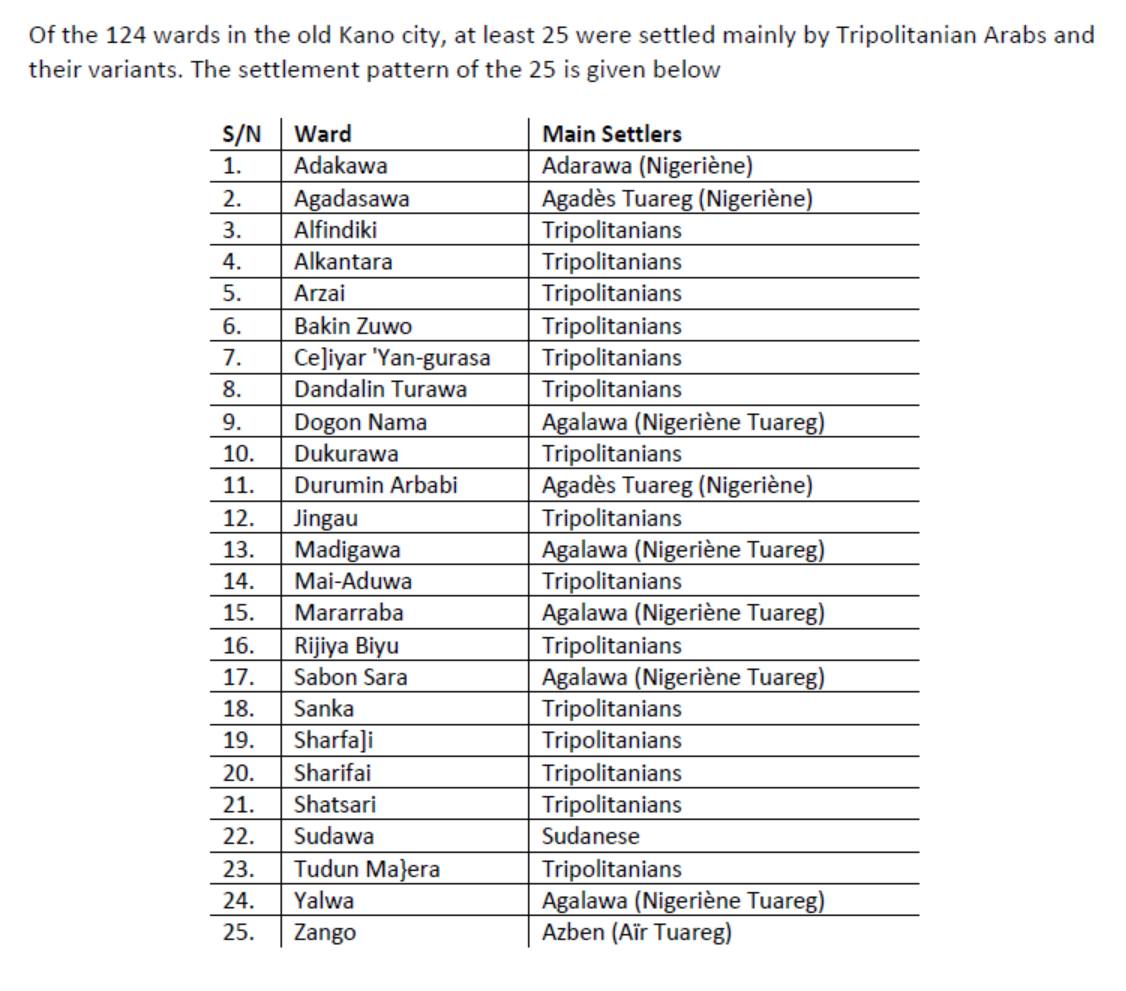
For those interested, I have included the table (from the paper attached) of the 25 Arab-dominated Kano inner city wards. I did this because not many would have the time to read 43 pages of the paper!

Adamu, Abdalla Uba. 2014. The presence of Arabs in Kano. In A.I. Tanko & S. B. Momole (Eds.). Kano: Environment, Society and Development (pp. 125-164). London & Abuja: Adonis & Abbey Publishers.

Or: https://shorturl.at/dgzW0

A crack on Hadiza Gabon’s wall: Humanizing Northern Nigerian stories

By Sa’id Sa’ad

Being a lover of reality shows, award nights, behind-the-scenes and documentary movies, I’d always dabbled from one interview to another, especially exclusive interview rooms that humanise celebrities from various industries. Something that often allows me to see these people beyond their screen-portrayed selves, beyond their polished English-speaking tongues in sets, and beyond their filtered pictures on Instagram.

From Steve Harvey’s show to Trevor Noah’s. From Coffee with Karan to dozens of international shows of the same make-up. Each of them has always fed me the dose of vitamins I needed to see different fantastic interviewees in their human form. Sometimes, I would wonder deeply how one person could have this widened, divergent existence.

However, in Nigeria, shows like #WithChude hosted by Chude Jideonwo have become relevant to Nigeria’s entertainment industry, bringing music artists and Actors – Nollywood – to live through personal exclusive discussions that spark varying conversations. Meanwhile, the advent of Ebuka Obi Uchendu’s Black Box Interviews has presented a new dimension for this art. Through bringing similar personalities as #WithChude’s, the Black Box interviews – geared by Ebuka’s mastery in media and moderation makes it more humane, deep – yet story-driven and intense conversations that would take about fast-phased 2-hour discussion that would leave you wanting more. Undoubtedly, these contents have been the source which news media and bloggers would often plug their ‘stories’ and ‘gossips’ from, giving more relevance to the celebrities and promoting their art. And above all, selling the stories of these people, majorly, using it to their career advantage.

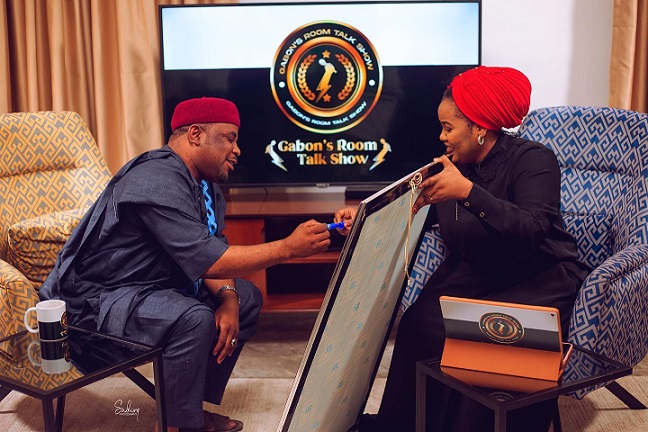
As you might already predict, Northern Nigeria’s entertainment industry has lagged same platforms, except for a few interview programmes produced by media companies. BBC Hausa’s Daga Bakin Mai Ita and Arewa24’s Kundin Kannywood are a few examples of what it was for the industry. Perhaps – as perceived by many – as a lack of “capacity” or “interest” to pursue the same, especially from the industry players. Or rather, others believe that as a result of the notion that northerners do not appreciate northern content. The latter, as sad as it may sound, has continued to place a borderline between contents from the region and its market. However, a robust attempt – from the industry players as thus they benefit from it – would have been a Noah’s Ark to what northern Nigeria’s storytelling would become and even the industry market. Hence, Hadiza Gabon’s Room.

Since the advent of the show – as much as I hardly ever skipped Daga Bakin Mai Ita – I am one of those who’ve watched every episode of Hadiza Gabon’s Room since its inception. Being a household name in northern Nigeria, Hadiza Gabon’s Room, a personal show produced by the actress lately, has gained attraction in the region. This should raise an eyebrow as to how northerners react to northern content or stories specifically produced in Hausa. Prior to the production, the most likely, perhaps consistent programme that ‘tries’ to do this task of humanising the northern entertainment artists has been Daga Bakin Mai Ita which, of course, contributed, though very shallow.

Another close ally to that was what used to be Kundin Kannywood, produced by Arewa24 – the first indigenous Hausa-speaking TV channel – and hosted by ace Kannywood actor Aminu Sheriff Momo. With the wider reach and technical skills invested in producing them, the duo have proven to have a lighter foundation of sustainability as they are run, produced and aired by media organisations who might – at any moment – halt, pause or terminate the programme, especially if any of its episodes attempt to wobble with the organisation’s reputation. But one would never separate celebrities and trends. Or can we?

I agree that “northern Nigeria does not appreciate northern Nigerian content” due to my experiences with middle-class-elite Hausa-speaking northern Nigerians who find their faces wrapped in shame to consume anything northern or anything Hausa. Be it music, film or any form of art. But even more, sometimes you could drop your jaw at how much northerners “dismiss” what becomes of Hausa celebrities from the region. Many were caught “bragging” about how much they didn’t recognise a certain northern celebrity they bumped into at a shopping mall.

But this is not so much different from what the same generation of Yoruba and Igbo does to their indigenous language promoters and contents as well. Perhaps the only difference between the Hausa-consuming northern Nigerian population and the others is that the typical educated middle-class or elites half-baked exposed northerner consume Hausa-produced content with ‘shame’. While a Yoruba or Igbo population consumes these contents in their own languages with ‘pride’. Unless for few who are bold hit the table, some have made it a subject of mockery to their friends who listens to Hausa songs or watch Hausa movies. Making it a “measure of exposure”.

Ordinarily, I’d assume that only a few people like myself – who are interested in storytelling and care about northern stories – consume Hadiza Gabon’s Room until a few weeks ago when the host interviewed a Kannywood actress who’d broken down on the show over what people would describe as “poisonous love” with another unnamed artist. This brought numerous comments from different people in the industry and beyond. But most surprising, from the same “typical educated middle-class or elites half-baked exposed northerners” admitting to having “been watching” the show. Perhaps this can also reflect a hypocritical-denial and intentional lack of acknowledgement. So, it’s safe to say these two contributed to placing the region’s storytelling where it is. Maybe even moved it farther.

Now, self-made analysts on social media have been placing the show on a scale weighing Hadiza Gabon’s skills in media or journalism, and some even going to the extent of breaking bits and pieces of how the questions should be asked. In all honesty, it is not balanced to completely dismiss the fact that there is still more to do from the producer in terms of the technicalities of the show, but it is also imperative to understand that Shows like these grow, get better and improve, with time. This could be reflected in what Ebuka Obi Uchendu or Chude Jideonwo’s shows were ten years ago and what they are now.

However, as a writer and a communications specialist, I would rather than analyse, admit that Hadiza Gabon would have become one of the bravest from northern Nigeria’s entertainment industry to self-produce such funnel that would feed – good or bad – stories from what creatives do in northern Nigeria. At least, a good or bad story is better than no story. Or better still, if Ebuka’s Black Box Interview Show could tell deeply personal stories about the life, career journey and even growth of certain entertainment stars from other parts of Nigeria, then there is a likelihood that Hadiza Gabon could be to northern Nigeria celebrities what Ebuka Obi Uchendu is to Nigerian Celebrities.

Though balancing stories is an essential part of storytelling, it is also unimaginable to think that one day you would find Chude Jideonwo interviewing Hamisu Breaker or Ado Gwanja on his show. This is not to be dismissive about the possibility of that, but the prospect as of now is blurry. Therefore, these stories from these people from northern Nigeria have to come out from northern Nigeria. And that is why Hadiza Gabon should be commended for that.

On the other side, celebrities have soon produced multiple of these shows – using their popularity to sell their stories – while putting a spotlight on their artists, storytellers, entrepreneurs, writers, tech gurus and even educators. And like tomatoes spread out on the front line of an open market, these have been central to the stories they tell the world about themselves. Since we refused to do the same, we are left with our favourite duo, “Almajiri and poverty” narratives.

Imagine if Hadiza Gabon’s Room is a Live show where these guests will speak – without filters, editing or CUT!? Such that truth will be told as raw as it should be, and the eyes will communicate a lie? Imagine if other writers and journalists would consistently write about whatever in-creatives-sake is coming out from northern Nigeria in theatre, movie, and music, such as Muhsin Ibrahim? Imagine if there were multiple consistent shows produced by the industry players who would use their popularity to air their stories, such as what Hadiza Gabon does in her Room? Imagine if consuming these contents in local languages is seen as mere “interest” rather than as a “measure of exposure”? Imagine! Imagine! Imagine!

This is a crack created by Hadiza Gabon’s Wall. We have now seen the gap. And there is more to see. Storytelling does not rest on the edge of a singular art form. Rooms as well, have ways of speaking. They have walls that portray. They have a roof that reflects. They have floors that nurture. We can only humanise our stories when we hang them on the walls and paint them. But what will become of us if our walls continue to crack?

Sa’id Sa’ad is a Nigerian writer, poet and playwright from Maiduguri. He is the NFC Essay Award Winner 2018 and the Peace Panel Short Story Prize Winner 2018. He tweets at @saidsaadwrites and can be reached via saidsaadabubakar@gmail.com.

Hausa names as ethnographic identifiers

By Prof. Abdalla Uba Adamu

It happened 40 years ago. A friend’s wife in Kano had delivered a bouncing baby boy. My friend chose Maikuɗi as the name for the baby. The families on both sides were having none of this. Maikuɗi was not a name, they argued. But he saw nothing wrong with it – a nice traditional Hausa name. He was adamant. They were adamant. Cue in A Mexican Standoff.

Three days before the naming ceremony, he blinked first and apparently gave up. With a glint in his eyes, he decided to name the child Ibrahim. A beautiful Hebrew name but cognately shared by both Muslims and Christians (from Abraham, the father of all). Everyone was happy – until it dawned on everyone that Ibrahim was the name of my friend’s father-in-law. Tricky. In Hausa societies, the names of parents are never uttered. In the end, everyone ended up calling the boy Maikuɗi! Right now, the boy is a successful international businessman living in the Middle East. Earning serious cash and living up to his name – which means one born on a lucky day. Or Tuesday.

A few years later, the same friend’s wife gave birth to a beautiful baby girl. He decided to name her Tabawa. Objections reloaded. Cue in Dog Day Afternoon. As previously, my friend blinked first. He decided to name her Hajara, another cognate of Hagar, the wife of Abraham. It also happened to be the name of his eldest sister. His mother could not utter it – both the Hausa and Fulani system of cultural relations prohibit mothers from calling the names of their first series of children. In the end, everyone ended up calling the child Tabawa. She is currently a university lecturer and a doctoral student in Nigeria. Living up to her name – which means Mother luck, or the name given to one born on Wednesday (in Kano; in Katsina, it is Tuesday) is considered a lucky day. Two children, both lucky in their lives. Their traditional Hausa names became their mascots as they glided successfully through life.

So, why the aversion to Hausa ‘traditional’ names? You can’t name your child Maikuɗi, but everyone will applaud Yasar (wealthy – mai kuɗi?). Or Kamal (perfection). Or Fahad (panther). Or Anwar (bright). Or Fawaz (winner). You can’t name your daughter Tabawa, but it is more acceptable to call her Mahjuba (covered). Or Samira (night conversationist –TikToker?). Name your daughter ‘Dare’, and you are in trouble. Change it to Leila, and you out of it, even though this is an Arabic for ‘dare’ (night).

A lot of the names the Muslim Hausa currently use have nothing to do with Islam. Bearers of such names rarely know their actual meaning or context. They were Arabic and forced on us by the Cancel Culture that attaches a derogatory ‘Haɓe’ coefficient to anything traditional to the Hausa.

Therefore, my friend, whose family story I just related, another friend and I decided to get together and be Wokish about traditional Hausa names. Paradoxically, none of us is genetically Hausa (whatever that might mean) – one had roots in north Africa, another had Kanuri heritage, and one had Agadesian and Torodbe roots – but all of us self-identified, with absolute honour and tenacity, as Hausa. None of this ‘Hausa-Fulani’ aberrational nonsense.

‘Hausa-Fulani’ appellation, in my view, is a Nigerian Cancel Culture device to suppress the Fulani culture. The Fulani may have conquered the ruling of the Hausa (except in one or two places) and imposed their rule. The Hausa, on the other hand, have linguistically conquered the Fulani. In Kano, claiming Fulani heritage is considered anthropological purity – without knowing a single word of Fulfulde (the Fulani language). Substituting rulers does not get rid of the general populace who remain what they are.

The third friend then took the task with gusto. He spent over ten years compiling authentic traditional Hausa names that have absolutely nothing to do with ‘Maguzanci’ (the label gleefully and contemptuously attached to any Hausa who is not a Muslim by the Hausa themselves) before Islam in about 1349, at least in Kano). He also collected names that had only a tinge connection to Islam. The end product was a hitherto unpublished list of 1001 authentic, genuine, traditional Hausa names that reflect the cosmology of the Hausa.

Hausa’s anthropological cosmology reflects the worldview and belief system of the Hausa community based upon their understanding of order in the universe. It is reflected in their naming system – just like any other culture. The Yoruba Muslims, for the most part, have retained this attachment to their traditional cosmology. Farooq Kperogi has done wonderful work on Yoruba naming, although with a focus on their adaptation of Muslim names. The failure of the Hausa to do so was, of course, due to the suffocating blanket of Cancel Culture that the Hausa had been suffering for almost 229 years.

Now, let’s look at the names and their categories. The first category I created from the 1001 Names, which I edited, revolved around Being, Sickness and Death. As noted earlier, the traditional Hausa centre their naming conventions on ecological and cosmological observations—using time, space and seasons to mark their births. Based on this, the first naming convention uses circumstances of birth. This category of names refers to the arrival of a child after another child’s death, the death of a parent, the sickness of the child immediately after being born or a simple structure of the child that seems out of the ordinary. Examples include:

Abarshi. This is derived from the expression, ‘Allah Ya bar shi’[May Allah make him survive]. A male child was born after a series of miscarriages. A female child is named Abarta. A protectionist naming strategy is where the child is not given full loving attention after birth until even evil spirits note this and ignore it and thus let him be. Variants include Mantau, Ajefas, Barmani, Ajuji, and Barau. Now you know the meaning of Hajiya Sa’adatu ‘Barmani’ Choge’s name – the late famous Hausa griotte from Katsina (1948-2013).

Then there is Shekarau, derived from ‘shekara’, a year. A male child is born after an unusually long period of gestation in the mother’s womb. A variant of this name is Ɓoyi [hide/hidden]. A female child is named Shekara. Now you know the meaning of the surname of Distinguished Senator Malam Ibrahim Shekarau from Kano.

A third example is Tanko. This is a child born after three female children. Variants include Gudaji, Tankari, Yuguda/Iguda/Guda. I am sure you know the famous Muhammed Gudaji Kazaure, a Member of the House of Representatives of Nigeria and his media presence in late 2022.

Each of these sampled names reflects a philosophical worldview, reflecting spiritual resignation or slight humour. They, therefore, encode the traditional Hausa perspective of living and dying as inscribed in the way they name their children.

Names that even the contemporary Hausa avoid because of bad collective memory are those linked to wealth and being owned or slavery.

Slaves have prominently featured in the political and social structure of the traditional Hausa societies, especially in the old commercial emirates of Kano, Zaria, Daura and Katsina. Their roles are clearly defined along socially accepted norms, and they are expected to perform given assignments demanded by their masters.

Slaves in Kano are divided into two: domestic and farm-collective. Trusted and, therefore, domesticated slaves are mainly found in ruling houses and are prized because of their loyalty to the title holder. Farmyard slaves were often captured during raids or wars and were not trusted because of the possibility of escape. They were usually owned by wealthy merchants or farmers and were put to work mainly on farms

Although the institution of slavery as then practised has been eliminated in traditional Hausa societies, the main emirate ruling houses still retain vestiges of inherited slave ownership, reflected even in the categorisation of the slaves. For instance, in Kano, royal slaves were distinguished between first-generation slaves (bayi) and those born into slavery (cucanawa).

At the height of slave raids and ownership, particularly when owning a slave was an indication of wealth, the names of the slaves often reflected the status of the owner. Examples of these names include Nasamu (given to the first slave owned by a young man determined to become a wealthy man), Arziki (first female slave owned by a man), Nagode (female slave given away to a person as a gift), Baba da Rai (first gift of a male slave to a son by his father), Dangana (male slave of a latter-day successful farmer or trader, although later given also to a child whose elder siblings all died in infancy. The female slave variant is Nadogara), and Baubawa (slaves with a different faith from the owner), amongst others.

The changing political economy of Hausa societies since the coming of colonialism has created new social dynamics, which included the outward banning of slavery. Thus, many of the names associated with slaves and ‘being-owned’ in traditional Hausa societies became disused, unfashionable, or, which is more probable, to be used without any idea of their original meaning. It is thought that some records of them may be of value. An example is ‘Anini’, usually a slave name but later used to refer to a child born with tiny limbs. The ‘smallness’ is also reflected in the fact that ‘anini’ was a coin in the Nigerian economy, usually 1/10th of a penny—a bit like the small Indian copper coin, ‘dam’ (from which the English language got ‘damn’, as in ‘I don’t give a damn’).

Further, with the coming of Islam, slave names were eased out and replaced by conventional Muslim names as dictated by Islam, Retained, however, are slave names that also served as descriptors of the functions of the slave, even in contemporary ruling houses. Examples of these slave titles, which are rarely used outside of the places, include:

Shamaki (looks after the king’s horses and serves as an overseer of the slaves), Ɗan Rimi (King’s top slave official and looks after all weapons), Sallama (King’s bosom friend [usually a eunuch], same role as Abin Faɗa), Kasheka shares the household supplies to king’s wives [usually a eunuch], Babban Zagi (a runner in front of the king), Jarmai (the head of an army), Kilishi (prepares sitting place for the king), amongst others. These names are almost exclusively restricted to the palace and rarely used outside its confines. Cases of nicknames of individuals bearing these names remain just that but had no official connotation outside of the palace.

The coming of Islam to Hausaland in about the 13th century altered the way traditional Hausa named their children and created the second category of Hausa beside the first ‘traditional’ ones. This second category became the Muslim Hausa, which abandoned all cultural activities associated with the traditional Hausa beliefs. This was not an overnight process. However, taking it as it does, centuries. Even then, a significant portion of Muslim Hausa material culture remains the same as for traditional Hausa. The point of departure is in religious or community practices, which for the Muslim Hausa, are guided by tenets of Islam.

Affected at this point of departure is naming conventions. This is more so because Islam encourages adherents to give their children good meaningful names. These names must, therefore, not reflect anything that counters the fundamental faith of the bearer or reflect a revert to a pre-Islamic period in the lives of the individuals.

However, while predominantly accepting Muslim names, traditional Hausa parents have domesticated some of the names to the contours of their language. For instance, Guruza (Ahmad), Da’u (Dawud), Gagare (Abubakar), Auwa (Hauwa), Daso (Maryam), Babuga (Umar), Ilu (Isma’il), amongst others.

So, here you are. If you are looking for an authentic, ‘clean’ traditional Hausa name or trying to understand your friend’s traditional Hausa name (or even yours), you are welcome to 1001 Traditional Hausa names.

The list is divided into two. The first contains 869 authentic traditional Hausa names. The second contains 132 Arabic/Islamic that the Hausa have somehow domesticated to their linguistic anthropology.

The file is available at https://bit.ly/42HJl97.

On Southern Nigeria’s selective outrage

By Suleiman Ahmed

In Nigeria, an election period is like watching a classic Series for the umpteenth time. You know how it’s going to play out, but it doesn’t make it any less fascinating. The most entertaining episode, of this Series, after the presidential election, of course, is the debate leading up to the Lagos gubernatorial election.

Firstly, the Yorubas must perform a ritual of agonisingly re-iterating the exact same thing: that Lagos is not a “no man’s land.” This is quickly followed by an outcry from the non-Yoruba, Lagos-based (mostly southern) Nigerians. They argue that, as Nigerians, every inch of land in the country, belongs to all Nigerians. That any attempt to deprive them of this right is ethnic bigotry. But how true is this? And do they practise what they preach? Let’s go down memory lane.

A few years ago, when the federal government suggested to some (southern) state governors to provide grazing lands to cattle farmers (who’re predominantly Fulanis) to grow their herds; to control herder-farmer clashes in parts of the country, many of the governors rejected this proposal. (Mostly) Southern Nigerians also took to social media to applaud the governors for refusing fellow Nigerians access to Nigerian lands.

Dangerous words like “invaders” and “take over” were recklessly deployed to stoke ethnic tension. No one cared to remember that these people, too, were Nigerians and therefore were entitled to own land and do business anywhere in Nigeria.

Now, in 2023, it’s election time again, and this same divisive rhetoric is being deployed, albeit in different circumstances. The same people who once championed an anti-Fulani campaign that ensured their fellow countrymen from the north couldn’t get lands in their own country are now complaining of being othered by Yorubas in Lagos. So, I’m asking: why is it ok for them to own lands and freely do businesses, have some influence on who becomes governor in “another man’s land,” but at the same time, see no contradiction in telling northern Muslim cattle farmers to return to the north, to look for land, because “the south does not belong to them?” Why are you concerned that the Fulanis “will take over your land” but are now getting triggered because the Yoruba people feel the same way towards you?

They wanted the land for free

When I first shared my thoughts on this topic on my Facebook Page, some interlocutors argued that the reason for the southern governor’s pushback was that the federal government wanted the land free of charge.

“Free,” in this context, is debatable. When an industry such as cattle farming wants the land for its activities, it’s not usually a mere hectare or two. A reasonable size would be hundreds to thousands of hectares. The size and complexity of such a project is not something private individuals can execute without support from the government.

Therefore, it was not out of order for the federal government to step in to help with things like making the land available and then building the infrastructure needed for the place to function properly. After which interested parties can be invited to come in and rent/buy spaces to set up shop. These farmers were clearly going to pay taxes to local authorities and generally operate the same way market stall owners do in places like Kano, Lagos or Aba.

Having said that, let’s say, for the sake of argument, I agree that the federal government wanted the state government to give “free” land to the cattle farmers; why was the response not: “bring more money!” Or “let’s have a better financial agreement?” We didn’t hear of any such request — of a better (financial) offer, from the southern governors. Instead, what we got from them, and many southern Nigerians, were: “the Fulanis should go back to the north and ask for land there,” “this is a plan by the Fulani government to take over our land and hand it over to their people,” and many other unpleasant, divisive comments. The protest from the south was a clear message to those cattle farmers from the north. It was made known, loud and clear, that their land was in the north and not in the south. What happened to being a Nigerian citizen with full rights anywhere in Nigeria?

We can’t be comfortable with othering and divisive languages when it involves the Fulanis and then suddenly become appalled when they’re deployed against a different group of people. It doesn’t work that way. We cannot, on the one hand, say things like Idoma land, Ijaw land, Tiv land, Igbo land, or Niger Delta land (or Niger Delta oil) and then throw tantrums when Yoruba people say Lagos is Yoruba land. You’re clearly not appalled at any injustice. You’re only now concerned because you are at the receiving end of it. What you’re practising is Selective Outrage (apologies to Chris Rock), and it is hypocritical.

Suleiman Ahmed is a writer and the author of the socio-political novel, Trouble in Valhalla. He tweets from @sule365.

Language and the specific gravity of identity

By Prof. Abdalla Uba Adamu

Muhsin Ibrahim had started a very interesting thread on his Facebook wall about language usage in northern Nigeria. Basically, the argument is about whether predominantly Hausa (his publics) should intensify their use of English in public discourse, especially now that things are getting more virtual. There has been a lot of resistance in using English among the Hausa because of the belief that using English (or other languages, except Arabic) leads to the erosion of identity. Muhsin urges the Hausa to embrace or at least immerse themselves as much as they can in the English language to gain a competitive advantage. I agree with him.

The arguments against the use of English are predicated upon language and identity. Generally, language symbolizes our identity and conveys identities to those who speak them. But how true is this in an interconnected world? I have a friend whose children were born in Hong Kong. They are adults now. They hardly speak Hausa. Does that make them Chinese? Imagine an Urdu-speaking Pakistani immigrant whose children were born in Wales and do not speak Urdu. Does that make the children Welsh?

In South Africa, the apartheid regime used language as one of the yardsticks, besides skin colour, to develop its divide-and-rule ideology against the black population. If a Black South African somehow was able to speak fluent Afrikaans, does that shifts his identity and make him White? I have encountered Hausa merchants in the Deira section of Dubai’s textile market speaking fluent Hindi – are they then Indians?

I once encountered a Yoruba mechanic in Gusau – born and bred there, but could only speak the Sokoto dialect of Hausa, not my absolutely wonderful Kano dialect, and informed me that although his parents were Yoruba, he does not speak the language. So, what was he? Bayarabe or Bazamfare? The Kano Hausa even created sociolinguistic categories for his situation: ‘Ɗan Kasa’ (‘son of the soil’), ‘Muna Kano’ (immigrant non-Hausa, Hausa-speaking), ‘Muna Hausa’ (immigrant, non-Hausa, retaining immigrant language identity). The two ‘outsider’ categories are easily recognized by Kanawa, who describe their Hausa as ‘wata iri’/strange. Oh, they will interact freely with you – until you come to marry one of their daughters!

So, does merely speaking a particular language confer on the speaker the identity of the originators of the language? We learn English and Arabic. Become fluent in them. Does that make us English or Arabs? Thus, if we speak other languages besides our mother tongue, does that shift the specific gravity of our identity? I have three adult children (an oxymoron, I know, but there you are!). We always address each other in Hausa, but we always write to each other in English! Does that alter our identity?

Then the big one. Any DNA test on me will reveal that I am genetically Fulbe (Silsilɓe/Torodbe mix). I don’t speak Pulaar. I tried to convince myself that I should speak Pulaar as a form of anchor to an identity. When I asked Aliyu U. Tilde about the easiest way to learn the language of my genetic ancestors, he suggested marrying a Fulɓe woman! Not on the cards – I am a single-wife person for life.

So, I moved into the anthropology of cultural preservation. At one stage, I was even the Grand Patron of the Fulani Development Association of Nigeria (FULDAN) Kano Branch. During one or two erratic meetings, I was the only one who could not speak Pulaar – and I was the Chairman! We set up an evening class school at Gidan Makama school in Kano to teach Pulaar. Not many people came – despite the usual posturing of many Kanawa that they are Fulɓe.

Next, with some funding from Maison des Cultures du Monde in Paris, I produced two CDs of Pulaar children’s songs (Surbajo, Short Round Crew), and with the help of the British Council in Kano, held a Pulaar music festival, Voices from the Desert, and included a Pulaar rap song (Wazobia Waru). I have no clue what the artists were singing! I next personally sponsored a series of video lessons on how to speak the language and paid lots to make the finished product sleek and professional. I planned to upload the lot on YouTube. That was four years ago. I never got around to it. If I could, somehow, learn Pulaar, what, exactly, would I do with it – none of my publics speaks it; so, with whom will I converse this new form of lost-and-found language identity?

I stopped all that and quit deceiving myself on the issue. Not even my great-grandparents from both sides of the genetic pool spoke it. At all. Only lovely, glorious, wonderful Hausa. In this, I stand with The Nigerian Bahaushe, where I belong. Gregor Mendel, the father of the modern study of Genetics, rest in peace.

So where do I find the intersection of my identity – at the junction of Hausa and Pulaar languages? And please, don’t say ‘Hausa Fulani’. There is absolutely nothing like that. The fact that the ‘Hausa’ was written before the ‘Fulani’ suggests a linguistic dominance, at the very least, not a genetic chiasma.

Yes, there is often a particularly strong link between language and a sense of belonging to a national group, a sense of national identity. Further, although fears are voiced in some countries about the loss of national identity caused by learning foreign languages, especially English, there is little, if any, research evidence to justify this fear. Studies of language and identity have traditionally focused on how individuals or groups maintain, construct, project or negotiate their social identities in and through linguistic practices. Speaking English, however, does not make you English (not to talk of being Welsh, Irish, or Scottish), even if you are British.

It is believed that languages become endangered when they are not passed on to children or when a metropolitan language dominates over others. The tenacity of the Hausa language and its speakers will only endanger those who come in contact with Hausa, not the other way around. No matter how much immersion in English the Hausa have, I doubt if they are in danger of losing their language and identity. After all, what is identity?

Broken down to the interpersonal level, identity is a person’s sense of self, established by their unique characteristics, affiliations, and social roles. We must therefore see identity as a shifting focus on multiple planes – cultural identity, professional identity, ethnic and national identity, religious identity, gender identity, etc. Language can bind but not suppress them.

Thus, acquiring the English language gives the Hausa a competitive advantage in any international communication while, at the same time, tenaciously retaining their identity. I know. I am one of them!

Prof. Adamu can be contacted via auadamu@yahoo.com.

Your language is your superpower: My stand on using local languages in schools

By Maryam Augie-Abdulmumin

With the approval of the National Language Policy by the Federal Executive Council (FEC), instruction in primary schools within Nigeria will now be done in the mother tongue. As with every other issue of importance in this country, the policy was greeted with passionate arguments, both for and against. The Government’s decision to promote language learning for greater learning outcomes has been in the making for many years, especially at the lower primary levels. The Federal Government may have officially made it compulsory for the primary mode of instruction to be in the mother tongue. However, this policy has been in practice in most remote communities, especially in the North.

Whilst some arguments against the idea (which we shall review shortly) were valid, it is worth considering the fact that Nigeria is currently facing what is akin to an education emergency. In this regard, whatever little effort is made, especially at the policy level, should be greeted with some positivity whilst exploring ways to augment the effort in the non-governmental and private sectors.

Having said that, it is equally important we explore reasons why this policy might not work. This is because it is only when we clearly understand the hurdles ahead that we will be sufficiently prepared to effectively nurture the policy seed that the Federal Government has planted. Below are three strong reasons advanced against the policy:

The Financial Implication of Educating Children From 500 different ethnic groups.

Without mincing words, I agree with those who say it is unrealistic and unachievable to educate children from over 500 ethnic groups. This is especially true considering that education has always been at the low end of budgetary allocations. Let’s face it, the current economic profile of the nation does not look promising for a radical overhaul of this nature. However, in order to take advantage of this policy and benefit from what technologically advanced countries like China, Germany, and Russia have benefited from for many years, we can start with the low-hanging fruits. By this, I mean let’s start with the three dominant languages – Hausa, Yoruba and Igbo.

These languages already have advanced international media backing (BBC Hausa, Yoruba, Igbo, for instance) and a copious body of knowledge accessible through search engines like Google. There is a possibility of easily scaling beyond the three languages by leveraging the data and lessons learnt at this phase of the implementation.

The dearth of Qualified Teachers and Instructional Materials

Closely related to funding is the challenge of the dearth of teachers and the availability of adequate instructional materials to implement such a grand overhaul. The truth is even the current system is grappling with the same challenges, so it is an open secret that any change will mean more challenges. However, with what is available through scientific research on the benefits of children receiving instructions through their local languages, it is clear that it is only a matter of time before this issue becomes the front burner of national discourse. And although we don’t have it all figured out, we have to start with what is available. The NCE curriculum makes provision for every college of education in the Federation to have departments of Hausa, Igbo, and Yoruba and some provision for the language of the immediate community.

Community ownership, NGO, and private sector support will go a long way in ensuring effective implementation. It is also important to note that whilst the Federal Government makes policies, the responsibility of implementing basic education lies with State Governments. Thus, the onus of ensuring this success will vary from state to state. If, for example, northern governors believe this policy will serve their interest most, they should do everything within their powers to ensure the success of this policy at the state and regional levels. The same may not be a priority for the southern region. What is significant here is how we make this policy work in the best interest of Nigeria’s peace and prosperity.

Favouritism and the Challenge to the Fragile Peace in Nigeria

Viewed from the historical context of education in Nigeria, it is obvious that English is more accessible, learnt and understood in the southern part of Nigeria than in the dominantly Hausa-speaking North, where the region has always relied on the Hausa language for the mass dissemination of information. In such a situation, it is obvious that a policy of this nature will find more fertile ground in the north compared to other regions of the country. But let’s face it, the earlier we speed up access to quality education through whatever medium possible, the better for our country’s peace and prosperity.

The data available on the out-of-school population in Nigeria is disproportionately in the north, and the earlier we bridge this gap, the better for our developmental outcome. In the final analysis, this policy might actually make it more cost-effective and efficient to educate a Nigerian child than the current western-based model.

In conclusion, whilst a radical policy of this nature is bound to be confronted with many obstacles, research and comparative curricular studies have proven that our nation gains from a policy favouring our local languages over foreign languages.

It is true that the English language gives us a platform to compete globally, but the spice is in what is truly ours, our local languages, which tell the stories of history and survival. Let’s not forget that nobody says our own languages cannot gain global dominance under the right circumstances, and it all begins with the curriculum.

Mrs Maryam Augie-Abdulmumin is the Founder and  Executive Director of Illmi Children’s Fund. She can be reached via: info@illmichildrensfund.org.

Kwankwaso/Obi ticket – A nice combination nobody should have thought about

By Muhammad Sulaiman Abdullahi, PhD

Many good things should have happened to Nigeria, but such good things were and are still averted by Nigerians who feel threatened by others. Our collective psyches teach us to be myopic and to lack reason. These make us promote selfishness, ethnic chauvinism or even other material gains at the expense of the best public interest.

Now that Kwankwaso/Obi ticket has been ethnically killed, I am happy that it didn’t come to fruition. It would have been disastrous to the nation as Peter Obi supporters are turning into something else. Now that it didn’t happen, it left some issues to ponder, especially on our reasoning that it shouldn’t have even been thought of in the first place. It left us with no hope as to the politicians we see, who are a sort of “young” blood, compared to those whose actual age, patriotism, source of wealth and health status are all not certain.

All of us in the North, without a doubt, believe that Dr Rabiu Musa Kwankwaso is far better than Obi. They are not comparable in whatever capacity, from academic credentials to practical experience, national spread, political platform and even patriotism. However, one irony about the ticket was that the way Northerners believe in Kwankwaso is similar to how South Easterners believe that Obi is better. They think that Obi is the only answer. In their bid to justify that, they reduced Kwankwaso to pieces, saying he was over-ambitious. This is where they woefully failed. This was what made the thought of bringing the ticket even more worrisome.

Obi’s supporters shouldn’t be blamed, as the country is programmed this way. People only know and promote people they are so much close to, naturally. What will happen if this natural knowledge is mixed with bitter secessionists’ sentiments and arrogance that beclouded their thought of anything if not theirs?

There are some reasons why Kwankwaso shouldn’t have even thought of Obi. Perhaps Kwankwaso did that out of nationalism and as another way of garnering support from the other end. Still, one thing Kwankwaso failed to realize was that Obi’s candidature was no longer his own. It has long been hijacked by a fake Christiandom, Obidients/OBiafrans and other disgruntled politicians from the other end. First, however, let’s consider some points here.

The way Nigeria is, a country with such a vivid religious divide, with Muslims as the majority and Christians with a significant number, the Christians must feel offended if they do not feature as number two, if not number one in the country. In this case, someone may say that democracy is, to some extent, a hoax. If not, why shouldn’t the majority carry the board all the time? But in Nigeria’s situation, Christians are many, and they would feel somehow alienated by the APC’s Muslim/Muslim ticket.

Therefore, it will be a miscalculation for anyone to ask Obi to deputize instead of being the lead. Christians may not take it lightly. They have already fought the Muslim/Muslim ticket and failed, and now the only option left for some of them shouldn’t be tempted or played with. Therefore, looking at it from this angle, it was a terrible idea right from the beginning. Reuben Abati confirmed this in an interview when he opined that, during one of their talks about Kwankwaso/Obi, he asked one question! And the answer to that question, given to him by the NNPP representatives, convinced him that the Kwankwanso/Obi arrangement was dead on arrival.

He asked them, is it fair that after a Northener – and maybe a Muslim – finishes his eight-year tenure, another Northerner will rule again immediately? He said the Kwankwanso/NNPP representatives responded that that is not an issue to worry about. This is their point of reasoning which should be understood.

Another point is regional affiliation. This doesn’t give much, but many Southerners may prefer to have someone healthier than Bola Tinubu, not minding his religion the way the Northerners do. Here, Obi as the lead may be more appealing to them.

On the other hand, there is an issue of the Igbo presidency. Igbo politicians have been too stubborn, divisive and too regional in their approaches to national discourse. They always create problems for themselves, of which Obi’s candidature is part. You can’t disown your country, engage in a series of treasonable felonies, condone crimes, support terrorism against your nation, and then think you would be trusted.

The idea of rallying behind Obi as the only source of salvation is another mistake made by the Igbos. It will make them more stubborn or more alienated. If Obi fails – which will likely happen, some of those overzealous OBiafrans who now threaten all who talk against Obi will surely be more stubborn and restless. And the mainstream politicians would put them aside as they know they are inconsequential.

Now that the ticket has been killed, most commentators agree that it wouldn’t change anything even if it had happened. The real fight is seen to be between the two giants. Now both camps should sheath their swords and forge ahead.

Kwankwaso and his supporters should continue to aim high. Merging with anyone among the two major parties cannot produce a result, and going alone is not the solution. Madugu and his team should think within and outside the box and develop a real solution.

As for Obi’s real supporters, the real Obidients, they should learn tolerance and know that Nigeria is not Imo, Abia or Enugu. Two states’ votes in the North can equal the total number of states in the South-East region. This is based on the latest voter statistics released by the Independent National Electoral Commission (INEC), which shows that the North has more voters registered in the continuous voter registration that ended last Sunday.

Therefore, these OBidients, including the OBiafrans, should be more civil, tolerant and open-minded. They should interact well with others, show decorum in their manners, and not allow the OBiafrans to lead them.

Dr Muhammad can be reached via @muhammadunfagge (Twitter) or email: muhammadunfagge@yahoo.com.

Till death do us part

By Dr Abubakar Mohammed Gombe

It is interesting to understand the divine marriage between a country and its citizens, specifically between Nigeria and Nigerians. In such a marriage, no amount of lives lost puts asunder. The mysterious marriage keeps producing low-quality products who believe eliminating half brothers will better their lives. Nonetheless, the marriage produced the golden voice of the continent that was, however, eliminated by the products of his mother.

The first army General who coordinated the marriage affair was also eliminated by the same products. Many more military coordinators in charge of the Nigerian marriage were eliminated. The latest were the homemade healthy transition of General Sani Abacha GCON; the prison made transition of MKO Abiola with General Shehu Musa Yaradua, and the contagious transition of President Umaru Musa Yaradua GCON. Yet, the marriage stands. It was only death that did them part.

A three-year civil war could not put asunder. The Ojukus were forcefully retained for the survival of the marriage of interest that occasionally accepts religious and tribal killings and hailing such acts by pardoning popular champions like General Zamani Lekot of the Zangon Kataf crises by the IBB regime and rehabilitating others for communal reintegration by the Buhari regime. These are sincerely done to sustain the cracked marriage until death.

The emergence of popular movements like Boko Haram, IPOB, Kidnapping, Cattle rustling, Herdsmen, Bandits, and Terrorism move to ensure the marriage failure. Still, the lifetime Unity in Corruption among the children of the marriage, which recently pardoned Joshua Dariye and Jolly Nyame, is stronger than the distraction of the popular movement groups that also exploit brothers of the same marriage.

While Unity in Corruption ensures poor education for brothers and sisters of the same marriage, BH went on destroying primary and secondary schools. They also vandalized electricity supplying poles and transformers to complement Unity in Corruption’s idea of rural electrification. IPOB, in its territorial states, declares Monday as an additional weekend while Kaduna officially declares Friday as the beginning weekend. In their territorial states, Bandits know all the army free zones where they peacefully operate without stepping on army toes. Cattle rustlers also know where there are no cattle, and so, instead of taking away cattle, they take the lives of entire villages that provoke them by not keeping cattle, their needs.

Nigerian lives are not safe on the road, on rail and at the airport. One finds it difficult to comprehend a passage in which children of the same mother kill within the home. Yet, the marriage stands and keeps producing children. Everyone identifies with the mother in a polygamous family and blames half brothers. In the Nigerian case, there is only one mother with several tribal lands. It seems only the Fulani have no land. Yet, the Fulani also join the powerful elites’ movement of Unity in Corruption. Under the same mother, the socio-political and economic status becomes the dividing line. The certified children that form Unity in Corruption blame the Almajiri for retrogression.  

Then, the most disturbing effort of closing universities to seek the attention of the I Assure You Regime by the educated class that formed ASUU appeared with the support of their supporting staff of SSANU and NASU to seek revitalization. ASUU believes closing universities and sending brothers and sisters home will pain Unity in Corruption. It indeed doesn’t. Instead, ASUU complements Unity in Corruption in denying access to university education and actualizing BH’s mission while in self and family hunger. While most state universities in the north religiously observe the ASUU strike, some state universities in the south graduate students. Yet, the marriage stands till death do us part.  

Considering the time, the response of the previous regimes, the regime of assurance with less action, and the possible incoming regime, ASUU ought to have a comprehensive retreat, call off its hunger strike, restrategize and declare regime change in Nigeria with the support of SSANU, NASU, Colleges, Polytechnics, NUT, students, parents and good citizens.

All Nigerians are deeply involved, and all political and armed movements are sponsored either to sustain Nigeria’s marriage for sponsors’ personal gain or to put asunder. With all the prophesies, projections and armed movements, the marriage of amalgamation remains. What Nigeria needs is the game-changer, and that changer can be found in ASUU. Nigeria needs focus and determination. ASUU must go into governance en mass. Otherwise, one or two members hardly make a meaningful impact.

ASUU should simply declare for the office of the Federal and State University Visitors, Senatorial Districts, Federal and State Houses of Assembly in the 2023 general elections and work with SSANU, NASU, Colleges, Polytechnics, Monotechnics, NUT, students, parents and good citizens. Nigeria must be saved. We remain Nigerians till death do us part. 

ASUU must retain its strong UTAS team and set in motion its national planning and enforcement team, policy enforcement team, economic team, company revival and creation team, employment creation team, national security management team, education monitoring team, patriotism enforcement team, salary and pension enforcement team, manufacturing promotion team, local and international lobby team, Crude oil and refinery enforcement team, action or resignation enforcement team, among others,  

Let’s use our hunger to save our country. With ASUU, SSANU, NASU, Colleges, Polytechnics, Monotechnics, NUT, students, parents and good citizens, Nigeria can be saved.

Let’s save Nigeria till death do us part.

Dr Abubakar Mohammed Gombe wrote from Gombe State University. He can be reached via amgombe2@yahoo.com or +23408060839578.

Unification of Nigeria: Incidental blessing

By Habib Korede

Restructuring has been a topic on Nigeria’s news headlines for decades, and as the 2023 general election approaches, ‘restructuring’ is one optics for political campaigns. However, the unification of Nigeria, which has continually stirred this debate, results from the colonials’ avarice but has fortunately been a blessing.

Before the colonials, Nigeria was home to over 300 ethnic groups, with Hausa in the North, Igbo in the South-East, and Yoruba in the South-West, as the three dominant ethnic groups. These ethnic groups operate under various separate entities such as ethno-religious, geo-regional, and political nationalities under caliphate, kingdoms, and empires,

The colonials amalgamated these entities through divide and rule policy on 1 January 1914, following Frederick Lugard’s recommendation. The colonials take full advantage of their exploration of the country by sternly concentrating power at the centre to favour their political and imperial interests instead of laying a good foundation for nation-building. This has become a puzzle for Nigeria in the post-colonial era. 

Struggles for inclusion at the centre and resource allocation have resulted in many heated controversies, distrust, compromise, and violent conflicts. These include the crisis that emanated in the 1959 and 1964 federal elections, the January and July 1966 coups, the three years civil war of 1967–1970 when the Igbo region wanted to secede into Biafra, followed by several bloody coups and counter-coups.

The unity of Nigeria has also been threatened by various ethno-religious conflicts resulting from bad governance, such as the Kaduna State Zangon-Kataf crisis in 1987, 12 June 1993, Moshood Abiola’s presidential election annulment crisis, and return to the military junta in November 1993.

The return to the democratic system of government under the leadership of Gen. Abdulsalami Abubakar, which gave birth to the presidency of Obasanjo in May 1999, led to a rapid paradigm shift in Nigerian political history.

Deterioration in the governance of the country sparked several protests. Protests like the 2012 fuel subsidy removal and the 2020 #EndSARS that resulted in the death of protesters are only a few examples.

From 1999 to date, every region of the country has shown dissatisfaction with the status quo. This dissatisfaction has led to several agitations and overheating of the country’s polity, which metamorphosed to ethno-religious and inter-communal crises, such as the year 2000 Kaduna crisis, the 7–13 Sep. 2001 Jos crisis, and so on.

These crises triggered the formation of several ethno-militia groups such as the Oodua Peoples Congress, Indigenous People of Biafra, Movement for the Emancipation of the Niger Delta, Niger Delta Avengers, the Boko Haram insurgency, banditry and the coordinated Fulani/Herdsmen-Farmers conflict. These militias are agent provocateurs that simultaneously unleash terror in the country to disrupt governance, leading to several national conversations, such as restructuring, decentralisation, creation of state police, and separation. 

The rising agitation for a restructured Nigeria results from perceived marginalisation, discouraging national leadership, identity crisis, ethno-religious intolerance, the concentration of power at the centre, and lack of patriotism.

However, different scholars have interpreted the word ‘restructuring’ differently, and both the antagonists and protagonists for a restructured Nigeria dissent on its meaning. Though, I see restructuring as ‘using an efficient medium to restore a collapsing building to save everyone in the building.’  

From 1914 to 2014, eleven constitutional conferences were held to strategise the most favourable federal system and resource sharing policy to keep the regions satisfied and united. However, the 2014 national conference confirmed inequality in the demand of all the country’s parts. Each region demands a policy for their vested interest even when it disfavours the unity and progress of the country. 

The Southern region suggests the country should revert to the regionalism of the 1963 constitution. Still, this suggestion was frayed by the fear of dominance and marginalisation of the minorities from future governance of the majority in these regions. 

Besides, the founding fathers of Nigeria were more selfless and patriotic than the current group of leaders, and the country’s population is higher than it was; these will make regional governance in contemporary Nigeria impracticable. 

Decentralisation of power and the emergence of state police, as suggested by many, will aid in the production of a pool of authoritarian state governors whose misuse of power will decline the country’s democracy. But, as mentioned by the former president of Nigeria, Goodluck Jonathan, ‘the stronger the boat of (democracy), the more it is able to meet the challenges of its voyage and deliver on its promise to citizens.’

Notwithstanding, the Northern region focused on creating additional states and power rotation among the six geo-political zones. Obviously, creating more states will further deteriorate the already weak economy because of the unnecessary administration cost. 

It is noteworthy that the clamour for creating a new state is not for developmental reasons but political purposes. This will abet the emergence of unproductive parasitic state elites, lead to the agitation for creating additional states, and eventually actuate the aggressive Balkanisation of Nigeria. Like Yugoslavia, East Timor, the former Union of Soviet Socialist Republics, and South Sudan. 

The systemic restructure of Nigeria will be insurmountable. The 1999 constitution stands as a considerable constraint to the systemic and resource restructuring because of the intricate processes involved in amending the constitution. This is one of the reasons the 2014 national conference ended in a stalemate; Nigerian leaders benefit from the current state of affairs in the country. They manipulate the system for their selfish interests. These leaders capitalise on the gullibility of the average Nigerian by using ‘restructuring’ as a campaign strategy to divide Nigerians, to amass votes at the polls after every four years. 

Because Nigeria has remained an indivisible entity for over 100 years shows the unity of the country. The many challenges Nigeria is facing arises from the selfishness of the leaders and the mindset of the citizens. It is eminent that Nigerians should recognise the power in population and diversity before it is too late. Thomas Malthus explains that: ‘The power of population is indefinitely greater than the power on the Earth to produce subsistence for man’.

Nigerians yearn for a prosperous Nigeria, and Nigerians need to know that prosperity comes with unity, sacrifices, and patience. ‘The cost of disintegration (of Nigeria) is higher than the cost of being together. We have everything to gain by being united than disunited,’ as stated by the former President of Nigeria, Olusegun Obasanjo.

The perennial agitation for restructuring and separation ensues from bad governance, corruption, insecurity, nepotism, and ethnic intolerance.

Achieving two concurrent goals will solve these problems: the first will be to intensify the country’s social structure, which will aid in reconciling Nigerians and redefine the perception Nigerians perceive Nigeria. The second will be strengthening the central government by building robust institutions where no one is above the law and where meritocracy always supersedes mediocrity.

Social restructuring of Nigeria is achievable under different progressions: by prioritising civic education and history at the basic education level; refurbishment of unity primary and secondary school across the country; the national youth service corps should continue to aid the youths of the country to explore the diverse cultures and enhance pragmatic multicultural solutions to the country’s problem; there should be an effective orientation agency that will be responsible for sufficient enlightenment of the masses, particularly on peace and unity of the country; and investing in intercultural dialogue.

When there is an unarguable socially restructured Nigeria, patriotism will augment, and every other thing will fall into place.

Most of the 36 states governors are doing a lot of things wrong. Still, the centre always receives the blame because of the rising weakness in the capacity of the central government to sanction the misappropriation of resources and bad governance by the state government adequately. Building powerful autonomous institutions will strengthen the central government.

Powerful institutions will enhance check and balance in the activities of the other arm of the government, which will help filter the best candidate for the leadership position in the public sector, and will unquestionably prosecute the guilty ones.

Powerful institutions will promote democracy and credible leaders. In the words of Chinua Achebe, ‘Nigeria is what it is because its leaders are not what they should be.’

Nigeria, a country with the fastest growing economy in Africa, the highest GDP on the continent, and the sixth most populous country globally, has all the potential required to become the world superpower. Good governance will enhance an excellent economy, peace, stability, and prosperity.

According to Ibrahim Index of African Governance, good governance is ‘the provision of the political, social and economic goods that any citizen has the right to expect from his or her state, and that any state has the responsibility to deliver to its citizens’.

Therefore, when the citizens are getting all the social and economic values they are expecting from the government, no region will have the urge to clamour for restructuring or separation of the country. However, there cannot be good governance when there is no equity, equality, transparency, inclusiveness, accountability, justice and responsiveness in the country’s activities

Habib Korede is a BEng (Hons) Civil Engineering graduate and a writer. He authored Propelling Success, and The Kalahari Review has featured his work. He can be reached via habibkorede247@gmail.com.

SPECIAL REPORT: How desire for materialism affects marriages and relationships

By Uzair Adam Imam 

Materialism is not limited to friendship or brotherhood; marriages and relationships also suffer greatly.

Friendship and brotherhood are gradually losing their true meaning, if not buried at all, because of this sudden shift of behaviour to materialism, The Daily Reality gathered. 

The menace led and is still leading to the breakdown of many relationships, including marriages, thereby manifesting itself into a serious problem in society – such as the increase in the number of widows and heartbreaking individuals.

The Daily Reality speaks with some people on this issue.

People like Aisha Mujitaba believe that guys pretend to be rich in life in order to woo girls.

“Nowadays, both loves and marriages are based on materialism; that is how equivocation and deception have chipped in in the process of getting married.

“Guys pretend to be wealthy in order to win girls’ hearts. Consequently, when they are joined in matrimony, the true nature of what the person is will be revealed. This leads to the breakdown of relationships,” Aisha said.

Parents were also accused of encouraging this lingering issue in society, according to Suwaiba Umar. 

She said, “Today, parents encourage their children to marry rich people. Marriages nowadays are not for the sake of Allah, the almighty. That is why guys make-believe a big life.”

Frowning at this behavioural change, Juwairiyya Aminu compared marriages in the past and marriages today.

She said, “Marriage in those days was entirely different from the marriage in these days, including the process, lefe (trousseau), ceremonies and whatnot.”

Both girls and their parents find it very exciting to have rich as their husbands or sons-in-law, making it difficult for the poor to get married.

“A poor man finds it very difficult to be loved, much less being married. But when a rich person proposes, without hesitation or any proper investigation on his religion, habit or maturity, he will be accepted,” Sa’adatu Shu’aibu.

Buhari Ahmad posited that guys fear being rejected by the girls, let alone the parents. For this, he said, “Guys make a pretence of big life out of fear of being rejected by girls and their parents.

“That is why guys now rent clothes, hats, shoes, bikes or even cars when visiting their suitors.” 

Materialism: What Brings About It?

Dr Muhammad Sulaiman Abdullahi is a lecturer at the Department of Nigerian Languages, Bayero University, Kano. He told this reporter in an interview that many reasons made our society materialistic.

“There are so many reasons which contribute to the moral decadence we are witnessing today in the Hausa society. I can summarily list them as follows:

“1. Deficiency in terms of Islamic education and pursuing more in terms of Western educational life and style.

2. Negative modernity

3. Access to the new media and multi-media stuff which led to increasing in absorbing haram items.

4. Lack of proper orientation, etc.”

The solution to materialistic life

“Having sound Islamic education and fear of Allah, pursuing what is halal in any form of education and social life; and abiding strictly to Islamic teachings are the solution,” Sulaiman added.