Hamas

Meta apologises to Malaysian PM after pulling down posts on slain Hamas leader

By Sabiu Abdullahi 

In a swift reversal, tech giant Meta has apologised and restored social media posts by Malaysian Prime Minister Anwar Ibrahim about the assassination of Hamas leader Ismail Haniyeh.

The move comes after Anwar’s office condemned Meta’s initial removal of the posts as “a blatant suppression of free expression”.

 Meta attributed the removal to “an operational error” and claimed the posts were taken down due to association with “dangerous individuals and organisations”.

However, the company has since reapplied a “newsworthy” label to the content, allowing it to be reinstated on Facebook and Instagram. 

The controversy highlights ongoing tensions between social media platforms and political leaders over censorship and free speech.

Anwar had previously accused Meta of “cowardice” for removing his posts, which included a video offering condolences to a Hamas official. 

Malaysia’s ties with Hamas, considered a terrorist organization by several countries, have been a point of contention. Anwar has defended his country’s links with the group’s political win.

Gaza ceasefire negotiations set to resume in Cairo 

By Uzair Adam Imam  

Negotiations aimed at securing a ceasefire between Israel and Hamas in the Gaza Strip are scheduled to recommence in Cairo on Sunday, as reported by Egyptian outlet Al-Qahera. 

This development follows Prime Minister Benjamin Netanyahu’s recent approval for renewed talks. 

An anchor for Al-Qahera News, closely associated with Egypt’s intelligence services, confirmed the resumption of negotiations, citing an Egyptian security source.  

Previous rounds of talks, mediated by Egypt, Qatar, and the United States, have yet to yield a viable agreement. 

Despite hopes to reach a ceasefire before Ramadan, progress has been slow, with the Muslim holy month now more than halfway through. 

Netanyahu’s endorsement of the new negotiations, set to take place in both Doha and Cairo, was announced on Friday.  

While details regarding the involvement of Mossad chief David Barnea remain undisclosed, Netanyahu’s office confirmed discussions with Barnea regarding the talks. 

Simultaneously, protests erupted in Israel’s largest city, with demonstrators blocking a major road in demand for the release of hostages held in Gaza and criticising the government’s handling of the conflict.  

Approximately 130 hostages, out of an initial 250 seized during the October 7 attacks that triggered the conflict, are believed to remain in Gaza.

Central to the ceasefire negotiations is the exchange of hostages for Palestinian prisoners held in Israel.  

French Foreign Minister Stephane Sejourne, along with counterparts from Egypt and Jordan, noted the urgent need for a permanent ceasefire and the release of all hostages during meetings in Cairo. 

Furthermore, France intends to propose a draft resolution at the UN Security Council outlining a “political” settlement for the conflict. 

While recent international efforts, including a Security Council resolution demanding an immediate ceasefire and a UN court order for humanitarian assistance, aim to alleviate the situation, the conflict persists.  

Hamas’s initial attacks on October 7 resulted in significant casualties in Israel, while Israel’s retaliatory campaign in Gaza has claimed thousands of lives, predominantly among civilians, according to official figures.

Tragedy: Children starve to death in Gaza hospitals

By Uzair Adam Imam

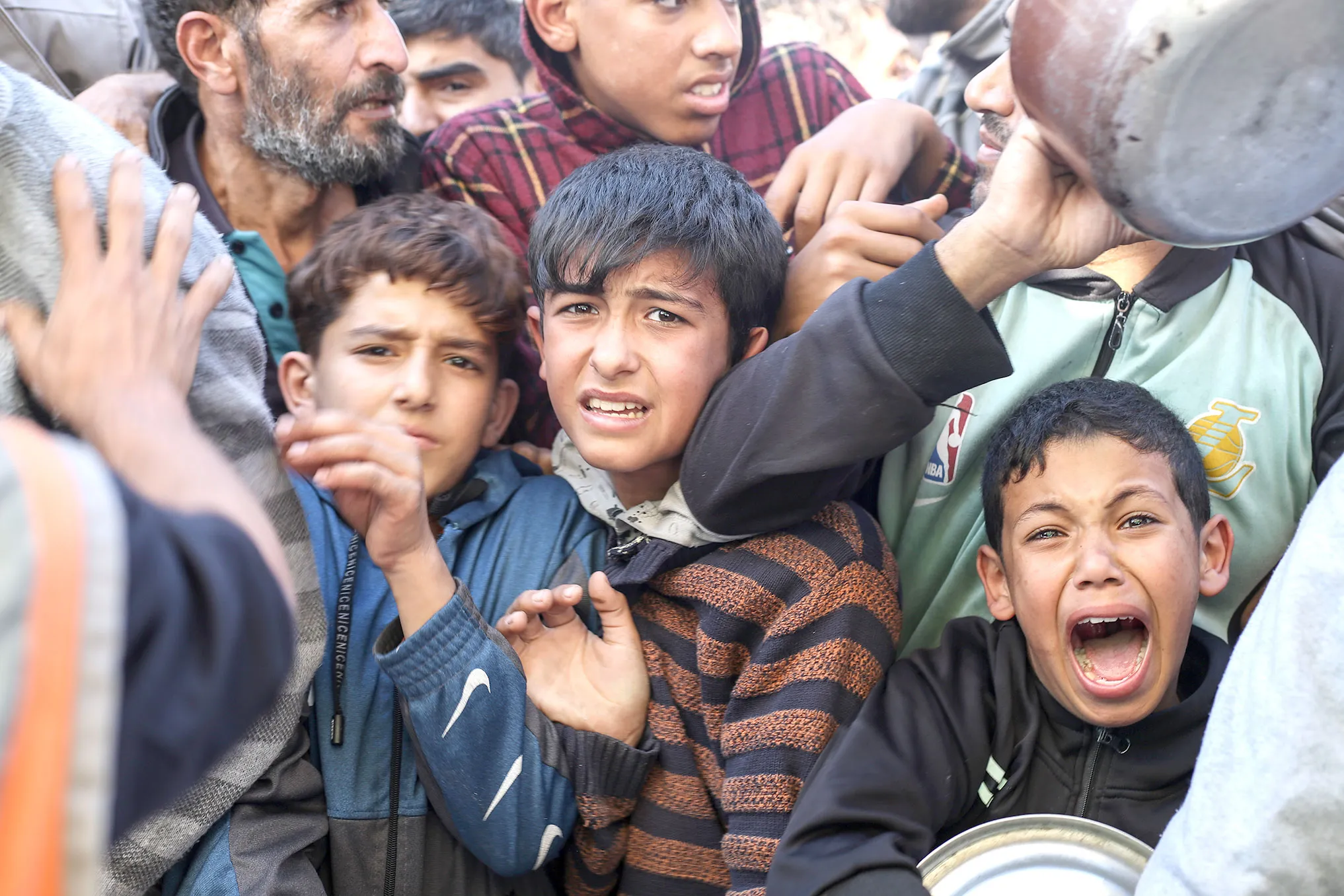
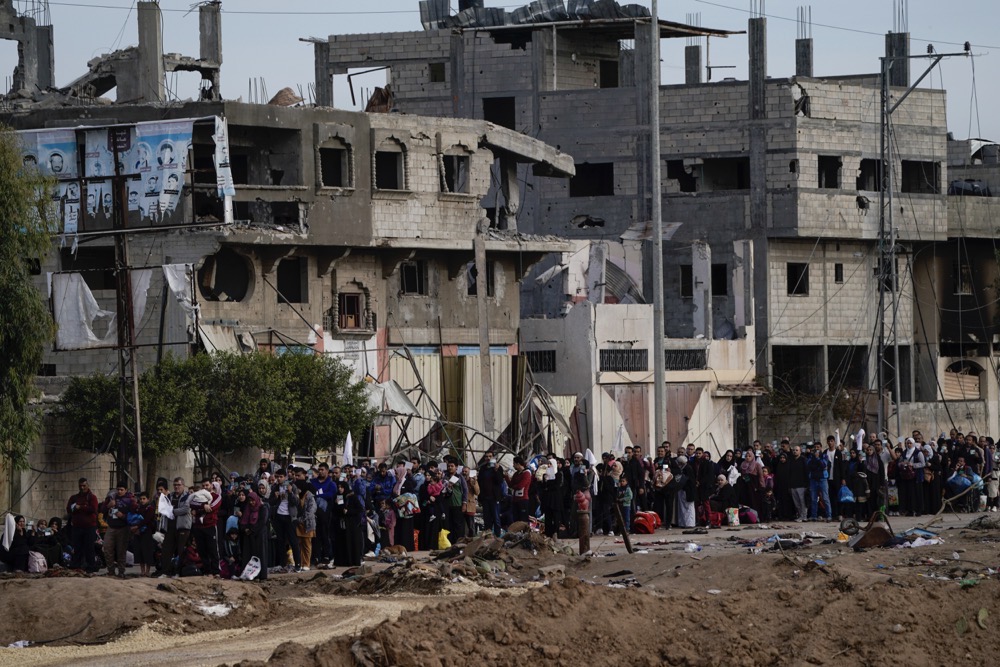
According to reports from Turkish TRT World, a recent aid mission to two hospitals in northern Gaza by the World Health Organization (WHO) has uncovered horrifying scenes of children dying from starvation. 

Dire shortages of food, fuel, and medicines exacerbate the situation.

WHO Chief Tedros Adhanom Ghebreyesus described the findings as “grim,” particularly highlighting the dire conditions at Al Awda Hospital, where one of the buildings has been destroyed. 

The Kamal Adwan Hospital, the only paediatrics facility in northern Gaza, struggles to cope with the overwhelming number of patients. Tedros revealed that the lack of food has tragically led to the deaths of 10 children.

Meanwhile, the Geneva-based organization Euro-Med Human Rights Monitor has released a statement presenting disturbing evidence of Israeli tanks deliberately running over Palestinians. 

Describing these actions as part of Israel’s genocide against Palestinians in Gaza, Euro-Med reported several cases of Israeli forces intentionally running over Palestinian civilians, including incidents on February 29, January 23, December 2023, and February 20.

The organization has called for an independent international investigation committee to address Israel’s ongoing military actions in the Gaza Strip.

The deadly offensive initiated by Israel following a cross-border incursion by Hamas on October 7, 2023, has resulted in significant casualties. 

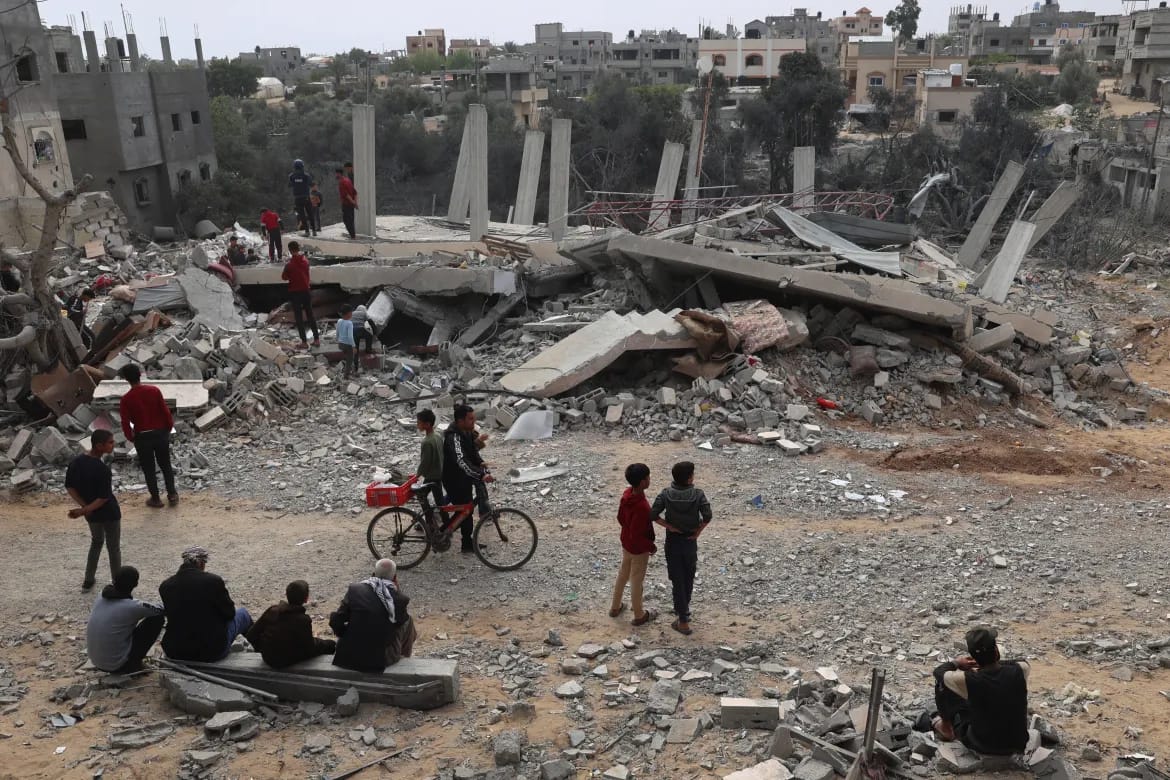
As the Israeli bombardment continues into its 150th day, TRT casualty counts estimate that at least 30,534 Palestinians, mostly children and women, have been killed, with 71,980 others wounded due to mass destruction and shortages of essentials.

‘Entirety of Hamas is a terrorist organization’ —New Zealand

By Sabiu Abdullahi 

New Zealand has escalated its stance against Hamas, extending its classification of the group as a terrorist entity to encompass its entire organization.

This decision, announced by the Ministry of Foreign Affairs, signifies a significant shift in New Zealand’s policy towards the Palestinian militant group. 

Prime Minister Christopher Luxon condemned Hamas for its role in the brutal terrorist attacks that occurred in October 2023, leading to this decisive move by the New Zealand government.

Luxon’s statement affirmed the severity of the attacks and the government’s unwavering stance against terrorism.

Foreign Minister Winston Peters elaborated on the rationale behind the expanded designation, citing the inability to differentiate between Hamas’s military and political wings following the October incidents.

According to Peters, the organisation as a whole bears responsibility for the “horrific terrorist attacks,” prompting the comprehensive designation. 

With the new classification in place, any form of material support or financial transaction with Hamas within New Zealand’s jurisdiction becomes a criminal offense.

However, Luxon clarified that the designation is targeted at Hamas as an organisation and does not hinder private humanitarian assistance to Palestinian civilians. 

Despite the firm stance against Hamas, Luxon reaffirmed New Zealand’s commitment to providing humanitarian aid and future development assistance to benefit civilians in Gaza.

This distinction aims to ensure that the punitive measures against Hamas do not exacerbate the humanitarian situation faced by innocent civilians in the region. 

Gaza War: Might is Right

By Dr Raji Bello

I have no intention of aggravating anyone’s feelings over the war in Gaza. I also feel bad about it, even though I don’t write much on the subject. The main reason for this is that nothing surprises me about what is happening. I have completely anticipated what Israel would do as well as the reaction of the Western countries to Israel’s conduct. No UN vetoes or abstentions by the Western countries is a surprise or a shock to me. 

My interest in history and current affairs for over 40 years has taught me two uncomfortable truths, which I have written about a few times:

1. Might is right. Powerful civilisations, kingdoms or countries have always done as they wished and will continue to do so until the end. Most other countries would either accept or at least not confront what the powerful countries do.

2. Relations between human societies or countries have never been based on moral considerations and will never be. They have always, and will always be, based on interests. Morality only becomes a consideration when there are no compelling interests to pursue.

When these two truths have been understood, two conclusions can be made:

1. no level of horror of human suffering would make powerful countries stop pursuing their interests. This is why the US and the UK behave like they do at the UN.

2. While it is incumbent upon the less powerful countries to also pursue their interests, they should never get in the way of a powerful country’s pursuit of its interests. 

Human beings are not as mentally sophisticated as we might think. We are technically and materially advanced, but the ancient rules still apply. For less powerful countries to survive and flourish, tact is essential. They could get what they wanted through tact but would risk being crushed if they stood in the way of a powerful country. 

The only feasible way to take on a powerful country directly is by acquiring more power than them. Until a less powerful country acquires more power, its strategy should be tact, and tact only.

Middle East, Israel targeted assassinations and the increasing risk of all-out war 

By Ismail Obansa Nimah

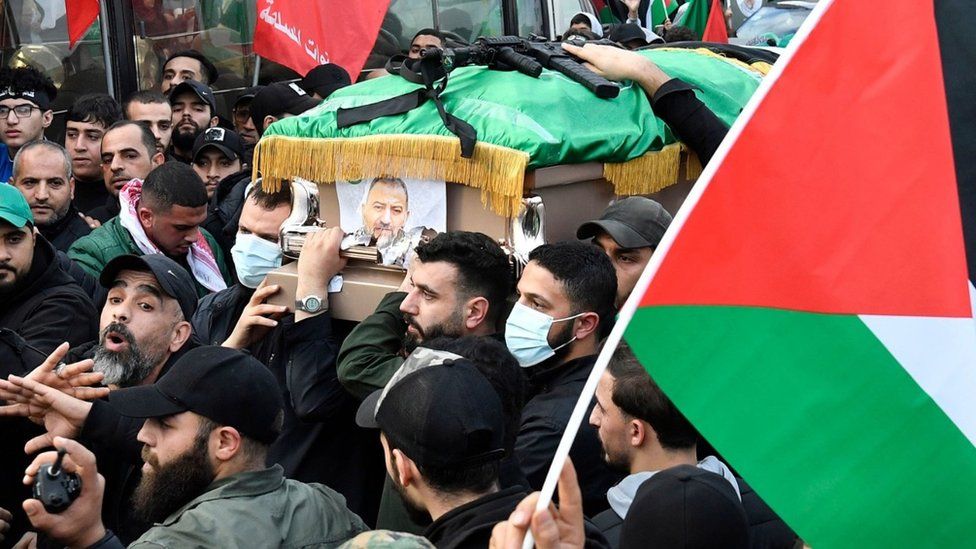
Yesterday again saw another targeted Israeli assassination of a high-profile leader of the Palestinian resistance axis, Hamas deputy leader Saleh Al Arouri. The assassination by Israel took place in the heart of Beirut, the capital of Lebanon, at about 5:45 pm Local time. It comes roughly 24 hours before the 4th anniversary of the assassination of Qassem Soleimani, former Commander of Iran’s elite Quds brigades of the Iranian Revolutionary Guard corps.

On the 3rd of January, 2020, turmoil was yet again unleashed in the Middle East when the United States of America (USA), in collaboration with her Israeli ally, assassinated Major-General Qassem Soleimani, a man who doubled as the commander of the Iranian Elite Revolutionary Quds Force and the second most potent/influential man in Iran after Ayatollah Al-Khamenei (Iran’s supreme leader).

Citing the preservation of the interest and national security of America, the United States launched a drone strike at a convoy conveying Soleimani and Iraqi militia leader Abu Mahdi Al-Muhandis, killing them both and eight others near Baghdad airport in Iraq.

The conflict between the US and Iran dates as far back as the 1970s, and as almost always, the killing of Soleimani immediately rattled up tensions, bringing the US and Iran to the brink of war. According to some Iranian sources, General Soleimani was on an important mission to deliver a message to the Iraqi prime minister about its gulf neighbours and reconciliatory steps taken between Iran and its neighbours, especially its regional rival Saudi Arabia, suggesting that Riyadh may have leaked intelligence to Washington.

The killing of Soleimani was met with shock, worldwide condemnation and fierce declarations of avenge from Iranian officials and Iranians, generally with the supreme leader, President and military commanders/leaders pledging a harsh retaliation. Following the killing, massive protests and mourning broke out in the cities of Iran and Iraq, with hundreds of thousands of Iranians pouring out into the streets, mourning and chanting their desires for revenge.

On January 5th, 2020, the remains of General Soleimani and the other Iranians killed alongside him were flown into Iran amidst a sea of millions of mourners. The funeral and national procession of the Iranian legend was planned for the 7th of January, at his home town in ‘Kerman’, but an ensuing stampede due to massive crowds led to the death of at least 56 people and injuring 213 people, resulting in the immediate postponement of the burial.

In the early hours of the 5th day after Soleimani’s assassination, on the 8th of January 2020, Iran retaliated and launched over a dozen ballistic missiles on two US bases in Iraq. The attack by Iran injured over 100 US soldiers, with most of them reportedly suffering traumatic brain injuries, and also resulted in the destruction of important US assets in the bases. Tensions immediately skyrocketed following the Iranian counterattack, with oil prices rising to levels not seen in 3 months and countries including the US ordering their citizens to evacuate and leave Iraq and its environments, as well as airliners being told to avoid the airspace over Iran and Iraq.

As the world woke up to the news of an Iranian response, so did the news of the downing of Ukrainian International Airlines flight 752, killing all 176 on board. The Iranian Revolutionary Guard Corps placed its defences on high alert following the counterattack, allowing its surface-to-air missile defence system to mistakenly shoot down the Kyiv-bound airliner shortly after take-off from Tehran. Following damages to the US bases and injuries to personnel, President Trump and the Pentagon ordered the immediate deployment of more US military assets to the Gulf region. Consequently, an airstrike on Iran that would be called off at the last minute by President Trump was ordered.

 Iraq, caught in a conflict between the world’s superpower and a Middle Eastern regional power, became destabilised. With the outright violations of its national sovereignty by a supposed ally, protest broke out with both ordinary Iraqis and the Iraqi parliament calling for the expulsion of American troops and other foreign forces from its soil. For a lot of them (Iraqis), the horrors and consequences of decades of war can still very much be remembered and felt, and they, by all means, want to be left out of another regional conflict.

Four years on, tensions remain at a ceiling level between Iran and the US/its Middle Eastern allies, particularly Israel. Israel’s brutal genocidal war on Gaza has killed more than 22,000 Palestinians, as well as more Israeli-targeted killings of Iranian officials. It’s regional allies with American support, including Mohsen Fakhrizadeh; it is yet to be fully known how close an all-out war is between Iran and American-backed forces within the region, particularly Israel.  Although so many structures have been re-named after Soleimani, the void created in the hearts of Iranians, the Palestinian resistance axis and the Islamic Republic of Iran by his death will take a long time to heal and will require more than an anniversary celebration for the already sanction crippled nation.

Ismail Obansa Nimah wrote via nimah013@gmail.com.

Truce extended between Israel, Hamas amidst lingering tensions 

By Sabiu Abdullahi 

The delicate truce between Israel and Hamas faced a pivotal moment on Thursday as both parties agreed to extend the ceasefire just moments before its scheduled expiration at 0500 GMT.

The Israeli military declared an “operational pause” without specifying the duration, citing ongoing mediator efforts and the complex hostage release process. 

Hamas echoed the extension for a seventh day, leaving the specifics shrouded in uncertainty.

Qatar, spearheading the truce negotiations, confirmed the extension until Friday, a decision met with anticipation amid calls for a lengthened pause to facilitate additional hostage releases and increased humanitarian aid to the ravaged Gaza Strip.

The timing coincided with the arrival of US Secretary of State Antony Blinken for crucial talks on Wednesday night. 

The truce, initiated on October 7, brought a temporary cessation to hostilities that erupted when Hamas militants crossed into Israel, resulting in a toll of 1,200 lives, predominantly civilians, and the abduction of approximately 240 individuals, according to Israeli authorities.

Israel’s subsequent air and ground campaign in Gaza reportedly claimed nearly 15,000 lives, predominantly civilians, and left large parts of the northern region in ruins, as reported by Hamas officials. 

Crucially, the truce agreement permits extensions contingent on Hamas releasing ten hostages daily. A source close to the group expressed a willingness to extend the pause by four days.

However, with a mere hour remaining before the truce’s expiration, Hamas disclosed that its offer to release seven hostages and hand over the bodies of three individuals killed in Israeli bombardment had been rebuffed. 

Both sides had previously declared their readiness to resume hostilities, with Hamas’s armed wing instructing fighters to “maintain high military readiness” in anticipation of combat resumption if the truce elapsed.

IDF spokesman Doron Spielman issued a warning of a swift return to operational mode, vowing to continue targeting Gaza if the truce lapsed.

Hamas delays hostage handover, cites agreement terms

By Sabiu Abdullahi 

The armed wing of Hamas, the Ezzedine al-Qassam Brigades, announced on Saturday a delay in the handover of a second group of hostages.

This was part of a truce deal with Israel, contingent on Israel’s adherence to the terms of the agreement. 

The issues at the centre of the delay involve the entry of humanitarian aid to the north of the Gaza Strip and the criteria for selecting prisoners for release.

The truce agreement, spanning four days, included the release of Palestinian prisoners in exchange for a three-to-one ratio. 

Initially, a Hamas source informed AFP that the handover of 14 hostages to the Red Cross had commenced but later reported a halt in the transfer process.

However, an Israeli official countered, stating that the hostages had not yet been handed over to the Red Cross. 

Despite the delay, the Israeli source maintains that Israel has not violated the agreement, alluding to a a different perspective on the situation.

The intricacies of these negotiations continue to unfold against the backdrop of the fragile truce between Israel and the Islamist movement.

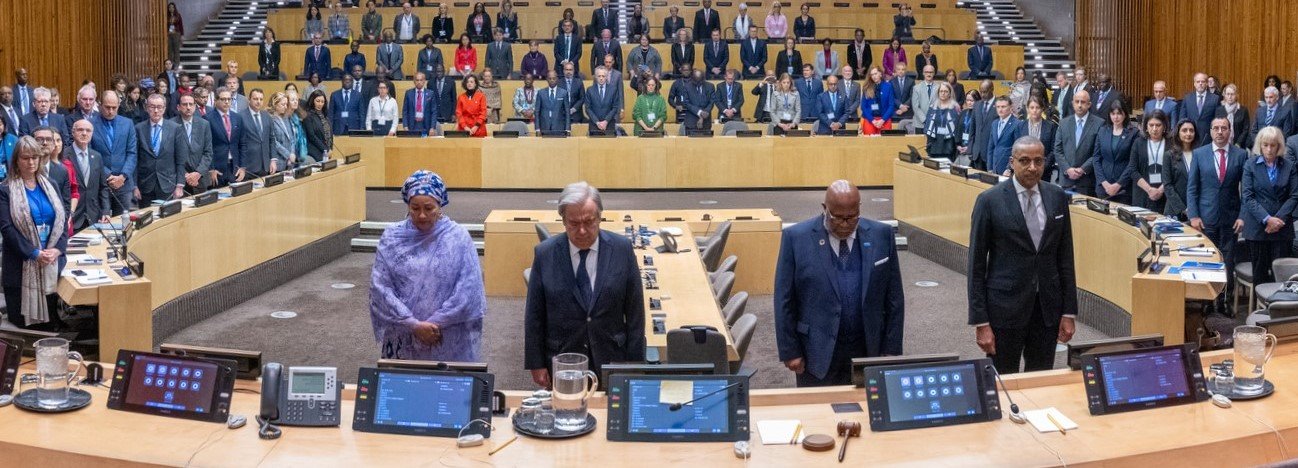
UN mourns staff killed in Gaza

By Ahmad Deedat Zakari

The United Nations (UN) has mourned staff of the organization killed by the Israel attacks in Gaza. 

The UN Secretary-General, Antònio Guterres, disclosed the development in a tweet on Monday. 

According to Guterres, more than 100 staff of the United Nations Relief and Work Agency met their death as a result of the raging war. 

“Today, the @UN family observed a moment of silence to mourn & honour our colleagues killed in Gaza. Since the start of this conflict, more than 100 @UNRWA staff have lost their lives – the highest number of UN aid workers killed in a conflict in such a short time. They will never be forgotten.” He tweeted.

Hamas did not start this war, Israel did

By Ismail Obansa Nimah

Theodor Herzl must be restless in his tomb for what is happening in Palestine. He must have forgotten to remember that even though he succeeded in creating Zionism to champion his vision for a Jewish state in the heart of Palestine, the territory he uprooted people from and where he currently rests was never really his. In it were millions of good-hearted people, living a beautiful life in their homes, farms, families, freedom, peace and prosperity. Until all they had was brutally taken away by the entity Herzl created, the state of Israel.

The Jewish homeland chanted by Herzl since the first worldwide Jewish conference in 1897 and seen by thousands of Jews as their God-given right and as “a land with no people for a people without land”, is for the first time since its creation up in an unprecedented amount of flames.

The West championed the Balfour Declaration after the First World War. It gave the territory of Palestine to a foreign occupation to establish the apartheid state of Israel in total injustice and disregard for the basic human rights of the indigenous people of Palestine.

After the Balfour Declaration,  the Zionist movement gained momentum and confidence. Jews worldwide, particularly in Europe, began to migrate and seek refuge in Palestine. The Palestinians welcomed and gave refuge to the Jews escaping persecution, particularly during the second world war and the Holocaust by Nazi Germany. But to the Palestinian’s dismay, their kind gestures were met with a very painful backstabbing.

 Following the Second World War, the Israeli Declaration of Independence, formally the Declaration of the Establishment of the State of Israel, was proclaimed on 14 May 1948. That declaration triggered resistance from the Palestinian and neighbouring Arab states. It questioned how people’s lands and homes could be stolen from them that easily.

The resistance led to the first armed confrontation between Palestinians and the newly founded state of Israel, together with their allies, resulting in the 1948 Nakbah, which not only saw  78% of Mandatory Palestine become illegally occupied by Israel but also saw the expulsion and flight of 700,000 Palestinians, the subsequent depopulation and destruction of over 500 Palestinian village and geographic erasure, the denial of the Palestinian right of return, the creation of permanent Palestinian refugees in their lands, and the “tyrannical destruction of the Palestinian society, all of which has continued till date.

The events of 1948 uncovered fierce resistance across occupied Palestinian territories and other Muslim nations—one that gave birth to the likes of Hamas, Hezbollah, and the Palestinian resistance fighters.

Since 1948, Israel has continued expanding its occupation and settlements in the Palestinian Territories. It thrashed the two-state solution and violated almost every international law in its systemic oppression, tyranny and ethnic cleansing of the Palestinians. It has carried out numerous indiscriminate attacks and killings of innocent Palestinians. The apartheid regime in Israel has illegally demolished thousands of Palestinian homes, destroyed heritages, desecrated religious sanctuaries, particularly Al-Aqsa Mosque, murdered countless unarmed civilians, including numerous children, women and the elderly and denied Palestinians basic human rights, including their freedom.

At the heart of the Palestinian resistance is the Gaza Strip (the headquarters of Hamas), which has endured decades of Israeli terror, bombardments and siege. The Gaza Strip is a densely populated area with a land, sea and air blockade by Israel since 2007. It is basically a prison.  Israel has carried out countless inhumane, unprovoked attacks across the strip, with the most deadly being in 2014 and the most recent occurring just five months ago. On average this year, 2 Palestinians have been killed daily by Israel across its occupied territories.

The hypocrisy of the Western powers fuelling the Israeli regime for decades has allowed successive generations of Palestinians to take bold and brave initiatives, like what is currently unfolding, to defend and resist the Israeli apartheid occupation. And it appears that the more fight they put to resist, the better they get at it. One may ask, what makes the Palestinians so different from the Ukrainians?

 With the seeming cowardice stance of the Arab Nations in their pursuit of a normalisation agenda at the expense of the Palestinians, it became increasingly clear that if the Palestinians would achieve anything at all, then they would either have to fight bravely and indeed as they currently are or die trying but retaining their honour and dignity with them.

This recent attack has sent a clear message to the world that if peace and stability must be achieved, then attention must be paid to the oppressed and not the oppressor. A man who has already lost so much would not mind throwing all that is left to defend his honour and dignity. The Palestinians have been stretched too thin, and they, more than anyone, have all the right to defend themselves in this war that the creation of Israel started.

Ismail Obansa Nimah wrote via nimah013@gmail.com.