Hamas

Over 100 killed in Israeli strikes on Gaza amid ceasefire dispute

By Maryam Ahmad

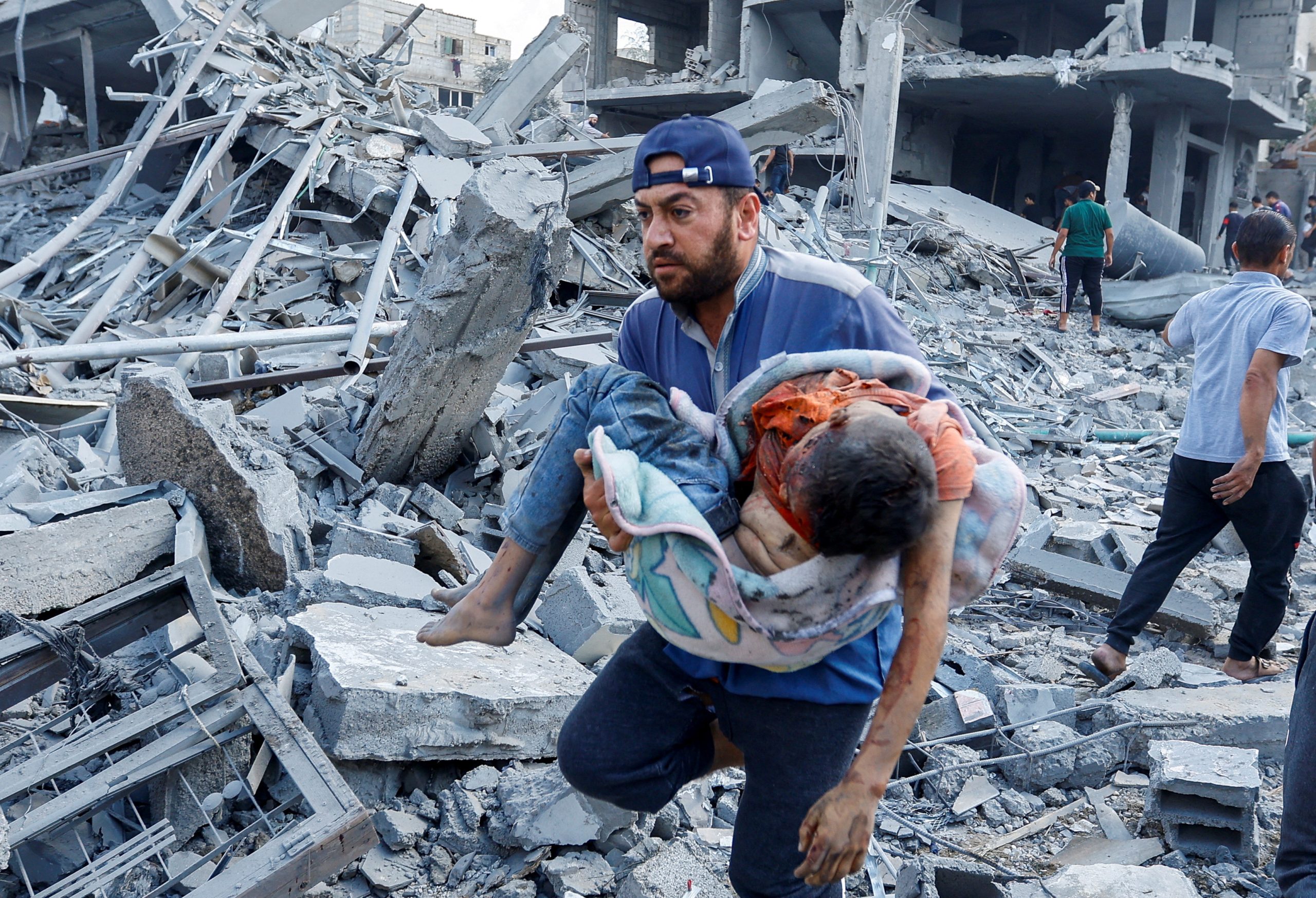
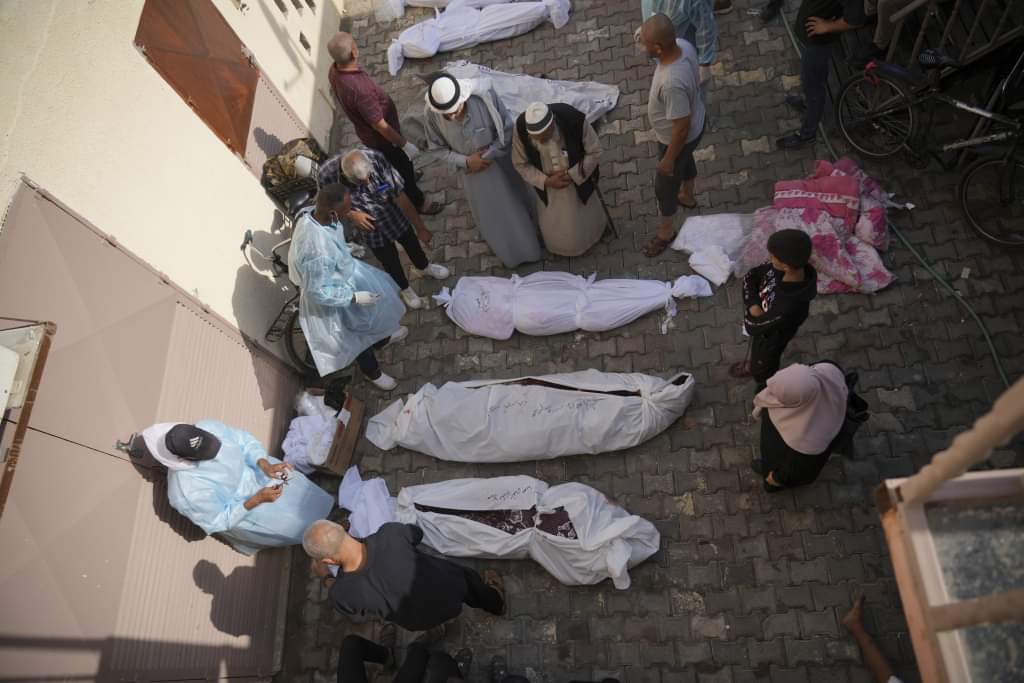
More than 100 people were killed in a series of Israeli airstrikes across Gaza on Tuesday, according to health officials in the enclave. The strikes came shortly after Israel accused Hamas of violating a fragile ceasefire agreement — an allegation Hamas has denied.

Palestinian health authorities said the attacks targeted several densely populated areas, leaving scores of civilians among the dead and many others injured. Rescue teams continued to search through the rubble for survivors late into the night.

In a statement, Hamas rejected Israel’s claims of ceasefire breaches and accused Israel of deliberately escalating the conflict. The group also said Israeli authorities had prevented the return of the bodies of Israeli hostages who were killed during earlier clashes.

The renewed violence has raised fears of a broader breakdown in the ceasefire, which had offered a brief respite after months of devastating fighting. International calls for restraint have grown as humanitarian conditions in Gaza continue to worsen.

Social media reactions trail Israeli strike in Qatar

By Sabiu Abdullahi

The Israeli airstrike in Doha, Qatar, has triggered heated reactions on Facebook, where users expressed anger and criticism over the relationship between Arab leaders and Western powers.

In a post by Facebook user Aisar Fagge, he reminded followers that, “Don’t forget, Qatar gave Trump a $400 million Boeing jet in May, this year. And now Trump has returned the favour. Keep collecting 🔥🔥.”

The comment sparked a flood of responses.Several users showed no sympathy for Qatar. Hussaini M Maccido wrote, “I have no sympathy for them. I can’t waste it on useless people.” Similarly, Bin Muhammad Tofu commented, “I’ve No Sympathy For The Useless Folks.”

Others expressed disappointment in Hausa. Abdulrahman Yunusa stated: “Ya Shiek ka mana da Hausa ‘Sun maida biki’ kenan. An musu alheri sun rama da tsiya,” meaning Qatar responded with hostility despite receiving goodwill.

Saeid Naser Ado argued that the Gulf state betrayed Muslims, saying, “Ba’a murnar shiga wani cikin masifa, amma da sai na ce Allah ya kara. Sbd sun ci amanar Musulunci da Musulmi thou daman ba addinin ne a gaban su ba.”

Musa Babanta criticized the country’s leadership, describing them as, “Shameless people, they should donate their land to Israel to please their western masters.”

Adding to the debate, Abubakar Jamo accused Arab rulers of idolizing former U.S. President Donald Trump. He wrote: “The Arab leaders view Trump as a God. He can save them from being overthrown. During his last visit to the Gulf, his hosts were bowing as they shook hands with him. This is the effect of being extremely rich without being Godly. They are slaves despite being rich.”

The discussions reflect how some Nigerians interpret the ties between Gulf leaders and Western powers, blaming such alliances for the Israeli strike on Doha.

Many commenters suggested that Arab rulers prioritize wealth and Western approval over protecting Islam and Muslims.

UK, France, and Canada condemn Israeli military escalation in Gaza, threaten sanctions

By Muhammad Abubakar

The leaders of the United Kingdom, France, and Canada issued a joint statement today strongly condemning the Israeli government’s continued military operations in Gaza and its denial of humanitarian aid to the besieged population.

In the statement, the three nations called the humanitarian situation in Gaza “intolerable” and labelled Israel’s limited allowance of food into the territory as grossly inadequate. They urged the Israeli government to halt its military offensive immediately and allow unimpeded delivery of humanitarian aid, in cooperation with the United Nations.

The leaders also called on Hamas to release the remaining hostages held since the October 7, 2023, attack on Israel, while affirming Israel’s right to self-defence. However, they described the ongoing Israeli response as “wholly disproportionate.”

The statement strongly criticised the Israeli government’s use of inflammatory rhetoric and warned that permanent forced displacement of Gaza’s population would constitute a breach of international humanitarian law.

The three countries also voiced strong opposition to the expansion of illegal Israeli settlements in the West Bank, stating such actions undermine prospects for a viable Palestinian state and threaten regional security. They pledged to take further actions, including potential targeted sanctions, if the situation does not improve.

The joint statement expressed support for current ceasefire efforts led by the United States, Qatar, and Egypt, and emphasised the need for a long-term political solution. The leaders stressed their commitment to a two-state solution. They highlighted the upcoming June 18 international conference in New York, co-chaired by Saudi Arabia and France, as a key moment for advancing peace.

“We are committed to recognising a Palestinian state as a contribution to achieving a two-state solution,” the statement concluded, reaffirming their readiness to work with international partners to bring stability to the region.

Smotrich: Gaza aid meant to avoid war crimes charges, not alleviate suffering

By Muhammad Abubakar

In a controversial address on Monday, Israeli Finance Minister Bezalel Smotrich openly acknowledged that the limited humanitarian aid allowed into the Gaza Strip is intended not to alleviate civilian suffering but to shield Israel from international war crimes accusations.

Smotrich declared that Israel is “annihilating everything that remains in the Strip,” describing Gaza as “one big city of terror.” He said the provision of minimal aid — such as “a few bakeries distributing pitas” and “a daily portion of cooked food” — serves a strategic purpose: maintaining global political cover. “It allows the world to continue providing us with international protection,” he asserted.

Smotrich defended Israel’s ongoing campaign of widespread devastation, describing it as a shift from targeted raids to full-scale occupation. “No more raids with ins and outs… we are conquering, clearing, and staying until Hamas is destroyed,” he said.

The minister praised the military’s intensified focus on Gaza’s civil infrastructure, noting that the Israel Defence Forces (IDF) is now targeting the administrative apparatus of Hamas, including ministers, civil servants, and the economic networks.

Boasting of the level of destruction inflicted on the enclave, Smotrich said, “We are dismantling Gaza, leaving it in ruins with unprecedented destruction, and the world still hasn’t stopped us.” He went further, expressing support for a complete blockade of essential services: “Until the last of the hostages returns, we should also not let water into the Gaza Strip.”

Perhaps most alarmingly, Smotrich appeared to endorse forced displacement, stating: “The population will reach the south of the Strip, and from there, God willing, to third countries, as part of President Trump’s plan.”

His remarks have sparked renewed concern over the humanitarian situation in Gaza and raised serious questions about the legality and morality of Israel’s ongoing military strategy.

ICC prosecutor Karim Khan steps down amid sexual misconduct probe

By Muhammad Abubakar

The International Criminal Court’s (ICC) chief prosecutor, Karim Khan, has temporarily stepped down from his duties as an investigation into allegations of sexual misconduct against him gets underway.

According to a report by The Wall Street Journal, a junior staff member has accused Mr Khan of forcing himself on her—an allegation he strongly denies. The ICC has not released further details but confirmed that Mr Khan would take a leave of absence to allow for an impartial probe.

Mr Khan has recently been at the centre of international legal proceedings, having sought arrest warrants for leaders of both Israel and Hamas over alleged war crimes committed during the ongoing conflict in Gaza.

In his absence, the ICC announced that Khan’s two deputies will assume his responsibilities to ensure continuity in the Court’s operations.

The investigation is ongoing.

Mahmoud Abbas urges Hamas to release hostages, relinquish Gaza control

By Muhammad Abubakar

Palestinian Authority President Mahmoud Abbas has called on Hamas to release all remaining hostages and relinquish control of the Gaza Strip, in a rare and direct rebuke of the group.

Speaking at a press conference on Tuesday, Abbas said that Hamas’s actions had not only deepened the suffering of Palestinians but also provided Israel with “excuses to commit its crimes.”

“Hamas must take responsibility for its decisions and the consequences they have brought upon our people,” Abbas said. “They must release all hostages and step aside to allow for national unity and reconstruction.”

The statement comes amid ongoing violence in Gaza and heightened international pressure to reach a ceasefire and address the humanitarian crisis. Abbas’s remarks reflect growing tensions between the Palestinian Authority and Hamas, which has governed Gaza since 2007.

There was no immediate response from Hamas to the comments.

BREAKING: Israel launches new ground offensive in Gaza

By Hadiza Abdulkadir

Israel has launched a fresh ground offensive in Gaza, targeting key areas amid escalating violence. The Israeli military described the operation as a “limited ground offensive” aimed at securing strategic zones.

The assault follows intense airstrikes that have killed hundreds of Palestinians, including women and children, and damaged civilian infrastructure. The renewed fighting has shattered a fragile ceasefire, with Prime Minister Benjamin Netanyahu vowing to continue until Hamas is dismantled.

International leaders have expressed concern over the growing humanitarian crisis, urging restraint to prevent further civilian casualties and displacement.

Hamas to release 4 Israeli hostages in truce swap agreement

By Sabiu Abdullahi

Hamas is set to release four Israeli women soldiers who have been held hostage since the October 7, 2023 attack, under a truce deal aimed at easing tensions in the Gaza conflict.

The exchange is part of an agreement expected to see a second group of Palestinian prisoners freed as well.

Israel confirmed on Friday that it had received the names of the hostages due to return, but neither side has specified how many Palestinians will be released in exchange.

The four Israeli soldiers who will be freed are Karina Ariev, Daniella Gilboa, Naama Levy, and Liri Albag.

Albag, who turned 19 while in captivity, and the other women, now 20 years old, were captured during the deadly Hamas assault on Israel in October 2023.

As part of the ongoing ceasefire agreement, Hamas spokesperson Abu Obeida stated on Telegram that “as part of the prisoners’ exchange deal, the Qassam brigades decided to release tomorrow four women soldiers.”

Israeli Prime Minister Benjamin Netanyahu’s office confirmed the list of names had been received through mediators.

Palestinian sources indicated that the releases could begin by noon, though no specific timing has been confirmed by either Hamas or Israel.

This release is part of a fragile ceasefire deal brokered by Qatar and the United States, which began on January 19, 2025.

The agreement is meant to pave the way for a permanent resolution to the conflict.

The deal’s first phase, which commenced last Sunday, includes the return of 33 hostages in exchange for approximately 1,900 Palestinian prisoners.

Thus far, Israel has seen the return of three hostages—Emily Damari, Romi Gonen, and Doron Steinbrecher—in exchange for the release of 90 Palestinians, predominantly women and minors.

The upcoming phases of the agreement are expected to focus on negotiations for a lasting end to the war and the reconstruction of Gaza, while also facilitating the return of the bodies of deceased hostages.

Gaza ceasefire agreement reached amidst mounting tensions

By Sulaiman Abdullahi

A ceasefire agreement was reached late Tuesday between Israel and Palestinian factions in Gaza after months of bloodshed that left thousands of civilians dead and injured. The truce, brokered by Qatar and the United States, aims to halt hostilities and restore a calm region.

The recent conflict, which erupted following the October 7 attack on Israel by Hamas militants last year, rapidly escalated into the deadliest episodes in the Middle East. Rocket barrages from Gaza were met with retaliatory airstrikes by Israel, displacing thousands and prompting widespread international condemnation.

“We have agreed to this ceasefire to prevent further bloodshed and suffering for our people,” said a spokesperson for Hamas, the group governing Gaza. Israeli officials confirmed the ceasefire but stressed that the agreement hinged on “absolute quiet” from Gaza.

The United Nations welcomed the truce, with Secretary-General António Guterres urging both sides to engage in meaningful dialogue to address underlying issues. “This cycle of violence will only end when both parties commit to a sustainable political solution,” Guterres remarked.

Residents expressed cautious optimism. “We are tired of war; we just want to live in peace,” said Mariam Al-Khatib, a mother of three in Gaza City. However, the region remains tense, with many fearing the fragile agreement could unravel.

As the international community continues to call for restraint, the focus shifts to ensuring that the ceasefire holds, offering a glimmer of hope for a long-term resolution to the decades-old conflict.

In his place, many more Sinwars would rise

By Ismail Obansa Nimah

The Israeli military killed Yahya Sinwar.  A picture of Sinwar in a military vest, with a sniper shot at his forehead, with one arm cut off and the other holding an AK-47 riffle, his body under enormous concrete from a collapsed building, circulated online.

Hamas confirmed the news of Sinwar’s death, fighting alongside his comrades for his people, his land, his home and the liberation of Palestine. Until his death, Israel had tagged Yahyah Sinwar as the most wanted man in Gaza and, by extension, the whole of Palestine. The Israeli military has been on the hunt for him for years. 

Born in Khan Younis refugee camp in 1962, after the infamous massacre and Nakbah that saw the newly formed state of Israel exile more than 750,000 Palestinians from their homes and livelihood, Yahya Sinwar spent his life as a refugee in Gaza and was quick to join the Palestinian resistance forces, after being a witness to the miserable treatments and denial of the rights and freedom of Palestinians by Israel.

He lived through the 1967 Arab-Israeli war and was a bedrock in the Hamas resistance movement founded 20 years later, in 1987. 

In 1989, he was arrested by Israel on the accusation of orchestrating the killing of two Israeli soldiers and was given four life sentences. Sinwar went on to spend 22 years under brutal conditions in an Israeli prison. He maximised his stay in prison by becoming fluent in Hebrew and acquiring various diplomas aimed at understanding the Israeli colonial entity, Jewish history and Zionism. He was subsequently released following a prisoner swap in 2011 and was elected the leader of Gaza following Hamas’s political win in the 2007 Gaza elections.

Until Ismail Haniyeh’s death, Yahyah Anwar was the de-facto ruler of Gaza and was second in command regarding Hamas after late Hamas Chief Ismail Haniyeh. Following the assassination of Ismail Haniyeh in Tehran in August of this year, he became the ultimate leader of Hamas and has, since October 2023, led a principled and steadfast fight against Israel in its war in Gaza.

In the last year, the Israeli government has manufactured countless falsehoods and made widespread propaganda about its war on Gaza, Hamas and the leadership of Hamas, particularly Yahyah Sinwar. Israel, through numerous outlets, claimed that Sinwar was hiding in tunnels, surrounding himself with wealth and using hostages and Palestinian civilians as human shields. And even though these claims have been debunked countless times, the Israeli military became the ultimate belier of itself when it released a droned footage of Sinwar’s last moments. 

The intent behind the footage release was to mock Sinwar and the entire Palestinian resistance, but the footage did the opposite. Instead, it propelled Sinwar to become a legendary figure. It showed Sinwar, sitting honourably on a couch, putting on a keffiyeh, debris around with his comrades down; after being fired on by a tank, a missile and sniped on the forehead, he used his remaining arm, in one last act of defiance to throw a stick at the filming drone. He was side by side with his comrades on the front lines, defending his lands and fighting for the liberation of Palestine and every Palestinian.

Sinwar’s entire life has been an inspiration and a huge source of strength for the resistance axis against the apartheid state of Israel. His story bears many sacrifices and losses for the Palestinian front. He was born a refugee and brutally raised as a refugee in his land amidst an unwavering magnitude of oppression and apartheid. 

Regardless of what the U.S.-led West and Israel wanted the world to believe about Sinwar, he died a hero, one that his greatest adversary inadvertently publicised. Even in his death, he continued to inspire the many more Sinwars who would ultimately rise in his place.

Ismail Obansa Nimah wrote via nimah013@gmail.com.