Hajj

Gov Yusuf visits Kano pilgrims in Saudi Arabia, offers sallah gifts

By Uzair Adam 

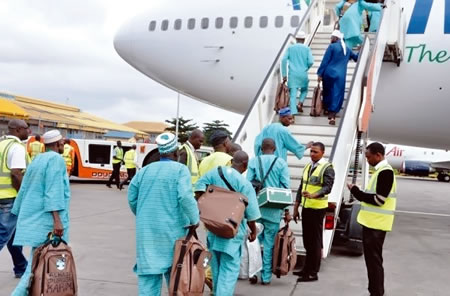
Kano State Governor, Abba Kabir Yusuf, has extended his Sallah greetings to the state’s pilgrims in Saudi Arabia and presented them with monetary gifts to mark the occasion. 

During his visit to their accommodation on Saturday night, he gifted each pilgrim 250 riyals, approximately N105,000.

Governor Yusuf praised the success of this year’s Hajj exercise, describing it as an improvement over previous years, particularly last year. 

“Last year’s Hajj exercise was also good, but this one is better, and we are grateful to God for this success,” he remarked.

The governor said the visit was intended to strengthen relationships, pray for the progress of Kano State and Nigeria, and share in the joy of Sallah with the pilgrims.

He urged the pilgrims to continue praying for Kano, Nigeria, and for those who lost their lives during the Hajj exercise. 

“I also commiserate with the families of those who died in Makkah, Madina, and during Arafah. May those who are missing be found,” he said.

Governor Yusuf called on the pilgrims to remain dedicated to their acts of worship and avoid any actions that might compromise the completion of their Hajj rituals until they return home safely.

He thanked the Kano State Pilgrims Welfare Board, local government chairmen, and other stakeholders for ensuring a smooth Hajj experience. 

“I also thank the local government chairmen for their unwavering support in caring for the people from their areas. And there are also members of the State Assembly, like I said. None of them is sleeping. Everyone is doing their best,” he added.

The governor concluded by praying for the acceptance of the pilgrims’ Hajj and a safe trip back to Nigeria.

In his remarks, the Director General of the Kano State Pilgrims Welfare Board, Lamin Rabi’u Ɗan Baffa, expressed gratitude to Governor Yusuf for his unwavering support and leadership during the pilgrimage.

NDLEA uncovers Hajj cocaine syndicate, arrests three in Kano

By Hadiza Abdulkadir

The National Drug Law Enforcement Agency (NDLEA) has dismantled a drug trafficking syndicate exploiting hajj pilgrims as cocaine couriers to Saudi Arabia.

Two intending pilgrims, Ibrahim Umar Mustapha and Muhammad Siraj Shifado, were arrested on Monday, May 26, at Mallam Aminu Kano International Airport during screening for an Ethiopian Airlines flight to Jeddah. They were found to have ingested 90 wraps of cocaine between them, weighing a total of 1.04 kilograms.

Following intelligence gathered from their arrest, NDLEA operatives apprehended three alleged sponsors of the operation: Abubakar Muhammad, Abdulhakeem Muhammed Tijjani, and Muhammad Aji Shugaba, on May 27 and 28 in Kano.

In a related operation, a 60-year-old businessman, Chinedu Leonard Okigbo, was arrested on May 28 at the same airport while boarding a Qatar Airways flight to Iran. He excreted 65 wraps of cocaine, weighing 1.41kg.

NDLEA Chairman, Brig. Gen. Mohamed Buba Marwa (Rtd), commended the agency’s Kano command for its swift action and called for continued vigilance during the hajj season.

“This bust shows how far traffickers are willing to go. We will not let religious pilgrimage be used as a cover for criminal activity,” Marwa stated.

Nigerians stranded in Saudi Arabia: Reps urge government to take action

By Anas Abbas

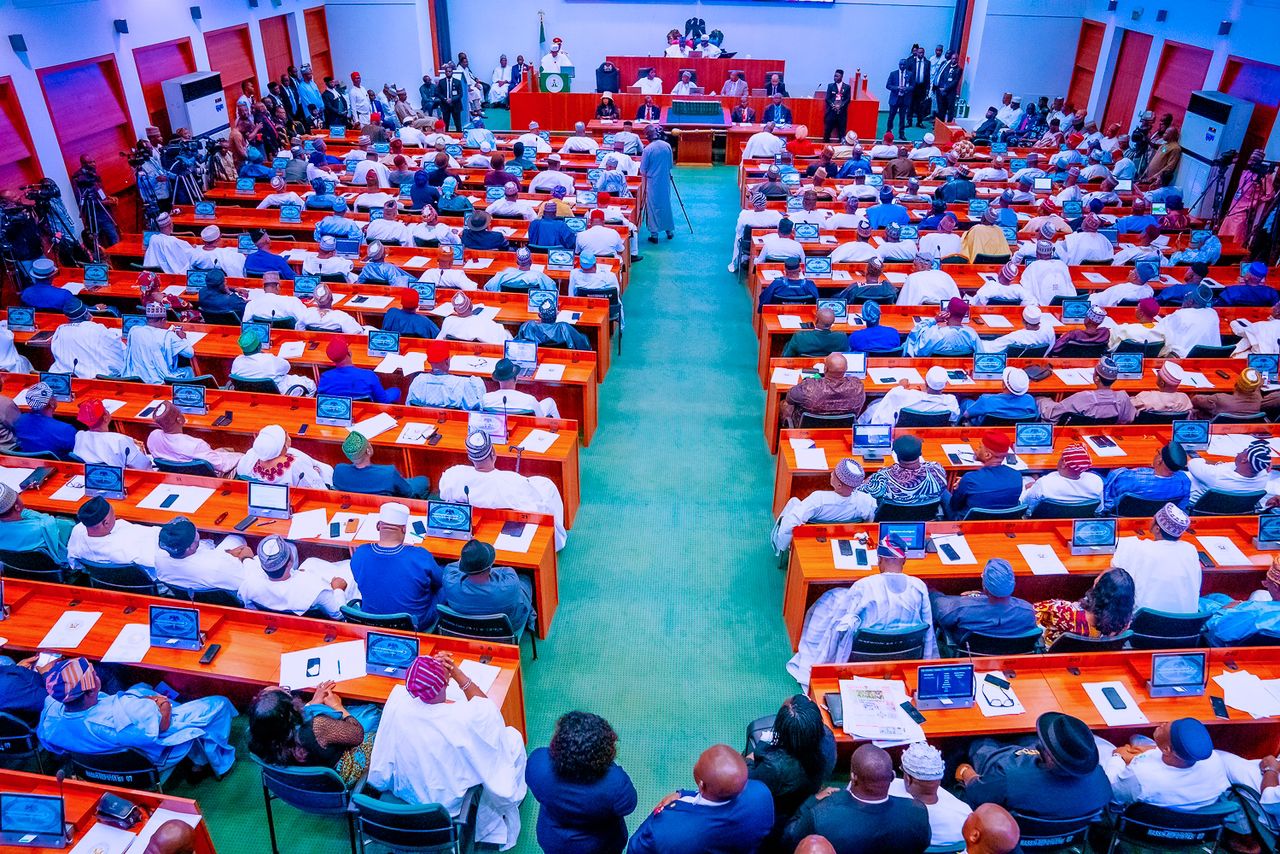
In a significant move, the House of Representatives has urged the federal government to take action to assist Nigerians residing in Saudi Arabia who have been adversely impacted by recent labour and immigration reforms implemented by Saudi authorities.

This call for intervention came during a plenary session on Wednesday, following a motion presented by Rep. Muhammad Bello Shehu (NNPP, Kano). 

Rep. Shehu highlighted that the Saudi government introduced substantial reforms in August 2024, which have had a profound effect on labour laws, impacting numerous Nigerians who have lived in the country for years and often support large families.

The reforms include changes to the definitions of “Assignment” and “Resignation,” the discontinuation of work permit renewals for domestic workers, and various regularisation processes. As a result, many Nigerians have lost their jobs, while others are burdened with exorbitant fees for renewing their documents and work permits.

“Some domestic workers, including drivers, have been laid off and are unable to afford the renewal fees. Many find themselves unable to leave the country due to outstanding overstays,” Rep. Shehu explained.

He also noted that the Urban Renewal aspect of the reforms has further complicated matters, as affordable rental properties have been demolished to make way for urban development, exacerbating the hardships faced by these individuals and forcing their children out of school.

The lawmaker also criticised, particularly the Ministry of Foreign Affairs, for not sufficiently engaging with Saudi authorities to secure an amnesty window for affected citizens or propose viable solutions for their evacuation and return to Nigeria.

In light of these challenges, Rep. Shehu urged Saudi officials to consider granting amnesty to Nigerians who wish to return home. 

Following the motion’s adoption, the House directed its committees on Foreign Affairs, Interior, Diaspora, and Muslim Pilgrimage to collaborate with the Executive Arm. They are tasked with negotiating an amnesty option for those willing to return and ensuring their safe evacuation, with a report due back to the House within six weeks.

Emir of Fufore to lead Adamawa’s 2025 hajj delegation

By Abdullahi Mukhtar Algasgaini

Adamawa State Governor, Rt. Hon. Ahmadu Umaru Fintiri, has named the Emir of Fufore, Alhaji Muhammadu Sani Ribadu, as the Amirul-Hajj and leader of the state’s delegation for the 2025 pilgrimage to Saudi Arabia.

The appointment, announced on Tuesday, recognizes Ribadu’s dedication, experience, and contributions to religious affairs in the state.

The delegation includes:

1. Alhaji Muhammad Buba Jidjiwa

2. Barr. A.T. Shehu

3. Alhaji Ibrahim Abba

4. Alhaji Abubakar Murtala

5. Alhaji Mohammed Dabo (Secretary)

Governor Fintiri urged the team to work diligently with relevant agencies to ensure a smooth and successful Hajj operation.

He also reiterated the need for proper coordination to guarantee a seamless pilgrimage for Adamawa’s intending pilgrims.

NAHCON, Flynas sign agreement for 2025 hajj airlift

By Uzair Adam

A Saudi-designated Nigerian Hajj air carrier, Flynas, has formalized an agreement with the Nigerian government for the airlift of pilgrims for the 2025 Hajj operations.

The National Hajj Commission of Nigeria (NAHCON) has announced that the transportation of Nigerian pilgrims to Saudi Arabia will commence on May 5, 2025.

The agreement was signed on Monday at NAHCON’s headquarters in Abuja by the Chief Commercial Officer of Flynas, Mr. Khaled Alhejairi, and the commission’s Chairman and CEO, Professor Abdullahi Saleh Usman.

Present at the signing were Flynas’s Director for Business Development, Mr. Yasser Ajlan, Manager of Business Development, Mr. Hani Isma’il, and the Managing Director of First Planet Travels and General Sales Agent (GSA) of Flynas in Nigeria, Alhaji Umar Kaila.

Mr. Alhejairi reaffirmed the airline’s commitment to maintaining high service standards for Nigerian pilgrims, stating that Flynas has consistently fulfilled its obligations since joining the Nigerian Hajj operations in 2014.

“We want to assure NAHCON that Flynas will continue to provide comfortable and seamless travel experiences for our esteemed customers in Nigeria during the Hajj operation,” he said.

In January, NAHCON approved four airlines—Flynas, Air Peace, Max Air, and Umza Aviation Services Limited—for the 2025 Hajj operations. Among them, Flynas, the most experienced, has successfully transported Nigerian pilgrims for the past decade.

For the 2025 Hajj, Nigeria has a projected quota of 71,274 pilgrims, with NAHCON preliminarily allocating 22,894 pilgrims to Flynas, 9,145 to Air Peace, 23,342 to Max Air, and 15,893 to Umza Air.

Flynas, which operates in Nigeria under the Bilateral Air Services Agreement (BASA) between Nigeria and Saudi Arabia, has played a key role in stabilizing airlift operations for Nigerian pilgrims while expanding the capacity of its workforce.

NAHCON justifies engagement of new service provider for 2025 Hajj operations

By Uzair Adam

The National Hajj Commission of Nigeria (NAHCON) has engaged an additional service provider for the 2025 Hajj following operational challenges with Mashariq al Dhahabia, the Saudi Arabian company initially contracted to serve Nigerian pilgrims.

A statement by NAHCON’s Head of Public Affairs, Muhammad Ahmad Musa, revealed that the decision was made to ensure a smooth pilgrimage experience after identifying issues that could hinder the seamless participation of Nigerian pilgrims.

Mashariq al Dhahabia had earlier threatened legal action against NAHCON, alleging a breach of contract due to the engagement of another company to provide services during the Masha’ir period—the five days pilgrims spend in Muna, Arafah, and Muzdalifah in Makkah.

The company argued that this move violated their agreement as the sole service provider and gave NAHCON 20 days to initiate discussions on the matter.

However, NAHCON maintained that it had acted in the best interest of Nigerian pilgrims, emphasizing its commitment to transparency and accountability.

“The decision to supplement Mashariq’s services with an additional provider was made after identifying operational challenges, particularly issues with Mashariq’s listing on the Saudi Visa Portal, Nusuk.

“Despite subsequent corrective actions by Mashariq al Dhahabia, NAHCON’s proactive decision was aimed at meeting Saudi deadlines and ensuring uninterrupted service for Nigerian pilgrims,” the statement read.

NAHCON dismissed reports of legal threats as an attempt to pressure the commission into granting an exclusive monopoly on the state pilgrim quota.

It reiterated its commitment to fostering a competitive service environment that prioritizes cost reduction and service quality.

The commission assured that it would continue upholding its contractual obligations and working transparently to safeguard the welfare of Nigerian pilgrims.

NAHCON kicks off major preparations for 2025 Hajj

By Abdullahi Mukhtar Algasgaini

The National Hajj Commission of Nigeria (NAHCON), led by Chairman Prof. Abdullahi Saleh Usman, has commenced its official preparations for the 2025 Hajj pilgrimage with a significant working visit to Saudi Arabia.

The visit, which started on January 7, 2025, follows an invitation from the Saudi Ministry of Hajj and Umrah (MoHU), and aims to lay the groundwork for a successful pilgrimage later in the year.

The Nigerian delegation, which includes top NAHCON officials, is set to finalize key arrangements for the 2025 Hajj.

This includes the signing of a Memorandum of Understanding (MoU) with Saudi authorities, which is scheduled for January 12, 2025.

The MoU will outline the framework for the coming year’s Hajj operations. Nigerian Foreign Minister, His Excellency Ambassador Yusuf Maitama Tuggar, will sign the MoU on behalf of Nigeria.

Accompanying Prof. Usman are NAHCON Commissioners for Planning, Research, Statistics, Information, and Library Services (PRSILS), Prof. Abubakar Abubakar Yagawal; Operations, Inspectorate, and Licensing Services (OILS), Prince Anofiu Olanrewaju Elegushi; and Policy, Personnel Management, and Finance (PPMF), Alhaji Prince Aliu Abdulrazaq.

Representatives from various Nigerian states’ Pilgrims’ Welfare Boards and Commissions, as well as Private Tour Operators, are also part of the visit.

Additionally, members from the Nigerian National Assembly, the Presidency, and the aviation industry have joined the delegation to help oversee preparations and decision-making.

A crucial part of the visit is the attendance of the International Hajj Expo, which kicks off on January 13, 2025. The delegation will evaluate potential service providers for Nigerian pilgrims at the event.

As part of the visit’s agenda, Prof. Usman and his team will hold consular meetings and engage in discussions with the heads of other countries’ Hajj missions.

They will also meet with the supervisors of the Hajj e-track registration portal, as well as officials from the General Authority of Civil Aviation (GACA) and other key stakeholders.

These consultations will finalize arrangements ahead of the MoU signing and set the stage for subsequent contracts with service providers, including United Agents, Car Syndicates, Tafweej, Adillah in Madinah, and Health Supervision Companies.

Meanwhile, other NAHCON staff members are conducting inspections of accommodations, catering facilities, and medical establishments in Makkah and Madinah to ensure they meet the required standards before finalizing agreements with service providers.

The ongoing preparations reflect Nigeria’s commitment to ensuring a smooth and successful Hajj for its citizens, with all logistical and service arrangements being carefully put in place ahead of the pilgrimage later in the year.

Embracing diversity in faith: Reflections from Madina

By Dr. Muhsin Ibrahim

Years ago, when visiting a prominent Hindu temple in Himachal Pradesh, India, an Indian coursemate became excited at the sight of a white man worshipping there. I asked why. She told me it was pretty reassuring to see someone you didn’t expect to share your belief practising it.

As I walk through sites in Madina, including the Prophet’s mosque, I see the faces of people from far and near, dressed differently and speaking various languages. People from all nooks and crannies of the world visit this holy city. I couldn’t help but recall and, somehow, share my friend’s feelings.

Without a doubt, Islam and Christianity, unlike and above many other religions, have universal appeal. I have also been to several parts of the world. However, seeing a sea of people of different skin colours, heights, and sizes worshipping in unison is stunning and soothing.

There is inflation globally, and poverty is also on the increase. Still, people troop to Mecca and Madina to perform Umrah, the lesser Hajj, as if it were free. For many Muslims, especially those who have never come here before, nothing is expensive.

Although the feeling is indescribable, I can mention just one: visualizing what you have (very likely) heard about all your life about Prophet Muhammad (SAW) and his companions feels distinct and unique. It’s so serene and serendipitous – ma sha Allah.

May Allah accept our prayers and rescue our country, continent, and all that is beyond.

Dr. Muhsin Ibrahim, who is a Nigerian working in Germany, is currently on lesser hajj in Saudi Arabia.

Selfies during Hajj – right or wrong?

By Ibrahim Suleiman Ibrahim

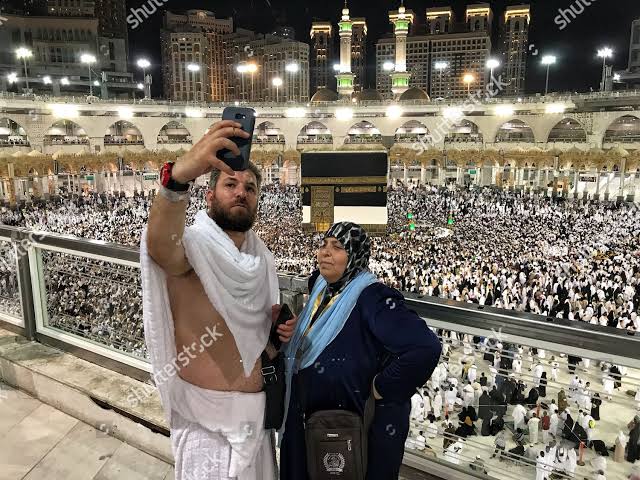
It is a human trait, especially in this digital era, for people to take pictures in memorable places, should they have the privilege of travelling to those places. This is because we humans love to capture our favourite moments in memorable places or with memorable personalities so as to treasure the memories. It isn’t ‘always’ a show-off, as some people misinterpret it to be.

A good example of the manifestation of this trait is how almost, if not all, Nigerian graduates have a picture of them in NYSC Camp wearing their NYSC uniforms, how almost every married person treasures the picture of his/her own wedding ceremony, and of course, how almost all privileged pilgrims take pictures in front of the iconic Ka’abah in Makkah when they go for pilgrimage.

However, I still can’t understand why some holier-than-thou folks quickly conclude without any unambiguous Quranic and Hadith references that anybody who takes pictures in Makkah lacks ‘Ikhlās’, i.e sincerity to Allah, whereas the same people will snap pictures at their respective Juma’at Masaajid after every Friday Prayer, take pictures of themselves learning under Islamic scholars and the likes, without anybody questioning their Ikhlaas.

If there’s anything the pilgrims are showing-off when they travel for Hajj, then it will be the beautiful and memorable locations they were privileged to travel to and not their act of Ibādah that took them there.

I mean, Makkah, aside from being a very beautiful place, is a dreamland to all Muslims across the globe and a place they rarely have the privilege of going to. As such, you shouldn’t expect them not to want to treasure the memories of the once-in-a-lifetime experience they have there.

I understand that some pilgrims allow snapping of pictures to interfere with their acts of Ibādah during Hajj, and that is wrong, but even at that, we aren’t in the position to judge them, as the sincerity of intention is only known by Allah, the all-knowing.

Even where Allah talked about giving alms in the Qur’an, as sacred as it is, he mentioned in Qur’an 2:271 that revealing alms-giving to the public is okay, but concealing it is much better.

We can analogically deduce that it’s actually better if you decide not to take pictures for fear of ‘show-off’ when you travel for Hajj.

However, it is wrong to bully those who choose to take pictures, especially if their intention is to treasure their memories.

We take pictures at important places, in cars, in aeroplanes, and other places. I feel that’s human nature. Do Muslims have any better place than Makkah? Still, I reason that we should guard our Iman and take our pictures with Ikhlas.

Ibrahim Suleiman Ibrahim

Man in tears after walking from UK to Makkah for Hajj

By Ahmad Deedat Zakari

Adam Muhammad, who lives in the UK, said he cried when he first arrived at Makkah for the 2022 pilgrimage. 

“I cried when I first arrived,” He told reporters. 

According to a report by Islamic Channel, the 53-year-old electrical engineer from the UK travelled around 4000 miles on foot to reach Saudi Arabia. 

He thanked the Saudi government for granting him and his family Hajj permits.

“The Saudi government granted my family and me Hajj permits when it knew I was travelling from the UK to Makkah on foot. I met with my family in Madinah after they arrived from the UK and walked together to Makkah. I feel grateful to them,” Adam said. 

While commenting on the journey, Adam said it was difficult, and he made it solely for Allah’s sake. 

“I would feel mentally exhausted, unable to eat or drink too. But then something inside me would tell me that what are you afraid of? You have Allah by your side, and you can make it. I have lived for 52 or 53 years for myself. Why can’t I dedicate 10 or 11 months to Allah?” He said. 

According to reports, Adam reached Ayesha Mosque in Makkah on June 26, where a huge crowd received him. 

Adam had documented the progress of his journey on TikTok, where he is very active with over 2.8 million likes.