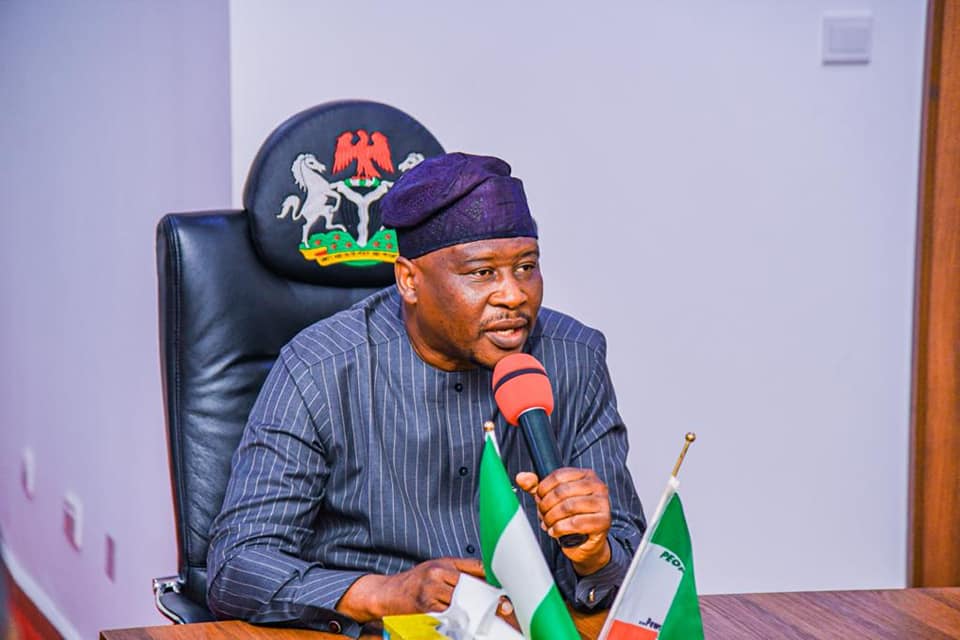
Governor Ahmadu Fintiti

Fintiri’s transformative interventions in the livestock sector

By Zayyad I. Muhammad 

Governor Ahmadu Umaru Fintiri of Adamawa State has demonstrated an unwavering commitment to revitalizing the livestock sector. He recognizes its immense potential to drive economic growth, enhance food security, and improve the livelihoods of farmers and herders. Through strategic policies and targeted initiatives, his administration has made significant strides in modernizing livestock farming, addressing long-standing challenges, and fostering sustainable development.

Key Initiatives and Achievements: Implementation of the National Livestock Transformation Plan (NLTP)  

Under Governor Fintiri’s leadership, Adamawa State has emerged as a key player in implementing the National Livestock Transformation Plan (NLTP), a federal initiative designed to resolve farmer-herder conflicts and promote sustainable livestock practices. In December 2023, the governor inaugurated the Pilot Ranch Project at the Gongoshi Grazing Reserve. This flagship project aims to modernize livestock farming by providing a controlled breeding, grazing, and disease management environment, setting a benchmark for other states.

Rehabilitation and Development of Grazing Reserves: The administration has prioritized the rehabilitation and development of grazing reserves across the state. These reserves have critical infrastructure, including water sources, veterinary services, and access roads, creating a conducive environment for livestock farming. The Gongoshi Grazing Reserve stands as a model of these efforts, showcasing the benefits of integrated livestock development and sustainable resource management.

 Strengthening Market Access for Livestock Farmers: Governor Fintiri has strongly emphasised improving market access for livestock farmers. The Mubi livestock market, one of the largest in the region, plays a vital role in the state’s economy, supplying approximately 29 million animals annually to Lagos State and generating around N29 billion in revenue. By enhancing market linkages and upgrading infrastructure, the government has further stimulated economic activities in the sector, benefiting both farmers and traders.

Conflict Resolution and Community Engagement: A cornerstone of Governor Fintiri’s livestock policy has been resolving recurrent clashes between farmers and herders. His administration has fostered peaceful coexistence between these groups through dialogue, stakeholder engagement, and policy reforms. Establishing grazing reserves and ranching systems has significantly reduced pressure on farmlands and minimized resource conflicts, contributing to a more harmonious and productive agricultural landscape.

Empowering Youth and Women in the Livestock Sector: The administration’s interventions in the livestock sector have also focused on creating employment opportunities for youth and women. Training programs and access to credit facilities have been introduced to enable these groups to participate in modern livestock farming. These initiatives have reduced unemployment and poverty levels and empowered women and young people to become active contributors to the state’s economic development.

Impact and Future Prospects: Governor Fintiri’s interventions in the livestock sector have already begun to yield tangible results, including increased productivity, higher incomes for farmers, and improved food security. By promoting sustainable practices and fostering partnerships with federal and international organizations, the administration has laid a solid foundation for the long-term growth of the livestock industry in Adamawa State.  

A notable example of such collaboration is the partnership between the Adamawa State government and the Livestock Productivity and Resilience Support Project (LPRES). On Thursday, January 16, 2025, the government distributed inputs and machinery to 23,000 livestock farmers, further boosting productivity and resilience in the sector.

Governor Fintiri’s continued focus on innovation, community engagement, and infrastructure development is expected to transform the livestock sector further. These efforts will solidify Adamawa State’s position as a leader in livestock farming in Nigeria and ensure sustainable economic growth and improved livelihoods for its citizens.

Zayyad I. Muhammad writes from Abuja via zaymohd@yahoo.com.
Governor Fintiri creates new chiefdoms and emirates in Adamawa

By Zayyad I Muhammad

On December 24, 2024, Adamawa State witnessed a transformative moment in its history. In accordance with Section 5 of the Adamawa Chiefs (Appointment and Deposition Law, 2024), Governor Ahmadu Umaru Fintiri announced the creation of new chiefdoms and emirates, marking a significant step in reshaping traditional governance and strengthening social cohesion in the state.

The newly created chiefdoms and emirates are:

Hoba Chiefdom with headquarters in Hong (2nd-Class Status)

Madagali Chiefdom with headquarters in Gulak (2nd-Class Status)

Michika Chiefdom with headquarters in Michika (2nd-Class Status)

Fufore Emirate with headquarters in Fufore (2nd-Class Status)

Gombi Chiefdom with headquarters in Gombi (3rd-Class Status)

Maiha Emirate with headquarters in Maiha (3rd-Class Status)

Yungur Chiefdom with headquarters in Dumne (3rd-Class Status)

These creations now gazetted and part of Adamawa State’s statutory repository, represents a bold move to modernise traditional institutions while preserving their cultural significance.

A Vision for Unity and Progress:

Governor Fintiri emphasised the profound objectives behind this development, stating:

“This piece of legislation is expected to reposition the traditional institution and embolden it to smartly play better roles in our affairs; create more centres of dispute arbitration and resolution at the communal level; provide the right governance in all ungoverned spaces within our polity; form more hubs for local intelligence gathering to aid our security system and above all strengthen social cohesion and confer on our people more dignity and pride as citizens.”

By creating these new chiefdoms and emirates, the state government aims to deepen communal harmony, address local governance gaps, and strengthen grassroots security and development mechanisms.

The Inevitability of Change:

Historians and observers have hailed the move as historic and necessary. They argue that societies must embrace the future by adapting to changing realities. Stagnation is not an option in a world that evolves daily. Adamawa State’s willingness to embrace these changes reflects the dynamism of its leadership and the resilience of its people.

As the saying goes, change is the only constant. By recognising the need for adjustments in governance structures, the state has positioned itself as a model for innovation and inclusivity in a pluralistic and multicultural society.

Opportunities for the Future:

The creation of these new chiefdoms and emirates offers greater opportunities. It enables communities to take pride in their identities while fostering unity and collaboration. As centres for arbitration, local governance, and intelligence gathering, the new structures will enhance peace, security, and development across the state.

Governor Fintiri reassured citizens that this process is ongoing and inclusive. “While we congratulate the new Emirates and Chiefdoms, we remain appreciative of other demands and agitations from other nationalities. I can assure you that this is a continuous process. With the right justification for more demands, we shall positively respond to genuine agitations.”

A Call for Collective Acceptance:

Creating these new entities is not just a political or administrative decision but a call for societal progress. It invites every community to rise above divisions, embrace shared aspirations, and move forward as one united state.

As Adamawa State charts this new course, it sends a message to the world: change, when embraced thoughtfully and purposefully, is a force for good. For societies that understand this, the future holds boundless possibilities.

Zayyad I Muhammad writes from Abuja via zaymohd@yahoo.com. 

As Governor Fintiri constructs the first superhighway in the Northeast

By Zayyad I. Muhammad

The Adamawa state government, under the leadership of Governor Ahmadu Umaru Fintiri, has commenced the construction of a 20.8-kilometre superhighway in Yola, the Adamawa state capital.

The Superhighway, starting from the Yola City Gate and ending at AA Lawan Junction inside the city of Yola, will open up a new corridor in the Jimeta-Yola metropolitan area as the superhighway is passing through virgin land, though there is massive building activity along the way—new housing estates, including the 2000 housing units constructed by the Governor Fintiri Government for civil servants and other citizens of the state. Other activities along the corridor are industries, farmhouses, schools, and commercial activities.

Some critics have been accusing state governors of neglecting basic needs while constructing big roads and flyovers, but Governor Fintiri is different—he has struck a balance between human development and infrastructure, rural needs and urban development, and community engagement, and political engagement. Governor Fintiri has built cottage hospitals and rehabilitated general and specialist hospitals throughout the states. He built new schools and improved the existing ones, including the payment for WAEC and NECO for all Adamawa State students.

In the just-released 2023 NECO Results, Adamawa State recorded the highest number of candidates with five credits, including English and mathematics. Recently, Governor Fintiri launched the Adamawa Human Development Council to drive Adamawa’s human development initiatives and oversee all human development issues in the state. Furthermore, Adamawa State has one of the most well-structured and sustainable poverty alleviation and wealth creation agencies in the northeast: the Adamawa Poverty Alleviation and Wealth Creation Agency (PAWECA). The agency trains and develops skills for youth and women; it’s doing well in that its core mandate

Coming back to the main topic, the superhighway, it is simply a product of knowledge-driven governance, which always strives to strike a balance between development and expansion, rural needs and urban requirements, and people’s needs and wants. This balance is essential for any state government to fulfil its vital role in how its citizens and businesses travel, commute, and transport goods and services. One of the crucial components of modern transportation in this era of high-speed technology is superhighways.

Like any other huge construction project, superhighways have their challenges, but the importance and the need for the 20.8-kilometre superhighway along that corridor overshadow its challenges.

City expansion, urban congestion, population growth, and modernization necessitate the need for better roadways on a global scale. Superhighways in towns and cities bring efficiency to businesses that depend on transportation, reduce commuter time, and are designed to enhance road safety while reducing accidents. Their economic impact is substantial, improving connectivity between different sections of the city, reducing congestion, and diverting long-distance traffic away from the inner town’s roads. Governor Fintiri’s 20.8km superhighway stretching from the Welcome Yola City Gate to AA Lawan Junction inside the city, which will be the first in any state capital in the Northeast, will offer these benefits, including opening a new corridor in the Jimeta-Yola capital city.

Zayyad I. Muhammad writes from Abuja via zaymohd@yahoo.com.
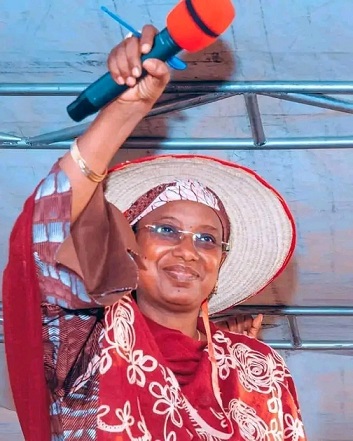
What next for Aishatu Dahiru Binani? (II)

By Zayyad Muhammad

In my piece, “What Next for Aishatu Binani?” Published months ago, I postulated that the Adamawa APC Gubernatorial Candidate in the 2023 election, Senator Aishatu Dahiru Ahmed Binani, had three options to choose from, which would make or mar her political future. First, Binani can continue to insist that she is the ‘Governor-Elect’, as declared by the suspended Adamawa INEC, Resident Electoral Commissioner (REC) Barristers Hudu Yunusa Ari. In this case, Binani will approach the tribunal with that sole demand.

The second option for Binani was to pursue her case through the tribunal while ignoring Hudu’s bizarre actions. The third option for her was to retreat and congratulate Governor Ahmadu Umaru Fintiri. That’s to discard the option of any litigation and move forward for the future. Binani and her team chose the former; they opted for litigation. Now, the Adamawa Governorship Election Tribunal has dismissed her case, thus putting her in a catch-22 situation. If Binani has to pursue the case to the Appeal and the Supreme Court—she will overstretch her luck—in politics, when you overstretch your luck, you may hit the wall with your head.

Everything being equal, Binani will battle three issues: she has lost a good rapport with most Adamawa APC-critical stakeholders. Second, the party itself seems not to be on the same page with her. Thirdly, continuing the legal battle means pressure on her pockets while knowing she has no chance. All the politicians that will hang on Binani’s side will only continue to do so if it will oil their courses.

Prof. Jibrin Amin has a famous saying: Ba’a adawa, babu dawa (opposition only survives with resources at hand). Fourthly, her philanthropic activities will diminish because she is not in a government position that allows her easy access to the materials used for the philosophical activities. Fifthly, discontinuing the case will portray her as weak in the eyes of her supporters. All Binani diehard supporters heavily rely on ‘the court case’ to have temporary relief and hope.

To be fair to Binani, she is among the few politicians with cult-like followers. She has fought a good battle in her own rights, but now she has found herself between two dicey options: one: reformat her politics by discarding all the unnecessary legal tussles; two: mend fences with her party at the state and LG levels, including lowering her head to some APC stakeholders who, hitherto, she assumed were not important, but they have shown her their capacity and understanding of how Adamawa politics works.

Two: go with her cult-like followers, whose only hope and temporary relief is to continue with the extraneous legal battle. And, whichever way she follows—Binani will now battle with being absent from the scene—no federal presence and local presence were cut short by the tribunal dismissal of the case and loss of influence in the local APC chapter.

Another salient fact is that one cannot discuss Binani’s political future without looking at Barr—Hudu’s faith in the court. A federal high court has ruled that Hudu’s trial can go ahead. Hudu’s conviction will have an impact on Binani’s political future.

Furthermore, the Adamawa APC will continue to have two sides: the Binani side, who have suffered massive losses of positions and steam due to court judgements against them, and the other side, who are in absolute control of the party machinery, federal might, and also sitting akimbo, laughing at the former’s predicament.

Nevertheless, one big picture is that Binani, as a person, will have to sit down and look at things from one important angle—the feasibility of being the sole financier of an opposition facing a battle from two fronts—its party and the government in power. Will Binani resort to what she did after the 2015 elections? When she suffered a ‘not surprising’ defeat in the 2015 Adamawa central senatorial election, she imposed upon herself a premature retirement from politics. The 2015 senatorial outing was a product of a miscalculated political move—contesting for the senate on a very weak platform—the PDM.

Here is the big dilemma: if Binani decides to temporarily ‘abscond’ from the scene, events and ‘new’ people will take over her spot before the 2027 election cycle, and if she decides to pursue her case to the Appeal and Supreme Courts, it will be an extraneous and costly adventure.

Here are three suggestions for Binani: First, she has lost goodwill within the APC family but has strong goodwill within her supporters’ base, so it’s time for sober reflection and amendment. Two: Governor Ahmadu Umaru Fintiri appears to be more calculative and bold. The Fintiri team—the Deputy Governor, SSG, Chief of Staff, and the rest—appear to work with the ‘books’ and off-the-shelf as well. In contrast, Binani’s team heavily relies on weak pivotal emotion hearsay and is confined to just a minute unit, which their eyes see, forgetting the wider picture.

The best bet for Binani is to congratulate Governor Fintiri and move on, as Mallam Nuhu Ribadu did to her after the APC Gubernatorial primary election tussle. The last suggestion for Binani is to make a deep soul search for where she wants to be in 2027 and the tough road ahead.

Congratulations, Governor Ardo Ahmadu Fintiri!

Zayyad Muhammad writes from Abuja. He can be contacted via zaymohd@yahoo.com.

A welcome to Gov. Fintiri’s Fresh Air metro buses 

By Zayyad I. Muhammad

Governor Ahmadu Umaru Fintiri ‘Fresh Air Metro Buses’ have commenced operation in the Jimeta-Yola metropolis, shuttling between Jimeta and Yola town, Jimeta Modern Market to Sangere. Modibbo Adamawa University to the Market, Sangere, Welcome to Yola City-Gate to the Market axis, etc. The government also said it planned to take more buses to other local government areas.

The metro buses significantly impact the citizens’ lives, as the fare fee is a mere 100 naira to any destination. Students, market women and men, farmers, and civil servants have expressed their joys and delight and excitement as one big issue in the common man’s difficulties—the high cost of transportation—has been solved.

Three cardinal things are the lubricants of a decent life: good healthcare, proper education, and easy transportation. Once a family had these things eased for them, all other things are now secondary. 

Politics apart, Gov. Fintiri has impacted healthcare by constructing new cottage hospitals and rehabilitating general hospitals. The payment of WAEC and NECO examination fees, rehabilitation of schools, and teacher welfare. And now, with the commencement of the metro bus service, which has transformed people’s lives not only through easing pressure on their pockets but also through the luxurious nature of the buses while being transported to their places of work, etc.

Recall the arrival in the state of the 58-seater luxurious ‘palliative buses’ was a big surprise to many people, including those in the opposition. Within less than a week of the government’s intention to procure the buses, the buses arrived in the state capital. This is commendable. This writer also says the metro buses are part of the ‘systemic approach’ of the Fintiri government in tackling the economic hardship associated with the removal of the subsidy on petrol, commonly called PMS, by the federal government.

Apart from providing cheap, affordable, and comfortable transportation to the masses, the purchase of the buses by the Fintiri government from Innoson Vehicles Manufacturing (IVM) is a true reflection of the government’s desire to support the local industries, whose multiplier effect can even reach the Adamawa people since the buses are being operated through public-private partnerships (PPP) to create jobs, maintain the buses, and create a friendly business environment to attract more investment.

The Fresh Air Metro buses will assist workers in their daily transport to their offices, pupils to their schools, and the movement of people from one point to another, including the ease of doing business in the state. Furthermore, the buses will greatly eliminate the hustling of using KEKE NAPEP tricycles.

One of the most important aspects of it is that the buses will greatly eliminate the insecurity that Shila Boys associate with the KEKE NAPEP; people will now freely and comfortably use the buses even at night without the fear of anything happening to them as each bus has security personnel attached to it. Urban planners have looked to such public transportation to facilitate improvements in community health and well-being.

Zayyad I. Muhammad writes from Abuja.

What next for Aishatu Binani?

By Zayyad I. Muhammad

Now that the storm in the drama-filled Adamawa gubernatorial election has been subdued, the two big contenders, Aishatu Dahiru Binani and Governor Ahmadu Umaru Fintiri, will have the opportunity to retrospect and strategize for their next steps. 

On Binani’s path, there are two junctions. First, stick to the moment. Second, make a U-turn to a new path. 

The fact is, the actions of the now-suspended Adamawa state Resident Electoral Commissioner (REC) Hudu Yunusa have ‘dented’ Binani’s public sympathy, especially outside Adamawa. The REC’s actions have put the APC on edge. So, Binani needs both ‘on-the-shelves’ and ‘off-the-shelves strategies, as her next moves may make and mar her political future. She has three (3) options.

First, continue to insist that she is the Governor-Elect, as declared by REC, Hudu Yunusa Ari. In this case, Binani will approach the tribunal with a sole demand – the court to proclaim her Governor-Elect,  based on Section 149 of the Electoral Act 2022, which states that: ‘Notwithstanding any other provisions of this Act, any defect or error arising from any actions taken by an official of the Commission in relation to any notice, form or document made or given or other things done by the official in pursuance of the provisions of the Constitution or of this Act, or any rules made thereunder remain valid, unless otherwise challenged and declared invalid by a competent court of law or tribunal.

The second option for Binani is to pursue her cause through the tribunal while completely ignoring Hudu’s bizarre actions. She can reinforce her case by hammering on the alleged irregularities in some local government areas during the 18th March 2023 gubernatorial election. Places like Governor Ahmadu Umaru’s village, Madagali LGA, which claimed a whopping 42.2% voter turnout

Binani’s third opposition is to retreat – congratulate Fintiri, discard the option of any litigation and move for the future.

These three options have implications for Binani, Adamawa politics, and Nigerian polity.

If Binani and her team decide to take the first option, she would be testing the effectiveness and the efficacy of section 149 of the Electoral Act 2023. While it will be good for democracy, as the court will interpret the section, INEC will do whatever possible to save its face.

The Bola Ahmed Tinubu government may be interested as well because it may want to distance itself from Hudu’s actions to show the international community and Nigerian ‘eagle eyes’ that the election which brought Tinubu to power was fair and that the umpiring was not jungle-like. Binani taking this option means that many heads will roll, as Hudu may spill the beans. Binani may also continue to lose support because Hudu’s actions were a ‘third-rate’ action in politics (elections are best won at the polling units). REC Hudu’s action has attracted many observers even outside Nigeria.

For the second option, Binani has good advantages over Fintiri if she can assemble an excellent legal team alongside experienced politicians, political experts, and intellectuals from Adamawa to provide data, facts and figures, and shreds of evidence to back up the claims of irregularities during the elections. Binani has a bright chance of winning the case based on technicalities, while Fintiri will face a lot of hurdles here. This option is very expensive and requires both political and individual commitment from Binani’s team.

The third option for Binani is to retreat, congratulate Fintiri, and move on. This is the most difficult option for her, in fact, for any politician who has come as far as she has. If Binani goes for this option, many of her supporters will be initially demoralized. But in the long run, she would relieve the entire polity of the suspense, uncertainty, and unknowns. In fact, the investigations on Hudu Yunusa, securities heads, and other people will be inconsequential.

Binani will rediscover herself, remove the dent of Hudu’s action on her political outlook, and technically trounces her adversaries in the Adamawa APC. She will create the road to becoming  Adamawa’s version of Kwankwasiya because of her well-known philosophical activities and for being an Iron Lady.

Furthermore, with this (third) option, Binani will ‘save the day’ for many people. But it is a very difficult option; only politicians operating with a complete mind of their own will opt for such an option. It requires foresight to see tomorrow from today.

 Binani may have depleted her arsenal, but she has had a good fight; Fintiri will not forget her in a jiffy.

Zayyad I. Muhammad writes from Abuja via zaymohd@yahoo.com.
Why Binani may not win Adamawa governorship election

By Mohammed Kabir Ibrahim

The March 18, 2023, governorship election in Adamawa State was unarguably the tightest-ever contested race in the history of the state. The incumbent governor, Ahmadu Fintiri, was up against a formidable challenger, Aishatu Dahiru Ahmed (popularly known as Binani), a former member of the House of Representatives and the current senator representing Adamawa Central Senatorial District.

The election was shaped to a large extent by ethnoreligious sentiment. While most Christians and ethnic minorities voted for the governor, most Hausa-Fulani/Muslims voted for Binani. Although the election was declared inconclusive, Binani committed avoidable mistakes that denied her the chance for a landslide victory.

Disrespect for elders was Binani’s first mistake. Shortly after the APC primaries that saw her defeat prominent politicians, including a former governor, Jibrilla Bindow, and former EFCC chairman, Nuhu Ribadu, some concerned Adamawa elders prevailed on Binani to reach out to those who lost the primaries for their cooperation and support towards winning the general election. Rather than heeding their elderly sound counsel, Binani was said to have exhibited a high level of arrogance and dismissed them as “Ribadu’s errand boys”. The elders took offence and refrained from making any further reconciliatory efforts. This singular display of hubris emboldened her opponents to teach her political lessons. While former Governor Bindow, alongside thousands of his supporters, dumped the APC for PDP, the former EFCC boss, Ribadu, opted to challenge the nomination process at the court.

Binani’s second mistake was populating her strategic campaign team with an army of incompetent, immature and belligerent youth under the aegis of “Binani Ambassadors”. These young people, some of whom are still fresh students in universities and colleges, have become her veritable political strategists. They dished out spurious propaganda and disparaged anyone who challenged Binani’s politics. The brazen manner in which the Binani Ambassadors demonised and denigrated Binani’s challengers on various social media platforms without restraint contributed to anti-party activities, particularly among thousands of Ribadu supporters during the governorship elections.

The Binani Ambassadors also misled her into believing that she had sufficient grassroots support and, as such, she didn’t need the backing of APC stalwarts in the state. The case of Fufore Local Government Area is a glaring example where Binani and her incompetent strategists bypassed and excluded renowned APC stalwarts and appointed lightweight politicians to coordinate her campaign.

Preference for political vendetta against perceived political opponents over reconciliation and cooperation preparatory to the all-important general election was Binani’s third political mistake. Perhaps acting on the ill-advised strategy of the insecure Binani Ambassadors, Binani initiated and pursued indiscriminate infighting between her loyalists and anybody loyal to Bindow or Ribadu within the Adamawa APC. The obsequiousness of the former state chairman of the party, Alhaji Ibrahim Bilal, further aggravated the intra-party conflicts. It had reached a point where the party leadership in the state got fed up and showed Alhaji Bilal the exit door.

Binani’s seemingly conceited and domineering nature is another mistake that cost her a sweeping victory at the end of the March 18 election and may likely work against her at the forthcoming supplementary polls. Those who know her say she always insists on having her way at all costs, even when her actions are supposedly unreasonable. For example, she allegedly stormed Ribadu Ward in Fufore Local Government Area and unilaterally sacked duly elected ward officials of the party. A senior ward official made several pleas for reconciliation and cooperation, but Binani was said to have dismissed his overtures and challenged him to go to court. A cursory look at the results from IREV shows that she narrowly won the Ribadu Ward, a largely Hausa-Fulani domain that could have given her an edged advantage.

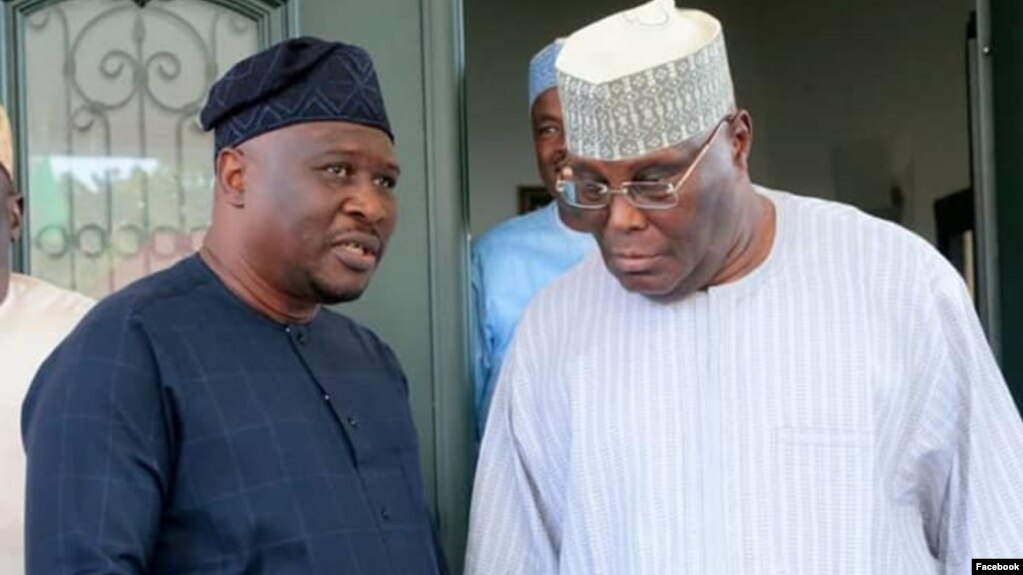
Binani also shot herself in the foot when she started an unwarranted battle against the party officials at her Ward in Yola South Local Government Area. She was alleged to have orchestrated the suspension of some key party officials loyal to Ribadu, although her antics were not successful. Binani’s relentless pursuit of political vendetta did not stop at the state level. She was also said to be clandestinely fighting with the loyalists of the first lady, Aisha Buhari and Secretary to the Government of the Federation, Boss Mustapha. Perhaps that explains why Mrs. Buhari’s brother, Mahmood Halilu, was seen alongside Governor Fintiri at the residence of former Vice President Atiku Abubakar during a press conference calling for the declaration of the election results after several delays. Even most recently, there are speculations that Binani is behind the suspension of the SGF.

Regardless of the outcome of the yet-to-be-scheduled supplementary election, Binani has succeeded in creating the impression that she is an authoritarian who will give no room for the opposition if, by the rarest coincidence, she becomes Nigeria’s first democratically elected female governor.

On the other hand, her philanthropic initiatives, massive support of women voters, ethnoreligious sentiment, and the fact that she hails from the central zone, which has the highest concentration of voters in the state, contributed in large measures to her impressive performance at the March 18, 2023 polls. Winning the cooperation and support of her party stalwarts would have closed the insignificant margin and propelled her to a landslide victory. As it stands now, Binani would need a miracle to win over 35,000 votes from the mere 37,000 available to defeat Governor Fintiri and become Nigeria’s first elected female governor.

Mohammed Kabir Ibrahim wrote from Kaduna and can be reached via mohammedkabir.ibrahim@gmail.com.

We need more of Binani

By Aliyu Idris

It’s undeniable that Sen. Aisha Dahiru Ahmed Binani’s name has travelled in the ears of many Nigerians. Her emergence as the flagbearer of the Adamawa State Governorship Candidate of APC grasped and arrested the attention of the country’s populace. With these, she received massive support and countless prayers from the people in the country and even the diaspora. Without a doubt, she’s a notable personality in this year’s election.

Binani might win or lose the election, but she won the people’s hearts. She has become influential and has set a pace for people to follow in the country’s politics. Among her influence is making the incumbent governor (Ahmadu Umar Fintiri) substitute his male running mate (Crowther Seth) with a female (Prof Keleptawa Farauta). This remarkably uplifts the status of women’s participation in politics and dismantles the common sense of some people that women don’t have a role to play in politics.

Binani’s bravery is incomparable; her audacity and capacity have shaken and made the sitting governor shiver and quiver. She made him initiate last-minute empowerment and execute some projects at the election deadline. Similarly, how she defeated strong male candidates during the party’s primary election is encouraging.

Binani will now be leaving the red chamber. Her four years as a senator representing Adamawa Central Senatorial Zone birthed legacies that will live on forever. Her projects in different sectors such as education, health, poverty alleviation programs, the establishment of Federal Medical Centre Mubi, upgrading Federal Medical Centre Yola to a Teaching Hospital and Modibbo Adama University Yola (MAU Yola) from a technology University to a conventional university, solar power lights supplies, unending and unbiased empowerment of hand workers, donations to religious organisations, youths association, and other life touching projects during her single tenure as senator will remain a testimony of making her the best-elected representative in the state.

Binani’s attracted even the opposition and proved to the present administration that their chanting and ranting of no opposition in the state is merely an illusion and a mirage but fortunate enough. They have now realised her intense display of spirit towards achieving a goal can never be underestimated, like Shakespeare’s lady Macbeth still gives them sleepless nights. Binani is a beacon of steadfastness that motivate the two genders, and her political career is now a fad, and she remains vivacious.

We need more Binani in us, around us and with us. The pavement of strong female participation in contemporary Nigeria has been set and revived by Binani. 

Binani is energetic, and the declaration of inconclusive is not the end of the journey but rather a fresh beginning to return and positively impact people’s lives. May Adamawa State and Nigeria succeed.

Aliyu Idris writes from Jimeta (Yola North) and can be reached via aliyuidreesali@gmail.com.

2023: Governor Fintiri’s politics of deceit and the presidential election in Adamawa

By Auwal Modire

The Presidential elections have come to pass, and the outcome of the results will continue to be a watershed in the political terrain and a new definition of “Loyalty “ in Adamawa PDP politics. Atiku Abubakar of the People’s Democratic, PDP, got 417,611 votes, Bola Ahmed Tinubu of the APC got 182,881, Peter Obi of the Labour Party (LP) secured 105,648 votes, while Rabiu Musa Kwankwaso of the New Nigeria Peoples Party (NNPP) got 8,006 votes

The performance of the Labour Party in the state though not surprising because of the open secret fraternity of the incumbent Governor with the Labour Party for some time. 

It is now obvious that the allegations against the Governor of Adamawa state for anti-party activities have come to pass. Many prominent people of Adamawa State last month alleged and warned that Governor Rt. Hon.  Ahmadu Umaru Fintiri had pitched his camp with the Labour Party’s Presidential candidate and crisscrossed the state campaigning for him in line with the arrangements of the G5 PDP Governors. It’s an open secret that he remained a member of the group covertly. The outcome of Saturday‘s Presidential election is a clear testimony to that effect. 

The theatrics of the  Governor’s pretentious loyalty and deception could only go that far, and today the die is cast, and the truth cannot be suppressed.

 Atiku Abubakar though not unaware of Fintiri’s intrigues, according to sources, decided to ignore all the clear and overwhelming evidence shown to him in that regard and deluded himself in a suspension of belief, hoping that Governor Fintiri would continue to be loyal and supportive.

The Waziri Adamawa rightly or wrongly is said to be scared of the consequences of confronting the Governor in order not to jeopardise his political fortunes since all politics are local, and will need the governor on his side to succeed in this rather elusive Presidency, having attempted severally without success and believing this could be his last opportunity. 

 In February, when the Labour Party candidate, Peter Obi, visited Adamawa State for his campaign, he ignored the protocol of usual courtesies on the Paramount Ruler, the Lamido of Adamawa Emirate and Chairman of the Adamawa state Traditional Rulers Council but headed straight to Numan Federation to pay homage/Respect to Hamma Bachama of Numan Federation, which was a serious breach of protocol and a slight on the Lamido. It’s also on record that he was there to fraternise with the predominantly Christian community in the zone. 

Obi’s action was attributed to Fintiri’s advice and in active collaboration of CAN leadership. This strategy is today consequential to Labour’s Political gains in that part of the State. Obi defeated Atiku in Numan LGA and secured substantial votes in the other areas in the zone. 

The outcome of the elections results in Madagali, the Governor’s support base where the Labour Party won at the Governor’s polling unit, is, without doubt, a collusion in cohort with the Governor.

The ADC Gubernatorial Candidate, Malam Muhammadu Usman Shuwa, after officially endorsing the PDP presidential candidate, His Excellency Alhaji Atiku Abubakar and promising to work for him in the state, relocated to his home town Madagali 6 days before the election. He made serious contact and strategies to ensure Alhaji Atiku Abubakar’s victory and delivered his polling unit and even his ward for Atiku.

If Fintiri had Atiku’s interest, he could have ensured he delivered not only his unit or Madagali but the entire Northern Zone for Atiku, being his domain and as an incumbent Governor of Atiku’s Party, but behold, the outcome isn’t what we expected.

They say in war, political war inclusive, all is fair, and politics is like the contributions in “Adashe”. In other words, it’s turn-by-turn. Everyone will take his share, albeit at the tail end  

Waziri Adamawa is well-schooled in political treachery and well-acquainted with its muddy terrain. Therefore needs not be incited into realigning his priorities and strategies. He surely feels where it pinches.

In stating the obvious, we can only wish Waziri Adamawa well in his future endeavours

Auwal Modire wrote from Yola, Adamawa state. He can be reached via modiree@aol.com.

Fintiri leads with sincerity of purpose

By Mubarak Shuaybu Shelleng

Before, Adamawa, as a sovereign state, was counted among the most underdeveloped states in Nigeria. Many transitional administrations we had in the past failed to deliver their mandate in providing basic social amenities to the teeming populace.

The incumbent governor of Adamawa state, Ahmadu Umaru Fintiri, was accurately counted among the few that impeccably excelled in delivering the security, education, health, and infrastructural needs of the state in his first four years in office. Something that is least expected from him. But the man surprised many by changing the narrative in running a system that touched the life of a common man in every nook and cranny of the state.

Unfortunately, none of the past administrations followed the right blueprint on how a committed and effective government should operate the way this current administration is doing.

Interestingly, it’s become a surprise to many that this current administration has succeeded in leaving no single stone unturned when talking about the provision of social amenities and workers’ welfare. A welcomed development that everyone, irrespective of their political parties, is applauding. If truly one has it in mind that we want Adamawa to develop and compete with other states in terms of infrastructural, political, and socioeconomic aspects, then this administration is moving on the right channel.

It’s now general knowledge that little or none among those that voted Fintiri into power regret their action, except those that are not interested in what is called ”Good governance” but focused more on stomach infrastructure. 

More often than not, those who truly had a dream of seeing progressive Adamawa through governance are usually not concerned with political affiliation, religion, or region, among other factors that characterize us as individuals. Rather individuals’ capacity to deliver, based on track record and physical projects, need no further political analysis. Political Candidates that will lead with utmost patience, a high sense of responsibility, and sincerity of purpose. 

Besides, very few among the most sophisticated and critically equipped minds think and analyze issues while keeping their personal biases and prejudice in interpreting and analyzing things that have a direct effect on societal wellbeing. Others find it difficult to think. Thus, remain with no option but to follow the Bandwagon.

The experience, they say, is the best teacher, and with what Adamawa state has been going through for years, regardless of the political party, one can be able to judge fairly on the kind of administration that instantaneously impacted positively the life of all and sundry.

Therefore, it’s high time we learn to turn a deaf ear to self-centred politicians who are influenced by the number of greedy sycophants surrounded with, seeking cheap political gains.

One is at every liberty to criticize or defend a particular divergent political view. But we should not deny the fact that some state governors have performed wonderfully well.

Truth is bitter and difficult to comprehend, but lies are sweet and travel faster than one could ever imagine. Though, understanding the complex game of politics is not for all but a few.

Mubarak Shuaybu Shelleng writes from Yola, Adamawa State.