Goodluck Jonathan

Fuel subsidy gone, but the borrowing floodgates are open

By Nasiru Ibrahim 

Nigeria’s debt situation has become more confusing and concerning in recent years. After removing fuel subsidies, which had always been used to justify heavy borrowing, many expected a change in direction. But surprisingly, debt has continued to rise—and sharply. 

In less than two years, Bola Ahmed Tinubu’s administration has added over ₦62 trillion to our total debt. This comes on top of Muhammadu Buhari’s already heavy debt legacy. Yet if you check the 2025 budget, it still carries a huge deficit. This is despite relatively stable oil prices and a slight improvement in crude oil production. So, something is clearly not adding up.

How can a country that has removed one of its biggest expenditures—fuel subsidies—still be borrowing more than ever? Is it that the revenue reforms aren’t working, or is this a deeper issue with how we manage our economy? These are real questions that need honest answers. The reality is that Nigeria’s current borrowing trend is worrying not just because of the amount, but also because of the manner in which it’s happening and what it reflects.

According to the Debt Management Office, as of March 31, 2025, Nigeria’s public debt stood at ₦149.39 trillion. Tinubu alone has added ₦62.01 trillion to that figure in under two years. Now, let’s compare that with previous administrations: Goodluck Jonathan borrowed ₦5.9 trillion in five years. Buhari borrowed ₦74.78 trillion in eight years—including the controversial “Ways and Means” borrowing from the Central Bank of Nigeria (CBN). That’s how bad things have gotten.

“Ways and Means” are short-term loans from the Central Bank to the Federal Government, intended to cover urgent expenses such as paying salaries or addressing unexpected shortfalls. Think of it like an overdraft facility. But the law is clear—the CBN Act, 2007 (Section 38) states that the Federal Government can only borrow up to 5% of the previous year’s revenue from the CBN, and it must be repaid in the same year. Under Buhari, this law was ignored. His government borrowed ₦22.7 trillion through Ways and Means, without obtaining proper approval from the National Assembly.

This ₦22.7 trillion had not been reflected in official debt figures for a long time. It only became part of Nigeria’s domestic debt record in May 2023, when Buhari’s government securitised it—basically converted it into long-term bonds. That move alone caused the total public debt to jump from ₦44.06 trillion at the end of 2022 to ₦87.38 trillion by June 2023. That’s a massive increase in just six months.

Now, some economists argue that Tinubu’s debt figures appear worse primarily due to the exchange rate. That argument is simple: Nigeria borrows in foreign currencies, such as the dollar, euro, or yuan, but records the debt in naira. So when the naira weakens, the same dollar loan becomes much bigger in naira terms.

Let’s look at the exchange rate across administrations. Under Jonathan, the exchange rate was around ₦ 157 to $1 in 2015. Under Buhari, the exchange rate was ₦770/$ in 2023. And under Tinubu, the exchange rate is now approximately ₦1536/$ as of 2025. So when you convert the same external loan, the naira value explodes as the currency weakens. Just this exchange rate movement has added ₦29.75 trillion to Tinubu’s external debt and ₦5.9 trillion to Buhari’s.

To properly check if the debt spike is mainly due to FX changes, let’s fix the exchange rate at ₦157/$ for all the administrations and see how much was actually borrowed. The formula is simple:


Old Dollar Debt × New Exchange Rate – Old Dollar Debt × Old Exchange Rate.

Using the DMO’s external debt figure of $38.81 billion in 2023:
$38.81bn × ₦770 = ₦29.85 trillion
$38.81bn × ₦1536 = ₦59.63 trillion
₦59.63 trillion – ₦29.85 trillion = ₦29.78 trillion

So, if the exchange rate had remained at ₦157/$, Nigeria’s external debt of $42.46 billion in 2025 would have been approximately ₦6.6 trillion. Under that fixed exchange rate, Jonathan’s total external borrowing would have been approximately ₦1.07 trillion over five years. Buhari’s about ₦4.48 trillion in eight years.

Tinubu’s about ₦1.12 trillion in under two years. This means if Tinubu continues at this pace, he’ll hit Buhari’s figure—₦4.48 trillion—in about eight years. Yes, the exchange rate plays a significant role. But that’s not the whole story.

Others argue that Tinubu’s debt problem is not just about FX. It’s also about spending discipline. Unlike Buhari, Tinubu removed fuel subsidies and slightly increased oil production (1.5–1.6 million barrels per day, compared to Buhari’s average of 1.2–1.3 million barrels), and customs and tax revenue also improved. Buhari faced more challenging conditions—global oil crashes, two recessions in 2016 and 2020, the COVID-19 pandemic, and high subsidy payments—during his early years. So, Tinubu had more room to save, but instead, borrowing has increased.

The 2025 budget projects a deficit of ₦13.08 trillion. It assumes oil at $77.96 per barrel and production of 2.06 million barrels per day. However, in reality, March production was only 1.65 million barrels per day, including condensates. And as of July 8, Brent crude was $70.20 and WTI was $68.42—both below the assumed price. That means revenue projections may fall short, and the government will likely borrow even more.

Tinubu has already requested $21.6 billion in new loans. In May 2025, Reuters reported that he also asked the National Assembly to approve loans of €2.2 billion, ¥15 billion (approximately $104 million), and an additional $2 billion in domestic loans. That’s not all.

The Federal Government also secured a $747 million syndicated external loan to fund Phase 1, Section 1 of the Lagos-Calabar Coastal Highway—from Victoria Island to Eleko Village. At ₦1536/$, this loan adds ₦1.147 trillion to the debt. The lenders include Deutsche Bank, First Abu Dhabi Bank, Afreximbank, and Zenith Bank, among others. The Islamic Corporation for the Insurance of Investment and Export Credit (ICIEC) is providing insurance. That brings Tinubu’s total borrowing to about ₦63.157 trillion in under two years.

This highway is being built under a Public-Private Partnership using an EPC+F model. The road is over 70% complete and is designed using CRCP technology—concrete with a 50-year lifespan and low maintenance requirements. While the loan adds to debt, it shows some confidence from global investors and introduces a financing model that shares risk between the government and private firms.

Now to the bigger picture. As of 2024, Nigeria’s debt-to-GDP ratio is around 25.1%, based on ₦144.67 trillion in debt and a nominal GDP of about $375 billion. That means debt accounts for about one-quarter of the economy—not yet alarming, but becoming risky if borrowing continues at this rate. What’s more worrying is the cost of servicing debt.

In 2024, debt service took up 4.1% of GDP—up from 3.7% in 2023 (AfDB report). That’s a lot. Imagine 4.1% of the entire economy going towards just paying off debt, instead of building schools, roads, or hospitals. Even worse, the debt service-to-revenue ratio rose from 76.86% in 2023 to 77.4% in 2024 (APA News). This means more than three-quarters of government revenue is now used to repay debt. That leaves very little for anything else. That’s not sustainable.

As Economics graduates, the way forward is clear. First, we need to depoliticise how we manage public finances. Countries like Chile, Sweden, and the UK have independent Fiscal Councils that enforce rules like debt limits and balanced budgets. Nigeria needs something like that to restore discipline and rebuild investor trust.

Second, loans must be tied to development goals—not used for consumption. Borrowing should be used for essential services like roads, electricity, and digital infrastructure, rather than paying salaries or covering bloated administrative costs. Rwanda and Ethiopia have shown how debt used for infrastructure can boost exports and growth. A cost-benefit analysis should accompany every loan.

Third, we must cut waste and off-budget liabilities. That includes fuel subsidies, failing state-owned enterprises, and unauthorised bailouts. Ghana passed a Fiscal Responsibility Act in 2018, capped its deficit at 5% of GDP, and ran audits that exposed massive leakages. Nigeria can cut borrowing by 30–40% just by following that path.

Fourth, improve tax collection—not by harassing small traders, but through fairness and the use of technology. Indonesia raised its tax-to-GDP ratio by digitising filing, automating risk detection, and linking tax IDs with national identity numbers. Nigeria can do the same—target high earners and multinationals instead of informal workers.

Fifth, public-private partnerships and syndicated loans, such as the Lagos-Calabar road, shouldn’t be used to conceal debt. They should help us attract private capital, share risks, and deliver real development. Countries like Morocco and Kenya make their PPP contracts public. Nigeria should also strive for greater transparency.

Finally, if things get out of hand, we can consider debt restructuring—but only as a last resort and if tied to fundamental reforms. Ghana restructured its debt in 2023 by extending maturities and cutting interest under IMF guidance. But what made it work was reform—cutting subsidies and improving tax systems. Without reform, restructuring solves nothing.

This is the time for Nigeria to act. If we continue on this path, we are only postponing a more profound crisis. But with the right decisions, we can still change direction.

Ibrahim is a graduate of Economics from Bayero University, Kano. He can be reached via nasirfirji4@gmail.com.
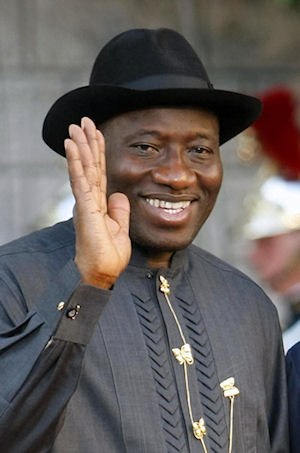
Jonathan’s PDP comeback: A Political revival or vote-splitting sabotage? 

By Salisu Uba KofarWambai 

The latest buzz in Nigeria’s political arena is nothing short of explosive: former President Dr. Goodluck Jonathan is reportedly set to return and contest under the platform of the Peoples Democratic Party (PDP). The revelation has sent shockwaves across the nation and beyond. But beneath the headlines, a critical question lingers — what is the real motive behind this sudden political twist?

Before the emergence of the African Democratic Congress (ADC) as a viable coalition platform for the opposition, Nigerians had grown increasingly frustrated with what they saw as a weakened opposition front. The PDP, once a vibrant counterforce, had been reduced to what critics call a “toothless bulldog,” accused of being manipulated by President Bola Tinubu through Nyesom Wike, a PDP member who openly works in favour of the ruling party and now holds a position in Tinubu’s government.

Wike’s influence, according to party insiders, has been anything but peaceful. His repeated interventions and internal disputes have reportedly destabilised the PDP, a strategy many believe cost the party dearly in the 2023 general elections. With the backing of the current administration, Wike has consistently won key legal battles, tightening his grip on the PDP’s power structure.

Recognising the deepening crisis, several PDP heavyweights, including the party’s last presidential candidate, Atiku Abubakar, abandoned the PDP ship, aligning under the ADC banner to form a credible opposition. This development was warmly received by many Nigerians disillusioned by the ruling APC’s economic policies, from the sharp devaluation of the naira to the painful removal of fuel subsidies, policies they say have deepened poverty nationwide.

Alarmed by the growing acceptance of the ADC among struggling Nigerians, the APC-led government appears to be dusting off an old playbook. Just as they allegedly did with the Kwankwasiyya movement in 2023, they now seem ready to field a high-profile figure to split the opposition vote. This time, the role is reportedly being handed to none other than Jonathan — a move seen by many as orchestrated to weaken the ADC’s momentum.

For political observers, the pattern is clear: divide the opposition, consolidate power, and keep the electorate distracted, all while avoiding a united front that could unseat the government in 2027. What stings for some Nigerians is the idea of Jonathan, once the principal, now accepting political direction from his former protégé.

Whether Jonathan’s alleged return is a personal decision or part of a calculated strategy by the ruling party remains to be seen. But one thing is sure: the stage is set for a high-stakes political drama, and Nigerians will be watching closely to see how and where this political gunshot will be fired.

Jonathan pays heartfelt tribute to Yar’Adua, 15 years after his passing

By Hadiza Abdulkadir

It has been fifteen years since Nigeria lost one of its most respected and selfless leaders, President Umaru Musa Yar’Adua. 

Today, Nigerians across the nation reflect on the life and legacy of a man whose brief presidency profoundly impacted the nation’s democratic and developmental journey.

Former President Goodluck Ebele Jonathan, who served as Yar’Adua’s vice president and later succeeded him, paid a heartfelt tribute to his late friend and leader. 

In his message on social media, Jonathan described Yar’Adua as a patriot and a servant leader who was driven by a commitment to unity, justice, and national progress.

“President Yar’Adua’s life was defined by service and selflessness,” Jonathan stated. “Whether as a teacher, governor, or president, his stewardship was guided by hard work, patriotism, accountability, commitment to justice and adherence to the rule of law.”

Yar’Adua’s presidency was marked by his efforts to reconcile a divided nation, foster unity among its people, and mobilise collective action towards building a just and peaceful Nigeria. Though his time in office was cut short by illness, his administration is remembered for significant reforms and a leadership style rooted in humility and inclusion.

Jonathan praised Yar’Adua for his unwavering dedication to democratic ideals and for laying a foundation of peace and accountability. “Fifteen years after his passing, he continues to stand as a reference for good leadership and a legacy of impact,” Jonathan remarked.

As the nation remembers President Yar’Adua, many Nigerians continue to honour his contributions to building a better country and celebrate the enduring example he set in public service.

Is the PDP dead?

By Kabiru Danladi Lawanti, PhD

By every objective measure, the People’s Democratic Party (PDP) has ceased functioning as a viable political entity in Nigeria. Its carcass continues to move but without pulse, purpose, or coherence. As a ruling party, the PDP had its moments, but its legacy is weighed down by monumental abuses of power, systemic electoral malpractice, and industrial-scale corruption. 

From the open manipulation of election results mid-process to the weaponisation of state institutions for partisan gain, the party leadership helped normalise impunity at the highest level. Two decades on, many of these cases—alleging theft of billions—are still unresolved.

But the party’s death didn’t happen overnight. It began in 2007, when President Olusegun Obasanjo imposed a sick candidate on Nigerians, followed by Goodluck Jonathan’s directionless presidency. In 2014, a mass defection gutted its internal cohesion, when five of its governors established the new PDP to challenge what they called a lack of internal democracy within the party. 

Losing power in 2015 should have been a moment for self-correction. Instead, the PDP lost its ideological compass. It abandoned the one role opposition parties must play in democracies: the duty to provide clarity, contrast, and credible alternatives. 

Even as the All Progressives Congress (APC) drifted into policy incoherence from 2017 onward and the confusion that followed – petroleum prices increase, ASUU and other university union strikes, economic recession, open stealing never seen before in the nation’s history, fuel subsidy removal, minimum wage controversy, etc.- the PDP remained inert—leaderless, rudderless, and largely invisible.

Today, what remains of the PDP is a loosely held patchwork of political actors in retreat. Governors are defecting. Its 2023 vice-presidential candidate has walked away. State-level structures are hollowed out. Internal leadership is fractured, and there is no unifying idea or strategic doctrine to rally around. What does this tell us? The PDP is not in decline. It is defunct.

Nigeria is experiencing a vacuum of governance across federal, state, and local levels. What is needed is a credible alternative with intellectual spine, strategic clarity, and moral authority. The PDP has forfeited that opportunity. Nigerians are now confronted with two bleak options: to stick with a failing ruling party or scavenge among opportunistic startups branded with catchy acronyms and no ideological soul.

The PDP’s collapse is more than a party’s fall—it is a signal of deeper systemic decay in Nigeria’s political architecture. But in every collapse lies an opening: for principled political entrepreneurship, grounded in values, competence, and execution. Who will offer that? The people that landed us in this mess in the first place or new faces? 

We need new faces in the political arena. These people parading themselves as opposition are no different from the PDP or APC; they are the same. Our youth need to return to their senses, and most people we see in leadership positions started showing their ability to lead in their early 20s. We must step forward if we want to see a Nigeria of our dreams. The time for lamentations is over.

The future belongs to those who can build systems, not just win elections.

The unfinished battle for local government autonomy

By Lawal Dahiru Mamman

In countries where governance works in favour of the people, citizens always look forward to progress and innovation. In contrast, Nigeria often clings to nostalgia, with many, including those who never lived through certain eras, romanticising what they fondly call the “good old days.”

Believing that the past was always better than the present, some advocate for a return to free education and overseas scholarships. Others yearn for the days of kobo coins, arguing that Nigeria’s economy thrived when they were in circulation and the naira held strong against the almighty dollar.

The era of Native Authorities, which largely financed itself through poll taxes and prioritised education, is also missed. Back then, local administrators ensured students were transported to and from school dormitories at the beginning and end of each term, reinforcing a system that valued structured governance and community welfare.

These administrative units, established under British colonial rule, eventually led to local governments (LGs). Initially, the LGs performed well, maintaining orderly markets, paying teachers’ salaries, and addressing essential grassroots needs.

However, over time, they lost autonomy and are now seen as mere appendages of state governments. Recognised as the most crucial level of governance due to their proximity to the people, successive administrations have made efforts to grant LGs full autonomy.

Yet, these efforts have consistently faced resistance. In 2012, former President Goodluck Jonathan declared his commitment to local government autonomy, emphasising that meaningful national development was impossible without functional local councils.

He argued that empowering LGs would have mitigated the rising insecurity. Jonathan also opposed the state-local government joint account, insisting that councils had a pivotal role in his administration’s “Transformation Agenda.”

At one point, he took legal steps to actualise this vision, but the dream of LG autonomy remained unrealised. Former President Muhammadu Buhari also pursued this goal. In May 2020, he signed an Executive Order granting financial autonomy to the judiciary, legislature, and local government councils.

Experts hailed this as a landmark move toward a more people-centred governance structure. Buhari’s rationale was grounded in Section 7 of the 1999 Constitution, which mandates LGs to oversee primary, adult, and vocational education, develop agriculture and natural resources (excluding mineral exploitation), and maintain key public services.

Their responsibilities also include street naming, house numbering, waste disposal, public convenience maintenance, and the registration of births, deaths, and marriages—basic yet crucial civic functions that remain poorly executed in today’s Nigeria.

Additionally, LGs are tasked with assessing and collecting tenement rates, regulating outdoor advertising, and overseeing public health and alcohol control. However, despite Buhari’s efforts, his administration’s push for LG autonomy, much like Jonathan’s, ultimately failed.

Now, President Bola Ahmed Tinubu finds himself at the center of this enduring struggle. He successfully secured a Supreme Court victory affirming LGs’ constitutional rights and their role in advancing grassroots governance.

He hailed the judgment as a win for democracy. However, what initially appeared to be an achievement began to feel like a setback. Many believe that state governors, who have long controlled local government resources, are deliberately frustrating the implementation of this autonomy for personal gain.

The requirement that LGs must conduct elections to receive direct allocations has further complicated the issue, as state governments continue to manipulate the process to maintain dominance.

By its very nature, local government should be the most accessible level of governance, open to all—from the ordinary citizen who walks barefoot to the community leader who mobilises residents for communal projects.

Yet, it has become a political chessboard where governors install their loyalists as council chairmen or caretakers, reducing them to mere appendages rather than independent administrators. Governors have historically played a decisive role in shaping Nigeria’s presidential politics.

With the 2027 elections casting a long shadow, party defections and quiet coalition-building are underway. This leaves Tinubu in a precarious position: will he stand firm on his commitment to full LG autonomy for sustainable economic development, or will he yield to political pressures and look the other way as 2027 approaches?

The battle for local government autonomy remains unfinished. The question now is whether Tinubu will see it through or let history repeat itself.

Lawal Dahiru Mamman writes from Abuja and can be reached via dahirulawal90@gmail.com.

The fall of the mighty

By Bilyamin Abdulmumin, PhD

When the PDP began its first tenure in 1999, there was a level of humility and fairness. But it was in their second tenure that their invincibility began to take shape.

As a former military Head of State, Olusegun Obasanjo did not help matters. For the second time in Nigeria’s history, he declared a state of emergency in Ekiti and Plateau and threatened several other states. During this period, the legislature was allegedly weaponized for political control, and allegations extended even to the Economic and Financial Crimes Commission (EFCC), a respected anti-graft agency. 

Arguably, the PDP reached its zenith in 2007 and became so confident that it could “do and undo. ” The opposition could no longer hold any chance; instead, they covertly or overtly carried out the bidding of the powerful PDP. This exuberance and excesses of the then-ruling party culminated in a ditch for democracy: reports indicated that the 2007 presidential election results were declared while the collation was still ongoing. 

In 2011, Goodluck Jonathan’s administration continued its escapade. Allegations of corruption and mismanagement ran rampant, and the PDP became a haven for anyone singing its praises. This perception was palpable, and the public echoed that anything labelled ‘dubious’ came from the party. 

Complacency eventually led them to boldly declare that the party would remain in power for sixty years. Instead of sixty, the PDP barely added another six years. Even the former party chairman, who initiated the sixty-year maxim, considered leaving the party in 2015. 

Never mind the masses’ outrage, founding fathers decrying maltreatment, and bigwigs, including governors, decamping to the opposition. PDP could not see the handwriting; they thought it would be normal. 

The death of the PDP would be slow, with several deep cuts. One of them was shunning them by decamping opposition. Shehu Sani, Nasir El-Rufa’i, Rabiu Musa Kwankwaso, and Peter Obi should all naturally have considered the PDP as an alternative. 

Another blow to the slowly fading party is an internal crisis. One crisis after another continues to shake the once-indomitable party, providing those looking to defect a compelling reason to change sides. 

Perhaps the deepest cut was Nyesom Wike’s presence, who actively undermined the party from within. As Minister of the Federal Capital Territory, Wike not only revoked the PDP land title of the new secretariat but allegedly facilitated a Supreme Court victory for his ally, Mr Samuel Anyanwu, against the current party secretary.

History is replete with the downfall of the mighties. Leaders, nations, and brands often reach a status where they seem invincible, only to succumb to the very excesses that caused their rise.

Response to Farooq A. Kperogi’s article on Emir Muhammadu Sanusi II

By Usman Abdullahi Koli

I read Professor Farooq A. Kperogi’s article “Emir Sanusi’s Quid Pro Quo for His Friends Turned Fiends” with keen interest. While it was well-written and rich in rhetorical flair, I believe it unfairly misrepresents the character and contributions of His Highness Emir Muhammadu Sanusi II and the broader context of his remarks. My intention here is not to disparage Mr. Kperogi or his intellectual depth but to offer a more nuanced perspective based on facts and a balanced understanding.

Sanusi’s commentary on economic reforms is not new, and it is not driven by self-interest, as the article implies. His economic positions, controversial as they may be, have always been rooted in his commitment to transparency, accountability, and fiscal prudence.

As governor of the Central Bank of Nigeria (CBN), Sanusi spearheaded reforms that stabilised the financial sector and exposed corruption, notably the mismanagement of funds in the petroleum industry. His leadership saved the Nigerian banking system during the 2009 global financial crisis. These efforts reflect a consistent commitment to economic pragmatism, not the “self-loving sadism” Mr. Kperogi ascribed to him.

At the Gani Fawehinmi Memorial Lecture, Emir Sanusi addressed Nigeria’s economic challenges within a historical framework, highlighting how years of poor management led to today’s difficulties. His statement about not defending the current government’s policies was not a quid pro quo demand but an expression of discontent over the failure of political leaders to reciprocate loyalty or act decisively for national progress.

Sanusi’s critique of governance has often transcended personal affiliations. For instance, he openly criticised the Goodluck Jonathan administration despite being part of the government apparatus, risking his career in the process. His comments in the lecture reflect this same principle: his loyalty is to ideas, not individuals.

The article unfairly caricatures Sanusi as an unrepentant neoliberal apologist indifferent to the suffering of the masses. While he has supported subsidy removal and exchange rate harmonisation, his positions are informed by Nigeria’s fiscal realities. Subsidy regimes, historically marred by corruption and inefficiency, drained trillions of naira from public coffers without addressing systemic energy sector challenges.

Critics often overlook the fact that subsidies disproportionately benefit the elite rather than the poor. Studies by organisations like the World Bank and Nigeria’s Budget Office have shown that wealthier Nigerians consume more fuel and thus benefit more from subsidies. Sanusi’s advocacy for subsidy removal aims to redirect these funds toward targeted interventions, such as healthcare, education, and infrastructure, which directly benefit the masses.

Contrary to the claim that Sanusi derives “delight from the misery of the masses,” he has consistently called for equitable resource allocation and the empowerment of marginalised communities. As emir, he launched initiatives to promote girl-child education, gender equity, and poverty alleviation in Kano State. His reforms in the Kano Emirate Council prioritised addressing social injustices that have long plagued Northern Nigeria.

For instance, his campaign against child marriage and his emphasis on the importance of education for girls drew both applause and backlash. These efforts single out his commitment to social progress and human dignity.

Mr Kperogi’s passionate critique of Sanusi’s remarks offers no clear alternative solutions to Nigeria’s economic woes. If we agree that Nigeria’s economy has suffered from decades of mismanagement, what is the path forward? Should we continue subsidising consumption at the expense of critical investments? Sanusi’s prescriptions, while debatable, are at least anchored in economic logic and long-term sustainability.

Nigeria’s challenges require a balanced, solutions-driven discourse. Reducing complex issues to personal attacks or dismissing individuals who have contributed significantly to national development is unproductive. Emir Sanusi’s positions are not beyond critique, but such critiques should engage with the substance of his arguments rather than resorting to ad hominem attacks or speculative interpretations of his motives.

Nigeria stands at a crossroads, and leadership—whether in government, traditional institutions, or civil society—must rise to the occasion. While Emir Muhammadu Sanusi II is not infallible, his track record of service, advocacy, and reform warrants a more balanced appraisal. Let us concentrate on fostering a Nigeria where ideas are debated with civility and respect, rather than transforming crucial national discussions into platforms for derision.

Usman Abdullahi Koli is a public relations expert, writer, and advocate for balanced public discourse. He can be reachedvia mernoukoli@gmail.com.

Rarara: Loyalty for sale

By Bilyamin Abdulmumin

When the former president Muhammadu Buhari’s praise singer Dauda Adamu Abdullahi Kahutu (Rarara), held a media conference some time ago, he stirred up the hornet’s nest. A press conference that initially appeared to lament about being sidelined in the current government ‘that they work hard to enthrone’ took an unexpected turn. Rarara would veer off the course to make damning allegations about the administration of his former boss. 

One of these damages, which sent shockwaves in social media, was that President Buhari did not leave the office until he brought every part of the country to a grinding halt, stating, ‘sai da ya yi dama-dama da kasar nan’. A journalist immediately posed the question that many Nigerians would be wondering: You were in the administration for eight years but haven’t raised a finger until now. Why? Rarara’s response was typical; he claimed he had been hopeful that something positive would happen, so he remained aloof during the eight-year tenure. 

However, sceptics, who don’t take things at face value, could argue that the president had an eight-year mandate. Within those years, how long would have been enough time for Rarara to raise the alarm? This was not to mention the apparent romance Rarara had had with the government during those years. This reminds me of one scandal that occurred during the Goodluck Ebele Jonathan (GEJ) government, and upon the pressure from the public, GEJ appeared determined to leave no stone unturned, so he gave two two-week ultimatum to the committee he set up to finish the investigation to bring the culprit to book.

However, to the most awe and shock, the person indicted for corruption would join the then-presidential foreign tour immediately after the order. A typical case of saying something, but body language says another. When considering the complete picture of the scenarios, the questionable timing and an unconvincing response led almost everyone to dismiss Rarara’s claims with a wave of the hand.

Rarara also launched another salvo, asserting that the 100 days of Bola Ahmed Tinubu were better than the entire eight years of Muhammadu Buhari. While the general view is that Buhari didn’t meet the messianic expectations set for him, drawing a parallel between eight years and 100 days for two different governments is like judging a sprinter’s performance in the first few meters of a marathon. For Rarara to make this shallow comparison, he must be among the Nigerians who thought 100 days was enough for the government to make substantial development. Ever since the United States president, Franklin D. Roosevelt, coined “first 100 days”, the gesture kept going wild; Nigerians have since imported and made it a ritual.

Because the mainstream media has amplified it and become embraced by the public, the newly elected Nigerian officials have become desperate to show that they could lift Zuma rock in the first 100 days in office. Assuming the new government has no serious court litigations to contend with, and the previous administration has little influence on their government, when did the busybody officials finish digesting the thousands of pages of the transition document handed over to them to decide on the administration trajectory? It is even the previous government budget that is already running. When they started to make their own, when were the projects conceived and implemented and matured for the public’s admiration? The speed at which a project is untimely executed to impress the public would go down the heel with double the speed.

In another arsenal that Rarara unleashed, he claimed to have contributed more to Buhari’s success than Buhari did himself. Following the historic dethronement of the incumbent in 2015, people pondered on the key figures that played the most significant role in paving the way for this landmark event: Rarara, President Buhari, and the Card Reader. Including Rarara in this list is a testament to his significant contribution to President Buhari’s success. However, that is not the complete story. All successful people have a tale to share; one crucial factor that defines them is consistency. They persistently push forward until circumstances align for success. So, in that moment of triumph, who rightfully claims the bragging rights?

Two theories were put forward to explain Rarara’s controversial media conference. One theory suggested that Rarara was acting based on the consent of the current administration, an indirect way of informing the public about the status quo of the country they inherited. Masses were already a block of ice waiting for an opportunity to rupture, no thanks to the ever-increasing prices of goods and services. This gave the ruling APC a conundrum: Should they give themselves excuses by condemning the previous administrations, or should they avoid self-sabotage and keep quiet? Therefore, Rarara, lacking a political appointment but commanding a Northern audience, became a strategic mouthpiece. This theory is plausible enough because, beyond the surface, the government could employ several manoeuvres to shift the public’s focus during hard times to avoid citizens’ wrath. 

The second theory shared by many, including Prof. Abdallah Uba Adamu, was that Rarara is a typical gold digger; his loyalty is not through thin and thick. He has consistently known to forsake one boss at a time of scarceness and identify with another where the abundance is emerging. From praise songs to invective ones; from Saraki Sai Allah for Shekarau to Malam yayi rawa da alkyabba, from dawa ta bare for Kwankwaso to Tsula tsilla tsilla, from uban Abba for Ganduje to hankaka.  But despite that, the nation was surprised to wake up with Rarara’s latest bombshell.  Because Rarara seems to have gone aboard when it comes to Buhari and his government, he goes all out against the critics of Buhari not only in his songs but also in several interviews he offered. 

As Rarara now courts new relationships with incumbents like Nasir Yusuf Gawuna, Dikko Umar Radda, or Bola Ahmed Tinubu, caution is advised. His track record of shifting loyalty raises questions about the depth of his commitment. These figures and their supporters should be wary of potential shifts and assess the sincerity of the newfound alliances.

Bilyamin Abdulmumin wrote via bilal4riid13@gmail.com.

Fuel Subsidy: Thoughts and Reflections

By Bilyamin Abdulmumin

Since the return of democracy in Nigeria, successive governments have contemplated removing fuel subsidies. The then government of President Olusegun Obasanjo (OBJ) saw multiple fuel price hikes, from N20 per litre it inherited from the transitional military government to the last unforgettable fuel hike. In 2007, two days before the expiration of his tenure, OBJ jacked up the pump price from 65 to 75 naira per litre.  However, the incoming president Umar Musa Yar’adua returned the honest nest to order.

The subsequent struggle to remove fuel subsidies, perhaps the biggest standoff, came in 2012 during the government of Goodluck Ebele Jonathan (GEJ). Vibrant labour, trade, civil and student unions, and agglomeration of opposition descended on the government for the decision, forcing GEJ to lower the price from the initial N141 to N97 and later in 2015 to 87 naira per litre. The struggle would continue. As soon as President Muhammadu Buhari (PMB) ascended to power, he greeted the public with partial subsidy removal.

PMB took the pump price from the official N87 to N145 before hitting N187 at the end of his tenure. But all out on fuel subsidy removal came during the run-down to the 2023 general election, where all the major presidential candidates dismissed any doubt left on fuel subsidy. They all warned the point black electorates that they would remove fuel subsidies so that President Tinubu would walk the talk even from the inaugural stage. 

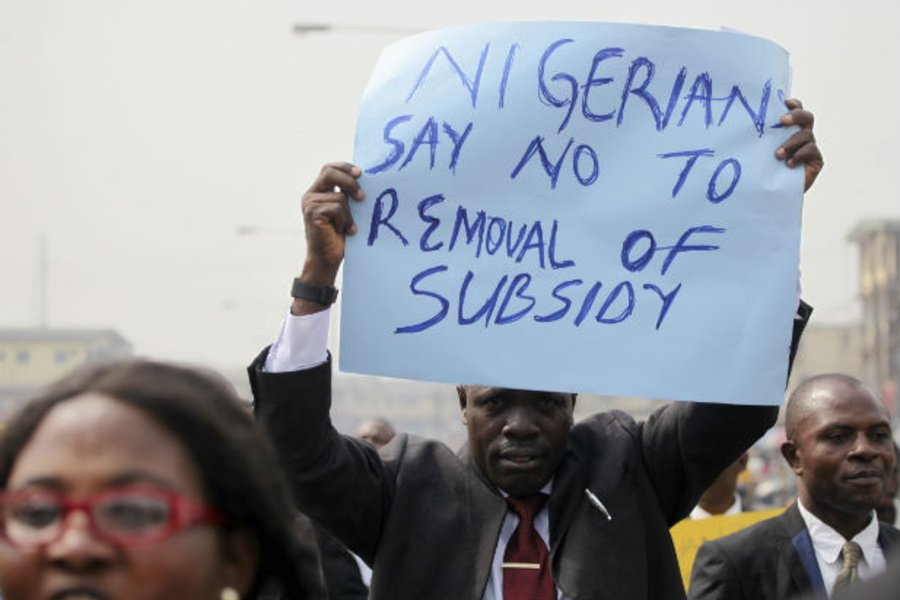
The government and subsidy removal activists argue that an unbelievable amount of funds are being poured into the scheme while the national infrastructure languishes in bad condition. The large amount spent on the subsidy has been said to reach this height dubiously, no thanks to inflated numbers by some unscrupulous officials and the diversion of subsidised fuel to neighbouring countries by rogue marketers. To add insult to injury, Nigeria borrows to sustain this counterproductivity. Although this argument is plausible, instead of throwing a baby with the bath water, why not the government sanitise the scheme so that it brings the amount to within its capacity?

Another pro-subsidy removal argument was that only a few rich Nigerians benefit from the subsidy, the poor masses who were the target of the scheme are not benefiting the way it is supposed to. This slogan is challenging to explain to people; which ‘The poor masses are not benefiting the way it is supposed to’? When people can visibly see the effects of the subsidy when they buy fuel. No answer is as crunching as for a Nigerian to enter a filling station, and after purchasing an expensive fuel, he declares, they said we don’t benefit from subsidy!

 GMB and APC supporters have an additional puzzling dilemma to unravel because GMB had outrightly opposed the plan in 2012 when President Goodluck Jonathan mulled the idea of its removal. GMB and other APC chieftains famously proclaimed ‘over their dead bodies’ would they allow it. Meanwhile, by the side of the TV screen, we threw roses at them.

So, one of the top Buharist El-Rufai’s tried to rescue the situation in the aftermath of the then PMB’s backpedal. According to an accidental civil servant: ‘When fact changes, decision changes.’ This was to defend the then PMB decision even though he opposed it earlier. This philosophy convinced me; I said that Elrufai rightly arranged the pieces together. But one of my friends would make my life miserable; he said the same philosophy could also be applied to Jonathan as his reason behind fuel subsidy removal. I became speechless.

The speed with which the marketers change fuel prices immediately after price changes from NNPC (Nigerian National Petroleum Corporation), regardless of what’s in their stock, whether old or new, is perhaps the biggest showdown between the public and marketers. As soon as NNPC announces a new price, marketers countrywide change the price in the blink of an eye. The public argues that since the new price is for the new product, the marketers with the old product should stick to the old price. One Sheik brought this public sentiment to the fore when he calculated the difference between the old and new prices and multiplied that by a presumably large number of litres for one marketer. The profit he got was staggering, about 300 million naira.

I share this public sentiment, and I, too, initially thought the marketers were doing it illegally until Mele Kyari explained it on BBC Hausa Ra’ayi Riga program. According to the NNPC MD, marketers must sell their old products at a new price. This approach enables them to recoup their old investment. For instance, if a marketer had 100 litres, he had to sell them at a new price so that he could buy the same amount, but if he sold them at the old price of N250, he would not be able to buy the same 100 litres of new product at a higher price.

This is a plausible reason from a market viewpoint; what of the masses? Because while the market provides safety measures for marketers, it does not offer the same to the general public, especially the poor. Economics and the related professionals’ expertise are needed here; they should help us balance these conflicting but appealing arguments.

Although it could be too late to cry when the head is chopped off, Nigerian policymakers may need to learn from thermal shock phenomena when it comes to subsidy removal or any government policy implementation.  Thermal shock is a situation a material experiences when exposed to sudden changes in temperature conditions; it can lead to the material cracking or even breaking down. 

Take a glass cup of tea, for instance. If the tea glass cup is scorching and you suddenly put it in cold water to cool the tea inside, the glass may crack or even break depending on the level of the thermal shock, but to cool the tea inside the got glass cup successfully without harming the glass, you apply gradual cooling. First, you put the glass cup in warm water, then gradually reduce the water temperature until it becomes cold; in this way, the tea inside the glass cup can cool without causing any injury to the glass.

Bilyamin Abdulmumin is a doctoral candidate in Chemical Engineering at ABU Zaria, a public affair commentator, and a science writer.

APC should stop thinking in a Jonathan’s way: Tinubu is the only solution 

By Amiru Halilu 

“When the calamity we feared is already arrived, or when the expectation of it is so certain as to shut out hope, there seems to be a principle within us by which we look with misanthropic composure on the state to which we are reduced, and the heart sullenly contracts and accommodates itself to what it must abhor.” William Godwin. 

Somewhere around the globe leaders convey joy, happiness, prosperity and economic development to the ruled. Over a decade, the aforementioned essentials for good leadership have waxed and waned in Nigeria. In the last thirteen years, Nigerians have drowned in blahs and are growing more melancholic every day. The mention of names: “Buhari, Jonathan” made the blood of an average Nigerian to boil. These nightmares ruined the nation beyond a remedied state. Instead of pursuing excellence and give the nation a clear sense of direction, both Buhari and Jonathan pursued retrogression, hopelessness; salivating the underlings and quibbling beyond what is reasonable. 

What really determines a leader is largely one’s political formation, national commitment, love for his country, cognitive intuitiveness of identifying brilliant minds and ideas, self-denial and sound sacrificial ideals. Unfortunately, neither Jonathan nor Buhari possessed and exhibit the aforesaid principles. Throughout the unproductive six years of Jonathan and now the wasteful seven years of Buhari, Nigeria lost international honor recognition and dignity; the nation has been grappling to cast-away the numerous disasters caused by the senselessness of these deuces. Each runs the nation as if he was/is assigned a mission to wreck havoc on the populace.

It is obvious now the ruling All Progressive Congress (APC) is on the cups of something terrible and that thing is the ugly idea of bringing Jonathan back to the throne. And perhaps, he may be better than many evil contestants under the party’s platform, but surely, darkness reigns at the foot of APC. What does this pack of deceitful scoundrels called APC mean by this suicidal mission? Is APC ready and well prepared to reconcile the clear contradiction between the brand (Jonathan) they putdown, tar-brushed as grossly incompetent, clueless, recklessly insensitive, brazenly irresponsible, irredeemably corrupt and the brand new Jonathan they are now trying to make their standard-bearer?

At this sober time of national renewal, at this time of gross social upheaval when the nation is in the sea of uncertainties, at a time when the economy stocked in reverse gear, in this auspicious moment when character and integrity are the signs and symbols that are absolutely needed, the man that was universally described as ineffectual buffoon and who had already done a colossal damage to the nation is certainly not the right man for the same job that requires certain degree of trust. He who participated in destroying Nigeria in the past would not partake in rebuilding her because destiny doesn’t believe in failure.

A person of Jonathan’s tragic qualification and profile shall never be asked to correct the wrong which he himself had instituted and normalized. We can’t expect the author to burn his own book. Jonathan could no more be a re-builder of Nigeria the way a wind can’t turn to rock or mud into gold. But Buhari and his handlers have seen Jonathan as the ultimate alternative because he managed to sink even lower. It’s hard to ever imagine that Buhari will have a remote link with Jonathan in respect to succession plan, but for an intellectually handicap, politically naive like him who had already convinced the world that there is neither honor nor integrity in governance in Nigeria it’s all in a days work.

Buhari’s attitude towards governance illustrates that Nigeria’s car has continued to be driven in reverse gear by drivers, including himself, who seem to be permanently on drugs. Thinking of bringing Jonathan back is just like calling back the captain of a ship whose negligence and inexperience had caused the death of many. The only thing that such mediocre captain will achieve is to completely submerge the ship and make sure that no single one on board has survived the next accident. Jonathan had melted down Nigeria; Buhari has milked her to her knees, and looking at the caliber of people Buhari wants to succeed him is a confirmation that he doesn’t mean well for the entire nation. 

The only candidate who perfectly possessed presidential credentials doesn’t seems to be Buhari’s favorite. The choice of Asiwaju Ahmed Bola Tinubu will not and will never go down well with those parasitic cabals who are less assured of themselves about what is possible in private life without the country’s largess. Today, we are just five days to the presidential primary elections yet, the presidency has been in limbo and drowned into the abyss of confusion in view of which puppet to field. A pliable puppet who will carry them along, cover their evil wrongdoings and forever follow their dangerous path and eventually sink the nation even deeper.

They perfectly know that Tinubu is a movement; he will not go with the flow; he will definitely sing a different tune. He is just like a medicine, good for you but hard to take. Those who love the party and those who want to save the party from collapsing before general election, must choose competence over hype; integrity over corruption; decisiveness over wavering; rationalism over chauvinism; action over rhetoric and above all, security over living in fear. Else those who have fed the party so well and feel that they have been paid with evil would likely leave the party after the long awaited presidential primary election.

Amiru Halilu writes from Kaduna and can be reached through haliluamiru@gmail.com or @AmiruHalilu