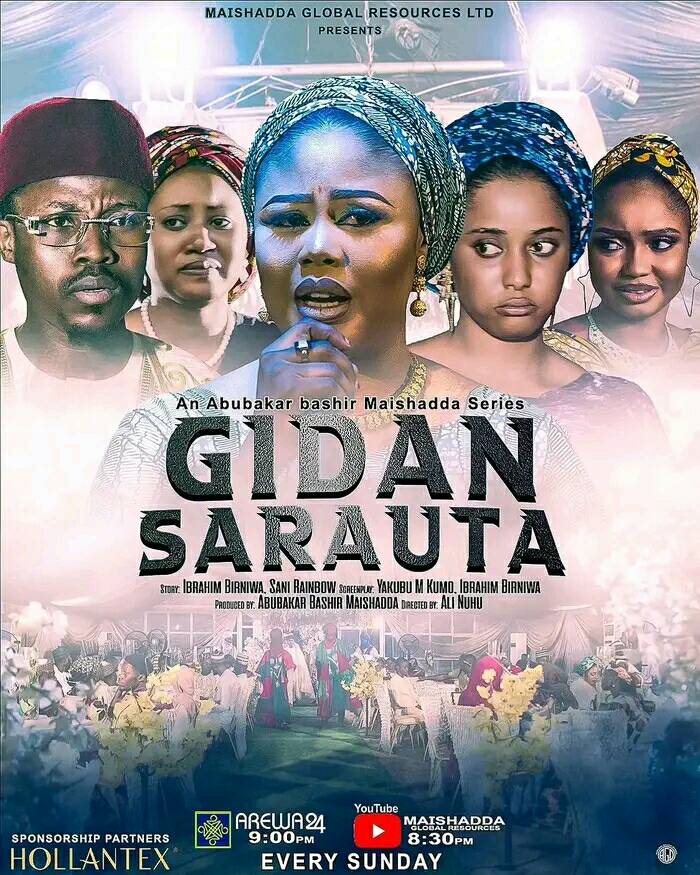
A critique of Ali Nuhu’s Gidan Sarauta
By Idris Ishaq Danwanka
The series Gidan Sarauta (“Royal House”), directed by Ali Nuhu, does not fully align with its title. The events portrayed in the series differ from what one would expect from a real Gidan Sarauta.
Let’s start with the characters: Ali Nuhu introduced Adam Abdullahi Adam (Abale), who played the role of a disrespectful son to a wealthy man named Rabiu Rikadawa, also known as Baba Dan Audu in Labarina. The character lacks a proper upbringing from his father and harbours a disdain for the less fortunate. While such behaviour may exist in certain places, it raises the question of why thuggery is associated with Gidan Sarauta. What message is Ali Nuhu trying to convey?
Furthermore, would it be plausible for a devout Muslim on their deathbed to instruct their son not to show compassion towards the poor? Such teachings contradict the principles of Islam, where one is expected to seek forgiveness from Allah and reflect on their wrongdoings before passing away.
Additionally, I am not particularly pleased with the casting choices in the series. Umar M Sharif, who sometimes speaks femininely, is selected to portray a prince. While this may not bother me as much, it is concerning to see Garzali Miko, who lacks the necessary qualities for such a character, also playing the role of a prince.
Moreover, the series seems repetitive, with certain events unnecessarily repeated within the same scene. Additionally, Mommy Gombe, who is assigned a significant role, appears to be somewhat inadequate for the part.
In summary, I have several reservations regarding the direction, character choices, and portrayal of events in the Gidan Sarauta series directed by Ali Nuhu.
Idris Ishaq Danwanka studies English Language and Literature at Federal University Dutse.