General Yakubu Gowon

Will renaming the University of Abuja to Yakubu Gowon University ease congestion for FCT residents?

By Adamu Abdullahi 

As Nigeria’s capital city, FCT Abuja needs a university other than the University of Abuja, established in 1988, to cater to the increasing number of people seeking university education within the territory and in Nigeria at large.

Establishing the Federal Capital Territory University of Science and Technology, Abaji would provide the legal framework to close the knowledge gap in science and technology.

FCT is the fastest-growing city in Africa, with only one federal university and no single polytechnic. The FCT find it challenging to study, yet the federal government has only a name to change in the federal capital instead of commissioning the one that the weed snake has taken over. 

What reduction of congestion will change the educational sector of FCT? Will the rename accommodate our prospective admissions seeker seeking to study for their ambitious course? Has the renamed university had all the courses that will interact with the international community to study in Nigeria?

Universities can be viewed as brands, much like corporations. Just as corporate brands maintain their identities over time, educational institutions rely on stable branding for recognition and credibility. 

A troubling precedent is set when university names are changed impulsively—particularly to honour politicians. This practice undermines the integrity of these institutions and can create significant confusion, particularly in the global context.

For instance, renaming the University of Abuja to Yakubu Gowon University raises several important concerns. Many foreign employers and academic institutions may now struggle to recognise the new name, which could impact their perceptions of the institution’s legitimacy and reputation.

The sudden name change may also confuse prospective employers, who might not be familiar with the new name but have been aware of the previous branding.

Moreover, graduates of these renamed institutions face a unique dilemma. They are handed Certificates that no longer align with the name they are familiar with from their years of study. This disconnect between the institution they attended and the name that appears on their degrees can lead to questions about the validity of their education and qualifications. 

It can also complicate further academic pursuits and job applications, as they may confront scepticism from potential employers or institutions unaware of the name change.

In essence, this practice of renaming universities to immortalise political figures can have far-reaching consequences. It disrupts the continuity and coherence of an educational brand built over the years, potentially diminishing the value of the degrees it confers and creating unnecessary barriers for its graduates in the competitive global job market.

Adamu Abdullahi wrote via nasabooyoyo@gmail.com.
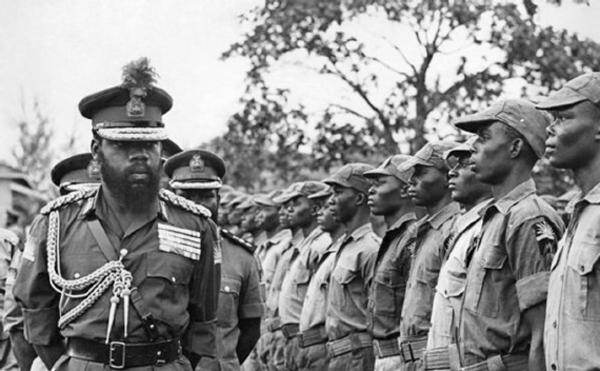
Nigeria Civil War: Conspiracies and interest of the World Powers

By Tijjani Hassan

War is a business of interest. Like the Russian invasion of Ukraine over the fear of western domination of the geopolitics of the defunct Soviet Union, Nigeria had her fair share of international politicking of how the superpowers wrestle for relevance in the post-World War II era, climaxing into the Nigerian-Biafran Civil war of secession.

As Chinua Achebe summarily spelt out in his book There was a Country, Harold Wilson, the PM of Britain, maintained a firm stance about one of the Queen’s priced colonies. The UK would not support the breaking away of Nigeria in the guise of secession. That would mean challenging their preplanned neocolonialism programme.

The BBC’s Rick fountain, in a story on Monday, January 3, 2000, titled “Secret papers reveals Biafra intrigue,” shows how Britain would and currently was more interested in her oil holding than a “united Nigeria”. The Cold War would see Britain and the Soviet Union wrestling for supplying the largest cache of ammunition to General Yakubu Gowon-led Federal government.

Russia, part of the former USSR, took a step further by sending MiG fighters and technical assistance to Nigeria. Moscow later expanded her bilateral relation with Nigeria with an eye on the Ajaokuta Steel Company. As a result, a $120 million contract was signed in 1969. However, the Steel Company, situated in present-day Kogi State, North Central Nigeria, remained a testament to the elephant project without producing steel for the manufacturing needs of Nigeria to date. 

The UK was, however, much concerned about France’s secret antics.

France, the other big player in the dark colonial days in Africa, was secretly shipping weapons and ammunition to the Biafran enclave through their former colony of Ivory Coast and Gabon. Moreover, France has always been sceptical of Nigeria’s growing domination and influence over the Paris Francophone clients in the West Africa Subregion. The Size of Nigeria is intimidating to her French neighbours of Cameroon, Niger, Chad, Benin Republic, and others in the geography of the West Africa sub-region.

The Caribbean Island of Haiti was the first to make a rush in granting full diplomatic relations with the breakaway Biafra Republic in 1969. That means a little to Nigeria anyways. It was, however, a moment of celebration in Biafra as it rekindled the hope for the sovereign Biafra Republic. 

France, who openly claimed to be neutral in her initial response to the crisis, issued a statement from the Council of Ministers in July 1968 sympathizing over the heart-trembling development in the heartland of Biafra. It was orchestrated by Charles de Gaulle, the French President who led Paris’s resistance against the Nazis in World War II.

Like the UK, it was about resource control. Paris has already hatched a plan for her multinational corporation, Elf Aquitaine, to become later the primary explorer of the crude oil deposit in West Africa. Nigeria’s oil in the old Eastern region would be the spoil of war.

While the war ragged, the United States of America openly looked elsewhere, neither supporting Nigeria nor Biafra. Instead, they advocated for a united “One Nigeria”. President Lyndon Johnson toed the line of Britain until Richard Nixon. Upon his assumption of office, President Nixon called on the Nigerian Military Forces to cease hostility to ease the suffering in Biafra.

The Portuguese were much more clever as they paved the way for Lt. Col. Emeka Odumegwu Ojukwu to land Biafran planes in Sao Tome, a Portuguese colony. The agreement was, however, shrouded in secrecy.

The Chinese were not left out of the Civil war politics in Nigeria. Although Biafra got most of her weapons from the black market and produced a few locally, China later provided military equipment to the breaking away part of Nigeria.

African leaders were not left out too. Despite the organization of Africa Unity (OAU)’s efforts to reconcile Gowon and Ojukwu, Julius Nyerere of Tanzania, on April 13, 1968, openly declared Dar-es-Salaam’s recognition of the Republic of Biafra. Tanzania was the first African country to take this overt stance. Gabon, Ivory Coast and Zambia would later follow the footsteps of Tanzania.

In sum, it was more about international politics and the desire to have a share of Nigeria’s resources in colossal oil deposits. As a result, western powers contributed less towards ending the Civil War, which ended in 1970.

Tijani Hassan A. wrote from Kano, Nigeria. He can be reached via tijanihassan2020@gmail.com.