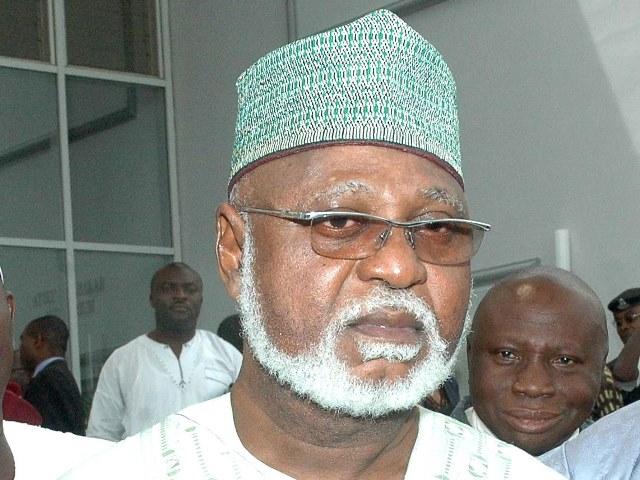
General Sani Abacha

A nostalgic tribute to Muhammadu Buhari

By Amir Abdulazeez

During the early and mid-months of 2002, I would often visit an uncle (now deceased) who generously provided me with newspapers before he had even read them himself. On one such visit, I picked up a copy of the Daily Trust, a relatively new publication at the time, and while flipping through its pages, I read the delightful news that not only made me happy but also propelled me into a brief career in partisan politics. Retired General Muhammadu Buhari had decided to join democratic politics and announced his entry into the All Nigerian Peoples Party (ANPP).

At the time, the Obasanjo-led administration was widely perceived as underperforming, failing to address Nigeria’s mounting challenges sincerely. The PDP had morphed into a formidable political giant, while the ANPP was weakening steadily; other newly registered parties existed only in the briefcases of their founders.  Buhari’s decision to enter politics at that time represented the single most decisive move that changed the Nigerian democratic landscape over the last 25 years. Youths, pensioners, activists, comrades, veterans and even fence-sitters found a new rallying point, and almost everyone else joined the new messiah.

Although many harboured reservations about Buhari, especially those whose interests had been hurt during his military regime or the post-1999 established elite who saw him as a threat, I was among the countless young Nigerians who adored Buhari to a fault. My admiration for him was so intense that another uncle once felt compelled to caution me. It was just before the 2003 presidential election when he walked into my room, saw a large framed portrait of Buhari on my wall, smiled, and advised me to moderate my obsession.

My love for Buhari began about 30 years ago. The establishment of the Petroleum Trust Fund (PTF) by General Sani Abacha’s administration in 1994 coincided with our early years in secondary school. By the time the Fund was a year old in 1995, the name of Muhammadu Buhari was on the lips of virtually all Nigerians. In my estimation, then, he was the only tangible positive aspect of the Abacha government. In fact, he appeared to be more popular than Abacha himself; a hypothesis that reportedly inspired Obasanjo to scrap the Fund in 1999 to avoid ‘running a government inside a government’.

I vividly recall a day in 1995 or 1996 when I accompanied my father to a bookshop. The PTF low-price edition of every book we went to buy was available at a 50% or so discount without any compromise in quality. While paying the money, I could see the smile on my father’s face reflecting deep satisfaction and appreciation for the work of the PTF. That was the first time in my life that I truly felt and understood the direct impact of government on the people. In pharmacies, PTF drugs were sold at subsidised rates. There was no propaganda, rhetoric, cosmetics, or media packaging; the work of Buhari’s PTF was there for everyone to see and touch. I was fortunate as a young lad to join elders on travels across the country from 1995 to 1997. I got tired of seeing the PTF road projects that I once asked: “Why won’t this Buhari return as president to fix Nigeria?”

Muhammadu Buhari, a constant figure in Nigerian political discourse since 1983, is no longer with us. Few anticipated his death, as the brief illness he suffered in London seemed either a rumour or a routine medical trip. Ironically, many of his detractors had “killed” him multiple times in the past; some of them dying before he did. In 2014, former Ekiti State Governor Ayo Fayose ran a notorious advertisement predicting that Buhari wouldn’t last in office for months if elected. Yet he won, served for eight years, and died just months short of turning 83.

Buhari lived a long, dedicated, and enduring life of service and commitment to Nigeria, spanning about six decades in both military and civilian capacities. Save perhaps for Obasanjo, there’s no Nigerian, dead or alive, who matches his array of public portfolios. His personal reputation for discipline, honesty, integrity, and austerity endured throughout his public life. He stood as a symbol of principled and stoic leadership, leaving behind a legacy that will continue to resonate for generations.

Just before his death, the debate of who made him president in 2015 resurfaced with an exchange of tantrums between some pro-Tinubu and pro-Buhari gladiators. While I found the debate outdated, my position remains that Buhari ought to have become president 12 years earlier. For the avoidance of doubt, Muhammadu Buhari did not lose the 2003 presidential elections; it was brutally rigged to return Obasanjo for a second term. That year’s election ranks among the most fraudulent in modern global history. In 2007, the presidential election results were allegedly fabricated, so we can’t even call that an election, let alone determine who won or lost.

Despite my immense love for Buhari, I was left with no choice but to join his critics after 2015. Less than a year in, it became clear that his government lacked the vision and effectiveness many had hoped for. In 2015, I queued until about 10:00 p.m. to vote for him, believing he was Nigeria’s last chance. By 2018, I was disappointed and called for him to serve just one term. I argued then that if he couldn’t lead like Nelson Mandela, he could at least exit like Mandela. By 2021, while in his second term, I was so disillusioned that I openly advocated for his impeachment.

It remains a mystery how our much beloved, tested, and trusted (his campaign slogan in 2003) Buhari failed to meet expectations so short. Some blamed his arrogant and underperforming appointees; others cited a fractured and directionless party. But ultimately, he bore the responsibility. His inability or unwillingness to discipline ineffective ministers eroded his credibility. In 2022, during the eight-month strike by university lecturers, I contacted one of his aides (a relative), who confirmed that it was Buhari’s ministers, not Buhari himself, who opposed paying the lecturers. Another indicator that he wasn’t really in charge. 

In the midst of the storm, Buhari’s administration achieved several landmark milestones in infrastructure, social welfare, and the fight against terrorism. He delivered the elusive Second Niger Bridge, the Lagos-Ibadan and Abuja-Kaduna railways and upgraded numerous critical road networks. His government implemented the Treasury Single Account (TSA), which significantly improved public financial transparency and curbed leakages. Buhari’s war against Boko Haram yielded mixed results but succeeded in reclaiming substantial territory from insurgents. He introduced arguably the largest Social Investment Program in the history of Africa, targeting millions of beneficiaries through initiatives such as N-Power, Trader Moni, Survival Fund, Anchor Borrowers Scheme, and conditional cash transfers.

Nigerians are free to hold divergent views on Buhari. But there should be decency in how we express those views. No one is without flaws; we all have our good and bad sides. One day, we too shall pass, and others will speak of us. Buhari had both triumphs and failings; some reaped benefits, others suffered losses. If you can pray for him, please do. If not, be measured in your words.

The past few days have witnessed a flurry of deaths, a sobering reminder that life is fleeting and death is inevitable. Today’s giants will one day lie lifeless. When Garba Shehu broke the news of Buhari’s death, I immediately made up my mind to put up a tribute. A few minutes after the announcement, I visited his Wikipedia page to verify some information about the general. To my surprise, the information about his death had already been updated: “Muhammadu Buhari (1942-2025)”—so swiftly? I said to myself. Baba is gone. May Allah forgive and grant him Jannatul-Firdaus.
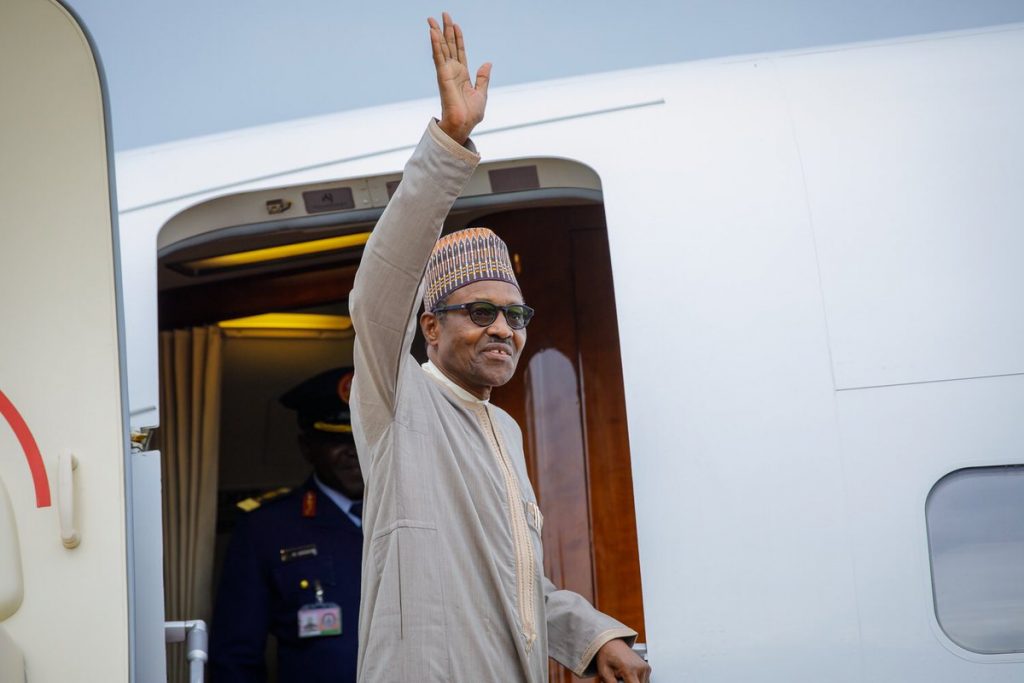
Goodbye, Muhammadu Buhari, I love you

By Prof. Abdussamad Umar Jibia

“Fellow countrymen and women. I, Brigadier Sani Abacha of the Nigerian Army, address you this morning on behalf of the Nigerian armed forces. You are all living witnesses to the grave economic predicament….”

That was on the 31st of December 1983. I was a Form Five student at the Government Secondary Technical School,Mashi. But the school was on its first-term vacation. So, I was at home. I was sitting with my father that early morning when someone came in to announce that the Army had overthrown President Shehu Shagari and that “rediyo baya Magana”, meaning the radio was silent. It was after my father sent for his transistor radio that I understood what the man meant. Normal radio programmes were not running. The radio station we listened to those days was mainly Radio Kaduna. Occasionally, we listened to Rima Radio, Sokoto, a Nigerien radio channel and Radio Kano. There was no Katsina State, so no Radio Katsina. No FM. No social media.

The only voice Radio Kaduna was airing was that of Brigadier Sani Abacha with the historical coup speech at regular intervals, filled with military music. Since my father did not go to Makarantar Boko, he asked me to translate, and I did that with the confidence of a final year student ready to take the WAEC examination in five months. Yeah, only WAEC. No NECO. No NABTEB. Nothing else except WAEC. 

But that was not the point. Everyone was anxious to know Shagari’s replacement. It didn’t come immediately. Later in the afternoon, a Yoruba voice (later identified as Tunde Idiagbon) spoke to announce the acceptance of the “voluntary retirement” of service chiefs. While they were still waiting, another General (Ibrahim Badamasi Babangida) spoke; he asked Nigerians to remain calm as they awaited the speech of the new Head of State and Commander-in-Chief of the armed forces. 

The speech did not come until midnight, when many of us were already asleep. The following morning, my father didn’t need me for translation as Radio Kaduna was airing the translated speech of the new Head of State, Major General Muhammadu Buhari. I saw happiness on the faces of the adults. I understood that they were happy because the new Head of State was not another Kaduna Nzegwu or an Aguiyi-Ironsi. 

That was the beginning of the Buhari story. For those of us in secondary schools, nothing changed. Our holiday ended and we went back to our boarding school. In the whole of what is now Katsina state, I knew of only one day secondary school. That was the one in Katsina town, and it was owned by the Government. All the other schools I knew were boarding schools and public schools.

We sat for the WAEC GCE O-level exam and passed with the necessary credits and distinctions. My BUK pre-degree admission came quickly, and it was after I reported and registered that I understood that Buhari had removed the feeding subsidy in tertiary institutions. So, we were on our own.

Buhari was overthrown in August 1985, and that was the beginning of his popularity. Four months after he was overthrown, Nigerian students went on a rampage to protest the IMF loan. It was followed by the unpopular SAP. The more General Babangida introduced new policies, the more popular Major General Buhari became, even though he was in prison. People were tearing Babangida’s pictures and pasting the pictures of Buhari, his prisoner, on their vehicles and business premises.

The interview Buhari gave The News magazine after his release from detention made him even more popular among the elites and demonised Babangida. In the interview, Buhari spoke about the “fifth columnist” in his administration,which was understood to be a veiled reference to Babangida.

Fast forward to 2015, as a democrat, Buhari became the President after three failed attempts. The experiences of Nigerians were bitter, depending on who was involved. To the victims of banditry like us, he was a failure. To university lecturers like me, he destroyed tertiary education. To the Shiites, he was a murderer. To the masses, he is synonymous with hardship.

However, regardless of how you see Buhari, you must admit that he was sincere. He was incorruptible and meant well for Nigeria. Buhari would have been the best president Nigeria had if only he had ensured accountability in his Government.

May Allah have mercy on the soul of Muhammadu Buhari and admit him into the highest level of Firdaus. Amin.

Professor Abdussamad Umar Jibia wrote via aujibia@gmail.com.

The Proliferation of National ‘Honours’ 

By Amir Abdulazeez

If we can recall, on 7th October, 2015, a 19-year-old student, Hassan Mohammed Damagum, sacrificed himself to save others from a suicide bomber who attempted to attack a mosque during the Subh (Dawn) prayer at Buhari Housing Estate in Yobe State. Hassan had sensed that the individual standing next to him was a suicide bomber trying to kill people. The boy was said to have confronted the bomber, who blew both of them off. 

Again, on 25th January 2017, Yakubu Fannami, another student from Borno State who was just in SS1, died a hero while preventing a suicide bomber from entering the Darrusalam Science and Islamic Academy in Maiduguri. Fannami tackled the female suicide bomber, preventing her from reaching the mosque and detonating her explosives, thus saving the lives of many worshippers.  

To the best of my research, which may be inadequate, neither of the two boys was publicly given significant national recognition. Nigeria’s story is replete with the neglect of brave and heroic citizens who had sacrificed a lot and even laid down their lives to save others. 

Since 1999, Nigeria has always chosen to reward and honour many lazy elites who contributed virtually nothing but became huge beneficiaries of government patronage and corruption. Every President has made it a duty to bestow national honours on his chosen elites as one would do with his personal property.

In line with the routine tradition of his predecessors, President Bola Tinubu used the June 12, 2025, Democracy Day to confer over 100 national honours, some posthumously. As expected, many awardees are members of his administration and personalities very close to him. A section of the awardees list portrays a belated compensation package to a gang of Abacha victims, who actually need justice more than honour.

While people like Prof. Humphrey Nwosu (CON), Prof. Wole Soyinka (GCON), Alhaji Balarabe Musa (CFR), Bishop Matthew Hassan Kukah (CON) and Femi Falana, SAN (CON) truly deserve their awards, it would have been wiser and more balanced to include people like Late Bashir Tofa (Abiola’s NRC opponent), Late Abubakar Rimi and Magaji Abdullahi (two important SDP figures who miraculously delivered Kano, Tofa’s State, to Abiola) and, of course, M.D. Yusufu, the presidential candidate of MDJ, who was Abacha’s sole challenger in his bid to undemocratically transform into a civilian president, among others. Perhaps, they would be remembered by this or another President in the next set of awards, for at this rate, every political household name, dead or alive, may soon have a national honour in Nigeria by 2030.

What exactly is this national honour, and who deserves it? The honouring system was originally envisioned as a prestigious recognition of exceptional service to the nation. It was formally established by the National Honours Act No. 5 of 1964 to inspire patriotism, reward merit, and foster national unity. 

The structure of national honours, divided into two orders (Order of the Federal Republic and Order of the Niger) and eight ranks (GCFR, GCON, CFR, CON, OFR, OON, MFR, MON), was designed to reflect degrees of national impact. However, the system’s proliferation and indiscriminate distribution have undermined these distinctions, often placing true heroes, statesmen and national icons equal or below some presidential sycophants, political loyalists and officeholders, regardless of their performance or public standing. 

The early years of Nigeria’s national honours system reflected its original purpose. Recipients such as Dr. Nnamdi Azikiwe, Sir Ahmadu Bello, Chief Obafemi Awolowo and Mrs. Funmilayo Ransome-Kuti were honoured for verifiable and transformative contributions. However, over time, the politicisation and personalisation of the awards diminished their integrity, giving way to an annual ritual often characterised by hundreds of questionable awardees whose contributions to the nation are neither tangible nor verifiable. In the past 15 years, things have gotten worse as the selection system itself has been incompetently reduced to a mechanism marred by political patronage, duplication and credibility crises. 

Today, the integrity of this noble initiative is in serious jeopardy, with widespread scepticism about its selection process and relevance. Ideally, recipients should be individuals whose lives exemplify ethical integrity, measurable public impact and selfless service. However, the current trend favours tenure over achievement and proximity to power over merit. Politicians under corruption investigation, individuals with no tangible contributions and business moguls with opaque wealth have all made their way into the honours roll. Prominent Nigerians have rejected national honours in protest. Chinua Achebe, Gani Fawehinmi and Wole Soyinka famously turned down honours, citing corruption, misgovernance and the lack of transparency in the process. Their principled refusals sent powerful messages about the need to restore the system’s credibility. As Achebe aptly put it, ‘a government that fails its people cannot in good conscience bestow honours’.

Numerous scandals have exposed the flaws of the system. In 2022, the conferment of awards to serving ministers during a prolonged ASUU strike and the inclusion of people accused of corruption represented a new low. Even more embarrassing were administrative blunders such as conferring posthumous awards to please certain interests and duplicating awards to the same person under different titles. Meanwhile, countless unsung heroes remain ignored. Rural teachers shaping future generations, healthcare workers battling epidemics without protection and community leaders mediating conflicts receive no recognition. 

The establishment has reluctantly recognised a few non-elitist Nigerians in the past. The belated honour to Dr. Ameyo Stella Adadevoh (posthumous OON, 2022), whose sacrifice averted an Ebola catastrophe in August 2014, only came after sustained public pressure for about eight years. In August 2018, then President Muhammadu Buhari and the United States Embassy honoured the Bauchi State-born 83-year-old Malam Abubakar Abdullahi, a Muslim Imam in a village in Plateau State. He sheltered and fed 300 Christians for five days to prevent them from being killed in an uprising. The old man ran from one corner to the other, stopping youths who wanted to enter the mosque to get hold of his guests. Eventually, they gave up after realising that the only way to execute their evil plan was to kill the old man. That was how he saved their lives. I am not sure whether the man was given any national honour beyond that presidential acknowledgement.

If we are to continue like this, I will suggest the renaming of the awards to “Special Presidential Honours”.  The National Honours Act, last revised in 2004, offers the President near-total discretion, with little room for public input or institutional checks. With time, it has been turned into a presidential farewell affair as outgoing Presidents routinely populate honours lists upon leaving office to pay back loyalists. Recent attempts at reform, such as the proposed National Honours and Merit Award Commission, represent a step forward but are insufficient on their own. Far-reaching legislative and administrative reforms are needed to restore the honours’ integrity. This includes public nominations, independent vetting panels, open selection criteria and mandatory justification of award decisions. 

A critical reform must also introduce public objections and transparency mechanisms, such as publishing nominee shortlists and designing revocation protocols. Honours should be rescinded from individuals found guilty of crimes or misconduct post-conferment. The system should no longer shield disgraced figures or treat national honours as irrevocable symbols of status, regardless of later behaviour. Furthermore, awards should be capped annually to preserve their exclusivity. Honouring fewer, more deserving Nigerians will increase the prestige of the titles and prevent undeserving awards. Most importantly, the honours system must reconnect with the grassroots. By recognising farmers, nurses, teachers, inventors and humanitarian workers, Nigeria can turn the system into a true tool of national inspiration. 

All these are, by the way, because ordinary Nigerians no longer care about leaders honouring themselves and their cronies. No impoverished Nigerian has the luxury of waiting to be honoured by someone whose honour is questionable himself. All Nigerians are asking for is guaranteed security to farm, stable power supply to produce, quality and affordable education to learn, reliable healthcare to survive and a stable economy to thrive. When they can provide this, they can go on naming and renaming national monuments after their wives and continue with the vicious cycle of self-glorification in the name of national honours.

Twitter/X: @AmirAbdulazeez 

The metaphor of self in Ibrahim Babangida’s A Journey of Service: An Autobiography

By Bashir Uba Ibrahim, PhD

Etymologically, the terms “autos”, “bios”, and “graphein” are Greek forms. While the former stands for “self”, the “bio” represents “life”, and the “graphein” which diachronically and morphologically changes over time to “graphy,” means “to write”. Thus, autobiography is a self-written narration of one’s own life. 

According to Celluni, “All men, whatever be their condition, who have done anything of merit, if so, be they men of truth and good repute, should write the tale of their life with their own hand”. Thus, the recent 420-page memoir launched by the former military Head of State, Ibrahim Badamasi Babangida, on Thursday, 20th February 2025, is a typical instance of a self-written account of one’s own life experiences.

Babangida’s A Journey of Service: An Autobiography is highly anticipated due to the author’s role as one of Nigeria’s most controversial, if not enigmatic, military leaders. His perceptive ingenuity and cunning leadership style earned him the nickname “Maradona” or “evil genius.” Thus, his reign was marked by numerous seemingly unforgettable controversies and troubles, ranging from the mysterious death of journalist Dele Giwa, the failed coup of Mamman Vatsa and his subsequent execution, Gideon Okar’s bloody failed coup, the Structural Adjustment Programme (SAP), the OIC palaver, and above all, the 1993 June 12 saga. 

As noted by Lejunre (1975), the supreme value of autobiography lies in its nature as a product of the writer’s self, the private realm of his reflective self that informs the bios and graphein, with which they interact to form a text as a discourse about his existence, particularly emphasising the development of his own life and personality. Therefore, as an autobiographical text, A Journey in Service represents a personal account of its author.

In addition, Babangida, in this book, makes a striking revelation, submissions and confessions that left some of its readers in a deep shudder and bewilderment. For instance, about the June 12 saga, an election that was annulled in broad daylight by him, he writes that on June 23rd, 1993, he left Abuja for Katsina to commiserate with the Yar’adua family over the death of their patriarch, Musa Yar’adua, the father of Major General Shehu Yar’adua and the late Nigerian president Umar Musa Yar’adua when “a report filtered to me that the June 12 elections had been annulled” (pp-275). He thus shifts blame to former Head of State General Sani Abacha, who was then his Chief of Defence Staff, the accusation which some people view as not only baseless but rather a joke and a scapegoat as succinctly captured in the book “But annulment was only a component of series of other options. But to suddenly have an announcement made without my authority was, to put it mildly, alarming. I remember saying: ‘These nefarious inside’ forces opposed to the elections have outflanked me! I would later find out that the forces led by General Sani Abacha annulled the election. There and then, I knew I was caught between a devil and deep blue sea” (pp-275).  

Therefore, Abacha served as a whipping boy or a fall guy, thus taking the blame. This is where the need for thanatography- a death writing comes up. Had Abacha been alive, the people would like to hear his side of the story on this saga, or had it been possible to write from the grave, thanatographically, his submission will help in striking a balance. Therefore, it is probable to say that Babangida’s autobiography, A Journey of Service, is just a metaphor of self that conceptually and schematically treatises his life journey from his early years, school years in Wushishi and Bida, early military career as a young officer to Nigerian civil war and NDA teaching years, mounting the saddle of leadership as the military head of state and the challenges that follow. 

In short, this autobiography is timely as it emerges in an era where one of MKO Abiola’s disciples, who fought for the cause of June 12, which led to his exile, is ruling the country. Meanwhile, the public’s eagerness to hear Babangida’s perspective after 32 years since the incident, along with numerous intricate mysteries, controversies, and decisions that characterised his regime, makes the book’s readership thought-provoking. 

However, my prediction is that the book will be subjected to various interpretations, re-readings, and misinterpretations depending on the perspective of its readers. Therefore, critics of this autobiography or memoir may approach it with the intention of deconstructing it, as the autobiographical activity (by Babangida) is also a form of deconstruction, evident through the narrative account and the self-writing upon the subject self.         

Dr Bashir Uba Ibrahim writes from the Department of English and Literary Studies, Sule Lamido University, Kafin Hausa. He can be reached via bashirubaibrahim@gmail.com.

Autobiographies as constructed narratives: Reflections on General Ibrahim Badamasi Babangida’s “A Journey in Service”

By Ibraheem A. Waziri 

On February 20, 2025, Nigeria marked a pivotal moment in its historical and literary landscape by launching A Journey in Service, the autobiography of General Ibrahim Badamasi Babangida, the nation’s former Military Head of State. Held at the Transcorp Hilton Hotel’s Congress Hall in Abuja, the event drew an illustrious crowd: President Bola Tinubu, former Presidents Yakubu Gowon, Abdulsalami Abubakar, and Goodluck Jonathan, alongside business magnates Aliko Dangote and Abdulsamad Rabiu. 

Beyond the fanfare and the nearly N17.5 billion raised for the IBB Legacy Centre—mistakenly dubbed a presidential library in early reports—the memoir’s release reignites a profound discussion about autobiographies. Far from being vessels of absolute truth, such works are meticulously crafted narratives designed to logically articulate an author’s perspective while justifying their actions and thoughts—past, present, and future. Babangida’s A Journey in Serviceembodies this, offering a lens to explore the constructed essence of autobiographical storytelling.

Autobiographies are, by design, subjective endeavours, distinct from impartial chronicles. They weave personal accounts from memory, intent, and selective disclosure, often prioritising coherence over unvarnished fact. Babangida, who governed Nigeria from August 27, 1985, to August 26, 1993, remains a divisive figure. Known for deft political manoeuvres—earning monikers like “Maradona” for his agility and “evil genius” for his cunningness—he oversaw a tumultuous era marked by economic upheaval and democratic setbacks. His most infamous act, the annulment of the June 12, 1993, presidential election—widely deemed Nigeria’s freest at that time, won by Moshood Abiola—has haunted his legacy for 31 years. 

Nigerians anticipated A Journey in Service as a chance for clarity or confession, yet its launch reveals a narrative sculpted to reflect Babangida’s self-perception. He acknowledges Abiola’s victory, a move Tinubu hailed as “unusual courage,” but frames the annulment as an unauthorised act by General Sani Abacha and other officers while he was in Katsina, sidelined by circumstance. This selective disclosure suggests not a full unveiling but a justification, repositioning him as a constrained leader rather than complicit.

This subjectivity underscores a broader truth: books, especially memoirs, filter reality through hindsight, bias, and audience expectation. Babangida’s 420-page work, reviewed by former Vice President Yemi Osinbajo, promises insights into his eight-year tenure—economic reforms like the Structural Adjustment Programme (SAP), infrastructure feats, and banking deregulation—yet sidesteps a complete reckoning. 

Critics highlight glaring omissions: no confession regarding the October 19, 1986, assassination of journalist Dele Giwa by a parcel bomb widely linked to his regime; no accounting for the $12.4 billion Gulf War oil windfall, per the 1994 Pius Okigbo report; and no remorse for the executions of coup plotters like Mamman Vatsa in 1986 and Gideon Orkar in 1990. Babangida’s claim that he feared Abiola’s assassination if he took office—a speculative justification—casts him as a reluctant actor amidst a military cabal, absolving himself of agency. As much as the revelations, these silences illustrate how A Journey in Service constructs a narrative that defends, rather than fully discloses, a deliberate choice aligning with autobiographical norms.

The memoir’s role as a legacy-building tool further amplifies its constructed nature. Launched as Babangida, now 83 (born August 17, 1941), nears life’s twilight, and Nigeria approaches the 2027 elections, the event doubled as a fundraising spectacle for the IBB Legacy Centre. Billion-naira pledges from Dangote, Rabiu, and others—totalling N17.5 billion per ThisDay—underscored Babangida’s enduring clout 31 years after stepping down. 

The title A Journey in Service reframes his rule as a patriotic endeavour, softening the authoritarian edges of his “evil genius” persona. By admitting Abiola’s win while distancing himself from the annulment’s execution, he crafts a complex portrait: a transformative leader navigating chaos, appealing to admirers who credit him with modernisation while mitigating critics’ ire over economic hardship and political repression. This duality reflects a narrative engineered to reconcile his past with the statesman image he seeks today, extending its influence beyond the page into Nigeria’s political present.

The historical context of Babangida’s tenure enriches this analysis. His regime followed a series of military coups, inheriting a nation battered by oil-dependent economics and factional strife. The SAP, intended to liberalise the economy, sparked inflation and unrest, while his annulment catalysed protests and deepened ethnic divides, paving the way for Abacha’s reign. A Journey in Service likely glosses over these ripple effects, emphasising achievements—like the Third Mainland Bridge or Abuja’s development—to counterbalance failures. This selective memory mirrors how autobiographies prioritise legacy over accountability, inviting readers to weigh Babangida’s narrative against Nigeria’s collective experience.

Reactions to the memoir underscore its status as perspective, not fact. Tinubu, a June 12 activist turned president, praised its candour as setting “records properly,” perhaps reflecting political pragmatism. Afenifere, a pan-Yoruba group, rejected it as too late to mend the annulment’s “ogbonge damage,” echoing Yoruba grievances. Activists accused Babangida of exploiting Nigeria’s accountability vacuum, a sentiment rooted in decades of unresolved justice. Literary scholar Pius Adesanmi, were he alive, might have called it a “textual performance,” blending truth and theatre. These responses reveal a fragmented reception: the book’s narrative is interpreted through readers’ biases, not universally embraced as truth, highlighting the elusive nature of autobiographical authority.

However, this constructed nature does not diminish the value of A Journey in Service; rather, it enhances its complexity. It provides a window into Babangida’s mind: his rationalisations, regrets, and aspirations amid a career of calculated risks. At the launch, Goodluck Jonathan urged the preservation of such narratives to enrich Nigeria’s political archive, calling for the institutionalisation of personal histories. 

Readers, however, must approach it sceptically, recognising it as one voice in a cacophony of perspectives—those of June 12 activists, SAP victims, and silenced journalists. Its significance lies not in claiming absolute truth but in sparking reflection and debate, compelling Nigerians to confront the ambiguities of their history. For youth, as commentators suggest, it offers leadership lessons—resilience and adaptability—albeit through a self-justifying lens that demands critical parsing.

Comparatively, A Journey in Service fits a global tradition of autobiographical narrative-building. Nelson Mandela’s Long Walk to Freedom blends triumph with curated humility, while Barack Obama’s Dreams from My Father navigates identity with selective introspection. With its wit (per Osinbajo’s review) and strategic candour, Babangida’s work joins this lineage, tailoring Nigeria’s military past to a personal saga. Its launch timing—amid economic woes and democratic flux—amplifies its relevance, positioning Babangida as a commentator on leadership in crisis, a narrative thread justifying his past while influencing future discourse.

In conclusion, autobiographies like A Journey in Service are not absolute truths but woven narratives serving their authors’ ends. Launched on February 20, 2025, Babangida’s memoir—through selective revelations, strategic omissions, and legacy-driven intent—justifies actions like the annulment while shaping his present stature and future remembrance. 

As Nigerians grapple with its contents, it stands as a testament to storytelling’s power: not a final word, but a provocation to question, analyse, and seek broader truths it skirts. In a nation wrestling with its past—where military rule, economic policy, and democratic betrayal remain raw—such narratives are vital, not for certainty, but for the conversations they ignite, urging a deeper reckoning with history’s many voices.

Ibraheem A. Waziri wrote from Zaria.

The politics of autobiographies

By Amir Abdulazeez, PhD

In ancient times and through the Middle Ages, people used autobiographies to share hidden truths, make confessions and communicate genuine experiences. Nowadays, they are used by politicians and world leaders for self-justification and self-glorification. Whether in the West, across Africa, or within Nigeria, the pattern remains the same—political figures use autobiographies to rewrite history in their favour, often ignoring their failures or controversies.

Between 1948 and 1954, former British Prime Minister Winston Churchill published multiple volumes of memoirs portraying him as World War II’s hero. While Churchill was undeniably a key figure in the war, his narratives downplayed criticisms of his leadership, including his alleged role in the Bengal Famine of 1943, which resulted in the deaths of millions. His autobiographical works cemented his legacy as a wartime leader while sidestepping his more controversial decisions.

Modern political memoirs have increasingly become exercises in selective storytelling, where leaders carefully articulate their narratives to present themselves in the most favourable light possible. Former United States President Richard Nixon used his autobiography, The Memoirs of Richard Nixon, to repair his image after the Watergate scandal. After lying about the possession of weapons of mass destruction as a justification to invade, Tony Blair’s A Journey and George W. Bush’s Decision Points cruelly and shamelessly attempted to justify their baseless war in Iraq in 2003. 

Across Africa, many leaders have also engaged in the practice of using autobiographies to deny or justify their shortcomings. As good as they were, Ghana’s Kwame Nkrumah, Zambia’s Kenneth Kaunda, Tanzania’s Julius Nyerere, and Kenya’s Jomo Kenyatta have all been accused of using autobiographies to exaggerate their legacies, downplay their shortcomings, and ignore controversies around their stewardships.

In Nigeria, Olusegun Obasanjo’s 2014 book My Watch has been widely criticised for being self-serving. While Obasanjo portrays himself as a patriot and a visionary leader, he conveniently overlooked his authoritarian tendencies and allegations of corruption and electoral fraud during his tenure.  

Despite all the glaring circumstances that led to Dr. Goodluck Jonathan’s decisive defeat in the 2015 Presidential elections, in his 2018 book My Transition Hours, he tried hard to justify and downplay his actions while also constructing different conspiracy theories that gave the impression that he didn’t lose the elections freely and fairly. 

Just when we thought we had enough of all these politicised autobiographies, former Military President General Ibrahim Badamasi Babangida has released his own memoirs. While often and correctly presented as one of Nigeria’s finest soldiers, strongest leaders, and elder statesmen, we cannot expect his memoirs to differ significantly from those of other Nigerian, African, and world leaders. IBB is unfortunate to be one of the most studied and documented Nigerian leaders, and there are numerous controversies, inconsistencies, and tactical deceptions associated with his tenure that no autobiography can reconcile. 

One major criticism of IBB’s memoir is its timing. The delayed release suggests a strategic waiting period for public emotions to cool and memories to fade. Apart from the main actors, many others in a position to validate or refute whatever he might say in his book are deceased. In fact, the majority of the current generation of Nigerians were not even born when he left power in 1993. In a nutshell, while Babangida’s autobiography may attempt to rationalise many of his decisions, the scars left by the events he oversaw, such as the Structural Adjustment Programme, state executions, public corruption, and the endless and wasteful transition programme, will remain fresh in the country’s memory.

In Nigeria, what have these autobiographies taught us? Many leaders and political figures have left behind terrible legacies that they cannot afford to entrust to impartial storytellers. While they ought to spend the remainder of their lives in regret and reflection, they prefer to add salt to the wound by publishing half-truths and falsehoods as autobiographies. When they do this, they invariably have other elitist co-conspirators, who benefited from their actions and inactions in power, gathering to celebrate them as heroes. 

As a former Nigerian leader, as long as you are alive and influential, you can always find a way to redeem your image despite your atrocities. I often ask people to imagine if General Sani Abacha were still alive; who would dare to recover any foreign loot associated with him? Who doesn’t have skeletons in their cupboards? Unfortunately for Abacha, apart from being dead, he had also stepped on most, if not all, of the toes that would have protected him, and again, one of the most affected became President just 11 months after his death.

Not everyone is the same. There are patriotic Nigerian leaders, statesmen, and freedom fighters who deserve to write autobiographies. Unfortunately, when they do, their works often get drowned in the ocean of the more negative ones who are wealthier and more popular. By tradition, Nigerians tend to promote and accept things that are popular and glamorous rather than those that are truthful and sincere. This is why you don’t hear trending biographies about Gani Fawehinmi, Abdulkadir Balarabe Musa, and others.

Ultimately, everyone has the right to their own opinion and narrative of events as they wish others to perceive them. While autobiographies offer valuable insights into the minds of world leaders, they should be read critically. Readers must recognise that these books are not always honest reflections of history but are often carefully crafted narratives aimed at preserving a leader’s legacy. 

The memoirs of political leaders frequently function more as instruments of image control than as genuine historical accounts. The ultimate judgement of political leaders should not lie within the pages of their autobiographies but rather in the lived experiences of their citizens and the tangible impacts of their policies. 

I read three autobiographies recently, and I found them to be outstanding and honest: Sir Ahmadu Bello’s My Life, Nelson Mandela’s Long Walk to Freedom and Mahatma Gandhi’s The Stories of My Experiments with Truths. Sardauna’s was simple, least self-glorifying and occasionally self-critical. Mandela’s was strictly a chronicle of collective struggles, only mentioning but leaving out details about subjective issues and cleverly terminating his story to the point he was inaugurated as President. He left the story of his presidency to be told by others. Gandhi’s was the best; when he was literally forced to write his memoirs in 1925, he named it ‘My Experiments’; the translators added the word ‘autobiography’. He never wanted to write because he believed that if your actions were right, there was nothing to boast about; for the wrong ones, there would always be many people to help you write them.

Twitter: @AmirAbdulazeez 

Sani Abacha: Lessons in leadership and attaining other life goals

By Saifullahi Attahir

After I read many books and essays about the life of the Late General Sani Abacha, including the famous Soldiers of Fortune by the brilliant historian Max Siollun, I was able to draw out some key lessons I wanted to share with my readers, hoping it would serve as a guide toward their leadership, professional, and other life aspirations.

A famous Hausa saying goes, ‘In ka ji wane ba banza ba’, meaning (every popular, great, or successful person has a hidden story behind it).

Sani Abacha was born in Kano in 1943 to a Kanuri businessman. He attended Kano Provincial College (later called Rumfa College) before proceeding to Nigeria Army training in Kaduna. He was commissioned into the Army and could participate in various trainings and engagements within and outside the country.

Abacha was destined to be among the few soldiers to become Nigeria’s Head of State during his career. Little was known about this young man before the 1983 coup that brought General Muhammadu Buhari to power. It was stated that only three times during a span of over three decades did Abacha ever appear to make any official public statements. He was a master of silence and maintaining a low profile.

For an ambitious and very calculated person like Abacha to achieve his dream within the cycle of influence in the elite Nigerian army, it must call for some behaviours and attitudes that he possessed either inherently or learned that he was fortunate to use, and quite predictably, these were the strongest weapons he used during his time.

 I am not advocating military rule or any form of ruthless use of force to lead people. In contrast, my article is about what characters can learn from great individuals regardless of where they hail from or their human mistakes. I hope this will be a guide to our youth who aspire to lead a responsible and impactful life.

Below are the lessons I wanted us to learn: 

1) Concealing intention

Abacha may have read Robert Greene’s 48 Laws of Power or mastered the art even before the book was written. Whether Abacha had already harboured the intention to rule Nigeria was another subject of debate, but his ability to remain unpredictable to the extent that even his boss, General Ibrahim Bahamas Babangida (IBB) stated that he never for once thought Abacha had any intention to become Head of State. This concealment of intention shielded him from the attraction of his colleagues with similar ambitions. Also, he was able to escape the trap of Boss/protégé conflict. 

Had Abacha publicly started showing any intention of replacing his boss, their relationship might have gone sour. This key lesson of never outshining your master and never publicly sharing your dreams and goals with anyone except the needful ones is a very important strategy for achieving your goals in life. Keep your enemies busy and maintain an air of unpredictability.

2) Patience

The importance of this assertive attitude can never be overemphasised. The art of patience, deliberation, and taking things without a rush is one of the best attributes for lasting success and achieving life goals.

When you are patient, life-changing opportunities will eventually come your way. Both Abacha and Bukar S. Dimka were contemporary ambitious young soldiers, but Dimka rushed his ambition by conniving with others and making his intention known. He eagerly executed an ill-prepared coup against Murtala. The tragedy ended up destroying both Dimka and his collaborators.

On the other hand, Abacha was more patient and allowed his ambition to buy time until 20 years later when he became an indomitable force to reckon with. He eventually became the Head of State. 

3) Know when to decide

 It’s not advisable to remain patient and inactive all your life. You are supposed to know when to act when to strike and when to attack. Whenever the long-awaited opportunity presents itself, you must seize it and act decisively quickly. At that point, you are not likely to procrastinate even for a while. When the country plunged into crisis, and the Interim National Government (ING) under Shonekan could not control the situation, Abacha saw this as both necessary and an opportunity to exercise his power. The rest is history.

These art and qualities require training and mastery by every person from any walks of life.

May Allah forgive his shortcomings and let his gentle soul rest in peace, ameen.

Saifullahi Attahir, a Medical Student of Federal University Dutse, wrote via saifullahiattahir93@gmail.com.

I’ve no regrets handing over to civilian government – Gen. Abdulsalami

By Uzair Adam Imam 

Former Head of State General Abdulsalami Abubakar expressed his satisfaction with handing power over to a democratically elected president in 1999.

Abubakar made this disclosure during an interview with journalists over the weekend. 

He stated, “Not at all! Not at all! Not at all! I am happy with what is going on. Yes, everything is not perfect, but here we are today, celebrating 25 years of unbroken democracy.”

Abdulsalami, who handed over power to former President Olusegun Obasanjo, acknowledged that while there are still challenges, Nigeria has made significant progress since 1999.

“We are not yet there but have come a long way since 1999. The only drawback we have in the system is people still sell their votes, and they do all types of things; they allow the politicians to use them in ballot box snatching here and there – unnecessary things that we should have overcome at this age.”

He emphasised the importance of voters holding elected officials accountable and lamented that some individuals still engage in vote-buying.

“Unfortunately, I still maintain, there are some very few people who abuse the process and they allow their votes to be bought. 

“And if they are buying these votes, certainly they cannot be called to be accountable, the people who are being so elected.”

Despite these challenges, Abdulsalami expressed optimism about Nigeria’s democratic progress and the growing awareness among citizens that their votes matter.

Musings on the solution to university education in Nigeria

By Ahmadu Shehu, PhD

Once again, there is a total blackout in Nigerian public universities. Last week, the Academic Staff Union of Universities (ASUU), the umbrella Union of academics working in Nigerian public universities, declared a one-month warning strike to remind the government of their promises signed just a year or two ago. 

It has been decades since the rift between ASUU and the Federal Government of Nigeria took the lives and progress of Nigerian students to ransom without a foreseeable end to the debacle.

ASUU was a child of necessity born out of the precarious situation Nigerian lecturers found themselves in the 70s under the various military juntas bent on killing the tertiary education in Nigeria as they did basic education. 

Thanks to radical scholars and the rise of socialism as an alternative economic and political ideology to capitalism the government prefers, ASUU got a deep ideological rooting. It also gets a wide acceptance among diverse social domains of the Nigerian society, who, like ASUU, were disenfranchised by and dissatisfied with the tyranny of successive regimes. 

The confrontations between ASUU and the military junta of Ibrahim Babangida and Sani Abacha made the association a front-wheel of social activism in Africa and gave it a legitimate voice that is believed to stand for the masses not just on education but also human rights and socioeconomic advancement. 

Over the decades, ASUU became very wealthy and stubbornly anti-establishment, which had assisted in its success against the government and lost popularity among Nigerians. But, these are topics for another day. 

While there are physical successes credited to ASUU struggles, the incessant strikes have killed many, delayed millions and subverted trillions of aspirations, destinies and successes of millions of Nigerians. Thus, one of the emergencies facing Nigerian university education today is this endless and worthless rift between ASUU and the Federal Government. 

A serious-minded government in Nigeria should have education as a priority. Any education policy that does not consider the solution to this rift is not comprehensive enough and may not solve the quagmire of education in Nigeria. 

How do we end this decades-old problem that has defied most solutions? Some people have advocated for the privatisation of Nigerian universities to have a purely money-driven university system reminiscent of the US-style, where citizens have to pay through their noses to acquire tertiary education. 

An opposite idea is one the one ASUU pursues. It is a totally free, accessible, and one hundred per cent public university education where all willing and qualified citizens can enrol and acquire tertiary education in fields of their choices and mental capabilities. 

ASUU’s idea is noble and ideal of a functional socialist society where education is an inalienable right of citizens. However, the situation in Nigeria and our economic ideology doesn’t allow for either of these ideas to work. It is why ASUU and the government have been going around the same hole of self-deceit and conscious pretence. 

To provide a lasting solution to this endless crisis that have killed our education and our economy,  I believe that privatisation is not the right solution, just as a costless education is not. We’re not America that the insensitive capitalists admire without reason nor the defunct Soviet Union that ASUU loves to imitate. These approaches do not fit our realities.

The alternative is for the government to collect and allocate special taxes to fund education. Again, we can see the models in Western and Central Europe, even in Asia, where citizens pay special taxes to fund education. In this regime, a specific percentage of all taxations will be allocated to education, and citizens will access this service which has been paid for in a different way, supposedly free of charge. 

Then, all federal universities shall submit and defend their budgets at the national assembly, effectively giving universities financial autonomy and removing them from the shackles of the ministry of education and, by extension, the cumbersome nature of mainstream Nigerian civil service. 

That means that each university will be an independent government entity responsible for 100% of its affairs without recourse to other government agencies. This equally requires that we abolish bottlenecks such as Tetfund or limit their capacity to specific funds. The ministry of education will only be a regulatory body in collaboration with the National Universities Commission (NUC). 

That way, the university management can be charged with the responsibilities of funds generation and management to the extent that lecturers no longer need ASUU as an association as all employees of a given university are totally within the purview of the university that employs them. The Federal Government doesn’t need to deal with the basic needs of university academics, such as salary and allowances.

In this model, academics take up their jobs knowing that their remuneration and social welfare are subject to their immediate employers, which is the university management. In turn, they submit their budgets yearly to the national budget and planning office, which will be debated and approved by the national assembly. Whatever they get is their own cup of tea. 

That effectively means that ASUU as an association will cease to exist because each of its members will be totally and absolutely under the purview of their immediate employers  – their home universities. There won’t be the federal government to fight. The common enemy will be gone, and there won’t be the basis for a national strike because each is on their own. 

This, as simple as it is in words, is a herculean task that cannot be easy to achieve. It requires a huge political will, legislative and administrative changes. 

No matter how long it takes, making universities entirely independent and autonomous while subjecting them to the same accountability measures prevalent on other government agencies is the surest, if not the only way to achieve a stable, qualitative and functional university system.

That way, there won’t be ASUU talk more of strikes, and the quality and quantity of education will be solely a responsibility of the universities and, therefore, the academics. 

Dr Ahmadu Shehu writes from Kaduna and can be reached via ahmadsheehu@gmail.com.