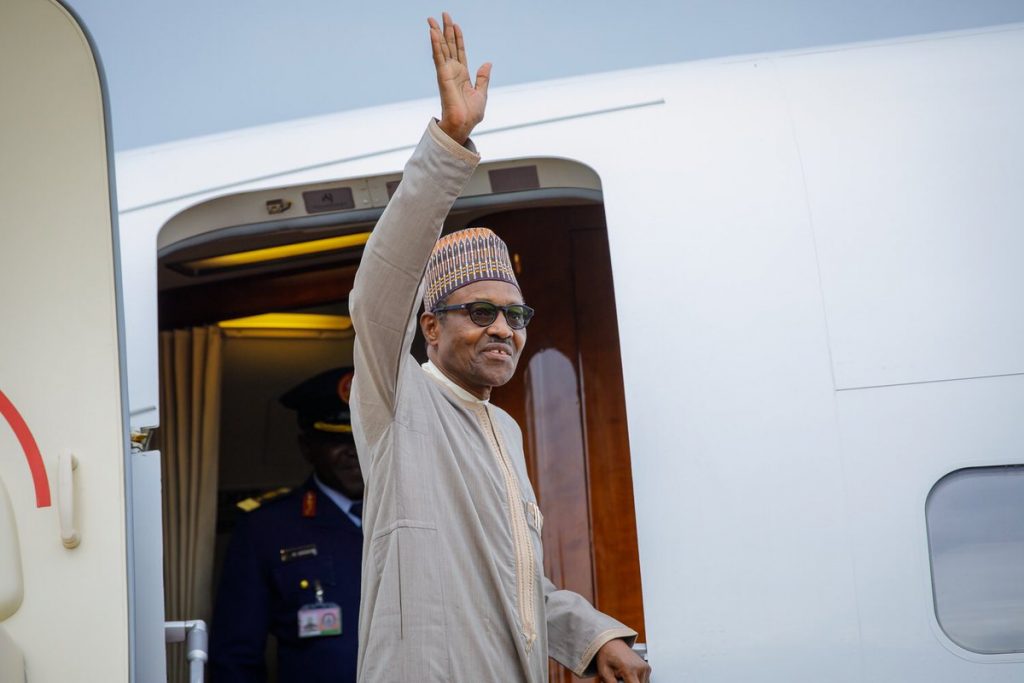
Goodbye, Muhammadu Buhari, I love you
By Prof. Abdussamad Umar Jibia
“Fellow countrymen and women. I, Brigadier Sani Abacha of the Nigerian Army, address you this morning on behalf of the Nigerian armed forces. You are all living witnesses to the grave economic predicament….”
That was on the 31st of December 1983. I was a Form Five student at the Government Secondary Technical School,Mashi. But the school was on its first-term vacation. So, I was at home. I was sitting with my father that early morning when someone came in to announce that the Army had overthrown President Shehu Shagari and that “rediyo baya Magana”, meaning the radio was silent. It was after my father sent for his transistor radio that I understood what the man meant. Normal radio programmes were not running. The radio station we listened to those days was mainly Radio Kaduna. Occasionally, we listened to Rima Radio, Sokoto, a Nigerien radio channel and Radio Kano. There was no Katsina State, so no Radio Katsina. No FM. No social media.
The only voice Radio Kaduna was airing was that of Brigadier Sani Abacha with the historical coup speech at regular intervals, filled with military music. Since my father did not go to Makarantar Boko, he asked me to translate, and I did that with the confidence of a final year student ready to take the WAEC examination in five months. Yeah, only WAEC. No NECO. No NABTEB. Nothing else except WAEC.
But that was not the point. Everyone was anxious to know Shagari’s replacement. It didn’t come immediately. Later in the afternoon, a Yoruba voice (later identified as Tunde Idiagbon) spoke to announce the acceptance of the “voluntary retirement” of service chiefs. While they were still waiting, another General (Ibrahim Badamasi Babangida) spoke; he asked Nigerians to remain calm as they awaited the speech of the new Head of State and Commander-in-Chief of the armed forces.
The speech did not come until midnight, when many of us were already asleep. The following morning, my father didn’t need me for translation as Radio Kaduna was airing the translated speech of the new Head of State, Major General Muhammadu Buhari. I saw happiness on the faces of the adults. I understood that they were happy because the new Head of State was not another Kaduna Nzegwu or an Aguiyi-Ironsi.
That was the beginning of the Buhari story. For those of us in secondary schools, nothing changed. Our holiday ended and we went back to our boarding school. In the whole of what is now Katsina state, I knew of only one day secondary school. That was the one in Katsina town, and it was owned by the Government. All the other schools I knew were boarding schools and public schools.
We sat for the WAEC GCE O-level exam and passed with the necessary credits and distinctions. My BUK pre-degree admission came quickly, and it was after I reported and registered that I understood that Buhari had removed the feeding subsidy in tertiary institutions. So, we were on our own.
Buhari was overthrown in August 1985, and that was the beginning of his popularity. Four months after he was overthrown, Nigerian students went on a rampage to protest the IMF loan. It was followed by the unpopular SAP. The more General Babangida introduced new policies, the more popular Major General Buhari became, even though he was in prison. People were tearing Babangida’s pictures and pasting the pictures of Buhari, his prisoner, on their vehicles and business premises.
The interview Buhari gave The News magazine after his release from detention made him even more popular among the elites and demonised Babangida. In the interview, Buhari spoke about the “fifth columnist” in his administration,which was understood to be a veiled reference to Babangida.
Fast forward to 2015, as a democrat, Buhari became the President after three failed attempts. The experiences of Nigerians were bitter, depending on who was involved. To the victims of banditry like us, he was a failure. To university lecturers like me, he destroyed tertiary education. To the Shiites, he was a murderer. To the masses, he is synonymous with hardship.
However, regardless of how you see Buhari, you must admit that he was sincere. He was incorruptible and meant well for Nigeria. Buhari would have been the best president Nigeria had if only he had ensured accountability in his Government.
May Allah have mercy on the soul of Muhammadu Buhari and admit him into the highest level of Firdaus. Amin.
Professor Abdussamad Umar Jibia wrote via aujibia@gmail.com.


