GDP

Nigeria’s Economic Resilience: Good policies or good luck?

By Ahmed Usman

As the year 2025 draws to a close, moments of reflection naturally set in, especially for an economy that has endured sharp shocks, painful adjustments, and cautious reforms. In an era of global economic turbulence marked by uneven commodity prices, persistently tight financial conditions, rising geopolitical tensions, regional insecurity, and an international retreat from development aid, many emerging economies have suffered currency instability, capital flight, and fiscal distress. 

For Nigeria, however, the year presents an unusual picture. Amid global uncertainty and domestic strain, key economic indicators are beginning to stabilise, prompting a deeper question about whether the country is merely ending the year on a fortunate note or finally turning a policy-driven corner.

The International Monetary Fund (IMF) projects that Nigeria’s economy will grow by about 3.9 per cent in 2025, with growth expected to strengthen modestly to around 4.1 per cent in 2026, driven by macroeconomic stabilisation and reform efforts across key sectors. While these numbers may not yet place Nigeria among the world’s fastest-growing economies, they mark a notable improvement from the passive growth of recent years and signal a gradual return of confidence.

One of the most significant recent developments is Nigeria’s GDP rebasing, which revealed that the economy is about 30 per cent larger than previously estimated. This adjustment is not merely a statistical exercise. It reflects the growing importance of services, digital trade, creative industries, and telecommunications, sectors that employ millions of Nigerians, particularly young people.

For households, a larger and more diversified economy is essential because it reduces overdependence on oil and expands opportunities for income outside traditional sectors. For policymakers, it improves Nigeria’s standing in global markets and provides a clearer picture of where growth is coming from, enabling more targeted policies.

The rebasing has also reshaped Nigeria’s debt profile. The debt-to-GDP ratio now stands at about 40 per cent, well below the levels seen in many peer emerging economies. More importantly, debt service as a share of government revenue has fallen to below 50 per cent, from much higher levels in previous years. This easing of fiscal pressure means the government now has slightly more flexibility to allocate resources to infrastructure, education, healthcare, and social protection. However, the challenge remains that Nigeria’s revenue base remains among the weakest globally, making sustained revenue mobilisation critical.

Perhaps the most tangible improvement for households and businesses has come from the foreign exchange market. After years of volatility and sharp depreciation, recent months have seen a reduction in exchange rate volatility, a narrowing of the gap between official and parallel market rates, and a gradual buildup of external reserves, now estimated at over $36 billion. This stabilisation has practical consequences. It helps slow imported inflation, reducing pressure on food, fuel, and medicine prices. Foreign portfolio inflows have also picked up, reflecting renewed investor confidence.

Nigeria’s capital markets are also telling a positive story. The stock market is enjoying its strongest rally in nearly two decades, with the All-Share Index posting record gains. This surge reflects expectations of improved corporate earnings and better macroeconomic coordination. Similarly, Nigeria’s bond market has entered a bullish phase, with falling yields and strong demand from both domestic and foreign investors. Lower bond yields reduce government borrowing costs and can eventually translate into lower interest rates for businesses and households seeking credit.

After reaching painful highs, inflation (food inflation) has begun to ease, FX conditions have improved, and supply pressures have eased. Although prices remain elevated, the slowdown in food prices offers some relief to households whose purchasing power has been severely eroded over the past two years.

Perhaps the most encouraging fiscal development is the sharp rise in government revenue. This improvement reflects tax administration reforms, subsidy removal, and better compliance. Higher revenue is central to Nigeria’s long-term stability. It reduces reliance on borrowing, strengthens public services, and allows targeted social spending to cushion vulnerable households from reform-related shocks.

Despite these gains, Nigeria’s resilience should not be mistaken for strength. The economy remains vulnerable to oil price swings, climate shocks, global financial tightening, and domestic security challenges. Monetary pressures, fiscal constraints, and external risks continue to interact in ways that could quickly reverse progress.

However, resilience built on sound fiscal management, credible monetary policy, and structural reform is fundamentally different from resilience driven by temporary luck. Strengthening domestic revenue, managing debt prudently, investing in human capital, and deepening diversification are not optional; they are essential.

Is the question whether Nigeria’s current resilience is the product of good policies or good luck? The evidence increasingly points toward policy-driven stabilisation, though aided by favourable timing and improved coordination.

The fundamentals are improving, confidence is returning, and the economy is stronger than it has been in years. The challenge now is to convert this fragile resilience into inclusive and durable growth, growth that raises living standards, creates jobs, and restores hope for millions of households.

Ahmed Usman wrote via ahmedusmanbox@gmail.com.

When the harvest smiles but Nigerian farmers do not

By Lawal Dahiru Mamman

Nigeria has long been a fascinating case study. Over the past two years, citizens have endured austerity. Government officials, whenever handed the microphone, have often likened the experience to that of a child who must first endure the prick of a needle before receiving the protection of a vaccine.

At the macro level, things are taking shape. The Central Bank of Nigeria (CBN) recently reported the highest Net Foreign Exchange Reserve (NFER) in over three years. According to the April report, the figure marked an increase from $3.99 billion at the end of 2023 to $8.19 billion in 2022 and $14.59 billion in 2021. 

Analysts say this reflects a substantial improvement in the country’s external liquidity, reduced short-term obligations, and renewed investor confidence. The naira, which had been on a steep downward path toward ₦2,000, has rebounded to around ₦1,400—its strongest level in months—as it rallies against the dollar in both official and parallel markets. 

It is on track to end the year on a firm note, buoyed by the growing forex reserves. Additionally, the National Bureau of Statistics (NBS) reported that Nigeria’s headline inflation rate dropped to 18.02% in September 2025, while also announcing an increase in its Consumer Price Index (CPI)—a measure of the change in prices paid by consumers for a basket of goods and services.

The Gross Domestic Product (GDP) has also recorded a growth rate of 3.13 per cent, particularly following the rebasing exercise. Despite these improvements, the common argument remains that such progress has not truly trickled down to the micro level.

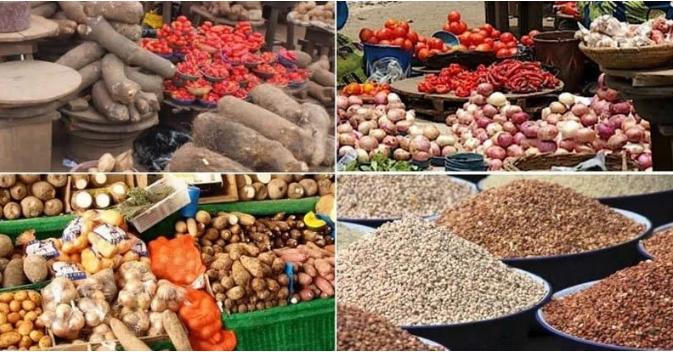
Most recently, however, food prices in markets across the country have begun to decline—particularly for rice, a staple that holds a special place in Nigerian households. While consumers have welcomed the news with relief, there is a flipside: farmers are crying out.

In truth, while lower prices delight the markets, they have left many farmers struggling to recover their investments. The government attributes the decline to increased local production through its interventions. Although the federal government opened a window for zero-duty importation of food items, the Minister of State for Agriculture and Food Security, Aliyu Sabi Abdullahi, insists that the fall in prices is due to large-scale agricultural investments under the National Agricultural Growth Scheme (NAGS) Agro-Pocket programme.

Farmers, however, tell a different story. They argue that the massive importation of food items has driven down local prices and left them incurring heavy losses. This is why, as a nation, we must proceed with caution. In reality, low prices can discourage cultivation—especially during periods of high input costs—threatening future harvests and deepening food insecurity.

There must be a balance between food security, farmers’ prosperity, and government intervention. Farmers should be supported through affordable credit, agricultural extension services, and guaranteed market access. The distribution of fertiliser to smallholders and the deployment of new tractors to Agricultural Mechanisation Service Centres will further help to reduce production costs and increase efficiency.

The current situation presents an apparent dilemma. While lower prices may bring short-term relief to consumers, prolonged losses could cripple agricultural productivity and strengthen dependence on imports—placing Nigeria’s food future at risk.

In all that we do, we must choose our approach carefully. Do we import food items to slash prices and win temporary public approval, if indeed such imports are genuine? Or do we double down on domestic production to achieve true self-sufficiency—especially in crops we can grow ourselves?

We must choose our pills carefully. Agriculture was once abandoned for oil, and we paid dearly for importing refined products while neglecting local refineries. Now that there is renewed interest in cultivation, we must not repeat the same mistake.

Lawal Dahiru Mamman writes from Abuja. He can be reached via dahirulawal90@gmail.com.

Kano beyond educational boom: A call for federal intervention to fuel growth 

By Ismaila Abdulmumini

Kano, renowned for its rich history, cultural vibrancy, and socio-economic vitality, marked 57 years of statehood a few days ago. A long journey of sacrifices and transformations, usually one at a time, gives Kano the new look we see and admire today. Kano is now carving a new identity as Nigeria’s educational powerhouse, boasting four federal universities, three state-owned institutions, and over five private universities, in addition to state and privately funded colleges and polytechnics. 

Equally, quantifiable challenges and rubble need to be put together to build the Kano of our dreams—the one we revere and would be proud of. The state’s transformation into a learning hub has inadvertently exposed systemic gaps in critical sectors, gaps that demand urgent federal intervention to unlock Kano’s full potential.  

Despite its academic strides, Kano grapples with erratic electricity, which stifles the industries that support its institutions. Students and entrepreneurs alike face daily blackouts, which undermine research, innovation, and productivity. Experts argue that federal investment in renewable energy projects and grid modernisation could ignite industrial growth, creating thousands of jobs while sustaining the educational sector’s momentum. 

Kano’s healthcare system, chronically underfunded and overburdened, struggles to serve its 15 million residents. State-run hospitals lack essential equipment, and medical personnel are stretched thin. Federal input through facility upgrades, increased funding, and partnerships with the private sector could reduce pressure, improve public health outcomes, and attract medical tourism, turning a cost centre into a revenue stream.  

In Kano’s bustling large markets that serve Africa, such as Dawanau’s grains, Kwari’s fabrics, and Singa’s groceries, transactions remain stubbornly analogue. This “brick-and-mortar” mentality, experts say, stifles economic scalability in the twenty-first century. “Digitisation isn’t optional; it’s survival,” argues tech entrepreneur Aisha Musa. Federal grants to build a robust digital ecosystem, e-payment platforms, online marketplaces, and broadband expansion could connect Kano’s markets to global consumers, boosting GDP and curbing youth unemployment.  

Kano’s agricultural landscape is littered with bad, indefatigable innuendo. Farms teem with tomatoes, peppers, and livestock, yet the state imports processed dairy goods. The absence of modern processing facilities leaves farmers vulnerable to waste and price fluctuations. A federal push to establish agro-industrial zones with cold storage and meat-processing plants could transform raw abundance into export-ready products, slashing Nigeria’s $10 billion annual food import bill and strengthening the naira. 

Potholed roads and inefficient rail networks cripple trade, inflating costs and deter investors. Upgrading transport infrastructure, which relies heavily on the federal government, would streamline the movement of goods from farms to ports, link markets to neighbouring countries, and position Kano as a logistics hub. “Better roads mean cheaper goods, happier consumers, and a thriving economy,” notes logistics expert Tunde Okoye.  

The blueprint for Kano’s renaissance is clear: targeted federal investments in energy, healthcare, digitisation, agro-industry, and transport. Such interventions promise to generate employment, diversify revenue streams, reduce import dependency, and fortify Nigeria’s economy. As the state stands at a crossroads, the message to Abuja is unequivocal: Empower Kano, and you empower the nation. Kano’s story does not need to be one of unfulfilled promises. With strategic governance, Africa’s “Centre of Commerce” could reclaim its title, this time, as a beacon of inclusive, 21st-century growth.

Ismaila Abdulmumini wrote via ima2040@outlook.com.

The growth Nigerians can’t taste: Behind the numbers lies hardship

By Nasiru Ibrahim

If the economy grows by 4% in Q1 2025, people expect to feel it through affordable food, reasonable wages, more job opportunities, an improvement in the standard of living, and quality education. I agreed with Dr. Usman Isyaku’s recent claim that “Economics is the new rocket science in Nigeria,” because economists are busy presenting abstract models, charts, graphs, GDP growth, and the economic policy debate is centred only on economic jargon and indicators that appear technical and confusing to the layman. The economic policy debate is supposed to be centred on what people earn, what they buy, how the cost of living rises, and what happens to inequality and poverty.

People often ask: if the economy is growing, why is our life getting harder? The answer to all this is the Nigerian economy’s economic growth and inflation paradox, which refers to the presence of economic growth and high inflation at the expense of people’s purchasing power and standard of living. Inflation erodes people’s purchasing power and repeatedly makes them poorer as prices rise.

The economic growth and inflation paradox is the reality of the Nigerian economy, considering that the economy experienced its fastest growth in about a decade in 2024, as pointed out by the World Bank’s lead economist for Nigeria, Sir Alex Sienant, yesterday in Abuja. He said the Nigerian economy grew by 4.6% year-on-year in Q4 2024. This means that in the last three months of 2024, the Nigerian economy produced 4.6% more goods and services than in the same period in 2023. However, even though the country produces more, many people don’t feel any benefit because prices are still rising, and daily life is becoming harder.

Growth figures like GDP are averages and do not address poverty, high inequality, a poor standard of living, or food affordability.

What caused this paradox?  President Tinubu’s economic reforms — removing fuel subsidies, electricity subsidies, and naira devaluation cuts —resulted in fiscal improvement. Government revenue grew by 4.5% of GDP in 2024, the fiscal deficit decreased, and external debt declined. On paper, these achievements are impressive, but they feel different to the common man on the street, as the prices of food, transport, and rent continue to rise.

The immediate cause is the lack of inclusive growth, with a few sectors like oil and banking dominating the GDP. Secondly, weak institutions refer to government agencies and public bodies that are supposed to ensure fairness, transparency, and accountability but fail to do so. When institutions are weak, they allow corruption, inefficiency, and poor management of public funds. This means money meant for roads, healthcare, education, or farming support gets wasted or stolen, and policies that should help everyone only benefit a few elites. This worsens inequality and keeps essential services underdeveloped.

Thirdly, agriculture and supply chain disruptions caused inefficiency in the sector. Insecurity and poor infrastructure, plus the issue of import waivers, contributed to cheap food imports, making it hard for local farmers to compete and causing them to incur losses.

I do not view economics as rocket science dominated by charts, models, and jargon. I see economics in everyday life—prices, wages, job opportunities, choices, affordable food for all, happiness, and a better life for all and sundry.

Economists should explain how policies affect people’s daily lives — not just in GDP numbers, but in real terms like food prices, wages, and employment opportunities. Economists need to engage with the public more directly, explaining key concepts like inflation or interest rates in simple terms. In 2022, the Nigerian government reported economic growth in the oil sector. Yet, unemployment was at a 20% high, and poverty was increasing, with more than 40% of Nigerians living below the poverty line.

Economists and policymakers often discuss GDP growth, real income, or inflation rates—terms that many Nigerians don’t fully understand. Most people are focused on practical issues like food prices, rent, and transportation costs, not abstract economic concepts.

Governments often use economic data to justify their policies, sometimes highlighting growth figures that don’t fully reflect the real situation. In Nigeria, governments usually focus on growth rates in sectors like oil and telecoms, which don’t directly impact most people’s daily lives, while ignoring issues like rising poverty and growing inequality.

What Should Be Done? 

Firstly, fuel subsidy reform must be done to protect ordinary Nigerians. The sudden removal of fuel subsidy in 2023 made life harder—transport became expensive, food prices shot up, and suffering increased. Even big economies like the U.S. still subsidise farmers, energy, and housing. But in Nigeria, our subsidy system was full of corruption and waste. Instead of removing it overnight, the government should have planned a gradual withdrawal and used the savings to support school feeding, health insurance, and public transport. State governors, like those in Lagos and Borno, should use their share of subsidy savings to support poor families. Local government chairmen can help by identifying struggling households and ensuring the help gets to them.

Secondly, we must secure our farms and support agriculture to fight food inflation. Insecurity in places like Benue, Zamfara, and Niger has chased farmers off their land. No farming means no food, and no food means higher prices. The government should send security teams to protect farmers and work with local vigilantes. State governors must invest in irrigation, storage facilities, and feeder roads, like Ebonyi’s rice project or Cross River’s cocoa plan. Local governments should help distribute seeds and fertilisers, and organise markets in villages so that food can move easily and become cheaper.

Thirdly, Nigeria must stop mismanaging foreign exchange and support local production. The constant rise and fall of the naira, unfair access to cheap dollars, and heavy import dependence have worsened things. The CBN must be open and fair in its forex policy and prioritise local manufacturers. State governments should build industrial hubs and support processing industries, as Ogun State is doing. Local governments can help small producers in things like leather, cassava, and shea butter—so we can reduce imports, create jobs, and lower prices.

Fourthly, state governors and LG chairmen must stop blaming the federal government for everything. Many things affecting people—bad roads, dirty water, expensive local markets—are within their power. Governors should form regional plans, invest in infrastructure, and support small businesses. Local governments should fix boreholes, maintain primary health centres, and organise rural markets. These small actions reduce the daily cost of living and improve lives.

Fifthly, we need proper social protection, not random handouts. Inflation is eating deep into people’s pockets. The government should use verified data (linked to NIN and BVN) to send digital cash transfers to the poor. Local governments must identify real households that need support. States should create public works programs—like road maintenance, tree planting, or waste collection—so people earn a living while helping their communities. That’s how India’s rural job scheme helped millions.

Lastly, no reform will work without fighting corruption and fixing our broken institutions. We can’t keep discussing change while money disappears, budgets are padded, and governors pocket LG funds. The government must pass audit laws, publish how money is spent, and punish corruption. State and local governments should meet transparency targets before receiving federal funds. We must also return full independence to local governments so they can serve people directly. Without these changes, even the best economic plans will fail.

Tinubu: Reforms are working, Nigeria is on path to stability and growth

By Hadiza Abdulkadir

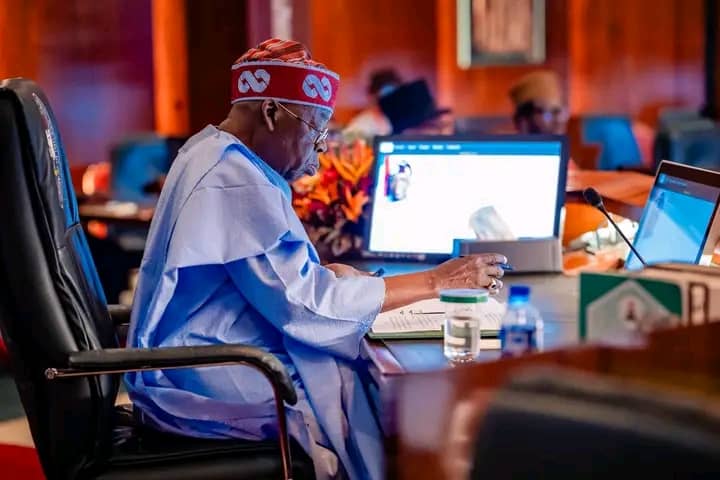
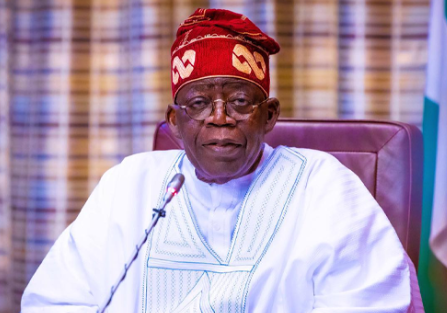
President Bola Ahmed Tinubu marked the second anniversary of his administration on Wednesday with an optimistic national address highlighting the government’s achievements and reaffirming commitment to economic reform, national security, and human capital development.

Speaking from the Aso Rock Presidential Villa, President Tinubu declared that his administration had made “undeniable progress” despite the sacrifices demanded of citizens, especially following the removal of fuel subsidies and the unification of foreign exchange rates.

“We are halfway through the journey that began 24 months ago. Today, I proudly affirm that our economic reforms are working,” he said, citing improvements such as easing inflation, increased foreign reserves, and higher state revenues.

According to the President, the federal government recorded over ₦6 trillion in revenue in Q1 2025 and successfully reduced the fiscal deficit from 5.4% of GDP in 2023 to 3.0% in 2024. Additionally, the country’s net external reserves rose sharply to over $23 billion by the end of 2024, a fivefold increase from the previous year.

In the energy sector, Tinubu noted a 400% increase in oil rig activity since 2021 and over $8 billion in new investments. “We have stabilised our economy and are now better positioned for growth and global shocks,” he added.

The President also highlighted reforms in taxation, infrastructure development, and the health sector. He announced the expansion of primary healthcare centres, the establishment of new cancer treatment centres, and a tax policy overhaul aimed at supporting low-income households and small businesses.

“Together, we are creating a system where prosperity is shared, and no one is left behind,” he said.

What Nigeria can learn from global best practices in fiscal transparency and public integrity

By Muhammad Ahmad Iliyasu

Nigeria’s governance and fiscal challenges are undermined by persistent corruption, inefficiencies in public finance, and a lack of transparency, all of which have stymied economic progress, among other issues. According to the 2024 Mo Ibrahim Index on African Governance, Nigeria ranked 33rd out of 53 African nations with a score of 45.7 out of 100, reflecting a decline of 1.4 in its governance score between 2014 and 2023. 

The ranking (above) is further emphasized by low scores across critical categories such as Security & Rule of Law (39.7), Participation, Rights & Inclusion (47.9), Foundations for Economic Opportunity (48.6), and Human Development (46.4). While these challenges are substantial, examples worldwide illustrate the transformative potential of fiscal transparency and public integrity when supported by robust institutions and data-driven strategies. Nigeria can identify actionable solutions to address its governance deficits by examining how other countries have succeeded in these areas.

One of the most striking examples of fiscal transparency comes from Estonia, which has emerged as a global leader in e-government. Estonia has digitized its public financial management systems and introduced blockchain technology to monitor public procurement and spending. According to the World Bank, these innovations have resulted in a 30% increase in administrative efficiency and a 25% decrease in opportunities for corruption. 

In comparison, Nigeria’s procurement processes remain largely opaque, frequently marred by corruption scandals involving inflated contracts and the misappropriation of public funds. By 2023, procurement-related corruption cost Nigeria an estimated 30% of its annual budget. Estonia’s success showcases that technology when applied systematically, can be a game-changer in ensuring fiscal accountability.

Participatory budgeting, which originated in Porto Alegre, Brazil, is another area from which Nigeria could draw valuable lessons. By directly involving citizens in decisions regarding local government budgets, Porto Alegre has boosted investment in vital services such as healthcare and education by 20%, specifically targeting underserved communities. This participatory approach has not only enhanced public service delivery but also built trust in government institutions. 

In Nigeria, public participation in budgeting remains minimal, with the process often limited to elite stakeholders. A 2021 report by BudgIT revealed that over 70% of Nigerians feel disconnected from how public funds are allocated. A more citizen-centric budgeting process would bridge this gap, fostering trust and ensuring that budgetary decisions reflect public priorities.

Anti-corruption frameworks in countries such as Singapore and Botswana highlight the significance of institutional independence and efficiency. Singapore’s Corrupt Practices Investigation Bureau (CPIB), established in 1952, functions independently from other government agencies and has played a crucial role in reducing corruption to negligible levels. This success is evident in Singapore’s top-tier ranking on Transparency International’s Corruption Perceptions Index (CPI), where it achieved a score of 85 out of 100 in 2023. In contrast, Nigeria scored 24 out of 100, ranking 150th among 180 countries. The difference stems not only from institutional strength but also from the enforcement of laws. While Nigeria’s Economic and Financial Crimes Commission (EFCC) has made strides, its efforts are frequently compromised by political interference, inadequate resources, and inconsistent prosecution of high-profile cases.

Fiscal discipline is another area where Nigeria lags behind global standards. Sweden and Germany, for instance, have adopted fiscal rules that ensure economic stability. Sweden’s balanced budget rule requires government expenditures not to exceed revenues over an economic cycle, while Germany’s “debt brake” caps structural deficits at 0.35% of GDP. These policies have allowed both nations to maintain sustainable debt levels—38% and 60% of GDP, respectively, as of 2022. In contrast, Nigeria’s public debt has risen sharply, reaching 40% of GDP in 2023, with debt servicing consuming over 80% of government revenues. Without strict fiscal rules, Nigeria risks entering a debt trap that could hinder long-term economic growth.

Open data initiatives also illustrate the potential for transparency. The United Kingdom’s Open Data Portal provides public access to over 40,000 datasets on government operations, enabling citizens and civil society to monitor public spending effectively. This transparency has contributed to a 15% increase in public trust in government institutions, as reported in a 2020 World Bank study. Meanwhile, Nigeria’s efforts at transparency, such as the Nigeria Open Contracting Portal (NOCOPO), have yet to achieve comparable results. A lack of comprehensive data and limited public awareness have restricted its impact, with Transparency International noting that only 10% of procurement data is consistently published.

In this context, the Center for Fiscal Transparency and Public Integrity (CeFTIP) plays a crucial role in Nigeria’s quest for better governance. Through its annual Transparency and Integrity Index, CeFTIP evaluates government ministries, departments, and agencies (MDAs) on their adherence to standards of transparency and accountability. Its reports reveal systemic gaps in compliance with fiscal transparency norms and provide recommendations to bridge these gaps. Additionally, CeFTIP organizes sensitization campaigns to raise awareness about the importance of fiscal openness, while its capacity-building programs train public officials in best practices for financial management and anti-corruption measures. These efforts are vital in establishing the foundational infrastructure for a culture of accountability in Nigeria.

Whistleblower protection is another area where Nigeria falls short. In New Zealand and Canada, robust legal frameworks safeguard whistleblowers from retaliation, resulting in a significant increase in reported cases of corruption and misconduct. According to the International Whistleblower Protection Network, countries with effective protections detect 30% more corruption cases. In Nigeria, the whistleblower policy introduced in 2016 initially led to the recovery of over $500 million but has since stagnated due to weak legal protections and a lack of institutional support.

South Africa offers valuable lessons in civil society collaboration. Organizations such as the Public Service Accountability Monitor (PSAM) have successfully partnered with government entities to track public spending, resulting in a 25% improvement in service delivery outcomes, according to the World Bank. In Nigeria, civil society organizations like CeFTIP, BudgIT, and Connected Development have made strides in promoting accountability but often face resistance from government agencies. Strengthening these partnerships could amplify their impact and ensure more transparent governance.

Recommendations

For Nigeria to replicate these successes, it must prioritize institutional reforms like DOGE and adopt data-driven strategies tailored to its context. Establishing a robust digital public finance system akin to Estonia’s would enhance transparency and reduce corruption. Adopting participatory budgeting processes, starting at the local government level, would empower citizens and align public spending with community needs. Strengthening anti-corruption agencies through legal and financial autonomy is essential to combating high-level corruption.

Moreover, Nigeria should introduce enforceable fiscal rules to curb excessive borrowing and ensure sustainable debt levels. Expanding open data initiatives and increasing public awareness of platforms like NOCOPO would improve oversight and citizen engagement. Supporting organizations like CeFTIP through increased funding, open access, and government collaboration could scale their impact on promoting transparency. Finally, enacting comprehensive whistleblower protection laws and fostering partnerships with civil society organizations would create a more inclusive and accountable governance framework.

By learning from the advancements in countries such as Estonia, Singapore, and Brazil, and by utilizing the ongoing initiatives of organizations like CeFTIP, Nigeria can establish a direction toward fiscal transparency and public integrity. These reforms, although challenging, are essential for rebuilding public trust, attracting investment, and ensuring a prosperous future for all Nigerians.

Muhammad Ahmad Iliyasu is Strategic Communications Officer at the Center for Fiscal Transparency and Public Integrity. He can be reached via his email: Muhada102@gmail.com.

Poverty reduction as an economic agenda in Nigeria

By Maryam Abdullahi Jibrin

Undoubtedly, the Nigerian economy has taken a more definite path that leads to progress and prosperity for the vast majority of our people. However, our national aspirations — equity, justice, integrity etc. must leap off the pages of cold print and become realizable objectives. Foremost, poverty must be addressed and reduced to a minimal level. 

The Millennium Development Goals (MDGs) first agenda is poverty reduction. UN viewed poverty as one of the greatest enemies of humanity. 

One of the surest ways to fight poverty is to build a strong economy that emphasizes job creation, an ever-increasing private sector and a problem–solving public service.

Nigeria is blessed with potentials. Now almost a century after independence, those potentials have turned into vast opportunities for all. 

The reality of our multicultural economy is no longer a point to mourn but one to turn to maximum advantage with which to build all the other sectors. Therefore, there is a need to formulate institutional, financial policy and macroeconomic support strategies to heal the economy.

Nigeria’s policy on poverty eradication must be unassailable if we are to get out of the economic predicament that stifles our initiatives. It means that our policy and decision-making processes must touch the heart of the problem. Only then can we have an effective solution — one that focuses on the needs of the most vulnerable segment of the polity and balances them with the growth imperatives of the economy. 

Against the background of both the local and global requirements, it became necessary to review the structural, operational and regulatory frameworks of the nation’s Poverty Reduction Plan. Since 1999, a set of policy directions and reforms have been implemented under a national development policy.

According to the National Bureau of Statistics (2012) report, 112.519 million out of an estimated 163 million of Nigeria’s population live in relative poverty. Relative poverty is the comparison of the living standard of people living in a given society within a specified period. Apart from the relative poverty index, Nigeria failed all poverty tests using all poverty measurement standards.

The poverty measure puts the country’s poverty profile at 60.9 per cent, the dollar per day measure puts the poverty profile at 61.2 per cent, and the subjective measure puts the poverty profile at 93.9 per cent (NBS 2012). The Human Development Index (HDI) of 0.423 also ranks Nigeria 142 out of 169 countries in 2010 with an estimated GNI per capita of $2156, life expectancy at birth of 48.4 years, Multidimensional Poverty Index (MPI) of 0.368 (UNDP, 2010).

The average Nigerian is a poor man. Nigeria is a nation of riches and poverty, wealth in the hands of few and extreme/abject poverty at the doorsteps of many. The divergence between Nigeria’s economic indicators, macroeconomic variables and reality is a source of concern. The reality is that people die because they cannot afford three square meals a day and access primary public healthcare. These problems are traceable to the weak governance that the nation has experienced over the years due to a combination of inefficient service delivery and inconsistent policy settings.

As strange as this may sound, this goes on side-by-side with an ostentatious display of wealth by the privileged few. 

In an attempt to proffer a solution to the foregoing problems, it is therefore imperative to determine the role of economic growth, agriculture and quality of governance in explaining the vast differences in poverty in Nigeria. Thus, the government should introduce initiatives to revamp education, infrastructure, fight corruption, end insecurity and ensure political instability nationwide. 

Maryam Abdullahi Jibrin writes from Bauchi. She can be reached via jibrinabdullahimaryam5@gmail.com.