Gashua

The urgent need for action on kidney disease-related deaths in Gashua

By Mujahid Nasir Hussain

Gashua, a local government area in Yobe state, Nigeria, is facing a distressing public health crisis. An alarming increase in the number of individuals succumbing to kidney diseases is being reported, yet the underlying cause remains unidentified. 

The kidneys are essential organs located in the retroperitoneal part of the body. These bean-shaped organs perform several crucial functions, including blood filtration, blood pressure regulation, electrolyte balance, acid-base balance, blood calcium regulation, and many more. However, when they become impaired, those vital functions are compromised, leading to severe and devastating deterioration and complications.

The rising number of deaths linked to kidney diseases in Gashua is a cause for serious concern. It is impossible to implement effective interventions without identifying the underlying cause, whether environmental, genetic, or related to lifestyle factors. 

The Yobe state government must prioritise an investigation into the root causes of these kidney diseases to find an end to the problem. Public health agencies, researchers, and medical experts should be mobilised to conduct thorough epidemiological studies and screenings to identify potential risk factors. 

In addition, there is also a need to take proactive measures through:

  • Raising Awareness:  Educating the community about kidney health, risk factors, and early symptoms of kidney disease to encourage timely medical consultation.
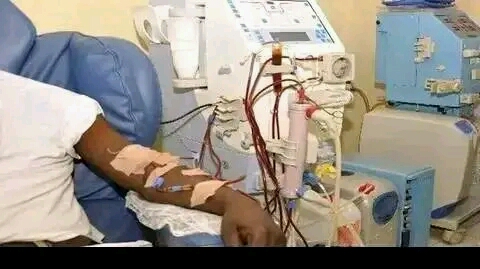
  • Enhancing Healthcare Facilities: Improving access to quality healthcare services, including dialysis centres and nephrology specialists, to manage and treat kidney diseases effectively.
  • Providing Clean Water: Ensuring the availability of clean drinking water is essential, as contaminated water is a known risk factor for kidney damage. 
  • Encouraging Lifestyle Changes: Promoting healthy dietary practices and regular medical check-ups to prevent kidney-related diseases.

Mujahid Nasir Hussain studies at Bayero University, Kano, Nigeria and writes via mujahidhnasir@gmail.com.
Gashua, who will save you?

By Hamza Muhammad Tasiu

I want to start with a powerful word: Kafkaesque! The meaning? It is when you enter a surreal world in which all your control patterns, plans, and how you have configured your own behaviour begin to fall to pieces. You find yourself against a force that does not lend itself to how you perceive the world. You don’t give up; you don’t lie down and die. You struggle against this with your equipment and whatever you have. But of course, you don’t stand a chance. That’s Kafkaesque as defined by Frederick R. Karl.

Kafkaesque comes from the name of the German author Franz Kafka. The word perfectly describes the cases of most kidney failure patients. The disease starts with back pain, then people go for diagnosis, and dialysis follows (Thank God it is free for Yobe indigenes). Swelling in arms and legs, shortness of breath, and hiccups follow and then comes the expected: slow and painful death. These are some of the things patients go through. 

But what is kidney failure? Kidney failure is a condition in which the kidneys lose the ability to remove waste and balance fluids. In other words, the kidneys have failed. 

Ordinarily, kidney failure should not be a death sentence. Dr. Ibrahim Sulaiman told us that a person can survive on 25% of his total nephrons, the kidney cells. That is, you only need half of one kidney to survive. But for most people, being diagnosed with one kidney failure is like being issued an indirect death certificate.

Most patients diagnosed with kidney disease put everything they can into the fight against the disease, but they stand no chance in most cases. And as the word says, ‘You don’t give up, you don’t lie down and die. You struggle against this with your equipment and whatever you have. But of course, you don’t stand a chance.’ 

Gashua has the highest number of cases of kidney failure in the whole of Yobe State. You could go to the dialysis unit in Yobe State Teaching Hospital and look at a kidney failure patient and ask him, ‘Are you from Gashua?’ The most probable answer? ‘Yes!’ 

As we speak today, hundreds of families are at the mercy of this disease. May we, the healthy ones, be protected from it. We also pray that this crisis comes to an end soon. 

My attempts for writing this short piece are that we may get someone (individuals, NGOs, governments, etc.) who will come to our aid and relieve the pain in my heart. As Neil Gaiman said, ‘Pain shared, my brother, is pain not doubled but halved.’

Hamza Muhammad Tasiu wrote via hamzamtasiu@gmail.com.