Suspension of subsidy removal: Nigeria narrowly escaped collapse
By Lawan Bukar Maigana
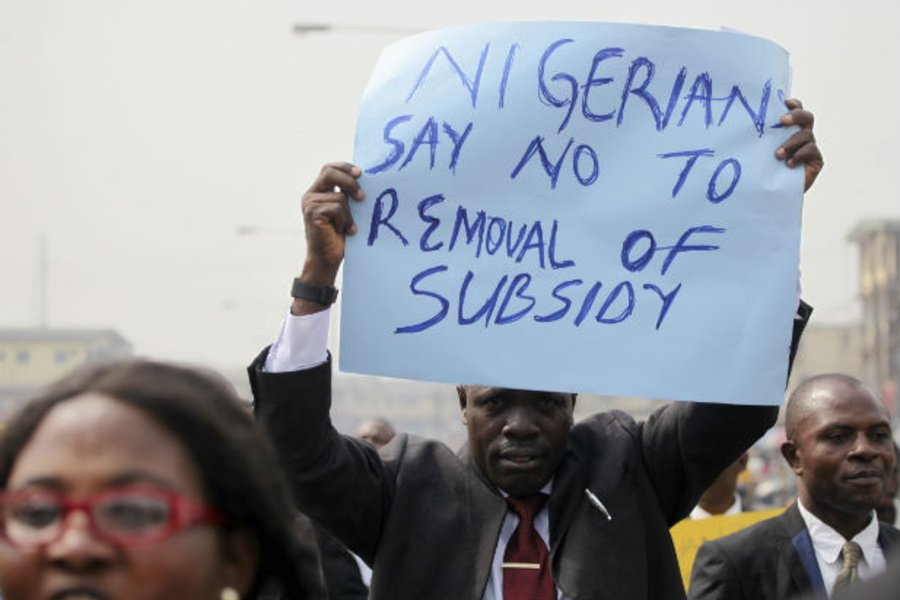
The Nigerian government was lucky enough to salvage itself from the intractable calamity it wanted to put itself in—the implications of removing subsidies on petroleum products from July this year. Whoever advised FG to suspend their noxious plans to remove subsidies on the products mentioned above is a true lover of the vast majority of Nigerians and Nigeria as a country.
Even though virtually every country in the world today battles an economic downturn, it is still unjustifiable for the FG to remove subsidies on petroleum products at this critical point. The country is fighting ethnoreligious conflict, refuse-to-end Boko Haram, kidnapping, banditry, mass employment, non-quality education, poor health services for the masses, illiteracy, and unpatriotic leaders, which other countries or most don’t.
I said it even before the government took a second look at its ugly plan to make subsidies on petroleum products history at the detriment of patients citizens. Had the plan come true, the country would have scattered, and perhaps the avoided fear would have been unavoidable because no one can bear the impact of removing subsidies on petroleum products, not even the haves can.
Nigeria would have had an unprecedentedly historic hike in foodstuff prices, transportation fare, building materials, medication, among others. And there would be a collapse of many companies in the country because they too cannot bear it, and the cost of living would be unbelievably unexplainable.
The inflation rate has never been so alarming as today in the country, and it keeps rising every day. Yet, the FG wanted to turn a blind eye to it and remove subsidies on petroleum products from July this year until a group of genuine professionals reviewed the plan and finally rejected it because of the nation’s current state.
Kudos to the considerate committee for being truthful to themselves. Every reasonable person knows that doing anything that will result in a hike in prices of commodities and services in Nigeria is untimely because most people are still ‘youth.’ Anyone who is economically unestablished is a youth regardless of their age.
In 2021, the National Bureau of Statistics (NBS) extrapolated that “ Nigeria’s annual inflation rate rose to 15.63% in December of 2021, after eight straight months of decline, amid a slight acceleration in prices of major component food (17.4% vs 17.2% in November), linked to the increase in demand during the festive season. Upward pressure also came from non-food products, including transport (15%, the same as in November); clothing & footwear (15.1% vs 14.8%); miscellaneous goods & services (14.1% vs 14%); housing & utilities (11.1% vs 10.6%), among others.
The annual core inflation rate, which excludes the prices of agricultural produce, rose further to 13.87% in December, the highest since April of 2017, from 13.85% in the prior month. Monthly, consumer prices inched up by 1.82%, the most since May of 2017, after a 1.08% increase in the prior month.
The Consumer Price Index (CPI) measures the change over time in the prices of 740 goods and services consumed by people for day-to-day living. The index weights are based on expenditures of both urban and rural households in the 36 states. The most important categories in the CPI are Food and Non-Alcoholic Beverages (51.8 per cent of total weight); Housing, Water, Electricity, Gas and Other Fuel (16.7 per cent) and Clothing and Footwear (7.7 per cent).
Transports account for 6.5 per cent of the total index and Furnishings and Household Equipment Maintenance for 5 per cent. Education represents 3.9 per cent of total weight. Health is 3 per cent, Miscellaneous Goods and Services 1.7 per cent, and Restaurants and Hotels 1.2 per cent. Alcoholic Beverages, Tobacco and Kola account for 1.1 per cent of the total index, Communications for 0.7 per cent and Recreation and Culture for the remaining 0.7 per cent.”
So, tell me how we can endure the impact of removing subsidies on petroleum products in Nigeria? I am happy that the Nigerian government has indefinitely suspended the planned removal of subsidies on petroleum products.
Lawan Bukar Maigana writes from Maiduguri, Borno State, and can be reached at lawanbukarmaigana@gmail.com