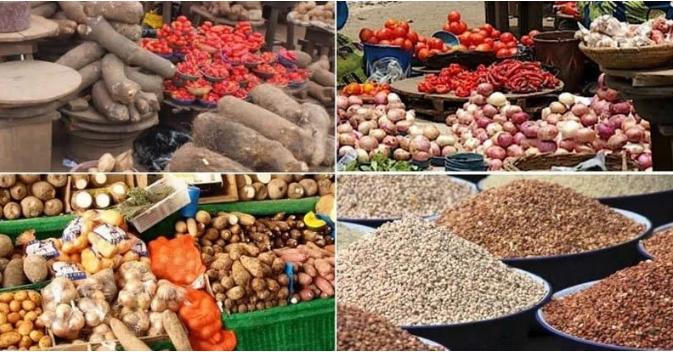
Food insecurity

Crashing food prices the wrong way

By Zayyad I. Muhammad

In 2024, President Bola Ahmed Tinubu granted duty waivers for the importation of key food items such as rice, maize, wheat, sorghum, and others. This decision was intended to tackle soaring food prices and has indeed led to a significant drop in the prices of food commodities.

Yesterday, Friday May 15th 2025, the Chairman of BUA Group, Abdul Samad Rabiu, announced that his company is intensifying efforts to further reduce the prices of rice and other essential commodities. While this gesture may appear patriotic and commendable, it raises critical questions: Is Abdul Samad a farmer? Shouldn’t such statements about food pricing and availability come from actual farmers and those directly involved in food production?

To be fair, the massive and often irrational hoarding of food items by middlemen has created artificial scarcity and price hikes, which may have prompted  the  government intervention and Abdul Samad’s statement . However, these  efforts, though well-intentioned, highlight a deeper, systemic problem that cannot be solved by importation alone. 

The government’s current approach, focused on crashing food prices through imports, is hurting local farmers and ultimately unsustainable.

While reducing food prices is essential for national food security and the wellbeing of ordinary Nigerians, the pathway to achieving this goal must be rooted in empowering local producers. Farmers are the real drivers of food affordability. Without supporting them, any temporary relief brought by food imports will ‘collapse’ the local economy under the weight of neglected domestic agriculture.

President Tinubu should prioritize policies that strengthen local agricultural capacity. This includes granting duty waivers not just for imported food, but more importantly for farm inputs, such as seeds, fertilizers, equipment, and agrochemicals. Supporting local agrochemical manufacturers and agromerchant firms will boost productivity and reduce dependence on foreign inputs.

Moreover, providing farmers with easy access to affordable loans is critical. Many smallholder farmers lack the capital to invest in modern tools or expand their operations. Through targeted financing and robust extension services, the government can unleash the full potential of Nigeria’s agricultural sector. Though many farmers and officials have abused several well-intentioned government incentives for agribusinesses. 

If current policies continue to favor food importation over local production, the consequences could be dire. The economy may suffer, and Nigeria’s food security will become dangerously dependent on foreign nations. This dependency not only undermines national sovereignty but also exposes the country to global agricultural market shocks.

Agriculture remains an important sector of Nigeria’s economy. Farmers contribute roughly 25% to the nation’s GDP. It is also the largest employer of labor, with over 25 million people, about 30.1% of the total workforce engaged in the sector. According to the Food and Agriculture Organization (FAO), more than 70% of Nigerians participate in agriculture in some form. 

Clearly, supporting local farming is not just about food, it is about livelihoods, national development, and economic stability.

Cheaper food prices are indeed crucial for Nigeria’s survival, but they must be achieved the right way, through robust, self-reliant, and locally-driven food production. Supporting and scaling small, medium large-scale farming across the country will naturally lead to lower prices, eliminate hoarding, increase food exports, and align with the Tinubu administration’s stated “Nigeria First” policy.

Food imports is a short-term fixes, now is the time to shift from to long-term solutions,

by putting farmers at the center of President Tinubu’s government food policies and programs 

Zayyad I. Muhammad writes from Abuja via zaymohd@yahoo.com.

Gombe gov’t dispatches essential food items to vulnerable persons across 11 LGAs

By Abdullahi Mukhtar Algasgaini

Gombe State government has dispatched truckloads of essential food items to all 11 local government areas of the state for onward distribution to the most vulnerable persons. 

This follows the approval of Governor Muhammadu Inuwa Yahaya, who has continued to demonstrate commitment to the welfare of the people. 

Each LGA has been allocated 1,000 bags of 50 kg sorghum, 1,000 bags of 25 kg rice, and 1,000 cartons of spaghetti pasta. 

Beyond the distribution to the 11 LGAs, an additional 5,000 bags each of rice and sorghum and 5,000 cartons of spaghetti pasta will be distributed to a wide array of groups, including faith-based organizations, civil society groups, trade unions, student unions such as the Gombe State Students Association (GOSSA) and the National Association of Nigerian Students (NANS), and Tsangaya and Almajiri schools. 

Special consideration has also been given to youths and women groups, and people living with disabilities, as directed by the Governor to ensure that the relief package reaches those who are mostly in need, especially in the face of the current economic hardship. 

This distribution is just one of many efforts by the government to support the citizens during difficult times. 

Governor Inuwa Yahaya remains committed to implementing effective measures to support the citizens and ensure their resilience, fostering social stability amid economic challenges.

The Governor also remains grateful to President Bola Ahmed Tinubu for his numerous interventions and initiatives to address the economic challenges facing the nation in this challenging period.

Food loss and waste: Scare of food insecurity

By Lawi Auwal Yusuf

An upsurge in food loss this year in some states, specifically those devastated by disastrous series of flooding that destroyed farmlands and carried away the produce, has raised some concerns about food insecurity in Nigeria. Several media reports actually talked about the widespread flooding damaging dwellings, large swathes of farmland, and infrastructure and displacing millions of people, only leaving them struggling to salvage the remains of their harvest. To this end, over 20 million Nigerians were projected to be facing food scarcity. Crops lost to the pandemic flooding coupled with lower yields, exorbitant prices of fertilizer and security challenges are likely to precipitate shortages and make prices costlier.

Indeed, Nigeria cannot afford to battle famine currently as it is facing a myriad of other extreme challenges. We recall that a 2021 UN report revealed that almost half of all food produced would never be consumed. Nigeria loses and wastes roughly 40% of its total food produced annually. Being the highest in Africa, with a total of 37.9 million tons of food that is thrown into the trashcans of households, restaurants, retailers and other food services. It further disclosed that each Nigerian discards almost 189kg of food every 12 months. No doubt, this trend, augmented by this year’s nosedive in the food supply, will famish more Nigerians.

But the big question remains, are Nigerian authorities conscious of this awful threat? Unfortunately, the government’s continued abysmal attention to the problem is evidenced by its lackadaisical disposition in dealing with the issue. The relatively paltry budgetary allocation to agriculture has made us more assured that they don’t give a damn about food security.

To add insult to injury, Nigerians are not yet willing to back away from food squandering, which they see as normal. The problem’s exacerbation implies that this behaviour is deeply entrenched as a lifestyle without visualising its social, economic and environmental repercussions. Wealthy individuals continue to store excess food while impoverished Nigerians remain at the mercy of starvation.  However, cutting food loss and waste is essential as more people continue to die of hunger every day, whereas millions of tonnes of edible food that can save their lives are extravagantly trashed into landfills.

Generally, food loss or waste is the food that is discarded and lost uneaten and occurs at either the production, processing, retailing or consumption stage of the food supply chain. Unlike in the Western metropolis where most food is wasted at the consumption level, contrarily, most food in the third world is lost at the production stage. Though food waste is a component of food loss, the two terms differ, considering the point at which the loss occurs.

Food loss is the decrease in quantity or the quality of food in the production and distribution process. While food waste is the removal of healthy food at the consumption level from the supply chain and usually occurs in shops or at home. Both are mostly caused by poor stock management, expiration, negligence or the indifferent act of throwing away half-eaten food.  

Consequently, food loss and waste undermine the sustainability of our food systems; hence, they cannot be resilient if they are not sustainable. When food is disposed of, all those resources used to produce it are wasted equally. This includes water, land, labour, energy, capital and precious time. Similarly, they have negative impacts on national food security as well as its availability. Nonetheless, they also help in pushing prices up while depleting farmers’ and retailers’ incomes.

It is gratifying to note that the disposal of food in junkyards leads to greenhouse gas emissions that exacerbate climate change. Studies have shown that more than 10% of global greenhouse gas emissions are a result of uneaten food. In addition, food disposal also produces methane, which is 23 times more potent than carbon dioxide. Bacteria produce methane as they decompose sludge in waste treatment facilities and other decaying matter in garbage lots.

Actions are necessary to check this exponential growth in food loss and waste that threaten national security in order to ensure self-sufficiency, maximize the use of the food we produce, increase profits and be thrifty with our natural resources. This will go a long way towards enhancing the efficient use of these scarce resources, mitigating climate change, increasing exports and reducing imports, and above all, supporting food security and nutrition.

 In view of the foregoing, it is necessary to combat the underlying causes like poor transport and storage facilities, unstable power supply, lack of preservation knowledge and techniques, and unplanned buying and excess cooking. Moreover, behavioural change will undoubtedly make a difference too.

Instructively, Nigeria must do all its best, come what may, to steady this monumental failure in food production as the demand for more food increases year on year due to its acutely growing population. Equally important is the need for the government to fill up the broader supply gap created by this year’s immense loss so as to meet up the national demand to forestall dearth in this already ailing country.

Lawi Auwal Yusuf wrote from Kano, Nigeria

Rising food prices in northern Nigeria

By Sumayyah Auwal Ishaq

Nigeria seems to be plunging into a new dimension of economic crisis as food inflation reached a new high in most of the northern region, hitherto considered the country’s food basket.

The prices of essential food items are rising astronomically, preventing many Nigerians from feeding adequately. The rising cost affects domestic and imported foods like rice, beans, tomatoes, pepper, onion, flour, egg, oils, bread, plantain, fruits, frozen foods, and yam. These staple foods that Nigerians consume daily. This coincides with a season of national economic downturn, high inflation, and depreciation of the national currency. 

A random survey conducted across major markets in Kaduna and other parts of the country by The Daily Reality this week has shown that a 50 kilogram (kg) of foreign rice sold for N27, 000 earlier in the year, sells for N34000 today. The same size of local rice sold for N19, 000 between January and April now sells between N25,000 and 28,000, depending on the brand.

The cost of beans, regarded as a meal for the lower class, is anything but disheartening. Presently, a bag of 50kg beans that previously sold for N27,000 rose to N37,000 and now sells for N47,000.

In the Bakin Dogo market, the prices of tomatoes, sweet potato, Irish potato, and onions have all doubled, making it difficult for many Nigerians. In February this year, one litre (or bottle) of palm oil was N400, while five litters was N2,000. But now, 1 litre of palm oil went up to N900; 5ltrs was N2,000. And as of September, 1ltr and five litres of palm oil had gone up to N700 and N3,500. A bottle of palm oil sold for between N250 and N300 is N800. A bag of onions is N24, 000, as against N12, 500 it sold in March this year.

Items whose prices have shot up are endless. Beyond food items, groceries, transport fare, school fees, house rent, cooking gas, and everything that concerns a man’s livelihood has seen their prices skyrocket, much to the chagrin of Nigerians, particularly low- and fixed-income earners.

Insecurity and food insecurity In Nigeria

By Safiyanu Ladan

Banditry and kidnapping for ransom have created a sense of fear in many farming communities in North-Western and Central parts of the country. Alas, thousands of farmers are left with no other options than to leave and abandon their farmland uncultivated for some years now for safer and more secure environments, mainly as refugees, in urban areas.

The displacement of farming communities by bandits as a result of incessant attacks which prevented them from tilling their farmland, the abrupt cessation of rainfall, the increase in the price of farm inputs, among others, are listed as the major factors that affect food production in Northern Nigeria.

This has significantly been attributed to the hiking in the price of agricultural produce and will ultimately lead to food insecurity.

In July this year, an official of the United Nations Dr Rhoda Dia, was reported to have warned that an estimated 13 million people in northern Nigeria face the risk of acute food insecurity in the next few months.

The Project Manager, United Nations Development Program – Global Environment Facility (UNDP – GEF), in charge of the Resilient Food Security Project, said the warning had become imperative because the country is facing growing levels of acute food insecurity due to decades of insecurity across the country, saying that the insecurity had resulted in increasing poverty and economic crises.

She, however, stated that the situation had been worsened by the COVID-19 pandemic and, recently, the series of clashes between farmers and herders.

According to an agriculturist, the insecurity we’re facing now, especially in the North-Western part of Nigeria, has dramatically affected crop production and will go a long way in enabling food insecurity.

The fact that most of the agricultural activities in northern Nigeria are done by peasant farmers who live in rural areas and have been subjected to unprecedented attacks almost daily by bandits is alarming.

In many aspects, insecurity has affected food production. Naturally, this can be associated with the increase in food price, even though there are other factors like the Covid-19 pandemic, as we can see in other countries. But, still, our peculiar problem that aggravated the situation is the issue of banditry.

While lamenting the security situation, some farmers in one of the most troubled states said bandits had captured more than 30% of their farmlands.

Given the foregoing, the food insecurity is imminent, and it’s so glaring that there’s nothing the government can do about it as it has failed the country.

Safiyanu Ladan writes from Zaria via uncledoctor24@gmail.com.