food

Crashing food prices the wrong way

By Zayyad I. Muhammad

In 2024, President Bola Ahmed Tinubu granted duty waivers for the importation of key food items such as rice, maize, wheat, sorghum, and others. This decision was intended to tackle soaring food prices and has indeed led to a significant drop in the prices of food commodities.

Yesterday, Friday May 15th 2025, the Chairman of BUA Group, Abdul Samad Rabiu, announced that his company is intensifying efforts to further reduce the prices of rice and other essential commodities. While this gesture may appear patriotic and commendable, it raises critical questions: Is Abdul Samad a farmer? Shouldn’t such statements about food pricing and availability come from actual farmers and those directly involved in food production?

To be fair, the massive and often irrational hoarding of food items by middlemen has created artificial scarcity and price hikes, which may have prompted  the  government intervention and Abdul Samad’s statement . However, these  efforts, though well-intentioned, highlight a deeper, systemic problem that cannot be solved by importation alone. 

The government’s current approach, focused on crashing food prices through imports, is hurting local farmers and ultimately unsustainable.

While reducing food prices is essential for national food security and the wellbeing of ordinary Nigerians, the pathway to achieving this goal must be rooted in empowering local producers. Farmers are the real drivers of food affordability. Without supporting them, any temporary relief brought by food imports will ‘collapse’ the local economy under the weight of neglected domestic agriculture.

President Tinubu should prioritize policies that strengthen local agricultural capacity. This includes granting duty waivers not just for imported food, but more importantly for farm inputs, such as seeds, fertilizers, equipment, and agrochemicals. Supporting local agrochemical manufacturers and agromerchant firms will boost productivity and reduce dependence on foreign inputs.

Moreover, providing farmers with easy access to affordable loans is critical. Many smallholder farmers lack the capital to invest in modern tools or expand their operations. Through targeted financing and robust extension services, the government can unleash the full potential of Nigeria’s agricultural sector. Though many farmers and officials have abused several well-intentioned government incentives for agribusinesses. 

If current policies continue to favor food importation over local production, the consequences could be dire. The economy may suffer, and Nigeria’s food security will become dangerously dependent on foreign nations. This dependency not only undermines national sovereignty but also exposes the country to global agricultural market shocks.

Agriculture remains an important sector of Nigeria’s economy. Farmers contribute roughly 25% to the nation’s GDP. It is also the largest employer of labor, with over 25 million people, about 30.1% of the total workforce engaged in the sector. According to the Food and Agriculture Organization (FAO), more than 70% of Nigerians participate in agriculture in some form. 

Clearly, supporting local farming is not just about food, it is about livelihoods, national development, and economic stability.

Cheaper food prices are indeed crucial for Nigeria’s survival, but they must be achieved the right way, through robust, self-reliant, and locally-driven food production. Supporting and scaling small, medium large-scale farming across the country will naturally lead to lower prices, eliminate hoarding, increase food exports, and align with the Tinubu administration’s stated “Nigeria First” policy.

Food imports is a short-term fixes, now is the time to shift from to long-term solutions,

by putting farmers at the center of President Tinubu’s government food policies and programs 

Zayyad I. Muhammad writes from Abuja via zaymohd@yahoo.com.

Nutella creator Francesco Rivella passes away at 97

By Maryam Ahmad

Francesco Rivella, the creator of the beloved hazelnut spread Nutella, has passed away at the age of 97 on Valentine’s Day.

Rivella, an Italian entrepreneur and food innovator, played a key role in developing the iconic chocolate-hazelnut spread that became a global favorite.

First introduced in the 1960s, Nutella quickly gained popularity for its rich taste and creamy texture, becoming a breakfast staple in households worldwide.

His passing marks the end of an era for the food industry, as millions remember the man who revolutionized sweet spreads. Tributes from fans and industry leaders have poured in, celebrating Rivella’s contribution to culinary history.

Rivella’s legacy lives on in every jar of Nutella, bringing joy to generations of chocolate lovers.

Availability and affordability of food

By Lawal Dahiru Mamman

Why are the Nigerians not having enough food to eat? Why? That is the question we need to answer. Statistics paint a grim picture and the anecdotal evidence is there. We have working farmers but numbers say people are not eating well.

The above was paraphrased from the address of the Chairman, Media Trust Group, at the 22nd Daily Trust Dialogue and Presentation of Unsung Heroes, themed “Food Security: Availability or Affordability?” held at the NAF Conference Centre in Abuja on 23 January 2025. One does not need an emeritus to explain the reasoning behind the choice of theme.

As an individual with a background in agriculture, I have often had serious discussions with two close friends about the true value of our certificates. If we cannot make a tangible impact on curbing hunger, which continues to plague Nigerians, then what is the point? The alarming statistics of hunger and malnutrition only paint a bleaker picture each year.

We never really take into account other graduates from different subsectors of agriculture, but we somehow always come to the conclusion that we are part of the reason millions of Nigerians go hungry, and we hope to make a difference in the near future, dumping the noise and swinging into real action.

It is this very concern that drives my desire to attend conferences or dialogues like the aforementioned, but circumstances did not permit it. Thankfully, technology has been birthed and it came to the rescue. The organisers provided live coverage across Facebook, YouTube, and Zoom, which I was able to access, allowing me to participate in the programme, albeit not until the very end.

It was a session to examine the current state of affairs and an open floor for discussion on how to make food available and affordable. Pundits brainstormed Nigeria’s vast fertile land, large bodies of water and adequate rainfall in each geopolitical zone, suitable for various crops and rearing animals, explored and seeked to decode how despite these rich agrarian factors hunger perseveres when there should be no correlation at all.

Farmer-herder clashes, a misunderstanding that has escalated from cultivated lands to homes, affecting innocent women and children, were deliberated upon, along with their impact on optimum crop production. In my view, our inability to properly harness pasture and rangeland is a contributory factor.

To put things into perspective, in a class, we studied over ten plants that, when cultivated, can provide sustenance for our livestock. This not only helps resolve clashes, but also reduces competition for valuable food resources between humans and domesticated animals, until we achieve self-sufficiency.

Genetically modified organisms (GMO) foods was another talking point. Exploring and tweaking specific genetic traits for better quality in other plants or animals is not new in agriculture. Before we sort ethical issues surrounding GMOs for long term solution on food availability, attention must be paid on short term remedy for same, and affordability.

Post harvest spoilage or waste was another concern. Even as these food items, especially perishables, are not sufficiently abundant, during harvest, a lot go to waste without arriving markets. What does this tell us? There is the ability to produce sufficiently but, as a nation it becomes imperative to invest in processing and storage infrastructure to arrest the issue of availability and affordability, it is basic economic principle of demand and supply.

Insecurity remains the bane of farmers. Many have abandoned their lands in order to remain alive, frankly, no one blames them. In offering solution, President of All Farmers Association of Nigeria (AFAN) said there is a need to defoliate forests in Nigeria which serves as safe haven for criminal elements – bandits, Boko Haram, ISWAP and Lakurawa alike.

He alluded to the fact that his idea may not sit well with climate change and environmental enthusiasts but stood firmly by this suggestion. This idea may not necessarily be out of place when we zoom our lens to realities of food availability and affordability. What I must add, if this is not welcomed, stakeholders should have a round table talk on other ways to save lives and tackle food insecurity without defoliation.

Present during the dialogue was the Minister of Livestock Development, Alhaji Idi Mukhtar Maiha. Among a lot of things he said Nigerians are tired of saying the country has “potential”, stressing that it is time to ”activate” it. Although we must know the potentials before attempting to activate, his assertion is oncourse, our potentials have since been established.

According to him, policies should address the issue where people produce for only family consumption with little to sell while also highlighting the need to change the way we do things in the agricultural sector, for us to get a different outcome. Rightly captured but do average farmers have at their disposal sophisticated tools to produce for family and market? our practice is still largely primitive you know.

I am a believer that every citizen has a role to play for the betterment of Nigeria but importantly, leadership bears greater responsibility therefore, I was happy the Minister and a representative of the Speaker of House of Representatives – both in positions to “make things happen” – were present or represented among other stakeholders.

Overall, the dialogue was critical, informative, and enlightening, but we hope to see where we go from here in our efforts to make food available and affordable.

Lawal Dahiru Mamman writes from Abuja and can be reached on: dahirulawal90@gmail.com

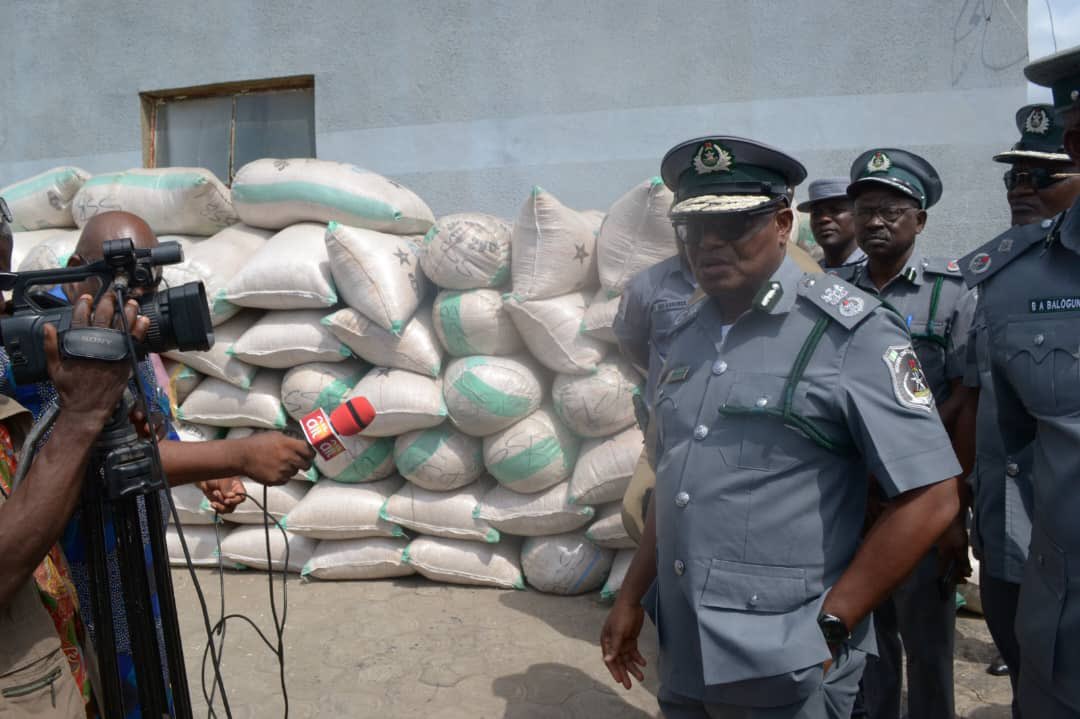
President Tinubu orders customs to return seized food items

By Uzair Adam Imam

On orders from President Bola Tinubu, the Nigeria Customs Service (NCS) will return seized food items to their rightful owners, on the condition that the items must be sold in Nigerian markets.

NCS Comptroller Adewale Adeniyi made this announcement yesterday in Katsina during meetings with residents of border communities at the Kongolam and Mai’Adua border posts.

The Customs chief mentioned that President Tinubu had made a decision to use his authority, not based on legal guidelines, “but rather reflecting the deep sense of generosity he holds toward Nigeria.”

Adeniyi said: “In doing so, he has directed that those food items that were going out of the country that have been seized in various border areas should be returned to the owners on the condition that those goods would be sold in the Nigerian markets.

“So, we will be monitoring you to know if there is a violation of this. Those food items will be returned, and it is a directive that we will pass them back into the Nigerian markets,” Adeniyi said.

Urgent calls to address food prices in Nigeria

By Abdullahi Adamu

Addressing the issue of food inflation and its impact on Nigerian students requires comprehensive and multi-faceted solutions.

The government, educational institutions, and non-profit organisations must work together to implement measures that alleviate the burden on students and promote their well-being.

Firstly, the government should prioritise policies that curb food inflation, including strategies to reduce transportation costs, enhance local agricultural production, and strengthen supply chain management. Such measures can help stabilise food prices and make essential items more affordable for students.

The detrimental impact of food inflation on Nigerian students extends beyond financial constraints and compromised nutrition. The inability to access adequate and nutritious meals takes a toll on students’ mental and physical well-being, affecting their academic performance. 

Dr Fatima Adeyemi, a nutrition expert, says the consequences: “Poor nutrition affects cognitive function, memory, and concentration. Students who do not receive sufficient nutrients are at a higher risk of experiencing fatigue, reduced productivity, and even mental health issues such as depression and anxiety.”

The situation has made many Nigerians poorer than they were in 2023, with 63 per cent of the population (133 million) said to be suffering from multidimensional poverty last year.

“I can’t even afford to eat properly again as food prices continue to surge. Once I can feed my children twice daily, I am satisfied,” said Hajiya Maryamu, a stylist at Kuje Modern Market. “People are trying to reduce costs to survive the difficult moment. As part of the cost measures, ladies now wear wigs instead of making their hair. This is taking jobs away from us. So, how can I afford a balanced diet for my children or myself?

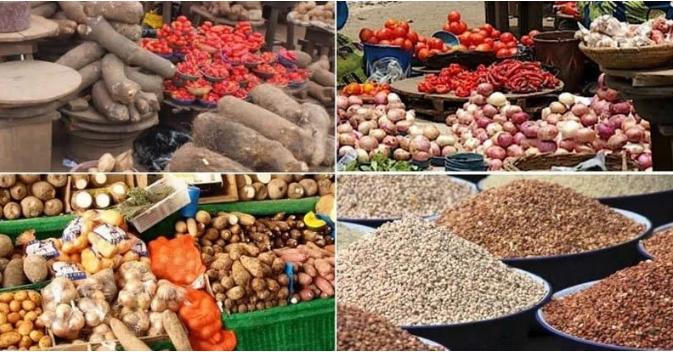
Increases in prices of oil and fat, bread and cereals, fish, potatoes, yam and other tubers, fruits, meat, vegetables, milk, cheese and eggs caused the rise in food inflation year-on-year.

Abdullahi Adamu wrote via nasabooyoyo@gmail.com.