Farmers

When the harvest smiles but Nigerian farmers do not

By Lawal Dahiru Mamman

Nigeria has long been a fascinating case study. Over the past two years, citizens have endured austerity. Government officials, whenever handed the microphone, have often likened the experience to that of a child who must first endure the prick of a needle before receiving the protection of a vaccine.

At the macro level, things are taking shape. The Central Bank of Nigeria (CBN) recently reported the highest Net Foreign Exchange Reserve (NFER) in over three years. According to the April report, the figure marked an increase from $3.99 billion at the end of 2023 to $8.19 billion in 2022 and $14.59 billion in 2021. 

Analysts say this reflects a substantial improvement in the country’s external liquidity, reduced short-term obligations, and renewed investor confidence. The naira, which had been on a steep downward path toward ₦2,000, has rebounded to around ₦1,400—its strongest level in months—as it rallies against the dollar in both official and parallel markets. 

It is on track to end the year on a firm note, buoyed by the growing forex reserves. Additionally, the National Bureau of Statistics (NBS) reported that Nigeria’s headline inflation rate dropped to 18.02% in September 2025, while also announcing an increase in its Consumer Price Index (CPI)—a measure of the change in prices paid by consumers for a basket of goods and services.

The Gross Domestic Product (GDP) has also recorded a growth rate of 3.13 per cent, particularly following the rebasing exercise. Despite these improvements, the common argument remains that such progress has not truly trickled down to the micro level.

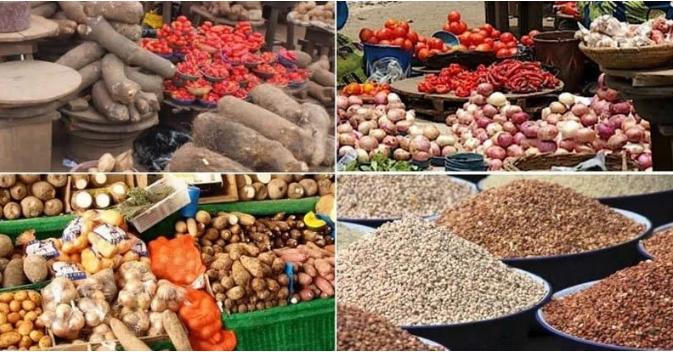
Most recently, however, food prices in markets across the country have begun to decline—particularly for rice, a staple that holds a special place in Nigerian households. While consumers have welcomed the news with relief, there is a flipside: farmers are crying out.

In truth, while lower prices delight the markets, they have left many farmers struggling to recover their investments. The government attributes the decline to increased local production through its interventions. Although the federal government opened a window for zero-duty importation of food items, the Minister of State for Agriculture and Food Security, Aliyu Sabi Abdullahi, insists that the fall in prices is due to large-scale agricultural investments under the National Agricultural Growth Scheme (NAGS) Agro-Pocket programme.

Farmers, however, tell a different story. They argue that the massive importation of food items has driven down local prices and left them incurring heavy losses. This is why, as a nation, we must proceed with caution. In reality, low prices can discourage cultivation—especially during periods of high input costs—threatening future harvests and deepening food insecurity.

There must be a balance between food security, farmers’ prosperity, and government intervention. Farmers should be supported through affordable credit, agricultural extension services, and guaranteed market access. The distribution of fertiliser to smallholders and the deployment of new tractors to Agricultural Mechanisation Service Centres will further help to reduce production costs and increase efficiency.

The current situation presents an apparent dilemma. While lower prices may bring short-term relief to consumers, prolonged losses could cripple agricultural productivity and strengthen dependence on imports—placing Nigeria’s food future at risk.

In all that we do, we must choose our approach carefully. Do we import food items to slash prices and win temporary public approval, if indeed such imports are genuine? Or do we double down on domestic production to achieve true self-sufficiency—especially in crops we can grow ourselves?

We must choose our pills carefully. Agriculture was once abandoned for oil, and we paid dearly for importing refined products while neglecting local refineries. Now that there is renewed interest in cultivation, we must not repeat the same mistake.

Lawal Dahiru Mamman writes from Abuja. He can be reached via dahirulawal90@gmail.com.

Farmer-herder clash: 8 killed, many injured in Adamawa

By Anas Abbas

A devastating clash between farmers and herders in Kodomun, Demsa Local Government Area, Adamawa State, has left at least eight people dead and several others injured.

According to Suleiman Nguroje, Police Command PRO, a joint security team has been deployed to restore order in the area, but no arrests have been made yet.

This latest incident marks a recurring pattern of violence, resulting in significant loss of life, livestock, and property over the years.

The Daily Reality gathered that the crisis allegedly began with the murder of a youth in Kodomun by suspected herders, escalating tensions and spreading to neighboring villages, including Kudiri, Sabonlayi, Kwayine, and Gorogbakai.

In response, Demsa LGA Chairman Akham Jalo called for calm during an emergency meeting at the palace of Hama Batta, HRM Homun Alhamdu Gladstone Teneke. Jalo urged stakeholders to work towards a lasting solution to the persistent conflict.

Excitement as Yobe Govt distributes farm components to 500 farmers 

By Uzair Adam Imam 

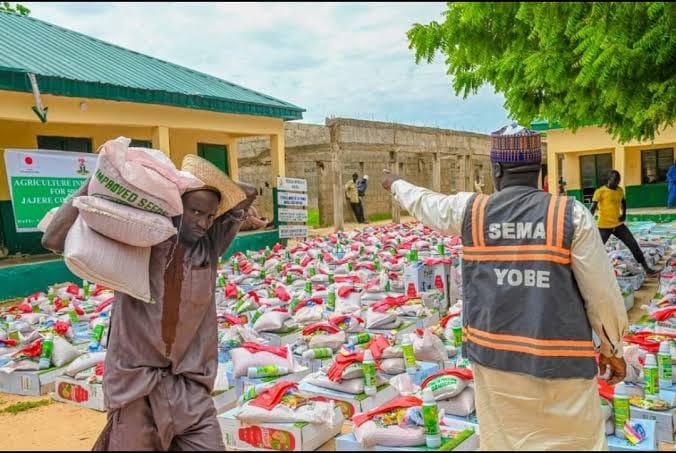
No fewer than 500 farmers have benefited from the agricultural component distributed by the Yobe State Government Sunday in the Jarere Community of the state.

The state government had described the distribution as part of its early recovery response project in the state.

Flagging off the distribution Sunday, Dr Mohammed Goje, Executive Secretary, Yobe State Emergency Management Agency (SEMA), disclosed that each of the beneficiaries would go home with a knapsack, sprayer, liquid fertiliser, herbicide, bean seeds, sorghum seeds, hand gloves and facemasks.

Reports disclosed that the 500 beneficiaries were identified by Agricultural Development Programme (ADP) through community-based selection.

It was gathered that the 500 beneficiaries included 400 men farmers and 100 female farmers of the community. 

However, the beneficiaries applauded the state government for identifying their community, Jajere, among the benefiting communities.

Fertiliser, herbicide’s prices soar in Kano as rainy season starts

By Muhammad Aminu

Subsistent farmers in Kano have decried the soaring prices of agro-inputs particularly fertiliser and herbicides as the farmers commence this year’s rainy season farming activities.

In an interview with The Daily Reality, some farmers said that prices of fertiliser and herbicides have skyrocketed to over 100% increase in some cases which would consequently affect their financial strength to afford the products necessary for better agricultural production.

The farmers lament that the inflationary nature of the prices would have adverse effects on their farming capacity amid tough economic situation in Nigeria.

A survey of Bata Market where fertiliser and other agro-allied products are sold in Kano by The Daily Reality revealed that Urea and NPK brands of fertiliser have recorded above 100% increase compared to their prices the previous season.

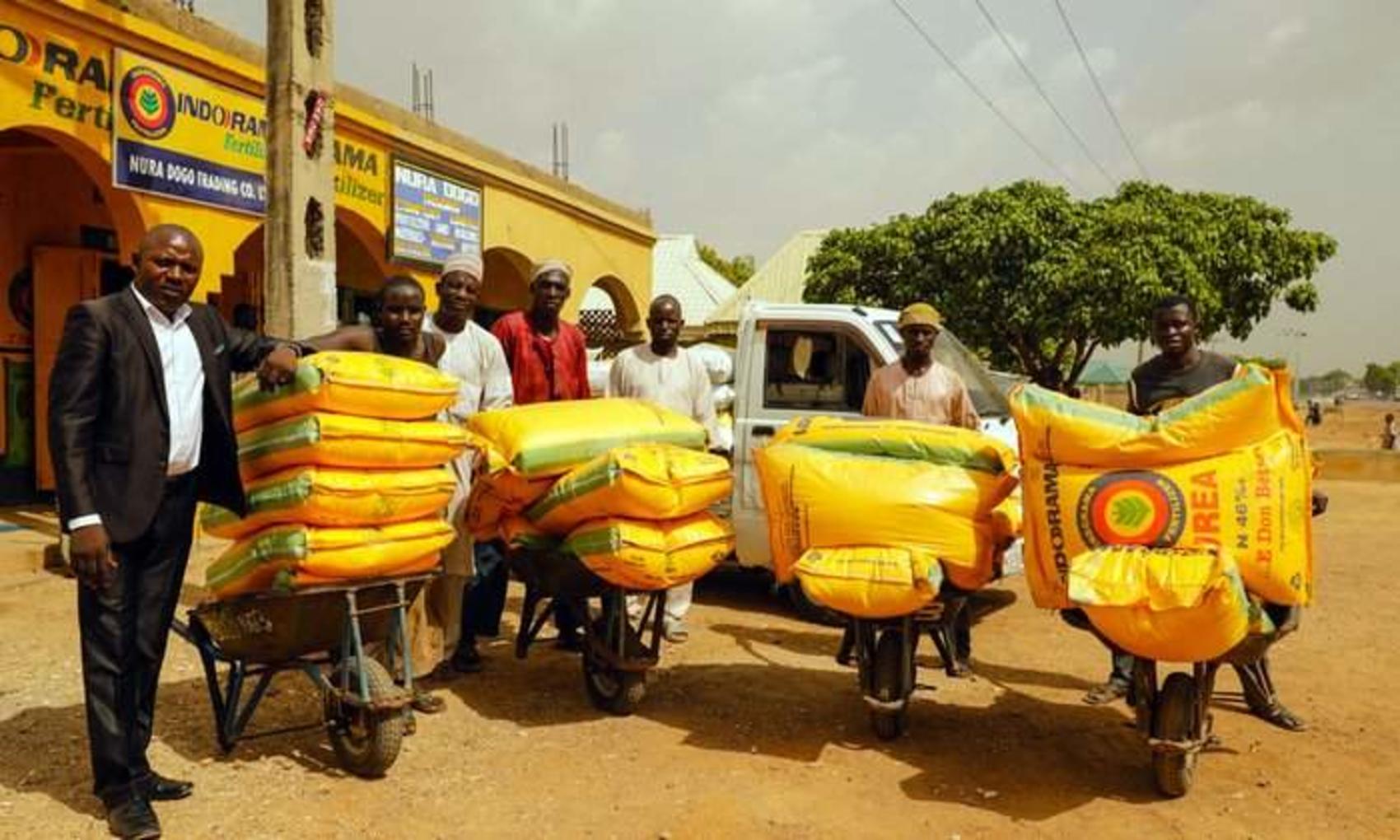
A 50kg of Urea and NPK fertiliser that sold at between N9, 000. 00 – N13, 000.00 in the previous rainy season now cost between N19, 000.00 – N 25, 000.00. To be precise, a 50kg of Indorama Urea fertiliser costs N22, 000. 00 against N11, 000. 00 last year; Dangote Urea sells at N19, 000.00 more than twofold of previous year’s value of N9, 000.00; Waraka Urea was sold N16, 000.00 in 2021 and now stands at N25,000.00 per 50kg bag.

For the NPK fertiliser, 15:15:15 Nagari and Golden Penny brands currently cost N25, 000. 00 each unlike last season’s N12, 000.00 and N13, 000.00 respectively while Kasco 20: 10: 10 brand now sells N15, 000.00 against N10, 000.00 last year.

The story remains the same for herbicides especially popular brands such as Vinash, Glycil, Paraforce, Dragon, and Bushfire among others. In 2021, their prices did not exceed N1, 800.00 at the extreme against current range of N2, 500.00 –N3, 000.00 per litre.

A marketer, Alh. Mustapha Zakari, said the price rise becomes inevitable because they also supply the products at exorbitant prices. “It is not our fault. We get the product at very expensive price and we have to get some profits for our effort. We are only middlemen. When we get it cheap, we sell cheap but when we get it expensive, we sell at high price too.”

Like most Nigerian states, Kano has significant number of rural folks whose primary means of production and earning a living is agricultural. Thus, both the rural and urban people are directly or indirectly connected to agriculture.

With the sharp changes in prices of agricultural inputs in 2022, many farming communities are finding it extremely difficult to afford fertiliser and herbicide which are very crucial in their agricultural activities that are being threatened by desert encroachment, deforestation and climate change.

Consequently, many farmers are now seeking for alternates to fertiliser in organic manure through use of refuse, human excrement, cow pats, chicken droppings, goat and sheep dungs in their farms.

According to Malam Musa Adamu, a subsistent farmer in Gano, Dawakin Kudu Local Government Area, “even the organic manure is now difficult to obtain.” He told The Star that “last year by this time, I purchased 15 bags of both NPK and urea fertiliser. But this year, when I went to the market with similar amount of money, I returned home with only six bags.” He wanted to have respite in organic manure but it also seems hard to collect in large quantity and convey it to the farm.

For Bala Sani, farming is becoming disenchanted to him despite his enthusiasm for agriculture. “I bought a litre of herbicide between N1, 500.00 to 1,800.00 last year. It now costs between N2, 500.00 to N3, 000.00. In fact, I reduce the size of my farm this year because everything costs more. It is better I farm small area that I can take care of it very well,” he said.

Nasir Ali whose farm in Kura village did not get adequate fertiliser last year, he said Allah’s rain would be sufficient both as water and fertiliser to grow his farm plants. He rhetorically asked “I am battling with how to survive with my family where can I get money for fertiliser?”

Although he did not dismiss the efficacy of fertiliser in farming, his position seems that of a hopeless and hapless farmer that only leans on his faith to the Supreme Being for bumper harvest “Our land isn’t as fertile as it used to be but there is nothing I can do. I would just accept whatever God gives me during the harvest. Even our refuse and animal waste aren’t available; and you have to buy and pay for transporting it to your farm,” he complained.

There are many stories of subsistent farmers whose lives and their entire communities depend on age-old agricultural methods to produce food for the state’s fast exploding population. With virtually absence of support from all the tiers of governments to bona fide farmers who are mostly rural based, food sufficiency or food security would continue to be a tall dream.

According to the Federal Ministry of Agriculture and the Food and Agriculture Organisation (FAO), Nigeria requires around 7 million metric tons of fertiliser to adequately cater for the needs of its farmers. Currently, Nigeria does not produce the required quantity and the Russian-Ukraine war has affected importation of both finished fertiliser and some raw materials for domestic plants which ultimately affect the price.

Pundits contend that Russia-Ukraine war portends adverse consequences on Nigeria’s and Africa’s agriculture because they heavily rely on Russia for nitrogen, phosphorus and potassium in their fertiliser plants which Euro-American sanctions make it inaccessible.

Although Africa’s richest billionaire Aliko Dangote’s 2.5$ billion fertiliser plant is estimated to produce 3million metric tons when completed which, alongside other producers, can serve the entire West African region, price of the product will still be a daunting challenge for rural dwelling farmers living below poverty line to afford the important product necessary for modern agriculture.

Hence, due to population explosion and diminished soil fertility, there is a need for a modernised, mechanised and improved agriculture to expand frontiers of food production to feed the fast expanding Kano population which subsistent farmers are already partners.

Relevant authorities, especially the state government needs to genuinely invest in agriculture; to modernise it and empower its poverty-stricken far bymers for a food-sufficient, job-creating and agro-exporting Kano.