Over 7,000 quack teachers were reported to have been remedied by the Teachers’ Registration Council of Nigeria (TRCN) in Adamawa, Borno and Yobe States.
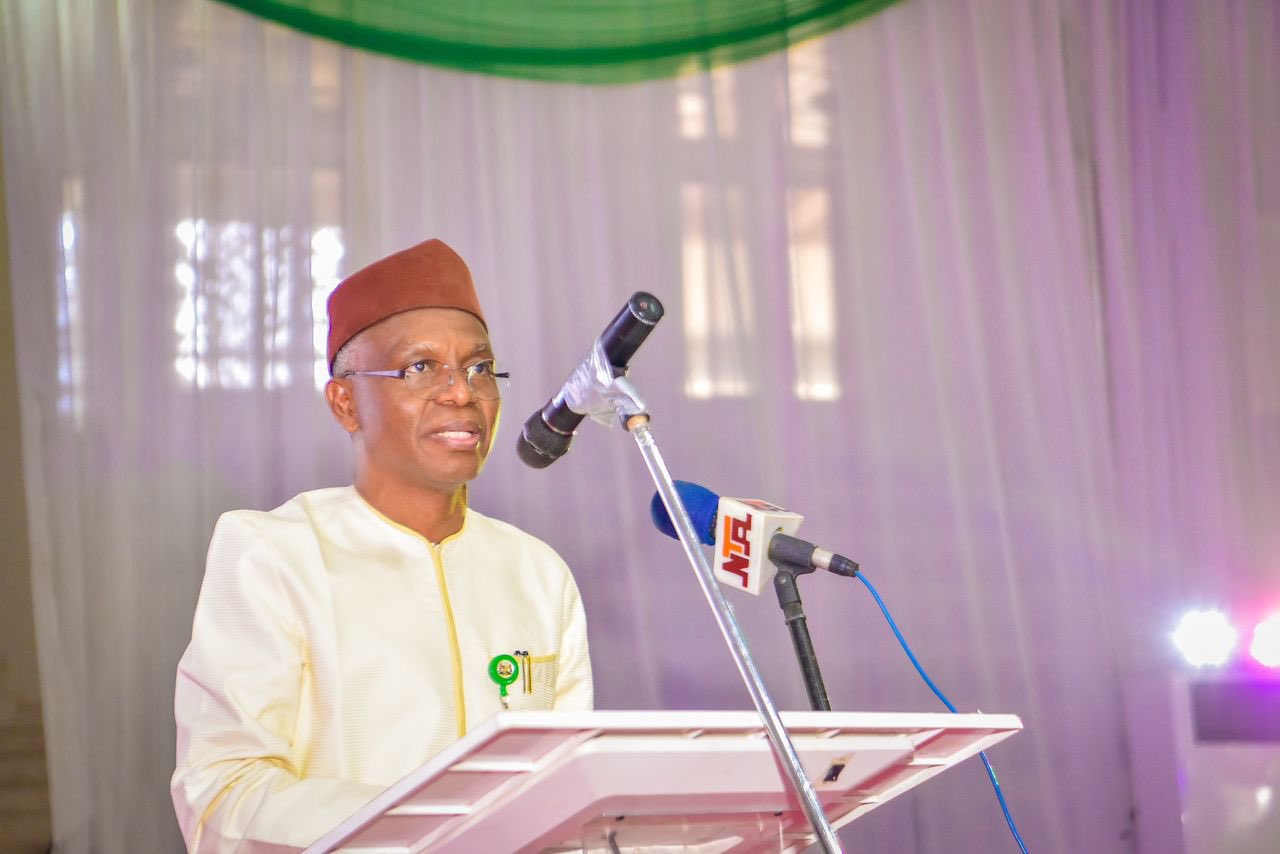
Prof. Josiah Ajiboye, the TRCN Chief Executive, made this disclosure to newsmen on Thursday at a workshop organised by the council.
At the workshop themed, “Strengthening Teachers Education: Challenges and Opportunities in Basic Sub-Sector in Nigeria”, Ajiboye lamented about the learning crisis in the country.
Ajiboye stated that the learning crisis in the country had always been attributed to poor teaching and the lack of qualified teachers.
However, he stated that the effort made by the council was to upscale the dignity of the teaching profession in the eyes of the public.
He stated, “The challenge with Nigerian education is largely attributed to poor teaching in which experienced, dedicated, committed and professional teachers were difficult to find in schools.
“The council, in order to upscale the dignity, rewards and recognition of the teaching profession, had developed a career path policy for the teaching profession,” he stated.
As against the traditional definition of grammar, English grammar is a mixture of arbitrary and non-arbitrary, logical and illogical rules that are fused to form a language that was hitherto made up of some feuding tribal groups (Angles, Jutes and Saxons). It was around the 14th century, when the Renaissance started, that many linguistic and literary forms and areas were borrowed from Latin, Greek, Sanskrit, French, Spanish, etc, to swiftly form a language that would be used to conquer the world.
English grammar is full of arbitrary and illogicalities that are used as rules governing language use.
The inconsistency of English grammar is vivid in tense formations. For example, the three broad English tenses are further subclassed into 12. Each one delineates a form of the verb that allows you to express a specific time. But the English language has bizarrely many different ways of forming future references. While, for example, “he has…” and “he had…” express two incongruous tenses, the following 5 sentences express one thing, one idea and one tense:
1. The man will take off in 2 minutes.
2. The man will be taking off in 2 minutes.
3. The man is going to take off in 2 minutes.
4. The man is taking off in 2 minutes.
5. The man takes off in 2 minutes.
Has your language such bizarre ways of expressing the same idea from different tenses fused in one tense?
While the auxiliary verbs such as have, has, had, etc attract past form of a verb, the past modal auxiliaries such as could, would, should and might ironically attract the present forms of a verb:
He had arrived before you came.
He could arrive before you.
What an incongruity!
There’s no grammatical environment where the rules of agreements are flouted as in the use of idiomatic expressions. For example, the rule of specification in the use of definite and indefinite articles is sometimes dropped in favour of the arbitrary. For instance, nouns and adjectives take articles depending on the environment. But many idiomatic expressions do not leave rooms for articles:
He is second to last.
He is second to the last.
Moreover, idioms such as “it is high time..” and “it is time..” bizarrely take past forms of a verb whenever they are used though they express the present context:
It is high time we spent the night there.
It is time he was jailed.
Sometimes, two similar idioms can be at variance with a slight change in an article. For example, the following sentences express two opposite meanings:
1. Musa had been the shadow on Abdu’s shoulders during their undergraduate days.
2. Musa is a shadow of his former self.
While the first means that Musa was so intelligent that he was Abdu’s rival at the university, the second one expresses that Musa is no longer as formidable as he was.
English grammar becomes arbitrary under the notional concord. Notional Concord refers to the agreement of verbs with their subjects on the basis of meaning rather than grammatical form. For example, each of the following quantifiers takes a different rule when it’s used: while “a number of..” takes a plural verb, “the number of..” arbitrarily takes a singular verb:
A number of students are missing.
The number of students is missing.
Similarly, in the use of a “catenative verb”(denoting a verb that governs a series of verbs in a sentence), two or more verbs can appear in different forms. Another can follow a verb in past form in continuous or even base form:
I saw her complain.
I saw her complaining.
I saw her complained.
What a grammatical anomaly!
Conditional tenses clearly expose the incongruity of English grammar. For example, the first conditional tense looks more futuristic than present in their expressions, yet the “if ..” clause uses habitual tense(if you come..), and third person singular marker (if he comes..). But why should a future reference be used with elements of “s” inflexion exhibiting presentness?
The second conditional tense(which expresses unrealistic situations) daringly expresses the grammatical incongruity: “If you, we, he, she, they were..” is used in all the categories of pronouns and nouns. Here, classifications such as first, second and third-person singular and plural are immaterial!
Under subject/verb concord, he, she, it, Musa, Binta is used in expressing habitual tense aspects using “s” or “es” inflection but I is not used in this pattern. He/she is used with “has” but I is used with “have”. He, she, it is used with “is” but I is used with “am”. You(second person plural), we, they are used with “are” yet “you”(second person singular) is also used with “are”. But you, we, they, he, she, it is used with “might have..”. Why not he, she, it ” might has..”? English grammar is so funny and complex!
In plural/singular formations, the rule is sometimes arbitrary. For example, boy, girl, friend form their plural with an “s” inflection. Yet, ox(oxen), child (children), etc, are oddly different.
Why, then, is English so complex in its grammar, phonetics and phonology?
First, English is the child of partible paternity (many fathers)as Jute, Norman, Angle, and Saxon have all contributed their semen in the bearing and formation of what would later become English.
Secondly, English is the most subjugated language, with huge borrowing from Danish, Scandinavia, Latin, Greek, German, French, Arabic, Hindi, etc. No language enjoys huge borrowing as English does.
Even the so-called 8 English Parts of Speech belonged to the Greek, not English grammar. This is why there are lots of incongruous rules. This is why “boy” is a noun but “beautiful” is not a noun but an adjective. Yet “beautiful” has all the qualifications of a noun. A table with a flat top and 4 legs is not called an adjective, but beautiful, an abstract quality is called an adjective. This is why you have rules such as “he, she is..” but not “I is..” but “am”. These parts of speech are adopted from Greek grammar.
The above and many more reasons are what make the English language have the hardest spelling system, pretty difficult pronunciation, a high number of sounds and sound shifts, etc.
The logic is that he is he, she is she, but I is not I, you is not you, but I am.. and you are… While she HAS the book, I ought also HAS the book. But it says I have… While we are we, they are they, but why you is not you, they say you are you not you is you.
This grammar is illogical!
Salisu Yusuf wrote from Katsina via salisuyusuf111@gmail.com.
Kudos to my paternal uncle (a family man) who cared for ten of us, including my mom, after our dad died in 2010. He ensured we had a sound, good life as if our late father were on earth.
This story is about me, a young beautiful, under thirty years old single intelligent lady. I am the third in my family, with two older brothers, two younger brothers and four younger sisters. I graduated from university and finished my youth service in 2020. I got a temporary job appointment (still on it) before, during, and after my youth service.
I used to help and take care of my siblings. Regarding education, I helped my eldest brother pay his professional exam fees. I also help my immediate older brother in pursuing his education at university. In addition, I covered all the expenses for the two junior brothers in their secondary school days. One is now a student at Aminu Kano College of Legal Studies (second year); the youngest brother recently graduated from secondary school and is looking forward to securing admission into the university for him.
For the sisters, I took over my immediate younger sister’s expenses from my uncle. She’s a student at Bayero University, Kano (BUK). The other junior sister recently got admission to the School of Hygiene, Kano, while the two younger ones are secondary school students, and I still care for them all.
Maturity is not by age but rather by the number of responsibilities one is able to shoulder. The best investment in life is to invest in human beings. I would rather walk around with old clothes and an old-fashioned phone, knowing that my siblings are busy getting qualitative education (modern and religious).
I pray that God will increase my heart and bless my income so that I will help other non-blood-related orphaned children worldwide.
Investing in technology and the sciences will undoubtedly play a significant role in enhancing our socioeconomic development. The World Economic Forum reports that innovation is critical to the future well-being of society and the driving force of economic growth.
In the past, people used their energy, physique, and animals in different industries, such as agriculture, transportation, and communication, to attain economic growth. The emanation of the first industrial revolution (industry 1.0) came with a paradigm shift in various industries when people began to use steam engines instead of their bodies or animals. The second industrial revolution (industry 2.0) created a profound development with the discovery of electricity, unprecedentedly enhancing economic stability and growth.
Another remarkable achievement is the emergence of the Third Industrial Revolution 3.0; at this stage, digital computers were developed, which improved our communication sector and enabled people to store and share data. The Fourth Industrial Revolution (4.0) is an emerging epoch of industrialisation that will undoubtedly revolutionise every sector. Because industry 4.0 is a knowledge-based economy that requires manpower, creativity, and innovation, embracing industry 4.0 will significantly increase our economic development.
Despite some portable advancements in current technology, we desperately need to pertain to science and technology to be competitive and achieve a palpable objective in the outlook of the Fourth Industrial Revolution. The 4.0 Industry is an emerging technology that would revolutionise humanity in almost every aspect of our lives, including health care, agriculture, energy, and various industries. Moreover, the 4.0 industry uses the assortments of the physical, biological, and digital worlds to design and develop disruptive technologies to shape and alleviate numerous humanitarian crises.
The fourth industrial revolution, otherwise called the “4.0 industry,” is a technological epoch encompassing artificial intelligence, automation, biotechnology, and the digital economy.
Artificial intelligence (AI) is a potential and multidisciplinary field that impacts various industries. According to Accenture’s estimation, clinical healthcare with AI applications will have a future increase of $150 billion in savings only in the healthcare sector by 2026. McKinsey reports that the global GDP of AI will be significantly boosted by 1.2% annually. Modern technology will emerge in the healthcare industry that can execute hospital services without human intervention. For example, timely automotive machines can accurately diagnose nefarious diseases like cancer and provide reliable treatment. Surgical robots are another AI approach that can effectively perform surgical tasks without medical doctors.
Artificial intelligence in agriculture is another milestone development that will indisputably increase the rate of crop production. Innovative AI technology in agriculture can detect plant diseases, impoverished nutrients, and pests. In addition, automotive devices can be influential in quality harvesting. AI technology is a widespread approach applicable in numerous areas, such as renewable energy, climate change, and the financial sector.
Biotechnology is another 4.0 industry with massive agriculture, biodiversity, and human diseases capabilities. Using a technique called “Clustered Regularly Interspaced Short Palindromic Repeats,” popularly known as “CRISPR Cas 9,” is a classical gene editing tool that paves the way for inserting or expelling genes of interest from an organism. This technological tool allows for rewriting plants’ “genetic composition” and disposing of unwanted genes from plants to improve plant growth. It produces genetically modified crops, thus addressing food security and production challenges. Also, CRISPR Cas 9 will probe into the human genome to decipher the onset of diseases and discover new treatments for different types of illness. Animal breeding is another integral part of biotechnology, with the aid of increasing biodiversity for economic growth.
The digital economy will not only provide profits and economic growth, but it will also curtail the unemployment rate in Nigeria. Engaging the youth to leverage the digital economy will provide independent jobs to the citizens, and the gorgeous aspects of the digital economy are manageable, so an individual can start with zero capital and build a high-dividend startup.
According to the International Business Machines (IBM) definition, “technology” is a field where human infusion is substantially reduced. Therefore, automation is an important part of economic growth and development. Automation machines can effectively perform a duty that humans can do; the era of automation will displace labour work in various industries. Self-driving cars are an example of automation that would help manage and prevent fatal car accidents. It can also be a substitute for vehicles or engines that require gasoline or diesel to tackle carbon dioxide emissions in the future. Automation will also play a role in business, climate change, and the energy industries.
We must embrace “science and technology” as a significant economic growth and development source. Several studies have shown that R&D, incorporated into science and technology, is the primary driver of socioeconomic development. But, according to an essay written by Adamu Tilde titled “CBN’s Inconsistent Policies,” is this true? A quick response to Dr Sheriff Almuhajir. In this essay, he points out that “knowledge” is the ultimate goal for success in modern economic development.
Adamu adds, “There have to be deliberate, continuous efforts in producing and training skilled manpower with the required expertise to navigate the thorny terrain of the modern economy.” This would take decades. But a journey of thousands of miles starts with a step. Let’s start with primary and secondary education. Until then, no amount of crying wolf about exclusion, unfair treatment, and harsh requirements would solve the sorry state of our economic development because the modern economy is not a respecter of sentiment. “You have to compete.” And the tool for the competition is knowledge.
Eventually, with the infatuation with the oil-based economy, the Nigerian government will neglect various other ways of economic growth. Therefore, the Nigerian government needs a paradigm shift in its economic policies. Capacity building in diverse sectors, such as artificial intelligence, agriculture, and the digital economy, can solve Nigeria’s economic problems and, at the same time, provide jobs for the youth.
Accentuating science and technology programmes in our media and newspapers will entice the government to impose strategies that will hasten economic development and encourage the youth to engage in a knowledge-based economy. For the past centuries, when the world heavily relied on a material-based economy, war was the only way to gain wealth and economic development, and many countries invaded their neighbours to seize their resources. But we are in the 21st century, where knowledge cannot be halted. In his book Homo Deus: A Brief History of Tomorrow, Yuval Noah Harari asserts that “the current source of wealth is knowledge.” Bargaining on mineral resources such as gold, oil, and silver is no longer the best approach for economic growth; knowledge, which requires skills, creativity, and innovation, is one of the major sources of economic development. Therefore, our domestic media companies and newspapers should have a special programme or weekly column covering the importance of technology, research, and growth in economic diversification.
My name is Hamza. My father had two wives. The family comprised ten children from two different mothers. I was the eldest and the sixth in my mother’s room and the family, respectively. We were three in my mother’s room.
One fateful day, our father, Alhaji Basiru, and his friends travelled to Katsina. Unfortunately, they had a ghostly road accident returning to Funtua, our hometown. Only one person survived. I was not enrolled in a public primary school at that time, not to talk of my younger brothers. Our mother became our father and mother; for she had taken all the responsibilities of the father.
Glory be to the Sustainer. Since before our father gave up the ghost, she had embraced some petty trade at home like selling ruwan leda (water, then, usually, packed in a medium-sized leather after being cooled by a Randa ‘earthy pot’), roasted groundnut and selling food later. Her local restaurant, which was home, had become renowned in the locality and the neighbour then, as there were fewer restauranteurs in the area.
She used to sell a bag of rice in two or three days in the comfort of her home. Over time, competition increased. Sequel to that, she boiled to cook only a few measures of rice. I hawked the food on a silver tray when things started getting out of hand. The hawking was usually done after I returned from morning school and sold before late afternoon prayer (Asr), after which I had the opportunity to go to Islamiyya.
Furthermore, she ensured we had all we wanted so that we had the equal privilege to be educated like other children whose parents are alive. I can never forget when I told her what someone told me about what seemed to them like we were chasing education. He said one of his friends said, “If he (referring to me) must further his education, we will see who will sponsor him.”
I felt sad even after narrating the story to our mother. She said, “You see, all these hardships that I endure are for you to be educated. I wish I had money to sponsor your education to university; I can spend any amount in my belongings for you to be educated”. She continued, “Although I do not have enough money to sponsor your education, I believe you will get someone to help you, and that is what I always pray for.” Whenever I remember that, I feel motivated.
Fortunately, I sat for my SSCE and came out with flying colours. It was in the school of our neighbour and brother who sponsored a duo of us, my half-brother and I, in his school. May Allah (SWT) reward him and add to his wealth, amin.
I then applied to Ahmadu Bello University (ABU) Zaria with a JAMB score of 252 for MBBS in 2020. After some years of waiting, due to Covid-19 and the lingering strike, I sat for post-UTME and scored relatively well. However, afterwards, I did not secure admission. That may be due to too much competition.
Still, I did not give up. I knew MBBS was, most of the time, not a one-off thing. So the following year, I sat for another one, prayed, and worked harder. This time around was Federal University Dutse (FUD) and still the MBBS. After all, I got it in that school in early January this year (2023).
I owe my success to my dearest mother. As Prof. Abdalla Uba wrote, her likes are the “REAL woman of substance.” In a few years, I hope to become a feather in her cap ( to be a professional medical doctor ), become an important person to society and save the lives of many victims.
His name was Sadik. Perhaps about 11 years old. He walked into my newly allocated office in the old Mass Communications building of Bayero University Kano (Nigeria) in 2013. I was startled. He was a tiny boy with deep dark skin, a beautiful face with intense eyes and a dolphin smile. He asked if I wanted to buy Fura (steamed millet balls blended in cow milk, often used as dessert, although it could stand on its own as a nutritious meal). He did not look like any of the usual urchins who thronged the corridors of the building look for odd jobs – run errands, empty trash, sweep office when those officially charged – and paid – to do so did not. Intrigued, I ordered one. He disappeared and returned some twenty minutes later with the Fura in a transparent plastic bag. I paid him, and that was that.
He returned the following day. When I declined to buy it because I didn’t feel like drinking the Fura, he insisted I buy it for others. When I asked why, he simply retorted that I appeared richer than other staff because, first, I was a professor, and second my office was larger. I was amused by his evaluation of my finances based on my position. And true, my office was the largest for staff, but I was a new bride in the Department – having been wedded to Mass Communication after an amicable transfer from the Department of Science and Technology (thus the ‘double’ professor tag), and all stops were pulled to make me welcome. Based on his logic of having a larger office, if not a deeper pocket, I bought about ten and asked him to distribute them to colleagues.
Sadik was to become a regular fixture in the corridor. Always after 2.00 p.m. One day he came with a blue checkered school uniform. Mentally, I thanked the boy who gave him the ‘hand me down’. The uniform was from Musa Iliyasu College, located along Gwarzo Road, a few kilometres from the New Campus of Bayero University Kano. This was a private and prestigious high school in Kano, attended by the children of the well-to-do.
I was told, however, that the uniform was his own and that he was indeed a student at the famous prestigious college. Curious about the human aspect of this development, I decided to delve further. What I found was what I want to share with you regarding the world of Hausa women.
Sadik did not come from an elite home. He was from a large Fulani family living in a ruga (a Fulani cattle encampment) near Janguza Army Barracks in Kano – itself a few kilometres from Bayero University Kano, New Campus, along Gwarzo freeway. The unit was a father, three wives and eighteen children. Sadik was the eldest in his mother’s room. They were herders. Indeed, Sadik was born near Tamburawa along Zaria Road in Kano when the family was on the move in 2002. They camped near Janguza Barracks, where they located their ‘hometree’.
The mother was the one selling the Fura at Bayero University Kano New Campus that Sadiq marketed. She had a ‘stand’ near the Faculty of Engineering. She had a lot of customers in all categories of the university community. After all, even professors love Fura. Her interaction with the university community enabled her to develop an interest in education, and she wanted to get Sadiq to attend a school and eventually a university. She did not want Sadik to follow the family herd. His father, however, wanted the child to join the family herding tradition. The mother then engaged one of her customers, a professor, to drive to the ruga and convince the father to allow the child to attend school, to which he reluctantly agreed. The mother then took over the process of educating the child.
She enrolled him in a local private primary school inside the Janguza Barracks. After he finished, she inquired which was the best high school around, and Musa Iliyasu came highly recommended. She enrolled him there. An exclusive private school. Paid for from the proceeds of her Fura business. She bought a bike for Sadik to make it easy for him to attend the school, some five kilometres from their tent. His legs could barely reach the pedals, but he was enthusiastic about learning. After school, he would go to her Fura stand, park the bike and then trample all over the BUK mega building advertising his mother’s Fura (even boldly entering the Vice-Chancellor’s office to market the Fura), all the way till 6.00 p.m. when they close ‘office’.
I interacted with Sadik for three years. He was so curious, bold, confident and always lifting books on my desk, trying to read them, asking endless questions, his eyes always darting and roving all other office. He was truly an inquisitive and intelligent child.
In 2016 I temporarily relocated my place of work to Abuja, and that was the last I saw of Sadiq. I did not fully return to Bayero University till 2022. In the intervening period, I had wistfully thought of Sadik and finally decided to find out what had happened to him when I returned. It was a massive success story of doggedness by a traditional woman.
When Sadik finished Musa Iliyasu College, he told his mother he wanted to be a pilot. She asked him to find out how much it would cost. Off he went to the Nigerian College of Aviation Technology (NCAT), Zaria, where he learned the fees could be as much as ₦7.5 million. He informed his mother, who immediately asked him to continue the process of getting admitted. She would pay the entire sum – after all, she was already a millionaire with the large herd she had. She earmarked the number of cows to sell to raise the pilot school fees. Sadik did the entrance exams but did not scale the final test. So, he was not admitted.
He then applied to BUK with his JAMB score of 201 for Computer Science but did not meet the Post-UTME requirements for the program. Again, he faced rejection. His mother initiated the process of getting him alternative university admission and was advised to take him to Al-Qalam University, a non-profit Islamic university in Katsina. He went there and inquired about the admission process and the fees. With his results, he was admitted. His mother sold two of her cows for ₦450,000 and gave him the money to pay for the school fees in Computer Science and his accommodation in Katsina. He enrolled and started his program.
When he relocated to Katsina, she sent him money every day. She eventually gave him ₦200,000, with which he started a Fura packaging business, employing his co-tenants in the house he was renting. Soon, he established a small business employing other students. Eventually, he vied for and succeeded in becoming the Vice-President of the Computer Science Students Association of the Al-Qalam branch.
Sadik became a dedicated student with a consistently high CGPA, which could eventually lead to either a good second upper or a first in Computer Science. He was eventually elected the President of the Computer Science Students of his university chapter. One day, the officers of the Association came to Kano for a function during a school break and decided to see his house, especially after he told them he lived in a ruga. They were astonished to discover he was telling the truth – their respect for his modesty raised higher.
In January 2023, I was in my office at the Faculty of Communication BUK when someone walked in. I was bent on my laptop but did notice the guest removing his shoes and coming and standing in front of my desk, waiting for a pause in my typing.
I looked up at a tall well-built young man. I immediately knew it was Sadik. At 21 years, everything about him has changed, of course, but not his dolphin smile. He told me he learnt I was asking of him and decided to come and greet me. I was so happy to see him, and it was he who related to me what I had written so far. I immediately connected him to Sunusi Ahmad Baffa Dawakin Tofa, Chairman of the Kano State chapter of the Fulfulde Development Association of Nigeria (FULDAN), of which I was a patron. They promised to come together and see how Sadik could be part of community mobilisation awareness and a role model, especially for youth. Sadiq owes his success so far to his mother.
Professor Abdalla Uba Adamu and Sadik
***
Sadik’s mother, Hajiya Hauwa Suleiman Dikko, was not an educated, entitled, privileged woman. She did not go to school. Her class was the hard knock of life. As a young girl, she missed going to school with lunchboxes and rucksacks festooned with stickers from the Marvel Cinematic Universe – Spiderman, Hulk, X-Men, and Fantastic Four. She did not attend a privileged landscaped school with paintings of Micky Mouse and Donald Duck on their walls. She had no driver to chauffer her to school in an airconditioned SUV. No TV to return to after school hours in a nice airconditioned living room. No iPads to play with. No Netflix to relax her hard stressful day. No extra lesson teacher (Uncle John or Auntie Funmi) to ensure she passed those horrible subjects such as Mathematics.
Her contemporaries who lived such life finished successfully from their expensive private schools (of course, no private school would allow mass failure, especially from children of the privileged) and had gatekeepers to ensure they got admission into the juiciest disciplines in the university of their choice. If at all in Nigeria – otherwise, it would be off to Ukraine (before it became too hot), some obscure countries in Eastern Europe, India, Cyprus, the UK or preferably, Malaysia.
When such contemporaries returned, they had cushy jobs waiting for them and a relatively easy path to the top. Eventually, they are celebrated as women of substance – given awards (which they don’t need) and celebrated in academic papers and opinion pieces as role models of female achievement and doggedness in a patriarchal society. I don’t mind their high-profile visibility. I just believe the accolades are wrongly placed, or at the very least, the Point of View (POV) should sweep around.
My female heroes? Those I will be celebrating today, the 2023 International Women’s Day? Let’s start with Sadik’s mother. And hundreds of others like her. I am sure you know one or two in your locality. They are women, often widowed, left alone, with little or no inheritance, and who, with the little they have, were able to provide much-appreciated services in their communities and keep a tight hold on their families. They don’t engage in endless and fruitless debates about gender identity or reproductive rights nor women’s representation in political representation and their share of hegemony. Rhetoric. Talking loud and saying nothing. As my main Man sang, “Like a dull knife / Just ain’t cutting / Just talking loud / Then saying nothing”. (James Brown, 1970).
Mainly, restauranteurs, these local women build people and impact their communities. With their business – restaurant (ƙosai, koko, tuwo, ɗanwake, wake da shinkafa, alkubus, gurasa, ƙashin rago, etc.), public transport (Keke NAPEP, buses, Acaba/Okada, Ƙurƙura), estate (properties, rental apartments, plots of land) – they are the role models who should be celebrated. They don’t feel entitled and are privileged in the peace of mind they have and the mentoring they do in their communities. They have no PAs, SAs, fierce dogs at the gates of their solar-powered villas and mansions, no frowning ‘maigad’ to intimidate and scare away panhandlers.
They have no SUVs as the cost of one could serve as capital for a whole year for their business. They don’t even have cars, despite some owning a transport business or so. They do not take their holidays in London or Dubai – they have no time for holidays as they are busy serving their communities. They marry off their daughters, not in grand style, with furniture imported from IKEA in China but from local makers – thus contributing to local economies.
So, what should be the concerns of women on International Women’s Day? For me, with a focus on Muslim Hausa women living in traditional communities, how about integrating them into the modern sector digital economy? Instead of empty rhetoric about gender representation, why don’t we focus on enabling them to acquire skills such as mobile phone repairs and POS services – in the comfort and safety of their homes? Many women are now engaged with mobile phones and online trading and payments. Muslim Hausa women feel unsafe in approaching service centres where clusters of men provide these services. Empowering them to be skilled in digital knowledge in the lungu and saƙo (alleyways) of our communities works better than hot-air rhetoric and genuinely can make a difference.
On this day, I, therefore, award accolades to Sadik’s mother, Hajiya Mai Ƙashin Rago Fagge (with a whole street named after her), and countless others whom I am sure Jaafar Jaafar knows more. They are truly women of substance.
Today, being International Women’s Day, please locate any in your community, go right up to her and appreciate her. Celebrate her achievements and her silent but visible impact in the community as the REAL woman of substance.
PS: Some have asked about Sadik’s whereabouts. He is in his final year at Al-Qalam, Katsina, Computer Science, and from his results so far, he is heading towards either a First Class or a very good Second Upper.
Professor Abdalla Uba Adamu can be contacted via auadamu@yahoo.com.
The four writers are Tares Oburumu, Ruth Chidera Echewe, Sadiq Mustafa and Taiye Ojo, they arrived in the ancient town of Ilorin, Kwara State, for the first batch of the 2023 Imodoye Writers Residency programme. A statement issued by the residency manager said the writers are expected to be there for three weeks and an optional one week.
Tares Oburumu is a Bayelsa State-born poet and essayist, based in Warri, Delta State, Nigeria. He’s the author of 6 published chapbooks. Tares Oburumu is the winner of the GAP poetry prize 2018 and his chapbook ‘origin of the syma species’ won The Sillerman First Book prize for African poets 2022, to be published by Nebraska University Press, U.S., in fall 2023. Tares had been nominated for the Pushcart prize with Woven Tales Press 2019, and Ice Floes International literary journal 2021.
Tares Oburumu is in Imodoye residency to work and expand his three chapbooks: Erasure, Chatham House and Red: the love story of Annie Ernaux. As a child, Tares heard the nerve-racking stories of how brothers took to the Atlantic Ocean, going oversee, and it broke him to pieces hearing the manner they died in their attempt to escape the bedlam their country has become. His lens’ expositions focus on emigration and the attendant trauma not told by those who suffer from it. And to shine the light on how they ended, coffined in the dream of escaping Nigeria.
Ruth Chidera Echewe, (Unbreakable) is a writer, editor, media personality and professional blogger. She publishes potpourri of themes in unbreaky.comblog, her personal blog space is called UNBREAKABLE FEATURES. She’s a graduate of English and Literary Studies from the Federal University Lafia, Nasarawa State, Nigeria. An indigene of Abia State, Nigeria, but resides in Enugu State.
Ruth, Chidera Echewe is in Imodoye to complete her work: Sisters Series, prose, dealings with humans, certain bonds that sustained our existence and given us a different definition of life. She kindly follows various studies that have proven the strongest bonds emanated from the establishment of relationships. Ruth is motivated by her passion for creativity which has gone ahead to give birth to what she intends to manifest into a publishing, writing and editing firm in the nearest future.
Abubakar Sadiq Mustapha is a poet, art curator, documentary photographer, and community developer. He studied Geology and Mining at Ibrahim Badamasi Babangida University, and currently rounding up his master’s program at the same Ibrahim Badamasi Babangida University, Lapai, Niger State. Sadiq uses books, photography, and arts in driving social change from girl-child education, and gender-based violence to youth participation in politics and believes in the power of photography and how it can be used toward mental health, is in Imodoye to complete his manuscript: Home is my Mother’s Tongue.
Abubakar is also a photo columnist with Salamander ink magazine and the curator of the Abubakar Gimba literacy campaign. He’s the project lead for The Lapai Bookclub’s mobile library and school, a project that takes reading and arts to grassroots communities in Northern Nigeria aimed at increasing the literacy rate of the region and creating awareness in governance.
Ojo Taiye is a Delta base Nigerian eco-artist and writer who uses poetry as a handy tool to hide his frustration with society. He’s the winner of the Hay Writer’s Circle poetry prize, US, 2021, Calthalbui poetry prize, Ireland 2021. In 2020 Taiye Ojo was selected to participate in Capital City Film Poetry Festival, in Michigan and Poetry Introductory Series, in Ireland. His commissioned works include Belfast Photo Festival 2021, Winnipeg Fringe Festival and Leeds Poetry Festival.
Taiye’s recent works explore neocolonialism, institutionalized violence and ecological trauma in the oil-rich, polluted Niger Delta. His themes deal with the effects of climate change, homelessness, migration, drought and famine, as well as a range of transversal issues arising from racism, black identity and mental health. Taiye Ojo is in Imodoye to complete his poetry collection: Scoping Map.
Established by Dr Usman Ladipo Akanbi, the Imodoye Writers Residency is a private initiative for writers and visual artists keen on completing their ongoing work in a conducive environment at no cost. And as part of giving back to the community, during their stay in the residency, the writers are expected to mentor secondary school students in Ilorin in creative art/writing.
Reading is a passion that every human needs to have to differentiate himself from other living creatures. Reading sharpens the brain of a reader. It makes him think in a different way compared to those who aren’t reading. One has to read to gain wisdom and even the life experiences of more than a million imaginary characters. For those reasons and many more, I said — read! Read! Read! And never stop reading.
People wonder how can a man with a wife, a business, and a life full of struggles dare to say that he has read hundreds of books in a year. Yes, it is possible if you know what the true definition of time management is.
Time management is the only phenomenon that helps everybody to do many things without even realising he did a lot. Plan your reading exercise, Have a timetable, and tell yourself that you can, then move on.
You can master any kind of skill if you do it repeatedly. So, if you read today and tomorrow, you will be a rocket reader. I can remember when I was in secondary school SS2, I read a book to some of my friends. I was reading it one day, “I swear you just held the book, but you were not reading from it”, Abdulmalik Ibrahim said, “He was my friend at school”.
“I was reading from it”, I said. He collected the book. Trying to prove me wrong. In the end, he proved himself wrong and said, “Why are you here? You should be an art student. So that you can study journalism”. He told me.
“Reading is my cup of tea, and I couldn’t do without it. I read a book in a single sitting because I don’t support cliffhangers. I must see the end of the story if I start reading it”, I told him. “Allah ya taimaki aku!” he said. We laughed.
I told them that I could not enter a toilet, eat food or sit down without reading something. Before, I was blamed at home for going toilet with a book, but now I have softcopies. Your phone can be your library in this 21st century!
So, you too can have speed in reading texts. I finished reading my first three books this year. I didn’t pen this to tell you that I am reading but rather to help inculcate reading culture within our blessed community. And tell people that if a dull young boy like me can do this, then everyone can do it.
Amidst public outrage, the Kaduna State Executive Council, under Governor Nasir Ahmad El-Rufa’i, has rescinded its decision on the collection of nominal fees in senior secondary schools across the state.
In a statement signed by the Special Adviser to the Governor (Media & Communication), Mr Muyiwa Adekeye on Tuesday said, “the Council observed that the circular issued by the Ministry of Education to school principals on collection of nominal fees is not consistent with government policy, and is thus invalid. The circular from the Ministry of Education to the heads of schools, dated 1st November 2022, is therefore rescinded with immediate effect, and all monies that may have been collected should be refunded forthwith”.
Adekeye further reaffirmed the state government’s commitment to providing free primary, secondary and technical/vocational education to every child resident in the state.
It would be recalled that a memo emanated from the State Ministry of Education imposed the payment of nominal fees to all students of senior public secondary schools in the state.
This article may ruffle feathers and annoy some people, but it is done with good intentions. I have observed youths’ excitement and political campaigns for presidential candidates on different social media platforms. In some cases, friends and associates have turned to foes for having opposing views on their candidates. Some even terminate a business relationship because of politics.
Indeed, I am aware of the difficulties faced by the people, especially the increasing cost of living worsened by inflation. Nigerians are suffering because of the bad economic policies of the present government and the ongoing depreciation of the Naira, which has plunged millions of people into poverty. In other words, people’s living standards are getting worse, as life was better a decade ago than now.
First, I want to clarify that I’m not too fond of politics and have no interest in any presidential candidate for the 2023 elections. However, as a Nigerian, I am a bit worried about how our people campaign for their candidates on social media platforms. Some clerics have gone to the extent of warning people not to vote for candidates outside their region. Unfortunately, the northern youth have not learnt any lesson in the last seven years.
The fact of the matter is that the current structure and governance system only benefits the elite and their cronies, as well as a coterie of aides, while most people are pauperized. The northern youths who are dissipating energy on these presidential candidates should note that the elite do not care about them but their aggrandizement. The northern political elites are hiding under the name “Arewa” to deceive the masses while using proceeds of corruption to buy properties in London, Dubai, New York, Kuala Lumpur and Paris.
Have they pondered to ask why public universities were closed for eight months, and the elite did not see the urgency to address the plight of the striking lecturers? Has the life of an ordinary northerner improved in the last seven years, although President Muhammad Buhari is in power? Was there any economic transformation in the North in the previous seven years? In my 12 years of experience as a journalist in Nigeria and my interaction with politicians and government officials, I have concluded that politics will not rescue the North, but only an attitudinal change towards entrepreneurship and commerce will change the narrative.
Attitudinal change towards entrepreneurship/commerce
I have never seen a society transformed based on political patronage. I have never seen a prosperous community due to its people being fixated on political power. So let me clarify that our fixation on political power will not save the North. It will not take millions of children out of the streets or rescue our economy.
Our focus should be on improving our economy, empowering women through education, and creating businesses and initiatives that will improve the general well-being of our people. I have seen many cases of global transformation based on entrepreneurship and commerce. For example, we have all witnessed China’s transformation based on the manufacturing and development of small and medium-scale enterprises. This is also the case with countries in South East Asia such as South Korea, Malaysia and Singapore. Thus, emphasis should be placed on the youths’ personal development and self-reliance. The idea of depending on politicians for handouts instead of pursuing self-reliance in the North should be de-emphasized. No society has prospered based on such practices of handing out peanuts to hangers for survival.
Acquisition of vocational/ digital skills
Our focus and pursuit of political power have never helped us in the past, and they will not help us going into the future. It only helped to enrich the northern political elite and establishment at the expense of the majority. What will save us is a society with an amalgamation of empowered youths equipped with the requisite education and modern skills relevant to the global economy.
I want to reiterate that our youth should learn vocational skills to support themselves and stop wasting their time blaming their relatives for not helping them or sitting in “Majalisa”. Academically inclined people should learn digital skills offline or online to get remote jobs or fend for themselves. They can also learn digital skills for free on platforms like Coursera, Simplilearn, Udemy, and Udacity, among others. I am appealing to northern youths not to waste their time antagonizing friends and associates over these charlatans masquerading as leaders.
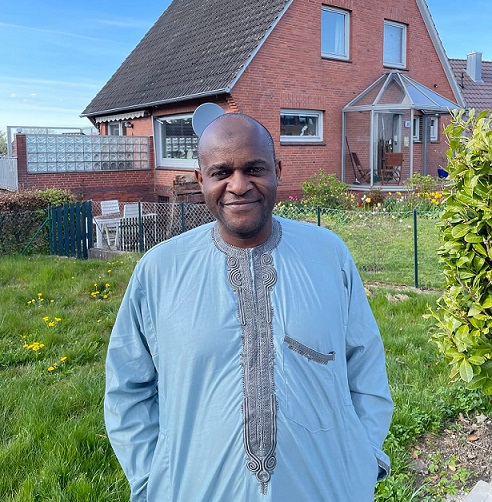
Aminu Mohammed is at the Kiel School of Sustainability, Chrtistan Albrechts Universität zu Kiel, Schleswig Holstein, Germany. He can be reached via gravity23n@gmail.com.