Education

Some takeaways from my reading journey

By Abdullahi Khairalla

I am not a huge fan of reviewing books that come my way because of personal reasons, but this time around, I felt compelled to share some major lessons and takeaway from a book I personally found rich in ideas for building and shaping leadership journey of any aspiring leader across different sectors.

“Lead Disruption” is a book written by Dr. Akin Oke with thrust and focus on providing a guide for exceptional leadership performance in this era of turbulence and uncertainty.

To begin with, the author began by establishing the fact that, the world today is faced with all kinds of disruptions, chaos occasioned by the accelerating rate of change and uncertainty in our hyperkinetic environments caused fundamentally by three seismic events:

  • Global Health Pandemic(Covid-19)
    *Global reorganisation of work due to the adoption of new technologies and
  • The ongoing geopolitical transformations across the globe (east/west tension).This according to him, summarises our world into VUCA meaning– Volatile, Uncertain, Complex and Ambiguous.

Additionally, recent predictions about the advance of the fourth industrial revolution indicate that the speed of change, uncertainty and disruption to businesses will continue to increase. The world will have to brace up for potential global economic recession and the effects of climate change due to the continued depletion of ozone layer. This rapid change taking place, will invariably displace the old order and that will require leaders who are well-packed and positioned with requisite skills to transit their businesses and societies into prosperity in line with the new realities.

It is not a matter of conjecture that the Covid-19 has taken the world by surprise and has shifted and dismantled many old conventions, practices and ways of doing things that had previously existed during the pre-Covid era in our business space, industries, government halls and social realm. One thing that stood out is the complete migration of human race into a technological world, work from home, a situation he terms as the “new normal”

To effectively provide effective leadership in light of the current precarious reality of our fast-paced world, the book outlines among other themes and concepts such as self-awareness, resilience, innovation quotient, empathy and effective communication as critical elements for leaders to navigate through the tough and murky waters of the VUCA world.

I will touch briefly on each of the concepts for the sake of time. Self-awareness is the bedrock of effective leadership. This is because effective leadership, begins with good self-leadership. For a leader, knowing yourself and staying true and authentic to oneself is one of the salient assets you need, to be able to lead others in times of uncertainty. Asking yourself how well do you know your personal traits, your strengths, weaknesses, values and preferences? are very critical for a leader that aspires to lead his people even in times of turbulence. Dr. Akin Oke gave an analogy of a dangerous turbulence called “clear-air” by aviators that airplanes face which occurs when the plane has stabilised and in the cruising altitude and is always difficult to predict as radars cannot signal it in advance.

At this point, pilots are not too concerned about it, because the body of the plane itself has the ability to come back to its original planned position based on the inherent strengths of the plane itself. “Aeronautical engineers call this ability positive stability and pilots will tell you that the secret lies within the complex technical configurations at work in-between the wings of the plane and the in the belly of fuselage. This is the same way ‘self-awareness works for a leader. Leaders should have this capacity within them-they must build that resilience within them, that positive stability. And you cannot do that without having a good configuration of yourself (you morality, integrity, honesty, etc)”

Again,self-awareness is very important as there is a strong nexus between private morality and public morality of a leader because his personality is molded by these two realities. Though, this assertion has met stiff criticism by some leaders who try to separate public morality from their private morality. Unfortunately, these two intertwined. While it’s true a leader is human like everyone else and is entitled to private life outside the public role, the reality is that the leader’s private life can have serious consequences on the larger society especially in terms of public perception or behaviour. A bigoted leader, for example, is unfit to lead a company or plural society made up of people of diverse inclinations, backgrounds and idiosyncrasies. This is because his professional sense of judgement will be affected. A bad father , would not be the ideal person to lead or speak to other about fatherhood or parenting,especially if his private life as a failed father is a matter of public knowledge.

Another key element highlighted in the book is of course ‘resilience ‘ which is about the ability of a leader to respond in a positive and constructive way to uncertainty. It is about adapting to a prompt change and capacity to bounce back after a setback. A leader is required to be resilient even in the face of towering threat and dilemma and do everything to emerge out of it. This of course led the author to introduce me to a concept previously unfamiliar to me ‘antifragility’ which is a notch higher than resilience. While resilience rests on the capacity to bounce back after a setback, antifragility has to do with not only bouncing back but how to learn to thrive in the face of adversity and uncertainty. Simply put ‘a resilient leader resists shocks and stays the same, the antifragile leader gets better”.

Equally, the author looks at the central role of innovation in propelling one to be an effective leader in times of disruptions such as the covid era. Innovative leadership lies in the ability of a leader to provide solutions that lead to improvement in the life of an organisation or society, using new ideas. Covid era is a referral case in point, with Zoom coming to the rescue of mankind at its most critical point of need. As a leader, your ability to generate breakthrough ideas that help and transform society at a time of needs and despair, speaks volume of you. Voltaire was right to say “no problem can withstand the assault of sustained thinking”

The last but not the least, among the tips reeled out by the author is “empathy”. This is about a leader putting himself in workers’ or subjects’ shoes to understand their emotions and feelings while ultimately providing solutions to them. He interestingly demonstrated how a leader with no empathy may receive vitriolic backlash by his subjects or workers. The case of Adams Osiomole in 2013 was cited when he was begged by a widow illegally selling wares by the roadside, where he told her to, “Go and die”.

Although Oshiomole’s outburst stemmed from his frustration as a leader trying to enforce street trading laws in a bid to make the city better, his unguarded utterance was met with widespread condemnation. He had to organise a highly publicised reunion with the widow barely a month later to apologise.

The book reached its climax on stressing the invaluable role of ‘communication’ in engendering effective leadership. Effective leadership communication is about transferring message in such a way that it can be understood by all the parties involved. The leader should take into the audience’s level of understanding and ability, especially by enhancing the clarity and unambiguousness of the every message transmitted to them.

Without effective communication, nothing gets done in a society especially in hours of uncertainty. An example of former governor of New Yoke Mr. Andrew Cuomo was drawn especially his daily Covid-19 briefings viewed globally via CNN which were source of information, direction and vision casting without leaving his subjects second-guessing on every next move. It enabled New Yorkers to have clear vision of the impact of the Covid Pandemic on the state of New York and probably America at large.

As far as I am concerned, Borno state governor Prof. Babagana Umara Zulum is also a shining example of effective leader even in moments of fear and despair. This could be seen during his frequent state-wide broadcast during the pandemic in English, Kanuri and Hausa respectively which provided hopes, empathy, details of infection rates, estimated death toll, that way, the people of Borno were able to make informed decisions towards slowing down the spread of the virus by complying the with Covid protocols and appreciate the need to endure tough lockdown restrictions. This is the essence of leadership communication.

Finally, providing tips for building effective communication in leadership by the author is just “an icing on the cake” these are; Affirming words or communication with action(behaviour of the leader), Demonstrate and Provide stories, anecdotes that inspire and motivate action, Communicate relentlessly, Active Listening and encouragement of inputs, Clarity, and simplicity in communication.

Abdullahi Khairalla writes from Maiduguri

YSU irregularities: An open letter to Gov. Mai Mala Buni

By Kassim Isa Muhammad

I am writing to bring to your attention the concerning situation at Yobe State University, where various violations of the university’s regulations are taking place.

As the governor of Yobe State, I urge you to intervene and address these issues promptly to ensure the integrity and compliance of the institution.

Specifically, one of the major issues that require your immediate attention is the tenure situation of the university Registrar, Dr. Kalli Gazali.

It has come to light that Dr. Gazali has purportedly continued to occupy the office of the Registrar despite retiring in September 2023 after serving for 35 years, not 65. This contravenes the university (Miscellaneous) Act 2012 on the retirement of non-academic staff.

The violation of such regulations governing the university raises serious questions about the adherence to established procedures and laws.

Furthermore, six months ago, an interview was conducted for the position of Bursar at Yobe State University. However, despite the passage of time, the results of this interview have not been announced.

This delay has created a sense of uncertainty and unease among the candidates and the university community.

Subsequently, it has come to our attention that another interview is being called, allegedly to favor a candidate who is rumored to be related to you, specifically your brother.

This development is viewed as a clear violation of the university’s laws and regulations, which are designed to ensure a fair and transparent selection process based on merit and competence.

Moreover, this is a clear violation of the oath of office and the Constitution, which you swore to uphold.

You took an oath that: ‘I will not allow my personal interest to influence my official conduct or my official decisions; I will do right to all manner of people, according to law, without fear or favor, affection or ill will.’

If it is true that you are allowing your brother, who is already a Bursar in another institution in Yobe State, to be brought to the state university and staging another interview just to pave the way for him, it is rather disgusting.

For example, the favoritism can be seen from the advert for the post of the Bursar; in the first advert, the qualification required is that the candidate for the post must: ‘…be a practicing Deputy Bursar with at least one-year minimum experience on the post in a recognized University….’

In the second advert, that criteria was completely deleted because the anointed candidate has not been a deputy bursar in a recognized university but is presently a substantive Bursar.

The question is, why is a substantive Bursar interested in becoming a Bursar in another institution? Perhaps to serve as a conduit pipe for those who are doing everything possible to ensure he becomes the Bursar.

Again, under the Experience in the first advert, the criteria are: ‘candidate must have a minimum of fourteen (14) years of prudent university financial management and administrative experience,’ whereas in the second advert, the word ‘university’ was removed to mean 14 years of prudent financial management because the anointed candidate did not possess 14 years of university experience.

The university’s laws and regulations are in place to uphold the integrity of the institution and ensure that all appointments are made fairly, transparently, and without bias.

The actions taken so far appear to be in contravention of these laws, undermining the trust and confidence of the university community and the public at large.

I, therefore, call on you to investigate the delay, ensure transparency, prevent nepotism, and announce the result of the already conducted interview.

Also, instruct the university governing council to immediately advertise for suitable candidates to apply for the already vacant office of the university registrar and appoint, in the interim, the most senior deputy registrar in an acting capacity to oversee the affairs of the office.

These are misconduct or irregularities within the university that merit investigation and corrective action.It is pertinent to uphold the principles of transparency, accountability, and fairness in the administration of educational institutions to safeguard the interests of students, staff, and the reputation of the university.

We believe that addressing these concerns will reinforce the integrity of the appointment process and restore trust in the governance of our esteemed university.

We have full confidence in your commitment to justice and fairness, and we trust that you will take the necessary steps to rectify this situation.

Kasim Isa Muhammad wrote from Damaturu, Yobe State.

I never chose Pharmacy, Allāh chose it for me – UDUS Pharmacy’s best-graduating student

By Mutalib Jibril

With ten awards and a CGPA of 4.88, Abdulsalam Ibrahim recently emerged as the best-graduating student of the Faculty of Pharmaceutical Sciences, Usmanu Danfodio University, Sokoto, for the 2022/2023 academic session. In this interview with Mutalib Jibril, after the Induction ceremony held on May 10, 2024, he speaks about his educational journey and how he achieved this feat.

Who is Abdulsalam Ibrahim?

Abdulsalam Ibrahim was born to the family of Alhaji Hussaini Abdulsalam and Hajiya Bashirah Ibrahim Abdulsalam in Minna, Niger state. I hail from Zungeru, Wushishi L.G.A of Niger State. I’m the fifth child of a family of six. I had my Primary and Secondary education at Minna before proceeding to the then School of Matriculation Studies, UDUS. I was admitted to study pharmacy at the most prestigious faculty of pharmaceutical sciences, UDUS.

With a Grade Index of 4.88, you emerged as the 2022/2023 best-graduating student of the faculty of pharmacy. How was this possible?

Alhamdulillah for the blessings of Allah upon me. Emerging as the best-graduating student is only possible because Allah has destined it to be so. Numerous factors contributed to this being a reality. Many of which are external and beyond my control. It couldn’t have been the hard work or the consistency. Many of my classmates were more hard-working and consistent. In summary, pray to the Almighty Allah always, try your best in a healthy manner and leave the rest. What Allah wishes for you will always prevail whether you like it.

Why did you choose to study Pharmacy?

 I never chose pharmacy. Allah chose pharmacy for me. After completing the school of matriculation studies, UDUS (2016/2017 set). I was admitted to study medicine and surgery at the university. However, due to some challenges the university faced with JAMB, some of our admissions had to be changed to other courses. It was a bitter experience for me because I wanted medicine. After attending some lectures on the History and Ethics of Pharmacy, a course offered at 100 level. I became interested in the profession and decided not to write another JAMB. The rest is history.

Would you say you knew you were going to be the bestgraduating student?

Not until some days before the induction did I know. Of course, the chances were high because I always had one of the best results in my class right from 100 level. The class was competitive with many hardworking, consistent, outstanding and intelligent scholars. Hence, the name “Mavericks” class of 2022”. The environment was encouraging because everyone contributed, and there was always much to learn. Alhamdulillah

What was your reading schedule like?

I don’t have a specific reading schedule. Pharmacy is overwhelming, with extended hours of lectures and practicals. The time available is always not enough. You keep studying even when you get tired. To pass a course with 50% as the pass mark is not for the lazy. Some courses even require a minimum of 60%. So, I was able to adapt to the system. The time at my disposal always determines my reading schedule for that particular time, except for my 100-level days when there was ample time to study during the day and sleep at night.

Which area of the course did you find most interesting?

Clinical pharmacy (therapeutics) and pharmaceutical microbiology.

How many awards did you receive? Please list them

10 awards, Alhamdulillah. These are:

– PCN award for the best-graduating student.

– Nigerian Association of Pharmacists in Academia (NAPA) award for the best graduating student.

– The faculty of Pharmaceutical sciences, UDUS award for best-graduating student.

– Award for the best-graduating student in clinical pharmacy and pharmacy practice.

– Board of Fellows of Pharmaceutical Society of Nigeria award for the best graduating student in clinical pharmacy and pharmacy practice.

– Award for the best-graduating student from Niger State.

– The faculty of Pharmaceutical Sciences has a UDUS certificate of distinction.

– PSN, Kebbi state cash award for the best-graduating student.

– Centre For Advanced Medical Research and Training (CAMRET) cash award for the best-graduating student.

– Bioraj Pharmaceuticals cash award for the best-graduating student.

Did you engage in extracurricular activities or take up leadership roles during your stay at the university?

Yes, there were some leadership roles. I served as the Asst. Sec. Gen., Pharmaceutical Muslim Students’ Society of Nigeria (PMSSN). I also served as deputy Ameer, PMSSN. I was part of the Imams at the Masjid in Amanawa Hostel for two sessions. I served as deputy Ameer Association of Muslim Health Students(AHMS).

I was Organizing Secretary NANISS Health wing (National Association of Niger State Students). I served as Sec. Gen., PANISS (Pharmaceutical Association of Niger State Students). And also President PANISS.

What was your best and lowest moment while in school?

My best moment was at the 200 level, when I passed all my courses with distinction, while my lowest moment was at the 300 level.

What are your future aspirations in your field?

I want to be a specialist in cardiovascular therapeutics or psychiatry. This will help me give back to society in a community or hospital setting. If Allah so wishes, I would like to be a researcher and teacher in clinical pharmacy or pharmaceutical microbiology.

What would be your advice to students aiming to attain academic excellence?

Restrict yourself from toxic situations. Know your limits. Maintain your physical and mental well-being. In academic settings, the brain does the work. You can easily achieve a lot in little time with a healthy lifestyle. 

Secondly, you need to start strong and be consistent throughout. Your academic performance is a cumulative result of your effort from the 100 level. Additionally, always start reading early to grasp the concepts efficiently. This also allowsfor repetitive study. Proper understanding always saves the day. 

Finally, always pray to Allah in everything you do. Eat well, sleep well, work hard, and trust in Allah.

Academic slavery in school: A must-halt journey

By Sulaiman Mohammed

Education is often regarded as the foundation of every society, the key to unlocking prosperity and success for nations and individuals alike. Yet, despite its importance, the individuals responsible (teachers) often find themselves not only underpaid but also underdeveloped.

The most common complaint among teachers in private schools is the poor payment as monthly income they receive for their hard work and dedication. As a profession (teaching), it requires significant time, effort, and skill. Many hours are spent planning lessons, grading assignments, and providing individual student support. Teachers play a crucial role in shaping the future of society, yet many are struggling to make ends meet.

The low salary that many teachers receive fails to reflect the importance of their work and makes it difficult for them to support themselves and their families. This affects their well-being and their ability to teach and inspire their students effectively. 

In my community (Rigasa, Kaduna state), I know of many qualified and experienced teachers who left school for another or even a different profession outside of teaching, all courtesy of underpayment and undervaluation to the detriment of the students. 

Finally, to ensure that students receive a quality education, teachers need to be adequately compensated in terms of fair salary, access to benefits, and other professional opportunities for staff sustainable development. Only then can we ensure that our schools are staffed with dedicated and passionate educators who can provide the best education. 

This is in dedication to Mallam Salihu, Bn Masood, Yunusa Bala, Mallam Umar, Haruna Bala, and several other teachers in this profession. Keep on keeping on; the students and society are our concern.

Sulaiman Mohammed wrote via muhammedsuleiman213@gmail.com.

Over 1,500 schools in Kaduna lack fences—Governor Uba Sani 

By Uzair Adam Imam 

Kaduna State Governor, Senator Uba Sani, has said that more than 1,500 schools across the state, particularly in the eight frontline local government areas, are without proper fencing. 

Speaking to stakeholders from all 23 local government areas, Governor Sani stated the urgency of addressing this issue for the safety and security of students. 

The governor unveiled a plan to address this shortfall by enlisting the support of prominent Kaduna-based business figures, Alhaji Adamu Atta of Fifth Chucker and Alhaji Bukar Shettima of Barbados.  

Together, they will fund the construction of fences for 100 schools as part of the Safe School Initiative.  

Governor Sani noted that education is a top priority for his administration, seeing it as the key to unlocking potential and opportunity. 

The need for action became even more apparent following a tragic incident in Kuriga, where 137 children were kidnapped.  

Governor Sani cited this event as a catalyst for a comprehensive assessment of school infrastructure across the state, revealing a dire need for security measures, particularly in junior secondary and primary schools. 

Highlighting security as paramount, Governor Sani commended the efforts of the service chiefs, singling out the Chief of Defence Staff for establishing a military base in Kachia. 

From Ruga to Artificial Intelligence: A mother’s lexicon of love

By Prof. Abdalla Uba Adamu

You might have remembered the post. March 8, 2023, to be precise. It was on International Women’s Day in 2023. It was about Sadiq, the fura hawker, and his wonderful mother, the fura seller at Bayero University, Kano. It was about love, faith, and sacrifice.

A simple Fulani woman sells fura so nourishing, fresh, and delicious that she could be given a slot in any restaurant at Harvard University—not the tree shade she occupies—and is often harassed at Bayero University. She does not sell fura because she needs the money. She sells it because she does not want to be idle. She is wealthy. Very wealthy. No mansions with a sea of workers at her beck and call. No fancy cars. No holiday retreats to the Seychelles. Simple meals. No crabs, oysters, lobsters, or caviar. No shopping in Paris and Dubai. Just cows. Many cows. Her lifeblood. She was willing to sell some of the cows to pay for her son’s education because, as a mother, she believed in him. She loves him and was willing to sacrifice her heritage—the cows—to ensure a sustainable future for him.

The son, Sadiq, has his head in the sky. He wants to fly, to be a pilot. The cost of the training at the Nigerian College of Aviation Technology, Zaria, in northern Nigeria, was more than ₦7 million. “No problem,” says the woman who lives in a hut with no electricity and draws her water from a well in a land that is not hers. “I can sell my cows for you to become a pilot.”

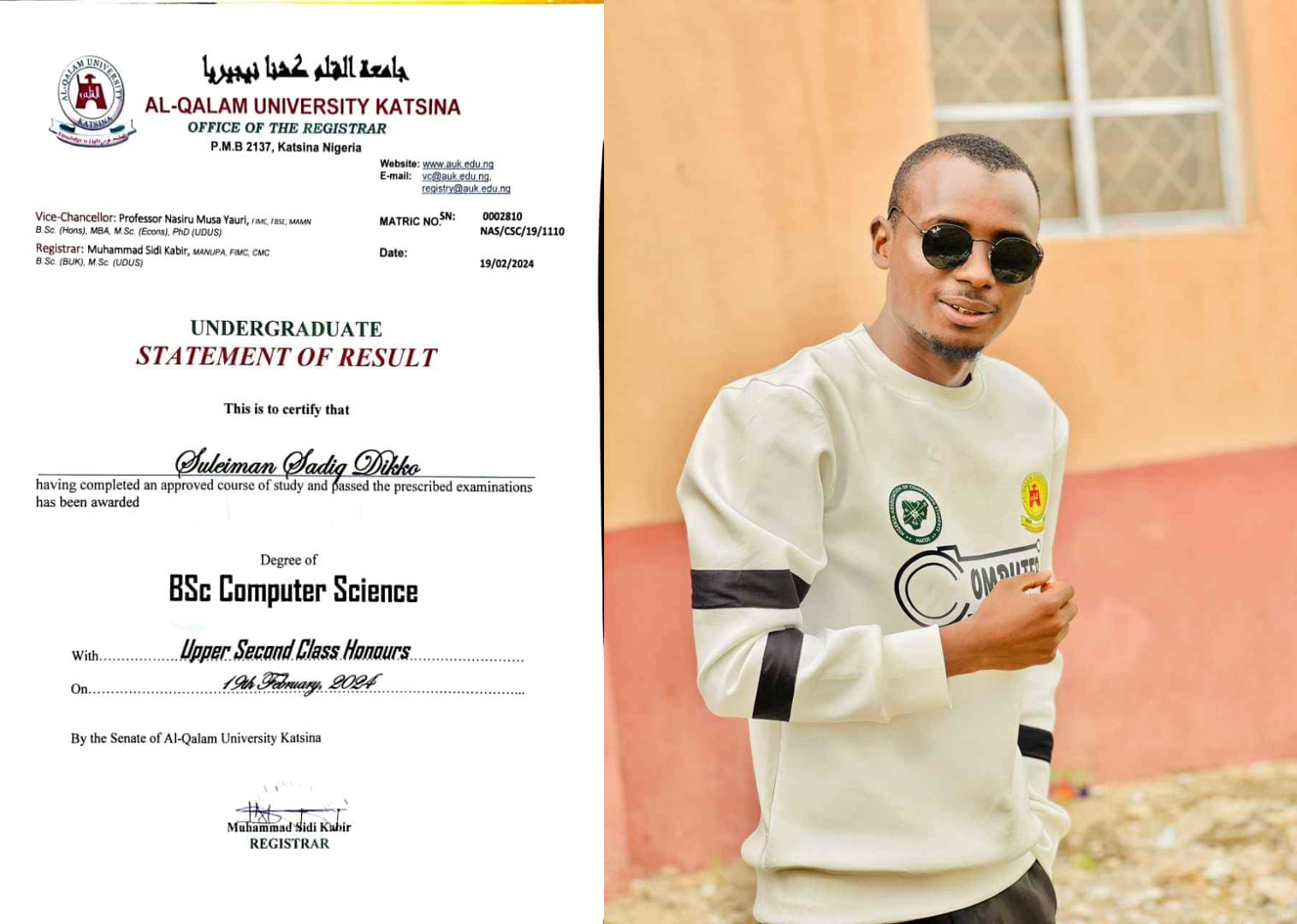
Unfortunately, Sadiq could not make the student pilot selection tests. Undeterred, she paid for his next choice—Computer Science at Al-Qalam University, Katsina, also in northern Nigeria. What made her a heroine was her sheer determination to see that he was educated. Human resource development at its most anthropological best—more sophisticated than the theories of Robert Owen, Charles Babbage, and Frederick Winslow Taylor, the credited proponents of the discipline. In this single but simple act of sacrifice, we see the power of love and the power of a woman who is not educated in any fancy school but the massive school of life. Yet, she knows, as a mother, the value of human capital development and is willing to sacrifice what she has to actualize it for her child.

At Al-Qalam, Sadiq was no slouch. His mother had sold a few cows to pay for his school fees for four years and also gave him spending money. He invested it in a fura business in Katsina—no doubt bringing Katsinawa the best fura they would ever taste from Kano! He did so to sustain himself throughout his college years without burdening his mother for upkeep money. He even employed some fellow students as his distributors. Extremely outspoken, he was the perfect candidate for the presidency of the Computer Science Students Association of the college, to which he ascended after being the Vice-President II of the association.

Back in Kano, he became a youth activist. He encouraged the formation of the Kano State Nomadic Fulɓe Youth Association in 2018. This was a coalition of all Fulani youth who had some form of education, especially higher education, and could therefore demand integration into society and better attention from politicians for their kraals. Ironically, considering that the power, hegemony, and control are actually in the hands of the Fulani—and have been so since 1807. This created a linguistic anomaly for the Fulɓe youth: those in power claim to be Fulɓe and although they have voices, they care less about Fulani causes. Those who speak Fulfulde and care more about Fulani causes are voiceless in the larger scheme of things.

Sadiq’s Fulɓe Youth felt the only way to gain attention to the plight of the Fulani was to align themselves with a political party. They chose a party not in power, the New Nigeria Peoples Party (NNPP), because they felt they would be listened to. Ironically, the All Progressives Congress (APC), which was in power, would have worked for them because of the “ability to speak Fulfulde” factor, since the then Governor of Kano, Dr. Abdullahi Umar Ganduje, is a genuine “I can speak Fulfulde” Fulɓe. But they chose the NNPP and its gubernatorial candidate, Eng. Abba Kabir Yusuf. They believed in him and devoted themselves to his cause.

During Engineer Abba Yusuf’s campaigns in 2019, a lyricist named Tijjani Gandu composed a political song for him titled, “Abba Gida Gida Abba”/Abba in every home. This actually became more or less Abba Kabir Yusuf’s nickname. With a catchy chorus and hook, it was perhaps the most iconic political song in Kano’s popular culture, even eclipsing “Kwankwaso Dawo Dawo”/ (Kwankwaso re-contest). Someone even had White kids somewhere in the US or Europe dancing to the chorus on social media!

Sadiq and Fulɓe Youth came up with a brilliant plan: map out all the Fulani kraals (Ruga) in Kano using their GPS coordinates in Google Maps to obtain data for easy access to the Fulani kraals (which he pluralizes as ‘Rugage’). Using satellite mapping, it would be relatively easy to determine access, population, and the level of development in each Ruga, which would be effective for campaigning, as well as for other uses—health and vaccination campaigns, schooling drives, etc. Next, the Fulɓe Youth under Sadiq came up with a slogan to campaign for Abba Kabir Yusuf: “Abba Ruga Ruga Abba,” deliberately rhyming with Abba Gida Gida Abba. They were even able to negotiate access to the man himself, i.e., Abba Kabir Yusuf. But it all came to naught.

Sadiq continued his studies, finishing in the autumn of 2023. Everyone knew he was excellent, and when Al-Qalam held a convocation ceremony last year for only First Class students, everyone who knew Sadiq expected him to be among those honored. Alas, it was not to be. However, Sadiq scored a Second Class Upper in Computer Science—perhaps a first for a fura hawker who lives in a kraal.

With such brilliant results in computer science and a committed social philosophy of uniting all Fulani youth in all kraals on a peace mission, it remains to be seen whether his mother’s sacrifice has been in vain. Being the son of a nobody, he lacks access to ‘big people’ who will give him a job. But Sadiq is not one to give up easily. His mind is too sharp, too restless to trudge from one office to another with a large brown envelope carrying his CV and looking for a job in futility.

I won’t be surprised if he uses these attributes to design an Artificial Intelligence routine that would perfect milk production—thus giving us better fura. Who knows? Harvard University might even invite him to open the first AI Restaurant in the world. Before then, as he faces his NYSC in May 2024, it would be a shame to waste his organizational skills. SA on Fulbe Youth? Why not? After all, the kraals also need development and attention—and not only during elections either.

Sadiq is what he is now—a unique, proud, hardworking, and brilliant Fulɓe youth advocate—because of his mother’s love and dedication. An ordinary mother, not the daughter of a “big man” or “important people,” just ordinary, but with an extraordinary commitment to love and sacrifice—and without being a social parasite.

Allah’s blessings for eternity to all mothers of the world on this day of re-embrace of Sadiq’s mother and her lexicon of love.

Prof. Abdalla Uba Adamu can be contacted via auadamu@yahoo.com.

5 ways students can leverage generative AI to improve their academic performance and career prospects

By Najeeb G. Abdulhamid, PhD

I was recently working on a document about the ethical and responsible use of generative AI in academic research. It struck me that I hadn’t explored the potential of this technology for students themselves. So, I’ve compiled 5 potential uses cases for generative AI that can enhance learning while promoting responsible and ethical practices.

1. Leveraging Generative AI for Peer Feedback

One of the benefits of generative AI is that it can provide feedback on your work. Whether you are writing an essay, preparing a presentation, or working on a project, you can use tools like Bing Copilot, ChatGPT, Google Gemini, and Claude.AI to get comments on your draft. These tools can identify your strengths and weaknesses, suggest improvements, and ask insightful questions. This can help you polish your work and learn from your mistakes.

However, you should always verify and cite the feedback generated by these tools. Do not blindly accept or copy their suggestions without checking their accuracy and relevance.

2. Using Generative AI as a Personal Tutor

Another way to use generative AI is to get personalized tutoring. You can use these tools to review course materials, prepare for exams, and explore new topics. For example, you can use these tools to generate summaries, outlines, or flashcards from textbooks, lectures, or slides. You can also request practice questions, hints, and solutions tailored to your specific course and difficulty level. Additionally, you can use these tools to generate summaries, analyses, and insights based on your research questions and sources, allowing you to explore new areas of your field.

However, you should not use these tools as a substitute for your instructor, textbook, or classmate. You should still attend classes, do your readings, and participate in discussions.

3. Using Generative AI as a Source of Inspiration

Generative AI can also spark your creativity and self-discovery. You can use these tools to generate new ideas or content related to your interests, like stories, poems, music, images, recipes, or travel guides. This can help you discover hidden talents and passions, broaden your perspectives, and uncover new possibilities.

However, you should not use these tools to plagiarize or copy the work of others. You should always give credit to the original sources and the generative AI tools you used.

4. Using Generative AI as a Copilot to Conduct Research

Generative AI can also assist you in conducting research. You can use these tools for brainstorming and ideation, summarizing relevant literature, and exploring research questions, methods, findings, limitations, and recommendations.

Additionally, these tools can help you refine your language and address potential grammar or clarity issues in your draft papers. This can help you conduct research more efficiently, communicate your findings with greater clarity, and effectively convey the significance of your work.

However, you should not use these tools to fabricate or falsify data, code, or results, or to misrepresent or exaggerate your findings and implications. Always follow the ethical and responsible principles and practices of research, such as transparency, accountability, fairness, and privacy.

5. Leveraging Generative AI to Build Stronger Teams

With the rise of project-based learning, fostering effective teamwork is crucial. Generative AI tools can help you generate suggestions and tips for successful collaboration, such as strategies for setting roles and responsibilities, managing conflict, and resolving issues. These tools can also generate project plans outlining tasks, deadlines, and deliverables.

Additionally, they can create templates that prompt you to define roles, goals, communication methods, and feedback mechanisms. This can help you develop interpersonal, leadership, and problem-solving skills, ultimately improving team productivity and satisfaction.

However, you should not use these tools to replace or undermine the human element and the social aspect of teamwork and collaboration.

A Word of Caution: Responsible Use is Key!

While these applications hold great promise, it’s crucial for students to check with their faculty and consult their academic integrity handbook first. If specific policy guidelines aren’t established, here are some golden rules for responsible and ethical use of generative AI tools:

• Verify all information: As the user, you are ultimately responsible for ensuring the accuracy, relevance, and appropriateness of your work. Do not blindly accept AI-generated content without thorough verification.

• Cite your sources accurately: This includes both the original sources you used in your work and the generative AI tools you employed.

• Beware of fabricated information: Generative AI tools can sometimes invent references and information. Always verify any suspicious content before including it in your work.

By employing these tools thoughtfully and ethically, students can enhance their learning experience, boost creativity, and cultivate essential skills for academic and professional success. P.S:

To make this article more useful, I created some sample prompts for each of the five use cases I discussed above. You can use them to try out generative AI tools for yourself. Just follow this link t.ly/R5gPT to access the prompt library!

Image and poster credit: #generatedwithbingcopilot

A look at Governor Fintiri’s Model and Mega School projects

By Zayyad I. Muhammad 

Adamawa State Governor Ahmadu Umaru Fintiri has commenced the implementation of his ambitious Mega and Model Schools projects. 

On January 25th, 2024, the Governor officially launched the construction of the model nursery, primary, and junior secondary schools across all 21 local government areas in the Girei local government area. Additionally, the governor plans to build comprehensive one-in-all mega secondary schools, two in each of the state’s three senatorial districts.

The big question is: Why is the Adamawa State Governor engaging in these enormously ambitious projects? There are three answers. First, according to the United Nations Children’s Fund (UNICEF), one in three children in Nigeria is out of school, totalling 10.2 million at the primary level and 8.1 million at the junior secondary school (JSS) level. Adamawa State, positioned as a frontrunner in the north for reducing the number of out-of-school children, aims to sustain and enhance its progress. 

Additionally, the state has achieved remarkable milestones in maintaining existing schools and securing impressive student performance in WAEC and NECO. Notably, in the 2023 NECO examination, Adamawa came first in the North and ranked second nationally for students with more than five credits in all subjects, including mathematics and English. 

Furthermore, as part of Governor Fintiri’s 2024 budget commitment, promises include allocating projects exceeding one billion Naira to each of the 21 local government areas in Adamawa State. The construction of model and mega schools reflects a dedication to fulfilling these promises and spreading development and resources beyond the state capital, fostering a sense of inclusivity among the people.

While some dissenting voices suggest that the government should focus on rehabilitating and maintaining existing schools and skills vocational centres, the governor has already taken care of that through well-designed approaches. According to experts, Adamawa State, known for its exemplary education sector management, employs a highly regarded systematic and systemic approach. 

Adamawa has implemented a system that consistently maintains school infrastructure while concurrently constructing new ones based on needs and distribution. The state actively recruits new teachers and provides ongoing training for existing ones, aiming to enhance teacher quality, welfare, and pupil enrollment to address the challenges of out-of-school children. 

According to the Commissioner of Education, Dr. Umar Garba Pella, there are essentially two types of schools in the world: those with classrooms and street schools. Failing to enrol children in schools with classrooms may result in them attending street schools, where one child in such a setting can negatively impact the education of 10 children in a conventional classroom.

There are three takeaways from Gov. Fintiri’s launch of the construction of the 21-model nusery, primary and junior secondary schools, and the six mega schools. Firstly, there is public excitement; the majority of Adamawa residents are enthusiastic, recognising the government’s effectiveness and the inclusive nature of infrastructure development. Secondly, the projects will have a regional impact: the Model and Mega schools in Adamawa are expected to significantly influence the state’s education sector and contribute to the broader educational landscape of the northeast subregion. These schools are designed to provide advanced facilities, technology, and specialised programs, accommodating many students and fostering diversity. 

Thirdly, the schools will have a multipurpose and economic impact. Governor Fintiri’s mega and model school projects aim to address the challenges highlighted by UNICEF. The UN said that 12.4 million children in Nigeria have never attended school, and 5.9 million left school prematurely. Thus, the project will tackle the high number of out-of-school children in the northeast and provide students with modern skills aligned with globalisation. Furthermore, the economic impact is evident, with the substantial investment of 16 billion naira in the model school project, which is expected to affect the lives of residents in various ways positively.

Zayyad I. Muhammad writes from Abuja via zaymohd@yahoo.com.

More about ‘studying abroad’

By Salihi Adamu Takai

Most of the people leaving their country for acquiring education abroad make mistakes when considering the study abroad as an “easy learning” or an “easy way of gaining certificate”. Some people applied for transfer from their Universities to gain admission abroad not for the purpose of proper learning or additional gaining.

In any country, there’s a university that you can find around that’s not standard and gives certificate any how. So, if someone is intending to gain only certificate (not qualitative education) he can get that in his/her surroundings. In learning, the intention and purpose matter. What makes you search for it, takes you there – but to what extent that can be achievable? Ask your mind!

If it’s only certificate I want, why should I leave my country for another place? Think twice or even thrice. As a Muslim, I learned in the Hadith that the Prophet (SAW) was reported to have said that “search for a knowledge even in China”. Referring to “China” in the Hadith, even though some Ulamas say the Hadith is not authentic, but it shows how important search for knowledge is/was, and it makes people curious to get it – for the well-being of their lives. It’s talking about the qualitative education not what can be gotten easily.

Studying or living abroad is a chance of life if the person uses the advantages appropriately. Apparently, it’s not something of gaining what’s easy to me or not – rather what can add me value into my life. This means a person living in the most developed country can plan to live in the most underdeveloped country in Africa. This can help the person acquire another things such as experience and study how different people live in different places.

Many people learned different languages accurately through living abroad. There you can interact with some people you have never met before. They speak what you speak not. You can learn from them something different.

Studying abroad also can be the best for you if you take it as it should be. This means as you learn from someones who are different from you nationally and socially, you can get someone new to you. Although, the contents of the things you’re acquiring are the same, but the things in them can be worth acquiring and grabbing.

Here in Uganda, I interact with Congolese whose country is Francophone. Their official language is French not English. Most of them live in some countries like Uganda to do their degree and at the same time learning English language. This shows that the purpose is not only a degree certificate – but the language is very important to them.

Therefore, it’s very important to the people (students in particular) who are living abroad to know that; it is a very good time that should be utilised decently. You’re not living there permanently. Anytime you can be asked to leave the country. So, it’s a life for a purpose with a limited time. Don’t take it as just a chance of pleasure – rather a chance of success – once it is misused – it can affect the whole life.

X-Raying the physical and mental effects of bullying

By Maimuna Katuka Aliyu

I find it difficult to believe that the majority of those reading this piece right now do not know what bullying is all about. Bullying, as a matter of fact, is a common phenomenon among us now. Being bullied is both heartbreaking and miserable for those targeted.

But many adults, unless they too have been bullied, have a hard time understanding just how much kids can suffer from being bullied. They fail to realize that the consequences of bullying are significant and can have a lasting impact on one’s mental and physical health.

According to the National Institute of Child Health and Human Development (NICHD), bullying has a lifelong impact on the social and emotional development of children, which puts them at risk for everything, from severe mental health issues to stunted professional growth later in life.
Bullying is the use of force, coercion, hurtful teasing or threat to abuse to aggressively dominate or intimidate an individual. The behaviour is often repeated and habitual.

In Nigeria, this mostly occurs in boarding schools among seniors who take advantage of their timid and weak juniors, thereby forcing them to do their bidding, such as washing clothes and assignments, cleaning their rooms, collecting their food, and punishing and beating them as they wish.

According to NICHD, children who are involved in bullying experiences (on either side of the situation) are at an increased risk of developing issues in both mental and physical health aspects. Bullying can have physical, social and emotional effects, too.

The physical effects of bullying include:
– Stress response
– Headaches
– Muscle pain
– Digestive upset
– Weight changes, etc.

Those who are bullied are at increased risk for mental health problems such as:
– Depression and anxiety
– Low self-esteem and personal drive
– Trouble focusing and falling grades
– Behavioral problems
– Social and relationship issues
– Substance abuse later in life
– Dropping out of school
– Self-harming behaviours, etc.

Bullying can also affect other children who witness the acts, even if they aren’t directly involved. While it may seem obvious that those who are bullied have a higher risk of developing developmental issues, what’s less obvious is that bullying also affects the on-lookers.

Bullying brings negative effects to everyone who witnesses the act by way of creating what feels like an unsafe environment. It can make children feel as though they are helpless, planting a deep seed of insecurity and disdain for their classroom (and classmates) as a whole.

It also makes kids feel as though they can’t be protected by those they trust (teachers, aides, parents, etc.), which can lead to withdrawal and a failure to thrive. Research shows that bullying and harassment can cause adult symptoms of post-traumatic stress disorder (PTSD).

In fact, one study examining mental health in college students found experiencing bullying to be the strongest predictor of developing PTSD symptoms.

Oftentimes, it is withdrawal that is the first and most obvious sign that bullying is taking place, apart from actually seeing the incident in person.

Over time, if the bullying continues, those who witness it will likely begin to show other signs such as attention issues, fear of participating in normal activities, acting out or other behavioural problems such as vandalism or destroying toys or objects. Because kids rarely tell an adult when they experience bullying, it’s important that parents, teachers, and other caregivers are aware of the warning signs.

For instance, kids may hint that they are being bullied by saying there is drama at school, that kids are messing with them, or that they have no friends. These are all signs that they are experiencing bullying. If your kids confess to being a target, tell them you are proud of them for having the courage to talk about it.

This reinforces that you value having an open dialogue about issues they’re facing. It’s also important that you believe what your kids tell you and that you make a commitment to work with them to find solutions. While it can be difficult, try to keep your emotions in check. Instead, remain calm and work with your child to make a plan.

When kids feel as if they have options, they are less likely to be overwhelmed with negative feelings. In addition, efforts to advocate on behalf of victims will not be effective unless people truly comprehend how painful and traumatic bullying can be.

Kids who are regularly targeted by bullies often suffer both emotionally and socially. Not only do they find it hard to make friends, but they also struggle to maintain healthy friendships. Part of this struggle is directly related to low self-esteem.

A lack of self-esteem is a direct result of the mean and hurtful things that other kids say about them. When kids are continuously called “fat” or “losers,” they begin to believe these things are true. Many times, kids feel like they need to accept occasional bullying in order to belong. As a result, they will succumb to peer pressure and accept bullying as a way to maintain their social standing.

Kids who are victimized often yearn for acceptance from the very people who are bullying them. In order to remain part of the group, they may tolerate fake friendships and mean behaviour, especially if the person bullying them has a higher social standing than they do.

In fact, research shows that 50% of students between the ages of 12 and 18 who have been bullied report that the bully had more social influence. In addition, 31% indicated that they had more money. Bullying victims also tend to experience a wide range of emotions. They may feel angry, bitter, vulnerable, helpless, frustrated, lonely, and isolated from their peers.

Consequently, they may skip classes and resort to drugs and alcohol to numb their pain. If bullying is ongoing, they may develop depression and even contemplate suicide. Aside from the bumps and bruises that occur during physical bullying, there are additional physical costs. For instance, bullied kids often experience anxiety. This stress on their bodies also will result in a variety of health issues, including being sick more often and suffering from ulcers and other conditions caused by persistent anxiety.

Bullied kids also may complain of stomachaches and headaches. The bullying they experience may aggravate other pre-existing conditions like eczema. Skin conditions, stomach issues, and heart conditions that are aggravated by stress all worsen when a child is being bullied.

Kids who are bullied often suffer academically, too. Bullied kids struggle to focus on their schoolwork. In fact, slipping grades is one of the first signs that a child is being bullied. Kids also may be so preoccupied by bullying that they forget about assignments or have difficulty paying attention in class.

Additionally, bullied kids may skip school or classes in order to avoid being bullied. This practice results in falling grades. When grades begin to drop, this adds to the stress levels the bullied child is already experiencing. A study conducted by the University of Virginia showed that kids who attend a school with a severe climate of bullying often have lower scores on standardized tests.

When a child is bullied, it is not uncommon for the parents and siblings to also be affected. Parents often experience a wide range of consequences, including feeling powerless to fix the situation. They also may feel alone and isolated. And they may even become obsessed with the situation, often at the expense of their own health and well-being. It also is not uncommon for parents to feel a sense of failure when their child is bullied.

Not only do they feel like they failed to protect the child from bullying, but they also may question their parenting abilities. They may even worry that they somehow missed the signs of bullying or that they did not do enough to bully-proof their child along the way. The truth is that no one can predict who bullies will target.

Parents can do everything right and still find out that their child is being bullied. As a result, they should never feel responsible for the choices a bully makes. Instead, they should place the blame where it belongs and focus on helping their child heal from bullying.

Research shows that bullying has a lot of effects which last well into adulthood. In fact, one study found that the consequences of being bullied by peers may have a greater impact on mental health in adulthood than originally thought. Remember, the experiences that people have while they are children help mould them into the adults that they later become. So it is not surprising that the effects of bullying linger well into adulthood.

However, having a counsellor help your child with the recovery process may speed things along. If you were bullied as a child and are still experiencing the side effects, the first step toward recovery from childhood bullying is acknowledging what happened to you. Do not dismiss what happened to you or minimize the severity.

Be truthful with yourself about the pain you experienced. You also need to make healing a priority. Take time to take care of yourself and consider talking with a counsellor about your experience. A counsellor can help you make sense of your feelings and move past the negative experience of bullying. He also can help you reframe your thinking and reclaim control over your life.

While it may be painful to think about the bullying you experienced as a kid, if it is still impacting your everyday life and the way you view yourself, then it is best to face the issue head-on. Once you have come to terms with what you experienced and changed the way you view yourself and others, you will be on your way to recovery.

Conclusively, bullying prevention has been put in the spotlight in recent years and has gained momentum in educational facilities across most countries or worldly. Many schools and childcare providers now implement some variation of an anti-bullying policy, which has had a major impact on developing minds everywhere.

Most anti-bullying policies include tips such as keeping a watchful eye, utilizing activities that encourage kids to speak up about their experiences and keeping an open line of communication with youngsters to ensure they are comfortable with sharing any unwanted behaviours by others. It is time bullying in whatever form is stopped in Nigeria. One hopes that the government, school management and society at large will do something to tackle the vicious malaise.

Maimuna Katuka Aliyu is an executive intern with PRNigeria in Abuja, Nigeria.