Education

North West Development Commission cancels foreign scholarships 

By Anwar Usman

The North West Development Commission (NWDC) has reversed its decision and announced cancelling its foreign scholarship application scheme. This is in compliance with the Federal Government’s recent directive to prioritise local education and promote indigenous capacity development.

This development follows a policy announcement made by the Federal Ministry of Education on May 7, 2025, reiterating a shift in focus towards reinvigorating Nigeria’s local educational institutions.

The statement, signed by the Ministry’s Director of Press and Public Relations, Mrs. Boriowo Folasade, highlighted the need to invest in homegrown talent and infrastructure rather than sending students abroad.

In a statement issued on Thursday, the NWDC reiterated its commitment to aligning its programs and initiatives with the Federal Government’s policies and priorities.

The statement reads, “This decision is in line with the new directive by the Federal Government, aimed at building local capacity and enhancing the quality of education within Nigeria,” the Commission stated.

The NWDC added that it would provide further updates on new opportunities and educational programs designed to support the development of the North West region in line with the new national educational outlook.

The cancellation marks a significant policy shift in the region’s educational strategy. It is expected to redirect resources towards improving local institutions, providing scholarships for domestic education, and creating skill development initiatives tailored to regional needs.

The importance of time: An appeal for punctuality in academia and elsewhere

By Abubakar Aminu Ibrahim

Deedee rushed around her room, gathering the necessary materials for her PhD proposal defense, her heart racing as she tried to remember everything. The session was officially set to begin at ten in the morning, as specified by the postgraduate college, but by seven, she was already anxious, determined not to be late for such an important academic event.

Thanks to the relentless morning traffic, Deedee barely arrived at her destination by eight. Clutching her papers tightly and breathing heavily, she sighed in relief—at least she was the first to arrive. Finally, she could set aside the worry of being late. She settled into her seat, absorbing the tranquillity in the environment and the nervous anticipation of her imminent defense.

The clock ticked on. By ten o’clock—the designated time—only a few familiar faces were moving about. It was evident that the college had only just started making arrangements for the venue and other necessary protocols. Deedee stayed patient. Maybe the session would begin by eleven, she thought, but I need to pick up Mukhtar from school by two.

Yet, the college workers—both academic and non-academic—moved about leisurely, their faces showing no awareness of time slipping away. As the hours passed, other students began to trickle in. No one noticed who had arrived first; there was no system in place to ensure that Deedee or any early arrivals would be attended to first. It seemed that the very concept of punctuality was foreign here.

Frustrated, Deedee later lamented, “Can you believe the session didn’t start until two o’clock in the afternoon? That was exactly when I was supposed to pick up Mukhtar from school?”

“I’m really sorry,” I said earnestly. “But this is what we refer to as ‘African time.’ People here often don’t prioritize valuing time.”

“But do you realize what that means!?” Deedee interjected. “It means our defense times were shortened, leaving us little opportunity to express the very ideas we spent sleepless nights preparing. I was caught between trying to present my work convincingly and worrying about my poor son. What could I say to impress the professors? What was Mukhtar doing at that moment? Was he thinking I had forgotten him? These thoughts, combined with exhaustion, drained all the energy I’d built up for the session.”

Sadly, lack of respect for time has become our trademark in Africa—or, let me be specific, in Nigeria, which I know too well. It is bad enough that the general populace disregards time, but it is even more disheartening that this culture thrives in academic environments. 

Ironically, some people deliberately arrive late to events, using it as a display of status. They ensure the crowd has gathered before they waltz in, basking in the admiration of those who foolishly equate tardiness with importance. Even more baffling is that these individuals always have some fools cheer and applaud their ignorance or arrogance.

We must recognize that our choices do not impact us alone. More often than not, they have far-reaching consequences for others. Consider how a single instance of lateness can disrupt the timing of subsequent activities. Life functions like a chain—delaying one link interrupts the entire sequence. If action A is postponed, it affects action Y, and ultimately, there may be no time left for action Z, which could be critical to someone else’s plans.

It is time we erased the shameful phrase “African time” from our vocabulary and our reality. We must recognize that adhering to schedules is an act of responsibility, a way of being our brother’s keeper. Whether as teachers, students, participants, or public speakers, we need to respect the time allocated to us, neither taking more than our share nor wasting what we have.

Yesterday is history, which is why it’s referred to as the past. Tomorrow is a mystery, unknown and unpredictable. But today—this moment—is a gift. That’s why it’s called the present. Use it wisely.

Abubakar Aminu Ibrahim wrote via abubakarmuhammadaminu21@gmail.com.

Borno: Education commissioner Wakilbe tours schools

By Rukayya Abubakar Othman

Commissioner of Education Engineer Lawan Abba Wakilbe continued his school supervision tour, visiting the Mafa, Dikwa, and Ngala Local Government Areas. He was accompanied by Bukar Sheriff Kime, Zonal Deputy Director of Monguno Zone, other educational board members, and the local education secretary. 

Engineer Wakilbe commenced his tour at Ngom Primary and Junior Secondary School, where he also visited Government Day Secondary School, Vocational Enterprise Institute, Central Primary, and Junior Day Secondary School in Mafa local government.

During the visit, the Commissioner expressed concern regarding the low student turnout and the high absenteeism among teachers, emphasising the necessity for immediate improvement.

Engineer Lawal Wakilbe, during his visit to Dikwa Government Day Secondary School, Shehu Sanda, Central, Kalaa Garu Primary, and Junior Day Secondary School, inspected the completed teachers’ quarters and the ongoing construction of the Higher Islamic School. 

During his visit to Dikwa, Engineer Lawan commended the attendance of teachers and students, and distributed learning materials and dignity kits to adolescent girls.

Commissioner Lawan Abba Wakilbe, on the second day of his visit to Gamboru, inspected Government Day Secondary School Gamboru, Gamboru Central, and Ndjamaina Primary and Junior Secondary School.

Engineer Wakilbe also inspected the Higher Islamic College Gamboru and Ladari Primary School. At Wulgo, heexamined the completed secondary school project, as well as the Primary and Junior Secondary School Wulgo.

The commissioner commented on the dedication of Ngala Education Secretary, Bulama Kole Bunu, and the Principal of Government Secondary School Gamboru, Mohammed Hamidu Talaki, during the distribution of learning materials and dignity kits to students.

This tour underscores the Borno State Government’s commitment to enhancing education quality and infrastructure across the state.

NERDC inaugurates academic planning committee

By Sabiu Abdullahi

The Nigerian Educational Research and Development Council (NERDC) has inaugurated its Academic Planning Committee (APC) to enhance research and development within the institution.

The inauguration, which took place on Wednesday, February 26, 2025, was held at the Council’s headquarters in Sheda, Abuja.

Speaking at the event, the Executive Secretary, Prof. Salisu Shehu, reiterated the pros of the committee.

He was quoted as stating that “the committee is a crucial committee of the Council to drive research and development activities.”

He noted that its formation would accelerate research progress and play a key role in advancing the Council’s mandate.

Prof. Shehu reminded members that NERDC serves as the think tank of Nigeria’s education sector and is expected to lead in educational innovations.

He urged also them to reposition both themselves and the Council to effectively fulfill their responsibilities, calling on the committee to develop impactful programmes and research agendas that would benefit both the Council and the country.

Expressing concern over financial constraints, the Executive Secretary stressed the importance of demonstrating expertise to attract more funding from the government and development partners.

In his closing remarks, Prof. Shehu appreciated the committee members for their commitment and urged them to stay motivated.

He advised them to contribute meaningful ideas, stating that he is open to “informed advice and quality suggestions and not gossips.”

Earlier in the meeting, Dr. Chima Egbujuo, Head of the Policy and Programmes Unit and Secretary of the Academic Planning Committee, provided an overview of the committee’s structure and responsibilities.

He explained that the APC comprises the Executive Secretary as the Chairman, alongside all Directors, Assistant Directors, and Chief Research Officers of the Council.

As an advisory body, the committee is expected to guide management on academic activities and initiatives.

AI and the future of jobs: How automation will impact employment in Nigeria

By Nasiru Ibrahim

“The introduction of AI and automation is a double-edged sword: it holds immense potential for efficiency, but its consequences on job markets, especially in developing economies like Nigeria, need to be addressed through strategic workforce planning and skills development” (Bessen, 2019).

This article examines the positive and negative impacts of AI on the workforce, supported by economic theory and real-life examples from Nigeria.

Artificial intelligence is the direct opposite of human intelligence. It showcases the ability of machines, such as computers, to carry out tasks that require human intelligence. AI performs tasks such as writing, problem-solving, analyzing data trends, driving self-driving cars, harvesting fruits on farms, and other tasks traditionally performed by humans.

AI automation involves the use of artificial intelligence and technology to automate repetitive tasks that humans traditionally carry out in their daily lives. It enhances productivity, efficiency, and scalability, reduces production costs, and ensures round-the-clock availability for services such as banking.

AI depends on data to perform tasks and learns from humans through data annotation or labelling. This indicates that it cannot recognise images, interpret voices, or understand statements unless trained by humans. Generative AI like GPT–4 is transforming the labour market while influencing the demand and supply of labour in the overall economy. The automation of repetitive tasks in both skilled and unskilled jobs by companies has raised concerns about whether AI will harm or benefit the workforce. This debate has led to the application of traditional economic theory to explore and explain the economic effects of AI.

Economic Theory on AI

Austrian Economist Joseph Schumpeter’s theory of creative destruction explains how new technology and innovation reshape economies by replacing old jobs and technologies with new ones. This theory supports the argument that AI can create new industries, jobs, and opportunities, as seen in Nigeria’s growing tech sector, which includes Fintech, E-learning, E-commerce, and Agritech. Below, we explain these theories with examples from across Nigeria.

Firstly, in Fintech in Lagos, companies like Flutterwave and Paystack now employ AI engineers and data scientists to develop fraud detection systems and personalised banking tools.

Secondly, in E-learning in Abuja, platforms like Ulesson use AI for tailored learning experiences, creating roles like app developers and AI trainers.

Thirdly, in E-commerce in cities like Lagos and Kano, Jumia and Konga use AI for supply chain optimisation and chatbots, fostering jobs in logistics tech and digital marketing.

Fourthly, in Agritech in Kaduna, Thrive Agric employs AI for farm monitoring and analytics, generating demand for data analysts and field specialists.

Human Capital Theory

Human Capital Theory, developed by Gary Becker and Theodore Schultz, emphasises the importance of education and skills in economic productivity. In Nigeria, the demand for human capital has increased in sectors such as machine learning, data annotation, and AI development. The rise of AI has fostered a need for expertise in areas like data science and machine learning. Initiatives like Data Science Nigeria are aiding individuals in acquiring these skills, enhancing their employability and contributing to the nation’s economy. This aligns with Human Capital Theory, which asserts that investing in education and skills enhances productivity.

Pareto Optimality

AI has the potential to increase productivity and efficiency in Nigeria’s economy without worsening the condition of any particular group, achieving Pareto optimality. AI in Nigerian healthcare, such as AI tools for diagnosing diseases, is helping both patients and doctors. These tools make diagnoses faster and more accurate, improving care without harming anyone. This is an example of Pareto Optimality, where everyone benefits without undermining the benefit of anyone.

Dr. G. Yoganandham (2024), Professor & Head of the Department of Economics, in his paper titled Impact of Artificial Intelligence (AI) on the Economy, Politics, Ecosystem, Innovation, and Promoting Inclusive Workforce Frameworks (2024), stated:

“The global economy could benefit by $13 trillion from artificial intelligence by 2030, although 375 million jobs may be displaced. The workplace is one of many areas where AI will bring a revolutionary impact. It can streamline processes, reduce costs, and enhance decision-making. AI can also improve customer satisfaction by analysing data for predictive analytics, reducing accidents in construction and manufacturing, and creating new employment opportunities in data science, machine learning, and AI education.

However, workplace AI raises ethical concerns about racial bias, privacy, security, and democracy. While some argue it may lead to robotic employment, there is ongoing debate about its potential to foster innovative work, create new career paths, and improve judgment.”

From the above theories, it can be deduced that on the one hand, AI, ceteris paribus, could have a positive effect on the expanding workforce in Nigeria, in terms of:

Firstly, AI fosters the creation of new jobs and opportunities. It fosters the emergence of new industries and job roles, particularly in data science, big data technology, AI engineering, and cybersecurity. Companies like Data Science Nigeria (DSN) are equipping Nigerians with skills in data analytics and machine learning, creating employment opportunities in the tech industry.

Secondly, AI enhances productivity and efficiency. It reduces production costs and streamlines processes, enabling businesses to operate more efficiently. In agriculture, Hello Tractor uses AI to connect smallholder farmers with tractor owners, increasing farming efficiency and reducing costs.

Thirdly, improving demand forecasting and profitability. AI tools optimise supply chain management and demand forecasting, leading to increased profitability for businesses. Jumia, Nigeria’s leading e-commerce platform, employs AI algorithms to predict customer preferences, enhance inventory management, and boost sales.

Fourthly, upskilling the workforce. AI encourages the development of skills that align with technological advancements, offering workers better career prospects.

On the other hand, AI could have a negative impact on the workforce in Nigeria, in terms of:

Firstly, job displacement due to the automation of repetitive tasks can affect low-skilled workers, particularly in the manufacturing and service sectors. In Nigeria’s financial sector, banks such as GTBank have adopted AI-powered chatbots (e.g., Habari), thereby decreasing the need for human customer service representatives.

Secondly, bias in hiring and decision-making. AI systems trained on biased data can create discrimination, particularly in hiring processes.

Thirdly, ethical and privacy concerns. AI-driven technologies often raise privacy, security, and data misuse issues.

Fourthly, there is limited access to AI resources. Many Nigerians, particularly in rural areas, lack access to the infrastructure and education required to benefit from AI advancements. For example, I live in Gwiwa Local Government Area, Jigawa State, but the entire local government lacks basic ICT facilities, let alone advanced technological resources that would help people understand artificial intelligence.

While AI promises to increase efficiency and productivity in various sectors in Nigeria, such as agriculture, the question remains: Will the benefits outweigh the job losses, particularly in a country with high unemployment and underemployment?

In Northern Nigeria, where more than 50% of the population is engaged in agriculture, a phased approach is urgently needed. Before AI can be widely adopted, attention should be directed towards improving mechanised farming techniques to enhance food security and tackle inflation. 

Given the shortage of skilled labour prepared to use AI in agriculture, it is essential to prioritise education and training, followed by the mechanisation of farming practices. This would ensure that the workforce is adequately prepared to embrace AI when it is introduced. AI has the potential to boost agricultural productivity by facilitating the timely harvest of crops and minimising the risk of poor yields.

The lack of education in Northern Nigeria exacerbates these challenges. According to the World Bank, the literacy rate in Nigeria stands at approximately 31%, with the Northern region experiencing a significantly higher illiteracy rate. This deficit in educational access has fostered a profound sense of frustration, as many individuals find it difficult to survive amid escalating economic hardships.

People in these regions often face unmet needs, yet politicians offer solutions that don’t address the core issues. This disconnect between the people’s needs and the actions of those in power further deepens the divide and hinders progress. Many feel that immediate economic policies, such as harsh taxation and subsidy removals, are prioritised over long-term, sustainable solutions. There is an urgent need for more inclusive and sustainable economic policies that address the technological transformation driven by AI and tackle the underlying social inequalities.

While AI adoption in agriculture has the potential to boost productivity and reduce costs, the key to its successful integration lies in addressing the fundamental issues of illiteracy, poor governance, and lack of infrastructure, particularly in the Northern regions. Only through a concerted effort to improve education, promote mechanised farming, and gradually introduce AI can Nigeria hope to mitigate the potential displacement of jobs while reaping the benefits of technology.

Ibrahim is a graduate of the Department of Economics from Bayero University, Kano, and writes from Jigawa.

Kano govt pledges reforms in Qur’anic education system

By Uzair Adam

The Kano State Government has reiterated its commitment to enhancing the Qur’anic education system in the state.

In a statement on Tuesday, the Director of Public Enlightenment at the Ministry of Education, Balarabe Abdullahi Kiru, said the government remains committed to improving Qur’anic education and creating a conducive learning environment for students across the state.

The State Commissioner of Education, Gwani Dr. Ali Haruna Makoda, gave the assurance while receiving executive members of the Parent-Teacher Association of Government Tahfeezul Qur’an Secondary School, Kiru, during a courtesy visit to his office.

Makoda, represented by the Permanent Secretary of the ministry, Alhaji Bashir Baffa Muhammad, underscored the significance of Qur’anic education in promoting peace and stability among the Muslim Ummah.

He assured that the government would continue supporting the system to build a better society.

“This administration has done a lot in terms of providing infrastructure in schools and integrating Islamiyya, Qur’anic, and Tsangaya education to ensure access to quality Islamic and Western education in the state,” he said.

Speaking on the upcoming Qur’anic graduation of Government Tahfeezul Qur’an Secondary School, Kiru, the commissioner described the event as timely and pledged the ministry’s support.

Special Adviser to the Governor on Education, Alhaji Tajuddeen Gambo, lauded the school’s contribution to Qur’anic and Islamic education in Kano and beyond.

“The Kano State Government is very proud of Kiru Tahfeezul Qur’an, considering its role in propagating Qur’anic and Islamic education, not only in Kano but across the country,” he said.

He added that the government would ensure the renovation of dilapidated buildings in the school to provide a better learning environment.

The Chairman of the school’s Parent-Teacher Association, Alhaji Umar Natagunda Gezawa, said they visited the commissioner to brief him on preparations for the Qur’anic graduation ceremony scheduled for Sunday, February 9, 2025.

“The graduation covers students from 2019 to 2024, with a total of 1,643 students who have memorized the Holy Qur’an,” he said.

He also noted that the school has produced many graduates who have become prominent figures across the country.

“The school has played a vital role in shaping future leaders, and Kano is proud of them,” he added.

The school’s principal, Alhaji Mamuda, applauded the government’s decision to include the school in the first batch of renovation projects.

“The bill of quantity has already been assessed by the ministry under the governor’s directive to facilitate the project,” he said.

In defence of Sule Lamido and Nasir El-Rufa’i

By Saifullahi Attahir

In 1984, during the second term of former US President Bill Clinton as Governor of Arkansas, he was alarmed by a damning report on the decline in educational standards in the state. He, therefore, constituted a committee headed by his wife, Hillary Clinton, to go around the state and come up with resolutions on how to rescue the State Educational sector.

He introduced robust proposals, including more time for academic work, mobilising more funds, increasing the school year, special opportunities for gifted children, a maximum class size of twenty pupils up to third grade, and more recruitment of Mathematics, History, and Science teachers.

The most controversial proposal required all teachers and administrators to take and pass the National Teacher Examination. Even in the US, this proposal was met with backlash from interest groups and misinformed teachers that the governor was trying to hijack their means of livelihood. But in reality, there is no way that a reform in education can be successfully achieved without looking at the guardians of that knowledge.

 Teachers are the backbone of any school. No matter how beautiful the school building, how few students per class, or how good the curriculum, if the person imparting the knowledge is not well-prepared, problems will continue to arise.

In President Bill Clinton’s case, he recommended that teachers who failed be given free tuition to take regular courses and be able to take the test as many times as possible until certified to be able to teach.

This same scenario occurred during the tenure of two visionary governors in northern Nigeria. Former Jigawa State Governor Alhaji Sule Lamido used the same strategy to improve the state’s education, which was then on life support. I can count the number of primary school teachers I knew who were allowed to return to the College of Education (COE) Gumel to obtain an NCE Certificate fully funded by the state.

In the case of former Kaduna State Governor Mallam Nasir Elrufa’i, we can remember the giant effort he tried to impose to rescue the educational sector in Kaduna. This included a massive purge of school teachers who could not pass their Aptitude test. The former governor was met with a heavy force of resentment and protest, including a mass media campaign in which he was simply trying to retrench workers from their source of livelihood.

These three cases were almost similar, although different States, different personalities, at different times, and nearly different approaches. But history will judge…

Saifullahi Attahir wrote via saifullahiattahir93@gmail.com.

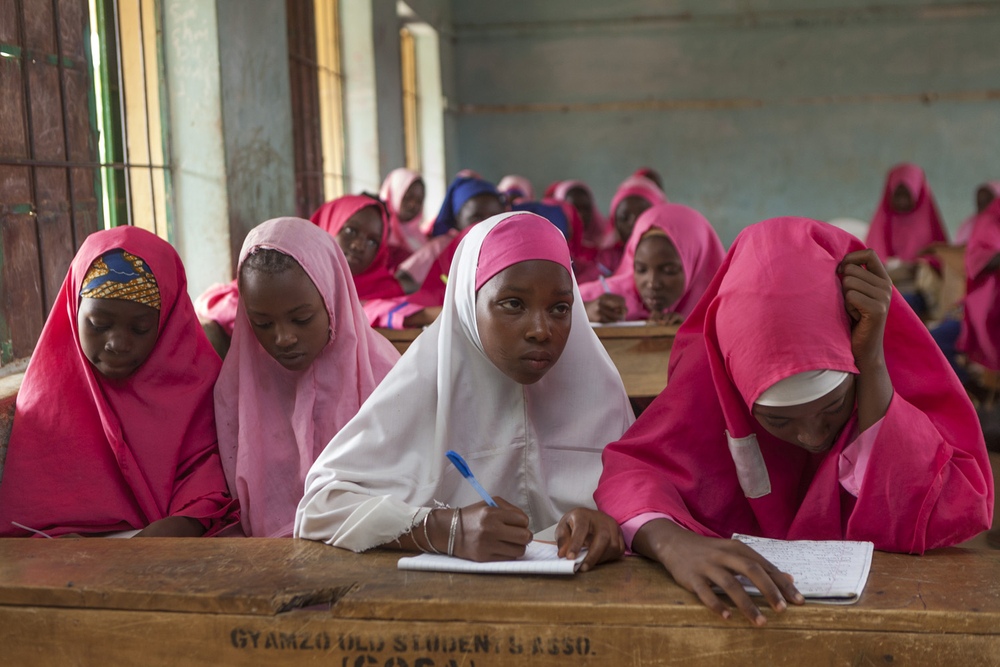
Empowering the future: The critical importance of educating girls

By Khadijat Ogido 

Educating girls is one of the most powerful tools for creating a sustainable, equitable, and prosperous society. Girls are provided with diverse basic knowledge, skills, and training contributing to national development. An educated child can only grow through a literate woman who has a greater chance of breaking the cycle of social vices by passing good knowledge to her daughter.

There is an adage that says, “Educate a man, you educate an individual, but educate a woman, you educate a Nation.”This adage summarises the essence of education to the girl child.

Investing in girls’ education transforms communities, countries, and the world. Girls who receive an education are less likely to marry young and more likely to lead healthy, productive lives. They earn higher incomes, participate in the decisions that most affect them, and build better futures for themselves and their families.

Girls’ education strengthens economies and reduces inequality. It contributes to more stable, resilient societies that allow all individuals – including boys and men –to fulfil their potential.

However, education for girls is about more than having access to school. It’s also about girls feeling safe in classrooms and supported in the subjects and careers they pursue—including those in which they are often underrepresented.

A girl is described as a female child between infancy and early adulthood. During this period of the development of the girl child, she is under the custody and supervision of adults who may be her parents or guardians and siblings who are older and more mature than she is.

According to the United Nations International Children’s Fund (UNICEF), Research has shown that millions of girls do not have access to school despite concerted efforts to promote the cause. Okeke, Nzewi, and Njoku (2008) identified child labour, poverty and lack of sponsorship, the quest for wealth, bereavement, truancy, broken homes, and engagement of children as househelps as factors that clog the wheel of children’s access to education.

According to UNESCO estimates, 129 million girls worldwide are out of school, including 32 million of primary school age, 30 million of lower-secondary school age, and 67 million of upper-secondary school age. In countries affected by conflict, girls are more than twice as likely to be out of school as girls living in non-affected countries.

Most factors that militate against the girl-child access to education are socio-cultural. Many countries on the African continent rank among the poorest in the world. The ongoing HIV/AIDS epidemics, over-crowding in cities, tribal warfare and despotic governments have contributed to the degeneration of the beautiful African land into a human rights catastrophe. At the centre of the devastating situation is the girl-child. 

The girl-children appear to be the most vulnerable and most undervalued members of the society. In a region where many are struggling to get enough food and to stay alive, remain out of reach of the various violent rebel armies, and care for those stricken with various diseases, a basic education, especially for girl children, is low on the list of priorities. The right to education, which is a fundamental human right, is frequently denied to girls in some African countries.

The then United Nations Secretary-General, Kofi Annan, stated that in Africa when families have to choose between educating a girl and a boy due to limited resources, the boy is always selected to attend school. 

In Africa, many girls are prevented from getting the education they are entitled to because families often send their daughters to work at a young age to earn additional income beyond the subsistence level and finance the education of their sons.

 It has been reported in BBC News (2006) that the African patriarchal societal viewpoint favours boys over girls because boys maintain the family lineage. Additional reasons why girls do not have adequate access to education in Africa include the fact that many have to stay home to nurse relatives with HIV/AIDS. Their mothers were uneducated, which is another reason they feel their daughters do not need education. Furthermore, some families do not believe in the education of girls. 

Many women who made it in life today also contributed immensely to the country’s growth and served as role models to the girl-child. Women like Funmilayo Ransome Kuti, Margaret Ekpo, Grace Alele Williams, Ngozi Okonjo Iweala, Flora Nwanpa, Onyeka Onwenu, etc. These women couldn’t have achieved it without a good education and were given the opportunity because it’s their right.

Malala Yousafzai, a Pakistani activist, said, “Let us remember: one book, one pen, one child, and one teacher can change the world.”

Educating the girl child is not just about attending school to acquire knowledge. It also serves as a weapon and a guide on how to shape her life and to break the barrier of a girl child not having the right to education.

Michelle Obama said, “When women are educated, their countries become stronger and more prosperous. Investing in a girl child’s education is not just a moral imperative; it is an essential strategy for achieving sustainable development and a better world for everyone.

Khadijat Ogido wrote via ogidokhadijat82@gmail.com.

Cultural diversity and its benefits in Nigerian education

By Waliyat Ayomide Oseni

In an era increasingly defined by globalisation and interconnectedness, cultural diversity has become pivotal in shaping educational frameworks worldwide. In Nigeria, a nation rich in ethnic plurality and cultural heritage, cultural diversity within educational institutions assumes strategic importance.

Cultural diversity refers to various cultural, ethnic, and social backgrounds represented within a community. Nigeria is often called a “melting pot” due to its numerous ethnic groups, languages, customs, and traditions. This diversity can enrich the educational experience, providing students with a broader worldview and enhancing their understanding of global issues. 

Nigeria is a diverse country with over 250 ethnic groups and more than 400 languages spoken, reflecting a rich cultural tapestry. This diversity is fundamental to Nigerian society and contributes to its vibrancy and uniqueness. Ethnic groups such as the Hausa-Fulani, Yoruba, and Igbo, among others, each bring their traditions, languages, and customs, creating a mosaic of cultures across the nation. 

Religious diversity is also prominent, with Islam, Christianity, and traditional African religions coexisting harmoniously. This cultural richness is celebrated through various festivals, ceremonies, and events, showcasing the country’s diverse heritage and promoting unity among its people.

One of the most significant benefits of cultural diversity in Nigerian educational institutions is promoting critical thinking and problem-solving skills. Diverse classrooms encourage students to engage with differing viewpoints, challengepreconceived notions, and foster respect for others’ beliefs and practices. This exposure sharpens analytical skills andcultivates empathy and social awareness, which are crucial for functioning in a diverse society and workplace. 

Diversity also fuels creativity and innovation in the learning process. When students are encouraged to collaborate across cultural boundaries, they combine unique experiences and ideas, leading to imaginative solutions to complex challenges. 

For instance, blending cultural perspectives in group projects can enhance creativity and result in more comprehensive and multifaceted outcomes. Educational leaders who emphasise collaboration among students from diverse backgrounds can harness this potential, creating an environment that nurtures innovative thinking.

In addition, extracurricular activities such as cultural festivals, language clubs, and international exchange programs can enrich students’ learning experiences and promote cultural appreciation. These initiatives foster community and belonging while encouraging students to celebrate their unique identities.

In conclusion, cultural diversity within Nigerian educational institutions offers many benefits, including enriched learning experiences, enhanced critical thinking, and improved interpersonal skills. Educators play a vital role in embracing this diversity and fostering an inclusive environment where every student can thrive. As Nigeria continues to navigate its identity within a global landscape, prioritising cultural diversity in education will undoubtedly enrich the learning experiences of future generations and contribute to the nation’s development.

Waliyat Ayomide Oseni wrote from the Department of Mass Communications, Bayero University, Kano.

ASUU accuses World Bank, IMF of undermining Nigeria’s education

By Anas Abbas

The Academic Staff Union of Universities (ASUU) has accused the World Bank and the International Monetary Fund (IMF) of actively undermining Nigeria’s public education system.

This allegation comes amidst the union’s frustration over the ongoing delays in renegotiating its 2009 agreement with the federal government, despite several Memoranda of Understanding (MoUs) and Memoranda of Action (MoAs), ASUU President.

 Prof. Emmanuel Osodeke expressed disappointment that the agreement has yet to be finalized.

During the ASUU Heroes Day 2024-2025 ceremony held in Abuja, Prof. Osodeke raised concerns about various issues, including the mandatory Integrated Personnel and Payroll Information System (IPPIS) and the suspension of salaries for ASUU members for three and a half months.

In a positive development, ASUU announced that it had awarded selected members PhD grants worth N500,000 each after thoroughly evaluating proposals. 

Prof. Osodeke praised the members for their unwavering commitment to defending Nigeria’s public university system and extended his support to ASUU members facing challenges at Kogi State University, Lagos State University, Ebonyi State University, and Chukwuemeka Odumegwu Ojukwu University.

The Heroes Day event recognizes past and present members for their dedication to enhancing public education. Prof. Osodeke paid tribute to the late Prof. Festus Iyayi, a former ASUU president, and others who have made significant contributions to the union’s objectives.