Education

Women’s education and socio-cultural injustice

By Ismaila Academician

Day in, day out, one will come across discriminatory remarks deadlier than plasmasonic missiles against educated women nowhere but in Northern Nigeria and, narrowly, among Hausa and Fulani people.

To begin with, every human deserves a better life that comes through development that comes through a civilisation that comes through education or knowledge. Like the solar system, our life as a system is made up of some fragments that are an integral part of the whole system syntagmatically. After existing in form and soul, education is the second most important thing. It provides us with other parts health, food, shelter etc.

In this regard, life at the superordinate level is the same as the sun, supporting the entire system. Education at the ordinate level is the same as oxygen on earth, our planet. Without life or the sun and education or the oxygen, we cannot survive. This emphasises the importance of education in human life.

However, 21st century is considered the age of information. This is to say there’s no time more prevailing for one to get educated than now. Internet brings whole lots of information to our doorstep. Thus, knowledge becomes much easier to acquire. Probably, there is no field of inquiry that is yet to be digitalised. And, it seems this is just the beginning of things.

The above picture baffles me to see people, some of whom are educated, chastising women for being educated. And that is coming in a prime time when people worldwide are benefiting from products and by-products of education.

The theatre of operation

Now, coming to the bone of contention, Western Education, it’s apparent that these pseudo-critics, feeling dissatisfied with the autonomy women achieved by attainment of knowledge, and out of their chauvinistic attitudes to over-dominate the women-dome, keep barking up the wrong tree. They draw a series of comics that only reveal their disengagement with logic. Whether one is liberal, religious or inadvertent, I don’t think any law or logic is denying and limiting women from getting an education. Education is not gender-specific; it’s for all. It’s one of our distinctive features as humans to acquire knowledge.

A woman can be described as a permanent secretary in her matrimonial home. A secretary is someone entrusted with a secret; he is a confidant to the head of a government department or household. There is nothing worth protecting and entrusting than life and property. Man risks his life and property to his wife, both in his presence and absence.

 A woman is a manager that manages all the resources needed to run the organisation, her matrimonial home. She alone knows the input and output of the house family members that drive the house’s affairs forward. A manager is a person whose job is to manage something, such as a business, a restaurant, a house etc.

A woman is a human resources manager. An HRM is a person responsible for developing employees (or children) so that they become more valuable to the organisation (or family and society in general). She manages the entire people in the house, including the husband. For example, she assigns who to cook, go shopping, tidy the home, etc. At the end of this, the house becomes a real home.

Now, come one come all. Let’s think about this: for one to have a sound and efficient secretary overseeing the activity of his home, life and property, he needs an educated wife. For instance, children return home after school with lots of homework, assignments etc. And with the increasing rate of child abuse, sexual abuse and domestic violence, the best and safest extra teacher your children can get is your wife, their first and best teacher ever.

Additionally, take this scenario as a case study: you work in Abuja, and your family live in Kano or Katsina. Definitely, your wife is in charge of the entire household, raising your children to the moral standards, making sure children attend school, and providing and taking care of their needs. She settles school fees; pays water, power, DSTV bills etc., on your behalf. Yes, that will best be carried out efficiently only if one is educated.

Clear of all doubts, we need more educated women than men since they are that vital pillar supporting our homes – by and large, our life entirely, because men move from the custody of their mothers to the custody of their wives.

Lastly, I am in no way downgrading the good image of uneducated women to the detriment of the educated ones, no and never!!!

May we get the best spouses, amen.

Ismaila Academician wrote via ismailaacademician@gmail.com.

Is education still key to success?

By Kasim Isa Muhammad

Education is the bedrock of development. Suppose the education system in the country can be revised to emphasize the practical aspect of education, particularly entrepreneurship. In that case, there is a great tendency that youths will be self-reliant and employers of labour. This is because they must have developed knowledge in technology and had productive knowledge for the future.

Education can be the key to success if the government, at all levels, can create a technical support platform for undergraduates to learn how to transform their knowledge into something useful for the nation.

Also, education can be considered a key to success when the students acquire good knowledge from qualified teachers and trainers. Therefore, the government needs to look for quality teachers, put them at the forefront, pay them good salaries, and equip the educational buildings with modern materials. If the students go through such a way of acquiring knowledge, education can be described as the key to success.

There is no doubt that education is the key to the problem in every human society, but, unfortunately, in Nigeria, the case is entirely different, where graduates roam the streets looking for jobs. However, in developed countries, students are taught to invest in entrepreneurship.

Recent statistics establish that 25 million graduates are unemployed, indicating that the government cannot employ the high population of graduates. Thus, there is a need for government to think and rethink providing job opportunities for our teeming youths.

Nonetheless, the government is doing its best to reduce unemployment with many programs initiated by President Muhammadu Buhari’s administration. The N-power is a good example. The program was solely established to reduce unemployment, but unfortunately, many Nigerians are misusing the money that will help them invest in entrepreneurship.

Yes, education is still a key to success when some skills are acquired. However, many of our graduates do not know that skill is sometimes more important than a certificate. Obviously, in the real world, people need to see what you can give, not what you have.

We all need to wake up from our deep slumber because the government cannot do it alone. We need to use the skills we acquired to help find lasting solutions to problems bedevilling the country.

Kasim Isa Muhammad wrote from Potiskum, Yobe state.

Three years down the line: A reminder to Governor Bala

By Sulaiman Maijama’a

This is a complex piece to write. How can anyone following my writings from the start of the Bala Mohammed’s led-administration not submit that I have been a hailer of this government? In 2020, to celebrate Gov. Bala’s first anniversary in office, I dedicated a fifteen-paragraph piece titled, “Gov. Bala @365 day: Journey so far”, in which I dwelled much on the governor’s giant strides, despite inheriting a failed government.

In his second year, it was a thirty-five-paragraph piece I wrote titled, “Two years under review: Bauchi State wears a new face”. These are apart from the weekly piece I used to write, which, if aggregated, would produce a voluminous book—all in an attempt to unveil the achievements and areas of strength of this government. 

This year as the governor marks his three years in office, it should be a time for sober reflection and critical thinking on the underperformed areas, or to put it more appropriately, areas more need to be done.

I feel I will not be fair to the governor if I don’t help him embark on self-assessment and self-criticism to increase his speed.

“Verily, political power is a vicegerency from Allah and a stewardship from God’s Apostle”, says Imam Muhammad Ibn Abdulkarim (as quoted in “Principles of Leadership”). Caliph Muhammad Bello is quoted in “Usul al-Siyasa” to have said, “be informed, my brother, that one of the most serious misfortunes that may befall a servant of Allah is to be a leader for the consequences of having to render a full account of the office.” On this note, leaders at all levels need to be reminded of the responsibilities they are saddled with.

There is no iota of doubt that, under the leadership of Senator Bala Muhammad, Bauchi State has become the Ameerah among its sisters in Nigeria in terms of infrastructural development. Bala Mohammed has actualised a gleaming new city. Suppose one is to aggregate the number of infrastructural projects so far executed in the state and divide them by the number of days within three years (1095 days). In that case, they will discover that no single day passed on without a project since Bala Mohammed assumed responsibility as the Executive Governor of Bauchi State.

However, beyond physical projects, have other sectors not been forgotten? Has education received the priority it is worth?  Someone will say that His Excellency has built new model schools and upgraded and renovated many. Yes, sure, I cited them many times as achievements. But beyond the surface, what about the teachers’ welfare, salaries, and allowances? To the best of my knowledge, since His Excellency came in, no single teacher in Bauchi State has been promoted. More importantly, we do not have a single strategic policy for improving the standard of education. These can defeat the aim of the polished model schools.

Let me remind His Excellency that during the previous administration of Muhammad Abdullahi Abubakar, he used to have a Special Adviser on Students’ Affairs, the position Governor Bala is yet to appoint, despite its importance. It seems ironic that governor Bala has SA for unmarried women but does not have one for students. Maybe the absence of this position is the reason for the tribulation befalling the indigene students of Bauchi State because they do not have anyone, appointed apart from a commissioner, to stand for them and to speak their voices.

Governor Bala is passionate about quality education because appointing Dr Aliyu Tilde as Commissioner for Education indicates that. But I don’t know the wisdom behind the termination of the sponsorship of 200 students of Malikiyya College of Health whose sponsorship was offered by the previous administration. Some of them had to give up schooling for a lack of financial capacity.

In the same vein, international scholarship, which is obtainable in sister stateslike Kano (where super-intelligent students are sponsored to study abroad), has been terminated. The local scholarship was paid only once and partially disbursed to only a few students whose institutions are in Bauchi State. Similarly, I don’t know if His Excellency is aware that the medical bond given to medical students as stipends by the previous administration has been disrupted, despite the challenges of the health sector. As the saying goes, “Health is wealth” and “education is the backbone of every development”. These students are an asset to our society. Thus, however much is invested in them will eventually payback. His Excellency needs to ponder on this.

On the issue of salaries, there still exists a problem. Not only that, people worry why despite death, retirement and a record of no employment, there has been an exponential rise in the Bauchi State wage bill from N4.5 billion to N7billion?  I’m not unaware of the fact that to address the challenges on the issue, the governor, on Thursday, September 10th, 2020, hosted a Media Parley with civil servants, labour leaders, government officials, elder statesmen, stakeholders and the media where massive corruption in the system was exposed. But recommendations were made by the financial consulting firm, DYNATECH Solutions Limited, contracted by the state government, but nothing seems to be improving. Some civil servants still spend months without a salary. They are suffocating.

Some people tell the governor that no government is without fault; every government comes with its shortcoming. Frankly, in Bauchi State, it comes with any flaws but not issues of salaries because Bauchi is a civil servants state. We like His Excellency, but we fear his opponents will use this to their advantage and campaign against him.

On the other hand, business people in the state have also been registering their discontent. His Excellency may have forgotten that during his campaign at Central Market, Bauchi, he promised that, if elected, he would inject into the annual budget,  Five Hundred Million Naira (500 000 000) earmarked as a loan to business people in the state. I believe this will be a good initiative and will help improve business. But, alas, three years have gone, and it is yet to be actualised. 

Similarly, His Excellency should begin to see to the welfare of his people, especially politicians who had made sacrifices to ensure that he comes on board. Honestly, many of them are not better than those in opposition party, despite their contributions and closeness to this government. These people may not summon the courage to tell the governor, but they open up when you speak to them off the record. Therefore, you cannot accuse them of anticipating a payoff from the government they brought in. Let me borrow Mahmud Jega’s words: to accuse a politician of expecting something in return from the government they supported and brought in is like accusing a person who attends prayers of expecting to be rewarded in the hereafter.

There are many ways these people can be helped. Why not learn from Jigawa State by giving them small-small contracts? Say, Mr. “A” bring the furniture to SSG’s office, give him N500 000;  Mr. “B” provide fuel for official cars in the governor’s office, 1 000 000; Mr. “C” bring chemicals for washing toilets in the government house;  produce chairs in primary schools;  build bathroom among others. Don’t give them a contract above N5 Million. They will still appreciate and be contented. With this, money will be circulating among people, thereby increasing the welfare of all and sundry. Being a staunch supporter of this government, I don’t want to believe that the contract is for “family and friends”, a slogan this administration is taunted with. 

Finally, I commiserate with the governor on his defeat in the recent PDP Presidential Primary Election. Keep the dream alive; the future holds a lot. We still need him as the executive governor of our dear state. One year is enough for him to remedy the observations mentioned above, which I raised out of concern.

My best wishes.

Maijama’a, Faculty of Communication, Bayero University, Kano. He can be reached via sulaimanmaija@gmail.com.
Is Nigeria finished? Civic Education to the rescue

By Khairat Suleiman Jaruma

For most Nigerians, there is no hope left for this complicated country of ours. As many often say, “Naija is finished”. I disagree that Nigeria is finished. We might think we are having our worst days as a country, but the worst is yet to come, and it will only come when we give up on fixing this dear country of ours.

The younger generation keeps me motivated and convinces me that there is still hope for Nigeria. I see how the Western world shoves the whole LGBTQ ideology down young children’s necks from a very tender age, and these children grow with this ideology strongly built in them. Let us borrow this method of theirs and use it to instil civic education into our next generation so it will be strongly built in them, or use the priming effect method, which effectively works in selling an idea or instilling a belief in people.

The importance of civic education in fixing Nigeria’s mess cannot be overemphasized. The idea behind civic education is to promote the demand for good governance by informing and engaging the public and as a necessary complement to efforts to improve the practice of good governance.

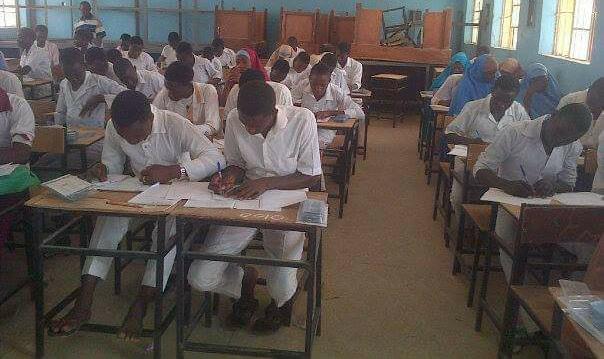
Civic education is perhaps the only tool we can use to address political and governance issues and critical social issues. However, we need to do more than just giving children notes on civic education to copy in schools, and we need to be more intentional about it. I believe that one of the most important things we need to do to change the narrative and set our country on a path of progress is to create a civically well-educated generation. Nigeria needs a patriotic generation prepared for the future and ready to challenge the existing execrable system.

Also, civic education, like we often assume, is not just a subject to be taught in schools only. We need to do more than that. We need to put in more efforts to educate and create more awareness of the role and importance of civic education to a prosperous Nigeria. We all need to be involved as individuals, governmental organizations, civil society organizations, or non-governmental organizations. 

The effort is not limited to young children or the next generation alone. It is essential that everyone learns more about civic education and practice it as, more often than not, young children do more of what they see than what they are told.

The change we seek might take time, and most of us might not live long enough to see the results of our efforts. Still, we need to set a good and solid foundation of positive change for the generation after us, or what we are facing right now might just be the tip of the iceberg compared to what they will face.

According to Bruce Lee, “Real living is living for others”. So let’s live simultaneously for the next generation and a better Nigeria. 

Khairat Sulaiman Jaruma wrote from Kaduna. She can be reached via khairatsuleh@gmail.com.

My journey from a poor to the best mathematics student

By Husseina Ojochenemi Abubakar

“Collect the like terms”

“Divide both sides by 2”

Mathematics was my worst nightmare during my primary education and my early years in secondary school. The pronunciation of the word “M.A.T.H.E.M.A.T.I.C.S” always got me some butterflies jollying in my stomach, if you know what that means. But, on the contrary, other subjects were just easy as beans.

My twin sister Hassana helped me solve particular arithmetic involving a word problem more than a dozen times in my junior year in secondary school, all to get the hack to solve similar problems. Especially since I was the class captain, you are often the focal point of most teachers.

But once the question is a bit twisted from her examples, I would start developing migraine, which often marked the end of that practice. Nevertheless, I kept wondering about these two mathematical terms.

“collect the like terms”

“divide both sides by so and so.”

As I type this now, I can’t stop laughing at myself how something so simple could cause me sleepless nights. In short, it was a miracle that I fairly scaled through during my Junior School Certificate Examination.

This miracle became more apparent in my first year at Senior Secondary School. Then, I was made the female class captain.

Our charismatic, vibrant maths teacher walked majestically into our class one fateful morning with his head up high. We immediately stood up to welcome him, which was the usual class tradition whenever a teacher walked into the class. He gestured to us to sit down and, without introduction, went straight to the chalkboard and wrote Mathematics followed by an equation. He demanded that the class representatives stand, which was my assistant and me.

Upon hearing this, I lost my composure, my palms and feet began sweating profusely, and I started running high temperature all at once. It was one of those moments you would wish you had a magic wand that could be used to tear the earth widely open to swallow you.

He turned to the other lady and asked her the first step to solving the equation. “No idea,” my then assistant answered sheepishly.

Mr maths teacher then gestured in my direction. Without knowing where the energy suddenly came from, I quickly answered, “collect the like terms.”

He was so impressed that his applause echoed through the four walls of the classroom and beyond. Then, he went to the board and carried out the command.

From no angle of elevation or depression, this exercise stirs a cognitive essence in my brain. I  had treated this topic in my extra moral class, and I think I got a zero in the mini-test given at the end of that day. Now, it became crystal clear to me what the term stood for in Mr maths teacher’s class.

Again, he turned in my assistant captain’s direction asking for the next step, and she couldn’t come up with the answer. As he turned in my direction, I quickly answered, “Divide both sides by 2.”

He was impressed once again. He went back to the board and executed the command. That was how we arrived at the answer that marked the beginning of my journey to stardom as one of the best mathematics students.

After that incident, a mathematics Milo competition was organised amongst all the SSI students of the secondary schools within my local government (i.e. Idah).

I was approached to represent my class and join two others for the whole arm of SSI at that time. However, I was still unsure of my mathematics potential, so I declined because I’m not good at maths. But the senior prefect convinced me that my other colleagues would assist as it was a collective effort. So, I agreed to participate.

Lo and behold, the day came, and I, who was supposed to be the backbencher during the mathematics, ended up receiving a standing ovation and monetary prizes because even the questions that were meant for the other school students, which they could not answer was answered majorly by me effortlessly.

One thing became clear to me—the power of grit (passion and perseverance when you face obstacles). I was not good at mathematics, but I never stopped trying to improve. I didn’t give up. I kept struggling. As you can deduce from the story, my effort eventually paid off when I least expected it.

This is my true life story. Even the mathematics was not in my hand; it was in my heart and subconsciousness.

You may be having some migraines over some challenges now. So, taking a break is allowed but don’t completely give up because not one of your efforts goes unregistered in your subconscious mind.

These are my words, my dear readers. Believe in the process, and you will arrive at your destination in sha Allah.

Husseina Ojochenemi Abubakar sent this article via hussymusty@gmail.com.

Yobe State: Education and Mai-Mala’s counterproductive handling

By Kasim Isa Muhammad

Since 1999, the people of Yobe have continued to give mandates to the ruling party, what is now known as the All Progressive Congress (APC), hoping that their lives will be better on all fronts- particularly in the education sector. Unfortunately, the Yobe education sector is known to be one of the worst in the nation. This is manifested by a legacy of dilapidated blocks of classrooms, a lack of laboratories; a lack of teachers; no teacher promotions, and the list goes on. 

With the emergence of Mai-Mala Buni as the Governor in 2019, he, on the inaugural date, in the most dramatic manner, convinced the nation that the education sector in Yobe is rotten-Yes, rotten! He declared what was known as an “emergency” in the sector. He announced his aim and gathered a committee to work out a plan for the sector. Millions of naira were spent on meetings, travel, and photography on a matter that a single administrative circular could have solved. 

Two years into the administration of Buni, not a single milestone was made in the education sector. The State Basic Education Board could not recruit trackers, teachers’ promotions stalled, teachers’ salaries were mutilated, and the hardworking principal of secondary schools was bullied by the business that leads the ministry of education. The sad news continues, and the peak was the video of Fika Government Secondary School that rattled the government. One could ask, what exactly is the problem? Is Buni the problem, or is his team at the peak of insubordination?

One of the most dramatic events that put the Yobe education sector in the spot was the case of the Buni Foreign Scholarship Scheme (BFSS), a scheme managed by a few of Buni’s trusted men. BFSS is characterised by poor stipend payment, poor academic quality, etc. Today, the BFSS is still a problem that will continue to make the Buni government unpopular and give the opposition a chance to punch the APC hard.

The local scholarship allowance is also an area where there is a hitched to pin network of students and their families to dispense protest votes against Buni and give the upper hand to opposition parties like the New Nigeria People’s Party (NNPP). It was only last week when NNPP moved to consolidate its gains by inviting Stand Up and Be Involved (SUBI) to adopt its party and contest all elections. Should this partnership work as planned, the APC will likely experience the most effective and fierce opposition in its history in Yobe State. 

The local scholarship allowance payment has been epileptic, inconsistent, and marred by a lack of competence in leadership. One can quickly note that this administration has provided the most inexperienced and inefficient leadership of the board in the history of Yobe. No one knows if the Yobe State Scholarships Board (YSSB) has adequate access to its budgetary allocations. If, in any case, it has access to funds, who can defend Buni or his proxy at the head of the YSSB for the lack of payment of local scholarship allowances? An act that even the military administration did well in Yobe! 

One might wonder if paying for local scholarships was related to the massive fund-raising effort for the 2023 elections. It is terrific, and only in APC’s Yobe State one can find people heading a government parastatal that failed to perform in contesting elections. Does this mean that Buni is impressed with the performance of the scandal-marred YSSB? 

Buni needs to know that there is significant dissatisfaction with his administration and team. Everything that the government does seems suspicious such as the maiden Education Appeal Fund, where billions of Naira were accumulated. Whether Buni knew or knew not, there is speculation on the ground that the education fund was a cover to grasp financial muscles to fight for the 2023 elections. Whether true or political, this sentiment makes up the opposition, and the chances to pin the people against the APC are high. It has always been easy to blackmail a government that cares less about its spending, budget performance, and revenue base. 

It is, however, clear that whatever sterling personal qualities a governor may have, of which Buni has many, the chances of failure can be significant. The popular opinion is that Buni is highly unlikely to succeed with his existing team. Buni must change gears and relate to reality on the ground and begin to listen to others rather than his yes-men. Those who tell him that he is always right even when he is wrong—for no one can always be right. We are calling for Buni to search for a new effective team should the 2023 election tide blow in his favour. Whereas the YSSB Chairman has a dual and conflicting constituency that rests with the constituents to decide. Ultimately, the YSSB has failed the children of the poor. 

Kasim Isa Muhammad wrote from Potiskum, Yobe State via kasimimuhd1999@gmail.com.

Islam is a religion of knowledge; learn it

By Professor Abdussamad Umar Jibia

Nigerian Muslims following discussions on the execution of a young woman by unknown youth in Sokoto would note that several obscure social media “Islamic scholars” have emerged. Some of them arrogated to themselves the right of ijtihad, a thing some of the most outstanding Islamic scholars avoided unless absolutely necessary. Unfortunately, people kept sharing such stuff as it suits their position on the matter.

When you decide to be a Muslim, you have taken a big decision to be a student of knowledge throughout your life. We all know this because the first passage of the Qur’an revealed to our Holy Prophet (Peace be upon him) is essentially an instruction to sit up and learn. After that, the Prophet lived the remaining 23 years of his life interpreting the Qur’an revealed to him piecemeal using both verbal and practical approaches. By the time he left, the religion was complete, and a whole body of knowledge was on the ground, safely transferred from generation to generation of Muslim scholars.

The knowledge is vast as it covers all aspects of life. Take the five pillars of Islam, for example. Whole books have been written on aqidah, which constitutes the first pillar of Islam. There are books on Salah (prayers), the obligatory and supererogatory aspects of it, prayer timings, adhan, iqama, the core body of prayer, etc. Same with Zakah, Fasting and Hajj.

The daily transactions of a Muslim in the market are well detailed in terms of halal and haram. In addition, there are books on rights, including rights of other Muslims, non-Muslims, neighbours, colleagues, animals, the environment, etc.

How would the sick be handled while still alive and after their death? What happens to their heritage? How is it shared? These are clearly stated.

All aspects of Islamic knowledge are available in detail, and, in sum, Islam is not a teach-yourself religion. Instead, it has to be learnt from those who know it.

Take it easy. I am not saying every Muslim must be a professional Islamic scholar, just like not everyone must be a medical doctor or an Engineer. You are probably 40, 50 or even 60 and above and have been working hard in the area Allah has placed you in. Keep working hard to earn a lawful means of livelihood for yourself and your family. That is an aspect of Jihad you are making.

I believe you would agree with me that you would not accept any quack to offer medical services to yourself and your family in the event of sickness. Most likely, you would look for the best affordable specialist to treat you and your loved ones. You would check their qualifications. You would not pick a document from an unknown specialist on the internet and begin to apply their medication and think you would be okay. When you want to build a house, you will look for the right architect to design it for you and the right engineer to supervise the work.

You are doing all of the above when it comes to Islamic knowledge. When you are going on hajj for the first time, for example, you would typically meet the scholar in your area to ask questions. You would probably attend the courses organized by the local pilgrims’ board. You are doing that to avoid wasting your money and make sure that you perform a hajj Allah would accept.

When your father dies, you would call someone you believe has a good knowledge of inheritance to help you share what has been left by the deceased. You do that for zakah, etc.

As a Muslim born to a Muslim family, you learnt to recite the Qur’an and pray from your Islamiyya days. Many thanks to your parents who took you there. Yet, you keep learning from your local Sheikh to make sure you recite the Qur’an even better and perform a prayer that is devoid of mistakes.

My brother, if you only consult an Islamic scholar you trust on all of the above, which are what you do daily and/or from time to time as a Muslim, why do you think you need a social media “scholar” to tell you the Islamic position on blasphemy, a thing not essential in your daily routine of Ibadat? I guess you are not contemplating insulting the personality of the Holy Prophet (SAW), and you are most probably not aspiring to be a Shariah court judge to know the kind of punishment you would pass on a blasphemer.

But in case you have abandoned your Sheikh and/or dropped all your Islamic books, thinking you don’t need to learn more about Islam, I am afraid that you are already preparing yourself for eternal destruction. So please go back, get an Islamic teacher you trust and continue.

As for the Sokoto case, we have shown sufficient anger, and anyone contemplating a repeat of what the young woman did would have to think many times. Let us leave the Muslim leadership to handle the rest. We should have confidence in the Sultan and his team.

May Allah forgive our shortcomings. Amin.

Professor Abdussamad Jibia can be contacted via aujibia@gmail.com.

Consolidating literary strides: Six years of Poetic Wednesday initiative

By Tijjani Muhammad Musa

Poetic Wednesday Initiatives (PW) was started by a group of poets of Arewa extract, but global in netizenry that have their muses tied confidently and securely to their minds.

Young, talented, prolific and spontaneous males and females write poetry with a passion that can surpass the fieriness of the sun as well as the soft and gentle subtleness of a sprouting flower.

As a poet myself, I have had close contact with the founding pillars of the movement and have interacted poetically with their brilliant works at an individual level on various literary platforms on and offline.

And when they, Salim Yunusa, Nasiba Babale, Abdulbasit Abubakar Adamu and a few others decided to unite as one, pulling their writing prowess and resources together and initiating PW, I knew something big was in the offing.

What I find fascinating about the whole Poetic Wednesday Initiatives thing is the innovation and strategy with which the youthful minds developed the idea into a viable literary concept that has turned out to be a force reckon with.

Soon, it became the in-thing to have a poet’s piece published on their platform or else it’s not worth reading. Everybody eventually started talking about the beautiful works coming from different hitherto unknown bards, all thanks to their featuring on Poetic Wednesday.

Budding poets on this side of the divide and those across the Niger river found it a challenge to up their writings to meet the unofficial standards set by the PW team. And on social media, the “Poetic Wednesday!” echo was all over the place.

To encourage further participation by shy and underdeveloped poets, PW started offering poetic lessons and coaching to young and not so young struggling poets to develop their skills. They even began a state by state tour in which they taught many the basics of writing good poetry.

Many who have benefitted from such an initiative have developed not just their words craftsmanship, but the confidence to share their poetry on various social media poetry sites. So many were the collections had never seen the light of the day earlier.

There is no doubt that the initiative within the first six (6) of its existence has successfully awakened the inert poets residing in many of us. The question now on many people’s minds is; how do PW consolidate on its success and achievements so far?

Well, for a start, PW is no more a mere platform for poetic talents, both budding, seasoned or veterans, to come and showcase their creative stuff and then walk away. The PW guys have turned the set-up into a fully incorporated business entity. Way to go!

Having been upgraded into a registered business outfit, PW is hoped to set out not only to promote creative literary works but, in collaboration with other stakeholders, to make it its affair to promote, sponsor, and publish writings from writers and poets, making them published authors among other things.

As part of their future strives, PW should also look into the potential of organizing literary workshops, seminars, webinars, shows etc. that will give opportunities to talents in the literary circle to be taught how to measure up in meeting requirements for entering and winning competitions and contests at local, national and international levels.

It will also be an outstanding achievement on PW’s part if it can organize sponsored literary competitions and contests for primary, secondary, and even tertiary institutions to discover hidden literary talents in society and connect them with corporate sponsors to publish their books and anthologies.

I would not mind seeing PW start an institution of learning where poetry, poets and writers in other genres of literature from across the world can find a haven to come and exchange ideas and technical knowhow towards furthering the development of writing skills in various languages such as Hausa, Yoruba, Igbo, Nupe, Kanuri among others via the art of writing.

Congratulations to the PW team for achieving such a monumental milestone. It has been six exciting and value-adding years for society. This is definitely worth going to the moon for. Thus we are pleased to associate with you and your success and believe that if careful planning, focus and dedication to execution would hold sway, more wins are assuredly guaranteed.

Tijjani Muhammad Musa – Poetic Tee is the Chairman of the Association of Nigerian Authors (ANA) Kano Chapter.

Firm, Cynox IT limited, unveils $500m Education Intervention in Kano

By Uzair Adam Imam 

A non-governmental firm, Cynox IT Limited, has unveiled a 500 million US Dollar educational development intervention project aimed at reducing the number of out-of-school children in Kano.

The Daily Reality gathered that the project would focus more on basic and secondary education. 

The project titled Education Strategic Investment and Development Initiative (ESIDI) is said to have also intervened in the areas of western, Islamiyyah and even Almajiri/Tsangaya schools.

It was reported that the project is in collaboration with the state’s ministry of education.

The Cynox Vice Chairman, Abdulrahman Abubakar Yabo, disclosed that the project came up as part of their attempt to address education challenges in entire northern Nigeria, starting with Kano.

He added that “Our ultimate goal is knowledge value revolution by increasing school enrolment in Kano and even training teachers.

“We are also working towards making students self-reliant after leaving school. The project will also focus more on Science, Technical, Engineering and Mathematics. We will collaborate with international tech giants such as Microsoft and Google in that aspect.

“Cynox is working in raising $500 million from local, national and international donor agencies, philanthropists and the host state (Kano) in raising the money.”

Yabo also explained that the Kano Government would provide 30 per cent of the amount.

Also speaking, Kano State Commissioner for Education, Muhammad Sanusi Sa’id Kiru, said the state had signed a memorandum of understanding with the firm. 

He said, “this will go a long way in complementing the state’s free and compulsory education.”

Tribute to Danmasanin Funtua

By Zaharadeen Muhammad

Some weeks ago, His Royal Highness, The District Head of Funtua, Sambo Idris Sambo, announced the confirmation of chieftaincy titles on some few outstanding sons of Funtua in recognition of their contributions to the town and the country as a whole. One of them is an unsung luminary in academia, and the health sector whose take off to educational journey began as Newton’s apple. But was it not William Shakespeare who likens the world to a theatre role with entrance – often by fluke, stage performance and exit? This time, Dr Umar Aminu’s entrance and performance will be profiled, and it will be quite the zinger.

Almost half a century ago, a religious scholar left Funtua for Katsina on a mission to supervise Islamic schools and carried his much younger brother with him. On a particular day, the curious lad wandered off to explore the new surrounding, and as fate would have it, he chanced upon a primary school in the neighbourhood. He surreptitiously tucked himself behind the door panel as he peeped into a class through the apertures relishing the nectar of the lesson.

He was to frequent the school many more times afterwards. Unknown to the school teachers and his brother, till the momentous day that his inert nature got the very best of him, he ventured an answer from his hideout to a puzzling question that appeared to elude the students sitting inside. Having gotten over his shock, the startled teacher identified where the voice emerged from, walked stealthily but tactfully toward the doorway and seized the kid. “he has to be enrolled,” thought the teacher. The brilliant boy in this tale was Dr Umar Aminu, and the elder brother was sheikh Aminu Liman of blessed memory. The anecdote was a watershed.

His academic sojourns would take him to Zamfara, Bauchi, Zaria culminating in him bagging a PhD in Public Health from Texila American University, USA. He gathered the mountain of knowledge and wealth of experience over the years working in public and private organizations and international agencies such as UNICEF, WHO, USAID, and FRIM. He brings to bear in solving various societal issues in Katsina state and beyond. To paraphrase sir Winston Churchill, what is the use of living if it is not to make this muddled world a better place for our posterity long after our departure.  

His first landmark contribution was to the health sector way back in 1999 when a glaring shortage of health personnel in the state was a cause of deep concern. Then, as a key member of the MSSN, he broached the idea at one of its meetings for establishing a centre for training health technicians who can, in the long run, make up for the inadequacy. The program began with only a handful of students and has metamorphosed into the world-class Muslim Community College Of Health Science and Technology, Funtua. Today, the school runs a wide range of health-related courses at ND and HND levels and draws a motley of students from every nook and corner of Nigeria.

His curiosity and a natural aversion to passivity and mediocrity made him the first to be on the ball whenever things appear to go south. That is why when there was statewide successive massive failures in SSCE between 1999 and 2003, a big blow to the quintessential reputation of the state in that regard,  instead of joining the wagon by stepping on the pedestal of lamentation, he met with stakeholders in the ministry to find out ways of ironing out the problem. He was one of the brains behind creating the refresher program, which, under the able stewardship of Malam Ilyasu Umar, has hatched hundreds of students who became medical doctors, pharmacists, engineers,  mathematicians, etc. Thus, leaving another indelible footprint in the sand of time.

His empathy and compassion dispose him to pursue numerous charitable causes, especially in education, where he has facilitated and personally offered many scholarships and grants to the less privileged. Moreover, his being a versatile and cynosure in education and business informed our decision to invite him to speak at our first (NIPES) public lecture themed ‘Our Economic Mindset’ held on February 2021. The advocate of functional education, self-development and entrepreneurship eloquently demystified our present unemployment crises that became ubiquitous clog and articulated sundry out of the box ways of putting a dent in the issue.

Dr Umar Aminu, The Danmasanin Funtua possesses most attributes our people recognize in the words of Anthony Kirk-Green as ‘Mutumin Kirki” in the book of the same title. These are truthfulness, trustworthiness, generosity, patience, good sense, bashfulness, courtesy, self-esteem, wisdom and scrupulous behaviour.  

“When a mother-cow is chewing grass,” said Chinua Achebe in Things Fall Apart, “its young watch its mouths”  We, the youngsters, have been watching from afar and up close and have drawn so much inspiration from his noble deeds. For these reasons and more, we join the joyous multitudes celebrating this well-deserved title. Allah shi tayaka riko, amin.

Zaharadeen Muhammad wrote from Abdullahi Aminci Road, Funtua, Katsina State via Zaharadeen2020@gmail.com.