ECOWAS

How courts are becoming the final arbiters in West Africa’s elections

By Abu Turay

Across West Africa, a silent but powerful transformation is taking root: the judicialization of politics. The courts, once arbiters of constitutional order, are increasingly the final arbiters of electoral contests. Nowhere is this trend more visible than in Nigeria, where nearly every major election ends not at the ballot box, but at the bench.

This expanding role of the judiciary in electoral outcomes raises complex questions: Are the courts rescuing democracy from flawed elections? Or are they replacing the people’s will with judicial verdicts, thereby shifting the center of gravity in democratic governance?

Courts as Electoral Arbiters

In Nigeria, the 2023 general elections showcased the scale of post-election litigation. Dozens of gubernatorial, legislative, and even presidential results were contested, with tribunals and appellate courts deciding outcomes. In some states, candidates initially declared losers were later declared winners by judicial rulings.

This is not unique to Nigeria. Ghana, Senegal, and Sierra Leone have all witnessed major electoral disputes resolved by courts. The judiciary has become both a battleground and a battlement—a place where democracy is either affirmed or redefined.

At face value, this suggests a maturing democracy where the rule of law reigns supreme. But the implications are not always reassuring.

Why Judicialization Is Rising

Several forces are driving this trend.

First, the deterioration of electoral credibility. When institutions like the Independent National Electoral Commission (INEC) are accused of logistical failures, transparency lapses, or bias, the courts become the last hope for justice.

Second, electoral malpractice, including voter suppression, ballot snatching, vote buying, and misinformation, creates fertile ground for legal contestation.

Third, the increasing legal codification of elections means that technicalities—like improper nomination, overvoting, or irregular result collation—can overturn popular mandates.

Finally, the high stakes of public office in West Africa create desperation. Access to state power can mean access to wealth, immunity, and patronage. In such a zero-sum environment, litigation becomes not just a legal process but a political strategy.

The Benefit and Risks of Judicialization

There’s no denying that courts have played a vital role in correcting flawed elections. In theory, their intervention strengthens democracy, punishes rigging, and reinforces accountability. For disenfranchised voters and honest candidates, the courts can offer justice.

However, the risks are real—and growing.

  • Erosion of Voter Confidence: When elections are routinely overturned or validated by judges, citizens may begin to see voting as irrelevant. If judges, not voters, decide winners, what incentive remains for civic participation?
  • Perception of Bias: Even when courts follow the law, public trust can erode if verdicts appear to favor the ruling party or lack consistency. Allegations—often unproven—of judicial compromise further deepen distrust.
  • Political Pressure on Judges: With so much at stake, courts may face overt or subtle pressure from powerful actors. This politicization of the judiciary undermines its independence and the democratic process.
  • Weakened Electoral Bodies: Overreliance on courts can take pressure off electoral commissions to improve. If every error or illegality is expected to be “fixed” in court, institutional reform stalls.

Striking the Right Balance

The solution isn’t to remove the judiciary from politics, but to restore balance in democratic governance. That starts with a few key reforms:

  1. Strengthen INEC: Electoral commissions must be empowered and insulated from political interference. Technology, transparency, and real-time result transmission should be prioritized.
  2. Judicial Reform: Appointments should be merit-based and transparent. Courts must deliver verdicts speedily, especially before swearing-in ceremonies, to avoid situations where incumbents retain power during prolonged litigation.
  3. Public Legal Education: Citizens must understand the legal basis for judgments. Civic education can prevent misinformation and temper partisan outrage.
  4. Political Party Reforms: Many disputes begin with flawed primaries. Strengthening internal party democracy would reduce court cases tied to candidacy irregularities.
  5. Pre-election Dispute Resolution: Early intervention by courts—before elections—on candidate eligibility, party symbols, and procedural concerns can limit post-election chaos.

Democracy in the Dock

The growing judicial role in elections reflects both the fragility and resilience of West African democracies. It shows that, although the ballot may be compromised, the Constitution still carries weight. Yet, democracy must not become a perpetual courtroom drama.

The judiciary is not an electoral umpire. It is a guardian of law, not a generator of legitimacy. When citizens believe their votes don’t count, the social contract frays. When politicians believe they can win in court what they lost at the polls, the democratic ethic decays.

Ultimately, a nation where every election becomes a lawsuit is one where democracy risks death by litigation.

To end this piece, I ask: Do we want a democracy that is judicially rescued or an institutionally reliable democracy? The difference will shape not only our politics but our future.

Abu Turay is an Embedded Technical Expert on Electoral Affairs at the Electoral Assistance Division of ECOWAS Peace, Security and Governance (EPSG) Program. He can be reached via bainam2010@yahoo.com.

President Tinubu passes ECOWAS leadership to Sierra Leone’s Bio, stresses unity, growth

By Abdullahi Mukhtar Algasgaini

President Bola Tinubu officially handed over the chairmanship of the ECOWAS Authority of Heads of State and Government to Sierra Leone’s President Julius Maada Bio on Sunday, urging regional leaders to remain vigilant and united in fostering peace and prosperity.

The symbolic transfer took place at the closing of the 67th Ordinary Session of the ECOWAS Authority in Abuja.

Tinubu, who completed his two-term tenure, expressed confidence in the bloc’s future under Bio’s leadership, calling for deepened cooperation and inclusive growth.

“With continued collaboration, ECOWAS will achieve greater heights in peace, security, and prosperity for West Africa,” Tinubu stated.

He emphasized the need to balance economic integration with political stability, noting that democratic values must be upheld for sustainable development.

In his acceptance speech, President Bio outlined four priorities: restoring constitutional order, strengthening regional security, boosting economic integration, and enhancing ECOWAS’ institutional credibility.

He pledged to lead a “people-centred” ECOWAS, addressing challenges like terrorism, political instability, and youth demands for accountability.

Bio commended Tinubu’s leadership, vowing to build on his predecessor’s efforts in regional dialogue and peacebuilding.

Both leaders called for collective action to secure a stable and prosperous future for West Africa.

ECOWAS leaders gather in Lagos to mark 50th anniversary

By Abdullahi Mukhtar Algasgaini

President Bola Ahmed Tinubu of Nigeria joined other West African leaders in Lagos on Wednesday to celebrate the Economic Community of West African States (ECOWAS) Golden Jubilee. The event marked 50 years of regional cooperation and integration.

Among the dignitaries present were Liberian President Joseph Nyuma Boakai, Togolese President Jean-Lucien Savi de Tové, and Guinea-Bissau’s President Umaro Sissoco Emalo. Also in attendance were former Nigerian Head of State Yakubu Gowon and ECOWAS Commission President Umar Alieu Touray.

The gathering highlighted ECOWAS’ achievements in promoting peace, economic development, and solidarity across the region since its founding in 1975. Leaders reaffirmed their commitment to deeper integration amid current challenges.

President Tinubu, in his remarks, praised ECOWAS’ resilience and called for stronger collaboration to address security and economic issues. The ceremony featured cultural displays and discussions on the bloc’s future.

The event concluded with a renewed pledge to advance the ECOWAS vision of a prosperous and united West Africa.

ECOWAS holds meeting in Ghana amid Niger, Mali and Burkina Faso withdrawal

By Anwar Usman

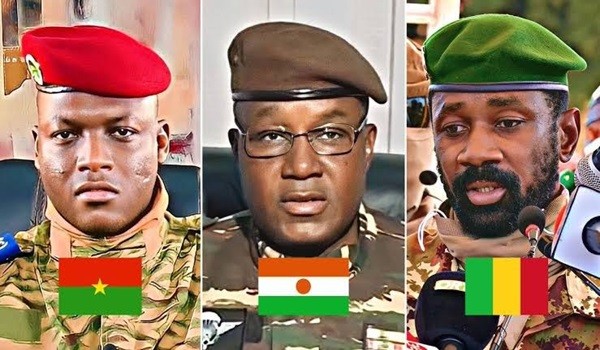
The Economic Community of West African States (ECOWAS) member states will meet in Ghana on Tuesday to discuss the withdrawal of Niger, Mali, and Burkina Faso.

The meeting will take two days, Tuesday and Wednesday.

In a statement released on Tuesday, the bloc said member states will discuss the modalities of the countries’ withdrawal and its implications for ECOWAS agencies in the countries.

The bloc also said it would “set up a structure to facilitate discussions on these modalities with each of the three countries.”

Furthermore, the ECOWAS member state will discuss its relationship with the three countries in Accra today.

“The session is being held to deliberate on the reasons for the withdrawal of Burkina Faso, Mali, and Niger from the regional bloc.

The statement further revealed that “Key items on the agenda include the modalities of the withdrawal process and the implications for ECOWAS Institutions and Agencies operating in the three countries. The session will also address other related matters of regional importance”.

Three weeks ago, the junta-led states, under the Alliance of Sahel States, imposed a 0.5 per cent import duty on goods from ECOWAS.

The levy applies to all goods from ECOWAS countries entering any of the three nations, except for humanitarian aid.

The policy countered ECOWAS’s intention of ensuring free movement of goods between its members and the AES countries despite their official exit from the bloc in January.

ECOWAS alliance fracture: The Sahelian state exodus, regional stability and Nigeria’s leadership litmus test – can Abuja steer a new path?

By Iranloye Sofiu Taiye

The recent decision by Mali, Burkina Faso, and Niger to withdraw from the Economic Community of West African States (ECOWAS) has triggered reactions of uncertainty across the geopolitical landscape of West Africa. This unprecedented move, announced in January 2024, marks a critical juncture for a bloc historically revered as a beacon of regional integration and collective security. The departure of these three Sahelian nations, all grappling with military rule, jihadist insurgencies, and socioeconomic fragility threatens to destabilize the delicate equilibrium of ECOWAS, undermining its credibility and operational efficacy.

ECOWAS was founded in 1975 via the Treaty of Lagos Nigeria, ECOWAS emerged as a post-colonial vision to foster economic integration, political solidarity, and collective self-reliance among West African states. Its architects envisioned a regional powerhouse capable of rivaling global economic blocs, anchored by principles of free movement, a common market, and monetary union. Over the decades, ECOWAS evolved beyond economics, establishing itself as a custodian of democratic norms through protocols such as the 2001 Supplementary Protocol on Democracy and Good Governance, which condemned any form of unconstitutional government changes.

The bloc’s peacekeeping ventures, notably the ECOWAS Monitoring Group (ECOMOG) interventions in Liberia (1990), and Sierra Leone (1997) demonstrated its capacity to mediate conflict. However, ECOWAS has also faced perennial challenges including coups d’état, governance failures, and the paradox between its lofty ideals and the grim realities of poverty and instability. The recent wave of military takeovers in Mali (2020, 2021), Burkina Faso (2022), and Niger (2023), each met with ECOWAS sanctions and suspensions exposed cracks in the bloc’s authority, heralding the current crisis.

The withdrawal of Mali, Burkina Faso, and Niger strikes at the heart of ECOWAS’s political legitimacy. These nations, representing 10% of the bloc’s population and vast territorial expanse, have denounced ECOWAS as a “tool of foreign powers” and accused it of imposing punitive measures that exacerbate their populations’ suffering. Their exit underscores a broader regional disillusionment with ECOWAS’s perceived alignment with Western interests, particularly France, amid rising anti-colonial sentiment.

For ECOWAS, the secession weakens its bargaining power on continental and global stages. The bloc’s ability to enforce democratic norms is now in jeopardy, emboldening other authoritarian regimes and eroding its moral authority. Moreover, the formation of the “Alliance of Sahel States” (AES) by the three nations — a mutual defense pact aligned with Russia — signals a shift toward alternative alliances, potentially fracturing West Africa into competing spheres of influence. This realignment risks destabilizing the region further, as rival powers like Russia, China, and Western nations vie for strategic footholds.

Economically, the departure of Mali, Burkina Faso, and Niger disrupts ECOWAS’s integration agenda. The bloc’s flagship projects — such as the ECOWAS Single Currency (Eco), slated for 2027—face existential threats. These nations collectively contribute critical mineral resources (gold, uranium) and agricultural output, and their absence could fragment supply chains, inflate intra-regional trade costs, and deter foreign investment.

The free movement protocol, a cornerstone of ECOWAS, may also unravel. Border closures and visa restrictions could follow, stifling cross-border commerce and cultural exchange. Nigeria, which accounts for over 60% of ECOWAS’s GDP, stands to lose significantly: its northern states rely on trade with Niger, while its industries depend on regional markets. The exodus may also derail infrastructure projects like the Kano – Maradi rail project hampering economic growth.

As ECOWAS’s traditional hegemon, Nigeria must spearhead the bloc’s response to this crisis. Historically, Nigeria has bankrolled ECOWAS initiatives and mediated conflicts, but its recent influence has waned amid domestic challenges—security crises, economic stagnation, and diplomatic inertia. To reclaim its leadership, Nigeria must adopt a multi-pronged strategy:

Diplomatic Re-engagement: Nigeria should initiate high-level dialogues with the AES states, addressing grievances while advocating a return to constitutional order. Leveraging its cultural and economic ties — particularly with Niger, with whom it shares a 1,600km border — Nigeria must balance firmness with empathy, avoiding the perception of bullying.
Institutional Reforms: ECOWAS requires structural revitalization. Nigeria should champion reforms to decentralize decision-making, reduce Francophone-Anglophone tensions, and prioritize grassroots economic integration. A revised governance framework, incorporating civil society and youth voices, could restore public trust.

Security Collaboration: The Sahel’s jihadist insurgencies, which have spilled into Nigeria’s northwest, demand a unified approach. Nigeria could propose a joint ECOWAS-AES security task force, blending counterterrorism efforts with development programs to undercut extremism.
Economic Incentives: To lure back the AES, Nigeria could advocate for sanctions relief tied to democratic transitions, coupled with debt forgiveness and infrastructure investments. A Marshall Plan-like initiative for the Sahel, funded by ECOWAS and international partners, might alleviate poverty fueling instability.
Conclusively, the exit of Mali, Burkina Faso, and Niger from ECOWAS is not merely a regional setback but a clarion call for introspection. The bloc’s survival hinges on its ability to reconcile idealism with pragmatism, balancing democratic principles with the urgent needs of fractured states. Nigeria, as the region’s linchpin, must rise to the occasion, blending visionary leadership with humility. In an era of shifting global alliances and resurgent authoritarianism, the stakes could not be higher: without decisive action, the dream of West African unity may dissolve into a mosaic of discord, leaving millions vulnerable to the storms of history.

Iranloye Sofiu Taiye can be reached via:
iranloye100@gmail.com

ECOWAS responds as alliance of Sahel States unveils new passport

By Sabiu Abdullahi

The Economic Community of West African States (ECOWAS) has announced that the exit of Burkina Faso, Mali, and Niger from the regional bloc officially took effect on Wednesday, January 29, 2025.

One year ago, the three Sahel nations declared their withdrawal from ECOWAS, and now they have taken a further step by introducing a common passport under the Alliance of Sahel States (ASS).

ECOWAS, however, noted that it remains open to dialogue “for the spirit of regional solidarity.”

Despite the introduction of the new passport, ECOWAS has urged authorities within and outside its member states to continue recognizing the ECOWAS-branded national passports and identity cards of citizens from Burkina Faso, Mali, and Niger.

The bloc also called for the continuation of visa-free movement, residency, and trade benefits for these countries “until further notice.”

The new Sahel passport is expected to become operational from January 29, replacing the ECOWAS passport for citizens of the three countries.

However, authorities in the Sahel states have assured that existing ECOWAS passports will remain valid until their expiration dates.On January 28, hundreds of pro-junta demonstrators in Burkina Faso, Mali, and Niger took to the streets to express support for their governments’ decision to leave ECOWAS.

In Niger, military officials led thousands of supporters to the capital, Niamey, where they chanted slogans critical of French President Emmanuel Macron and other regional leaders.

A similar demonstration occurred in Burkina Faso, where Prime Minister Rimtalba Jean-Emmanuel Ouedraogo and other government officials joined thousands of citizens in a rally in Ouagadougou.

Although no major protests were reported in Mali, observers expect further developments in the coming days.

The departure of these three countries from ECOWAS marks a significant shift in regional dynamics.

Experts warn that the move could disrupt regional integration, complicate trade, and increase travel restrictions.

“Now, the three countries will lose the duty-free trade benefits that ECOWAS members enjoy,” one analyst noted, adding that the landlocked nations of Mali, Burkina Faso, and Niger may face higher costs for accessing coastal ports in West African countries like Nigeria, Benin, and Ghana.

According to ECOWAS Trade Information Systems (ECOTIS), Mali recorded $3.91 billion in exports and $6.45 billion in imports in 2022, while Burkina Faso had $4.55 billion in exports and $5.63 billion in imports.

Niger, with a smaller economy, exported goods worth $446.14 million while importing $3.79 billion worth of goods.

With their departure from ECOWAS, these nations may face additional tariffs and trade barriers.ECOWAS introduced its regional passport in December 2000, allowing visa-free movement across member states and granting citizens the right to stay in another member country for up to three months.

With the withdrawal of Mali, Niger, and Burkina Faso, travel restrictions may now come into effect, especially for citizens of these countries and West Africans wishing to visit the Sahel region.

The bloc has given the three countries a six-month grace period, extending until July 2025, to reconsider their decision in case they wish to rejoin.

Meanwhile, ECOWAS has put structures in place to facilitate discussions with the departing nations to minimize disruptions to lives and businesses during the transition period.

The decision of Burkina Faso, Mali, and Niger on opting out of ECOWAS

By Tijani Abiola

Burkina Faso is a landlocked country located in West Africa. It shares boundaries with six countries: Mali to the north, Niger to the east, Benin to the southeast, Togo and Ghana to the south, and Côte d’Ivoire to the southwest. As of the last knowledge update in January 2022, the total population of Burkina Faso was 21 million people. The country’s official language is French, which is spoken alongside different indigenous languages.

Economically, Burkina Faso is mainly an agricultural country, though there is also a very strong presence of gold mining. However, this country is troubled by poverty, drought, and political instability.

Mali, on the other hand, also in West Africa, shares borders with Algeria to the north, Niger to the east, Burkina Faso and Ivory Coast to the south, Guinea to the southwest and Senegal and Mauritania to the west, with a population of about 20 million people. The official language is French, and Bambara is also widely spoken.

Political instability, ethnic tension, and conflicts with extremist groups positioned mostly in the northern parts of the country have also challenged Mali in the years past. It lies in the region bordered by Libya to the northeast, Chad to the east, Nigeria and Benin to the south, Burkina Faso and Mali to the west, and Algeria to the northwest. It has a population of about 24 million people. 

The official language is French, and many indigenous languages are spoken. Niger is largely an agrarian society, with subsistence farming forming a very critical part of the economy. Uranium mining is also a very important industry. The country faces challenges such as poverty, desertification, and food insecurity.

All three have diverse cultures and histories, and all have unique challenges. The Sahel region, including the northern parts of Burkina Faso, Mali, and Niger, has seen a particular outbreak of security issues, including conflicts with jihadist groups and ethnic tensions.

Meanwhile, in the years 2020, 2021 and 2023 in Mali, Burkina Faso and Niger, respectively, there were successful military coups which still reign to date.  The Economic Community of West African States (ECOWAS) turned an eye to their decision and style of new leadership of the bloc’s member-states. Efforts towards national reconciliation have been in vain. 

The Economic Community of West African States is a regional political and economic union comprising fifteen countries located in West Africa, of which the above-mentioned Countries are members.

Burkina Faso, Mali, and the Niger Republic have all in recent times expressed intention to part ways with ECOWAS bloc bodies. That decision has been a climax and a very big bottleneck for ECOWAS, as the trio of these countries are some of the most resourceful countries which shoulder a huge part of the yearly ECOWAS budget and yet one of the poorest countries on the African continent. After their decision to leave the West African regional bloc of ECOWAS, what effect will this have on ECOWAS?

This country represents almost 20% of the ECOWAS population – that is 66 million out of 420 million people. As mentioned above, cotton, gold, and uranium ore are precious resources for Burkina Faso, Mali, and Niger, respectively.

Is ECOWAS blind to these facts?

I will say no, but will they have intensified negotiations before now? Yes. Their belief may be that they will soon get tired and comply or call for help after being deprived of some amenities benefited from nearby ECOWAS countries. Yet, they still remain adamant about their decision. For such countries to make such decisions looks like a threat to other ECOWAS countries.

ECOWAS should know this is no joke. The pumping question is: what if they excel in their decisions and their leaders are able to change their countries and become the best in years to come? What will happen to other ECOWAS countries whose corruption still influences their development?

Is dumping ECOWAS best for Burkina Faso, Mali, and the Niger Republic?

This decision will not only restrict their access to large international markets for foreign exchange and development provided by ECOWAS but also international partnerships that help in country development. Also, the free visa for all ECOWAS states is another big opportunity they might be deprived of from ECOWAS countries.

Though their decision has not been formally in writing to ECOWAS, they may be nursing second thoughts in the decision or calling for attention to negotiation stylishly. The poking questions are;

Is this the best idea for these three countries?

Will they stand without ECOWAS?

Won’t they be a threat to other ECOWAS countries if their decision is granted?

Does ECOWAS need to let them be?

Africa is a blessed continent with all its natural resources, but a continent with the highest rate of poverty and a corrupt leadership style needs to be resolved.

Tijani Abiola wrote via abiolatijani001@gmail.com.

Tinubu to address political crisis in Senegal

By Uzair Adam Imam

President Tinubu is scheduled to travel to Senegal on Monday in response to the ongoing political crisis gripping the West African nation.

As reported by the Western Post, Tinubu, who also serves as the Chairman of ECOWAS, aims to engage in discussions with President Sall to advocate for upholding the country’s constitution and preventing Senegal from descending further into crisis.

One of the key objectives of Tinubu’s visit is to urge for the immediate conduct of presidential elections, highlighting the importance of restoring stability and democratic processes in Senegal.

Free Niger, free Bazoum

By Dr. Aliyu U. Tilde

The stalemate between ECOWAS and Niger Republic needs to be broken urgently for humanitarian and strategic reasons. The decision should be taken tomorrow at the meeting of the Heads of State of the regional body to shorten the unnecessary suffering of 26 million ECOWAS citizens in Niger.

Humanity

The world is appalled by the ongoing starvation in Gaza, and it is rightly calling for its end. In a similar way, the humanity in us should trigger our conscience to open Niger’s borders and restore its electricity. There is just no reason why we should superintend over the death of African lives and the destruction of the economy of a member state in the name of democracy. It is no longer about Mohamed Bazoum or General Tchiani or the neo-colonial interest of France. It is about the people of Niger.

Democracy is not as important to Africans as it is to their lives and livelihoods. In a year or two, Niger can return to democracy, and heavens will not fall before then. However, the longer we strangulate Nigeriens now, the longer our guilt for the collective punishment we meted on them last later. On their part, the Nigeriens will retain—and recall—for generations the long memory of ECOWAS’ suffocating sanctions, and they will bring it to bear on every future association with Nigerians in particular.

A Shot in the Foot

Apart from the imperatives of history, DNA, culture and contiguity, the Niger Republic will, through River Niger and our future Europe-bound gas pipeline, continue to play a crucial role in our economy, not to mention the daily cross-border trade relations worth billions of Naira.

Our weaponization of electricity to Niger will seriously undermine future strategic cooperation with the Republic regarding River Niger. Nothing will stop it from damming the River in a big way to ensure its national electricity and food security, letting us get sufficient water in Kainji and Jebba Dams only when there is an overflow. We will be forced to rely solely on gas for power generation.

Our national security will also be at great risk when Niger inevitably develops cold feet, as a payback, on our strategic partnership against Boko Haram and Bandit terrorism. Niger is just a neighbour too important for Nigeria to call off. I am not sure if we haven’t shot ourselves in the foot already.

Forward

The July coup is now a standing reality. I suggest, as a way out, that ECOWAS demands two assurances from Niger, with a third party, say America, serving as a guarantor to the agreement: The release of Bazoum and a short timetable for a return to civilian rule in exchange for immediate removal of sanctions. This ‘Niger free, Bazoum free’ formula will immediately relieve the population of the horrendous difficulties it is undergoing and save the lives of the sick, including women and children, who are dying in Nigerien hospitals due to the blackout. It will also save the investments of hundreds of Nigerians whose loaded vehicles have been stranded at the borders for months now.

Bazoum’s government is spilt milk which cannot be recovered. ECOWAS should let this go and prepare for the future. It can consider establishing a standing force to immediately intervene in future incidents if necessary without procrastination. But how democracy is proving to be a conveyor of poverty and bad governance in Africa makes it a creed not worthy of such a financially heavy enterprise.

Instead, ECOWAS should develop mechanisms to promote good governance as the only assurance of stability and prosperity and a panacea against future coups. No matter the situation, in the future, measures that will bring hardship to citizens and ruin the economies of member states should be avoided as much as possible by ECOWAS. We cannot be Americans in Iraq. Otherwise, we will only be surrogates of colonial masters. So far in Niger, we have cut our nose to spite our face. Tomorrow, December 10th, is the date to start stitching it.

Dr. Aliyu U. Tilde can be reached on Twitter: @Dr_AliyuTilde.

Nigerien coup amidst ECOWAS diplomatic impotence

By Muhammad Muzdaleefa

The resurgence of military coups is thwarting Africa’s democratic journey. The recent coup d’état in Niger, which saw the ousting of President Mohamed Bazoum by the military, has not only shaken the stability of the country but has also laid bare the divisions and weaknesses within the Economic Community of West African States (ECOWAS). It has also exposed a wide cleavage between citizens of member countries and their governments on ECOWAS policy on Niger. 

As far as one can read the mood without the aid of a proper poll, support for military action against Niger would probably be less than 10 per cent across the region. In Niger, news footage suggests that the public is more solidly against ECOWAS military intervention. Somewhat or otherwise, the mainstream media and social media comments show deep scepticism about ECOWAS’ direction and intentions. Many, if not most, commentators believe that the West, especially France and the US, are behind the ECOWAS drive towards a military solution in Niger.

This has led to resentment, especially in the Francophone countries, where the citizens point out that ECOWAS has been silent at draconian French exploitation of their resources continuing long after independence.

One of the glaring weaknesses exhibited by ECOWAS in response to the Niger coup is its lack of unity and consistency among member states.

While some countries strongly condemned the coup and called for a swift return to civilian rule, others remained relatively silent, seemingly hesitant to take a decisive stance. This lack of a united front weakens the regional body’s influence and diminishes its ability to address such crises effectively.

Another aspect that has been brought to the forefront is ECOWAS’s flawed diplomatic approach. Despite constituting a mediation committee to engage with the coup leaders and negotiate a resolution, ECOWAS failed to halt the coup or achieve a viable solution. The committee’s lack of leverage and the limited consequences the perpetrator’s face have raised questions about the efficacy of diplomatic efforts and the regional body’s influence over military leaders.

ECOWAS has often resorted to imposing economic sanctions to exert pressure and resolve political crises. However, the effectiveness of such measures in addressing coups has been questionable. The reliance on economic sanctions has a limited impact, particularly in countries with weak economies and high poverty levels like Niger. 

The recent example of Mali, where sanctions failed to bring about meaningful change after a military coup, highlights the need a more comprehensive and proactive approach by ECOWAS. The situation has become even grimmer, with Russia increasingly stepping in to provide short-term assistance to cushion the effects of the sanctions against coup countries, which appear to have exchanged the influence of France with that of Russia.

What is worse is the fact that the Niger crisis has also highlighted ECOWAS’s inability to identify and address underlying issues that lead to political instability. This failure to take pre-emptive measures further exposes weaknesses within the organisation. Since ECOWAS gave an ultimatum to Niger, citizens in ECOWAS countries have voiced their disapproval against any military action, mainly because ECOWAS lacks the moral authority to send troops into Niger.

Many commentators have pointed out failure within member countries as a significant contributing factor undermining ECOWAS’s intentions. Some West African governments are dynasties, flawed elections taint others, while some have repressed their countries’ media and opposition parties. 

What principles does an ECOWAS military intervention in Niger seek to establish, and are they all practised in the countries that will impose them by force of arms in Niger? If democracy is essential to ECOWAS, it has to ensure that the complete panoply of democratic principles is firmly in place in all member countries. It cannot pick and choose. Therefore, to safeguard democracy, ECOWAS should invest more proactively in conflict prevention mechanisms, addressing socio-economic disparities, and promoting good governance across member states. 

Timely intervention in electoral processes, strengthening democratic institutions, and promoting dialogue are crucial steps towards avoiding crises before they occur. In addition, ECOWAS must develop a robust apparatus to communicate with citizens across the entire subcontinent and carry out programmes that promote dialogue between citizens and between citizens and governments. 

Does public opposition to military action signal a higher tolerance for military coups in West Africa? That is a difficult question, but there is no doubt that people have generally become disenchanted with the Western democratic model, given that poverty and lack of opportunity continue to be entrenched. At the same time, politicians are seen as opportunists who are in it for themselves. However, none of this can be interpreted to mean that people in West Africa prefer military regimes.

Significantly, however, the coup in Niger has exposed the leadership vacuum within ECOWAS. While the organisation has made progress in promoting regional integration and economic development, its political leadership role has been less pronounced. ECOWAS needs robust leadership capable of decisive action in times of crisis, backed by a clear framework and mechanisms that discourage power grabs and protect democratic systems.

The coup in Niger has exposed the weaknesses, divisions, and inconsistencies within ECOWAS. The regional body’s lack of unity, ineffective diplomacy, reliance on economic sanctions, inadequate pre-emptive measures, and leadership vacuum have hindered its ability to respond effectively to political instability. The regional body’s response to the coup has showcased its challenges in effectively addressing political crises, highlighting the need for a more cohesive and proactive approach to preserving democracy in the region.

To strengthen ECOWAS and protect democracy in the region, there is an urgent need for member states to forge a unified front, strengthen conflict prevention mechanisms, explore diplomatic alternatives, and foster strong leadership committed to preserving democratic values. Without addressing these fundamental issues, the fragile democratic gains achieved in West Africa may remain at risk, allowing further regional divisions and challenges to promote peace and stability.

Muzdaleefa wrote from Kaduna via mohammedadamu736@gmail.com.