Economic Policies

Nigeria’s Economic Resilience: Good policies or good luck?

By Ahmed Usman

As the year 2025 draws to a close, moments of reflection naturally set in, especially for an economy that has endured sharp shocks, painful adjustments, and cautious reforms. In an era of global economic turbulence marked by uneven commodity prices, persistently tight financial conditions, rising geopolitical tensions, regional insecurity, and an international retreat from development aid, many emerging economies have suffered currency instability, capital flight, and fiscal distress. 

For Nigeria, however, the year presents an unusual picture. Amid global uncertainty and domestic strain, key economic indicators are beginning to stabilise, prompting a deeper question about whether the country is merely ending the year on a fortunate note or finally turning a policy-driven corner.

The International Monetary Fund (IMF) projects that Nigeria’s economy will grow by about 3.9 per cent in 2025, with growth expected to strengthen modestly to around 4.1 per cent in 2026, driven by macroeconomic stabilisation and reform efforts across key sectors. While these numbers may not yet place Nigeria among the world’s fastest-growing economies, they mark a notable improvement from the passive growth of recent years and signal a gradual return of confidence.

One of the most significant recent developments is Nigeria’s GDP rebasing, which revealed that the economy is about 30 per cent larger than previously estimated. This adjustment is not merely a statistical exercise. It reflects the growing importance of services, digital trade, creative industries, and telecommunications, sectors that employ millions of Nigerians, particularly young people.

For households, a larger and more diversified economy is essential because it reduces overdependence on oil and expands opportunities for income outside traditional sectors. For policymakers, it improves Nigeria’s standing in global markets and provides a clearer picture of where growth is coming from, enabling more targeted policies.

The rebasing has also reshaped Nigeria’s debt profile. The debt-to-GDP ratio now stands at about 40 per cent, well below the levels seen in many peer emerging economies. More importantly, debt service as a share of government revenue has fallen to below 50 per cent, from much higher levels in previous years. This easing of fiscal pressure means the government now has slightly more flexibility to allocate resources to infrastructure, education, healthcare, and social protection. However, the challenge remains that Nigeria’s revenue base remains among the weakest globally, making sustained revenue mobilisation critical.

Perhaps the most tangible improvement for households and businesses has come from the foreign exchange market. After years of volatility and sharp depreciation, recent months have seen a reduction in exchange rate volatility, a narrowing of the gap between official and parallel market rates, and a gradual buildup of external reserves, now estimated at over $36 billion. This stabilisation has practical consequences. It helps slow imported inflation, reducing pressure on food, fuel, and medicine prices. Foreign portfolio inflows have also picked up, reflecting renewed investor confidence.

Nigeria’s capital markets are also telling a positive story. The stock market is enjoying its strongest rally in nearly two decades, with the All-Share Index posting record gains. This surge reflects expectations of improved corporate earnings and better macroeconomic coordination. Similarly, Nigeria’s bond market has entered a bullish phase, with falling yields and strong demand from both domestic and foreign investors. Lower bond yields reduce government borrowing costs and can eventually translate into lower interest rates for businesses and households seeking credit.

After reaching painful highs, inflation (food inflation) has begun to ease, FX conditions have improved, and supply pressures have eased. Although prices remain elevated, the slowdown in food prices offers some relief to households whose purchasing power has been severely eroded over the past two years.

Perhaps the most encouraging fiscal development is the sharp rise in government revenue. This improvement reflects tax administration reforms, subsidy removal, and better compliance. Higher revenue is central to Nigeria’s long-term stability. It reduces reliance on borrowing, strengthens public services, and allows targeted social spending to cushion vulnerable households from reform-related shocks.

Despite these gains, Nigeria’s resilience should not be mistaken for strength. The economy remains vulnerable to oil price swings, climate shocks, global financial tightening, and domestic security challenges. Monetary pressures, fiscal constraints, and external risks continue to interact in ways that could quickly reverse progress.

However, resilience built on sound fiscal management, credible monetary policy, and structural reform is fundamentally different from resilience driven by temporary luck. Strengthening domestic revenue, managing debt prudently, investing in human capital, and deepening diversification are not optional; they are essential.

Is the question whether Nigeria’s current resilience is the product of good policies or good luck? The evidence increasingly points toward policy-driven stabilisation, though aided by favourable timing and improved coordination.

The fundamentals are improving, confidence is returning, and the economy is stronger than it has been in years. The challenge now is to convert this fragile resilience into inclusive and durable growth, growth that raises living standards, creates jobs, and restores hope for millions of households.

Ahmed Usman wrote via ahmedusmanbox@gmail.com.

CIPS approves new membership fee structure for Nigeria, allowing payments in Naira

By Dr Salisu Uba FCIPS

The Chartered Institute of Procurement and Supply (CIPS) has approved a new membership fee structure for Nigeria, allowing procurement professionals to pay in Naira from 1 December 2025. The decision includes a reduction in fees, marking a significant shift for one of the largest professional communities within the institute.

The change follows years of rising financial pressure linked to foreign currency payments, which many practitioners said had limited access to professional qualifications and continuous development.

Local Currency Move Seen as Major Relief

Nigerian members have long argued that payment in foreign currency placed an unnecessary strain on practitioners working in an economy affected by inflation and exchange rate volatility. The shift to Naira is expected to broaden access to certification and support career progression for early and mid-level professionals.

The announcement was delivered by the CIPS Nigeria Country Director, Chukwudi Uche, at the institute’s Port Harcourt symposium in late November. The event brought together industry leaders to discuss supply chain collaboration and tax policy.

A Step with Wider Professional Consequences

CIPS, regarded as the global benchmark for procurement standards, plays a central role in shaping skills, ethics, and governance across the profession. Its qualifications are commonly required for senior roles across the public and private sectors, and its code of conduct is widely used to guide responsible practice.

In Nigeria, CIPS has been instrumental in supporting capacity building, improving transparency, and raising the overall standard of procurement governance. The institute has worked with government agencies, private sector organisations, and development partners to improve processes and strengthen accountability.

Industry experts say the latest decision could encourage greater participation in formal training programmes and increase the number of qualified professionals available to organisations that rely on strong procurement governance.

Procurement’s Role in National Development

Procurement plays a direct role in national development by shaping how public funds are spent and how essential goods and services are delivered. Poor procurement decisions can delay infrastructure, inflate project costs, and weaken accountability. Strong procurement systems support industrial growth, improve public services, and help build competitive local supply chains.

A more accessible professional pathway through CIPS is expected to expand the pool of trained experts who can support national development goals. This includes improved contract management, better risk control, and more effective engagement with local suppliers.

Integrity and Expertise Seen as Priorities

With the revised fee structure now in place, I hope to see more organisations and individual practitioners in Nigeria work closely with qualified experts to protect the integrity of procurement systems. Both public and private sector projects rely heavily on competent professionals who understand governance, ethics, and value-for-money. Strengthening professional capability is essential if Nigeria is to reduce waste, improve transparency, and support long-term development.

A Community Achievement

The fee revision is the result of extensive engagement across the Nigerian membership base. The leadership of Ben Farrell and Sam Achampong has been widely acknowledged, along with the contributions of members who have advocated for reform through various channels. The CIPS Nigeria Country Office has also played a central role in pushing for the change.

More information on the revised fees is expected to be released by CIPS in the coming days.

Dr Salisu Uba is a Fellow of the Chartered Institute of Procurement and Supply and the Chief Executive Officer of NatQuest, a leading technology-enabled supply chain company.

From export hype to empty stomachs: A response to Mr Tanimu Yakubu, the DG of the Nigeria Budget Office

By Nazeer Baba

For context, Mr Tanimu, in defence of the economic freefall under the current administration, claimed that the naira has bounced back to dominance as a result of Nigeria’s non-oil commodity exports. In reality, however, non-oil exports accounted for only about 9% of Nigeria’s total exports between Q1 2024 and Q4 2024, while mineral fuels, mainly crude oil, maintained their traditional dominance with 91% of export volume. In other words, nothing has fundamentally changed in Nigeria’s dependence on a major oil-exporting economy.

Yes, non-oil exports indeed rose from $2.696 billion in H1 2024 to $3.225 billion in H1 2025—a 19.62% growth. Much of this was driven by the naira devaluation, which makes our commodity cheaper in the foreign market at the expense of Nigerians. Another reason is the climate challenges that disrupted cocoa production in major producers like the Ivory Coast and Ghana, temporarily creating space for Nigerian cocoa. But this is both an incidental and a policy blunder.  

The more urgent question is how this growth affects the key aspects of development. Poverty, unemployment, and inequality, especially for the 133 million Nigerians living in multidimensional poverty? As the economist Amartya Sen argued, real development should be gauged by what happens to these three dimensions. Unemployment

The official unemployment rate fell to 4.3% in Q2 2024, down from 5.3% in Q1. But this decline has little to do with any job boom under President Bola Tinubu. Instead, it is the product of a statistical adjustment. In the past, the NBS only counted those aged 15–64 who worked at least 20 hours per week as employed. Under the new guidelines, anyone 15 years or older who worked for pay—even for just a single hour in a week—is now considered employed. At best, this is a manipulation of numbers.

For young people, the reality is harsher. Unemployment among 15–24-year-olds was 6.5% in 2024 under the new formula, but under the previous methodology, it had peaked at 53.4%. The World Bank confirms this paradox: low official unemployment rates coexist with widespread poverty. Millions are “employed” but still trapped in poverty. Job quality, not misleading headline numbers, is what truly matters. Today, most Nigerians endure insecure, informal, and underpaid work.

Poverty

Nigeria has long been an economy under strain, but the shock of 2024–2025 has been unprecedented. Over 54% of Nigerians now live in extreme poverty, surviving on less than $2.15 per day. Rural poverty is staggering at 75.5%, while urban poverty stands at 41.3%. According to Reuters, by August 2025, an estimated 33 million Nigerians are facing acute food insecurity. Inflation, naira devaluation, fuel subsidy removal, recurrent floods, and internal displacement have left two-thirds of households unable to afford food.

Inequality

Nigeria’s inequality gap has never been wider, despite being Africa’s largest economy. With abundant human capital and vast resources, Nigeria has the economic potential to lift millions out of poverty. Yet the wealth distribution remains grotesquely skewed. According to Oxfam, the combined wealth of Nigeria’s five richest men $29.9 billion, could end extreme poverty nationwide. Meanwhile, over 5 million Nigerians are at risk of hunger and starvation. More than 112 million people live in poverty, yet the richest Nigerian man would need to spend \$1 million a day for 42 years to exhaust his wealth. His annual earnings alone could lift 2 million people out of poverty for a year. This is the textbook case of an economy trapped in extreme inequality.

Policy Recommendation

If Nigeria is serious about reversing this deterioration, the government must move beyond statistical gimmicks. A realistic policy response would be to mandate a Commission that directly links export earnings to job creation and poverty reduction. This means:

1-Mandating that a percentage of non-oil export revenues be reinvested into agro-industrial value chains to generate decent jobs.

2-Expanding targeted social protection programs funded from windfall oil revenues to cushion the poorest households against inflation and food insecurity through deliberate and direct cash transfers.

3- Enforcing progressive taxation on extreme wealth to finance healthcare, education, and rural infrastructure. Areas where inequality is most glaring.

Without policies that directly address poverty, unemployment, and inequality, Nigeria’s so-called “export-led rebound” will remain nothing more than a statistical illusion.

Nazeer Baba wrote from Abuja, Nigeria, via Babanazeer29@gmail.com.

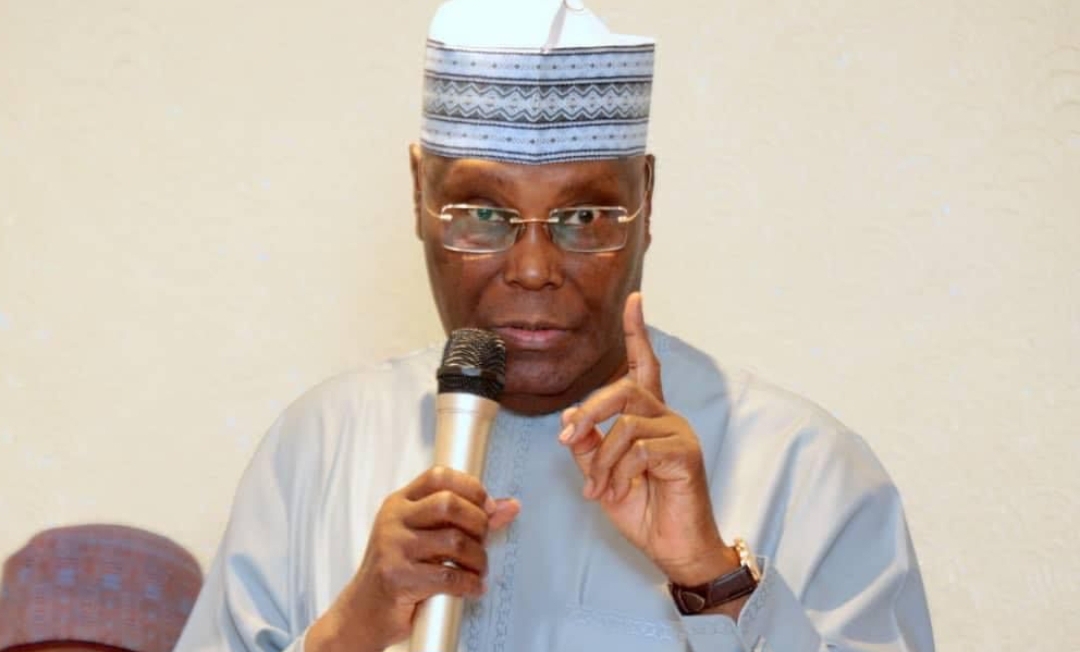
Atiku blasts Tinubu over unpaid wages, demands release of labour activist

By Muhammad Abubakar

Former Nigerian Vice President and presidential candidate Atiku Abubakar has criticised the Bola Ahmed Tinubu administration over unpaid wage awards and the detention of labour activist Comrade Andrew Uche Emelieze.

In a statement shared on his social media accounts, Atiku accused President Tinubu of worsening economic hardship through the “hasty and thoughtless” removal of fuel subsidy on his inauguration day, which he said plunged Nigerians into inflation, hunger, and despair.

Atiku said the government promised a ₦35,000 monthly wage award to federal civil servants pending the conclusion of a new minimum wage deal. Ten months later, only six months have been paid, leaving ₦140,000 owed per worker.

He condemned the arrest of Comrade Emelieze, who was detained for attempting to organise a peaceful protest over the unpaid wages, calling it “an affront to democracy.”

“We demand the immediate and unconditional release of Comrade Emelieze,” Atiku said. “Nigerian workers will not be silenced, intimidated, or forgotten.”

The Federal Government has yet to respond to the statement.

Prof. Amoka slams SAN over “Unpopular Opinion” on Nigerian professors

By Muhammad Abubakar 

Professor Abdelghaffar Amoka of the Department of Physics at Ahmadu Bello University, Zaria, has responded strongly to what he calls a “misinformed and politically biased” opinion by Sunusi Musa, SAN, regarding the state of Nigerian academia.

In a lengthy rejoinder titled “The Impoverished Nigerian Professors and the ‘Unpopular Opinion’ of a Misinformed SAN,” Prof. Amoka criticised Musa for attributing the poverty of Nigerian professors to their alleged lack of productivity and large family sizes. 

Amoka argued that the true cause lies in the systemic neglect and chronic underfunding of the Nigerian education sector, particularly university staff salaries and research funding.

He noted that academic salaries have remained stagnant since 2009, with professors now earning the equivalent of less than $400 per month, a sharp drop from over $3,000 in 2009. He described the situation as a “crime against humanity,” accusing the political class of starving intellectuals while enriching themselves.

Amoka debunked the claim that Nigerian academics are unproductive, citing the international recognition they receive and their contributions to research and student success abroad. 

He further pointed out the lack of sufficient research funding, comparing Nigeria’s meagre investments to the billions spent annually by countries like the US, UK, China, and even smaller nations such as Norway and Malaysia.

The professor further criticised the SAN for bringing personal life choices—such as marriage and family size—into a discussion about national policy failure. He emphasised that productivity in academia depends on conducive working conditions and appropriate incentives.

Amoka ended the piece by urging fellow academics to prioritise their well-being, pursue legitimate side hustles if necessary, and continue doing their best to sustain a struggling system. He warned that the continued devaluation of education poses a threat to the country’s future.

“We are starving the thinkers and feeding those who can’t think. What sort of system are we expecting to create?” he asked.

Nigeria backs BRICS vision for global restructuring, youth inclusion — Tinubu

By Muhammad Abubakar

President Bola Ahmed Tinubu has reaffirmed Nigeria’s commitment to the ideals of the BRICS bloc, emphasising the need for financial restructuring and a reimagined global order that reflects the aspirations of emerging economies.

Speaking at the ongoing BRICS summit in Rio, Tinubu stated that the group must evolve beyond its economic identity to become a “beacon for emerging solutions” based on solidarity, self-reliance, sustainability, and shared prosperity.

Talking about Nigeria’s youth-driven demographic, the President emphasised the importance of shaping global policies that address the specific concerns of young people, who comprise 70% of Nigeria’s population.

“Nigeria is not a passive participant in global affairs,” Tinubu declared. “We are taking bold, homegrown steps to accelerate renewable energy, mainstream climate action, strengthen urban resilience, and expand healthcare access.”

He concluded with a strong message of determination: “The world is changing. Nigeria will not be left behind. We will help lead the way.”

How Dangote Refinery reshapes Nigeria’s fuel supply, pricing, and distribution, raising monopoly concerns

 By Nasiru Ibrahim 

The channels of distribution from exploration to consumers in Nigeria’s oil industry—before Dangote’s refinery—began with crude oil extracted by NNPC Ltd. and international companies such as Shell, Mobil, and Chevron. The crude was sold to NNPC or exported. Due to the poor performance of local refineries, such as those in Warri and Port Harcourt, Nigeria relied on importing refined fuel through NNPC and major marketers, including TotalEnergies, Oando, and Conoil.

Once imported, the fuel was stored in depots like Apapa, Atlas Cove, Ibru Jetty, and Calabar. From there, independent transport companies such as Petrolog, TSL Logistics, AA Rano, and MRS transported it by tanker to filling stations. These stations—both major and independent—sold the fuel directly to consumers. 

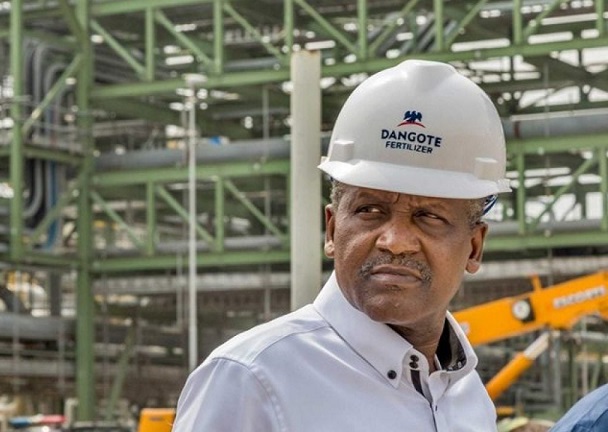
Alhaji Aliko Dangote is on the verge of taking full control of Nigeria’s downstream oil sector, covering everything from marketing and retail to transportation and distribution of petroleum products. In economic terms, this is known as vertical integration. Many Nigerians are now raising concerns that Dangote could dominate the entire fuel market. This comes after Dangote Petroleum Refinery released a press statement outlining its upcoming plans for fuel supply and distribution.

In the statement dated June 16, 2025, the company announced that it will start selling petrol (PMS) and diesel in the Nigerian market from August 15, 2025. To support this, it plans to roll out 4,000 Compressed Natural Gas (CNG)-powered trucks across the country to deliver fuel directly to buyers at no additional logistics cost.

Dangote also revealed that it will offer credit facilities to credible buyers who purchase at least 500,000 litres of PMS or diesel. 

These buyers include registered oil marketers, manufacturers, telecom companies, airlines, and other large fuel consumers. The company states that this move will enhance fuel availability, reduce reliance on imports, and bolster Nigeria’s energy security by overseeing both refining and distribution.

With Dangote’s new initiative, he buys crude oil from NNPC and refines it here in Nigeria. Then, using his trucks, he moves the fuel to his storage depots and delivers it straight to filling stations. This means no need for middlemen or prominent marketers—everything is handled by Dangote’s team from start to finish.

However, while this could lower fuel prices and ease supply challenges, it has also sparked fears about reduced competition. Some worry that giving too much power to one player could lead to a market monopoly, calling for proper regulation to ensure fairness in the downstream sector.

Economists, policymakers, businessmen, entrepreneurs, and economics students like myself are actively considering the potential impact of this new initiative on oil marketers, the Nigerian economy, employment, exchange rates, consumers, filling stations, climate change, and other critical factors. Many are questioning whether this move will yield positive results. However, we cannot understand the implications unless we first examine the structure and components of Nigeria’s downstream sector, including Dangote himself, his competitors, those affected by his actions, and all other players in the supply chain up to the final consumer.

In economics and policy development, a long-standing debate exists about how policies should be evaluated. Some scholars argue that policies should be judged by their outcomes, while others believe they should be assessed based on their intentions. For example, Milton Friedman emphasised that policies must be judged by their results, not their intentions. 

In contrast, economists like Paul Samuelson acknowledged the importance of considering both intent and context, especially when outcomes are not yet visible. This debate is relevant here. It may be premature to conclude whether Dangote’s new initiative is positive or negative solely based on expected results, as those outcomes have not yet materialised. 

Nevertheless, some would argue that judging the initiative by its intention — such as improving fuel availability, reducing logistics costs, and enhancing energy security — is still meaningful, especially in economic policy, where many decisions are based on projected or long-term effects. Evaluating intentions enables us to gauge the direction of policy, even in the absence of immediate evidence.

Nigeria’s downstream sector is responsible for refining, retailing, distribution, transportation, and marketing of petroleum products. It comprises several companies and regulatory bodies, including NNPCL, Dangote Refinery, Oando, MRS, AA Rano, ExxonMobil, Danmarna, Aliko Oil, and many others. While Dangote operates across both the midstream and downstream sectors, his actions may also indirectly affect the upstream sector, particularly through their influence on demand, supply, and the pricing of petroleum products.

Instead of focusing solely on the structure of the downstream sector, I believe we should carefully consider both the potential benefits and drawbacks of this new initiative by Dangote Refinery, without completely dismissing Friedman’s view on judging policies strictly by results.

Potential Positive Implications of the New Initiative

Firstly, Dangote’s new initiative will reduce Nigeria’s dependence on imported oil from the Gulf and Europe. This is beneficial for Nigeria’s foreign exchange (FX) reserves, as less demand for imported fuel means the country will need fewer U.S. dollars for imports. As a result, this could lead to an appreciation of the Naira due to a fall in demand for foreign currency. Additionally, it will improve the trade balance and increase GDP contribution from the domestic oil refining sector.

Secondly, the initiative will create both direct and indirect jobs in Nigeria. Direct employment opportunities will arise for truck drivers, mechanics, technicians, depot workers, and logistics personnel. If Dangote deploys between 2,000 and 4,000 trucks, and each truck requires one to two drivers, along with at least one support mechanic, one depot staff member, and logistics coordinators, this could result in approximately 20,000 direct jobs. Indirect employment opportunities will arise for consultants, accountants, lawyers, filling station managers, as well as workers in catering, cleaning, petrochemicals, fertiliser, plastics, and related industries.

Thirdly, the initiative will enhance fuel accessibility and improve supply chain efficiency, thereby reducing waste and environmental pollution. By taking direct control over storage and distribution, the initiative can eliminate middlemen inefficiencies, potentially reducing fuel scarcity and hoarding, which often drive up inflation. With direct sales to filling stations, illegal practices like tanker swaps and product diversion by middlemen can be curbed. Furthermore, the use of Compressed Natural Gas (CNG)-powered trucks will lower transportation costs, reduce emissions, and increase domestic gas utilisation, thereby boosting gas revenue.

Fourthly, the initiative is expected to lower fuel prices, which is a major driver of inflation in Nigeria. By eliminating international shipping fees, foreign refinery profit margins, and import levies—all of which form a significant portion of the overall fuel cost—the retail price per unit of fuel could drop. Lower fuel prices can ease the cost of living, reduce inflationary pressures, and improve economic stability.

Fifthly, the initiative will strengthen Nigeria’s energy security in the face of global supply chain disruptions. For instance, ongoing conflicts such as the Israel-Iran and Russia-Ukraine wars, or geopolitical tensions in the Middle East, can threaten the global fuel supply. Additionally, OPEC+ efforts to raise oil prices increase external vulnerabilities. By reducing dependence on imported fuel, Nigeria becomes more resilient to global shocks, ensuring steady availability of fuel at domestic filling stations even during international crises.

Sixthly, from a broader perspective, this initiative positions Nigeria as a regional supplier of refined petroleum products in Africa, reducing the continent’s reliance on Europe and the Gulf. This shift enhances Nigeria’s foreign policy leverage and strategic influence, particularly within regional and international institutions such as ECOWAS, AfCFTA, AfDB, and Afreximbank. A robust domestic refining industry enhances investor confidence and may attract more foreign direct investment (FDI) in the long term. Investors are more likely to commit to economies with stable energy supply, regional trade advantages, and reduced exposure to global price shocks.

Potential Negative Implications

Firstly, there is a serious economic fear that this could lead to a monopoly, and many Nigerians have already raised concerns about that. The Petroleum Tanker Drivers and Owners Association of Nigeria (PATROAN) and the Independent Petroleum Marketers Association of Nigeria (IPMAN) have both expressed worry that Dangote might dominate the entire downstream oil sector. In economics, when a single company controls the whole supply chain, from refining to selling, it stifles competition. And when there’s no competition, prices can be fixed unfairly, small businesses get pushed out, and consumers suffer in the long run.

Secondly, there’s the risk of predatory pricing. This occurs when a powerful company sells at very low prices—sometimes even below cost—to drive smaller competitors out of the market. Dangote might do this since he doesn’t import fuel and can afford to sell at a lower price. However, after chasing them out, he can raise prices at any time, leaving people with no choice and putting consumers at risk of exploitation. This leads to what is called “deadweight loss” in economics, where both individuals and the economy lose out.

Thirdly, many jobs could be lost, especially among small fuel marketers, distributors, and transporters who previously imported and sold fuel themselves. Dangote is now doing everything directly—refining, distributing, and even retailing—which means companies like AA Rano, Danmarna, Aliko Oil, and many others might be pushed out or forced to operate under unfair terms. This is already affecting their businesses, especially in the North, and could lead to job losses in areas that rely heavily on these companies.

Fourthly, government policy interference and the role of the Nigerian National Petroleum Company Limited (NNPCL) could create more problems. NNPCL also operates in the downstream sector and has partnerships and influence that could either support or conflict with Dangote’s activities. Past issues, such as unclear pricing, fuel subsidy mismanagement, and delays in policy implementation, demonstrate that when government agencies operate without transparency, it can create more confusion than solutions. This could make it easier for big companies like Dangote to influence decisions in their favour while others suffer.

Fifthly, new investors might avoid the sector. If one company already controls everything, what’s left for others to invest in? People may view the fuel business in Nigeria as a “one-man game,” making it challenging to attract new ideas, competition, and investment. This can slow down innovation and limit the country’s long-term progress in energy.

Sixthly, there’s a risk of regional imbalance. Dangote might focus more on high-demand urban areas where there’s more profit, and this could lead to fuel shortages in rural or northern regions. Small marketers who once served these communities may not survive, and that means remote areas could suffer more from fuel scarcity. This may exacerbate existing regional inequalities.

Possible solutions 

Firstly, don’t ban fuel imports immediately. Let other marketers continue importing fuel, at least for the time being. If only one company controls the supply, prices may rise or stay unstable. The government can grant import waivers to others, ensuring that competition remains alive and fuel remains affordable.

Secondly, we should repair our old refineries and support the development of new ones. Dangote shouldn’t be the only one refining fuel. If we repair the Warri, Port Harcourt, and Kaduna refineries and encourage small private ones, we’ll have a more local supply. That also helps in the future if we want to export after meeting our own needs. 

Thirdly, ensure that other players can access storage and transportation facilities. If only Dangote had the port, pipelines, and trucks, smaller marketers wouldn’t survive. The government can step in to make sure these facilities are shared fairly, with clear rules and affordable fees.

Fourthly, don’t forget far places like Northern states and rural towns. Most fuel may remain in the South, where Dangote is located. Therefore, the government should support distribution to remote areas by encouraging group buying or establishing shared fuel depots. Everyone deserves access, not just those near the refinery.

Fifthly, expand the availability of fuel alternatives like CNG to more locations. If we’re shifting to compressed natural gas (CNG), it should not be exclusive to the rich or city dwellers. Rural and remote areas require the same support,including CNG buses, filling stations, and awareness initiatives.

Finally, monitor prices and ensure fairness. We need a simple system that tracks and shows fuel prices across regions. That way, if one company tries to raise prices unfairly, the public and the government will be aware.

Ibrahim is an economist and writer based in Jigawa State, Nigeria. He holds a degree in Economics from Bayero University, Kano. With a background in journalism at Forsige, he currently works as a research assistant and contributes expert commentary on economics, finance, and business.
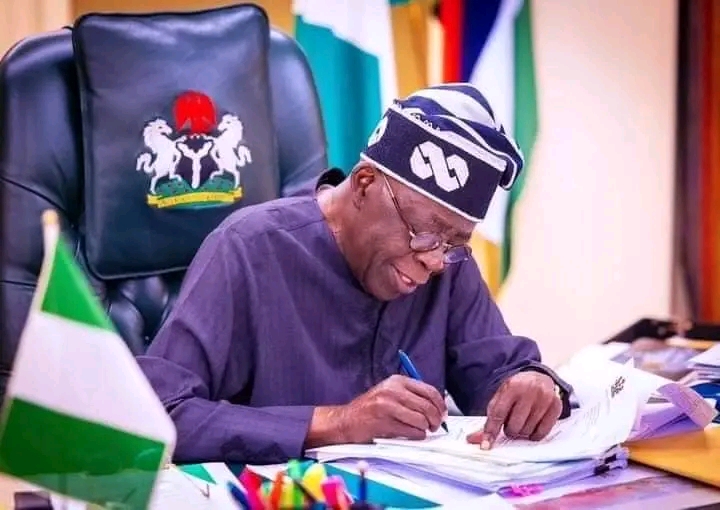
President Tinubu signs tax reform bills into law

By Anwar Usman

The President of Nigeria, Bola Ahmed Tinubu, has today signed the four tax reform bills into law.

The bills, which he said will transform Nigeria’s fiscal and revenue framework, were signed at the Presidential Villa in Abuja on Thursday afternoon.

The four bills include the Nigeria Tax Bill, the Nigeria Tax Administration Bill, the Nigeria Revenue Service (Establishment) Bill, and the Joint Revenue Board (Establishment) Bill, which were recently passed by the National Assembly.

Those present at the signing ceremony were Senate President Godswill Akpabio, Speaker of the House of Representatives, Tajudeen Abbas; Senate Majority Leader, House Majority Leader, chairman of the Senate Committee on Finance, and his House of Representatives counterpart.

On Wednesday, Bayo Onanuga, Special Adviser to the President on Information and Strategy, stated that the implementation of the new tax laws would significantly transform tax administration in the country, leading to increased revenue generation, an improved business environment, and a boost in domestic and foreign investments.

The growth Nigerians can’t taste: Behind the numbers lies hardship

By Nasiru Ibrahim

If the economy grows by 4% in Q1 2025, people expect to feel it through affordable food, reasonable wages, more job opportunities, an improvement in the standard of living, and quality education. I agreed with Dr. Usman Isyaku’s recent claim that “Economics is the new rocket science in Nigeria,” because economists are busy presenting abstract models, charts, graphs, GDP growth, and the economic policy debate is centred only on economic jargon and indicators that appear technical and confusing to the layman. The economic policy debate is supposed to be centred on what people earn, what they buy, how the cost of living rises, and what happens to inequality and poverty.

People often ask: if the economy is growing, why is our life getting harder? The answer to all this is the Nigerian economy’s economic growth and inflation paradox, which refers to the presence of economic growth and high inflation at the expense of people’s purchasing power and standard of living. Inflation erodes people’s purchasing power and repeatedly makes them poorer as prices rise.

The economic growth and inflation paradox is the reality of the Nigerian economy, considering that the economy experienced its fastest growth in about a decade in 2024, as pointed out by the World Bank’s lead economist for Nigeria, Sir Alex Sienant, yesterday in Abuja. He said the Nigerian economy grew by 4.6% year-on-year in Q4 2024. This means that in the last three months of 2024, the Nigerian economy produced 4.6% more goods and services than in the same period in 2023. However, even though the country produces more, many people don’t feel any benefit because prices are still rising, and daily life is becoming harder.

Growth figures like GDP are averages and do not address poverty, high inequality, a poor standard of living, or food affordability.

What caused this paradox?  President Tinubu’s economic reforms — removing fuel subsidies, electricity subsidies, and naira devaluation cuts —resulted in fiscal improvement. Government revenue grew by 4.5% of GDP in 2024, the fiscal deficit decreased, and external debt declined. On paper, these achievements are impressive, but they feel different to the common man on the street, as the prices of food, transport, and rent continue to rise.

The immediate cause is the lack of inclusive growth, with a few sectors like oil and banking dominating the GDP. Secondly, weak institutions refer to government agencies and public bodies that are supposed to ensure fairness, transparency, and accountability but fail to do so. When institutions are weak, they allow corruption, inefficiency, and poor management of public funds. This means money meant for roads, healthcare, education, or farming support gets wasted or stolen, and policies that should help everyone only benefit a few elites. This worsens inequality and keeps essential services underdeveloped.

Thirdly, agriculture and supply chain disruptions caused inefficiency in the sector. Insecurity and poor infrastructure, plus the issue of import waivers, contributed to cheap food imports, making it hard for local farmers to compete and causing them to incur losses.

I do not view economics as rocket science dominated by charts, models, and jargon. I see economics in everyday life—prices, wages, job opportunities, choices, affordable food for all, happiness, and a better life for all and sundry.

Economists should explain how policies affect people’s daily lives — not just in GDP numbers, but in real terms like food prices, wages, and employment opportunities. Economists need to engage with the public more directly, explaining key concepts like inflation or interest rates in simple terms. In 2022, the Nigerian government reported economic growth in the oil sector. Yet, unemployment was at a 20% high, and poverty was increasing, with more than 40% of Nigerians living below the poverty line.

Economists and policymakers often discuss GDP growth, real income, or inflation rates—terms that many Nigerians don’t fully understand. Most people are focused on practical issues like food prices, rent, and transportation costs, not abstract economic concepts.

Governments often use economic data to justify their policies, sometimes highlighting growth figures that don’t fully reflect the real situation. In Nigeria, governments usually focus on growth rates in sectors like oil and telecoms, which don’t directly impact most people’s daily lives, while ignoring issues like rising poverty and growing inequality.

What Should Be Done? 

Firstly, fuel subsidy reform must be done to protect ordinary Nigerians. The sudden removal of fuel subsidy in 2023 made life harder—transport became expensive, food prices shot up, and suffering increased. Even big economies like the U.S. still subsidise farmers, energy, and housing. But in Nigeria, our subsidy system was full of corruption and waste. Instead of removing it overnight, the government should have planned a gradual withdrawal and used the savings to support school feeding, health insurance, and public transport. State governors, like those in Lagos and Borno, should use their share of subsidy savings to support poor families. Local government chairmen can help by identifying struggling households and ensuring the help gets to them.

Secondly, we must secure our farms and support agriculture to fight food inflation. Insecurity in places like Benue, Zamfara, and Niger has chased farmers off their land. No farming means no food, and no food means higher prices. The government should send security teams to protect farmers and work with local vigilantes. State governors must invest in irrigation, storage facilities, and feeder roads, like Ebonyi’s rice project or Cross River’s cocoa plan. Local governments should help distribute seeds and fertilisers, and organise markets in villages so that food can move easily and become cheaper.

Thirdly, Nigeria must stop mismanaging foreign exchange and support local production. The constant rise and fall of the naira, unfair access to cheap dollars, and heavy import dependence have worsened things. The CBN must be open and fair in its forex policy and prioritise local manufacturers. State governments should build industrial hubs and support processing industries, as Ogun State is doing. Local governments can help small producers in things like leather, cassava, and shea butter—so we can reduce imports, create jobs, and lower prices.

Fourthly, state governors and LG chairmen must stop blaming the federal government for everything. Many things affecting people—bad roads, dirty water, expensive local markets—are within their power. Governors should form regional plans, invest in infrastructure, and support small businesses. Local governments should fix boreholes, maintain primary health centres, and organise rural markets. These small actions reduce the daily cost of living and improve lives.

Fifthly, we need proper social protection, not random handouts. Inflation is eating deep into people’s pockets. The government should use verified data (linked to NIN and BVN) to send digital cash transfers to the poor. Local governments must identify real households that need support. States should create public works programs—like road maintenance, tree planting, or waste collection—so people earn a living while helping their communities. That’s how India’s rural job scheme helped millions.

Lastly, no reform will work without fighting corruption and fixing our broken institutions. We can’t keep discussing change while money disappears, budgets are padded, and governors pocket LG funds. The government must pass audit laws, publish how money is spent, and punish corruption. State and local governments should meet transparency targets before receiving federal funds. We must also return full independence to local governments so they can serve people directly. Without these changes, even the best economic plans will fail.

Tinubu: Reforms are working, Nigeria is on path to stability and growth

By Hadiza Abdulkadir

President Bola Ahmed Tinubu marked the second anniversary of his administration on Wednesday with an optimistic national address highlighting the government’s achievements and reaffirming commitment to economic reform, national security, and human capital development.

Speaking from the Aso Rock Presidential Villa, President Tinubu declared that his administration had made “undeniable progress” despite the sacrifices demanded of citizens, especially following the removal of fuel subsidies and the unification of foreign exchange rates.

“We are halfway through the journey that began 24 months ago. Today, I proudly affirm that our economic reforms are working,” he said, citing improvements such as easing inflation, increased foreign reserves, and higher state revenues.

According to the President, the federal government recorded over ₦6 trillion in revenue in Q1 2025 and successfully reduced the fiscal deficit from 5.4% of GDP in 2023 to 3.0% in 2024. Additionally, the country’s net external reserves rose sharply to over $23 billion by the end of 2024, a fivefold increase from the previous year.

In the energy sector, Tinubu noted a 400% increase in oil rig activity since 2021 and over $8 billion in new investments. “We have stabilised our economy and are now better positioned for growth and global shocks,” he added.

The President also highlighted reforms in taxation, infrastructure development, and the health sector. He announced the expansion of primary healthcare centres, the establishment of new cancer treatment centres, and a tax policy overhaul aimed at supporting low-income households and small businesses.

“Together, we are creating a system where prosperity is shared, and no one is left behind,” he said.