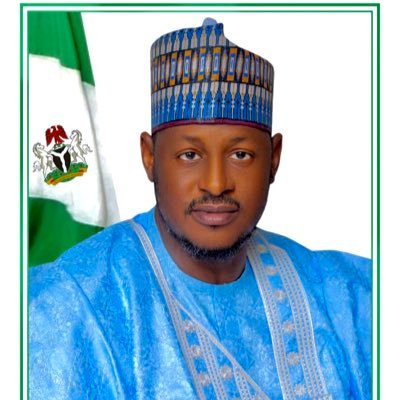
Dikko Umaru Radda

Bandits and Betrayal: Why negotiation is not the answer

By Muhammad Isyaku Malumfashi

There are people within this government who support negotiations with bandits, and this piece aims to address them. I wrote against former Governor Masari’s governance when he had negotiated with bandits in an article published by The Daily Reality newspaper, titled “How Governor Masari is Wrongly Governing Katsina State.” I’m doing the same to refute any move to negotiate with bandits at the expense of the government’s power.

Meanwhile, apart from the government’s “data boys,” the problem we now have is the “negotiation lawyers” who protect the government from criticism of negotiating with terrorists. As I have been saying, it is a failure of the government to negotiate with terrorists.

Not only I, but many security experts have opined that negotiating with bandits is futile. In fact, the governor himselfDr Dikko Umaru Radda, admitted during a call-in interview with Channels Television that he wouldn’t negotiate with bandits at their weakest point. We all applauded, as they have no justifiable reason for their actions and hence no grievances to present to the government for it to listen to. They should either surrender and cease fire, or the government should use force to wipe them out.

We’ve seen many such negotiations with bandits in both the previous administration and the present that have not borne fruit. Perhaps the Fulani terrorists breached the truce by breaking the agreement, thereby continuing to commit crimes against innocent citizens. 

The biggest problem is that they will come into town with weapons, as we’ve seen in the Kankara Local Government area, until people become accustomed to seeing them. Then, some will start to befriend them, so they, too, can get the opportunity to handle weapons. Thus, the country might become like Libya – God forbid – where arms became available to citizens as a result of government carelessness in the name of self-defence, and subsequently turns into a lawless state.

Because in Libya today, one with more sophisticated arms is the most feared and powerful being, just like a government. They can do and undo as they want. Nigeria, particularly Arewa, might face a similar fate, but I believe God will embarrass them. The worst thing about this negotiation is that even if there is negotiation, these Fulani bandits won’t take up any job that will earn them money. Instead, they’ll move to another town where there’s no security problem and continue their terrorist activities. If there’s another negotiation, they’ll move forward.

They wanted to pursue an agenda of conquest with great force, as in the 1804 Jihad. I know historians among us will relate better, though I’m not one; I’m a history enthusiast and studied it in secondary school. Thus, we’re not ignorant of the past. If we don’t forget, those Fulani bandits camped at the Kankara forest under the notorious bandit leader Babaru, aka, had to negotiate with the people of Yar Goje town, before they could target some villages.

Then, they got the opportunity to attack the Mantau village in Malumfashi, where they killed many worshippers during dawn prayers in the mosque and thereafter kidnapped many residents and took them to their camps. Although they later released them, the government claimed the release was due to a firefight with troops, but Zuma Times reported the opposite. We believe the latter, as the government didn’t present any evidence of casualties.

The Mantau village has been a headache for the bandits for years. They’re well-prepared and gallant, and on many occasions, they’ve hidden at routes where bandits pass by to attack and kill them. The village was a no-nonsense and fearful place for bandits. Even the day they attacked them, it was a raid, not face-to-face, which shows an act of cowardice. Therefore, the Fulani won’t stop terrorising; they’ll move forward until they’ve conquered the Hausa land entirely, as captured and masterminded by their ancestors for centuries.

Negotiation with bandits, even though it has never happened at the state level but at the local governments’ level, as seen in Jibia, Batsari, Kurfi, Kankara, and others, makes us suspect that even those that happened at the local governments’ level were with the governor’s consent. He doesn’t want to admit his failure or is afraid of reversing his stance on non-negotiation with bandits.

The idea is totally archaic and reckless because not everybody will sit down and watch people who killed their loved ones or bankrupted them through ransom payments be forgiven and allowed to roam freely, while the people they killed are no more. The properties destroyed or collected for ransom are not compensated.

Even the government’s careless move to empower repented bandits is not welcoming because they have enough money collected from ransom payments. Why should the government empower them with our money? I think the best approach is to empower the victims, not the repentant bandits. The government should also reintensify its security approach, especially given the recent surge in banditry attacks in eastern and southern Malumfashi over the past two days. May Allah restore absolute peace and stability in our towns, states, and the country at large.

The dilemma of negotiating with bandits: A path built on ashes?

By Aliyu Ya’u

His Excellency, Dikko Umar Radda’s position on rural banditry has provoked considerable reactions, with some questioning his resolve to confront bandits rather than seek a peace agreement.

Given that he lacks control over the paramilitary and armed forces present in the state, it is fair to say that he has taken commendable steps by establishing the state’s community policing group and encouraging the civilian population to engage in self-defence. 

I fully empathise with his frustration, especially in light of the constant criticisms and pleas from victims suffering due to the terror of rural banditry. Understandably, his excellency may feel disheartened and powerless to prevent these criminals from continuing their activities. 

Further, everyone, especially the civilian population, would welcome a peace accord in a real conflict situation. In such situations, all parties’ demands are tabled and deliberated, and sustainable solutions are found and implemented. 

However, in the case of an unorganised and unregulated group like rural bandits of the North-western and North-central Nigeria, who wreak havoc daily without reasonable justification. 

The question lies not in the society respecting the peace accord, but in the modalities employed to guide the peace settlement. Another question is whether the peace accord is sustainable, using historical parameters to assess the credibility and reliability of the commitment of the violent party involved. 

Any peace accord between a government, society, and an armed group should be based on disarmament, demobilisation, and reintegration (DDR). 

According to the United Nations Peacekeeping operation unit, DDR is “a process of removing weapons from the hands of members of armed groups, taking these combatants out of their groups and helping them to reintegrate as civilians into society.”

The question is whether the militias or bandits are ready to surrender all their weapons, demobilise from their dens, and reintegrate into the larger society. Unless the government can confirm these terms with the bandits’ leaders, mediators, and sureties, it will not be obligated to build a wall of ash blocks. 

Other questions include, How strong and convincing are the commitments laid down or presented by the militias? How committed is the leadership to the pact? What are the demands? How cogent and soluble are they? Do they have a unified command structure? Is the command structure capable of issuing an effective directive that will be respected by various dens and groups committing heinous bandit crimes? 

These armed groups are often small; in most cases, a group comprises 10 or fewer bandits who act autonomously, unless they need to cooperate against a sedentary enemy community. The absence of a centralised governing body makes it difficult to build an effective peace agreement with the groups. How could a peace accord with hundreds of bandit groups roaming the regions’ thick and interconnected forests that span hundreds of kilometres and access many states be possible? 

Another aspect deserving the government’s focus is the scope of Katsina state’s peace accord. What areas will it encompass? Will the armed bandits responsible for heinous crimes in Katsina state prevent others from neighbouring states from crossing into the area to commit banditry? It’s crucial to recognise that we are not dealing with an insurgent group, a separatist movement, or an ideological terror organisation; rather, the state is confronting multiple disorganised criminal entities. 

The focus should be on the following: The state’s primary concern is achieving lasting peace, not a temporary ceasefire. The bandits should establish a reliable leadership structure that is known and accessible, and willing to take full responsibility if they breach the agreement. They should clearly specify what sets their current commitments apart from those made with previous governments. Additionally, they should submit their complaints for the state’s review and assessment. The sureties must first confiscate or disarm the bandits before any peace accord is signed.

Aliyu Yau holds an M.Sc. in Defence and Strategic Studies and is a public policy and conflict analyst based in Kaduna.

From Dubai dreams to banditry nightmares: The tragedy of APC governance in Katsina 

By Muhammad Isyaku Malumfashi

What is happening in Katsina under the present APC administration is a shameful outcome from a government that once boasted of being widely read, widely travelled, and experienced. In fact, from the campaign period to its first year in office, the government bragged that it had all it took to make Katsina a “new Dubai.” That was why a high educational background was used as a symbol of the administration. Even in appointments, only so-called “learned” people were considered, irrespective of whether they were truly experienced or trustworthy.

The most pressing challenge of this government is denial. This denial is even more dangerous than the insecurity bedevilling the state. When you acknowledge the existence of a problem, you will be open to every advice on how to tackle it. But if you keep denying or boasting that you have eliminated it. At the same time, the menace still exists—and perhaps in a more deadly form than during the previous administration—then no matter the energy you invest, you will not succeed. The government and its loyalists continue to deny the bold existence of Fulani terror groups in the state.

Before the recent banditry attack on Muslim worshippers during dawn prayers at Mantau town in Karfi Ward, Malumfashi Local Government—which drew attention from outsiders to what we have long been saying about the APC government’s ill-conceived security surveillance approach—there had already been several incidents of bloodshed, property destruction, and abductions across about nine local governments daily. In places like Malumfashi, where I come from, the banditry menace has worsened since Governor  Dikko Radda assumed office.

The government’s approaches to fighting terror are either ill-planned or manipulated by vested interests, gambling with people’s lives and properties. If we are to judge by the capacity and fanfare displayed by the governor in the past two years—boasting about his readiness and zeal to wipe out criminals from their hideouts—then this government has no excuse for failing. By now, Dr Dikko Umaru Radda himself must have realised that governance, especially in a state with millions of residents, is hectic and demanding. It is unlike how he portrayed it during his campaign. Thus, Katsina is bigger than Charanchi, and the State Government House Office is not an ordinary SMEDAN office.

Notwithstanding, I read with dismay some comments by APC loyalists denying the existence of rampant banditry. According to them, the present government has curbed it. But I was gladdened by how people tackled them in the comment sections, pointing to multiple banditry incidents under this government—incidents worse than anything seen before.

Meanwhile, I do not waste my energy trying to rebut these “data boys” because I know they are either sponsored to promote the government and whitewash its failures, or they do it voluntarily to secure appointments. That is why I stopped engaging in the comment section of my friend Hamis Nababa whenever he appears on air defending the government, because I know he has a personal target. Let alone the unfortunate lawmakers or appointees like Surajo Abdu Kwaskwaro, representing Kaita, who went on air denying the recurrence of bandit attacks in Katsina.

When people are desperate for food, not everyone can remain true to their conscience. Hunger is a terrible thing; it pushes some people to compromise their integrity. But one should not put one’s reputation at stake simply for survival. This is where business security matters—because if those “data boys” were truly independent or well-established in their own ventures, they would not be engaging in such disgraceful acts of defending a failed government whose shortcomings are already too glaring.

One doesn’t even need to doubt whether Governor Dikko is a Grade II certificate holder or truly a PhD holder. Just look at how his government executes projects and the questionable funds allegedly spent on them. Even when figures appear clear on paper, the blunders make them impossible to explain convincingly. At the end of the day, there is nothing tangible to show.

As many have opined, the only candidate that will be extremely difficult to sell in 2027 is that of the APC. If you doubt this, let us wait for time to tell. Those bragging that APC will still win should remember: unless the ruling party uses force, manipulative tactics, vote-buying, intimidation, or pre-stuffed ballot papers, it will be unseated before noon on Election Day if the election is free and fair. Mark my words—because no sane person can campaign for APC in its present state without appearing utterly ridiculous.

Muhammad Isyaku Malumfashi wrote via muhammadisyakumalumfashi@gmail.com.

Saving a legacy: Urgent call to protect Umaru Musa Yar’adua University

By Dikko Muhammad, PhD

Dear Governor Malam Dikko Radda, PhD., with honour and regards befitting of your office and esteemed personality, the people imploring you to address the urgent matters of Umaru Musa Yar’adua University, Katsina, are your friends, not your foes. They don’t want to see the beautiful pumpkin planted about two decades ago uprooted by your administration. If that calamity, God forbid, would happen, it mustn’t happen under the administration of the most credentialed person in the history of our state. 

Sir, UMYU isn’t just a mere state university. It was an ambition and a dream of our revered Malam Umaru Musa of blessed memory. UMYU is the culmination of the sweat and toil of many prestigious individuals from our dear state, impeccable individuals who embraced Malam Yar’adua’s dream and made it a reality.

Men and women who spent sleepless nights, travelled far and wide, to ensure that UMYU isn’t just a prestige project, but a strategic and need-based initiative that addresses the higher education deficit of our dear state and the Northern region. Many of these important individuals are alive today. Please, Sir, as they inch nearer to their graves, don’t make them feel that their labour is in vain. UMYU alone is a fulfilling mission for many of them.

Sir, forgive my repetition– UMYU isn’t just a mere state university. It’s a solution to our century-old gender gap in access to educational opportunity. It enables thousands of parents to educate their daughters to the level of degree certification at a time when interstate and intercity travel are becoming increasingly dangerous by the day. 

When UMYU collapses, may Allah prevent that, it will sink with the dream of thousands of girls who aspire to become educated mothers, productive members of society, and contributors to the future knowledge-driven economy. You just need to look left and right in your own extended family to see the impact this university has already made. 

Your Excellency, Sir, look into the posterity. It’s very long. And it remembers all. Save this system. The university workers are not asking for the impossible. They simply ask that you respect the law establishing this university. They’re only asking you to give the equivalent of whatever is obtainable in federal universities. This is enshrined in the laws that established UMYU. 

I’m deeply sorry if I sound boring. I want to remind your esteemed person that at the point of inception, no state across the Northern region has invested resources in its university as UMYU. Billions have been spent on the training of staff. I am a product of UMYU. I got my first degree here. My teachers called me to join them and serve UMYU. The university has spent millions training me for my master’s and PhD degrees. The same happened to hundreds of others.

Unfortunately, the tasteless, unmotivated and uninspiring condition of service has frustrated many out of UMYU. Many others are awaiting the bond period to japa or to move to another university. In my faculty (pictured here), I know of more than 10 people who have left this institution with their PhD financed by UMYU. UMYU has failed to retain its most precious investment. It has also fallen short of attracting other people with the highest degrees into its corridors. 

As tens of PhDs are leaving UMYU, the university can only attract people with a first degree or, at most, a master’s degree. In practical terms, UMYU is gradually positioning itself as a training ground while Katsina continues to be short-changed in the process. 

Your Excellency, I may disagree with many of your policies. But I never doubted your resilience in moving our dear state forward. Please look into UMYU. Write your history on the footprints of time. You have all that is required to save the most important legacy of Malam Umaru Musa Yar’adua, a statesman, your political mentor, a person you hold dear and a man related to you in other equally important capacities. 

Dikko Muhammad writes from the Department of English and French, UMYU. He can be reached via dikko.muhammad@umyu.edu.ng.

Phone snatchers tighten grip on Katsina metropolis — Authorities must respond swiftly

By Usman Salisu Gurbin Mikiya 

Katsina, as the name resonates, is widely regarded as a home of hospitality — a land where people live in harmony and mutual respect. It is a place of comfort where the warmth of its people makes life pleasant and fulfilling.

Recently, however, the long history of relative peace has begun to fade; an uncharacteristic catastrophe once thought distant has started unfolding, becoming a major concern for residents of Katsina Metropolis and beyond, especially as it adds to the decade-long insecurity bedevilling the state.

The issue of phone snatching in Nigeria originated from wristwatch snatching in Southern Nigeria, particularly in Lagos and other highly populated state capitals. It often occurred in strategic areas with heavy traffic, and over time, it evolved into a practice of phone snatching.

In Northwestern Nigeria, phone snatching started in Kaduna State about eight years ago. I vividly recall my visit to Kaduna in 2020, when I was on assignment for my media organisation. A Keke Napep rider warned me to hide my phone from criminals after noticing me pressing it through his mirror.

What began as an alarming trend in Kaduna escalated into a catastrophic issue, with phone snatching syndicates extending their activities into Kano, creating panic and undermining public safety.

During one of my visits to Kano, two of my brothers, on different occasions, warned me not to use my phone while on a tricycle in certain areas. They cautioned that I could lose my life over a phone, as snatchers were everywhere, and even advised me to choose the Keke Napep I boarded carefully.

Indeed, what started as an alarming wave in Kaduna has gradually spread like wildfire, creeping into Kano and now reaching Katsina. Once considered a distant menace, the problem has arrived at the very doorstep of Katsinawa, turning a basic necessity —the mobile phone — into a source of constant fear. This epidemic of criminality is no longer a local crisis but a regional catastrophe demanding urgent attention.

In Katsina Metropolis, residents of Sabuwar Unguwa are no strangers to this menace, as multiple reported cases of phone snatching have occurred, particularly targeting visitors and strangers in the area.

During Governor Ibrahim Shehu Shema’s administration, wayward youths, popularly known as Kauraye, emerged in Katsina. They crippled businesses and created tension in the metropolis, especially in areas such as Sabuwar Unguwa, Inwala, Sabon Layi, and Tudun Ƴan Lahidda.

Their reckless activities frustrated Governor Shema to the point where he took decisive measures that restored sanity and ended the menace.

Similarly, during Governor Aminu Bello Masari’s administration, persistent attacks by delinquent youths, suspected to be from Inwala in the ATC area, forced the government to establish a special Civil Defence outpost. This step drastically reduced the menace.

In his first year in office, Governor Dikko Umaru Radda also faced resurging activities of wayward youths in Sabuwar Unguwa. He personally led security agents in night operations, which eventually restored peace in the area.

However, with three different phone snatching incidents recorded within just three days on major roads, it is clear that social vices are escalating in the city. If not urgently addressed, they risk crippling businesses and threatening public safety.

The first incident occurred on 20th September, when Mrs Sada Shu’aibu was attacked near Sabuwar Dan Marna graveyard, and the attackers attempted to snatch her phone and inflicted serious injuries on her body. 

The following day, 21st September, during the grand finale of the Maulud procession, Usman Marwan was brutally attacked by phone snatchers at his business centre near the MTN office in Kofar Ƙaura.

Furthermore, on 26th September, another victim narrowly escaped death after being attacked by snatchers. This incident has heightened concerns among residents of the metropolis.

With insecurity already ravaging some local governments in Katsina State, the fact that the capital city is now battling phone snatching suggests that Katsina is increasingly under the control of thugs.

This menace has resurfaced under the leadership of Governor Radda, who had earlier recruited hundreds of youths to fight insecurity in the state. Many residents are now watching closely to see how he will respond to this rising threat.

Phone snatching can still be contained within a short period if several urgent measures are taken, including:

The government should initiate a law prescribing either the death penalty or life imprisonment for anyone convicted of phone snatching, alongside a shoot-on-sight order for fleeing offenders.

The government should declare a state of emergency on phone snatching so that the fight against this menace does not derail broader security efforts in the state.

Usman Salisu Gurbin Mikiya, M.Sc. student, Department of Mass Communication, Bayero University, Kano. He can be reached via his Email: usmangurbi@gmail.com.

Bandit kingpin attends peace talks in Katsina as communities call for negotiations

By Anwar Usman

Local communities in the Faskari local government area of Katsina State have entered into negotiations with armed groups, raising fears of a repeat of a sequence whereby the collapse of peace agreements led to renewed violence.

Reports have it that bandit representatives, including figures accused of leading raids and abductions, sat with community leaders at a gathering in Hayin Gada.

The bandits reportedly agreed to stop attacks on villages, allow farmers safe passage, and release abducted persons in exchange for freedom of movement and market access for Fulani and the development of their areas.

In attendance were the notorious kigpin Alero, who spoke on behalf of several armed groups. He said the initiative was “not the first of its kind”, but the turnout was unprecedented.

Also present was Kwashe Garwa, whose name is 19 on Nigeria’s most-wanted terrorists list. Videos shared on multiple local media show Mr Garwa, with ammunition strapped around his waist, condemning the stereotyping of Fulani herders as criminals.

Garwa stated, “In Nigeria, whenever there is a discussion, they call Fulani herders bandits and terrorists. But tell me, which tribe in the world does not have criminals among them? You, Hausawa, who say we are bandits, don’t you also have bandits among you? Yet, no one stereotypes you with such a name.”

Garwa further asserted that killings and kidnappings would not stop until “injustice” against the Fulani was addressed. “There will be no peace if security agencies do not also stop killing our people,” he added.

Reports indicate that similar peace agreements were reached in Jibia and other frontline areas, with residents negotiating directly with bandit leaders for safe passage, a cessation of raids, and the reopening of markets.

Acknowledging the arrangements, Governor Dikko Radda said at the launch of an EU-funded conflict prevention project last week that negotiations were ongoing in several frontline local government areas and credited them with restoring calm in those areas.

I have to create state police to tackle insecurity — Tinubu

By Uzair 

President Bola Tinubu has reiterated that the creation of state police is inevitable in addressing Nigeria’s worsening insecurity.

Speaking at the Presidential Villa in Abuja on Tuesday during a courtesy visit by prominent Katsina indigenes led by Governor Dikko Radda, Tinubu assured that his administration is determined to confront the menace of banditry and other security threats.

He directed security agencies to review their strategies in Katsina, which has recently witnessed a surge in banditry, and announced plans to deploy advanced military equipment and surveillance technology. 

The president also disclosed that newly recruited forest guards in the state would receive enhanced training and support.

Tinubu acknowledged Nigeria’s security challenges, including porous borders and long-standing weaknesses, but stressed that with determination and a strategic approach, they could be overcome.

“The security challenges we are facing are surmountable. Yes, we have porous borders. We inherited weaknesses that could have been addressed earlier. It is a challenge that we must fix, and we are facing it,” he said.

He revealed that the federal government had approved the acquisition of additional drones and instructed him to receive daily updates on security operations in Katsina.

“I am reviewing all aspects of security; I have to create a state police. We are looking at that holistically,” Tinubu added.

The president reassured Nigerians that insecurity would be defeated, emphasising the need to protect children, places of worship, and livelihoods from criminal intimidation.

He reminded the delegation that in February 2024, the federal government established a committee to develop a framework for state policing, which has since garnered widespread support. 

However, by March, 20 states were yet to submit their reports, according to Vice-President Kashim Shettima.

Tinubu also paid tribute to former President Muhammadu Buhari, praising him for leaving behind a legacy of success.

Governor Radda and other members of the delegation, including former Governor Aminu Masari and Ibrahim Ida, the Wazirin of Katsina, commended Tinubu for his commitment to security and infrastructural development in the state. 

Ida urged the federal government to prioritise upgrading the Umaru Musa Yar’Adua International Airport and bolstering security in southern Katsina.

Debunking the Claims: A closer look at governance and opposition in Katsina State

By Ahmed Abdulkadir

It was with a mix of curiosity and concern that I came across an article published by The Daily Reality on July 12, 2025, titled “How the Lack of Strong Opposition Masks the Government’s Failures in Katsina.” The write-up was emotionally charged, laced with sweeping generalisations and unverified claims against the administration of Governor Dikko Umar Radda. But beyond the passion and provocative headline lies the need for a more measured and fact-based perspective—one grounded in reality rather than rhetoric.

Let us take a closer look at the major allegations raised in the article and critically examine them with verifiable facts and thoughtful context.

The “Failure” of a PhD Holder? A Misplaced Premise

One of the more glaring assertions in the article is the idea that Governor Radda’s possession of a PhD was oversold during his campaign and that his government has since failed to meet expectations. But such a claim is not only simplistic—it is unfair.

Yes, Governor Radda holds a doctorate degree, a fact that underscores his academic pedigree. However, governance is not a matter of titles or certificates—it is about policies, programs, and political will. The proper question should be: What has he done since assuming office in May 2023?

So far, the Radda administration has rolled out programs in agriculture, healthcare, and security reform. For instance, his data-driven community development model now guides the distribution of fertiliser, agro-support, and loans, ensuring that those who truly need support get it. His collaboration with the Bank of Industry for interest-free loans to MSMEs is unprecedented in the state. His administration has also launched the Health Insurance Scheme for Retirees—the first of its kind in Katsina’s history.

If there are areas needing improvement, no doubt. But to write off the administration as a “failure” just two years into a four-year mandate without a balanced assessment is more political than logical.

Insecurity: Who Really Bears the Blame?

The article devotes significant attention to the security situation in Katsina State. It laments the rising tide of banditry and communal violence, laying the blame squarely on the state government’s shoulders.

There is no denying the pain and fear that many communities in Katsina face. Attacks in places like Yargoje and Faskari are fresh scars in our collective memory. But to understand the security challenge in Katsina, one must first recognise that it is a national crisis, not a localised failure.

Security in Nigeria is under the exclusive control of the Federal Government. The police, the military, and the intelligence agencies all answer to Abuja. Governors, including Dr. Radda, are often described as “chief security officers” in name only—they command no troops, control no weapons, and fund security operations from limited state budgets.

That said, the Radda administration has not folded its arms. It has recruited and trained community vigilantes, equipped local security outfits, and created a Directorate of Humanitarian and Social Support to cater to victims of banditry and displacement. These interventions may not be silver bullets, but they reflect proactive governance in a highly constrained security architecture.

Education: A Long Road, not a Quick Fix

Another issue raised in the article is the high number of out-of-school children in Katsina. On this point, the critics are absolutely right. Katsina ranks among the states with the highest rates of out-of-school children in Nigeria. But what they failed to mention is that this is not a new problem, nor one created by the Radda administration.

The roots of the educational crisis in Katsina go back decades. Years of underfunding, weak infrastructure, socio-cultural barriers, and insecurity have combined to undermine education in the state. What matters now is what the current government is doing to address it.

Governor Radda has begun the process of improving school enrollment, especially for girls. New schools are being built in underserved areas. He has introduced teacher recruitment and training initiatives. And there are plans underway to integrate Qur’anic education with formal curriculum to bridge the gap between Almajiri and Western education.

Is it enough? Not yet. But progress is being made—step by step.

Opposition Politics: Is There Really a Vacuum?

Perhaps the most politically charged claim in the article is that Katsina suffers from a lack of effective opposition, which allows the government to operate without scrutiny. This is an old and recurring lament in Nigerian politics, especially in states where the ruling party dominates.

Yes, the All Progressives Congress (APC) won the 2023 governorship with a comfortable margin. Yes, the party also secured all three Senate seats and most House of Assembly positions. But to interpret this dominance as the death of opposition politics is disingenuous.

The PDP remains active in Katsina. The SDP fields candidates. Civil society voices are alive and well. In fact, the very article in question—published without censorship—is evidence that dissenting voices are being heard.

If opposition parties are underperforming, the responsibility lies with them to reorganise, re-strategise, and connect meaningfully with the grassroots. Democracy is not sustained by the volume of complaints but by the quality of alternatives.

A Balanced View, not a Biased Verdict

In conclusion, while the concerns raised by Daily Reality are important and deserve public discourse, their presentation lacks balance and fails the test of objectivity. The article reads more like a political broadside than a serious critique of governance. It ignores nuance, omits progress, and assumes malice where complexity exists.

Katsina State, like much of Nigeria, is grappling with real challenges—security, education, healthcare, and youth unemployment. But it is also a place where honest efforts are being made to build a better future. The truth, as always, lies somewhere in the middle, not in the extremes of praise or condemnation.

Governor Radda may not have achieved everything yet, but his administration has not been idle, incompetent, or indifferent. Let us hold him accountable, yes—but let us also be fair, factual, and future-minded in our assessments.

Ahmed Abdulkadir is the Board Chairman of Katsina State Radio and Television Services.

How the lack of strong opposition masks the government’s failures in Katsina 

By Muhammad Isyaku Malumfashi

One thing I despise about Katsina’s political realm is the absence of a strong and formidable opposition that will tackle the government’s dormancy and make them very focused and renaissance-like toward their responsibilities by using both envious and constructive criticism against those in power, so that at least the citizens may witness democratic dividends seen in some states.

But for the opposition to hold hands and keep mute without holding those in power accountable for any misfortune is unhealthy, and that’s the reason why we are here. Many citizens have questions about the power, but they are afraid to ask due to threats of arrest or intimidation by those close to the power. Perhaps some would disguise themselves in the name of advice to convince you not to oppose this failed government led by the so-called PhD, but they will not prove to you that what you said about the government is not true.

It’s a good thing to advise one to be cautious and watchful of his tongue, but it’s cowardice to intimidate him with arrest or cite the quibbles of his words without pointing out the error in them. The present Katsina government at all levels has become a failure despite the boasting made about the ‘educational qualification’ of the governor during the campaign and even after in his first year of office.

The governor made it clear that he would work with only ‘educated people’ because he is a PhD holder. His academic position was also used to deceive people into believing that Katsina would have a governor for the first time who had attained such a high level of education, unlike his predecessors, who were only master’s degree and diploma holders. People believed that the highest level of education equates to good governance until Governor Radda spent two years in office with nothing to show, or at least outshine or perform better than his predecessors.

That’s when we realised that a secondary school leaver may do better than a PhD in governance because it’s not about the qualification but fear of God, experience, integrity, and honesty. This administration of a PhD holder has not endangered any sector in Katsina. Take the security issue first, which is the most pressing issue in the state.

During the campaign, the governor made it clear that even if it’ll cost him not constructing a single gutter, he’ll eliminate insecurity in the state. We were happy to hear that and even began to see some desirable steps toward actualising that by distributing ammunition to citizens, launching the Katsina State Security Watch Corps, and arresting and killing many people found sabotaging the fight against insecurity. But what happened along the way?

The emphasis was later shifted to politics; the bold promise of no negotiation with bandits at the weak point was broken, and we saw negotiations made in some local governments when it was apparent that the bandits breached many trusts that had been placed in them by the previous government after the talks, and the insurgency escalated. It’s only during Radda that we’ve seen the worst of banditry, especially in my hometown of Malumfashi.

Initially, they only attacked villages, but later they expanded their attacks to cities. People are no longer safe. The son of our immediate local government chairman has been in bandits’ captivity for months now. My sibling, a sister of the same father and the same mother, was kidnapped in the same area where the ex-chairman lived while in office, and his child was abducted.

Many people inside Malumfashi were kidnapped; some were killed, and some had ransom paid to release them. Even today, I woke up seeing the sad news of the death of a PDP leader in Malumfashi from bandits. It’s under this government that dozens of villages in Malumfashi were evacuated due to banditry, and a whole brigadier general from Tsiga was kidnapped and spent more than 50 days in their hands before gaining freedom after millions were paid to them as ransom.

And a first-position winner from Katsina of the National Qur’anic Competition (Musabaqa) held in Kebbi was also kidnapped with his parents along their way back to Faskari from Katsina, where the governor gave him prizes and gifts, but was not able to ask security to escort him home despite the apparent danger of their town. And the governor made a blatant lie in a video, which I saved for my unborn children to remind them that ‘he’s the one feeding every family whose head is kidnapped in the state.’ This is not just a capital lie but a grievous one.

If you take education, you still have nothing to show. The previous government was paying WAEC and NECO for every student in government schools who passed the qualifying exams. Still, this government of ‘PhDs’ paid only NECO to every student, even if he or she passed both WAEC and NECO last year. Katsina’s NECO result was released late last year, after many schools had concluded their admission processes, and the pass rate was very low. Katsina was ranked among the three lowest-passing states in the NECO exam last year.

The governor employed thousands of teachers and a few from the health sector. I agreed, but he did not tell us how many thousands have retired in every sector every year and how far along the replacement process is. No school will go without seeing a shortage of teachers, and the same goes for clinics.

How long did it take him to implement the 70k minimum wage, and has it been implemented 100%? You’ll hardly see a civil servant who saw an increase of up to 50k in his salary, like in other states. What was the cause of his dispute with the university staff about the minimum wage implementation, and how many times did they reject his low implementation of minimum wage for them?

The tertiary school fees were raised when many students were dropping out due to the high cost of education, even though the governor is now earning more than his predecessor because of the removal of subsidies. His predecessor did not increase the school fees, but PhD did. In his just two years in office, he claims to have spent more on security than the previous government did in 8 years, yet there has been no clear difference between the two governments in their success against banditry in the state.

Only these two crucial areas are sufficient to condemn this Yan Boko government, but the lack of opposition in Katsina is giving the governor the confidence to speak badly about the coalition. 

Coalition/opposition has come to stay in Katsina, and no man born of a woman can stop it.

Governor Radda queries Katsina Emir

By Abdullahi Mukhtar Algasgaini

The reason for the query is the non-participation of some districts in the traditional Durbar during the last Eid-al-Adha celebrations, two weeks ago.

However, as some observers pointed out, there has been a cold war between the Emir and Governor Dikko Umar Radda in the last six months.

They added that Governor Radda is bent on checkmating the Emirs’ perceived excessess.

Part of the governor’s plan, the observers who prefer to remain anonymous said, is to restructure the Emirate, bring on board some of the Emir’s sworn “detractors,” and appoint them to strategic traditional stools.

Incidentally, the governor and the Emir are blood relations. The Emir himself said so publicly during the 2023 electioneering campaign.