Democracy

Democracy vs. Military Rule: No contest

By Abdullahi Muhammad Yalwa

Sometimes, intellectual masturbation makes people say despicable things. That’s how they say foolish things without actually knowing. If not intellectual premature ejaculation, what else would possibly make an educated person compare democracy with military rule? You can’t compare the two at all. In fact, it’s an insult to real thinking to mix them up without a strong reason as to why and how.

Yes, Nigerians are frustrated with democracy because we’ve suffered under it. Presumably, every Gen Zer born from 1999 to date has suffered, or is suffering, from the discontents of democracy. Corruption, poverty, and bad leaders all strangulate our growth. As such, it’s easy for someone who never lived through military rule — or never thoroughly read about it — to think it was better. Nevertheless, it’s inexcusable to make that comparison in the 21st century. With all the history and information one click away. This is lazy thinking.

Nigeria’s story explains the tension between Democracy and Autocracy. Since independence in 1960, Nigerians have swung between dreams of democracy and military high-handedness. The First Republic, which started in 1963, collapsed into coups by 1966. Then came 30 years of mostly military rule, with a short democratic break from 1979 to 1983.

Within this duration, Gowon fought the Biafran war from 1967 to 1970, which resulted in millions of deaths and the fangs of deadly hunger almost flung Nigeria into an abyss. After Gowon, Buhari came in the 80s with his “War Against Indiscipline” rhetoric. Though some changes were recorded only minimally, his government, too, was a failed experiment. Then, Babangida followed his coup and ruled Nigeria through military rule for almost 10 years. His scandalous cancellation of the 1993 election brought General Abacha, who also killed activists in a cold-blooded manner, abducted critics, and censured opposition. Under Abacha, Nigeria became a global pariah, an outcast because of misrule, corruption, and human rights abuses. So, the soldiers promised order but delivered fear, theft, and failure. Beyond the Gun tirade, a lot of them proved to be nothing but unscrupulous, self-centred, and avaricious.

When democracy returned in 1999, it wasn’t perfect — but it was progress. From Obasanjo to Yar’Adua, Jonathan, Buhari, and now Tinubu, we’ve seen peaceful transitions. That alone is a miracle compared to the blood and chaos of coups, which are primarily scathing and scary.

Democracy works and is better than military rule because it gives people a voice. Under democracy, leaders are elected. The constitution limits their powers, and Citizens can question, join them, or change the government. Nigeria’s record is full of incidents in which the people removed the government despite its resistance. Elections since 1999 have been taking place, even though with low turnout and many flaws.

Furthermore, democracy still allows movements and protests like that of #EndSARS in 2020. As such, people can protest against abuse without the nation collapsing. That’s democracy in action.

Equally, in a democracy, the law stands above all. Rights like speech, movement, and association are still protected despite shortcomings. The media and civic groups expose scandals and corruption. Dan Bello is our standard example here. Leaders feel pressure because they can be voted out. They are still afraid of the people’s might. Similarly, growth comes from debate, not decree. Policies get tested and refined before execution. Sometimes they are reversed after execution because of pressure. All these are happening because of the grace of Democracy.

Now, compare that with military rule. Under soldiers, power is seized by guns, not ballots. A few officers give orders. No dialogue, no accountability, only decrees that replace laws. The constitution goes silent. Many of its parts got scraped and unscripted. Rights become suspended, or mere names on papers. Dissent under the military is punished with the barrels of guns. Abacha’s regime proved it — hidden trials, executions, silence. Thus, there is no right to protest, no matter the height of injustice.

Nevertheless, some people may say the military will bring discipline, build roads, and promote infrastructure. But all of that without justice is short-term. Order without fairness is not peace; it’s fear, which eventually erupts into chaos in disguise. 

We have tested the military. And the reflex is there in history for the discerning minds. Under the generals, Nigeria’s economy sank, institutions died, and corruption deepened. Stability built on fear never lasts. Once soldiers take power, they rarely leave it peacefully. Hence, there is no rotation of government. You only get stuck with whatever you’ve got.

Although Democracy has its flaws, issues like bad elections, corruption, and insecurity remain rampant in our country; nevertheless, it is by far a better option. At least, it gives us freedom to protest, options for dialogue, and hope in change. By contrast, military rule gives us nothing but fear, silence, and graves.

The worst democracy is still better than the best dictatorship. Democracy lets us correct our mistakes. Military rule buries them.

So, all these comparisons and happiness over the aborted coup against Tinubu is nothing but nostalgia from frustrated people who refused to learn better. Democracy is not Nigeria’s problem. Nigeria’s main issue is bad leadership. If only we’d vote for responsible leaders, they’d fix the system, without destroying it. They’d strengthen our votes. Protect our rights. Hold leaders accountable. All these would happen only when democracy grows. Thus, democracy grows, Nigeria grows.

No gun can build what the people can build together.

Abdullahi Muhammad Yalwa, a Law graduate based in Azare, Bauchi State, can be reached at abdullahimuhammadyalwa02@gmail.com.

Zohran Mamdani and the triumph of inclusion: A lesson for Nigeria

By Abdulhamid Abdullahi Aliyu

When Zohran Mamdani, an Ugandan-born politician of Indian descent who migrated to the United States, emerged victorious as the new Mayor of New York, it became more than just another electoral story from America. His triumph resonated across continents, sparking global conversations on representation, inclusion, and the reawakening of civic trust in politics. For many, Mamdani’s victory symbolised a powerful statement that character, vision, and authenticity still matter in the age of polarisation.

Mamdani’s path to City Hall was anything but easy. As an immigrant, a Muslim, and a progressive voice, he faced a storm of hostility from powerful circles. President Donald Trump and billionaire Elon Musk, among others, were said to have thrown their weight behind his opponents, amplifying fears that his immigrant roots and socialist ideals made him unfit for leadership. Yet, against all odds, Mamdani not only survived the onslaught but emerged stronger, armed with nothing but a clear message of hope, justice, and inclusiveness.

What made Mamdani’s campaign remarkable was not just his defiance of elite power, but his connection with ordinary people. His grassroots outreach, his emphasis on social housing, education, climate action, and racial justice found resonance among New York’s diverse electorate. He spoke to their realities, not to their fears. In doing so, he rekindled faith in participatory democracy, the belief that leadership should reflect the people’s shared struggles and aspirations, not the privilege of a few.

It is no coincidence that Mamdani’s rise echoes that of other reform-minded figures who emerged from outside political establishments. His campaign defied the dominance of corporate funding and media bias, relying instead on volunteerism, small donations, and community-based mobilisation. That model reminded the world that authenticity, not affluence, is what truly earns public trust.

Back home in Nigeria, Mamdani’s story holds profound lessons. Our political system remains heavily tilted in favour of the wealthy and the well-connected. Elections are often a contest of money, not merit. The idea of a young, visionary leader without financial backing or godfather support ascending to power still sounds utopian. Yet his victory invites reflection. What if Nigerian politics began to reward credibility over connections? What if the masses recognised their collective power to shape outcomes beyond inducements and ethnic sentiments?

Mamdani’s triumph also reinforces the value of civic enlightenment. His message cut through misinformation because citizens were engaged and aware. In Nigeria, the recurring crisis of leadership is not only about corrupt elites but also about the disempowered electorate that allows manipulation to thrive. Real change begins when citizens see themselves as active participants in governance, not passive observers of elite bargains.

Beyond politics, his story underscores the beauty of diversity as a source of strength. America, despite its contradictions, remains a land where the son of immigrants can become a city’s chief executive. In Nigeria, where diversity often fuels division, Mamdani’s ascent serves as a reminder that inclusion is not a weakness but a path to unity. The more our institutions reflect the country’s social mosaic, the more legitimacy they command.

The lesson from New York’s new Mayor is therefore clear: leadership that listens, represents, and uplifts will always triumph over propaganda, money, and prejudice. For Nigeria, it is not enough to envy its victory; we must internalise the principles that made it possible: sincerity, civic participation, and justice. Mamdani’s win is not just a political event; it is a mirror reflecting what genuine democracy could look like when people, not power, decide.

Abdulhamid Abdullahi Aliyu is a journalist and syndicate writer based in Abuja.

The messiah-villain binary: A trap in democracy

By Oladoja M.O

In the grand, often tumultuous, theatre of African politics, a deeply entrenched and insidious narrative persists: the Messiah-Villain Binary. This simplistic, yet devastating, framework casts political leaders not as fallible public servants, but as either divine saviours or malevolent destroyers. It’s a binary that suffocates nuance, stifles accountability, and, in a continent desperate for democratic maturity, acts as a corrosive cancer on the body politic. We must call this what it is: a dangerous delusion that has shackled Africa’s progress for far too long.

This orientation, a relic of post-colonial strongman politics, reduces the complex art of governance to a moral melodrama. Citizens, conditioned to see their leaders as larger-than-life figures, become spectators in a perpetual battle between good and evil. When a new leader emerges, they are instantly elevated to the status of a messiah, the one chosen to slay the dragons of poverty, corruption, and instability. Any opposition is, by default, cast as the villain, a saboteur working against the people’s will. This is not just a rhetorical device; it’s a profound psychological trap that prevents a healthy, critical relationship between the electorate and those they elect.

Look no further than the story of Robert Mugabe in Zimbabwe. In the euphoric dawn of independence in 1980, Mugabe was the indisputable messiah. He had led the liberation struggle, promised the people a new land, and was seen as the architect of a new, prosperous Zimbabwe. But as his rule solidified, dissent grew. His staunchest supporters did not see his brutal suppression of the Gukurahundi massacres and his increasingly authoritarian tendencies as the actions of a flawed leader, but rather as the necessary evils required to defeat the ‘villains’—the opposition, foreign agents, and internal critics. This narrative allowed him to dismantle democratic institutions and cling to power for nearly four decades, all while his country’s economy imploded. The messiah had morphed into a tyrant, but the binary, with its pre-assigned roles, kept many from seeing the reality until it was too late.

A similar pattern can be seen in Rwanda, albeit with a different trajectory. Following the 1994 genocide, Paul Kagame was hailed as the man who pulled his nation from the brink of total annihilation. He is undeniably a messiah figure for many Rwandans, credited with bringing stability, order, and remarkable economic growth. Yet, this messianic status has made it incredibly difficult for a genuine political opposition to emerge. Critics, journalists, and political rivals who question his iron grip on power are often swiftly silenced, accused of undermining national unity or of being sympathisers of the genocidal past. 

The messiah’s narrative, while perhaps initially justified, has become a tool to legitimize the suppression of democratic pluralism. The ‘villain’ is no longer the genocidal regime, but anyone who dares to challenge the man who defeated it. This is a profound danger: when a leader’s infallibility is tied to a nation’s salvation, dissent becomes tantamount to treason.

The messiah-villain binary is a disease that festers in the heart of African electoral politics. It’s visible in the fervent, almost religious, rallies where supporters see their candidate not as a political leader with a manifesto, but as an oracle. The 2017 Kenyan election and the subsequent crisis offered a stark illustration. Both Uhuru Kenyatta and Raila Odinga were cast as messianic figures by their respective supporters. For Odinga’s base, he was the long-awaited liberator, the man who would finally lead them to a promised land of social justice. For Kenyatta’s supporters, he represented stability and continuity, the man protecting the country from the ‘villainous’ forces of instability. This emotional fervour, fueled by tribal and regional loyalties, led to a deeply polarised society where compromise became impossible. The result was not just political gridlock, but a cycle of violence and deep-seated animosity that continues to haunt the nation. The election wasn’t a contest of ideas; it was a crusade.

This issue is not just a problem of the past; it remains alive and well today. In Nigeria, the perennial politics of ‘saviour’ and ‘enemy’ plague the electoral landscape. From the military regimes to the current democratic dispensation, every election is framed as a life-or-death struggle against forces of darkness. A new candidate emerges, promising to sweep away the corruption of the past, and is instantly elevated to a messianic pedestal. Yet, once in power, the same old patterns of patronage and unaccountability emerge. The people, having invested their faith in a person rather than in institutions and processes, are left disillusioned, only to repeat the cycle with the next messiah figure. This prevents the building of strong, independent institutions, a free press, an impartial judiciary, and a non-partisan civil service, because the entire political system revolves around the individual, not the rules.

The messiah-villain binary is a trap, a narrative cul-de-sac from which genuine democratic progress cannot escape. It’s a cancer because it preys on hope, exploiting the legitimate frustrations of the populace for political gain. It turns citizens into blind followers and opponents into sworn enemies. This dangerous orientation must be dismantled. We must stop looking for messiahs. There are no magical saviours.

There are only men and women who are fallible, flawed, and accountable to the people they serve. We must demand a politics of substance, not spectacle. We must judge our leaders not by the promises they make on the campaign trail, but by their respect for democratic institutions, their commitment to the rule of law, and their willingness to be held to account.

The true liberation of Africa as a continent and Nigeria as a nation will not come from a single hero, but from a critical and engaged citizenry that understands that the power to govern belongs to them and that no politician, no matter how charismatic, is a god. It is time to retire the messiah, to dismantle the villain, and to embrace the hard, unglamorous work of building a true and lasting democracy.

Oladoja M.O writes from Abuja and can be reached at: mayokunmark@gmail.com.

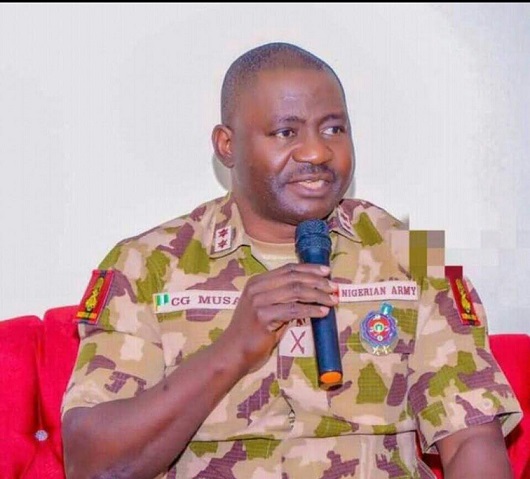
Defence Headquarters dismisses coup report as “false and malicious”

By Abdullahi Mukhtar Algasgaini

The Defence Headquarters (DHQ) has strongly denied an online report linking the cancellation of Nigeria’s 65th Independence Anniversary parade to an alleged coup attempt.

In a press release signed by Brigadier General Tukur Gusau, the DHQ described the publication as “false, malicious, and intended to cause unnecessary tension.” 

The military high command stated that the parade was cancelled to allow President Bola Ahmed Tinubu to attend a strategic bilateral meeting abroad and to enable the Armed Forces to sustain their operations against terrorism, insurgency, and banditry.

The statement also addressed the recent arrest of sixteen officers, clarifying that they are part of a routine investigation for professional misconduct. The DHQ assured that an investigative panel has been constituted and its findings will be made public.

Reaffirming its loyalty, the Armed Forces declared its unwavering commitment to the Constitution and the Federal Government, urging the public to disregard the falsehood being circulated by “purveyors of misinformation and enemies of our nation.” 

The statement concluded with the firm declaration, “Democracy is forever.”

Rule of law must be upheld for democracy to thrive — NBA Ungogo chair

By Uzair Adam

The Nigerian Bar Association (NBA), Ungogo Branch, on Monday flagged off its 2025 Law Week in Kano, joining counterparts across the country in celebrating the legal profession and underscoring the rule of law as fundamental to Nigeria’s democratic future.

The week-long event featured a range of activities — including prayers, a health walk, sporting contests, a cocktail party, dinner, and paper presentations — designed to promote reflection, unity, and professional engagement.

While addressing participants during the ceremony, Chairman of the NBA Ungogo Branch, Barrister Ahmad Abubakar Gwadabe, described the Law Week as more than a routine tradition.

He said it was “a celebration of our identity, a reaffirmation of our professional calling, and a rare opportunity to reflect deeply on the legal and societal questions that shape our democracy.”

According to him, the theme of this year’s event, “The Rule of Law in a Democratic Society,” is not only timely but vital, given the current realities in the country.

“At a period marked by democratic uncertainties, institutional fragility, and a growing call for social justice, we must remind ourselves that the rule of law is not an option — it is the very soul of any genuine democracy,” he said.

Barrister Gwadabe cautioned that when the rule of law is undermined, governance becomes arbitrary, rights are violated, and power goes unchecked.

He stressed that only its firm presence ensures that “societies flourish, institutions gain legitimacy, and the dignity of every citizen is protected.”

He also spoke on the design of the Law Week activities, noting that they were structured to blend professional development with member bonding.

“The week entailed prayers, health walk, sporting competitions, cocktail party, dinner, and paper presentations. These were carefully chosen to balance both professional development and unity among members,” he said.

Highlighting some of the branch’s achievements, Gwadabe mentioned initiatives to decongest prisons, promote bail for bailable offences, defend human rights, and build synergy with the judiciary and legislature.

He further disclosed plans for a forthcoming ‘Law and Order Summit’ — an initiative aimed at facilitating dialogue among community leaders, youth groups, law enforcement, and policymakers to tackle insecurity and youth restiveness in Kano and across the northern region.

Representing the Kano State Government, Secretary to the State Government, Umar Farouk Ibrahim, commended the NBA Ungogo Branch for its efforts. He described the rule of law as a pillar of justice and good governance.

“Democracy without the rule of law is like a body without a soul — lacking purpose, direction, and legitimacy,” he said, adding that it is the ultimate safeguard that ensures no one, regardless of status or position, is above the law.

He also reaffirmed the state government’s commitment to strengthening the justice system through recruitment of new state counsels, capacity building, and infrastructure support.

“Justice delayed is not only justice denied, but a threat to the very foundation of democratic order,” he said.

Also speaking at the event, the Attorney General and Commissioner for Justice, Haruna Isa Dederi — represented by Director of Civil Education, Usaini Hassan Sulaiman — reiterated the state’s commitment to legal reform and judicial independence.

“We take this principle seriously,” he said, citing efforts such as the construction of a new Kano State High Court Complex, enhancement of anti-corruption systems, and the passage of human rights protection laws.

While acknowledging existing challenges, he assured attendees that the government remains committed to continued reforms and working closely with legal professionals.

The gathering brought together legal experts, government officials, academics, and civil society actors, all of whom echoed the call to safeguard the rule of law as a collective responsibility for peace, justice, and the survival of democracy.

Rivers, Nigeria’s democracy and matters arising

By Blaise Emeka Okpara

If recent events in Nigeria’s body politic are anything to go by, then one would be right to conclude that our democracy is headed for the rocks. At no time in our nation’s history has such a calamity of monumental proportions befallen us! What is worse, we are witnessing for the first time an unholy alliance between the three arms of government. What this portends is that the people, who should be the primary concern of governance, are now being relegated to the background.

There is great danger, and from the look of things, it might not get better anytime soon. The current reality in Nigeria, where both the legislature and judiciary have collapsed their structures into that of the executive, has created an atmosphere of distrust and hopelessness among Nigerians. There is a disconnect between the government and the people. This dichotomy exists due to the nonchalance associated with the current crop of political leaders.

Of great concern is the recent declaration of a state of emergency in Rivers State, which saw the suspension of a duly elected governor and the appointment of a sole administrator. While it is undeniable that the Constitution of the Federal Republic of Nigeria, in Section 305, bestows upon the President the power to declare a state of emergency, it does not grant him the power to remove an elected governor. 

More disheartening was the speedy ratification by the Senate through a voice vote. How, on earth, did the Senate determine a two-thirds majority through a voice vote? These and many other questions continue to bug the discerning.

As if that were not enough, the Attorney General of the federation and Minister of Justice, Lateef Fagbemi SAN, was vociferous  in his outburst, threatening that the President would not hesitate to declare more states of emergency in any state if it becomes necessary. In a democracy! Such unguarded utterances should not be encouraged because they go against the principles of democracy. 

Moreover, from all indications,it seems that the days of healthy debates in the national assembly are gone. Today, Nigeria has a  national assembly that functions as an extension of the executive. One wonders what might become of our democracy if President Ahmed Tinubu decides  to prolong his stay in office beyond the constitutionally required terms. With the antecedents of this current national assembly, one might conclude that it is a done deal. 

Sadly, the judiciary is not exempt. At a time when Nigerians look to the judiciary as the bastion of democracy, the institution has been so undermined that it no longer inspires confidence among the populace. Brazen disregard for justice, driven by monetary inducement, has become the norm. This is even more evident in the audacity with which Nigerian politicians now instruct aggrieved individuals to go to court. 

Outcomes of judicial processes can easily be predicted by simply observing those involved. When a nation has a judiciary that takes orders from the executives, where then lies the hope for the common man? One can only find judges hobnobbing with politicians in a compromised judiciary.  

The return to constitutional democracy was met with great expectations and optimism from Nigerians after years of military rule. However, more than two decades later, it seems Nigeria is gradually drifting towards a darker era where only a privileged few individuals manage the affairs with little or no regard for the people.

There is a pervasive feeling of helplessness among Nigerians that those in positions of authority can do and get away with anything. As scary and unsavory as this may sound, it is the truth, given recent occurrences. It reeks of a lack of empathy for a President to declare the removal of the subsidy on the day of his inauguration without considering the impact on the people. To this day, Nigerians are still reeling from the effects of that hasty decision. Needless to say,millions of Nigerians were plunged into poverty as a result. 

Unlike in 2013, when the then-President removed the fuel subsidy and Nigerians had the freedom and courage to take to the streets, the reverse is now true. In fact, during the last “Hunger protest,” most protesters were teargassed by the police, and some were arrested. The criminalization of protests in Nigeria by the current administration has instilled fear among citizens. When citizens are frightened by the government of the day, it’s not a democracy.

The usual refrain by the police that protests would be hijacked is purely a calculated attempt to suppress dissenting voices. This confrontational approach to peaceful protesters is undemocratic because it contradicts citizens’ rights to freedom of expression as enshrined in section 39 of the 1999 constitution (as amended). If citizens’ rights to protest are being trampled upon, then it is correct to conclude that we are gradually sliding back to the despotic years of the military, where speaking truth to power was considered an act of bravery. 

Conclusively, most of those in positions of authority today, like the sitting President, often wax lyrical about their heroics during the NADECO days of the military. President Tinubu was among the major organizers of the “occupy Nigeria” protests, which saw his party, the All Progressive Congress(APC), come to power. If protest was fashionable then,why is it not now? 

Democracy thrives on fundamental principles such as the separation of powers among the three branches of government to ensure checks and balances, fundamental human rights, the rule of law, popular participation, and, most importantly, legitimacy. 

Only the people can bestow this legitimacy through periodic elections. When these core principles are abused,democracy is in danger. Political office holders need to engage in introspection to curtail their high-handedness and save our democracy from imminent collapse. To be forewarned is to be forearmed.

Blaise Emeka Okpara writes from Abuja and can be reached at: emyokparaoo1@gmail.com.

Brice Oligui Nguema elected president of Gabon in landmark post-coup election

By Muhammad Abubakar

Brice Clotaire Oligui Nguema has been elected president of Gabon, securing more than 90% of the vote in the country’s first election since the 2023 military coup that brought him to power.

General Oligui Nguema, who led the ousting of longtime leader Ali Bongo Ondimba in August 2023, had been serving as transitional president. His victory marks a significant milestone in Gabon’s political transition following the end of the Bongo family’s 56-year rule.

The provisional results, announced by electoral authorities, indicate overwhelming support for Oligui Nguema, though opposition figures have raised concerns about the fairness of the process.

The election is seen as a pivotal moment for the central African nation as it seeks to restore democratic governance and stability.

Brice Oligui Nguema poised to win Gabon election after coup

By Hadiza Abdulkadir

Gabonese voters head to the polls Saturday in a pivotal election expected to cement army officer Brice Clotaire Oligui Nguema’s grip on power. Nguema, who led a coup last year ousting long-time ruler Ali Bongo, is widely popular for ending the Bongo family’s decades-long rule.

Unlike many juntas across Africa, Nguema has allowed relatively free elections and avoided harsh crackdowns. However, concerns remain about his democratic intentions.

A new constitution passed in November boosts presidential powers, and Nguema—though promising to step down from the military—has yet to do so formally.

International observers are watching closely, hoping Gabon can buck the trend of prolonged military rule seen in parts of West and Central Africa.

The outcome of this election may shape the country’s democratic future and signal whether Nguema intends to truly hand power back to civilians.

Strengthening democracy: A call for reforms in Nigeria’s governance 

By Alamin Musa Muhammad 

In recent years, Nigeria has stood at a pivotal juncture in its democratic evolution. Our country, rich in natural and human resources, has grappled with challenges that threaten to undermine its democratic institutions. While there have been successes, particularly in the peaceful transfer of power and the continuation of democratic processes, systemic issues call for reflection and reform.

At the heart of these challenges is the question of participation. Democracy, in its ideal form, seeks to empower every citizen, granting them a voice and ensuring that the governance structures are responsive to all needs.

Many since have similar opinions about the actual practice of democracy in Nigeria. Peter Obi, a former presidential candidate for the Labour Party (LP) in the general election of 2023, has expressed dismay at the state of Nigerian democracy, claiming that it has seen numerous losses and is hampered by poor leadership.

He tweeted, “We have continued to rank low and perform badly in every measurement of true democracy, signalling a critical deficiency in our democratic system.”

The Nigerian experience with democracy has revealed gaps in this aspiration. These gaps are not necessarily due to a lack of commitment to democratic principles but rather to a broader issue of implementation and inclusivity.

One of the core pillars of democracy is the ability of its citizens to participate meaningfully in governance, or at least that is what the famous scholar Plato believes. While voting and elections form the bedrock of this participation, they alone are insufficient to achieve the broader goals of justice, equity, and empowerment.

Gabriel Dewan, Plateau state speaker house of assembly, said, “Nigerian leaders, including myself, have failed the people after 25 years of the country’s unbroken democracy; he rated Nigeria’s democracy low”.

Nigeria’s political landscape, shaped by decades of military rule and the influence of elite-driven politics, often fails to translate electoral victories into genuine empowerment for its citizens.

Premium Times reported the speaker to have said that the country was blessed with abundant human and natural resources, but the leaders did not correctly harness them. With the natural resources and blessings God had bestowed upon Nigeria, the country ought to be far better than it is now; there are countries with far fewer resources than Nigeria, yet they were in a much better state.

Like many before it, the current administration has embarked on a series of reforms aimed at stabilising the economy and addressing security issues. Yet, while commendable in intent, these efforts highlight the complexities of governance in a diverse and multifaceted society. The rising cost of living, coupled with increasing insecurity, suggests that reforms must be more attuned to the lived realities of the people.

Nigeria is a poignant example of the disconnect between democratic theory and practice within the country’s political landscape. As BBC reporter Simi Jolaoso noted in a Wikipedia publication, Nigeria is experiencing “the worst economic crisis in a generation,” marked by soaring inflation and skyrocketing food prices. 

The crisis has been exacerbated by economic reforms introduced under the current administration, including the removal of fuel subsidies and the devaluation of Naira. While these measures were ostensibly aimed at liberalising the economy and attracting foreign investment, they have instead intensified the hardships faced by ordinary citizens. 

Protests erupted on July 29, 2024, with demonstrators taking to the streets, brandishing placards proclaiming messages like “Enough is Enough” and “We Are Not Slaves in Our Country.” Such sentiments highlight the erosion of social justice and the exclusion of the masses from meaningful political participation, reflecting the theories posited by Dewey and others that underscore democracy’s essence as a system of values rather than merely a political framework. 

Reforms must also extend to the institutions that safeguard democracy. A robust judiciary, a free press, and an active civil society are essential components of a functioning democracy. Strengthening these institutions will protect citizens’ rights and ensure that the government remains accountable to the people it serves.

Furthermore, the concept of democracy as merely a political system defined by elections and power transfers must evolve. Democracy, at its core, is about fostering a system of values—justice, equity, and social progress. A democracy that fails to address society’s socioeconomic disparities or marginalises large sections of its populace cannot fully claim the mantle of democratic legitimacy.

As Nigeria looks to the future, the question that must be asked is whether the current reforms genuinely work for the greater good of all Nigerians. While there are many challenges, they also present an opportunity—a chance to redefine governance in a way that is more responsive, more inclusive, and more attuned to the aspirations of its people.

The strength of Nigeria’s democracy will ultimately depend on its ability to adapt and reform in ways that bridge the gaps between policy and practice, between the elite and the grassroots, and between political ambition and the needs of everyday Nigerians.

The decisions made today will shape Nigeria for tomorrow. It is a call to action—not just for those in government but for every Nigerian who believes in the promise of democracy.

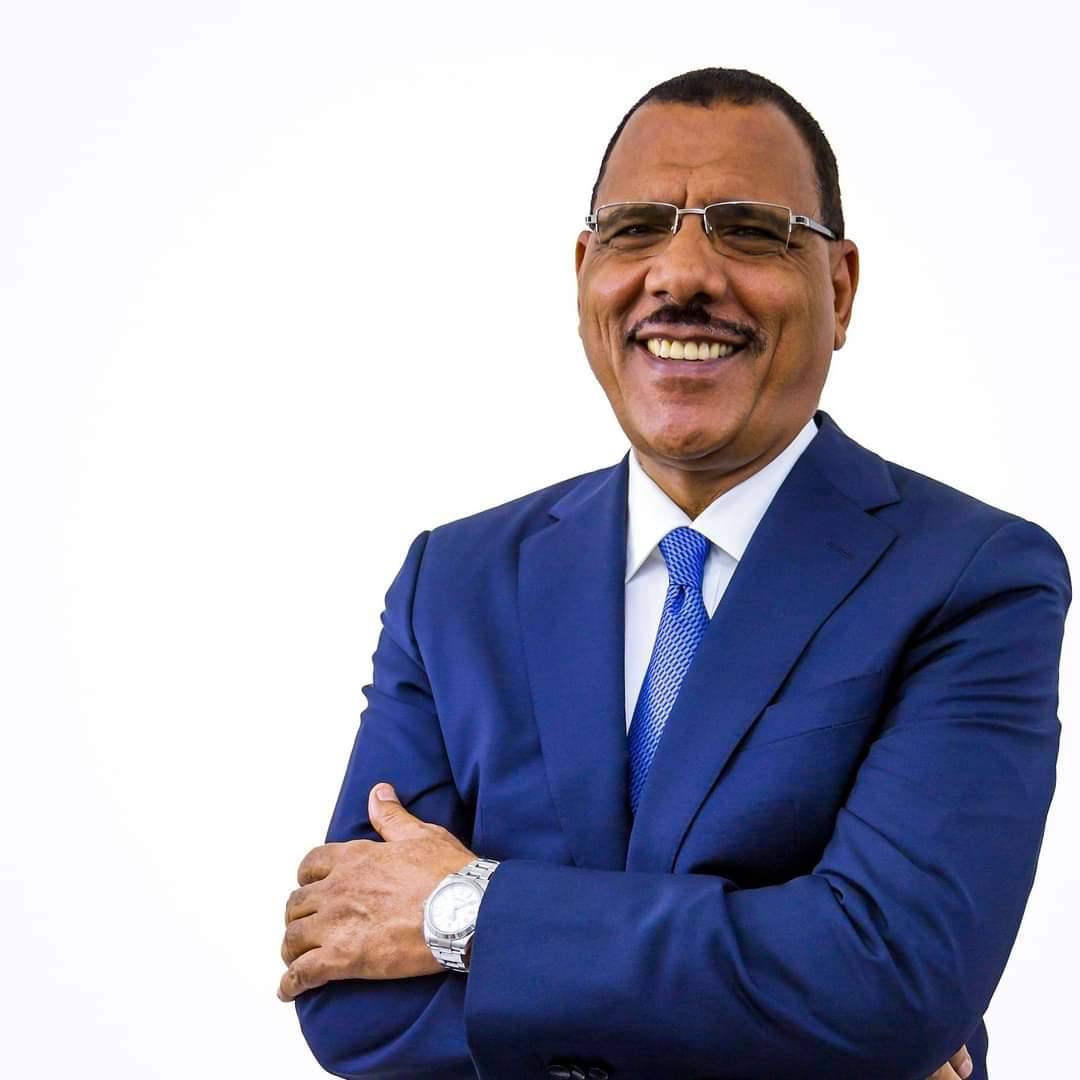
Free Niger, free Bazoum

By Dr. Aliyu U. Tilde

The stalemate between ECOWAS and Niger Republic needs to be broken urgently for humanitarian and strategic reasons. The decision should be taken tomorrow at the meeting of the Heads of State of the regional body to shorten the unnecessary suffering of 26 million ECOWAS citizens in Niger.

Humanity

The world is appalled by the ongoing starvation in Gaza, and it is rightly calling for its end. In a similar way, the humanity in us should trigger our conscience to open Niger’s borders and restore its electricity. There is just no reason why we should superintend over the death of African lives and the destruction of the economy of a member state in the name of democracy. It is no longer about Mohamed Bazoum or General Tchiani or the neo-colonial interest of France. It is about the people of Niger.

Democracy is not as important to Africans as it is to their lives and livelihoods. In a year or two, Niger can return to democracy, and heavens will not fall before then. However, the longer we strangulate Nigeriens now, the longer our guilt for the collective punishment we meted on them last later. On their part, the Nigeriens will retain—and recall—for generations the long memory of ECOWAS’ suffocating sanctions, and they will bring it to bear on every future association with Nigerians in particular.

A Shot in the Foot

Apart from the imperatives of history, DNA, culture and contiguity, the Niger Republic will, through River Niger and our future Europe-bound gas pipeline, continue to play a crucial role in our economy, not to mention the daily cross-border trade relations worth billions of Naira.

Our weaponization of electricity to Niger will seriously undermine future strategic cooperation with the Republic regarding River Niger. Nothing will stop it from damming the River in a big way to ensure its national electricity and food security, letting us get sufficient water in Kainji and Jebba Dams only when there is an overflow. We will be forced to rely solely on gas for power generation.

Our national security will also be at great risk when Niger inevitably develops cold feet, as a payback, on our strategic partnership against Boko Haram and Bandit terrorism. Niger is just a neighbour too important for Nigeria to call off. I am not sure if we haven’t shot ourselves in the foot already.

Forward

The July coup is now a standing reality. I suggest, as a way out, that ECOWAS demands two assurances from Niger, with a third party, say America, serving as a guarantor to the agreement: The release of Bazoum and a short timetable for a return to civilian rule in exchange for immediate removal of sanctions. This ‘Niger free, Bazoum free’ formula will immediately relieve the population of the horrendous difficulties it is undergoing and save the lives of the sick, including women and children, who are dying in Nigerien hospitals due to the blackout. It will also save the investments of hundreds of Nigerians whose loaded vehicles have been stranded at the borders for months now.

Bazoum’s government is spilt milk which cannot be recovered. ECOWAS should let this go and prepare for the future. It can consider establishing a standing force to immediately intervene in future incidents if necessary without procrastination. But how democracy is proving to be a conveyor of poverty and bad governance in Africa makes it a creed not worthy of such a financially heavy enterprise.

Instead, ECOWAS should develop mechanisms to promote good governance as the only assurance of stability and prosperity and a panacea against future coups. No matter the situation, in the future, measures that will bring hardship to citizens and ruin the economies of member states should be avoided as much as possible by ECOWAS. We cannot be Americans in Iraq. Otherwise, we will only be surrogates of colonial masters. So far in Niger, we have cut our nose to spite our face. Tomorrow, December 10th, is the date to start stitching it.

Dr. Aliyu U. Tilde can be reached on Twitter: @Dr_AliyuTilde.