Daniel Bwala

Bwala, Mehdi Hasan and the reality of global journalism

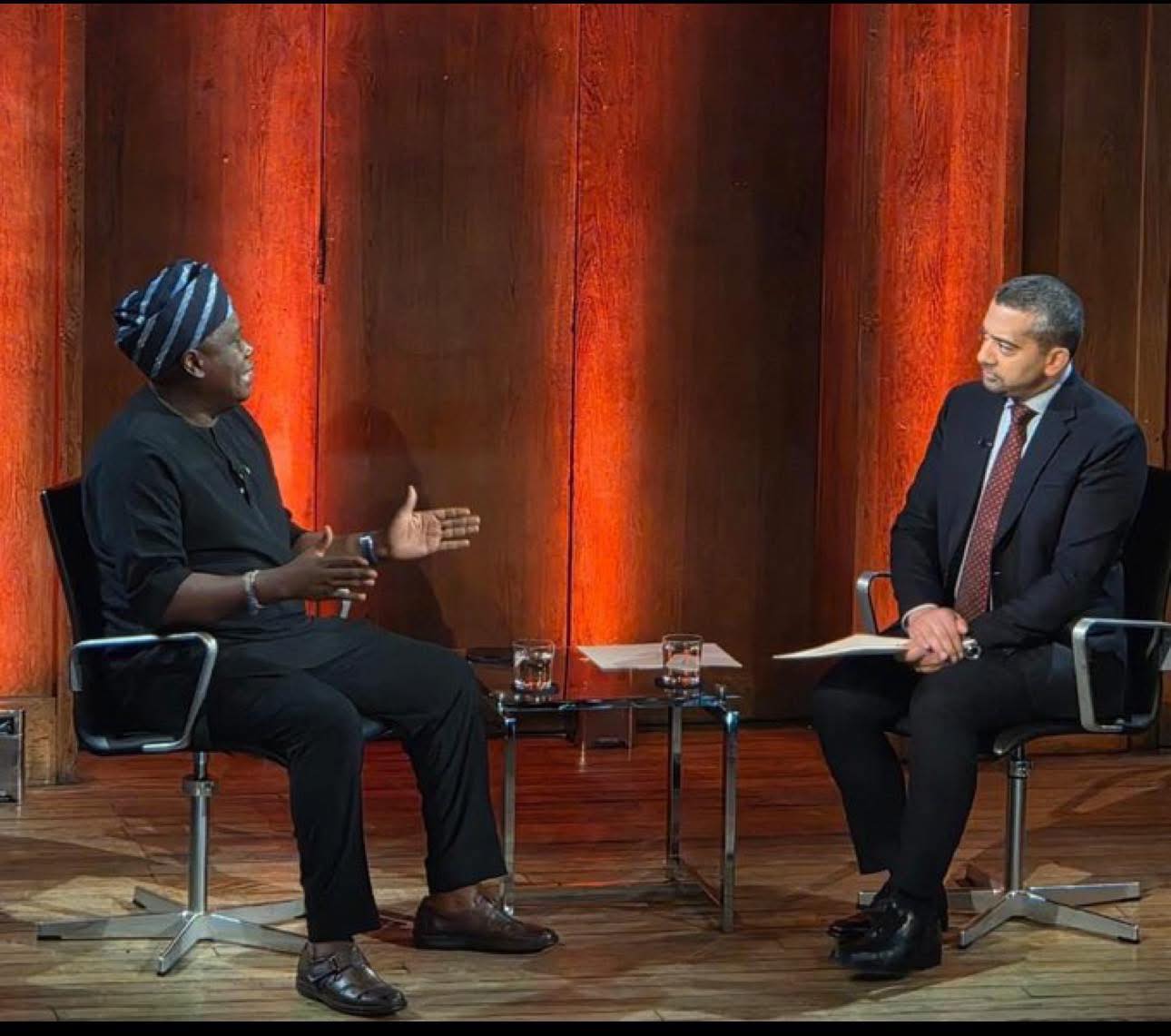
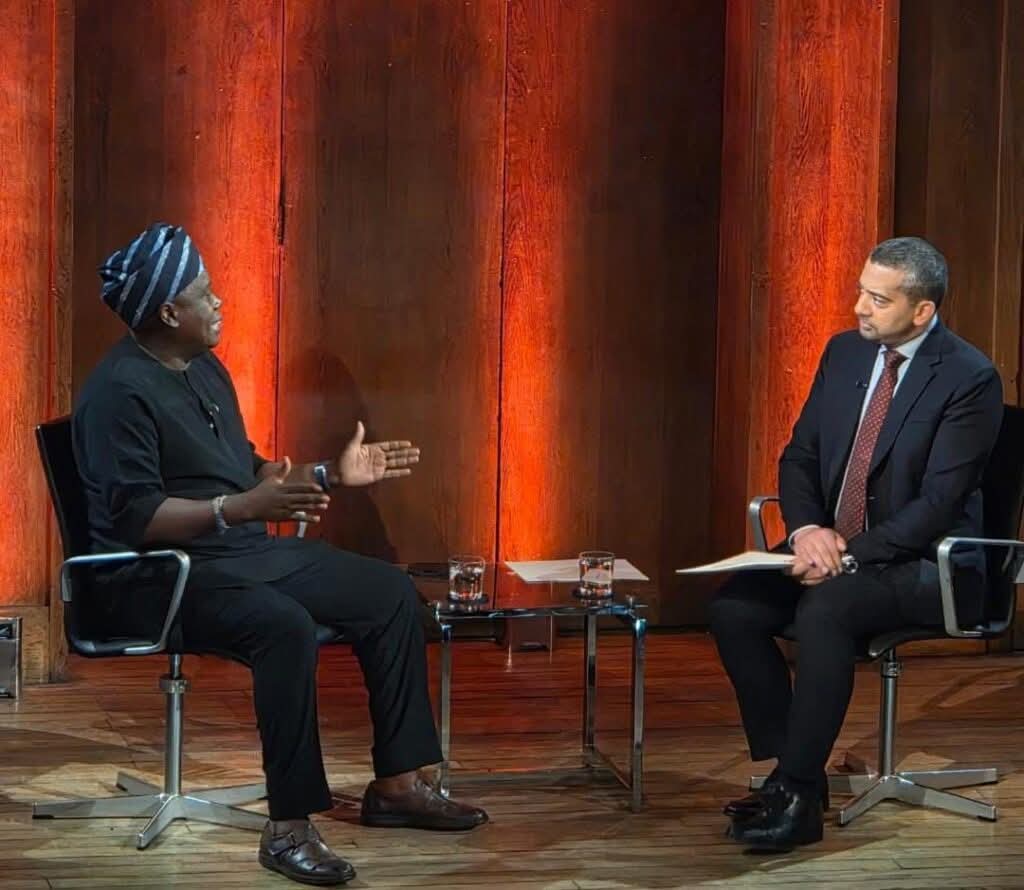
The recent exchange between Daniel Bwala and Mehdi Hasan on Al Jazeera’s Head to Head programme has sparked widespread debate across Nigeria’s political and media space. The interview, which quickly went viral on social media, has been interpreted by many observers as a revealing moment at the intersection of political communication, accountability, and international journalistic standards.

Appearances on global platforms such as Al Jazeera are rarely routine engagements. Programmes like Head to Head are built on a tradition of rigorous questioning, where political figures are expected to defend their arguments under intense scrutiny. For journalists such as Hasan, whose interviewing style is known for its directness, the objective is not merely to host a conversation but to interrogate claims with evidence, previous statements, and policy records.

It is within this context that Bwala’s performance, a media aide to Bola Ahmed Tinubu, has attracted considerable commentary. Some analysts argue that the controversy surrounding the interview reflects a broader challenge faced by many political spokespersons when transitioning from domestic media environments to global broadcast platforms. International interviews of this nature often demand a high level of preparation, particularly when the subject has an extensive public record that can be referenced during questioning.

One of the most notable aspects of the interview involved the presentation of Bwala’s earlier criticisms of Tinubu during the period leading to the 2023 Nigerian presidential election. Before aligning with the current administration, Bwala had publicly expressed views that were sharply critical of the president and his political movement. During the interview, those earlier remarks were revisited and contrasted with his present role as a defender of the government’s policies.

In professional journalism, such lines of questioning are neither unusual nor inappropriate. Public figures frequently encounter questions about their previous positions, particularly when those positions appear to contradict their current stance. The purpose is not necessarily to embarrass the interviewee, but to test the consistency and credibility of their arguments.

Following the broadcast, Bwala reportedly stated in subsequent media interviews that he felt “ambushed,” suggesting he had not anticipated extensive questioning about his past remarks on Tinubu. That explanation, however, has generated further discussion among media commentators. Critics maintain that any appearance on a programme known for its confrontational format should reasonably come with the expectation that past public statements may be scrutinised.

Beyond the immediate personalities involved, the episode highlights an important issue in Nigeria’s political communication culture. Many public officials are accustomed to interview formats within the local media environment, where questioning can sometimes be less adversarial and more conversational. While this approach may foster cordial interactions between journalists and political actors, it can also create a degree of unpreparedness when officials engage with international media institutions that operate under different professional expectations.

Global news networks often emphasise adversarial journalism as a way of ensuring accountability. Interviewers are expected to challenge power, confront inconsistencies and demand evidence for political claims. Within that framework, the intensity of the Hasan–Bwala exchange was largely consistent with established international broadcasting practices.

There is also a broader dimension to consider. When government representatives appear on international media platforms, their performance inevitably shapes perceptions of their country’s governance and political culture. Such appearances, therefore, carry implications that extend beyond individual reputations, touching on issues of national image and diplomatic communication.

Nevertheless, the controversy surrounding the interview also offers a useful moment for reflection. Nigeria’s democratic system benefits from open engagement with the media, both domestically and internationally. In an era where information circulates instantly across borders, political communicators must recognise that past statements remain accessible and can resurface at any moment.

Ultimately, the Bwala–Hasan interview serves as a reminder of an enduring reality in public life: political narratives are constantly subject to scrutiny. In the digital age, where every speech, interview or social media post becomes part of a permanent archive, consistency and preparation are essential tools for anyone representing government policy.

Whether one views the exchange as a difficult interview, a tactical misstep, or simply the normal workings of adversarial journalism, it reinforces the importance of accountability in democratic discourse. When political actors face rigorous questioning, the process may be uncomfortable, but it remains central to the role that journalism plays in holding power to account.

Abdulhamid Abdullahi Aliyu is a journalist and syndicate writer based in Abuja.
Tinubu’s aide, Daniel Bwala, defends ‘controversial’ interview with Al Jazeera

By Sabiu Abdullahi

Daniel Bwala, the Special Adviser to President Bola Tinubu on Media and Policy Communication, has responded to the criticism that followed his recent appearance on Al Jazeera’s Head to Head programme.

He said he stands by his decision to defend the Tinubu administration during the interview with journalist Mehdi Hassan and has no regrets about taking part in the programme.

The interview, which aired on Thursday, generated strong reactions across social media platforms. Several clips circulated widely on X, where many commentators criticised Bwala’s performance and described it as embarrassing.

During the discussion, Hassan confronted Bwala with remarks he made in the past about President Tinubu before he defected from the Peoples Democratic Party to the All Progressives Congress in 2023. In those earlier comments, Bwala had referred to Tinubu as corrupt, unfit to lead, and a drug baron.

At some points in the interview, Bwala disputed making certain statements. Hassan then presented video recordings of the remarks, which triggered further reactions and mockery online.

The Al Jazeera host also questioned Bwala on Nigeria’s worsening security situation. Hassan cited figures from reports published by Amnesty International and Human Rights Watch. Some critics later argued that Bwala did not counter those figures with independent data.

In a statement released on Saturday, Bwala said the backlash was expected. He claimed the criticism came largely from opposition supporters and insisted it would not distract him from his responsibilities in government.

“The majority of the naysayers are members of the opposition and their sympathisers. It does not bother me one bit. Their temporary excitement over the interview has not lasted and will not last, because it does not take away their obvious problem of lack of vision and mission in conducting and managing a political party.”

Bwala also rejected suggestions that his appearance on the programme was meant to impress viewers.

He said, “Selling ice cream, looking fine, and seeking the praises of men were never part of” his job description, he said, adding that promoting and defending the President and his administration was what he did “with ease and joy.”

The presidential aide stated that producers of the programme first contacted him nearly six months ago. He said they indicated interest in questioning the government on issues such as security, corruption, and the economy. According to him, they never informed him that the interview would include questions about his past political comments.

“Nowhere in our almost six months of communication did they mention that they were going to challenge my past. If that had been their plan, ethically and professionally, they were supposed to inform me so I could prepare my response. But that’s okay, ethically, that is on them, not on me.”

Bwala further accused Hassan of using what he described as “opposition research-style journalism.” He alleged that some of the statements presented during the interview were inaccurate, while others amounted to “outright fake news.” He said he would address those issues in detail later.

On the issue of his earlier criticism of President Tinubu, Bwala said political rivalry often leads to strong statements.

“I am glad those were things I said when I was in the opposition saddle with such zeal. It is all politics.

“Half of Donald Trump’s cabinet is made up of people who once spoke against him, and quite a number of people in our own cabinet also spoke against President Tinubu in the past. Those things do not bother him if you care to know.”

Bwala also criticised opposition parties. He said they lack a clear plan for governance and electoral success.

“They have no path to victory and no alternative policies or programme for the Nigerian people.

“And if they say they do, they can as well go to Head to Head and be interrogated on that.”

He stressed that he remains willing to face tough interviews in defence of the government.

“I have never, and will never, subscribe to ducking or dodging interviews on matters that concern promoting and defending the administration I was appointed to serve,” he said. “It is the least of what is required of me.”

Bwala also expressed interest in returning to the programme for another discussion. He said future conversations should focus on the government’s policies and achievements rather than his past political comments.

“I am glad that by then questions about my past will no longer be news so that we can focus on our administration’s policies, programs and what we have achieved so far,” he said.

Despite his criticism of how the interview was conducted, Bwala spoke positively about the Al Jazeera host.

He described Hassan as “arguably the best debater on the planet” and said he still respects and admires him.

Presidency accuses El-Rufai of conspiring to overthrow Tinubu’s government

By Abdullahi Mukhtar Algasgaini

The Nigerian Presidency has criticized former Kaduna State Governor Nasir El-Rufai for his comments about democracy in the country.

The Daily Reality reported that El-Rufai, speaking at a national conference in Abuja on Monday to strengthen democracy in Nigeria, stated that the ruling All Progressives Congress (APC) party has failed to fulfill its promises to the people.

He said, “I no longer see the APC as a party. There has been no meeting of any party organs for two years—no meetings of the party leadership, no NEC, nothing. We don’t even know if it’s a one-man party or if there’s no structure at all.”

The former governor added that there was a significant gap between the party and the people, noting that the APC had deviated from its founding purpose and could no longer deliver on its promises to the public.

He further stated that the country’s problems result from the leadership of incompetent, lackadaisical individuals who hold power.

In response, Daniel Bwala, former Federal Capital Territory Minister and Special Adviser to President Bola Tinubu on Communications, accused El-Rufai of plotting to destabilize the government he helped establish.

On his X platform, Bwala queried whether El-Rufai would make such remarks if he were part of the current government and seated in the cabinet.

“Brother, if you were in the government and the cabinet, could you take this position and express such views? History has shown such behaviour in the past. Now you want to overthrow the government you helped establish,” Bwala said.