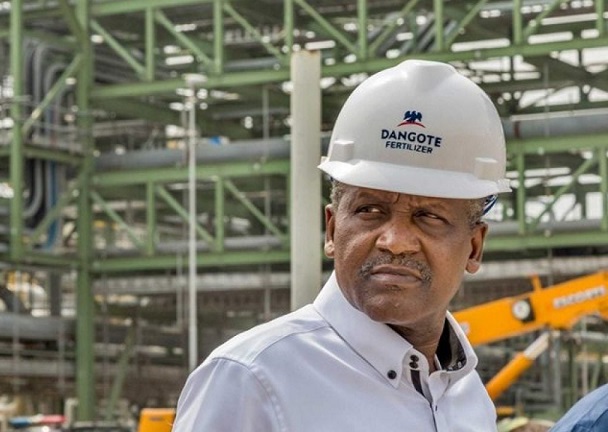
Dangote refinery

Dangote Refinery, energy security and the monopoly of the oil sector

By Kabir Fagge Ali

Nigeria’s oil industry was recently thrown into chaos following disputes that erupted between Farouk Ahmed, the Chief Executive Officer (CEO) of the Nigerian Midstream and Downstream Petroleum Regulatory Authority (NMDPRA), and Aliko Dangote, President of the Dangote Group when the former accused the Dangote Refinery of producing substandard diesel and operating without proper licensing.

As stated by the NMDPRA, the diesel from Dangote’s refinery contained unsafe levels of sulfur, suggesting it was inferior to imported products. In response, Dangote countered these claims by presenting laboratory tests proving his diesel’s superior quality and compliance with international standards.

Dangote emphasised that the NMDPRA had previously accredited his refinery’s in-house laboratory, which added credibility to his defence—going ahead to criticise the reliability of the NMDPRA’s testing methods and called for an investigation into the standards of fuel testing laboratories in Nigeria.

During a visit by leaders from the House of Representatives, Dangote demonstrated the refinery’s production capacities and dismissed allegations of receiving special incentives. Industry analysts confirmed that although the refinery is in the pre-commissioning stage, it is already producing fuel.

This controversy brings to light critical issues surrounding energy security, monopoly, and the potential benefits to Nigeria’s economy as we understand the importance of energy security to national economic stability and development.

For Nigeria, the most populous country in Africa, ensuring energy security is essential for economic growth, industrialisation, and the overall well-being of its citizens. Recent changes, such as removing fuel subsidies, have underlined the importance of a robust and reliable energy sector.

Energy security can be viewed through both long-term and short-term lenses. Long-term energy security involves investments that support sustainable economic development and environmental needs. Short-term energy security focuses on the immediate availability and affordability of energy.

It is often noted that energy security encompasses availability (geological), accessibility (geopolitical), affordability (economic), and acceptability (environmental and social) considerations. These address concerns related to the depletion of fossil fuel reserves and environmental impacts.

The Dangote Refinery represents a significant step towards improving Nigeria’s energy security. By reducing the country’s reliance on imported refined products, the refinery aims to enhance energy independence and stability. This shift is expected to alleviate some economic burdens, particularly in light of recent subsidy removals, as I mentioned before, that have led to increased fuel prices and higher costs of goods.

However, there are concerns about monopoly and regulatory oversight. Under President Bola Ahmed Tinubu, the Nigerian government deserves a commendation for collaborating with the Dangote Refinery to address these challenges. Nevertheless, the government and the Dangote Group must work together to ensure that the benefits of this refinery extend to Nigerian citizens.

The Government should ensure that this collaboration includes fair pricing agreements and transparent operations, ensuring that the refinery’s products are affordable and accessible to the populace. According to the National Bureau of Statistics, the removal of the subsidy has led to a decline in economic growth, with the country’s GDP contracting by 1.92% in the first quarter of 2023.

The Dangote refinery is a welcome development for Nigeria’s energy security. The refinery, which is expected to be one of the largest in Africa, will have the capacity to produce 650,000 barrels of refined petroleum products per day. This will significantly reduce Nigeria’s dependence on imported petroleum products, thereby reducing the country’s energy costs and increasing its energy security.

Energy security is a critical component of Nigeria’s economy, and the Dangote refinery is a step in the right direction. By reducing the country’s dependence on imported petroleum products, the refinery will help to conserve foreign exchange, reduce the pressure on the naira, and increase the country’s GDP.

Furthermore, the refinery will create jobs, stimulate economic growth, and increase government revenue. However, the Dangote refinery’s dominance in the Nigerian energy market has raised concerns about an energy monopoly.

The NMDPRA has expressed concerns about the refinery’s potential to dominate the market, leading to a lack of competition and high consumer prices. Aliko Dangote has countered that the refinery will increase competition and reduce prices, as it will provide an alternative to imported petroleum products.

Despite the concerns about energy monopoly, the Nigerian government and Aliko Dangote have agreed to collaborate to ensure that the refinery benefits the Nigerian economy. The government has provided incentives and support for the project, while Dangote has committed to ensuring that the refinery operates transparently and competitively.

While the Dangote refinery is a significant development for Nigeria’s energy security, the country still relies heavily on fossil fuels. Nigeria needs to diversify its energy sources to include renewable sources such as solar, wind, and hydropower.

This will reduce the country’s dependence on fossil fuels, reduce its carbon footprint, and mitigate the impact of climate change.

Although concerns about energy monopoly need to be addressed, the collaboration between the government and Dangote is a positive development. However, Nigeria must diversify its energy sources to include renewable ones to ensure a sustainable energy future.

Kabir Fagge Ali, a youth corps member with PRNigeria Centre, wrote via faggekabir29@gmail.com.

NNPCL and Dangote refinery: whom will Nigerians trust?

By Ibrahim El-Caleel

This press release shows that Dangote Refinery is also enjoying the whole petroleum industry ruse and elongating it. NNPC said they bought your petrol at N898. Instead of this press statement to deny it, you simply tell the public the actual price you sold it to them.

For example, “We didn’t sell petrol at N898 to NNPC. We sold it to them at N619”. Is this too difficult to do or unethical?

When you do this, then let the NNPC come and deny it; then you take the next step by publicly sharing a sample of the invoice where they bought it at N619 from Dangote Refinery. This is what transparency means.

But how do you expect people to believe this? Why should people trust Dangote Refinery and not NNPC? Both DR and NNPC are only making statements; they go explain taya, no evidence. Where is the invoice?

The petroleum industry in Nigeria lacks transparency. Nobody wants to let Nigerians understand what is going on so that they can start asking the right questions. They are leaving everyone in the dark so that immediately you say anything, they will mock you that you don’t understand anything; you are a layman who doesn’t understand anything about the oil business! Yet, you are the same layman buying the petrol which fuels the industry.

What Dangote Refinery is doing at the moment is just a glorified, or let me say corporate “DM for price”. It’s the same “DM for price” that BUA Cement did one time saying it has reduced the price of cement without giving any details on how much was the initial price before they “reduced” it.

Hello DR, NNPC,

Price is not a trade secret, geniuses! If you are hiding the price of your product, then there is something shady you are doing. How can you be doing a “DM for price” strategy for a global commodity like petrol? It takes me just a click to know the price of a barrel of crude oil in the global market, same thing for an ounce of gold. What is so special about the price of the Nigerian refined petrol that you need to keep it a secret?

Anyway, lemme mind my business. You know over the last few weeks I decided to give up on my self-assigned goal of understanding the petroleum industry. I only drive into a filling station and buy petrol according to what I can afford at the time. How the petrol got there ain’t really any of my business any longer. I don’t care. When we all become tired of the nonsense going on in Nigeria one day, I am sure we will come and agree on the way forward. I am very sure this nonsense cannot continue to happen forever. It will end one day.

NNPC mobilises trucks to Dangote Refinery for petrol distribution

By Uzair Adam 

The Nigerian National Petroleum Company (NNPC) Ltd. has deployed over 100 trucks to the Dangote Refinery in preparation for petrol loading, scheduled to begin on Sunday, September 15, 2024. 

According to a post by NNPC on its official X handle, the trucks were dispatched to the refinery’s fuel loading gantry in Ibeju-Lekki on Saturday, with more expected to arrive. 

“As of Saturday afternoon, more than 100 trucks had been mobilised, and by the end of the day, up to 300 trucks are expected to be stationed at the gantry,” the company said.

The deployment marks a significant step toward ensuring timely petrol distribution from the Dangote Refinery, which is expected to enhance fuel availability nationwide.

JUST IN: Dangote refinery begins petrol production

By Uzair Adam

The Dangote Refinery, with a capacity of 650,000 barrels per day, has begun producing petrol.

The announcement was made on Tuesday by Alhaji Aliko Dangote, the refinery’s Chief Executive Officer, while addressing journalists about this significant milestone.

The $20 billion refinery, built by billionaire businessman Aliko Dangote, commenced operations in January, initially focusing on the production of diesel and aviation fuel.

Further details are expected shortly.

Dangote Refinery and the Malta story

By Zayyad I. Muhammad 

Petrol and electricity are the oxygen of any nation. Once these two crucial resources are restricted, the country struggles to breathe. Many Nigerians were surprised to learn that Nigeria’s petroleum importation from Malta surged significantly to $2.8 billion in 2023, up from zero importation between 2017 and 2022. 

On the other hand, the majority of Nigerians were unhappy with the news that the $19 billion Dangote Refinery is struggling due to a poor supply of crude oil and other hindrances from government agencies that are supposed to support such a national asset.

For most Nigerians, Dangote Refinery represents hope and the expectation of lower petroleum prices. Regardless of people’s opinions about Dangote, he has accomplished what Nigeria has failed to achieve in decades. In fact, in the last ten years, only six countries in the world have managed to build new massive petroleum refineries, including the Dangote Refinery. 

Other countries that have built refineries include China, which has added multiple new refineries like the 400,000 barrels per day (b/d) Yulong Petrochemical Plant and the 300,000 b/d Shenghong Refinery; Kuwait’s Al-Zour refinery with a capacity of 615,000 b/d, which started operations in 2021; Saudi Arabia’s Jazan refinery with a capacity of 400,000 b/d, also operational since 2021; and Oman’s Duqm Refinery, with a capacity of 230,000 b/d, which commenced operations in 2022. Additionally, India has expanded its refining capacity with new units at the Ratnagiri refinery.

Nigeria’s importation of petroleum products was initially intended as a temporary solution to the insufficient supply from its four state-owned refineries. However, due to inefficiency and corruption, this temporary measure has become a permanent solution.

In Nigeria, the prices of refined petroleum products are heavily influenced by import-related factors. There are over ten components contributing to the landing cost of petrol, including freight, port charges, the NMDPRA 1% levy, storage costs, marine insurance, fendering, the NMDPRA COQ and NOA, Q&Q analysis, letter of credit fees, and interest. Additionally, the high exchange rate further inflates the price of imported petrol. To eliminate these extra costs, local refining is the only viable solution. Nigeria’s only option for now is the Dangote refinery.

Many Nigerians, ordinary citizens, and bureaucrats view the $19 billion Dangote refinery as an asset and a blessing. It has the potential to liberate Nigeria from decades of dependence on petrol importation, which is one of the major causes of pressure on the Naira and the scarcity of the dollar. The refinery will position Nigeria on the map of nations exporting crude and refined petroleum products and fertiliser. 

Dangote Fertiliser is one of the largest fertiliser plants in the world, with an annual production capacity of 3 million metric tonnes of urea. Nigeria’s yearly urea fertiliser needs are only 1.5 million metric tonnes. 

Dangote has already demonstrated his capability in the cement industry. With Dangote Cement, Nigeria is a net exporter. Nigeria boasts one of the largest cement industries in Africa, with a combined production capacity of over 58.9 million metric tonnes per year among major producers. It leads the cement industry in West Africa, hosting at least 12 registered companies. Dangote Cement is the largest producer in Nigeria and West Africa, contributing over 35.25 million metric tonnes per year (Mt/yr) to the region’s cement capacity. Due to Dangote’s significant cement production capacity, Nigeria satisfies not only its domestic cement needs but also exports to neighbouring countries, enhancing regional trade and economic integration.

Let the Dangote refinery be! It will transform the Nigerian oil and gas industry into a net exporter of refined petroleum products.

Zayyad I. Muhammad writes from Abuja via zaymohd@yahoo.com.

Of Dangote Refinery and NNPC brawl 

By Usman Abdullahi Koli, ANIPR 

Experts say that the newly established Dangote Refinery might address Nigeria’s energy crisis, but this legacy project is finding its footing in navigating the rigours of International Oil Companies (IOCs). Not only this, but government strategy policy greatly affects operations in the business space. The refinery is facing a fresh challenge from regulatory bodies in Nigeria, which may make or mar its success.

The $19 billion Dangote Refinery project has ignited a fierce debate between the Nigerian National Petroleum Corporation Limited (NNPC) and Aliko Dangote – Africa’s richest man. This flagship project, poised to be the largest single-train refinery in the world, has the potential to transform Nigeria’s economy and reshape the continent’s energy landscape. 

Yet, the dispute between NNPC and Dangote threatens to derail this vision. Can Nigeria find a harmonious balance between private sector efficiency and public sector oversight, unlocking the full potential of this game-changing project?

Aliko Dangote’s vision for the refinery is to reduce Nigeria’s dependency on imported refined petroleum products, saving the country billions in foreign exchange. He emphasises the need for private sector management to ensure efficiency and accountability, citing historical inefficiencies in government-run enterprises. Dangote seeks assurances that his substantial investment will yield returns, expressing concerns about potential government interference that could jeopardise profitability.

On the other hand, the NNPC maintains that it must have a significant role in the refinery to safeguard national interests. The corporation argues that state involvement is crucial to ensure that the refinery’s output aligns with national energy policies and goals. NNPC also emphasises the need for regulatory oversight to prevent monopolistic practices and ensure that prices of refined products remain affordable for Nigerians.

According to Mele Kyari, NNPC’s Group Managing Director, “Our involvement in the Dangote Refinery is to ensure that the project aligns with national interests and that the country benefits maximally from the investment.” Aliko Dangote, however, believes that “private sector efficiency is key to the success of the refinery, and government interference could hinder its progress.”

Dangote might be jittery about the government’s ineffectiveness in running similar assets. His fears would be that he who failed to turn around his refinery successfully wanted a front seat and, perhaps, direction. The business mogul’s aims surpassed the government’s fight against it after the allegations of monopoly attempts by the government. 

Dangote said his friend, who warned him against investing in Nigeria, now mocks him. He was ready to be bought out by the government when the regulatory body said that the refinery’s output was inferior to imported products. This statement ignited reactions from netizens.

The dispute highlights the tension between private enterprise and state control in critical sectors. Both sides present valid arguments that merit consideration. Balancing economic independence with national control, operational efficiency with public accountability, and investment security with public interest is essential to harness the benefits of both approaches.

As the saying goes, “Too many cooks can spoil the broth,” but in this case, finding a harmonious balance is key to ensuring the refinery’s success and, ultimately, Nigeria’s economic stability. Efficiency must be paired with accountability for any project to succeed, and this wisdom applies aptly to the current NNPC-Dangote situation.

Transparency and mutual respect are the pillars upon which this partnership should rest. By acknowledging the strengths and concerns of both parties, Nigeria can move towards a solution that advances the Dangote Refinery project while ensuring sustainable and inclusive growth for the nation.

In the words of Aliko Dangote, “The success of the refinery is paramount for Nigeria’s economic stability.” Mele Kyari also notes, “Our goal is to ensure that the refinery serves the national interest while also providing returns on investment.” Ultimately, the NNPC-Dangote dispute underscores the complexities of managing critical national assets. By finding a middle ground that balances private sector efficiency with public sector oversight, Nigeria can unlock the full potential of the Dangote Refinery and secure a brighter energy future for generations to come.

The path forward lies in a collaborative effort where the private and public sectors work together. If handled with care and foresight, this partnership can transform Nigeria’s energy landscape and set a benchmark for future endeavours. The Dangote Refinery has the potential to be a game-changer, and it is in the best interest of all Nigerians to see it succeed.

Usman Abdullahi Koli wrote via mernoukoli@gmail.com.

NNNPCL Boss: I will expose the truth when time comes

By Abdullahi Mukhtar Algasgaini

The Chief Executive Officer of the Nigerian National Petroleum Company Limited (NNPCL), Mele Kyari, has declared that he will reveal the truth about the company’s operations when the time is right.

Kyari made this assertion on Wednesday while testifying before a Senate ad-hoc committee investigating alleged economic sabotage in the petroleum industry.

Led by Senator Opeyemi Bamidele, the committee is probing the oil firm’s activities amidst controversy and public scrutiny.

Kyari denied any involvement in the importation of sub-standard products, stating that NNPCL is committed to transparency and honesty.

The CEO expressed frustration over unfair media attacks, which he believes are aimed at tarnishing the company’s reputation and creating the impression of economic sabotage.

“We are not criminals, we are not thieves,” Kyari said. “We will protect our dignity so we can serve this country.”

Kyari also revealed that the oil and gas industry is bleeding, hinting at undisclosed issues which “they” knew that cannot be made public “until the time comes.”

Will Dangote Refinery be a monopoly?

By Zayyad I. Muhammad

One entity that will benefit most from the Petroleum Industry Act (PIA ) is Aliko Dangote, with his 650,000 barrels per day integrated refinery, which is Africa’s biggest and the world’s biggest single-train facility. The refinery has 1,100 kilometres of pipeline to handle three billion Standard Cubic feet of gas per day. In addition, it has power plants with a combined capacity of about 400MW.

Section 317 (8) of the Senate version of the PIA noted that petrol importation license would be restricted “only to companies with active local refining licenses”. This clause and the unmatched prowess occasioned by the refinery is a formidable edge for Dangote. However, some report state that the federal government has reversed these exclusive petrol importation rights.

Dangote can have absolute control of the petroleum industry’s downstream and midstream sectors. How? Dangote can acquire the numerous idle fuel stations scattered nationwide or take over one of the established major retail marketers, though most idle stations are not strategically located. However, Dangote can revive and utilise them using the price advantage- by setting an unbeatable price, and a litre is a litre strategy, employing the best domestic workforce in the downstream sector and optimising modern technology for service delivery in these stations.

The petroleum retail industry is growing in Nigeria. The growing number of fuel stations across corners of the country is proof of this. But operational and logistical gaps remain in the blooming industry, like bad roads coupled with the use of old trucks, poor remuneration of drivers, and lack of modern technology. Thus the industry is losing billions of Naira due to shortages when truck discharge petroleum products at fuel stations and the rising disputes between drivers and station managers.

Furthermore, some marketers have poor welfare systems for staff and have not put in place some feasible plans for the realities that will accompany the arrival of the Dangote Refinery in the PIA regime. As a result, many of them may end up operating in the dark. For any marketer to survive the new regime, they must set up a strong think-tank or a special unit in their R&D departments to ‘look’ at the future, opportunities and threats and opportunities that Dangote Refinery will come with.

With his current economic capacity, Dangote can exploit oblivious lapses to implement backward integration in the petroleum industry. The $100 million Dangote-Sinotruck plant in Lagos will give Dangote an advantage in the logistics and operations sector. The plant assembles trucks and cars in Nigeria for local use and export; it is 65 per cent owned by Dangote and 35 per cent by Sinotruck. Therefore, having new petroleum distribution trucks and well-trained and well-paid drivers will not be difficult for Dangote.

The Dangote Refinery will give him the required volume of products and enough loading bay for trucks to load. The refinery covers 2,635 hectares of land, six times the size of Victoria Island, Lagos. Scarcity will not be challenging for Dangote if he ventures into retail. Dangote can tap the domestic workforce to employ the best hands in the downstream sector. With access to funding and resources, Dangote can deploy massive Liquefied Petroleum Gas (LPG) and Compressed Natural Gas (CNG) skids at once in as many stations as possible to also prepare for the future.

As mentioned, if Dangote acquires these thousands of idle fuel stations or any of the established major marketers, the brand can offer mouth-watering prices at these stations, making customers travel even 5km just to purchase petroleum products at a Dangote station. Furthermore, these prices can knock many competitors out of the market. However, some of them can still survive as third-party partners to Dangote. However, the NNPC can take advantage of its $2.76 billion stake in the Dangote Refinery and boast its retail business.

With this colossal refinery, Dangote has the advantage in the midstream and downstream of the oil and oil gas industry. Anyone coming in will need the next ten years to catch up. The bigger, the more advantageous, it seems!

Zayyad I. Muhammad writes from Abuja via zaymohd@yahoo.mom.

Dangote refinery and the leadership question in Nigeria

By Aisar Fagge

On Monday, 22nd May, 2023 President Muhammadu Buhari inaugurated the Dangote oil refinery in Ibeju-Lekki, Lagos State, Nigeria. Many African leaders, envoys and dignitaries from various parts of the world attended the event.

As the Vanguard newspaper reported, the essence of building the refinery is to “help Nigeria achieve self-sufficiency in refined products and even have surplus for export.” This is a huge win for Dangote as a businessman, Lagos State for its revenue and perhaps Africa for its image at international stage.

However, many Nigerians are asking, didn’t Nigerian leaders feel any shame to attend an event of an entrepreneur who built a refinery but a whole government of the leading economy in Africa cannot? 

Historically, Nigeria has four refineries: Old Port Harcourt refinery commissioned in 1965, Warri refinery established in1978, Kaduna Refinery commissioned in 1980 and New Port Harcourt refinery commissioned in 1989. However, for the past 20 years, these refineries had a poor record of operation before they ran out of steam.

Nowadays, none of the refineries works because we institutionalise corruption. Every new govt will come with the promise that Kaduna or Port-Harcourt, or Warri refinery will soon commence production, but no drop of oil will be refined. And yet, government continue paying these ghost workers who produce nothing.

The question Nigerians keep asking is, if one man can build a refinery from scratch, why does a government with all its resources fail to rehabilitate its four refineries, sack all those ghost workers, appoint new MDs, stabilise them, refine our crude oil, use the trillions of the so-called subsidy to develop education, health, agric, security, infrastructure, etc.?

Some people would argue that in today’s world, the government has no business in businesses; it should only provide an enabling environment for such private investors to thrive through competition. So, they say the government should only focus on governance, policies and regulation of private investment.

Those people will cite the US and other developed countries without public refineries. But what of the Saudi ARAMCO and other Gulf countries like UAE, Kuwait, Qatar, etc? They all own and control their refineries. Look at their development index and look at where we are languishing. Even this Dangote’s refinery is greeted with mixed reactions. Some people argue that his refinery will make little or no difference at all since it is not ours. But only time will tell about that.

Though I’m not an economist, I think transforming Nigeria into an entirely capital state will not produce the desired result, considering our current development and peculiarities. A country with weak institutions should first believe in strengthening those institutions before thinking of borrowing a Western economic model.

So, I believe the Nigerian government must provide and guarantee its citizens’ basic needs – education, security, electricity, and health before anything else. Citizens of an oil-rich country, such as Nigeria, don’t deserve this suffering we’re in. We deserve more.

We pray for the success of Alhaji Aliko Dangote. He achieved this feat against many odds. However, for Nigeria to attract more investors, more must be done at all levels.

Aisar Fagge wrote from Kano. He can be contacted via aisarsalihu86@gmail.com.