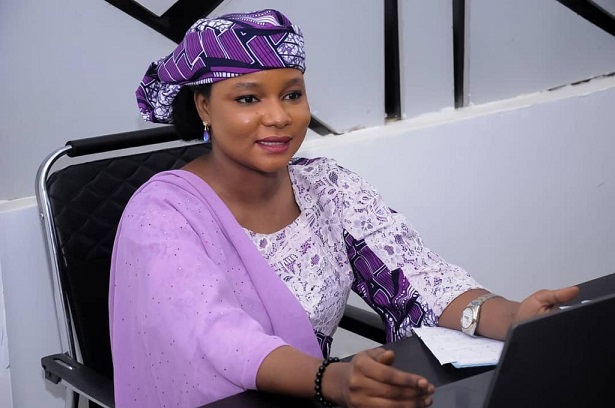
Cyberbullying and female social media users in Northern Nigeria: A story of Zainab Naseer Ahmad and her struggles
By Nusaiba Ibrahim Na’abba
Over time, social media platforms have gained unmatched acceptability over the legacy forms of communicating or exchanging messages – newspaper, radio and television. Their rapid rise has also corresponded with the swift increase in the development of social media platforms – Facebook, Twitter and WhatsApp – widely embraced by youths in Nigeria.
According to Statista, a known global database organisation, as of 2022, Nigeria has approximately 84 million internet users despite economic hardships that have affected the majority of Nigeria severely throughout the years.
This report projects that there will be a significant rise of 117 million internet users in 2027. “Nigeria is one of the most populous countries worldwide, more internet penetration amounted to over 38 per cent of the population in 2022 and is set to reach 48 per cent in 2027,” read a Statista report.
Already, there are several projections about a massive increase in the population of Internet users as the population increases.
Social media platforms are acknowledged worldwide as important communication forums facilitating wider discussions that cannot necessarily be done offline. Discussions here are indeed quite pervasive as opposed to one-on-one or group discussions. According to Dingli and Tanti (2015), in their study titled ‘Pervasive Social Network’, a pervasive social network is an extension of the traditional social network. The most important aspect borrowed from the traditional social network is the recent intrusion in the field of mobile technology – mobile social networks.
In the past decade, social media platforms such as Facebook, WhatsApp, and Instagram have proven to perform exceptionally well in aspects of e–commerce, changing perspectives of business dealings with a touch of speed and inclusiveness. USAToday (2019), over the past ten years, social media has evolved mainly from keeping in touch with others to flaunting what we have for attention or curating unrecognisable versions of ourselves.
Adding to its purpose of improving personal interactions, social media platforms have enabled youths worldwide to be engaged in businesses by creatively coming up with marketable ideas through unique content creation strategies. Such include online learning, personal life blogging and politics, among many others.
Most businesses use online marketing strategies such as blogger endorsements, advertising on social media sites, and managing user-generated content to build brand awareness among consumers (Wang and Kim, 2017).
People worldwide have embraced the vast opportunities created by social media and have greatly transformed them into gigantic opportunities. In Northern Nigeria, several blogs, including Open Diaries and Northern Hibiscus, have vast followership, raising the bar of social discussions around various topics on relationships, marriage, divorce and digital marketing. From 2016 till date, Northern Hibiscus has over 521,000 followers, while Open Diaries, which also started in 2016, has over 248,000 followers.
According to Rani and Padmalosani (2019), “Social media activism is a form of media activism which brings in a larger audience because of its interactive features towards a great mass. The information that breaks in social media becomes viral in fractions of a second”. More so, “the campaigns and protests-related information on social media can increase the number of supporters. Thus, social media is far superior to traditional media. There are various social media platforms like WhatsApp, Facebook, Twitter, and Instagram, where information can trend in no time”.
Zainab Naseer Ahmad, a social media activist whose role is to influence people on social media, has raised the bar of activism and opened the doors for women to contribute their ideas and suggestions for societal development on social media platforms. From 2019 till date, Ms Ahmad has toiled through the toxic infiltrated space to support the development of beneficial government policies for the larger society in Kano State and beyond.
Gender-based cyber-bullying and trolling
In Nigeria, there is widespread gender-based violence through electronic communication devices, according to Premium Times. Furthermore, “it was noted that technologically facilitated gender-based violence occurs in Nigeria amid a climate of pervasive gender-based violence. The new digital era has given bigotry and misogyny new opportunities to thrive. This is in addition to Nigeria’s different cultural makeup and traditions that have made toxic belief systems that reaffirm patriarchal views that seek to silence women and restrict their liberties in all settings, offline and online, even worse”.
The renowned online newspaper also explains that “Violence against women online is often perpetuated via digital social media platforms like Facebook, Instagram, TikTok and Twitter. This form of violence, especially suffered by women in the public eye and feminist activists, has a detrimental effect on their rights to freedom of expression, keeping them from actively participating in discourse and silencing their voices”.
The online bullying and trolling women face in the online space is an extension of the existing gender-based violence that engulfs a larger part of Northern Nigeria communities. As a result, it is very easy for users to use condescending statements to women, especially on Facebook, which is a massive community of networks.
As a social media activist, Muhammad Khalifa believes that “most of the female activists are seen as a wayward, and their activities are a departure from the generally accepted norms and values of a typical northern woman”. According to Muhammad, “Every northern Nigeria woman is supposed to have a sense of modesty of abstaining from social discussions that happen online.
Khalifa’s claims corroborate some of the experiences shared by Zainab after she decided to become a social media activist. Her phase of activism began in 2018 when she led the commencement of a movement tagged “free pads for girls” on Facebook.
The campaign was rebutted by fierce backlash from her community and the online community, who saw the concept as mainly indecent and capable of corroding existing values that a “lady” should have in the North. The campaign was purposely led to ensure the availability and accessibility of sanitary napkins for young women in schools.
With the excessive prices of sanitary pads in supermarkets, Zainab joined forces with other online users to call on the government to take the initiative on the health issues confronting learners. She said, “My worry was how students in Government-owned secondary schools can have access to proper hygiene with relative ease”.
Paradigm Initiative, an initiative that works to connect underserved young Africans with digital opportunities and ensures the protection of their rights, condemns online violence against women, sexual harassment online, cyber-stalking, doxing, online trolling, targeted hate speech, and identity theft. Also, Paradigm Initiative reports that “Reports from the Federal and State Ministries of Women Affairs in Nigeria have shown that there has been a 149% rise in reports of gender-based violence from March to April 2020 in 23 out of 36 states in Nigeria in which data is available”.
The experiences narrated by Zainab and other female online social media users indicate that even women of older ages are not exempted from cyberbullying. Ziyaatulhaqq, formerly FatIbolady, who surfaced on Instagram, had a bitter experience with social media trolling and bullying. During an interview with Mahangar Zamani on BBC Hausa, Ziyaatulhagg said, “From 2016 to 2018, the same thing happened in my life: over 20 accounts were opened, and peddling lies about my life. It was pure hell”.
Not only Zainab, Ziyatulhaqq and Aysha, but many women also lament the blackmail, lack of confidence, self-sabotage and body shaming online. This is also another challenge for women activists in cyberspace. The challenge also destroys their ideas for development or a desirable change.
Abba Gwale, an active social media user for ten years in Kano State, said, “There is a general assumption among society that women are not capable of participating in activism and sees any girl involved in such online activities as immoral.”
“They think women should not engage themselves with issues on social media platforms such as marriage, politics, etc,” said Gwale. These are the experiences shared by Zainab and other female social media users.
The positive influence of female-led social media activism
With the increase in social media usage and the realisation of business opportunities in tech and digital platforms, there has been a rise in positive contributions by women, which societies at large have felt. The global COVID-19 pandemic significantly disrupted businesses in Nigeria, especially Kano State, a known hub for commercial activities. It also opened new doors as women creatively leveraged the Internet to start remote businesses.
The popular social media influencer Aisha Falke engaged a large community of women and men who taught different ideas in tech, businesses and several online opportunities on social media. Numerous youths were exposed to the immense online opportunities available, and many benefitted.
Like other social media users, Zainab also climbed the ladder to prominence. Zainab says visibility on social media platforms takes time, effort and consistency. “I’ve been an active social media user for over five years now, but I only used to chat with friends before 2018. It was in 2018 that I developed a passion for social issues and decided to harness the social media platform – Facebook”.
To have a noticeable impact, you’d have to spend appreciable time on a particular platform and consistently nurture your niche. According to Aysha Tofa, the co-founder of ‘Start-up Kano’, a tech hub that incubates youth businesses in Kano State, the hub has mentored over 500 start-ups, and women have proven to be very capable in the online space. “Many businesses are single-handedly run by women who have gained with significant returns,” said Tofa.
Despite cyberbullying, women are gaining prominence in the online space. Zainab Naseer was able to receive about 700 pads that were handed to vulnerable women in Kano State. “This is one of my greatest accomplishments, and I’ll cherish it forever,” she says. In recognition, Khalifa Muhammad, a social media user who has spent over eight years on Facebook, shares that “there are some issues that can only be discussed by women because of cultural and religious norms and ethics. The few women online like Zainab are doing well to educate our communities on that”.
On the part of other women, the likes of Zainab have opened the doors of opportunities and how to overcome greater challenges ahead in cyberspace. Hannatu Suleiman, an active social media activist and an aspiring journalist, has also gathered the courage to post on social issues bedevilling her community in Kano. She says, “Zainab is one person that I look up to in cyberspace. I’m now confident about writing online despite the challenges of bullying and trolling”.
Zainab was strategic during Dr. Abdullahi Umar Ganduje’s just-concluded term as the Governor of Kano State. Her sanitary pad campaign propelled the government’s decision to distribute sanitary pads to secondary school students for free. She says, “It was a big achievement to me when I heard that, as it was what I have been advocating for”.
Future Prospects of Social Media and Digital Rights for Women
As technological opportunities continue to gain accolades and acceptance, women are hopeful of embracing their deserved rights online. They would also be acting more responsibly to present other social challenges tormenting the lives of women at local levels.
Before becoming the President of the Youth Society for the Prevention of Infectious Diseases & Social Vices (YOSPIS), Zainab mobilised youth in Kano State to peacefully protest the killings that surfaced in Northern Nigeria. She gained recognition from her live videos on Facebook. The protest left trails of its effects as she was invited to answer some questions by the Department of State Security (DSS).
Zainab said, “I was softly cautioned to refrain from the protest as it may lead to unwarranted results. This made me desist from the protest”.
Through YOSPIS, Zainab has conducted many online and offline activities, including raising youth awareness of the negative impacts of social vices and election monitoring, among other things. The organisation has been particularly keen on equipping youths with information about their relevance in development.
According to Zainab, “Women can only own their sect in the online space by supporting each other. Women must understand that the online space is a free space that seeks the contribution of all people. There’s also an opportunity to report cases of bullying and trolling like I once did, and action was taken. I had to report to the Kano State Police, which summoned the culprit. He was interrogated and later asked to apologise on the Facebook platform he used after confessing he used my photo with a derogatory statement without my consent on his page”.
She adds, “From that moment, all blackmail, insults and other sorts of cyberbullying against me has drastically reduced. There are several privileges to meeting with influential people which are necessitated by social media platforms among thousands of opportunities”.
According to Mr Abdulhameed Ridwan, a lecturer in the Department of Mass Communication at Skyline University Nigeria, a cybercrime act in Nigeria was established to serve as redress for cyberspace crimes such as cyberbullying, cybersecurity, and cyberstalking, among others. When offenders are caught, taken to court, and found, they either pay a fine or spend a substantial time in prison, depending on their crime.
Despite the availability of the law, there is still a low level of awareness on the part of social media users, and other users feel there is a delay in the judicial system, he added. His views corroborate well with that of Zainab, that many social media users in Nigeria are unaware of their rights and the available laws for protecting them.
This work was produced due to a grant from the Africa-China Reporting Project at the Wits Centre for Journalism at the University of the Witwatersrand. The opinions held are of the author(s). Nusaiba can be contacted via nusaibaibrahim66@gmail.com.
