Corruption in Nigeria

EFCC’s anti-graft war and politics of sponsored protests 

By Haroon Aremu 

In a period marked by ongoing high-profile corruption cases by the Economic Financial Crimes Commission (EFCC), the Nigerian authorities urgently need to address the potential dangers of protests and the pressing demand for justice. 

Specifically, some high-profile corruption cases under anti-graft agencies warrant thorough examination to understand the depth of the issue and the necessary steps required for resolution and swift justice dispensation.

Bodies like the National Youth Service Corps (NYSC) scheme preach the promotion of national security, awareness and consciousness; thus, I cannot but wonder how these situations affect Nigeria as a nation and proffer feasible solutions.

Communication and information management delivery is important as we have some high-profile cases in the country, and Nigerians eagerly await their conclusion. The EFCC charged with this responsibility should ensure a quick but thorough investigation to reduce corruption in our society, thereby bridging the gap of mistrust between the agency and the populace.

It can be recalled that the former Minister of Petroleum Resources, Diezani Alison-Madueke, has been accused of corruption and money laundering involving billions of dollars. The EFCC has seized properties and assets worth millions linked to her. She is facing charges in Nigeria and is under investigation by the United Kingdom’s National Crime Agency.

 Former governor of Ekiti State Ayodele Fayose is charged with receiving N1.3 billion from the Office of the National Security Adviser (NSA) for his election campaign. The EFCC arraigned him, and his trial is ongoing. Also, the former Federal Inland Revenue Service (FIRS) chairman, Babatunde Fowler, is under investigation for alleged financial mismanagement and fraud. 

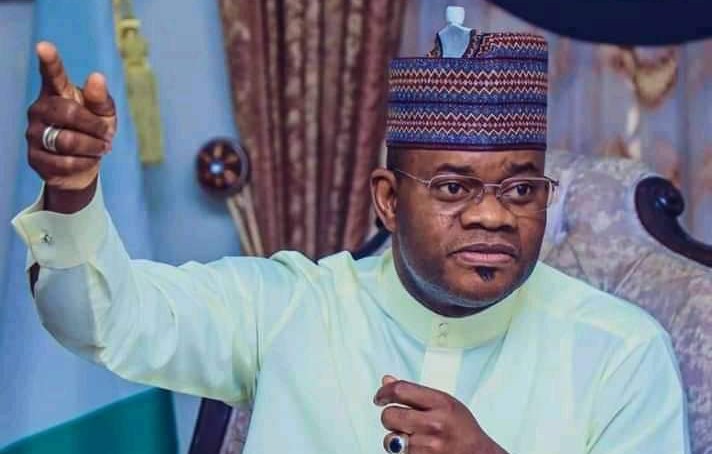
Similarly, Yahaya Bello, former governor of Kogi State, stands accused of an N80.2 billion fraud. The Chief Judge of the Federal High Court, Justice John Tsoho, has kept the case in Abuja, declining Bello’s request to transfer the trial to Kogi State.

The long list also included former Governor of the Central Bank of Nigeria (CBN) Godwin Emefiele, who is being charged with financial mismanagement and corruption while leading the apex bank. 

 EFCC’s investigation into Betta Edu, suspended Minister of Humanitarian Affairs and Poverty Alleviation, is ongoing, with specific details yet to be fully available. Also, Sadiya Umar Farouq, the former Minister of Humanitarian Affairs, Disaster Management, and Social Development, is accused of embezzling funds meant for social welfare programs. It is gratifying that the court has asked her to account for over N790bn she embezzled while in office.

Amid these significant corruption cases, there are speculations that some individuals facing probes by the EFCC might be sponsors of planned protests against the anti-corruption agency. This has raised concerns about the motivations behind these demonstrations and their potential impact on national stability.

While peaceful protests are a democratic right, they can spiral into violence, property damage, and disruption of public order. The EndSARS protests serve as a stark reminder of where lives were lost, properties destroyed, and chaos ensued. Protests pose risks to participants and bystanders and can escalate into broader conflicts with law enforcement or opposing groups.

As a concerned citizen, I always preach sustainability in national security and justice enforcement, given the complexities surrounding these high-profile cases and the associated risks of protests.

Efforts to address these issues involved community engagement programs to address grievances before they escalate into protests. This fosters trust and opens channels for dialogue. Strengthen intelligence networks to anticipate and prevent potential violence. This involves monitoring social media and other communication channels for signs of unrest.

There is also a need to provide specialised training for law enforcement officers on de-escalation techniques to handle protests more peacefully and effectively while ensuring transparent and accountable governance to build public trust. This includes clear communication about the progress of high-profile cases and actions taken.

Similarly, fostering continuous dialogue between government officials and civil society to find mutually agreeable solutions to contentious issues is another alternative approach. The EFCC should collaborate closely with police and military personnel, especially during arrests, because the police have higher immunity for legal arrests of public figures, which can help manage high-tension situations more effectively. 

Finally, Navigating the dual challenges of addressing high-profile corruption cases and managing potential protests requires a multi-faceted approach. Swift and fair dispensation of justice, combined with proactive and strategic security measures, will strengthen national security and uphold the rule of law in Nigeria. 

The ongoing cases involving figures like Diezani Alison-Madueke, Ayodele Fayose, Babatunde Fowler, Yahaya Bello, Godwin Emefiele, Betta Edu, and Sadiya Umar Faruq, among others, must be handled with care. Nigerians expect a swift investigation and dispensation of fair judgment to restore faith in our anti-graft agencies and judicial system, which will ultimately deter future corruption.

Haroon Aremu Abiodun is a corp member with PRNigeria Center Abuja and wrote in via exponentumera@gmail.com.
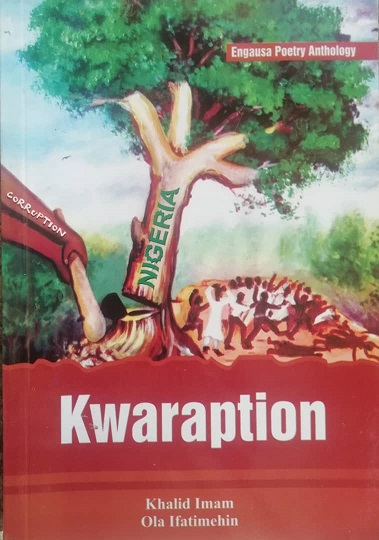
Engausa: An emerging writing phenomenon – A  study of  Imam and Ifatimehin’s “Kwaraption”

By Aliyu Idris

Engausa is a new emerging phenomenon that involves code switching and code mixing in English and Hausa. It’s a creative bilingual blend encompassing importance, uniqueness, and sending a message using a fusion of two popular languages (Hausa and English). It’s another genre of poetry and writing with its peculiarities. Its linguistic efforts are not to create a phenomenon that is Hausa or English but to create a genre that’s genuinely “Engausa.”

Khalid Imam and Ola Ifatimehin worked to establish a new writing phenomenon in the atmosphere of writing. After submission, they edited the ENGAUSA poetry anthology titled KWARAPTION.

Kwaraption Engausa Anthology is a poetry anthology comprising fifty-one poems penned by forty-five teeming poets. Various notable works of art have been produced on corruption in Nigeria. The poems in this anthology were written in various styles, from traditional to experimental, and they reflect the diverse voices and experiences of the poets.

One of the anthology’s strengths is its focus on Engausa poetry. Engausa is a hybrid form of poetry that blends Hausa and English languages. It is a relatively new and still evolving form of writing. The anthology features several poems in Engausa, allowing readers to experience this unique and dynamic form of writing.

The poems provide readers with a vast knowledge of Nigerian richness and valuable resources, but they’re not properly managed and are embezzled due to corruption. They also portray corruption as a major hindrance to the country’s progress, lament the nation’s current status, and inquire when corruption will end. The poems highlight many causes of corruption and its consequences.

The poets come from various backgrounds and experiences, and their poems reflect this diversity. The anthology features poems from established and emerging poets, which shows diversity in the anthology.

They try to display the pervasiveness of corruption in all parts of the country. Clearly, corruption was endemic but has now metamorphosed into an unending pandemic that continues to destroy the nation’s advancement. Several instances of the poem address corruption in different sectors of life, ranging from offices to hospitals to markets to politics to schools.

Kwaraption Engausa: An Anthology of Poems is a valuable contribution to Nigerian and Hausa literature and literature at large. It is a must-read for anyone interested in contemporary Nigerian poetry or the Engausa form of poetry as a newly branded way of writing.

Aliyu Idris wrote via aliyuidris063@gmail.com.

NIGERIA: It’s the impunity, actually

By Dr Raji Bello

Our high-maintenance and strangely imaginative federal legislators have embarked on another fancy idea for solving our country’s problems – a single six-year term for federal and state chief executives. I have since realised that Nigerians would suggest anything as a way out of our problems other than the most pertinent one: defeating impunity. At the current rate that our National Assembly is moving, we will wake up one day to hear a motion to return the country to using miles instead of kilometres as a way to improve efficiency. 

Although I advocate for replacing our current system with a more centralised one, I have never doubted that the country’s most important problem is that its citizens can conduct themselves without any fear of consequences.

The fear of consequences has always moderated human behaviour and has brought peace, order, stability and prosperity to human societies. Even the most sophisticated countries in the world today have never thought of lifting the threat of consequences for law-breaking on their citizens. But Nigeria has decided that applying consequences for breaking the law is unkind and should be done away with. 

We are always unwilling to punish wrongdoing while also being unable to do so. As a result, we keep moving from chaos to dysfunction and back to chaos again. And each time we sit and ponder over potential solutions, we always look away from impunity – we feel that some cosmetic changes could rescue us while we allow our personally profitable culture of impunity to remain.

When our electoral system is not working, we think of changing electoral laws but without punishing those who broke the existing laws. Hardly anyone is in jail at the moment in Nigeria for sponsoring or perpetrating electoral violence, and the infamous former Adamawa INEC commissioner has still not been punished one year after he wilfully infused chaos into the state’s governorship election. 

We are incapable of punishing corruption by our VIPs; our most celebrated cases—Abacha loot, Alamieyeseigha, and Ibori—only happened because foreign countries assisted us. The Halliburton and Siemens bribery scandals were never punished in Nigeria, although both companies were prosecuted in their home countries for the crimes that they committed in Nigeria. 

It took the determination of the UAE and the US, not Nigeria, to finally put scammer Hushpuppi away. We have managed to convict kidnapper Evans after several years of trial, but there are now fresh attempts to arrange a plea bargain for him. As big as the problem of oil theft is in our country, only foreigners and other minor individuals have ever been convicted of the offence. 

A notorious bandit, who could not be arrested in Nigeria, was intercepted recently when he crossed the border into the Republic of Niger. If not for the help from the same Niger, we would also not have Abdulrashid Maina in prison by now. Nnamdi Kanu jumped bail and left Nigeria while our security looked the other way and it took the cooperation of Kenya to get him back. 

In the Boko Haram theatre, terrorist kingpins only die from infighting among their factions, not by getting killed by the authorities. Any terrorists that we actually capture are given a pardon and ‘rehabilitated’ in camps in our towns, where they end up living side-by-side with their terrified former victims. Over a dozen soldiers were killed on active duty in Delta State without any accountability by the culprits in that act, but we were surprised when five were killed yet again in Abia State. 

The few VIPs that we have managed to jail for corruption after long trials were given official pardons by the former president of Nigeria, whose pardon list also included ‘common criminals’ jailed for offences like the 419 scam. Donald Trump and Hunter Biden have just been convicted of, guess what, lying, but Nigeria could not as much as arrest and arraign Yahaya Bello for looting public funds and the famous case of our former Accountant-General Ahmed Idris has not taken off yet. 

Senator Omo-Agege was fingered by the police for the theft of the Senate’s mace but he got promoted to deputy senate president soon after. Ahmed Lawan has regained his senate seat without really participating in a valid electoral contest. He did not contest in the original primary but got his party to stage another one for him after he had decided that he wanted to be a senator again, not president. With his ‘victory’ in the arranged primary, he got the Supreme Court to support him via a 3-2 split decision. The same individual spoke to the BBC Hausa a few days ago as an elder statesman, where he proffered solutions to the problems of Nigerian democracy. There is no way that a country with such brazen industrial-scale duplicity would make any headway.

Open incitement is largely consequence-free in the country, and the perpetrators know that. Our Islamic clerics who went to foreign countries to study must have seen how public preaching is highly regulated in these countries. All Friday sermons are written by the state, and Imams get fired for merely letting substitute Imams deliver their government-authored sermons. But the same clerics return to Nigeria to assert their freedom to speak publicly in any way that they choose. For Nigerians, democracy is the same thing as lawlessness.

Well, there are no new laws or new political systems that could work side-by-side with impunity. We must defeat impunity first before anything else would work. Impunity begets even more impunity, unleashing a catastrophic loop. As long as the average Nigerian does not fear possible consequences for their actions, we will never be a normal country.

The battle of the White Lion, the Eagle, and the rest of us

By Lawan Bukar Maigana 

Many people believe that journalists also aid money laundering in Nigeria. This may be true as some professional journalists are sometimes hired to protect and polish the horrible images of politicians, like the former Governor of Kogi State, Alh. Yahaya Bello.

Let us be brutally frank: Bello was notorious for owing Kogi workers their salaries for months and even years when he was governor.  

The self-acclaimed White Lion was a ‘cancer’ Kogi workers battled with throughout his stewardship. Surprisingly, a mere eagle chased him, and everyone knows he went into hiding despite his lioness strengths. It is so strange that a perceived ordinary eagle has humbled him. This eagle deserves a national award for successfully turning a lion into an ordinary fearful man.

Unequivocally, I have come to the realization that some lawyers are also culpable when it comes to issues of protecting political elements who looted public funds for their personal enjoyment, forgetting the indomitable eagle that fights fat-belly lions and defeats them, especially when the lions and tigers have eaten so much that they can’t even run, let alone fight back. 

If not unpatriotic, why would a legal luminary describe the EFCC’s move against the former egoistic Governor of Kogi State, Yahaya Bello, as ‘illegal’? If arresting or declaring him wanted was illegitimate, what is the constitutional name given to money launderers? I guess they are called ‘My lord’. I can’t even describe how sad I was when I read the news that a lawyer has advised the Economic and Financial Crimes Commission (EFCC) not to act above the law in its efforts to arrest and subsequently prosecute Kogi’s former governor.

I don’t know what the lawyer means by ‘not acting above the law’ in this context because it is the law that establishes the commission and empowers it with the right to arrest and prosecute unjust public officers who turned public offices into a stealing factory where theft is committed with impunity. Professionals like journalists and lawyers should ideally lead the fight against injustice and bad governance and uphold state accountability and transparency through every means available at their disposal, not the other way around.

While writing this afternoon, I read an article by a reporter from The Street Journal. The report was accompanied by a video of a female civil servant protesting against the non-payment of nine years’ salaries by the immediate past Governor of Kogi State. She said, ‘I have not been paid for seven years. Tinubu, are you hearing this? I am dying of hunger. Tinubu, where are you? Yahaya Bello, armed robber.’ I believe there are thousands like her who are suffering in silence due to fear of victimization by either the past Governor or his cult-like loyalists, who can commit unspeakable offences to silence the existing truth that uncovers the wrongdoings of the white lion. 

The lawyer uncommonly went on to challenge the withdrawal of state security details attached to the ‘White Lion’ and even termed it as illegal, adding that Bello is now exposed to great political dangers. I tend to wonder if there is anything as dangerous as subjecting people to hunger and starvation by not paying their salaries for years. It is in the news. The man has been having issues with the Labour Congress over non-payment of salaries for years. I guess the alleged pocketed N80.2 billion Naira largely owned by starving civil servants of Kogi State.

In relation to the charges against Yahaya Bello, the 21st Century Chronicle published on January 12, 2024, that the embattled ex-Governor of Kogi State, along with his nephew Ali Bello, had been arraigned before the Federal High Court in Abuja over a suspicious transaction in a N10 billion money laundering case, transferred in tranches from the accounts of the Kogi State Government and that of the state’s government house account. This, among many similar charges against him, shows that he’s unlikely innocent of the crimes attributed to him.

I am not antagonistic towards Yahaya Bello as a person. My concerns stem from patriotism, and I only wish that the Federal Government will not interfere in his case in any way, as he is a white lion who proudly once said that he is never afraid of any confrontation. Let the truth set him free if he was truthful and honest. We are keenly following his case.

Lawan Bukar Maigana writes from Abuja and can be reached via email: Lawanbukarmaigana@gmail.com.

Nigerian Senators’ diatribe and their corrupt national budget opprobrium

By Nura Jibo

Senator Abdul Ningi remains a hero of Nigeria’s democracy. His revelations, as the senator from Edo North implied, will haunt their reputation, causing them to receive years of contempt and opprobrium from the Nigerian people.

No one takes any of the current Nigerian senators seriously.

The entire country and world leaders view their tongue-lashing as an overt confession to the national budget’s animadversion. What irony!

Indeed, the mentality of Nigerian politicians, both young and old, is the same. To enter politics, contest, “win” either fairly or by crooked means, and serve the 1st, 2nd, 3rd, and 4th terms.

This could be easily spotted in the Senate chamber. It is full of geriatrics who served eight years as governors in their respective states and have now become senators to take cover in the Senate and hide their political obloquy.

In the past two days, Nigerians have been left in no doubt that the Nigerian senators, including their Senate President, are already in a state of disgrace resulting from public opprobrium. And this is quite understandable.

There is no way a Nigerian citizen could trust any senator with his hard-earned electoral vote. Unless the senator steals it by fabricating figures the way they surreptitiously did in the 2023 national budget, where some of them were allocated ₦500 million as publicly confessed by one of their own!

For one of their own to call all of them culpable, or better yet, culprits, is certainly an obloquy and political hara-kiri—an indelible series of political somersaults.

What Senator Ningi presented was a testament to the fact that the entire Senate is now embroiled in a disturbing saga of corruption and self-incrimination, demonstrating a reckless disregard and disrespect for the public good.

Indeed, this Senate’s attitude is certainly an intentional breach of decorum that exposes them to the vagueness, vagaries, verbosity, and waffle of their statutory unconscionability!

May Allah SWT save Nigeria and its people from this kind of Senate’s malicious misrepresentation(s) of the people under the tutelage of budget padding.

Abolishing Nigerian godfatherism mentality

By Usman Muhammad Salihu

Nigeria has long been known for its political culture of godfatherism, which refers to a system in which a powerful politician or group of politicians wield significant control over the political fortunes of others. The practice of godfatherism has been a defining feature of Nigerian politics for decades, and it has been blamed for perpetuating corruption, stifling democratic participation, and hindering economic growth and development.

Godfatherism in Nigeria is typically characterised by a system in which a powerful politician, usually an incumbent governor or party leader, sponsors and funds the candidacy of a less-established politician or aspirant for an elected office. In exchange, the godfather expects loyalty and a significant portion of the proceeds from the office once the candidate is elected.

This system has become deeply entrenched in Nigerian politics, and it has produced a political class that is more interested in personal gain and self-preservation than in serving the needs and interests of the people. The consequences of godfatherism are numerous and far-reaching, and they include:

Corruption: Godfatherism promotes corruption in the political system, as the godfather expects a significant return on their investment in the candidate. This often leads to a cycle of corruption, where the candidate engages in corrupt practices to satisfy the demands of the godfather.

Lack of accountability: The godfather system creates a culture of impunity in which elected officials feel less accountable to the people they represent. This lack of accountability undermines the credibility of the democratic process and perpetuates a culture of political apathy among citizens.

Stifling of democracy: Godfatherism stifles the growth of democracy by limiting the ability of independent-minded candidates to contest for political office. This limits the choices available to voters and undermines the democratic process.

Economic stagnation: The godfather system discourages economic growth and development by favouring candidates more interested in their gain than in implementing policies that will benefit the economy.

Social inequality: The godfather system reinforces social inequality by favouring candidates from privileged backgrounds or with access to financial resources. This leaves many citizens without a voice in the political process and perpetuates a system of elitism.

Given the many negative consequences of godfatherism, it is clear that this practice must be abolished if Nigeria is to realise its full potential as a democratic and prosperous nation. This will require a concerted effort from all stakeholders, including politicians, civil society organisations, the media, and the general public.

To achieve this goal, Nigeria must strengthen its democratic institutions, including the judiciary and the electoral system, to ensure they are more independent and less susceptible to external influence. Additionally, there must be greater awareness and mobilisation of the public to demand accountability and transparency from elected officials.

In conclusion, the mentality of godfatherism in Nigeria must be abolished if the country is to achieve its full potential. This will require a long-term commitment to strengthening democratic institutions, promoting accountability and transparency, and mobilising the public to demand change. With a concerted effort from all stakeholders, Nigeria can move beyond the politics of godfatherism and towards a more democratic and prosperous future.

Usman Muhammad Salihu wrote from the Mass Communication department, Abubakar Tatari Ali Polytechnic, Bauchi State. He can be contacted via muhammadu5363@gmail.com.

Centre for Fiscal Transparency and Integrity Watch embrace NAPPR project

By Ibrahim Uba Yusuf

The Centre for Media, Policy and Accountability (CMPA) has continued its advocacy to seek collaboration with sister agencies on the successful implementation of the Nigeria Anti-Corruption Performance Public Reporting (NAPPR) project. 

The Executive Director of the Centre and project lead, Dr Suleiman Amu Suleiman, who led the project team to Centre for Fiscal Transparency and Integrity Watch, explained that the project has four components: research, advocacy, training and developing a harmonised template for anti-corruption reporting.

He lamented the differences in the pattern of reporting corruption by Anti-Corruption Agencies (ACAs) as a result of the different indicators used and hope that the project will fill this gap by developing a harmonized template that the ACAs will use in reporting corruption in Nigeria.

Also speaking, the Deputy Project Manager, Naziru Mikailu, said at the onset of the project, ‘the Centre faced difficulties in convincing the ACAs to key into this project’. 

‘We hope that the Centre will help us in the implementation of this project and development of the template in view of your field experiences’, Naziru noted.

The Executive Director Center for Fiscal Transparency and Integrity Watch, Mallam Umar, described the NAPPR project as brilliant which will give civil society organizations, the media and members of the public an opportunity to check those who check others. 

‘We will support CMPA Implement this project’, Umar assures.

Also speaking, Chairman of the Centre Abdulrahman A. Mustapha expressed the hope that the template, when developed, will give the required result of unifying various variables of measuring corruption which will facilitate development.

‘The centre is ready to provide CMPA with all the technical support needed to ensure that the template is accepted by the ACAs in Nigeria’, he added. 

Nigeria and its challenges: The need for competent leadership

By Muhammad Nazif Abubakar

Nigeria is facing several challenges that threaten its stability and prosperity. From economic struggles to political corruption, the country is at a crossroads and, come February, must take to the ballot and vote for competent leadership that can take actions to address these issues to secure its future.

Nigeria’s numerous economic challenges can be overwhelming in recent years, including declining oil prices and organised oil theft. The latter has significantly impacted the country’s economy, leading to billions of dollars in lost revenue for the government and oil companies and lost profits for businesses operating in the oil industry. This lost revenue could have been used to fund critical public services and infrastructure projects, exacerbating the adverse economic effects of crude oil theft. Moreover, the financial struggles in Nigeria have led to high levels of unemployment, particularly among young people, and have contributed to widespread poverty. In addition, the country has struggled with high inflation levels and a weak currency, making it difficult for people to afford necessities.

Political corruption is another major issue in Nigeria. Politicians and government officials are frequently accused of embezzlement and misusing public funds. Examples of this corruption, most of which were documented by Dr Nura Alkali in his book entitled When Stealing is Not Corruption: Nigeria Under President Jonathan, include the 2015 elections, which were marred by allegations of vote buying and the use of government resources to support certain candidates; the 2012 fuel subsidy scandal, in which billions of dollars in subsidies were embezzled by government officials; the 2010 Halliburton scandal, in which the company paid bribes to Nigerian officials to secure contracts; and the 2015 DasukiGate scandal, in which former National Security Adviser, Colonel Sambo Dasuki embezzled public funds meant for military equipment. More recently, a former Accountant General of the federation was involved in over a 100-billion-naira scandal. Corruption has contributed to a lack of trust in successive governments. It has made it difficult for the country to address its many challenges.

In addition to these economic and political challenges, Nigeria is also facing several security threats. Before 2015, the country was plagued by violence and terrorism, with groups like Boko Haram carrying out attacks on civilians and government targets. This has destabilised the country and made it difficult for citizens, especially in the northeast, to go about their everyday lives. Attacks by members of Boko Haram have drastically subsided in recent years. However, Nigeria is struggling with increasing levels of banditry in its northwest region. This has included armed robberies, kidnappings, and attacks on communities and security personnel. These bands of criminals have caused widespread fear and insecurity in the region, especially in Katsina and Zamfara. In addition, they have made it difficult for people to go about their daily lives.

The root causes of this banditry are complex and multifaceted. Poverty and unemployment are major contributing factors, as many of these bandits are driven by the desire to make a quick profit. In addition, the lack of effective law enforcement and security in the region has made it easier for these criminal groups to operate with impunity. The government has attempted to address this issue by deploying security forces and implementing programs to address poverty, but these efforts have had limited success. It will require a more comprehensive and coordinated approach to effectively address the problem of banditry in Nigeria’s northwest region.

Nigeria has a large and diverse population and a rich history and culture. With exemplary leadership and policies, Nigeria has the potential to become a thriving and prosperous nation. However, this will require a concerted effort to address the issues holding the country back. This will require tackling corruption, improving the economy, and managing security threats. It will also require working to build a more inclusive and just society where all citizens have the opportunity to succeed and thrive.

Despite Nigeria’s many challenges, there is hope for the country’s future. This hope lies in the decisions made during the next election cycle. The person chosen to lead Nigeria must be capable of addressing the country’s problems. As former US Senator Daniel Patrick Moynihan once said, “The single most exciting thing you encounter in government is competence because it is so rare.” Competence is a rare quality in the Nigerian political landscape. Still, it is essential for the success and prosperity of the country. Therefore, we must choose a competent leader to navigate Nigeria’s challenges.

Muhammad Nazif Abubakar from Kaduna via muhd.abubakar@hotmail.com.

Pardoned convict, Dariye, suggests ways to end corruption in Nigeria

By Uzair Adam Imam

A former governor of Plateau State, Joshua Dariye, gives suggestions on ways to end the menacing issue of corruption in Nigeria.

Dariya disclosed this on Monday while he was featured on Channels Television NewsNight programme.

The Daily Reality recalls that the former governor, alonside former Taraba State governor, Jolly Nyame, were convicted of corruption charges sometime ago.

Dariye was convicted of stealing N1.16 billion while serving as Plateau governor from 1999 to 2007 and was granted a pardon by the Council of State led by President Muhammadu Buhari on April 14, 2022.

While, Nyame, the other convict, arrainged for stealing N1.6 billion and the two were released from Kuje Custodial Centre on August 8, 2022.

However, Dariye said the legal action against curruption by jailing would not in any way ended the graft which is everywhere in the country.

He said, “Dariye and Nyame were jailed. Has it ended corruption? Like I told My Lordship, you can jail me for 200 years, if that will end corruption, I will say glory be to God.”

He added that his imprisonment was politically motivated, arguing that some persons did worse but were spared.

He stated, “If we want to end corruption, it will not be a one-day issue; you will take corruption to cure corruption. And if you start delivering policies, let me just tell you for example: If the railway is working, without these people sabotaging, it will reduce a lot of hardship on our people, it will reduce the prices of commodities and farm produce.

“Things are not working, some people are benefitting from it, they are frustrating government measures,” he noted.